Bill· HRH.R. 2059 (119th)referred
To prohibit the issuance of licenses for the exportation of certain defense articles to the United Arab Emirates, and for other purposes.
United States · United States Congress · 11 March 2025
The world's political record
Person
United States · Official source
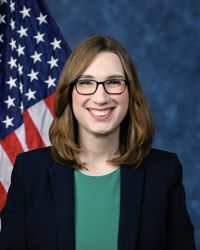
661 records where Rep. McBride, Sarah [D-DE-At Large] is listed as a sponsor, author, or other actor. Search with topics and years
United States · United States Congress · 11 March 2025
United States · United States Congress · 11 March 2025
United States · United States Congress · 11 March 2025
United States · United States Congress · 11 March 2025
United States · United States Congress · 11 March 2025
Medicare Dental, Vision, and Hearing Benefit Act of 2025 This bill provides for Medicare coverage of dental, vision, and hearing care. Coverage includes (1) routine dental cleanings and exams, basic and major dental services, emergency dental care, and dentures; (2) routine eye exams, eyeglasses, and contact lenses; and (3) routine hearing exams, hearing aids, and exams for hearing aids. With respect to such care, the bill establishes special payment rules, limitations, and coinsurance requirements.
United States · United States Congress · 11 March 2025
Caring for Survivors Act of 2025 This bill increases the monthly rate of dependency and indemnity compensation payable to surviving spouses through the Department of Veterans Affairs (VA). Dependency and indemnity compensation is a monthly payment made to eligible survivors (i.e., spouses, parents, or children) of (1) certain veterans who died as a result of a service-connected condition; (2) service members killed while on active military duty or active or inactive duty for training; or (3) veterans who did not die from a service-connected condition, but were totally disabled by a service-connected disability for a certain period of time. The bill also (1) reduces, from 10 years to 5 years, the period of time that certain veterans must have been rated totally disabled due to a service-connected disability in order for a survivor to qualify for benefits; and (2) specifies the amount that is payable to survivors of veterans who were rated totally disabled for a period of less than 10 years before their death.
United States · United States Congress · 11 March 2025
Pink Tariffs Study Act This bill requires the Department of the Treasury to study and report to Congress on whether the U.S. tariff system is regressive (e.g., tariffs are higher on mass-market consumer goods compared to analogous luxury goods) or demonstrates a gender bias (e.g., tariffs are higher on women's clothing compared to men's clothing). For this study and report, Treasury must (1) coordinate with U.S. Customs and Border Protection, and (2) consult with the U.S. International Trade Commission and the Office of the U.S. Trade Representative.
United States · United States Congress · 10 March 2025
Action for Dental Health Act This bill reauthorizes through FY2030 grants to states for developing the dental workforce and increasing access to oral health services in designated dental health professional shortage areas. This program is administered by the Bureau of Health Workforce within the Health Resources and Services Administration.
United States · United States Congress · 10 March 2025
25th Anniversary of 9/11 Commemorative Coin Act This bill directs the Department of the Treasury to mint and issue coins to commemorate the 25th anniversary of the September 11, 2001, terrorist attacks on the United States and the establishment of the National September 11 Memorial and Museum at the World Trade Center. The sale of all coins issued under this bill must include a surcharge to be paid to the National September 11 Memorial and Museum at the World Trade Center to support operations and maintenance. However, if the issuance of this commemorative coin exceeds certain annual limits, no surcharge may be included.
United States · United States Congress · 10 March 2025
Pay Our Military Act This bill provides continuing appropriations for military pay for any period during which interim or full-year appropriations for FY2025 are not in effect (i.e., a government shutdown). Specifically, the bill provides FY2025 continuing appropriations for the pay and allowances of (1) members of the Armed Forces, including reserve components, who perform active service or inactive-duty training during the period; and (2) civilian employees and contractors of the Department of Defense (and the Department of Homeland Security in the case of the Coast Guard when the Coast Guard is not operating as a service in the Department of the Navy) who are providing support to such members of the Armed Forces. If a government shutdown occurs, the bill provides the continuing appropriations until the earlier of (1) the enactment into law of specified appropriations legislation, or (2) January 1, 2026.
United States · United States Congress · 10 March 2025
American Teacher Act This bill establishes grants to increase the minimum salary of public elementary and secondary school teachers. It also authorizes a national campaign regarding the value of the teaching profession. First, the bill directs the Department of Education (ED) to award four-year grants to state educational agencies (SEAs) and, through them, subgrants to local educational agencies to establish a minimum annual salary of $60,000 (to be adjusted annually for inflation) for these teachers. Second, the bill directs ED to award grants to eligible SEAs to provide cost-of-living adjustments to the annual base salary of teachers. Finally, the bill authorizes ED to carry out a national campaign to (1) increase awareness about the importance of teachers and the value of the teaching profession, (2) encourage secondary school and college students to consider teaching as a professional career, and (3) diversify the pool of individuals who enter the teaching profession.
United States · United States Congress · 10 March 2025
United States · United States Congress · 10 March 2025
Feed Our Families Act of 2025 This bill provides appropriations for carrying out the Food and Nutrition Act of 2008 during the first 90-day period of a lapse in discretionary appropriations for carrying out the act during any fiscal year beginning after FY2024. The Food and Nutrition Act of 2008 is the authorizing statute for several Department of Agriculture nutrition and food assistance programs, including the Supplemental Nutrition Assistance Program (SNAP).
United States · United States Congress · 10 March 2025
Medicare Home Health Accessibility Act This bill allows individuals to receive occupational therapy as a home health service under Medicare without the need for other services. Currently, individuals may only receive occupational therapy as a home health service if they first qualify for home health services based on other needs (e.g., physical therapy).
United States · United States Congress · 10 March 2025
Pay Federal Workers and Servicemembers Act This bill makes federal civilian and military personnel who are excepted from furlough during a government shutdown eligible for unemployment compensation benefits. During a government shutdown due to a lapse in appropriations, federal employees who are excepted from furlough are required to report for work and perform duties, but their pay is delayed until appropriations legislation is enacted. Under guidance issued by the Department of Labor, excepted employees who are performing services (but whose payment for that work is delayed) are generally ineligible for unemployment compensation benefits based on states' definitions of unemployment. This bill provides that, for the purpose of determining eligibility for unemployment compensation during a government shutdown, excepted employees are deemed to be (1) totally separated from federal service, and (2) eligible for unemployment compensation benefits with no waiting period for the eligibility to accrue. The bill applies to the following federal personnel who are excepted from furlough and are not being paid due to a government shutdown: (1) any member of the Armed Forces or the Commissioned Corps of the National Oceanic and Atmospheric Administration, and (2) any federal civilian employee who is an excepted employee or an employee performing emergency work.
United States · United States Congress · 6 March 2025
U.S. Engagement in Sudanese Peace Act This bill requires or authorizes certain actions related to the conflict in Sudan, including requiring sanctions on certain foreign persons (individuals or entities) and authorizing U.S. assistance for a multinational force in Sudan. The bill requires the President to select various sanctions to impose on each foreign person the President determines (1) has knowingly perpetrated, directed, or enabled genocide, war crimes, or crimes against humanity against civilians in Sudan since April 2023; (2) has knowingly engaged in systematic blocking of and interference with the delivery of humanitarian aid to civilians in Sudan since April 2023; or (3) is violating the UN arms embargo on Darfur, a region in western Sudan. Sanctions that may be imposed include blocking of property, blocking of visas, or bans on loans. The bill also authorizes the Department of State to provide assistance to deploy and sustain a multinational force to advance civilian protection, facilitate humanitarian operations, and monitor any prospective ceasefire in Sudan. No major defense equipment may be sold, exported, or transferred to any country the President identifies as supporting the Sudanese Armed Forces (Sudan's military) or the Rapid Support Forces (a paramilitary force in conflict with the Sudanese Armed Forces). The State Department and the U.S. Mission to the United Nations must advocate for and support certain policies in multilateral bodies, such as unimpeded humanitarian access in Sudan and the documentation of atrocities. The bill extends the position of special envoy for Sudan through December 23, 2029.
United States · United States Congress · 6 March 2025
United States · United States Congress · 6 March 2025
End Veteran Homelessness Act of 2025 This bill requires the Department of Veterans Affairs (VA) to furnish case management to certain veterans who are eligible for the HUD-Veterans Affairs Supportive Housing (HUD-VASH) program administered by the Department of Housing and Urban Development (HUD) and the VA. Specifically, the VA must furnish case management to veterans who are eligible for HUD-VASH that the VA determines require case management. The VA must prioritize vulnerable homeless veterans in assigning case managers and providing services. The VA must take certain actions if a veteran refuses case management. HUD or a public housing authority may not revoke assistance solely on the basis that a veteran has refused case management. Additionally, a veteran may not be evicted or penalized by the owner of a property solely on the basis that they have refused case management or cannot be provided case management for health and safety reasons. The Government Accountability Office must report to Congress on veterans who are served by the HUD-VASH program, case managers and case management services provided under the program, and metrics about housing stability for veterans participating in federal housing assistance programs. The bill also provides statutory authority to expand eligibility for the HUD-VASH program to any veteran who is homeless, at risk of homelessness, or receiving assistance under another housing assistance program if the VA determines a voucher under HUD-VASH is more appropriate. (Currently, assistance is statutorily limited to certain veterans who have chronic mental illness or substance use disorders.)
United States · United States Congress · 6 March 2025
United States · United States Congress · 6 March 2025
United States · United States Congress · 6 March 2025
United States · United States Congress · 6 March 2025
United States · United States Congress · 5 March 2025
Protecting Americans’ Social Security Data Act This bill prohibits political appointees and special government employees from accessing Social Security data systems that contain personally identifiable information about Social Security beneficiaries. Specifically, political appointees and special government employees may not access systems maintained by the Social Security Administration (SSA) that issue or record Social Security account numbers, that are used to determine eligibility for or to pay Social Security benefits, or that otherwise contain personally identifiable information about individuals receiving or applying for benefits. The bill also establishes a civil right of action for an individual whose information was negligently accessed or disclosed in violation of these provisions. The individual may bring suit against the United States if the violator was a U.S. employee or officer, or against the violator if they were not a U.S. employee or officer. Such a claim must be brought within two years of the affected individual’s discovery of the violation. Upon a finding of liability, defendants are liable for specified monetary damages. If an individual is criminally charged or subject to proposed disciplinary or adverse action by a federal or state agency for having accessed or disclosed information in violation of these provisions, SSA must notify the individual whose information was accessed or disclosed of the violation as soon as practicable. Finally, the bill requires the SSA Office of the Inspector General to investigate and report to Congress on any unauthorized access to or disclosure of information in a beneficiary data system.
United States · United States Congress · 5 March 2025
TAP Promotion Act This bill requires that pre-separation counseling under the Transition Assistance Program include a presentation that promotes the benefits available to veterans from the Department of Veterans Affairs (VA). The bill also requires the VA to annually report on the presentation to (1) identify veterans service organizations that participate, (2) provide the number of members of the Armed Forces who attend, and (3) provide any recommendations for changes to the presentation.
United States · United States Congress · 5 March 2025
Keeping Our Field Offices Open Act This bill temporarily prohibits the closure or consolidation of, or other limitation of access to, Social Security Administration (SSA) offices and stations, and sets forth procedural requirements for future changes to office and station availability. Specifically, the bill prohibits through at least January 21, 2029, the closure or consolidation of, or other limitation of access to, SSA field offices, hearing offices, and resident stations. On or after that date, SSA must submit a report to Congress justifying its process for selecting stations and offices to be closed, consolidated, or limited. The prohibition is lifted 180 days after the submission of such report. The bill also sets forth requirements that must be met before SSA may close, consolidate, or otherwise limit access to an office or station after the initial moratorium expires. At least 120 days before such a change takes effect, SSA must provide public notice to individuals in affected areas, including information on how lost access to SSA services will be replaced. SSA must also conduct at least two public hearings on each such change. Further, SSA must provide a hearing to any individual who makes a timely showing that a determination to close, consolidate, or limit an office or station is arbitrary, capricious, or deficient in another specified manner. Finally, a closure, consolidation, or limitation may not result in the total number of SSA offices or stations falling below the number of such offices or stations in operation on January 20, 2025.
United States · United States Congress · 5 March 2025
John R. Lewis Voting Rights Advancement Act of 2025 This bill establishes new criteria for determining which states and political subdivisions must obtain preclearance before changes to voting practices may take effect. Preclearance is the process of receiving preapproval from the Department of Justice (DOJ) or the U.S. District Court for the District of Columbia before making legal changes that would affect voting rights. A state and all of its political subdivisions shall be subject to preclearance of voting practice changes for a 10-year period if, during the previous 25 years: 15 or more voting rights violations occurred in the state; 10 or more violations occurred, at least 1 of which was committed by the state itself; or 3 or more violations occurred and the state administers the elections. A political subdivision as a separate unit shall also be subject to preclearance for a 10-year period if three or more voting rights violations occurred there during the previous 25 years. States and political subdivisions that meet certain thresholds regarding minority groups must preclear covered practices before implementation, such as redistricting. States and political subdivisions must notify the public of changes to voting practices. The bill authorizes DOJ to require states or political subdivisions to provide certain documents or answers to questions for enforcing voting rights. The bill outlines factors courts must consider when hearing challenges to voting practices, such as the extent of any history of official voting discrimination in the state or political subdivision.
United States · United States Congress · 5 March 2025
United States · United States Congress · 4 March 2025
United States · United States Congress · 4 March 2025
United States · United States Congress · 3 March 2025
United States · United States Congress · 3 March 2025
Securing and Enabling Commerce Using Remote and Electronic Notarization Act of 2025 or the SECURE Notarization Act of 2025 This bill allows a notary public commissioned under state law to remotely notarize electronic records and perform notarizations for remotely located individuals. The bill provides technical requirements for the notarizations, including the creation and retention of video and audio recordings and the use of communication technologies (i.e., video chat). Additionally, the bill requires U.S. courts and states to recognize notarizations—including remote notarizations of electronic records and notarizations of remotely-located individuals—that occur in or affect interstate commerce and are performed by a notary public commissioned under the laws of other states. The bill also allows a notary public to remotely notarize electronic records involving an individual located outside of the United States, subject to certain requirements.
United States · United States Congress · 3 March 2025
Safe Schools Improvement Act This bill requires states to direct their local educational agencies (LEAs) to establish policies that prevent and prohibit bullying and harassment of elementary and secondary school students. In particular, these policies must prohibit bullying and harassment based on race, color, national origin, disability, religion, or sex. Sex includes sexual orientation, gender identity, and sex characteristics (including intersex traits). Further, LEAs must provide (1) students, parents, and educational professionals with annual notice of the conduct prohibited in their disciplinary policies; (2) students and parents with grievance procedures that target such conduct; and (3) the public with annual data on the incidence and frequency of that conduct at the school and LEA level. The Department of Education must conduct and report on an independent biennial evaluation of programs and policies to combat bullying and harassment in elementary and secondary schools. The National Center for Education Statistics must collect state data to determine the incidence and frequency of the conduct prohibited by LEA disciplinary policies.
United States · United States Congress · 27 February 2025
United States · United States Congress · 27 February 2025
Rebuild America’s Health Care Schools Act of 2025 This bill allows hospitals to receive reimbursement under Medicare for certain costs associated with training nursing and allied health students in settings other than the hospital itself. Currently, hospitals may receive reimbursement under Medicare for the reasonable costs associated with training nursing and allied health students if certain conditions are met; the criteria vary depending on whether the students are enrolled in an educational program that is operated by the hospital or another entity. If the students are part of a program that is operated by another entity, the training must occur at the hospital itself or in areas immediately surrounding the hospital in order to qualify for reimbursement (among other requirements). The bill allows hospitals to receive reimbursement for these costs if the training is conducted at an entity that is related to the hospital (i.e., common ownership or control). The bill requires the Centers for Medicare & Medicaid Services (CMS) to update regulations to reflect these changes. Additionally, the CMS may not recoup or reduce payments to hospitals with respect to costs that are allowed under the bill and must refund any such recoupments or reductions that occurred during the six-year period prior to the bill's enactment.
United States · United States Congress · 27 February 2025
Governing Unaccredited Representatives Defrauding VA Benefits Act or the GUARD VA Benefits Act This bill imposes fines on individuals for soliciting, contracting for, charging, or receiving any unauthorized fee or compensation with respect to the preparation, presentation, or prosecution of any claim for Department of Veterans Affairs benefits. The attempted commission of such offenses is also punishable by fine.
United States · United States Congress · 27 February 2025
Keep Americans Safe Act This bill establishes a new criminal offense for the import, sale, manufacture, transfer, or possession of a large capacity ammunition feeding device (LCAFD). The bill does not prohibit certain conduct with respect to an LCAFD, including the following: importation, sale, manufacture, transfer, or possession related to certain law enforcement efforts, or authorized tests or experiments; importation, sale, transfer, or possession related to securing nuclear materials; and possession by a retired law enforcement officer. The bill permits continued possession of, but prohibits sale or transfer of, a grandfathered LCAFD. Newly manufactured LCAFDs must display serial number identification and the date of manufacture. Additionally, the bill allows a state or local government to use Edward Byrne Memorial Justice Assistance Grant Program funds to compensate individuals who surrender an LCAFD under a buy-back program.
United States · United States Congress · 27 February 2025
Biliteracy Education Seal and Teaching Act or the BEST Act This bill directs the Department of Education to award renewable two-year grants to states to establish or improve, and carry out, Seal of Biliteracy programs and early language programs to recognize student proficiency in both English and a second language. Student proficiency shall be demonstrated through proficiency in speaking and writing in both languages and may also be demonstrated through reading and listening in both languages. Further, these programs must allow speakers of any official Native American language to use equivalent proficiency in speaking, reading, and writing in such language in lieu of proficiency in English.
United States · United States Congress · 27 February 2025
TRICARE OBGYN Treatment and Access without Lags in Care Act or the TOTAL Care Act This bill requires the Department of Defense (DOD) to implement a five-year pilot program under which female beneficiaries enrolled in TRICARE Prime may receive obstetrical and gynecological care without a referral. (Generally, the TRICARE Prime program requires a beneficiary to obtain a referral for care through a designated primary care manager.) Under the pilot program, participating female beneficiaries may elect to designate an obstetrical or gynecological care provider under the TRICARE program (i.e., the various programs carried out by DOD, including TRICARE Prime) as an additional designated primary care manager.
United States · United States Congress · 27 February 2025
United States · United States Congress · 27 February 2025
Save America's Forgotten Equines Act of 2025 or the SAFE Act of 2025 This bill permanently prohibits the slaughter of equines (e.g., horses and mules) for human consumption. (Current law prohibits the slaughter of dogs and cats for human consumption. This bill extends the prohibition to equines.) Specifically, this bill prohibits a person from knowingly (1) slaughtering an equine for human consumption; or (2) shipping, transporting, possessing, purchasing, selling, or donating an equine to be slaughtered for human consumption or equine parts for human consumption. The bill subjects a violator to a fine. The bill applies to conduct in or affecting interstate or foreign commerce or within the special maritime and territorial jurisdiction of the United States. However, it does not apply to an activity carried out by an Indian for a religious ceremony. As background, in recent years, the appropriations acts have prohibited the Department of Agriculture (USDA) from using federal funds to inspect horses before they are slaughtered for human consumption. Therefore, there are currently no USDA-inspected horse slaughter facilities in the United States.
United States · United States Congress · 27 February 2025
United States · United States Congress · 27 February 2025
This joint resolution redesignates the memorial to Robert. E. Lee in Arlington National Cemetery as the Arlington House National Historic Site.
United States · United States Congress · 27 February 2025
This resolution expresses support for the goals and ideals of PCOS Awareness Month. Polycystic ovary syndrome (PCOS) is caused by a hormone imbalance and can cause symptoms such as infertility, weight gain, excess hair growth, and acne.
United States · United States Congress · 26 February 2025
Farm and Food Cybersecurity Act of 2025 This bill directs the Department of Agriculture (USDA) to (1) assess cybersecurity threats in the agriculture and food critical infrastructure sector, and (2) conduct annual crisis simulation exercises for food-related emergencies or disruptions. The agriculture and food critical infrastructure sector includes (1) any activity relating to the production, processing, distribution, storage, transportation, consumption, or disposal of agricultural or food products; and (2) any entity involved in any of these activities. Specifically, USDA must conduct a risk assessment every two years on the cybersecurity threats to, and security vulnerabilities in, this sector. The risk assessment must include any recommendations for federal legislative or administrative actions to address related threats and vulnerabilities. USDA must also conduct an annual simulation exercise relating to a food-related emergency or disruption in coordination with the Department of Homeland Security (DHS), the Department of Health and Human Services (HHS), and the Office of the Director of National Intelligence (ODNI). Among other things, the exercise must (1) involve a realistic and plausible scenario that simulates a food-related emergency or disruption that affects multiple sectors and jurisdictions, and (2) incorporate input from experts and stakeholders from various disciplines and sectors (e.g., agriculture, public health, emergency management, transportation, and energy). USDA, in consultation with DHS, HHS, and ODNI, must submit a report to Congress on each simulation exercise, including recommendations to enhance the cybersecurity and resilience of the agriculture and food critical infrastructure sector.
United States · United States Congress · 26 February 2025
Protect Veteran Jobs Act This bill provides reinstatement eligibility to veterans who were involuntarily removed or otherwise dismissed without cause from civil service positions from January 20, 2025, through the date of enactment of this bill. Such veterans must be eligible for reinstatement to their former positions or any other civil service positions for which they are qualified. Each executive branch agency must regularly report through January 20, 2029, to Congress regarding veteran employees who were removed or otherwise dismissed from the agency, including the total number of employees removed and the reasons for the dismissals.
United States · United States Congress · 26 February 2025
Respect, Advancement, and Increasing Support for Educators Act of 2025 or the RAISE Act of 2025 This bill establishes a refundable federal tax credit for eligible educators and increases and expands the federal tax deduction for certain classroom and professional development expenses. The bill also increases federal funding for programs that support effective instruction. Specifically, the bill allows (1) eligible educators (elementary and secondary public school teachers and early childhood educators) to claim a tax credit of $1,000, and (2) eligible educators employed at a qualifying school to claim an additional tax credit of up to $14,000 ($9,000 for an early childhood educator without a bachelor’s degree) based on the qualifying school’s student poverty ratio. The bill generally defines a qualifying school as a public elementary or secondary school served by a local education agency eligible for federal grants that support the education of disadvantaged children, an elementary school or secondary school funded by the Bureau of Indian Education, or an early childhood education program serving children who are eligible for certain financial or food assistance. Further, the bill increases to $500 ($300 in 2025) and continues to adjust annually the above-the-line tax deduction for certain classroom and professional development expenses of educators. The bill also expands eligibility for the credit to include early childhood educators. (Above-the-line tax deductions are subtracted from gross income to calculate adjusted gross income.) Finally, the bill provides additional funding for education programs, including teacher salary incentive grants and professional development, certificate, and credentialing programs.
United States · United States Congress · 26 February 2025
United States · United States Congress · 26 February 2025
Promoting Access to Diabetic Shoes Act This bill allows a nurse practitioner or physician assistant to fulfill documentation requirements for coverage, under Medicare, of special shoes for diabetic individuals. Under current law, such requirements may be satisfied only by a physician.
United States · United States Congress · 26 February 2025
United States · United States Congress · 26 February 2025
American Dream and Promise Act of 2025 This bill provides certain non-U.S. nationals ( aliens under federal law) with a path to receive permanent resident status and contains other immigration-related provisions. The Department of Homeland Security (DHS) or the Department of Justice (DOJ) shall provide conditional permanent resident status for 10 years to a qualifying individual who entered the United States as a minor and (1) is deportable or inadmissible, (2) has deferred enforced departure (DED) status or temporary protected status (TPS), or (3) is the child of certain classes of nonimmigrants. The bill imposes various qualifying requirements, such as the individual being continuously physically present in the United States since January 1, 2021, passing a background check, and being enrolled in or having completed certain educational programs. DHS shall remove the conditions placed on permanent resident status granted under this bill if the individual applies and meets certain requirements, such as completing certain programs at an educational institution, serving in the military, or being employed. Furthermore, DHS or DOJ shall provide lawful permanent resident status to certain individuals who had TPS, were eligible for TPS, or were eligible for DED status on certain dates. Such individuals must meet certain requirements and apply for such status within three years of this bill's enactment. This bill also repeals a restriction that bars a state from providing higher education benefits to undocumented individuals unless those benefits are available to all U.S. nationals without regard to residency in the state.