Bill· HRH.R. 5267 (119th)reported
American Franchise Act
United States · United States Congress · 10 September 2025
The world's political record
Person
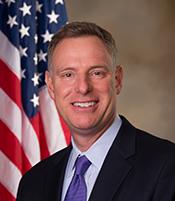
United States · Official source
3,731 records where Rep. Peters, Scott H. [D-CA-50] is listed as a sponsor, author, or other actor. Search with topics and years
United States · United States Congress · 10 September 2025
United States · United States Congress · 10 September 2025
Reforming and Enhancing Sustainable Updates to Laboratory Testing Services Act of 2025 or the RESULTS Act This bill requires the use of particular data from the private sector to inform Medicare payment rates for certain widely available laboratory tests. Specifically, the Centers for Medicare & Medicaid Services (CMS) must contract with an entity that maintains a database of claims data for clinical diagnostic laboratory tests that (1) are not advanced diagnostic tests, and (2) were furnished by more than 100 providers and suppliers of such services over a specified six-month period (i.e., widely available tests). The database must meet specified requirements, such as having data that is representative of the entire country and from more than 50 private payors and claims administrators. The contracted entity must be a nonprofit entity that is not affiliated with any government agency, any insurance issuer or provider, or any other organization in the health care sector. Beginning January 1, 2028, the CMS must use the information obtained from the database to inform Medicare payment rates for these widely available laboratory tests. The bill additionally specifies processes for determining payment rates for laboratory tests that are not advanced diagnostic tests, are not widely available, and lack adequate claims data. The CMS must use certain existing processes to set appropriate rates. The bill also delays scheduled payment reductions for laboratory tests until 2028 and allows for judicial and administrative review of payment rates.
United States · United States Congress · 10 September 2025
United States · United States Congress · 10 September 2025
United States · United States Congress · 9 September 2025
United States · United States Congress · 9 September 2025
United States · United States Congress · 8 September 2025
United States · United States Congress · 4 September 2025
United States · United States Congress · 4 September 2025
United States · United States Congress · 3 September 2025
United States · United States Congress · 3 September 2025
United States · United States Congress · 2 September 2025
This bill reauthorizes through FY2026 the Small Business Innovation Research (SBIR) program, the Small Business Technology Transfer (STTR) program, and related pilot programs. The SBIR and STTR programs are administered by various federal agencies and provide competitive awards for domestic small businesses to conduct research and development projects that have the potential for commercialization.
United States · United States Congress · 2 September 2025
United States · United States Congress · 19 August 2025
United States · United States Congress · 15 August 2025
This bill designates the facility of the United States Postal Service located at 1444 Main Street in Ramona, California, as the "Archie Moore Post Office Building".
United States · United States Congress · 12 August 2025
United States · United States Congress · 5 August 2025
United States · United States Congress · 5 August 2025
United States · United States Congress · 5 August 2025
United States · United States Congress · 1 August 2025
Wildfire Emergency Preparedness Act of 2025 This bill establishes grants, training, and interagency coordination for responding to wildfires and fires in the wildland-urban interface (WUI) (i.e., where undeveloped land or vegetation meets human infrastructure). It also requires measures for protecting the health of firefighters and emergency responders. The bill establishes an Under Secretary of Agriculture for Fire Coordination to manage coordination of government preparation and response to wildfires and WUI fires. Such office may award grants to fire departments and emergency medical services organizations for training firefighting personnel or obtaining personal protective equipment for responding to such fires. Also, the Forest Service must establish a national plan with guidelines for training structural (i.e., urban) firefighters to respond to wildfires and WUI fires. The Forest Service may provide grants to certain nonprofit organizations to carry out training programs pursuant to the plan. Upon request from agencies, the Department of Defense (DOD) may allow its firefighters to conduct operations or assist in responding to wildfires and WUI fires. Agencies must reimburse DOD for such services. Additionally, the National Institute for Occupational Safety and Health must perform research and development and report to Congress on protecting the respiratory health of firefighters and identifying certain hazardous substances in areas affected by wildfires and WUI fires. Also, task forces within the National Urban Search and Rescue Response System of the Federal Emergency Management Agency (FEMA) must train each member in peer mental health support and include members who are mental health practitioners.
United States · United States Congress · 29 July 2025
United States · United States Congress · 29 July 2025
Enhance Access To SNAP Act of 2025 or the EATS Act of 2025 This bill expands eligibility for the Supplemental Nutrition Assistance Program (SNAP) for certain students. Specifically, the bill removes the restriction on SNAP eligibility for students to allow otherwise eligible students who are attending institutions of higher education (IHEs) at least half time to participate in SNAP. Under current law, students 18-49 years old are restricted from participating in SNAP, with exceptions (e.g., caring for a child under the age of 6 or employed for at least 20 hours a week). The Consolidated Appropriations Act, 2021 temporarily exempted some students from certain SNAP eligibility requirements; these temporary student exemptions expired after the end of the COVID-19 public health emergency on May 11, 2023. Further, the bill provides that students enrolled at least half time in a recognized school, training program, or IHE constitute individual households (not residents of institutions ) and may be eligible for SNAP benefits. (Participation in SNAP is limited to households.)
United States · United States Congress · 29 July 2025
United States · United States Congress · 29 July 2025
United States · United States Congress · 29 July 2025
United States · United States Congress · 25 July 2025
United States · United States Congress · 23 July 2025
This bill designates the facility of the United States Postal Service located at 6444 San Fernando Road in Glendale, California, as the "Paul Ignatius Post Office".
United States · United States Congress · 23 July 2025
United States · United States Congress · 23 July 2025
Resident Physician Shortage Reduction Act of 2025 This bill increases the number of residency positions eligible for graduate medical education payments under Medicare for qualifying hospitals, including hospitals in rural areas and health professional shortage areas. The bill provides for an additional increase of 2,000 positions per fiscal year from FY2026-FY2032; during this period, each hospital may receive up to 75 additional positions in total under the bill and current law. Additionally, one-third of the positions that are made available under the bill must be allocated to hospitals that are already operating above applicable resident limits. The bill also requires the Government Accountability Office to report on strategies to increase the diversity of the health professional workforce, including with respect to representation from rural, low-income, and minority communities.
United States · United States Congress · 23 July 2025
Fair Representation Act This bill requires ranked-choice voting (a system in which voters rank candidates in order of preference) in certain federal elections and requires the use of multi-member districts in certain states. It also outlines criteria for congressional redistricting and generally prohibits mid-decade redistricting. Specifically, the bill requires states to use ranked-choice voting in elections for Senators and Members of the House of Representatives. The Election Assistance Commission must make payments to states to implement ranked-choice voting. The bill generally requires (1) that states entitled to six or more Representatives establish districts such that three to five Representatives are elected from each district, and (2) that states entitled to fewer than six Representatives elect all Representatives on an at-large basis. The bill also sets forth criteria for congressional redistricting, including by (1) requiring congressional districts to comply with the U.S. Constitution and the Voting Rights Act of 1965, and (2) prohibiting the use of a redistricting plan that was drawn with the intent (or has the effect of) materially favoring or disfavoring any political party. The bill creates judicial remedies if a state fails to enact a final congressional redistricting plan. In particular, if a state fails to enact such a final plan by the applicable deadline, then a three-judge district court shall have the exclusive authority to develop and publish the congressional redistricting plan for the state. The bill also includes a provision to prevent states from redistricting more than once following an apportionment (i.e., mid-decade redistricting).
United States · United States Congress · 22 July 2025
United States · United States Congress · 22 July 2025
United States · United States Congress · 21 July 2025
United States · United States Congress · 21 July 2025
United States · United States Congress · 17 July 2025
United States · United States Congress · 17 July 2025
ePermit Act This bill establishes requirements related to digitizing environmental reviews conducted under the National Environmental Policy Act of 1969 (NEPA). The Council on Environmental Quality (CEQ) must develop, publish, and iteratively update data standards for the collection and curation of certain data related to environmental reviews. CEQ must also design, test, and build prototype tools for environmental reviews. Additionally, CEQ must publish guidance to assist relevant agencies in implementing such standards as well as certain minimum functional requirements, such as data sharing that enables automated transfer of relevant data among federal agencies. Federal agencies responsible for environmental reviews or authorizations must implement the data standards and such minimum functional requirements. To the maximum extent practicable, CEQ and such agencies must iteratively develop and maintain a unified interagency data system consisting of interconnected federal agency systems and shared services for environmental reviews and authorizations, including a common interactive, digital, cloud-based authorization portal. Within a year, CEQ must oversee a pilot of shared services for environmental reviews and authorizations, including the portal. To the maximum extent practicable, CEQ must develop and implement the unified interagency data system by December 1, 2027.
United States · United States Congress · 17 July 2025
United States · United States Congress · 17 July 2025
United States · United States Congress · 16 July 2025
This resolution expresses the sense that adaptations to and protections from extreme weather conditions must be developed and deployed rapidly and equitably, with consideration for the physical and mental health needs of current and future generations of young people.
United States · United States Congress · 16 July 2025
Preventive Health Savings Act This bill requires the Congressional Budget Office (CBO), upon receiving a request from Congress, to determine if proposed legislation would reduce spending outside of the 10-year budget window through the use of preventive health care. Under the bill, the term preventive health care generally refers to an action that focuses on the health of the public, individuals, and defined populations in order to protect, promote, and maintain health and wellness and prevent disease, disability, and premature death. If CBO determines that the proposed legislation would result in net reductions in budget outlays from the use of preventive health care, any CBO projection regarding the legislation must include (1) a description and estimate of the reductions in outlays, and (2) a description of the basis for these conclusions. Any estimate provided by CBO pursuant to this bill must be used as a supplementary estimate and may not be used to determine compliance with the Congressional Budget Act of 1974 or any other budgetary enforcement controls.
United States · United States Congress · 16 July 2025
United States · United States Congress · 15 July 2025
United States · United States Congress · 14 July 2025
United States · United States Congress · 14 July 2025
United States · United States Congress · 10 July 2025
This bill reauthorizes through FY2030 activities of the Centers for Disease Control and Prevention to address vector-borne diseases (e.g., diseases spread by bites from ticks or mosquitoes). These activities include (1) a national strategy, (2) grants for regional centers of excellence, and (3) cooperative agreements with state, local, and tribal health departments to increase capacity for preventing and responding to vector-borne diseases.
United States · United States Congress · 10 July 2025
United States · United States Congress · 10 July 2025
United States · United States Congress · 10 July 2025
United States · United States Congress · 10 July 2025
This resolution expresses support for the designation of Journeyman Lineworkers Recognition Day. (A journeyman lineworker is a person who builds and maintains electrical power systems.)
United States · United States Congress · 7 July 2025