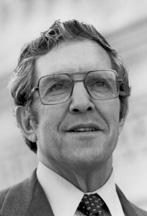
United States · United States Congress · 26 January 1984
Honors Commander Alphonse Desjardins, founder of La Caisse Populaine de St-Marie, Manchester, New Hampshire, the first incorporated credit union in the United States
United States · United States Congress · 24 January 1984
Expresses the sense of the Congress that: (1) U.S. negotiators, in negotiations with Japan, should insist that Japan dismantle all nontariff barriers to imports of beef; and (2) if progress is not made toward the dismantling of such nontariff barriers by a specified time, the U.S. Trade Representative should seek appropriate relief under U.S. and international trade law.
United States · United States Congress · 18 November 1983
Indian Health Care Amendments of 1983 - Title I: Indian Health Manpower - Amends the Indian Health Care Improvement Act to authorize appropriations for specified Indian health programs for FY 1985 - 1988, including scholarship programs. Provides that the active duty services obligation incurred by the recipient of an Indian Health Scholarship shall be met by service in the Indian Health Service or in specified programs under the Indian Health Care Improvement Act. Title II: Health Services - Extends from seven to 11 years the fiscal year period during which the Secretary of Health and Human Services is authorized to expend certain appropriated funds and to employ personnel in order to eliminate backlogs in Indian health care services. Extends the authorization for specified appropriations for health services from FY 1985 - 1988. Title III: Health Facilities - Extends the authorization for specified appropriations for hospitals, health centers and staff housing from FY 1981 - 1988. Extends from seven to 11 years the fiscal year period during which the Secretary is authorized to expend specified sums for health facilities and safe water and sanitary waste disposal facilities. Title IV: Access to Health Services - Extends the authorization for specified appropriations for grants and contracts with tribal organizations' from FY 1985-1988. Amends the Social Security Act to make any provider of the Indian Health Service eligible for Medicare and Medicaid payments. Title V: Urban Indian Health Services - Directs the Secretary to contract with urban Indian organizations to administer health services programs in urban areas. Details eligibility criteria for such programs. Prescribes reporting and recording procedures for urban Indian organizations which receive or expend funds under this Title. Authorizes appropriations. Authorizes the Secretary to enter into contracts with urban Indian organizations to determine the health status and unmet health care needs of urban Indians in affected urban areas. Delineates the requirements of such contracts. Requires the Secretary to: (1) develop evaluation procedures for the performance of contracts; and (2) conduct annual onsite evaluations of each contracting urban Indian organization. Prescribes guidelines for the renewal of health care or referral services contracts. Prohibits renewal of contracts for determination of unmet health needs. Requires certain reports to Congress. Authorizes appropriations for FY 1985 - 1988. Title VI: Health Services for Rural Indians - Directs the Secretary to contract with Indian organizations to administer health services programs in rural areas. Details eligibility criteria for such programs. Authorizes appropriations for FY 1985 - 1988. Requires the Secretary to review the rural Indian health services program and to submit an assessment report to the Congress with recommendations for further legislation. Title VII: Miscellaneous - Repeals the requirement that the Secretary conduct a study of the health hazards faced by Indians as a result of a nuclear resource development on or near Indian reservations and communities. Extends from FY 1984 to FY 1988 the time during which Arizona is designated as a contract health service delivery area. Authorizes appropriations for FY 1985 - 1988. Extends eligibility for health services of specified Indians in the State of California from FY 1984 - 1988. Repeals the personnel ceilings demonstration project. Requires the Secretary to: (1) complete within one year implementation of a program to prevent and control hepatitis-B in Alaska; (2) report to the Congress about the status of such program; and (3) request budget authority for a hepatitis-B control program in Alaska for FY 1985 - 1989. Requires the Secretary to submit an analytical report to the Congress regarding the impact that implementation of clinical care priorities would have had upon the delivery of clinical health care services during FY 1980 - 1983. Prohibits the Secretary from modifying any clinical health care service provided before passage of this Act. Title VIII: Organizational Improvements - Establishes the Indian Health Service in the Department of Health and Human Services. Makes the Assistant Secretary of Health and Human Services for Indian Health the administrator of the Indian Health Service. Transfers to such Assistant Secretary the functions currently performed by the Director of the Indian Health Service. Establishes an Indian Health Advisory Board comprised of Indians or Alaska Natives. Authorizes appropriations for FY 1985 - 1988. Title IX: Payment for Health Care - Entitles to reimbursement authorized providers of medical or health services for the costs incurred in providing such services to eligible Indians. Prescribes procedures for payment. Authorizes appropriations for FY 1985 - 1988. Authorizes the Secretary to negotiate a health services contract upon a determination that negotiation is necessary to assure delivery of health services at locations at least 100 miles from the residences of a substantial majority of the Indian population to be served.
United States · United States Congress · 18 November 1983
Authorizes appropriations to the Secretary of the Interior for FY 1985 through FY 1989 to assist States in carrying on the work of a competent and qualified mining and mineral resources research institute at one public college or university (or private college or university if a State does not have an eligible public college or university) in the State meeting eligibility requirements. Provides that funds appropriated shall be made available for grants to be matched on a basis of no less than one and one-half non-Federal dollars for each Federal dollar during FY 1985 and 1986, and no less than two non-Federal dollars for each Federal dollar during FY 1987 through FY 1989. Authorizes appropriations to the Secretary for FY 1985 through FY 1989 which shall be made available to institutes to meet the necessary expenses for purposes of: (1) specific mineral research and demonstration projects of broad application which could not otherwise be undertaken; and (2) research into any aspects of mining and mineral resources problems related to the mission of the Department of the Interior which are not otherwise being studied. Sets forth funding criteria. Requires each institute to: (1) set forth its plan to provide for the training of individuals as mineral engineers and scientists; (2) set forth policies and procedures to assure that Federal funds made available under this Act will supplement and, to the extent practicable, increase the level of funds that would, in the absence of such Federal funds, be made available for purposes of this Act, and in no case supplant such funds; and (3) report annually to the Secretary concerning amounts received under this Act and projects undertaken pursuant to this Act. Directs the Secretary to: (1) prescribe necessary rules and regulations; and (2) report to Congress annually concerning the receipts, expenditures, and work of the institutes in all States under the provisions of this Act. Prohibits anything in this Act from being construed to authorize Federal control of education at any college or university. Directs the Secretary to assure that programs authorized by this Act are not redundant. Authorizes appropriations necessary to print and publish the results of activities carried out by institutes under this Act and for administrative planning and direction. Directs the Secretary to establish a center for cataloging current and projected scientific research in all fields of mining and mineral resources. Directs the President to clarify agency responsibility for Federal mining and mineral resources research and to provide interagency coordination of such research. Directs the Secretary to appoint a Committee on Mining and Mineral Resources Research to consult with and make recommendations to the Secretary on all matters relating to mining and mineral resources research as required by this Act. Requires the Committee to: (1) develop a national plan for research and development in mining and mineral resources and to formulate and recommend a program to implement the plan utilizing resources provided for under this Act; and (2) submit such plan to the Secretary, the President, and Congress by March 1, 1986, and to update the plan annually. Requires the Committee to determine the eligibility of a college or university to participate as a mining and mineral resources research institute under this Act.
United States · United States Congress · 18 November 1983
Job Opportunity Act of 1983 - Amends the Internal Revenue Code to extend the expiration date for the targeted jobs tax credit from December 31, 1984, to December 31, 1989.
United States · United States Congress · 18 November 1983
Wine Equity Act of 1983 - Requires the President to direct the U.S. Trade Representative (USTR) to negotiate the harmonization of tariff and nontariff barriers on wine with each designated major trading country. Requires negotiations with designated major trading countries which do not export wine to the United States in order to eliminate all tariff and nontariff trade barriers of such countries to the importation of U.S. wine. Requires the President to impose tariff and nontariff trade barriers equal or substantially equivalent to the barriers applied by a designated major trading country if such country does not provide harmonization to U.S. produced-wine within 180 days of the country's designation as a designated major trading country. Provides for removing such U.S. tariff and nontariff barriers. Requires the USTR to report to specified congressional committees at the beginning and end of each negotiation. Requires the USTR to consult with such committees to identify further tariff and nontariff barriers to and potential markets for U.S. wine. Provides for assistance for the USTR from other Federal agencies.
United States · United States Congress · 18 November 1983
Central South Dakota Water Supply System Act of 1984 - Authorizes the Secretary of the Interior to construct, operate, and maintain the Central South Dakota Water Supply System (CENDAK unit) of the Pick-Sloan Missouri basin program to provide irrigation water to 74,000 acres of land in South Dakota. States that the project will include measures to mitigate for project-caused impacts on wildlife habitat. Requires the CENDAK unit to be integrated physically and financially with other Federal works constructed under a plan approved by the Flood Control Act. Directs that facilities constructed and acquired for use in the previous Oahe water supply unit shall be salvaged and utilized and included in the CENDAK unit costs as far as is feasible. Authorizes the Secretary to sell, exchange, or otherwise dispose of lands acquired for the previous Oahe unit in order to develop and maintain the CENDAK unit, provided that the Secretary reconvey to former landowners at no less than market value any lands deemed unsuitable for the CENDAK unit. Directs the Secretary to make appropriate allocations of project costs to irrigation, municipal and industrial water supply, fish and wildlife, and recreation. Prohibits private lands from being acquired for mitigation purposes until optimum utilization for fish and wildlife has been made of Federal and State lands in South Dakota. Provides that repayment contracts for the return of construction costs allocated to irrigation shall require that, as a prerequisite to water service, water users enter into agreements to: (1) participate in an irrigation management system; (2) participate in a program to provide habitat replacement for losses resulting from irrigation; and (3) establish and implement a program for mitigation of any net losses of wildlife due to the use of grassland for irrigated crops. Determines interest rates for the unpaid balance of capital costs of the CENDAK unit. Authorizes the Secretary to transfer to water users' organization(s) the care, operation, and maintenance of the works herein authorized. Authorizes appropriations.
United States · United States Congress · 18 November 1983
Native American Programs Act Amendments of 1983 - Amends the Native American Programs Act of 1974 to prohibit the rejection of financial assistance solely on the grounds that the request serves Indians or an Indian organization in a nonreservation area. Requires that programs under this Act be administered within the Department of Health and Human Services (currently they may be delegated to other Federal departments and agencies). Prohibits any transfer of such administration outside of the Department. Directs the Secretary of Health and Human Services to continue the administration of grants through the Administration for Native Americans (the Administration). Requires the Commissioner of such Administration to delegate all functions within the Administration. Restricts the delegation and redelegation of functions by the Secretary to personnel within the Department. Permits interagency funding agreements between the Administration and other Federal agencies. Authorizes appropriations through FY 1987. Specifies the percentage of appropriated funds which shall be used for financial assistance under this Act.
United States · United States Congress · 18 November 1983
Authorizes the Secretary of the Interior to construct, operate, and maintain the Lake Andes-Wagner Unit, South Dakota Pumping Division, Pick-Sloan Missouri River basin program, South Dakota, for the purpose of providing irrigation water. Requires such unit to be integrated physically and financially with other Federal works under the Flood Control Act. Directs that user repayment of construction costs of the irrigation project will be based upon ability to pay as determined by the Secretary. Authorizes appropriations.
United States · United States Congress · 17 November 1983
Federal Advisory Committee Act Amendments of 1983 - Amends the Federal Advisory Committee Act to declare that advisory committees should: (1) be established only when the information sought by the committee is not otherwise available through another Federal source; (2) be terminated when the work of the committee becomes obsolete or too expensive; (3) be composed so that the committees are balanced in their membership in terms of points of view represented and functions to be performed; and (4) hold open meetings except where closed meetings are consistent with such Act. Prohibits agencies from compensating advisory committee members unless specifically required by law. Authorizes the head of an agency to hire a consultant as a committee member if the agency is otherwise unable to meet the need for technical expertise or the requirement for balanced membership. Authorizes the agency head to compensate committee staff members. Limits the amount of such compensation. Requires the rate of compensation to be reviewed annually. Lists additional duties of agency heads, including the duty to file a charter of an advisory committee and to designate a Committee Management Officer for the agency. Sets forth procedures that must be followed in establishing an advisory committee. Requires the agency head or chairperson of an independent Presidential advisory committee to ensure that: (1) each meeting is held at a reasonable time in a reasonably accessible place; (2) the size of the meeting room is sufficient; (3) any member of the public is permitted to file a written statement with the advisory committee; and (4) any member of the public may speak at a meeting if the agency's regulations so permit. Sets forth the procedure that must be followed to close an advisory committee meeting to the public. Requires the agency head or Administrator of an independent Presidential advisory committee to designate a full time Federal employee to be the designated Federal official for the advisory committee who: (1) must attend the meetings; (2) shall adjourn the meetings when it is in the public interest; and (3) shall, for agency-established advisory committees, approve or call the meetings, approve the agenda, and, if appointed by the agency head, chair the meeting. Prohibits an advisory committee from conducting a meeting in the absence of the designated Federal official. Requires the Administrator of the General Services Administration or a designee to issue instructions periodically to agencies regarding reporting requirements and procedures. Requires advisory committees to terminate after two years unless the President or agency head terminates it before that time. Authorizes the President to renew advisory committees established by the President. Authorizes agency heads to renew an advisory committee specifically directed by law. Requires an advisory committee whose duration extends beyond two years to file a new charter every two years.
United States · United States Congress · 17 November 1983
Designates 1984 as the Year of Water. Requests the President to welcome the delegates of the International Congress on Irrigation and Drainage in Fort Collins, Colorado.
United States · United States Congress · 15 November 1983
Amends the Social Security Amendments of 1983 to delay until after December 31, 1985, mandatory coverage under the Old Age, Survivors and Disability Insurance program for employees of tax-exempt religious or apostolic organizations which do not have in effect on January 1, 1984, a waiver certificate (which waives such an organization's exemption from taxation for purposes of the Old Age, Survivors and Disability Insurance program).
United States · United States Congress · 15 November 1983
States that the Congress: (1) holds Iran responsible for upholding the rights of the Baha'is; (2) condemns Iran's decision to destroy the Baha'i faith; and (3) calls upon the President to work with appropriate foreign governments to form an appeal to Iran concerning the Baha'is, to cooperate with the United Nations in its efforts on behalf of the Baha'is, and to provide humanitarian assistance for Baha'is who flee Iran.
United States · United States Congress · 11 November 1983
Amends the Internal Revenue Code to exempt from Federal income taxes members of the armed forces or civilian employees of the United States who die as a result of hostile action outside the United States.
United States · United States Congress · 8 November 1983
Amends the Small Business Act to provide that financings provided to State and local development companies under the Small Business Investment Act of 1958 shall not be considered when computing the total amount outstanding and committed to a borrower from the business loan and investment fund established by this Act.
United States · United States Congress · 7 November 1983
Natural Gas Market Adjustment Act of 1983 - Amends the Natural Gas Policy Act of 1978 to permit a purchaser to reduce the required take under a take-or-pay contract clause to 50 percent for the three-year period following enactment of this Act. Requires 30 days notice from a purchaser to a seller in any case where the purchaser makes the election. Declares against public policy and unenforceable indefinite price escalator clauses. Defines such a clause as any contract provision which sets the price of natural gas by reference to prices for other commodities. Prohibits the Federal Energy Regulatory Commission from denying a cost passthrough to an interstate pipeline under a contract entered into or renegotiated after enactment on the grounds that the amounts paid were excessive due to fraud or abuse, if such amounts are prudent purchases. Defines "prudent purchases" to include amounts paid for natural gas which bear a reasonable relationship to the fair market value of the gas. Sets forth guidelines for determining fair market value.
United States · United States Congress · 27 October 1983
Missing Children's Assistance Act of 1983 - Amends the Juvenile Justice and Delinquency Prevention Act of 1974 to require the Administrator of the Office of Juvenile Justice and Delinquency Prevention to establish and maintain a national toll-free telephone line for reporting information regarding the location of missing children. Directs the Administrator to establish a national resource center and clearinghouse to: (1) provide technical assistance to State and local governments and agencies in locating missing children; (2) coordinate public and private efforts to recover missing children; and (3) disseminate information on innovative missing childrens' programs, services, and legislation. Requires the Administrator to publish an annual summary of research on missing children and prepare a comprehensive plan for coordinating activities of all agencies and organizations responsible for missing children. Authorizes the Administrator, in consultation with the Advisory Board on Missing Children, to make grants for research or demonstration or service programs designed to: (1) educate parents and community agencies on ways to prevent the abduction of children; (2) assist in the recovery or tracking of missing children; (3) aid communities in collecting material to assist parents in the identification of their children; (4) demonstrate the psychological consequences of a child's abduction; and (5) collect data on investigative practices utilized by law enforcement agencies. Requires the Administrator to appoint an Advisory Board on Missing Children to assist the Administrator in coordinating programs and activities relating to missing children. Authorizes appropriations for FY 1984 through 1988.
United States · United States Congress · 26 October 1983
Nonpoint Source Pollution Management Act of 1983 - Amends the Clean Water Act ("the Act") (also known as the Federal Water Pollution Control Act) to provide for a nonpoint source pollution management program. Requires each State, by itself or in combination with other States and after notice and opportunity for public comment, to submit a proposed nonpoint source pollution management program to the Administrator of the Environmental Protection Agency within 18 months after the enactment of the Clean Water Act Amendments of 1983. Requires that such proposed State program: (1) identify waters within State boundaries which, without additional action to control nonpoint sources of pollution, cannot be reasonably expected to attain or maintain applicable water quality standards or the goals and requirements of the Act; (2) designate categories or subcategories of nonpoint sources of pollution or, where appropriate, particular nonpoint sources, that contribute significant pollution loadings to such identified waters; (3) identify best management practices which will be undertaken to reduce pollutant loadings resulting from each designated category, subcategory, or particular nonpoint source; (4) identify programs to achieve implementation of such best management practices; (5) include a schedule containing annual milestones for utilization of program implementation methods and implementation of best management practices at the earliest practicable date; (6) include a statement by the State attorney general, or attorney for the State water pollution control agency, that State laws provide adequate authority to carry out the program, or a schedule and commitment by the State to seek such authorities as expeditiously as practicable; and (7) include an indentification of Federal financial assistance programs and Federal development projects for which the State will review individual assistance applications or development projects for their effect on water quality, pursuant to specified procedures, to determine whether such applications or projects would be consistent with and further the purposes and objectives of the program. Allows the State, in developing such program to rely upon specified information and utilize appropriate elements of waste treatment management plans. Allows the State, in developing and implementing such program, to make use of local agencies or organizations. Sets forth procedures and deadlines for revisions and approval or disapproval by the Administrator of such proposed or revised State programs. Directs the Administrator to report to the Congress on actions taken with regard to any State which fails to submit a program which meets specified requirements. Directs the Administrator to award grants to assist States in the implementation of approved management programs. Limits such grants to 75 percent of program implementation costs in any fiscal year. Requires that non-Federal sources provide at least 25 percent of such costs. Provides that two-thirds of the funds appropriated in any fiscal year for such grants shall be allotted among States according to a specified table of percentage allotments. Provides that one-third of such appropriations shall be made available to the Administrator who shall make grants in response to applications from States if the Administrator determines such grants are necessary and appropriate to assist such States in: (1) controlling particularly difficult or serious nonpoint source pollution problems, including those resulting from mining; (2) implementing innovative methods or practices for controlling nonpoint sources of pollution, including both regulatory or nonregulatory programs where appropriate; (3) controlling interstate nonpoint sources pollution problems; or (4) providing financial assistance, limited to a specified amount, for approved management program implementation by an Indian tribe within the reservation. Sets forth provisions for reallotment of State allotments. Permits States to use such grant funds for financial assistance to persons only to the extent that such assistance is related to the cost of demonstration projects. Prohibits such a grant to any State unless the Administrator determines that the State is implementing such program satisfactorily. Authorizes the Administrator to request information, data, and reports necessary for determination of continuing eligibility for such grants. Authorizes appropriations to carry out the nonpoint source pollution management program for FY 1985 through 1987. Requires each State to report annually to the Administrator on: (1) its progress in meeting the schedule of milestones; and (2) where appropriate information is available, reductions in nonpoint source pollutant loadings and improvements in water quality resulting from implementation of the management program. Directs the Administrator to transmit to the Office of Management and Budget and the appropriate Federal departments and agencies a list of those assistance programs and development projects identified by States for which individual assistance applications and projects will be reviewed. Requires each Federal department and agency, within 60 days after receiving such notification, to: (1) modify existing regulations to allow States to conduct such review; and (2) accommodate the concerns of the State regarding the consistency of such applications or projects with the State program. Directs the Administrator to collect and make available information pertaining to management practices and implementation methods. Directs the Administrator, within 36 months of enactment of the Clean Water Act Amendments of 1983, to report on: (1) management programs being implemented by the States by types and amount of affected waters, categories and subcategories of nonpoint sources, and types of best management practices being implemented; (2) State experiences in adhering to schedules and implementing best management practices; (3) the amount and purpose of grants awarded; (4) progress in reducing pollutant loads and improving water quality in the waters of the United States; and (5) what further actions need to be taken to attain and maintain in those waters applicable water quality standards and the goals and requirements of the Act. Revises provisions relating to agreements among Federal agencies to include a reference to approved nonpoint source pollution management programs.
United States · United States Congress · 25 October 1983
Life Insurance Tax Act of 1983 - Title I: Life Insurance Provisions - Subtitle A: Taxation of Life Insurance Companies - Amends the Internal Revenue Code to set the rate of tax on a life insurance company at the corporate rate on its life insurance company taxable income (LICTI). Sets forth an alternative tax in the case of capital gains. Defines life insurance company taxable income as life insurance gross income reduced by life insurance deductions. Defines life insurance gross income as the sum of: (1) premiums; (2) decreases in certain reserves; and (3) other amounts generally includible by a taxpayer in gross income. Allows three types of deductions: (1) general life insurance deductions; (2) the special life insurance deduction; and (3) the small life insurance company deduction. Sets forth definitions and special rules for each type of deduction. Sets forth rules for the calculation of net increases and decreases in reserves. Requires life insurance companies to use either the accrual method of accounting or a method permitted under regulations which combines an accrual method with another recognized method. Sets forth rules for the amortization of premiums and accrual of discount. Sets forth rules for the computation of a company's share and the policyholders' share of investment income. Sets forth rules for the tax treatment of foreign life insurance companies. Requires an adjustment to LICTI where a required surplus held in the United States is less than a specified amount. Sets forth rules for the tax treatment of contiguous country branches of domestic life insurance companies. Provides that life insurance company taxable income which has an existing policyholders surplus account shall be increased by any direct or indirect distribution to shareholders from such account. Defines "life insurance company" as an insurance company which is engaged in the business of issuing life insurance and annuity contracts or noncancellable contracts of health and life insurance if its life insurance reserves plus unearned premiums and unpaid losses comprise more than 50 percent of its total reserves. Sets forth rules for the tax treatment of variable contracts. Sets forth rules relating to capital gains and losses of a life insurance company. Sets forth the effective date for the provisions of this Act. Provides transitional rules. Subtitle B: Taxation of Life Insurance Products - Redefines "life insurance contract" for purposes of the Internal Revenue Code. Defines such a contract as any contract, which is a life insurance contract under applicable State or foreign law, but only if the contract meets either of two alternatives: (1) a cash value accumulation test; or (2) a test consisting of a guideline premium requirement and a cash value corridor requirement. Specifies requirements of each such test. Sets forth rules for contracts not meeting the life insurance definition. Sets forth transitional rules. Treats as distributed to a contract holder any amount of an annuity contract held by an individual who dies before the annuity starting date. Exempts any such amounts from the five-percent penalty tax on a premature distribution from an annuity. Limits the amount of the interest deduction allowed in the case of life insurance loans. Sets forth rules for the calculation of such limit. Extends to former employees and key employees the limitations on group-term life insurance purchased for employees. Subtitle C: Nondeductible Contributions to Individual Retirement Plans - Allows certain nondeductible contributions to individual retirement accounts and annuities. Limits such contributions to the least of: (1) $1,750; (2) the excess of compensation includible in gross income over the amount allowable as a deduction under present rules; or (3) an amount designated by the taxpayer as a nondeductible contribution. Subtitle D: Studies - Requires the Secretary of the Treasury to report annually to specified committees of the Congress on the revenues received by this Act and to compare the amount of such revenues and the amount anticipated by reason of changes made by the Tax Equity and Fiscal Responsibility Act of 1982 and this Act. Requires the Secretary to make annual reports in the years 1986, 1987, 1988, and 1989 concerning the impact of this Act on specified segments and products of the life insurance industry.
United States · United States Congress · 19 October 1983
Criminal Fine Collection Act of 1983 - Amends the Federal criminal code with respect to the imposition, payment, and collection of fines. Lists factors that the court must consider in determining whether to impose a fine, including: (1) the ability of the defendant to pay; (2) the burden that payment will impose on the defendant; and (3) any restitution or reparation made by the defendant. States that payment of a fine is due immediately unless the court requires payment by installment or by any date certain. Permits a sentence to pay a fine to be stayed while an appeal is taken. Makes a fine delinquent if any portion of such fine is not paid within 30 days of when it is due. Provides that a fine is in default if it is more than 90 days delinquent. Allows for the modification or remission of a sentence to pay a fine. Requires the clerk to forward each fine payment to the U.S. Treasury and notify the Attorney General of its receipt. Requires the court to certify to the Attorney General when a fine exceeding $100 is imposed, modified, or remitted. Makes the Attorney General responsible for the collection of any unpaid fine for which certification has been issued. Allows the court to impose interest and monetary penalties for any willful nonpayment. Establishes civil remedies for the satisfication of an unpaid fine. Provides that a judgment imposing a fine may be enforced by execution against the property of the person fined as are judgments in civil cases. Allows the court to resentence a person upon willful failure to pay a fine to any sentence which might originally have been imposed. Provides for a statute of limitations on the liability to pay a fine of 20 years or upon death of the person fined. Provides penalties for criminal default of a fine. Makes payment of a fine a condition of probation or parole in certain circumstances. Requires the Attorney General to include in the annual crime report steps taken to implement this Act and any progress achieved in criminal fine collection.
United States · United States Congress · 6 October 1983
Alternative Energy Tax Incentives Act of 1983 - Amends the Internal Revenue Code to extend the residential energy income tax credit for renewable energy sources for five years from 1985 to 1990. Reduces the qualifying percentage for energy source expenditures by specified increments between 1985 and 1990. Increases from 15 percent to 20 percent the investment tax credit for solar, wind, geothermal, and ocean thermal property. Extends such tax credit for five years from 1985 to 1990. Extends the investment tax credit for hydroelectric generating property and biomass property for five years from 1985 to 1990. Reestablishes the credit for cogeneration property until 1990. Qualifies until 1995 affirmative commitments for solar, wind, geothermal, ocean thermal, biomass, and cogeneration projects begun by December 31, 1990. Eliminates the 20 percent limitation for oil and natural gas used in cogeneration facilities. Qualifies as biomass property methane-containing gas produced by anaerobic digestion from nonfossil waste materials. Revises the definition of geothermal deposit to lower the required temperature to 104 degrees Fahrenheit. (Present regulations require a temperature of 122 degrees Fahrenheit.) Includes shale oil property and tar sands equipment as energy property for purposes of the investment tax credit. Grants a 15 percent depletion allowance for tar sands. Allows an investment tax credit for photovoltaic energy property. Defines photovoltaic property.
United States · United States Congress · 6 October 1983
Renewable Fuels Tax Incentives Act - Amends the Internal Revenue Code to increase the amount of the exemption from the excise tax on gasoline for gasoline mixed with alcohol. Extends such exemption to diesel fuels and special fuels which contain at least 10 percent alcohol. Increases from 50 cents per gallon to 90 cents per gallon the amount of the income tax credit for alcohol used as fuel. Amends the Tariff Schedules of the United States to increase the tariff on alcohol imported for use as a fuel from 50 cents per gallon to 90 cents per gallon. Provides for the transfer of certain windfall profit tax revenues to the Highway Trust Fund.
United States · United States Congress · 6 October 1983
Declares that it should be U.S. policy to: (1) support the people of Afghanistan in their struggle to be free from foreign domination; (2) provide the Afghans, upon request, with material assistance; and (3) pursue a negotiated settlement of the war in Afghanistan based on the total withdrawal of Soviet troops and the recognition of the right of the Afghans to choose their own destiny.
United States · United States Congress · 29 September 1983
Expresses the sense of the House of Representatives that the President should: (1) urge the Council of European Community Ministers to reject their Commission's proposals that seek to shift to other countries the financial burden of disposing of their agricultural surpluses; and (2) continue to oppose proposed Common Agricultural Policy (CAP) modifications that would adversely affect the access of U.S. agricultural exports to European Community markets. States, also, that if the European Community adopts such proposed CAP modifiestions, then it is the House's sense that measures should be implemented to protect U.S. trade interests.
United States · United States Congress · 23 September 1983
Amends the Federal Election Campaign Act (FECA) to declare that contributions, gifts, or payments by union members to a separate fund which is used by the union for political purposes must be voluntary and unrelated to moneys required as a condition of employment. Declares it to be unlawful to use moneys paid to an organization as a condition of employment for any type of election or campaign activities by such organization.
United States · United States Congress · 22 September 1983
Expresses the sense of the Senate that: (1) U.S. negotiators, in negotiations with Japan, should insist that Japan dismantle all nontariff barriers to imports of beef; and (2) if progress is not made toward the dismantling of such nontariff barriers by a specified time, the U.S. Trade Representative should seek appropriate relief under U.S. and international trade law.
United States · United States Congress · 21 September 1983
Constitutional Amendment - Proclaims the English language to be the official language of the United States. Grants Congress the power to enforce this article by appropriate legislation.
United States · United States Congress · 19 September 1983
Expresses the sense of the Senate that the United States owes the Japanese a debt of gratitude for their cooperation in connection with the Korean Air Lines tragedy.
United States · United States Congress · 19 September 1983
Expresses the sense of the Congress that the transfer of ownership or management of any civil meteorological satellite system and associated ground system equipment to the private sector is not presently appropriate.
United States · United States Congress · 15 September 1983
Aviation Tax-Reduction Act of 1983 - Amends the Internal Revenue Code to exempt from the gasoline excise tax any gasoline sold for use as a fuel in an aircraft. Provides for adjustments to the excise tax on noncommercial aviation fuel (presently 12 cents per gallon on gasoline and 14 cents per gallon on jet fuel). Sets forth a formula for the calculation of such adjustments based on total amounts appropriated from the Aviation Trust Fund each fiscal year. Exempts from the special fuels excise tax any fuel used in aircraft involved in agricultural activities. Provides for adjustments to: (1) the passenger ticket tax; (2) the cargo waybill tax; and (3) the excise tax on aircraft tires and tubes.
United States · United States Congress · 14 September 1983
Title I: Short Title - Declares that this Act may be cited as the National Productivity and Innovation Act of 1983. Title II: Joint Research and Development Ventures - Provides that no joint research and development program shall be deemed illegal per se in any action under the antitrust laws. Limits to actual damages, interest thereon, and the cost of suit the amount that any person or State may recover in an antitrust action based on conduct that is part of such a program and that has been disclosed to the Attorney General and the Federal Trade Commission. Authorizes any individual participating in such a program to file with the Attorney General and the Commission a notification describing the program and specifying conduct to be performed under the program. Directs the Commission to publish in the Federal Register a notice of each such notification, including a description of the participants, the program, and its objectives. Declares that material submitted as part of such notification shall be available to the public upon request, unless the Attorney General or the Commission determines that the individual who submitted the notification shows good cause for not disclosing certain material. Allows an individual to withdraw a filed notification before it is published and accompanying material is made publicly available. Exempts actions and determinations of the Attorney General or the Commission concerning such notifications or antitrust actions or investigations from judicial review. Title III: Intellectual Property Licensing Under the Antitrust Laws - Amends the Clayton Act to provide that agreements to convey rights to use, practice, or sublicense patented inventions, copyrights, trade secrets, trademarks, know-how, or other intellectual property shall not be deemed illegal per se in actions under the antitrust laws. Limits to actual damages, interest thereon, and the cost of suit the amount that any person or State may recover in an antitrust action based on such an agreement. Title IV: Patent and Copyright Misuse - Prohibits a patent or copyright owner who is entitled to relief for patent or copyright infringement from being denied relief or being deemed guilty of misuse or illegal extension of the patent right or copyright by reason of doing any of the following, unless such conduct violates the antitrust laws: (1) licensing the patent or copyright under terms that affect commerce outside the scope of its claims; (2) restricting a licensee in the sale of a patented or copyrighted product; (3) obligating a licensee to pay excessive royalties, royalties that differ from those paid by other licensees, or royalties not related to a licensee's sale of the patented or copyrighted product; (4) refusing to license a patent or copyright to any person; or (5) otherwise using the patent or copyright allegedly to suppress competition. Title V: Process Patents - Requires a process patent to grant the patentee the right to exclude others from using or selling products produced by that process. Includes as patent infringement the unauthorized use or sale of a product of a patented process. Places the burden of proving that a product was not produced by the patented process on the defendant in a patent infringement action if the court finds that: (1) a substantial likelihood exists that the product was produced by that process; and (2) the claimant has exhausted all reasonable means of determining the process used and was unable to make such determination.
United States · United States Congress · 12 September 1983
States that the United States: (1) condemns the Soviet destruction of Korean Air Lines Flight 7 and calls for an explanation from the Soviets; (2) extends its sympathies to the families who lost loved ones and supports their rights to obtain compensation from the Soviets; (3) calls on the Soviets to assist in the recovery of the remains of the victims; (4) reaffirms the actions against Aeroflot and calls for an international investigation by the International Civil Aviation Organization; (5) urges the international community to demand that the Soviets modify its air defense procedures to assure the safety of commercial airliners; (6) urges other nations to join the United States in applying sanctions against Soviet civil aviation; (7) notes that Soviet refusal of responsibility raises doubts among the world community over the Soviet's willingness to behave as a responsible member of the international community; and (8) urges our allies to cooperate with the United States in implementing additional sanctions against the Soviet's until certain conditions are met.
United States · United States Congress · 3 August 1983
Coin-Operated Phonorecord Player Copyright Act of 1983 - Revises the scope of the limitations on the performance of a nondramatic musical work on a coin-operated phonorecord player (jukebox) to require: (1) the manufacturer or importer of the player, rather than the operator, to register and pay a one-time only compulsory licensing fee of $50, rather than an adjusted annual fee, to the Copyright Royalty Tribunal for distribution to the copyright holders; and (2) the operator of a currently-owned player to pay a compulsory licensing fee of up to $25 based upon the number of years of useful life remaining in the player. Directs the Register of Copyright to keep a list of all registered players. Restates the royalty distribution procedures.
United States · United States Congress · 3 August 1983
Water Resources Development Act of 1983 - Title I - Directs the Secretary of the Army, acting through the Chief of Engineers, to obligate no sums in excess of those specified in this title for the combined purpose of the "Construction General" account and the "Flood Control, Mississippi River and Tributaries" account. Authorizes appropriations for FY 1984 through 1988. Title II: General Provisions - Directs the Secretary to enter into agreements with landowners who are benefitted by local flood control projects to assure that such owners will contribute 50 percent of that project's cost. Limits the commencement period for any such flood control project to ten years from the enactment of this Act unless the Secretary shows that such project remains needed and justified. Authorizes and directs the Secretary to submit to Congress a list of all existing studies that have an inactive or deferred status in order to allow either the Committee on Environment and Public Works of the Senate or the Committee on Public Works and Transportation of the House of Representatives to deauthorize any surveys on such list within 90 days thereafter by resolution. Allows for the submission of Federal projects with a cost of up to 10,000,000 provided, however, that any project with a cost exceeding $10,000,000 must be authorized by Act of Congress. Provides further that each such project must contain benefits directly related to agriculture that account for at least 20 percent of the total benefits of the project. Requires the Secretary of Agriculture to study and report to the appropriate congressional committees on the feasibility of requiring full public access to all water impoundment facilities that have recreation-related potential. Declares the development, expansion, and rehabilitation of municipal and industrial water supply and distribution systems to be a legitimate Federal purpose. Amends Federal law to provide for the compatability of Federal flood control projects with any existing or planned local flood control improvement programs. Directs the Secretary to undertake a program for the control of river ice, to assist communities in the breakup of such ice, and to provide technical assistance to local units of government to control or break up such ice. Authorizes appropriations for FY 1984 through 1988. Directs the Secretary, upon request, to survey the potential of rehabilitating former industrial sites, millraces, etc. already constructed for use as hydroelectric facilities. Authorizes appropriations for FY 1984 through 1988. Amends the Flood Control Act of 1970 concerning agreements made between Federal and State governments for cooperation in payment of mutually-beneficial flood control projects. Requires a favorable report from the Chief of Engineers before any flood control facility construction may begin. Provides that the Secretary shall not require non-Federal interests to assume operation of any Federally-run facility as a condition to the construction of new recreational facilities. Provides for the sharing of construction costs by the States in proportion to the local benefit realized by such construction. Title III: Project Provisions - Authorizes and directs the Secretary to undertake the following flood control improvement projects: (1) Warrior River, Mound State Park, Moundville, Alabama; (2) Fort Toulouse National Historic Landmark and Taskigi Indian Mound, Alabama; and (3) Tangier Island, Virginia. Authorizes and directs the Secretary to undertake the following navigation and channel improvement projects: (1) Christina River, Wilmington, Delaware; (2) Abiquiu Dam, New Mexico; (3) Richard B. Russell Dam and Lake, Abbeville, South Carolina; (4) Winooski River Basin, Waterbury, Vermont; (5) Tacoma Harbor, Washington; (6) Northern Mariana Islands; and (7) Missouri River Basin, South Dakota. Provides that power provided by this Act for the benefit of the state of South Dakota shall not be resold for less than the current market value. Provides that the operation and maintenance of Jackson Hole Snake River project, Wyoming, shall be the responsibility of the Secretary, provided that non-Federal interest contribute the initial $35,000 in construction costs. Modifies the Rio Grande Floodway project, Truth or Consequences Unit, New Mexico, to authorize the Secretary to construct a flood control dam on the Cuchillo Negro Creek. Authorizes and directs the Secretary to consider Acequia Systems as public entities. Authorizes the Secretary to institute cropland irrigation research for the St. John River Basin, Maine. Authorizes appropriations. Authorizes bank protection activities in Starr County, Texas, in accordance with certain specifications. Title IV: Dam Safety - Dam Safety Act of 1983 - Amends public law concerning the definition of "dam". Authorizes appropriations for FY 1984 through 1987. Provides for the distribution of such funds among the States. Directs the Secretary to provide assistance to any State that establishes and maintains a dam safety program which includes the following: (1) a procedure for the review of dam plans to determine its safety; (2) a procedure to determine that such dam will be operated in a safe manner; (3) a procedure for inspection at least once every three years, or more if warranted; (4) the State has the power to modify the dam to assure its safety; (5) the State develops a system of emergency procedures to be followed in the event of dam failure; and (6) the State has the necessary emergency funds to make immediate repairs in order to protect human life and property. Provides for the approval of submitted programs within 120 days unless notified prior to that by the Secretary. Provides for periodic review of dam safety programs by the Secretary. Requires the Director of the Federal Emergency Management Agency to report to Congress on the need for Federally-sponsored programs of guarantees of insurance for owners of dams. Authorizes to be established a Federal Dam Safety Review Board responsible for reviewing the design and safety of dams constructed in the United States, and to monitor State implementation of this Act. Requires the Board to file an advisory report on proposed dams prior to their construction. Directs the Board also to study the need for a Federal loan program to assist owners of non-Federal dams in rehabilitating such structures to assure their safety. Provides for the composition of Board members. Directs the Secretary to provide training for dam safety inspectors. Authorizes appropriations for FY 1984 through 1987. Directs the Secretary to begin research to develop techniques and equipment for more efficient dam inspection. Provides for State participation in such research. Authorizes appropriations for FY 1984 through 1987. Authorizes the Secretary to maintain and publish information on the inventory of dams authorized under this Act. Authorizes appropriations. Title V: Inland Navigation - Directs the Secretary to obligate no more than $500,000,000 for construction, renovation, and maintenance of the inland waterways of the United States from 1985 through 1999. Directs the Secretary to impose user charges on the commercial users of the inland waterways of the United States to the degree necessary to maintain the system. Establishes an Inland Waterways Users Board (the Users Board) to represent the shippers and users of such waterways. Authorizes the Secretary to operate and maintain any navigational project, provided that when replacement of such project is deemed essential and the cost is less than $25,000,000, the Secretary may proceed with such work. Authorizes the following works of improvement to the inland waterways by the Secretary: (1) Helena Harbor, Arkansas; (2) White River Navigation to Batesville, Arkansas; (3) Lake Pontchartrain, North Shore, Louisiana; (4) Greenville Harbor, Mississippi; (5) Vicksburg Harbor, Mississippi; (6) Atlantic Intracoastal Waterway Bridges, North Carolina; (7) Olcott Harbor, New York; (8) Bonneville Lock and Dam, Oregon and Washington; (9) Memphis Harbor, Memphis, Tennessee; (10) Gallipolis Locks and Dam Replacement, Ohio and West Virginia; and (11) the New York State Barge Canal, provided that control and operation of the canal continues to reside with the State of New York. Upper Mississippi River System Management Act - Provides that Congress recognizes the Upper Mississippi River System as a nationally significant ecosystem and commercial navigation system, and provides for the administration and regulation of such system. Provides that Congress approves of a "Master Plan" as a guide for future water policy on the Upper Mississippi River System. Provides for cooperation of several States in the System among one another toward the growth and development of the System. Authorizes the Secretary to provide for the construction of a second lock at locks and dam 26, Mississippi River, Alton, Illinois and Missouri. Authorizes such sums as are necessary to carry out the provisions of this section. Directs the Secretary to monitor traffic movements on the System in order to determine any future capacity expansion. Authorizes appropriations for such monitoring. Authorizes the Secretary of the Interior to undertake various programs for the enhancement of the Upper Mississippi River System. Authorizes appropriations for this purpose. Authorizes such Secretary to implement a program of Recreational Projects for the System. Authorizes appropriations for this purpose. Finds that the "Master Plan" is in compliance with the National Environmental Policy Act of 1969. Title VI: Cost Sharing - Directs that the construction of any water resource project can only be initiated after the Federal agency and the non-Federal sponsor have contractually agreed to share the project's cost in accordance with certain guidelines (share of cost depends on the type of project provided). Enumerates the non-Federal share for each type of water resource project. Provides for the repayment period of the non- Federal share, with appropriate interest. Provides that any cost-sharing agreement with a non-Federal private or public sponsor shall be consistent with the ability of such sponsor to pay. Provides for the sharing of costs up to the date of enactment of this Act. Title VII: Adopts and authorizes the following works of improvement to rivers, harbors, and other waterways for flood control and other purposes to be undertaken by the Secretary in accordance with specified plans and provisions: (a) Flood Control: (1) Village Creek, Jefferson County, Alabama; (2) Eight Mile Creek, Paragould, Arkansas; (3) Fourche Bayou Basin, Little Rock, Arkansas; (4) Helena and vicinity, Arkansas; (5) Little Colorado River at Holbrook, Arizona; (6) Cache Creek Basin, California; (7) Redbank and Fancher Creeks, California; (8) Santa Ana River Mainstem, including Santiago Creek, California; (9) Fountain Creek, Pueblo, Colorado; (10) Metropolitan Denver and South Platte River and Tributaries, Colorado, Wyoming, and Nebraska; (11) Oates Creek, Georgia; (12) Agana River, Guam; (13) Big Wood River and Tributaries, Idaho; (14) Rock River at Rockford and vicinity, Illinois; (15) Halstead, Kansas; (16) Atchafalaya Basin Floodway System, Louisiana; (17) Bushley Bayou, Louisiana; (18) Louisiana State Penitentiary Levee, Mississippi River; (19) Quincy Coastal Streams, Massachusetts; (20) Mississippi River at St. Paul, Minnesota; (21) Redwood River at Marshall, Minnesota; (22) Root River Basin, Minnesota; (23) South Fork Zumbro River Watershed at Rochester, Minnesota; (24) Horn Lake Creek and Tributaries, including Cow Pen Creek, Tennessee and Mississippi; (25) Robinson's Branch of the Rahway River at Clark, Scotch Plains, and Rahway, New Jersey; (26) Rahway River and Van Winkles Brook at Springfield, New Jersey; (27) Green Brook Subbasin, Raritan River Basin, New Jersey; (28) Middle Rio Grande Flood Protection, Bernalillo to Belen, New Mexico; (29) Puerco River and Tributaries, Gallup, New Mexico; (30) Cazenovia Creek Watershed, New York; (31) Mamaroneck and Sheldrake Rivers Basin and Byram River Basin, New York and Connecticut; (32) Hocking River at Logan and Nelsonville, Ohio; (33) Miami River, Fairfield, Ohio; (34) Miami River, Little Miami River, West Carrolton, Holes Creek, Ohio; (35) Muskingum River Basin, Ohio; (36) Scioto River at North Chillicothe, Ohio; (37) Mingo Creek, Tulsa, Oklahoma; (38) Parker Lane, Muddy Boggy Creek, Oklahoma; (39) Harrisburg, Pennsylvania; (40) Lock Haven, Pennsylvania; (41) Saw Mill Run, Pittsburgh, Pennsylvania; (42) Big River Reservoir, Rhode Island; (43) Nonconnah Creek, Tennessee and Mississippi; (44) Buffalo Bayou and Tributaries, Texas; (45) Boggy Creek, Austin, Texas; (46) Lake Wichita, Holliday Creek, Texas; (47) James River Basin, Richmond, Virginia; (48) Chehalis River at South Aberdeen and Cosmopolis, Washington; (49) Yakima Union Gap, Washington; (b) Hydropower Development: (1) South Central Railbelt Area, Alaska, Hydroelectric Power, Valdez and Copper River Basin; (2) Murray Lock and Dam, Hydropower, Arkansas; (3) Metropolitan Atlanta Area Water Resources Management Study, Georgia; (4) Lucky Peak Dam and Lake, Idaho; (5) W. D. Mayo Lock and Dam 14, Hydropower, Oklahoma; (6) McNary Lock and Dam Second Powerhouse, Columbia River, Oregon and Washington; (7) Gregory County Hydroelectric Pumped Storage Facility, South Dakota; (c) Shoreline Protection: (1) Charlotte County, Florida; (2) Indian River County, Florida; (3) Panama City Beaches, Florida; (4) St. John's County, Florida; (5) Jekyll Island, Georgia; (6) Atlantic Coast of Maryland and Assateague Island, Virginia; (7) Atlantic Coast of New York City from Rockaway Inlet to Norton Point, New York; (8) Presque Isle Peninsula, Erie, Pennsylvania; (9) Folly Beach, South Carolina; (d) Mitigation: (1) Fish and Wildlife Program for the Sacramento River Bank Protection Project, California; (2) Richard B. Russell Dam and Lake, Savannah River, Georgia and South Carolina; (3) West Kentucky Tributaries Projects, Obion Creek, Kentucky; (4) Cape May Inlet to Lower Township, New Jersey; (5) Cooper Lake and Channels Project, Texas; (e) Demonstration: (1) Cabin Creek, West Virginia; (2) Lava Flow Control, Island of Hawaii, Hawaii; and (3) San Francisco Harbor, Fisherman's Wharf Area, California.
United States · United States Congress · 3 August 1983
Small Business Competition in Contracting Act of 1983 - Amends the Small Business Act to prohibit Government procurement officers from using qualified bidders or similar lists to preclude small businesses from being awarded contracts without referring the matter for final disposition to the Small Business Administration (SBA). Requires the SBA to certify small businesses as eligible to perform specific Government subcontracts if the contract involved exceeds $100,000 or the approved limits of a contractor's procurement system, whichever is greater. Provides that a Government procurement officer may not refuse to include a product of a small business concern or group of small business concerns on a qualified products list without referring the matter for final disposition to the SBA. Prohibits the SBA from: (1) establishing an exemption from the requirements that Government procurement officers refer questions as to a small business' eligibility as a Government contractor to the SBA for disposition; or (2) refusing to accept such a referral. Requires prime contractors on Government procurement contracts (in excess of $500,000 or $1,000,000 for construction) to develop and submit a plan to Government agencies for placing subcontracts in designated areas of high unemployment. Declares it to be the policy of the United States that small business concerns and small business concerns owned and controlled by socially and economically disadvantaged individuals shall have the maximum practicable opportunity to participate in the award of Government prime contracts and subcontracts for appropriate portions of component systems, spare parts, and services for major weapon systems. Provides that during the planning for contracts for the procurement and performance of services or for the production or assembly of goods for major weapon systems, the head of each Federal agency shall maximize competition for such components or services so as to insure to the maximum extent practicable that small and small disadvantaged businesses are not precluded from performing as prime contractors and subcontractors on such contracts. Requires Federal agencies to publicly post and make available to small businesses information concerning the agencies' solicitations, unless such disclosure of information would be a breach of security or would disclose the Government's cost estimate for the procurement. Directs the Department of Defense to use funds appropriated for the development or production of any major weapon system to acquire manufacturing data relating to such system. Requires contracts entered into by any military department for the development or production of any major weapons system to contain provisions insuring the Government's acquisition of such manufacturing data, including conditions under which the contractor waives proprietary rights with respect to data necessary for the performance of such contracts. Provides waiver authority upon notification to specified congressional committees in instances where the military department determines that manufacturing technical data is not necessary. Directs each military department, within a specified time, to complete an inventory of the manufacturing technical data which the Government has in its possession or to which it has access. Directs the Comptroller General of the United States to transmit to Congress, within three years after enactment of this Act, a report evaluating each military department's efforts to compile an inventory of the manufacturing data in its possession or to which it has access. Provides that the exclusive remedy for the violation of protected information by the Government is a suit in the United States Claims Court for damages. States that Federal procurement rulemaking is to be covered under the Administrative Procedure Act.