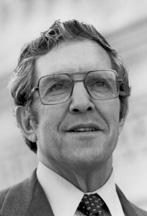
United States · United States Congress · 15 December 1975
Constitutional Amendment - States that, with respect to the right to life, the word 'person,' as used in this article and in the fifth and fourteenth amendments to the Constitution of the United States, applies to all human beings, including their unborn offspring at every stage of their biological development, irrespective of age, health, function, or condition of dependency. Provides that this article shall not apply in an emergency when a reasonable medical certainty exists that continuation of the pregnancy will cause death of the mother.
United States · United States Congress · 15 December 1975
Encourages teachers, students, parents, and associates of our Nation's schools to participate and declare a day in the spring of 1976 as a Community Cleanup Day as a Bicentennial gift to our Nation. Calls upon the Govenors of these United States to designate a day in the spring of 1976 as Community Cleanup Day.
United States · United States Congress · 10 December 1975
Occupational Safety and Health Reform Act - Makes it the purpose of this Act to improve the administration of the Occupational Safety and Health Act and to provide for regulatory procedures related to such administration. States that the Secretary of Health, Education, and Welfare shall not propose any rule promulgating a new occupational health or safety standard before he: (1) has, as part of each such proposal, reviewed and published in the Federal Register the financial impact of such proposed standard; and (2) has determined with due regard for that impact that the benefit to be derived from such standard justifies such proposal. Provides that no standard adopted or promulgated shall require any employer to phase out, change, or replace existing equipment or facilities before the normal useful life of that equipment or facility has expired unless failure to so phase out, change, or replace that equipment or facility prematurely would result in a serious violation. Directs the Secretary to prescribe, as soon as practicable after the date of enactment of this Act, as part of each existing standard adopted under the Occupational Safety and Health Act: (1) the estimated average and maximum cost per unit to the average employer who is subject to that standard for compliance with the conditions, practices, means, methods, operation, or process used or proposed to be used by that employer under that standard; and (2) the period within which it is, in fact, possible for such employers to meet such standard including, but not limited to, availability of required devices, and possibility of performance of required procedures. Sets forth requirements with respect to notifying an employer of violations of the requirements prescribed pursuant to this Act. States that any employer who has been found to be not in compliance with any rule or standard adopted or promulgated under this Act shall not receive a notice for such violation if he is able to show: (1) that implementing such rule or standard would not materially affect the safety or health of his employees in the facility inspected; (2) that he has employed alternative procedures to protect his employees from the hazards contemplated by the rule or standard which are as effective in protecting the safety and health of his employees; or (3) that he has furnished adequate notice and exerted all reasonable efforts, pursuant to such regulations as the Secretary may prescribe, to obtain the compliance of his employee, that such violation was attributable to such employees, and that he could not otherwise have reasonably prevented such violation. Sets forth procedures for enforcement of these regulations. Authorizes the Secretary to enter into compliance agreements with an employer believed to be in violation of an occupational safety and health standard promulgated pursuant to such Act under which enforcement and penalty provisions are waived or deferred upon condition that the employer will voluntarily comply with the applicable standard upon such terms and conditions as the Secretary determines appropriate under the circumstances. States that failure of an employer to abide by such an agreement may be taken into account in resulting enforcement and penalty procedures. Directs the Secretary to provide technical advice, assistance, and consultation to employers with less than 100 employees whenever it is necessary to assist them in complying with applicable standards.
United States · United States Congress · 9 December 1975
Sets forth a payment schedule for the care and treatment of veterans in State veterans' homes with funds of the Veterans' Administration, in those cases where the veteran would be eligible for the type of care in a Veterans' Administration facility. Limits such payment in all cases to one-half of the cost of the State home care. (Amend 38 U.S.C. 641)
United States · United States Congress · 8 December 1975
Regulatory Reform Act - Provides that before any rule promulgated by any Federal agency can become effective, it must be submitted to the Congress for approval. Requires that an economic impact statement accompany such submission. Authorizes agencies to make rules which impose a penalty upon an employer of an employee who violates any rule or regulation in effect against such employer. States that no agency may require an applicant or a party to an agency proceeding to provide such agency with information or documents which have been previously furnished to such agency or which are not directly relevant to such application or proceeding. Entitles the applicant for any license to reimbursement by such agency for the complete costs of such party's application if such agency has not made a final determination in the licensing proceeding within six months of the date of announcement of the intention of any such proceeding.
United States · United States Congress · 3 December 1975
Establishes, under the Congressional Budget Act, a zero-base budgeting process. States that such process shall consist of requiring each Congressional committee responsible for reporting legislation authorizing appropriations for any Federal program to conduct a comprehensive review and study of such program at least once every six years as though it were being proposed to be enacted for the first time. Provides that such comprehensive reviews shall include consideration of (1) alternative funding levels, (2) probable costs and benefits, (3) whether the original program objectives are still relevant, (4) the impact of the program on the functions and freedom of the private sector of the economy, and (5) the feasibility of alternative programs. Authorizes the Committees on the Budget of the House of Representatives and the Senate to establish guidelines and standards for the conduct by the various committees of the House and Senate of their zero-based budgeting functions. Makes technical and conforming amendments to the Congressional Budgeting Act.
United States · United States Congress · 2 December 1975
Authorizes and requests the President to issue a proclamation designating the seven calendar days commencing on April 30 of each year as "National Beta Sigma Phi Week."
United States · United States Congress · 1 December 1975
Provides that the total contribution of the United States to the United Nations for any calendar year after 1975 shall not exceed an amount which bears the same ratio to the United Nations budget as the total population of the United States bears to the total population of the United Nations member states.
United States · United States Congress · 20 November 1975
Stipulates that as of October 1, 1976, no appropriation is authorized and no payment shall be made to the United Nations in excess of the amount arrived at by the division of the total assessment of such organization by the number of its member states which make up the United Nations General Assembly.
United States · United States Congress · 20 November 1975
Expresses the sense of the House of Representatives that the President should, upon visiting the People's Republic of China, request that the Chinese officials use their good offices to obtain an accounting of members of the United States Armed Forces missing in action and confined as prisoners of war in Southeast Asia and of all American civilian personnel who are listed as missing in Southeast Asia. Requests that upon his return to the United States, the President should report back to the Congress on the results of his request.
United States · United States Congress · 20 November 1975
Designates the week beginning April 4, 1976, as "National Rural Health Week." Urges that efforts in disseminating health information be intensified. Calls for improved health services for rural America.
United States · United States Congress · 14 November 1975
Provides that no debt owned to the United States by any foreign country may be settled in an amount less than full value of such debt unless the Congress by concurrent resolution approves of such settlement.
United States · United States Congress · 13 November 1975
Propane Allocation Act - States the purpose of the Act of requiring the Administrator of the Federal Energy Administration to deal on a temporary basis with propane shortages to minimize their impact. Directs the Administrator, within given limitations, to regulate the equitable allocation of propane and its wholesale price. Outlines procedures for computing the price of propane recovered from oil and that derived from gas. Terminates authority granted under this Act at midnight, June 30, 1976, except for actions or pending proceedings not finally determined and actions and proceedings based upon any act committed prior to that date. Provides that willful violators may be fined not more than $5000 for each violation. Subjects any violator to a civil penalty of not more than $2500 for each violation. Grants United States district courts exclusive original jurisdiction of all cases or controversies arising under this Act, subject to enumerated conditions. Preempts State and local law whenever there is a conflict involving the allocation of propane. Mandates submission to the Attorney General of any proposed regulations on allocation. Directs the Attorney General to advise the President on the possible effect of such regulations on anticompetitive practices, and to suggest any alternatives which might be more consistent with the antitrust laws. Requires that whenever two or more individuals involved in the propane business meet, confer, or communicate in such a manner as might be construed to violate the antitrust laws, they shall do so only: (1) upon a personal or delegated order of the Administrator, specifying and limiting the subject matter and objectives, and (2) in the presence of a representative of the Department of Justice's Antitrust Division, with a verbatim transcript taken and deposited for public inspection with the Attorney General and the Federal Trade Commission. Restricts, to levels of prior usage, purchase or use of propane for feedstock for any synthetic natural gas or peak shaving for any gas utility.
United States · United States Congress · 6 November 1975
Expresses the sense of the House of Representatives that the President should, upon visiting the People's Republic of China, request that the Chinese officials use their good offices to obtain an accounting of members of the United States Armed Forces missing in action and confined as prisoners of war in Southeast Asia and of all American civilian personnel who are listed as missing in Southeast Asia. Requests that upon his return to the United States, the President should report back to the Congress on the results of his request.
United States · United States Congress · 4 November 1975
Reclamation Authorization Act - Title I: Polecate Bench, Wyoming - Reauthorizes as a part of the Pick-Sloan Missouri Basin program the Polecat Bench area of the Shoshone River. Directs the Secretary of the Interior to implement such inclusion into the program. Reuires that the development under this Act of the Polecat Bench area shall be in accordance with the Federal Water Project Recreation Act. Provides for limiting of water applications from the area for a period of ten years to exclude use by newly irrigated lands. Title II: Dickinson Dam, North Dakota - Authorizes the Secretary of the Interior to modify the Dickinson Dam spillway on the Heart River in the State of North Dakota. Authorizes the construction of a new spillway. Authorizes an amendatory repayment contract with the city of Dickinson, North Dakota for repayment of specified authorized work costs. Authorizes the appropriation of $4,000,000 for works construction under this title. Title III: McKay Dam and Reservoir, Oregon - Directs the Secretary of the Interior to reallocate costs of the Umatilla project in the State of Oregon for the purposes of irrigation, flood control and recreation at McKay Dam and Reservoir in such State. Authorizes the appropriation of $1,300,000 for the modification of McKay Dam for purposes of this title. Title IV: Pollock-Herreid Unit, South Dakota - Authorizes the Secretary of the Interior to construct and operate the Pollock-Herreid unit, in the State of South Dakotta, of the Pick-Sloan Missouri program. Sets forth the principal works of such project. Authorizes the appropriation of $26,000,000 for the works authorized under this title.
United States · United States Congress · 28 October 1975
Authorizes the Secretary of the Army to delegate to the States specified functions with respect to the location and plans for structures, excavations, dredging, or fills in or on navigable and other waters of the United States covered under the provisions of the Federal Water Pollution Control Act. Requires that a condition of any such delegation shall be the enactment by the State of legislation, and a State permit program, which is at least as effective as the Federal standards under such Act.
United States · United States Congress · 23 October 1975
Veterans' and Survivors' Pension Adjustment Act - Revises generally the schedules of payment of non-service-connected disability pensions payable to the veterans of the Mexican border period, World War I, World War II, the Korean Conflict, and the Vietnam Era, and to the widows and children of such veterans. Revises generally the aid and attendance allowance payable to the widows of veterans of all periods of war. (Amends 38 U.S.C. 102, 322, 415, 521, 541, 542, 544)
United States · United States Congress · 23 October 1975
Condemns the resolution adopted by the Third Committee of the United Nations General Assembly which equates Zionism with racism, and urges the U.N. General Assembly to disapprove such resolution.
United States · United States Congress · 23 October 1975
Expresses the sense of Congress that the officers and administrators of the various governmental institutions supported by public moneys should take steps to remove from facilities under their control all architectual barriers to the handicapped. Directs that funds for such efforts be taken from their discretionary funds.
United States · United States Congress · 9 October 1975
Requires Executive agencies to submit proposes ruless and an explanation thereof to Congress. Provides that such proposes rules shall become effective within 60 days after submission unless either House of Congress disapproves of such rules by resolution.
United States · United States Congress · 9 October 1975
Agricultural Energy Research Act - Establishes within the Cooperative State Research Service of the Department of Agriculture the Office of Agriculture Energy Research. Directs the Secretary of Agriculture to appoint a Director of Agricultural Energy Research. Designates the function of the Office to carry out a research program designed to increase agricultural and rural energy efficiency by implementing alternative energy source pilot projects and by refining alternative energy developments to specific agricultural and rural uses. Authorizes to be appropriated $5,000,000 for fiscal year 1976, and $10,000,000 for fiscal year 1977. Requires the Director to allocate appropriated funds on a fair and equitable basis among State agricultural experiment stations.
United States · United States Congress · 9 October 1975
Authorizes the President to issue a proclamation designating the week in November which includes Thanksgiving Day in each year as "National Family Week."
United States · United States Congress · 8 October 1975
Requires that States having agreements entered into under the Old-Age, Survivors, and Disability Insurance program of the Social Security Act will continue to make social security payments and reports on a calendar-quarter basis no more frequently than the fifteenth of the second month following the calendar quarter.
United States · United States Congress · 3 October 1975
Authorizes the Secretary of the Interior to make payments to State or local governments upon their election in an amount equal to 75 cents for each acre of specified categories of public land within the boundaries of the State or local political subdivision.
United States · United States Congress · 3 October 1975
Expresses the sense of Congress that the officers and administrators of the various governmental institutions supported by public moneys should take steps to remove from facilities under their control all architectual barriers to the handicapped. Directs that funds for such efforts be taken from their discretionary funds.
United States · United States Congress · 23 September 1975
Sets forth a method of computation for the Commissioner of Education to follow in determining the amount of additional Federal assistance due under the Education Amendments of 1974 to educational agencies which lack property of sufficient assessed valuation to generate revenue from a reasonable tax levy sufficient to enable such agency to provide a level of education equivalent to that maintained in comparable school districts of the State.
United States · United States Congress · 22 September 1975
Airport and Airway Development Act Amendments - Directs the Secretary of Transportation to prepare and publish a revised national airport system plan for the development of public airports in the United States. States that such plan should include: (1) an identification of the levels of public service and the uses made of each public airport in the plan, and the projected airport development which the Secretary deems necessary to fulfill the levels of service and use of such airports during the next 10-year period; and (2) a listing of the amount of funds expended in each of the fiscal years 1971 through 1975 for terminal area development at each air carrier, commuter, and reliever airport, showing separately the amounts expended for nonrevenue producing public use areas and for other areas. Authorizes appropriations of up to $2,000,000 to carry out such purpose. Authorizes specific appropriations under the Airport and Airway Development Act to develop air carrier airport programs and general aviation airports in the territories of the United States. Specifies the apportionment and distribution of funds under the Airport and Airway Development Act. Authorizes the Secretary of Transportation to make grants of up to $25,000 to any State for up to 75 percent of the cost of developing standards for airport development at general aviation airports in each State, other than standards for safety of approaches. Authorizes appropriations of $1,275,000 to carry out such purposes. Stipulates that, notwithstanding any other provision of law, no part of any funds authorized to be obligated for fiscal years 1978, 1979 and 1980 shall be obligated or otherwise expended except in accordance with a statute enacted after the date of this Act. Requires the Secretary of Transportation to conduct a study of airports in areas where land requirements, local taxes or a low revenue return per acre may require the closing of such airports, together with recommendations concerning the preservation of such airports. Directs the Secretary to establish a civil aviation information distribution program within each region of the Federal Aviation Administration. Prohibits the closure of any existing flight service station operated by the Federal Aviation Administration, except under specified conditions. Authorizes appropriations of $72,000,000 to the Secretary to undertake a demonstration project related to ground transportation services to the Oakland International Airport, California, which will be consistent with the objectives of the Urban Mass Transportation Act.
United States · United States Congress · 22 September 1975
Federal Water Pollution Control Act Amendments - Extends through fiscal year 1977 the authorization of appropriations for: (1) water treatment works pilot training programs; (2) the development of a system of forecasting the supply of and demand for water pollution control specialists; (3) grants for State pollution control programs; (4) scholarships, training grants and contracts in the field of water pollution control; (5) grants to designated agencies to assist in the development and operation of continuing areawide waste treatment management planning processes; (6) grants to the States for lake water improvement programs; and (7) the purposes of this Act other than those specified in (1) through (6) above. Authorizes the use of ad valorem taxes to satisfy the user charge system requirement for applicants for treatment works grants under the Federal Water Pollution Control Act. Extends the provisions for Federal reimbursement of construction costs of publicly owned water treatment works to include reimbursement for works on which construction was started not later than July 1, 1973. Increases the amount of the appropriation authorized to cover such reimbursement to $2,950,000,000. Provides for certification by the State water pollution control agency of treatment projects within such State where the Administrator of the Environmental Protection Agency determines that such projects will be carried out in accordance with State laws and standards at least equivalent to those established by Federal law. Permits the Administrator of the Environmental Protection Agency to extend from July 1, 1977, until July 1, 1982, the deadline for the achievement of effluent limitations of public treatment works required by the Federal Water Pollution Act. Directs the Administrator, when considering such extension, to consider the cost involved in achieving secondary and alternative treatment and the effects such secondary and alternative treatment will have on public health and water quality. Extends until April 1, 1975, the deadline for submission of State water quality inventory reports. Requires such reports to be revised and kept current biennially. Directs the Administrator to submit such reports to Congress on or before October 1, 1975; October 1, 1976, and biennially thereafter. Eliminates the requirement that public hearings on proposed effluent standards be held within thirty days following publication of the standard. Permits the Administrator to defer the effective date of proposed effluent standards for up to three years following promulgation of such standards if he determines that compliance within one year is technologically unfeasible for a particular category of sources. Establishes a civil penalty of not to exceed $50,000 for the owner or operator of any vessel, onshore or offshore facility from which any hazardous substance is discharged. Provides for the designation by the Administrator, as a hazardous substance, any element or compound which presents an imminent and substantical danger to public health or welfare, including fish, shellfish, wildlife, shorelines, and beaches. Provides for a civil penalty of unspecified limit when the United States can show that the discharge of a hazardous substance was the result of willful negligence or willful misconduct on the part of the responsible owner or operator.
United States · United States Congress · 18 September 1975
Highway Trust Fund Act - Extends for an additional 15 years, until 1993, the provisions which establish the Highway Trust Fund and impose the taxes which are transferred to the Highway Trust Fund.
United States · United States Congress · 18 September 1975
Sets forth a method of computation for the Commissioner of Education to follow in determining the amount of additional Federal assistance due under the Education Amendments of 1974 to educational agencies which lack property of sufficient assessed valuation to generate revenue from a reasonable tax levy sufficient to enable such agency to provide a level of education equivalent to that maintained in comparable school districts of the State.
United States · United States Congress · 17 September 1975
Truth in Budgeting Act - Provides for full congressional review of all Federal programs every 2 years by the appropriate standing committees of the House and Senate. Provides that each comprehensive review conducted by a committee with respect to a Federal program under this Act shall include a detailed consideration of the past experience under the program and a projection of the expected future experience of the program, a consideration of alternate ways of carrying out the activities involved and alternative funding levels for such activities, an evaluation of each such alternative in terms of its probable costs and benefits, a comparison of each such alternative with other programs and activities in the same or related fields, and an evaluation of the overall success or failure of the program. Details the method to be used to review such programs by the standing committee. Provides that no funds in excess of the appropriations for the previous year may be authorized for a program that has not been subject to review during the calendar year.
United States · United States Congress · 11 September 1975
Provides that when an eligible veteran transfers between consecutive school terms from one approved institution to another, the veteran shall, for the purpose of entitlement to the payment of the educational assistance allowance, be considered to be enrolled at the first institution for a period of thirty days. Provides educational assistance allowance to each veteran who served from July 25, 1947, until June 27, 1950, for a period of more than 180 days and received a discharge under conditions other than dishonorable. Extends veterans the maximum educational benefits from 36 to 45 months.
United States · United States Congress · 11 September 1975
Designates the Veterans' Administration hospital in Loma Linda, California, as the "Jerry L. Pettis Memorial Veterans' Hospital. Authorizes the Administrator of Veterans' Affairs to provide a memorial at such hospital in memory of the late Jerry L. Pettis.
United States · United States Congress · 11 September 1975
Expresses the sense of Congress that the officers and administrators of the various governmental institutions supported by public moneys should take steps to remove from facilities under their control all architectual barriers to the handicapped. Directs that funds for such efforts be taken from their discretionary funds.
United States · United States Congress · 5 September 1975
Expresses the sense of Congress that the officers and administrators of the various governmental institutions supported by public moneys should take steps to remove from facilities under their control all architectual barriers to the handicapped. Directs that funds for such efforts be taken from their discretionary funds.
United States · United States Congress · 3 September 1975
Expresses the sense of Congress that the United States Government while engaged in a lessening of tensions with the People's Republic of China, do nothing to compromise continued close relations with the Republic of China.
United States · United States Congress · 1 August 1975
Authorizes appropriations, under the Elementary and Secondary Education Act of 1965, for purposes of educational research and training for fiscal years 1977 and 1978, of such sums as are necessary to increase the allotments to States to the level of funding those States received for fiscal year 1974 for the programs consolidated under title IV (Educational Research and Training) of such Act.
United States · United States Congress · 24 July 1975
Provides, under the Water Resources Development Act, that the Secretary of the Army shall not require as a condition precedent to construction of bank stabilization works for the protection of the Sacred Heart Hospital in Yankton, South Dakota, that such hospital agree to hold and save the United States free from damage due to such construction.
United States · United States Congress · 23 July 1975
Revises clause 6 of rule XXVIII of the Rules of the House of Representatives to provide that managers appointed by the House to each conference committee shall transact all business in meetings open to the public except where the House, by majority vote and in open session, shall vote to close such meeting or meetings. Directs that it shall be in order to debate such motion to close for ten minutes before the vote is taken on that motion, one-half of such time to be given to debate by the mover of the motion and one-half to debate in opposition to the motion.
United States · United States Congress · 9 July 1975
Beef Research and Information Act - Authorizes the Secretary of Agriculture to issue orders: (1) providing for the establishment and administration of plans for advertising, sales promotion, and consumer information with respect to the use of cattle, beef, or beef products and for the disbursement of necessary funds for such purposes; (2) providing for research and studies with respect to sale, distribution, marketing, utilization, or production of cattle, beef, or beef products, and the creation of new products thereof, to the end that the marketing and utilization of cattle, beef, or beef products may be encouraged, expanded, improved, or made more acceptable, and the data collected by such activities may be disseminated and for the disbursement of necessary funds for such purposes; and (3) providing that slaughterers maintain and make available for inspection such books and records as may be required by any order issued pursuant to this Act. Provides for the establishment of a Beef Board, to be composed of not more than 68 cattle producers or representatives of cattle producers appointed by the Secretary. Sets forth the duties and responsibilities of the Beef Board, including: (1) the administration of the orders of the Secretary in accordance with its terms and provisions; and (2) the issuance of rules and regulations to effectuate the terms and provisions of such orders. Requires the Secretary to conduct a referendum among cattle producers who have been engaged in the production of cattle for the purpose of ascertaining whether the issuance of an order is approved or favored by not less than two-thirds of such producers. Authorizes appropriations of such funds as are necessary to carry out the provisions of this Act.
United States · United States Congress · 25 June 1975
Authorizes the Administrator of the Federal Aviation Agency, under the Federal Aviation Act, to permit the operation of an aircraft without an emergency locator transmitter during an inspection, repair, or modification of such transmitter when such inspection, repair, or modification is required by rule and the Administrator determines that the aircraft will be operated in an acceptably safe manner when the transmitter is not on board.
United States · United States Congress · 25 June 1975
Veterans' Administration Physicians and Dentists Comparability Pay Act - Provides increases in pay for physicians and dentists employed full time by the Department of Medicine and Surgery of the Veterans' Administration. Establishes special pay for such physicians and dentists to maximum annual amounts of $5,000 and $2,500, respectively. Establishes a schedule of incentive pay in amounts up to $8,500 for physicians, and $4,250 for dentists, annually. Directs the Comptroller General of the United States to report to Congress by August 31, 1976, on investigations and evaluations: (1) of the problems facing Federal departments and agencies, including the uniformed services, in recruiting and retaining qualified physicians and dentists; (2) of the extent to which a uniform system of pay, allowances, and benefits would alleviate or solve such problems; and (3) of other appropriate solutions. Directs the Comptroller General to develop alternative courses of action to solve such recruitment and retention problems. (Amends 38 U.S.C. 4107; 4114 (a) (2))
United States · United States Congress · 25 June 1975
Permits the Secretary of the Treasury under the State and Local Fiscal Assistance Act to withhold a percentage of the total entitlement payment for any period to insure sufficient funds for final allocation of funds among the state and local units of government. Appropriates to the State and Local Government Fiscal Assistance Trust Funds: (1) $1,625,000,000 for fiscal year 1976, (2) $6,687,500,000 for fiscal year 1977, (3) $6,837,500,000 for fiscal year 1978, (4) $6,987,500,000 for fiscal year 1979, (5) $7,137,500,000 for fiscal year 1980, and (6) $7,287,500,000 fiscal year 1981. Appropriates to the Fund as noncontiguous States adjustments: (1) $1,195,000 for fiscal year 1976, and (2) $4,780,000 for each of the fiscal years 1976 through 1981. Exempts amounts appropriated to the Fund from the provisions of the Congressional Budget Act. Directs the Secretary of the Treasury to submit a report with appropriate recommendations to the Congress no later than September 30, 1980, concerning the extension of this title. Declares that if the entitlement of any Indian tribe or Alaskan native village is waived for any entitlement period, then the amount of such entitlement shall become part of the entitlement of the county government of the county in which such unit is located. Increases the maximum percentage points per entitlement period until it reaches 175 percent. Directs each State and local unit of government which receives funds under such Act to submit a report to the Secretary after the close of each entitlement period on the use of the funds received. Directs such unit of local government which expects to receive funds to submit a report to the Secretary on how it plans to use the funds it expects to receive. Empowers the Secretary whenever he determines that a unit of government has failed to comply with an applicable regulation to withhold all or a portion of the entitlement funds due such unit of government, to terminate the eligibility of such unit of government, and to require repayment of the entitlement funds expended. Requires units of government to provide an opportunity for citizens to give recommendations and views on the proposed expenditures of all funds within such units distributed under such Act.
United States · United States Congress · 17 June 1975
Broadcast License Renewal Act - Permits the Federal Communications Commission to extend three-year broadcast licenses for an additional two years upon a finding of public interest. Requires in making such determination, considerations of whether different term lengths for radio and television stations and for different categories of licensees are in the public interest. Limits other class licenses to a five-year maximum, prescribing the renewal procedures for such licenses and the criteria to be considered in renewal, including responsiveness and lack of serious deficiencies. Sets guidelines for expeditious action on applications for renewal of broadcasting station licenses by limiting material required to be filed. Requires the Commission to examine the renewal process and report within six months on methods of reducing and consolidating filings and supporting documents.