Resolution· SCONRESS.Con.Res. 74 (95th)referred
A concurrent resolution recognizing April as Fair Housing Month.
United States · United States Congress · 4 April 1978
Designates the month of April as "Fair Housing Month."
The world's political record
Person
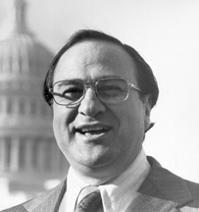
United States · Official source
875 records where Sen. Abourezk, James [D-SD] is listed as a sponsor, author, or other actor. Search with topics and years
United States · United States Congress · 4 April 1978
Designates the month of April as "Fair Housing Month."
United States · United States Congress · 3 April 1978
Surface Transportation Act - Title I: Rail Transportation - Directs the Secretary of Transportation to prepare a national survey of the existing rolling stock of all rail freight carriers. Directs the Secretary, based on the results of such survey, to create regional reserves of railroad rolling stock for lease to rail carriers for seasonal, specialized or high volume operations which in and of themselves do not justify the purchase of equipment. Directs the Secretary to establish, in conjunction with the reserve of rolling stock, regional rolling stock repair yards. Directs the Secretary, every six months, to establish efficiency ratings for each participating rail carrier for each of its lines utilizing reserve rolling stock. Stipulates that if a carrier's rating has increased it shall be eligible for reduced leasing rates and that if such rating has decreased a penalty charge shall be assessed on future leases of rolling stock by the railroad. Directs the Secretary to establish a computerized car identification plan to monitor the location, use, and respective load factors of the rolling stock in the regional reserve rolling stock program. Authorizes the Secretary to make grants to States to conduct a study of abandoned rail lines or lines subject to abandonment to determine whether the line involved is crucial to intrastate or interstate shipment, the costs of operating such a line, and whether the State should provide for the continued operation of such line. Authorizes the Secretary, upon the completion of such a study, to make a loan to a State to cover 90 percent of the costs of upgrading such a railroad line for operation. Authorizes appropriations out of the Railroad Rehabilitation and Improvement Fund to carry out the provisions of this title. Title II: Bus Transportation - Establishes the Federal Bus Administration within the Department of Transportation. Requires the Secretary of Transportation to carry out the Department's functions relating to the common carriers of passengers by motor vehicle through the Administration. Authorizes the Secretary to make grants to States to cover 90 percent of developing State bus plans. Requires such plans to determine the primary efficient service routes throughout the State for common carriers of passengers by motor vehicle utilizing Interstate and Federal-aid primary highways and to determine efficient feeder routes to serve such primary routes. Stipulates that after approval by the Secretary of a State's bus plan the State shall enter into contracts to provide common carrier motor vehicle passenger service on the feeder routes in such plan. Stipulates that such contracts shall: (1) be offered first to private carriers holding service authority on such feeder routes; (2) be awarded to the lowest bidder; (3) include provisions for long-term low interest loans to cover vehicle, equipment, or operating costs or the option to participate in an equipment leasing program developed by the Secretary; (4) provide for State established fares including a 40 percent discount to persons over 65 years old and the handicapped; and (5) provide for the use of fuel efficient vehicles meeting the requirements of the Secretary. Establishes within the Treasury a Motor Bus Trust Fund for making expenditures to carry out this title. Directs the Secretary to make grants available for covering up to 80 percent of the costs of planning and renovating or constructing terminals to include waiting stations for common carriers of passengers by motor vehicle. Directs the Secretary to establish a program to develop a national policy for intercity motor bus carriers and to establish a national route plan in conjunction with State bus plans and to streamline primary class 1 carrier routes. Title III: Transportation Public Service Employment - Directs the Secretary to enter into an agreement with the Secretary of Labor to develop policies, procedures, and programs to carry out this Act which will provide employment opportunities for the unemployed. Directs the Secretary to provide public service jobs for construction and renovation of bus terminals, upgrading and rehabilitating rail lines, maintaining and repairing Federal rolling stock held in regional reserves, construction of new repair yards, rehabilitation of existing repair yards, and maintaining and repairing upgraded rail beds. Authorizes the Secretary to enter into agreements with business and industry for job training and employment with respect to employment projects generated by this Act.
United States · United States Congress · 21 March 1978
Indian Trust Information Protection Act - Prohibits the release of any information held, obtained, or prepared by the Federal Government in the discharge of its Federal trust responsibility to the Indian people except: (1) in the case of information pertaining to an Indian tribe, to an official of an Indian tribe authorized by the tribe to receive such information (2) in the case of information pertaining to an individual Indian, to the individual Indian to whom the information pertains; (3) in the case of information pertaining to an Indian tribe, to any member of the tribe, provided, that the release of the information is not inconsistent with the Federal trust responsibility; (4) to either House of Congress; (5) in the case of information pertaining to an Indian tribe or individual, to any person where the chief executive officer or tribal council by resolution authorizes the release of the information, or where the individual Indian makes such authorization; (6) when the information has previously been lawfully made public; (7) when the information was provided in an application for funds under a Federal grant or contract; or (8) to any Federal department, agency, or employee or agent thereof where the information is required in furtherance of official duties. Establishes criminal penalties for the violation of the provisions of this Act.
United States · United States Congress · 21 March 1978
Declares it the sense of the Senate that United Nations Security Council Resolution 425, relating to the Lebanon crisis, should be implemented and that all parties concerned should comply with the resolution.
United States · United States Congress · 21 March 1978
Declares it the sense of the Senate that United Nations Security Council Resolution 425, relating to the Lebanon crisis, should be implemented and that all parties concerned should comply with the resolution.
United States · United States Congress · 20 March 1978
Expresses the condemnation of the Senate of the kidnapping of Aldo Moro. Declares it the sense of the Senate that (1) Italy deserves the support of the United States, and (2) the President should instruct the Permanent Representative to the United Nations to press for consideration of solutions to the problem of terrorism in all appropriate forums.
United States · United States Congress · 16 March 1978
Domestic Violence Prevention and Services Act - Declares the purpose of this Act to be to increase the participation by States, local communities, private nonprofit groups, and individual groups in efforts to prevent domestic violence and assist victims and dependents of victims of domestic violence. Requires each State, in order to obtain a grant under this Act, to establish a State citizen panel on domestic violence. Declares that such a panel shall be established to provide an opportunity for citizen participation in planning and developing efforts to prevent domestic violence and assist victims and dependents of victims of domestic violence, and provide citizens familiar with the problems of domestic violence an opportunity to make recommendations with respect to resolving such problems. Requires each panel: (1) to oversee within the State the implementation of Federal, State, and local projects under this Act; and (2) to study and make recommendations on matters relating to domestic violence. Authorizes the Secretary of Health, Education, and Welfare to make grants to States to assist them in supporting programs and projects to prevent incidents of domestic violence. Sets forth requirements for applications for such grants. Requires each State receiving a grant to submit to the Secretary a report providing specified information on the implementation of projects to prevent domestic violence. Establishes within the Office of the Secretary of Health, Education, and Welfare the National Center on Domestic Violence. Declares the duties of the Director of such Center to be: (1) the coordination of all Federal programs with respect to domestic violence; and (2) the provision of a national information and resource clearinghouse for matters concerning domestic violence. Requires the Secretary, through the Director, to enter into contracts to provide for not less than one regional center for domestic violence to be located in each region of the United States as designated by the Secretary. Directs the Secretary, through the Director, to conduct research activities with respect to domestic violence. Directs the Secretary, through the Director, to annually submit to Congress a report on the programs authorized by this Act. Directs that the records of any person concerning such person's treatment for drug abuse, in connection with any program assisted under this Act, be kept confidential. Directs the Secretary to report to Congress, not later than three years after the enactment of this Act, as to the effectiveness of programs administered pursuant to this Act. Requires the Director to give particular attention to the availability of VISTA volunteers with respect to programs on domestic violence prevention. Establishes an Interagency Domestic Violence Council to assist the Director in coordinating all Federal programs regarding the prevention of domestic violence. Requires the States, to be eligible for grants under this Act, to contribute to programs supported by this Act in amounts specified in this Act.
United States · United States Congress · 16 March 1978
National Agricultural Land Policy Act - Title I: Objectives - Declares that it is the policy of the Federal Government, in cooperation with State and local governments, to use all practicable methods to retain and protect agricultural land, to reduce its conversion to nonagricultural uses, and to limit the encroachment of industrial activities. Title II: Research Program - Establishes a three-year Agricultural Land Review Commission to study: (1) agricultural land in the United States; (2) the effects of industrial development, climate and other factors on the productivity of such land; (3) the acquisition of such land by persons not engaged in agricultural activities; and (4) methods of protecting such land, and of reducing the amount of it being converted to nonagricultural uses. Authorizes the Commission to make grants to institutes of higher learning to do research pursuant to its study. Requires the Commission to report its findings, conclusions and recommendations to the President and to Congress. Title III: Demonstration Programs - Authorizes the Secretary of Agriculture to pay up to 75 percent of the cost and to provide technical assistance to any State pilot project undertaken to demonstrate and test methods of reducing the amount of agricultural land being converted to nonagricultural uses. Requires all such projects to be completed within five years after enactment of this Act. Directs the Secretary to report his findings, conclusions and recommendations to the President and to Congress. Title IV: General Provisions - Defines terms used in this Act. Title V: Funding - Authorizes for Title II programs the appropriation of $15,000,000. Authorizes for Title III programs the appropriation of $75,000,000 each for fiscal years 1979 and 1980, and $100,000,000 each for fiscal years 1981, 1982, and 1983.
United States · United States Congress · 15 March 1978
Refugee and Displaced Persons Act - Amends the Immigration and Nationality Act of 1952 to define refugee or displaced person for purposes of such Act. Authorizes the admission of up to 40,000 refugees or displaced persons per year as immigrants. Empowers the Secretary of State to recommend to the Attorney General that all or any portion of a group of refugees or displaced persons be admitted into the United States conditionally in certain circumstances. Authorizes the Attorney General to allow parole admission of aliens for humanitarian reasons. Increases from 20 per cent to 26 per cent of the number of additional visas that shall be allocated to spouses, and unmarried sons or daughters of aliens lawfully admitted for permanent residence in the United States.
United States · United States Congress · 13 March 1978
Beef Act - Amends the Federal Meat Inspection Act to require imported equine meat products capable of use as human food (1) to be labeled as imported, and (2) to be tested for chemical substances. Directs the Secretary of Agriculture to assess fees for the testing and labeling of such products. Authorizes the Secretary to suspend imports for failure to pay such assessments. Amends the policy of Congress to restrict the importation of beef, veal, goat, and sheep meat, and live cattle to specified amounts after December 31, 1978. Prescribes a formula for adjustment of such quota. Directs the Secretary of Agriculture to allocate such quota among supplying countries according to certain criteria. Decreases the percentage by which estimates of such annual imports must exceed the imports of the preceding calendar year before triggering the imposition of import quotas. Permits the President to suspend an import quota proclamation if it determined that domestic cattle producers are operating at a reasonable profit. Permits the President to prohibit or curtail the importation of any products covered by this Act if it is determined that such action is required by the economic or national security interests of the United States.
United States · United States Congress · 13 March 1978
Farmer-Sponsored Agricultural Production and Stabilization Act - Title I: Findings, Statements of Purpose, and Definitions - States the findings of Congress and the purposes of this Act. Title II: National Agricultural Producers Board - Establishes within the Department of Agriculture the National Agricultural Producers Board, composed of 50 members elected by producers of agricultural commodities from each of the 50 States, which shall: (1) determine which agricultural commodities shall be included in the national production quota and marketing certificate program; (2) advise the Secretary of Agriculture regarding the national production quota for any commodity for any year; and (3) assist in the development of policy for implementing this Act. Title III: Mechanism for Attaining Market Equilibrium - Directs the Board to make a National Market Determination, for any commodity in any year, of the proper combination of production or marketing agreements necessary to assure market equilibrium. Requires a national referendum of the producers of each affected commodity for the purpose of expressing preferences on the form of agreements. Title IV: Pricing Policy - Prohibits the sale, trade, or other disposition of any agricultural commodity at less than 100 percent of parity. Title V: Imports - States that imports of all agricultural products which are domestically produced must be stopped until prices equal to 100 percent of parity are reached, and then limited to only the amount that American producers cannot supply. Title VI: Reserves - Requires the storage of all quantities of agricultural commodities produced in excess of the total market equilibrium quantities. Authorizes the Secretary to establish a National Strategic Reserve of any commodity. Prohbits sales from such Reserve at less than 100 percent of parity prices. Title VII: Applicability of Other Laws - Declares the provisions of all other laws inapplicable to any commodity for which the National Marketing Determination has been made to the extent inconsistent with this Act. Title VIII: Sanctions - Sets criminal penalties for any person who buys, sells, trades, or otherwise disposes of any agricultural commodity in violation of this Act.
United States · United States Congress · 13 March 1978
Directs the Architect of the Capitol to study the feasibility of using solar energy for heating the hot water in the Phillip A. Hart Office Building now under construction. Directs the Architect to make cost comparisons between solar and conventional energy systems over specified periods of time and report such findings to the Senate.
United States · United States Congress · 9 March 1978
Amends the Reservoir Salvage Act of 1960, as amended, to authorize appropriations to the Secretary of the Interior for fiscal years 1979-1983 for administration, investigation, and salvage operations of the program providing for recovery, protection, and preservation of significant scientific, prehistorical, historical, or archeological data which may be lost through federally regulated, permitted, or licensed construction projects.
United States · United States Congress · 9 March 1978
Federal Disclosure and Accountability Act - Prohibits any Federal employee from coercing any individual for the purpose of interfering with the right of such individual to disclose any illegal or otherwise improper Government Action to the Review Board on Improper Government Actions established by this Act, and from taking any adverse personnel action against such individual who is a Federal employee in retaliation for such disclosure. Requires the Board to investigate any such disclosure and, in the event further investigation or action is warranted, to notify the person, the head of the agency in which such person is employed, and, if appropriate, the Attorney General and/or the Comptroller General.
United States · United States Congress · 9 March 1978
Indian Program Evaluation and Needs Assessment Act - Makes findings that Federal agencies dealing with Indian affairs have not adequately furnished Congress with the information necessary to assess the needs of Indians and Alaskan Natives and that such lack of information has hampered Congress in determining such needs and responding to them. Title I: Program Expenditure Data - Requires the head of each Federal agency to develop procedures for compiling, maintaining, keeping current and reporting to Congress information concerning (1) the agency's annual expenditures for programs and services for which Indians are eligible; (2) services or programs specifically for the benefit of Indians; and (3) the agency's method of delivery of services and funding. Requires further that each Federal agency which administers programs which are specifically directed to or for the benefit of Indians and other programs for which Indians are eligible maintain and report to Congress information on the relative amounts expended for the administration of such programs and for actual services and funding to Indians and individual Indian organizations. Directs the Bureau of Indian Affairs to provide Congress with a comprehensive record of land holdings and use patterns of Indian land. Requires the head of each Federal agency, in coordination with the Federal Interagency Council on Indian Affairs established by this Act, to conduct every five years a needs assessment program aimed at determining the actual needs and problems of Indians and Indian organizations that are eligible for the programs and services administered by each such agency. Title II: Federal Interagency Council On Indian Affairs - Establishes a Federal Interagency Council on Indian Affairs. Sets forth the duties of such Council in the development of a uniform format to be used by all Federal agencies in assessing the needs of Indians.
United States · United States Congress · 7 March 1978
Authorizes the Secretary of the Army, acting through the Corps of Engineers, to construct an adjacent-type pumped-storage hydroelectric dam as part of the Fort Randall Dam-Lake Francis Case project, South Dakota.
United States · United States Congress · 6 March 1978
Designates specified lands within the Arches National Park, Utah, as a wilderness area.
United States · United States Congress · 6 March 1978
North Country National Scenic Trail Act - Establishes the North Country Trail within Federal lands in New York, Pennsylvania, Ohio, Michigan, Wisconsin, Minnesota and North Dakota. Provides for the inclusion of State, local, and privately held lands. Directs the Secretary of the Interior to implement the provisions of this Act.
United States · United States Congress · 6 March 1978
Amends the Wild and Scenic rivers Act by designating a specified portion of the Salmon River, Idaho, as a wild river. Directs the Secretaries of Agriculture and Interior to cooperate with relevant State and local governments and the interested public in the development of a management plan for the area.
United States · United States Congress · 6 March 1978
Authorizes the Secretary of the Interior to designate a segment of the Delaware River, located in New York and Pennsylvania, as a component of the National Wild and Scenic Rivers System. Prohibits the construction of water resources projects in the Upper Delaware River area for up to three years after the enactment of this Act, where the Secretary determines that such activity would directly and adversely effect property being considered for exclusion in the National Wild and Scenic Rivers System. Requires the Secretary to publish proposed land use control guidelines in the Federal Registry and to assure that ample opportunity is afforded for state, local and private parties to participate in the development of the land use control measures for the Upper Delaware River component.
United States · United States Congress · 6 March 1978
Designates specified lands within the Conyonlands National Park, Utah, as a wilderness. Authorizes water pipeline construction and missile recovery within the wilderness area.
United States · United States Congress · 6 March 1978
Oregon National Historic Trail Act - Amends the National Trails System Act to establish the Oregon National Historic Trail within Federal lands located in Missouri, Kansas, Nebraska, Wyoming, Idaho, Oregon, and Washington. Provides for the inclusion of State, local, and privately-held lands. Directs the Secretary of the Interior to administer the lands designated under this Act.
United States · United States Congress · 6 March 1978
Amends the National Trails System Act to establish national historic trails as a new category of trails within the National Trails System. Sets criteria for the designation of trails as National Historic Trails. Directs the Secretary of the Interior to encourage the States to consider establishing historic trails as part of their comprehensive historic preservation plans.
United States · United States Congress · 6 March 1978
Designates specified lands in the Buffalo National River, Arkansas, as a wilderness areas.
United States · United States Congress · 6 March 1978
Amends the Wild and Scenic Rivers Act to designate a specified segment of the Rio Grande, Texas, as a component of the National Wild and Scenic Rivers System. Requires the Secretary of the Interior to develop a management plan concerning the wild river component within two years of the enactment of this Act. Directs the Secretary to consult with relevant Federal and State officials as well as with the government of Mexico in the development of such management plan. Restricts the amount of area that may be included in the wild river component. Restricts the amount of money which may be spent in the acquisition of lands and interests therein.
United States · United States Congress · 6 March 1978
Potomac Heritage National Scenic Trail Act - Amends the National Trails System Act to establish the Potomac Heritage Trail within Federal lands located in Maryland, Pennsylvania, Virginia, West Virginia, and the District of Columbia. Provides for the inclusion of State, local, and privately-held lands. Directs the Secretary of the Interior to administer the lands designated under this Act.
United States · United States Congress · 6 March 1978
Amends the Wild and Scenic Rivers Act by designating portions of the following rivers for study as potential additions to the National Wild and Scenic Rivers System: Salt River, Arizona; Gulkana River and Delta River, Alaska; Gila River, New Mexico; Green River, Utah; Illinois River, Arkansas; Kern River, California; Shenandoah River, Virginia and West Virginia; Sweetwater River, Wyoming; Cacapon River, West Virginia; Columbia River, Washington; Guadalupe River, Texas; John Day River, Oregon; Loxahatchee River, Florida; Niobrara River, Nebraska; Tangipahoa River, Louisiana and Mississippi; Yellowstone River, Wyoming and Montana; Madison River, Montana; Ogeechee River, Georgia; and the Wenatchee River, Washington. Sets deadlines for the completion of the inclusion studies. Limits the amounts which may be appropriated for such studies.
United States · United States Congress · 6 March 1978
Amends the Wild and Scenic Rivers Act to designate a specified segment of the Skagit River, Washington, as a wild river. Requires the Secretary of Agriculture to consult with affected Federal and State authorities, as well as the interested public, in the development of a management plan for the area.
United States · United States Congress · 6 March 1978
Amends the Wild and Scenic Rivers Act to designate a specified segment of the Delores River, Colorado, as a component of the National Wild and Scenic Rivers System. Directs the Secretaries of Agriculture and Interior to cooperate with relevant State and local officials and with interested private parties in the development of a management plan for the wild river component. Restricts the amount of land in the wild river component that may be withdrawn from appropriation under mineral leasing and mining laws.
United States · United States Congress · 6 March 1978
Amends the Wild and Scenic Rivers Act by increasing the appropriation authorization ceiling for: (1) the study of specified rivers; and (2) the acquisition of land and interests in land along the following river areas: Chattooga (North Carolina, South Carolina, and Georgia), Eleven Point (Missouri), Rouge (Oregon), Upper St. Croix (Minnesota and Wisconsin), and Salmon (Middle Fork, Idaho).
United States · United States Congress · 6 March 1978
Designates specified lands within the Capitol Reef National Park, Utah, as a wilderness area.
United States · United States Congress · 6 March 1978
Lewis and Clark National Historical Trail Act - Amends the National Trails System Act to establish the Lewis and Clark Trail within Federal lands located in Missouri, Kansas, Nebraska, Iowa, South Dakota, North Dakota, Montana, Idaho, Oregon, and Washington. Provides for the inclusion of State, local, and privately-held lands. Directs the Secretary of the Interior to administer the lands designated under this Act.
United States · United States Congress · 6 March 1978
Continental Divide National Scenic Trail Act - Amends the National Trails System Act to establish the Continental Divide National Scenic Trail within Federal lands located in Montana, Idaho, Wyoming, Colorado, and New Mexico. Directs the Secretary of Agriculture to consult with relevant State and Federal officials in the administration of the lands designated under this Act.
United States · United States Congress · 6 March 1978
Amends the Wild and Scenic Rivers Act to designate a segment of the Pere Marguette River, Michigan, as a component of the National Wild and Scenic Rivers System.
United States · United States Congress · 6 March 1978
Amends the Wild and Scenic Rivers Act to designate a specified segment of the Bruneau River, Idaho, as a component of the National Wild and Scenic Rivers system. Directs the Secretary of the Interior to supervise the acquisition and development of the river segment.
United States · United States Congress · 2 March 1978
Amends the Internal Revenue Code to direct the Secretary of the Treasury to issue regulations corresponding to the principles set forth in a certain private letter ruling relating to the exclusion from gross income of amounts deferred by participants in public deferred compensation plans.
United States · United States Congress · 2 March 1978
Consumer and Agricultural Protection Act - Establishes a National Board of Agricultural Governors, independent of the Department of Agriculture and consisting in part of agricultural producers, whose primary duty shall be the annual establishment of cost of production prices for cotton, dairy products, dry beans, feed grains, poultry, rice, soybeans, sugar, livestock and wheat. States that such prices shall take into account: (1) machinery ownership costs; (2) general farm overhead costs; (3) a value for the management services contributed by the producer; (4) labor costs; and (5) a value for the land utilized. Sets 1978 cost of production prices as follows: (1) dry beans, $22.00 per hundredweight; (2) wheat, $4.75 per bushel; (3) sugar, $.25 (raw) per pound; (4) corn, $3.15 per bushel; (5) soybeans, $6.60 per bushel; (6) barley, $3.00 per bushel; (7) grain sorghum, $5.39 per hundredweight; (8) oats, $1,65 per bushel; (9) cotton, $.70 per pound; (10) cattle, $.55 per pound; (11) calves, $.65 per pound; (12) milk, $12.00 per hundredweight; (13) hogs, $.50 per pound; (14) rice, $10.00 per hundredweight; and (15) poultry, $.40 per pound. Requires the Secretary of Agriculture to guarantee or make direct nonrecourse loans to producers of specified nonperishable commodities. Specifies formula for the determination of loan levels and conditions for the calling of such loans. Directs the Board to establish mandatory release prices for each commodity, expressed in terms of a percentage of the cost of production price plus storage costs and interest charges. Requires the release for domestic or export sale of a portion of a commodity under loan when such commodity's market price reaches the mandatory release price level. Requires the Secretary to establish and maintain a National Commodity Reserve of cotton, feed grains, rice, soybeans, sugar, and wheat, for provision during national emergencies and for the protection of producers from depressed prices. Requires the Secretary, upon receiving written production estimates from producers prior to the production year, to determine and announce production adjustments if he finds that, in the absence of such adjustments, domestic stocks, including Reserve quantities, will exceed domestic and foreign demand and the replenishment needs of the reserve. Directs the Board to apportion production cutbacks and mandatory set-asides among producers equally. Specifies civil penalties for the use of land removed from production for harvesting any crop or for grazing. Permits production adjustments with respect to livestock, dairy products, poultry, and perishable commodities (designated by the Board) only upon a vote by a majority of the producers of such a commodity. Provides for coverage under this Act of any commodity not specified, by means of a petition and majority-vote referendum among the producers of such commodity. Permits the termination of such commodity, whether specified or unspecified by the same means. Bars the importation of a specified commodity at less than the domestic cost of production price, adjusted for transportation and handling costs. Authorizes the board to impose price maintenance custom duties on imported agricultural commodities. Prohibits the purchase of domestic specified commodities for foreign assistance programs at less than cost of production prices.
United States · United States Congress · 27 February 1978
Genetic Disease Amendments - Title I: Revision and Extension of Genetic Diseases - Amends the National Sickle Cell Anemia, Cooley's Anemia, Tay-Sachs, and Genetic Diseases Act to include genetic conditions, as well as genetic diseases, within the program of research, counseling, and education established by such Act. Extends the authorization of appropriations for such program for three fiscal years, through 1981. Title II: National Commission Amendment - Directs the National Commission for the Protection of Human Subjects of Biomedical and Behavioral Research to conduct a study of the ethical, social, and legal implications of voluntary testing, counseling, and information and education programs with respect to genetic diseases and conditions.
United States · United States Congress · 27 February 1978
Farmer Survival Act - Title I: National Production Goals - Directs the Secretary of Agriculture to proclaim a national production quota for those commodities (other than tobacco) designated by the National Agricultural Producers Board. Requires each such quota to be a quantity sufficient to meet domestic consumption and export requirements for the next marketing year, plus any quantity needed for a national strategic reserve. Title II: National Agricultural Producers Board - Establishes the National Agricultural Producers Board, whose duty, in part, shall be to determine which agricultural commodities shall be included in the national production quota and marketing certificate program. Title III: Marketing Certificates - Requires the Secretary to issue a marketing certificate to each producer of any commodity prescribing the maximum quantity of such commodity to be marketed in the marketing year. Specifies a formula for the determination of such quantity. Title IV: Pricing Policy - Prohibits the sale or disposition of any commodity at a price less than the market price announced by the Secretary. Requires such price to be the average parity price for a commodity for the preceding marketing year as determined by the Secretary of the Board. Title V: Reserves - Authorizes the Secretary to establish a national strategic reserve of any commodity, sales from which shall be permitted to make up for under-production. Requires sales at not less than full parity prices. Title VI: Applicability of Other Laws - Declares other laws inapplicable to any commodity to the extent such laws are inconsistent with the provisions of this Act. Title VII: Impact Assessment - Requires the Secretary to report to Congress on the extent to which increased food prices resulting from provisions of this Act can be expected to affect adversely the ability of lower income Americans to attain nutritionally adequate diets at reasonable costs. Requires recommendations concerning methods of financial assistance to such Americans. Title VIII: Sanctions - Prescribes criminal penalties for the sale or disposition of any agricultural commodity in violation of this Act or any regulation issued pursuant to it.
United States · United States Congress · 27 February 1978
Changes the boundaries of the Wind Cave National Park in South Dakota.
United States · United States Congress · 27 February 1978
Amends Senate Resolution 4 (95th Congress) to make the Senate Select Committee on Indian Affairs a permanent Senate committee.
United States · United States Congress · 24 February 1978
SS Life Act - Directs the Secretary of the Navy to transfer to LIFE International for 15 years the hospital ship U.S.S. Sanctuary (AH-17) to furnish health care to developing nations. Renames such ship the "SS LIFE". Authorizes the appropriation of $6,000,000 for fiscal year 1979 for modification of such ship and for maintenance and operation $494,000 for fiscal year 1979, $5,000,000 for fiscal year 1980, $4,000,000 for fiscal year 1981, $3,000,000 for fiscal year 1982, $2,000,000 for fiscal year 1983, and $1,000,000 for fiscal year 1984.
United States · United States Congress · 22 February 1978
Amends the Community Mental Health Centers Act to direct the Secretary of Health, Education, and Welfare to establish a grant program with State and local government agencies and nonprofit organizations to provide assistance and related services to victims of rape.
United States · United States Congress · 22 February 1978
Directs the Secretary of Transportation to enter into a contract with each State for payment of 100 percent of the costs of repairing highways and surface rails of urban mass transportation systems (other than railroads) which were damaged as a result of the winter weather of 1977-1978. Authorizes appropriations of $250,000,000 out of the Highway Trust Fund to carry out the purposes of this Act.
United States · United States Congress · 6 February 1978
Tribal-State Compact Act - Title I: Authorization of Compacts and Agreements - Authorizes the States and the Indian tribes to enter into compacts on matters relating to: (1) the enforcement or application of civil, criminal, and regulatory laws of each within their respective jurisdictions; and (2) the allocation or determination of governmental responsibility over specified subject matters or specified geographical areas, or both, including compacts providing for jurisdiction on a case-by-case basis, and agreements providing for concurrent jurisdiction between the States and the tribes. Requires the United States to provide 100 percent of the costs for personnel or administrative expenses in any agreement or compact between an Indian tribe and a State under this Act in which one of the parties assumes an obligation which it would not otherwise be legally obligated or entitled to perform, or would not be obligated to perform at the standard established in the agreement or compact. Title II: Planning and Monitoring Boards - Authorizes the Secretary of the Department of the Interior to encourage the tribes and the States to establish councils, committees, boards, or task forces between the States and individual tribes, or on a statewide or regional basis, to discuss jurisdictional questions which exist between the parties, and to provide Federal representatives to such discussions from the Department as may be useful.
United States · United States Congress · 6 February 1978
Amends Title XIX (Medicaid) of the Social Security Act to extend medical assistance under such Title to individuals who are unable to care for their personal needs due to a physical or mental handicap which may result in death or which has lasted or may last continuously for at least one year.
United States · United States Congress · 6 February 1978
Rural Health Needs Planning Act - Amends the Public Health Service Act to require the Secretary of Health, Education, and Welfare to include in the national guidelines for health planning separate guidelines for nonurbanized areas. Requires to be included on the National Council on Health Planning and Development consumers of health care who are representative of nonmetropolitan areas. Authorizes the Secretary to make grants to health systems agencies on the basis of square mileage served by the agency, for the development and operation of subarea councils and requires health systems agencies to consider the views of such councils. Changes the formula by which the size of grants to health systems agencies shall be determined. Requires the inclusion of members from nonmetropolitan areas on Statewide Health Coordinating Councils. Requires centers for health planning to disseminate to health systems agencies planning approaches and methodologies with special emphasis on the needs of medically underserved populations.
United States · United States Congress · 6 February 1978
Regulatory Procedures Reform Act - Title I: Planning and Management - Amends the Administrative Procedure Act to establish a single GS-18-level office in each agency to plan and manage the agency's regulatory activities. Requires such office to: (1) adopt deadlines and track the process of regulatory proceedings; (2) establish priorities; (3) improve administrative procedure; (4) periodically review agency regulations and identify those which are inconsistent or no longer necessary; and (5) report annually to Congress on the extent to which the agency has met the deadlines it has set for itself pursuant to this Act for the resolution of matters before it and on the priorities of such agency. Title II: Administrative Procedures - Requires persons initiating any matter before an agency to submit in writing all the facts and arguments upon which such person proposes to reply. Requires each agency considering a matter subject to this Act to conduct an informal hearing at the conclusion of which the presiding employee shall designate any disputed question of fact or remaining question of law for resolution in an adjudicative hearing but only if he determines that such a matter can only be resolved with sufficient accuracy in such an adjudicative hearing. Establishes civil penalties for failure to comply with an agency subpena. Requires each agency to maintain public files of significant agency actions along with copies of the briefs and arguments submitted with respect to such actions. Authorizes the establishment of employee boards to review decisions of presiding employees. Permits such review only when the agency issues a public finding which specifies the particular issues to be reviewed. Title III: Administrative Law Judges - Changes references to "hearing examiners" in the Act to "administrative law judges." Establishes procedures for appointing persons as administrative law judges. Title IV: General Provisions - Establishes the effective date of this Act.
United States · United States Congress · 6 February 1978
Designates May 3, 1978, as "Sun Day."
United States · United States Congress · 2 February 1978
Flexible Parity Act - Title I: Wheat - Amends the Agricultural Act of 1949 to provide for the 1978 crop of wheat a sliding-scale of established prices, keyed to voluntary five percent increments above the required acreage set-aside level, ranging from $3.00 per bushel for a 20 percent set-aside up to $5.04 per bushel for a 50 percent set-aside. Title II: Feed Grains - Amends the Agricultural Act of 1949 to provide for the 1978 crop of feed grains a sliding-scale of established prices, keyed to voluntary five percent increments above the required acreage set-aside level, ranging from $2.10 for a ten percent set-aside up to $3.45 for a 50 percent set-aside. Title III: Upland Cotton - Amends the Agricultural Act of 1949 to provide for the 1978 crop of upland cotton a sliding-scale of established prices, keyed to voluntary five percent increments above the required acreage set-aside level, ranging from 54 cents per pound for a 20 percent set-aside up to 84 cents per point for a 50 percent set-aside. Title IV: Grain Release Prices - Amends the Agricultural Act of 1949: (1) to prohibit the Secretary of Agriculture from providing for the redemption of stored wheat and feed grains loans unless the market price for such commodities is not less than parity; (2) to prohibit the Secretary from calling such loans until the market price for wheat and feed grains is at least 105 percent of parity; and (3) to prohibit the Commodity Credit Corporation from selling its stocks of wheat and feed grains for less than the parity price of such commodities.