Bill· SS. 4620 (119th)referred
Mandatory E-Verify Act of 2026
United States · United States Congress · 21 May 2026
The world's political record
Person
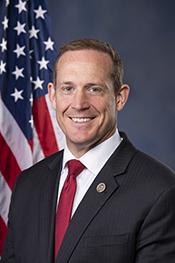
United States · Official source
2,264 records where Sen. Budd, Ted [R-NC] is listed as a sponsor, author, or other actor. Search with topics and years
United States · United States Congress · 21 May 2026
United States · United States Congress · 21 May 2026
United States · United States Congress · 20 May 2026
United States · United States Congress · 20 May 2026
United States · United States Congress · 19 May 2026
United States · United States Congress · 14 May 2026
United States · United States Congress · 13 May 2026
United States · United States Congress · 13 May 2026
United States · United States Congress · 12 May 2026
United States · United States Congress · 11 May 2026
This resolution honors the life of Dirk Kempthorne, former Senator for the state of Idaho, and offers condolences to his family and loved ones.
United States · United States Congress · 30 April 2026
United States · United States Congress · 30 April 2026
United States · United States Congress · 30 April 2026
United States · United States Congress · 30 April 2026
United States · United States Congress · 30 April 2026
This resolution expresses commitment to countering the influence of China in Latin America and the Caribbean and emphasizes the importance of U.S. investment and engagement in the region. The resolution also encourages countries in Latin America and the Caribbean to review foreign investments in strategic sectors that risk undermining their security.
United States · United States Congress · 29 April 2026
United States · United States Congress · 29 April 2026
United States · United States Congress · 29 April 2026
United States · United States Congress · 29 April 2026
This resolution honors the contributions of small businesses in the United States and supports the designation of National Small Business Week.
United States · United States Congress · 28 April 2026
United States · United States Congress · 22 April 2026
United States · United States Congress · 22 April 2026
United States · United States Congress · 22 April 2026
United States · United States Congress · 22 April 2026
United States · United States Congress · 21 April 2026
United States · United States Congress · 20 April 2026
United States · United States Congress · 16 April 2026
United States · United States Congress · 16 April 2026
United States · United States Congress · 16 April 2026
United States · United States Congress · 16 April 2026
United States · United States Congress · 16 April 2026
Fostering Learning and Excellence in Charter Schools Act or the FLEX Act This bill expands and revises the Charter Schools Program (CSP), including by expanding the allowable uses of CSP funds. Current law authorizes competitive grants to state entities (e.g., state educational agencies and state charter school boards) and, through them, subgrants to eligible applicants (i.e., charter school developers) to enable them to open and prepare for the operation of a new charter school or replicate or expand an existing high-quality charter school. The bill allows subgrants to also be used for adding or expanding programs or other offerings at these schools, such as through the adoption of new academic programs or delivery models, personalized learning, or a new curricular approach. New offerings must enable additional students to enroll in and benefit from the school. Eligible applicants may also use CSP funds for activities such as hiring and compensating teachers and other school staff (currently, this may only occur during the planning period); carrying out necessary renovations, upgrades, or facility repairs, or acquiring portable classrooms; and providing transportation to students (currently, only one-time, start-up transportation costs are permitted). Eligible applicants may request and receive advance payments of subgrants. Among other requirements, the Department of Education must (1) use CSP funds for additional activities (e.g., increasing the number of available seats in charter schools that serve rural students and students with disabilities), and (2) consult with charter school operators prior to issuing a notice of proposed rulemaking relevant to charter schools.
United States · United States Congress · 15 April 2026
IGO Anti-Boycott Act This bill penalizes U.S. persons (individuals or entities) that participate in certain boycotts imposed by international governmental organizations (IGOs). The bill expands an existing law that prohibits various actions by U.S. persons in relation to boycotts imposed by foreign governments on a country that is friendly to the United States and not itself the object of a U.S. boycott. This bill applies those prohibitions to similar boycotts imposed by IGOs. Prohibited actions include (1) refusing to do business with companies organized under the laws of the boycotted country, if the refusal is pursuant to an agreement with or request from the country or IGO imposing the boycott; (2) furnishing information about whether any person has a business relationship with or in the boycotted country; and (3) furnishing information about whether someone is associated with charitable or fraternal organizations that support the boycotted country. Criminal penalties for willful violations of this law include fines of up to $1 million. In addition to such fines, individuals may be imprisoned for up to 20 years. Civil penalties may include fines and revocations of export licenses for certain national security-related items. The bill also requires the President to annually submit to Congress and make available to the public a report describing these boycotts and listing the foreign countries and international governmental organizations involved in fostering or imposing them.
United States · United States Congress · 15 April 2026
United States · United States Congress · 26 March 2026
United States · United States Congress · 26 March 2026
United States · United States Congress · 26 March 2026
United States · United States Congress · 26 March 2026
United States · United States Congress · 24 March 2026
United States · United States Congress · 24 March 2026
United States · United States Congress · 19 March 2026
United States · United States Congress · 19 March 2026
United States · United States Congress · 17 March 2026
Federal Law Enforcement Officer Service Weapon Purchase Act of 2026 This bill directs the General Services Administration to establish a program under which a federal law enforcement officer may purchase a retired firearm from the agency that issued the firearm to the officer.
United States · United States Congress · 16 March 2026
United States · United States Congress · 11 March 2026
United States · United States Congress · 11 March 2026
United States · United States Congress · 11 March 2026
United States · United States Congress · 11 March 2026
Next Generation 9–1–1 Act This bill establishes a grant program to support implementation of next generation 9-1-1 (NG9-1-1) systems by state, territorial, and tribal governments and requires other related activities. NG9-1-1 means a secure, interoperable, Internet Protocol-based (IP-based) system for receiving 9-1-1 requests for emergency assistance. (IP-based 9-1-1 systems have capabilities that legacy telephone systems do not, including enhanced location-finding and the ability to receive text and multimedia messages.) Under the bill, the National Telecommunications and Information Administration (NTIA) must provide grants to state, territorial, and tribal governments (and entities established by those governments) to support the implementation and maintenance of NG9-1-1 systems. Grant funds may also be used for public outreach on NG9-1-1, implementation of cybersecurity measures, and, subject to certain limits, training and administrative costs. Entities applying for grants must submit a plan for NG9-1-1 coordination and implementation that ensures interoperability and reliability, incorporates cybersecurity tools, and meets other requirements related to technology and procurement. Applicants must also certify that they have established, or will establish within a specified time frame, a sustainable funding mechanism to support NG9-1-1 and effective cybersecurity resources. The NTIA must advise applicants on the preparation of implementation plans and provide technical assistance to grant recipients. Further, the NTIA must establish (1) an advisory board to provide recommendations with respect to the grant program and other topics related to NG9-1-1; and (2) a cybersecurity center to coordinate with state, local, and regional governments on the sharing of cybersecurity information related to NG9-1-1.
United States · United States Congress · 5 March 2026
United States · United States Congress · 5 March 2026
United States · United States Congress · 4 March 2026
United States Commission on International Religious Freedom Reauthorization Act of 2026 This bill reauthorizes the U.S. Commission on International Religious Freedom through FY2028. The commission is an independent federal commission tasked with monitoring international religious freedom conditions, reviewing U.S. government policy, and making policy recommendations.