Bill· SS. 4065 (119th)referred
STAND with Taiwan Act of 2026
United States · United States Congress · 11 March 2026
The world's political record
Person
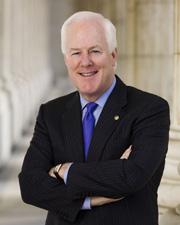
United States · Official source
4,950 records where Sen. Cornyn, John [R-TX] is listed as a sponsor, author, or other actor. Search with topics and years
United States · United States Congress · 11 March 2026
United States · United States Congress · 3 March 2026
United States · United States Congress · 3 March 2026
United States · United States Congress · 3 March 2026
Bankruptcy Threshold Adjustment Act of 2026 This bill restores changes that expired in 2024 applicable to debt limits for Subchapter V (small business reorganization) and Chapter 13 (the wage earner's plan) bankruptcies. Specifically, the bill increases the debt limit under Subchapter V from approximately $3.4 million to $7.5 million and increases the cumulative debt limit under Chapter 13 from approximately $2.1 million to $2.75 million. The bill also applies both secured and unsecured debt towards the Chapter 13 limit. (Currently, separate limits apply to secured and unsecured debt under Chapter 13 bankruptcy.)
United States · United States Congress · 26 February 2026
United States · United States Congress · 25 February 2026
Gun Owner Registration Information Protection Act This bill prohibits federal funding of, or support for, state databases that list (1) firearms lawfully owned or possessed by individuals, or (2) individuals who lawfully own or possess firearms.
United States · United States Congress · 25 February 2026
United States · United States Congress · 24 February 2026
United States · United States Congress · 24 February 2026
United States · United States Congress · 12 February 2026
United States · United States Congress · 12 February 2026
Count the Crimes to Cut Act This bill establishes public databases of federal criminal offenses. Specifically, the bill requires the Department of Justice to report on and create a public database of all criminal statutory offenses. Additionally, the bill requires federal agencies to report on and create public databases of criminal regulatory offenses that they enforce.
United States · United States Congress · 12 February 2026
United States · United States Congress · 12 February 2026
United States · United States Congress · 12 February 2026
United States · United States Congress · 11 February 2026
United States · United States Congress · 9 February 2026
United States · United States Congress · 29 January 2026
Safeguard American Voter Eligibility Act or the SAVE America Act This bill requires individuals to provide documentary proof of U.S. citizenship when registering to vote, and requires photo identification to vote, in federal elections. Specifically, the bill prohibits states from accepting and processing an application to register to vote in a federal election unless the applicant presents documentary proof of U.S. citizenship. The bill specifies what documents are considered acceptable proof of U.S. citizenship, such as identification that complies with the REAL ID Act of 2005 that indicates U.S. citizenship. Further, the bill (1) prohibits states from registering an individual to vote in a federal election unless, at the time the individual applies to register to vote, the individual provides documentary proof of U.S. citizenship; and (2) requires states to establish an alternative process to demonstrate U.S. citizenship. Each state must take affirmative steps on an ongoing basis to ensure that only U.S. citizens are registered to vote, which shall include establishing a program to identify individuals who are not U.S. citizens using information supplied by certain sources. Additionally, states must remove noncitizens from their official lists of eligible voters. The bill (1) provides for a private right of action for certain violations, and (2) establishes criminal penalties for certain offenses. Individuals voting in federal elections must present an eligible photo identification document. An individual who votes by absentee ballot must submit a copy of their identification document with both the request for, and the submission of, the absentee ballot.
United States · United States Congress · 28 January 2026
United States · United States Congress · 27 January 2026
United States · United States Congress · 27 January 2026
United States · United States Congress · 15 January 2026
United States · United States Congress · 15 January 2026
United States · United States Congress · 15 January 2026
United States · United States Congress · 15 January 2026
United States · United States Congress · 14 January 2026
United States · United States Congress · 14 January 2026
United States · United States Congress · 14 January 2026
United States · United States Congress · 13 January 2026
United States · United States Congress · 13 January 2026
Pregnant Students' Rights Act This bill requires each institution of higher education (IHE) that participates in federal student aid programs to provide certain information to prospective and enrolled students on the rights and resources for pregnant students to carry a baby to term or students who may become pregnant while enrolled at the IHE to carry a baby to term. In particular, this required information must include a list of community and on-campus resources that exist to help a pregnant student in carrying the baby to term and caring for the baby after birth, information about the accommodations available to help a pregnant student carry the baby to term and parent the baby after birth, and information on how to file a discrimination complaint related to the student's determination to carry a baby to term.
United States · United States Congress · 8 January 2026
United States · United States Congress · 7 January 2026
United States · United States Congress · 18 December 2025
United States · United States Congress · 17 December 2025
United States · United States Congress · 17 December 2025
United States · United States Congress · 17 December 2025
United States · United States Congress · 16 December 2025
United States · United States Congress · 16 December 2025
Essential Caregivers Act of 2025 This bill prohibits certain health care facilities from limiting the access of essential caregivers to residents of those facilities, including during designated emergency periods. Specifically, the bill generally prohibits Medicare skilled nursing facilities, Medicaid nursing facilities, Medicaid intermediate care facilities, and associated inpatient rehabilitation facilities from restricting the access of essential caregivers to residents of the facilities, including during emergency periods in which visitation rights are otherwise restricted. During emergency periods, facilities may restrict access for an initial period of up to seven days and for one additional maximum seven-day period (if the additional period is approved by the state health department). Facilities may restrict access for a total of 7 days (or 14 days with the approval of the state health department) during an emergency period. Essential caregivers must agree to comply with any safety protocols set by the facility, which may be no more stringent for caregivers compared to those for staff. Caregivers who fail to comply with these requirements may be denied access, subject to an appeals process.
United States · United States Congress · 16 December 2025
United States · United States Congress · 11 December 2025
Law Enforcement Officer and Firefighter Recreation Pass Act This bill directs the Forest Service and the Department of the Interior to make the National Parks and Federal Recreational Lands Pass available, without charge, to law enforcement officers and firefighters.
United States · United States Congress · 11 December 2025
United States · United States Congress · 11 December 2025
United States · United States Congress · 9 December 2025
United States · United States Congress · 9 December 2025
United States · United States Congress · 9 December 2025
Stop Sextortion Act This bill criminalizes threats to distribute child sexual abuse material to intimidate, coerce, extort, or cause substantial emotional distress. This practice is commonly referred to as sextortion . The bill also increases criminal penalties for related offenses that involve the use of child sexual abuse material to intimidate, coerce, extort, or cause substantial emotional distress. Specifically, the bill establishes new federal criminal offenses for threatening to distribute child pornography or a visual depiction of a minor engaging in sexually explicit conduct with intent to intimidate, coerce, extort, or cause substantial emotional distress. An offense, or an attempt or conspiracy to commit the offense, is subject to criminal penalties. Additionally, the bill increases the maximum prison term for various offenses involving the sexual exploitation of children if those offenses involve the use of child pornography or a visual depiction of a minor engaged in sexually explicit conduct with intent to intimidate, coerce, extort, or cause substantial emotional distress.
United States · United States Congress · 9 December 2025
Ending Coercion of Children and Harm Online or the ECCHO Act This bill establishes a federal framework to combat the online coercion of minors to commit harm. The bill creates new criminal offenses, expands reporting of instances involving the online coercion of minors, facilitates the prosecution of offenders, and expands protections for minors who testify in court. Specifically, the bill makes it a crime to intentionally coerce a minor to commit suicide (or attempt to); kill someone (or attempt to); kill a pet, emotional support animal, service animal, or horse (or attempt to); physically harm an individual (including the minor), pet, emotional support animal, service animal, or horse; or commit (or attempt to commit) arson or certain other acts such as doxxing or swatting. A violation (or conspiracy or attempt to commit a violation) is subject to a fine, a prison term, or both. The bill requires electronic communication service providers and remote computing service providers to report instances of online coercion of minors to the National Center for Missing & Exploited Children via the CyberTipline. The bill facilitates the federal prosecution of offenses committed by (1) individuals as part of a child exploitation enterprise, and (2) minors in certain circumstances. The bill extends various protections for minors who testify in court (e.g., certain privacy protections) to those who are victims of or witnesses to crimes involving mental injury (i.e., psychological or intellectual harm to a child) or the negligent treatment of a child.
United States · United States Congress · 9 December 2025
United States · United States Congress · 4 December 2025
United States · United States Congress · 4 December 2025
United States · United States Congress · 4 December 2025
United States · United States Congress · 4 December 2025
Back the Blue Act of 2025 This bill establishes new criminal offenses for violent conduct against judicial officers and law enforcement officers and makes related changes. The bill also broadens the authority of certain law enforcement officers to carry firearms. Specifically, the bill prohibits killing, attempting to kill, or conspiring to kill a federal judge, a federal law enforcement officer, or a public safety or judicial officer for a state, local, or tribal agency that receives federal funding. The bill also prohibits fleeing to avoid prosecution, custody, or confinement for an offense. Additionally, the bill prohibits killing former federal judges, former federal law enforcement officers, or former public safety or judicial officers for state, local, or tribal agencies that receive federal funding. The bill also prohibits certain assaults on state or local law enforcement officers for state (or District of Columbia) agencies that receive federal funding. The bill limits federal court review of challenges to state court convictions for killing a public safety officer or judge. The bill also limits the recoverability of damages and attorney's fees in a proceeding to enforce a civil rights violation during or relating to conduct by the injured person that constitutes a felony or crime of violence. The bill allows federal, state, and local law enforcement officers to carry firearms if authorized by law. The bill also allows qualified law enforcement officers to carry concealed firearms and ammunition (including magazines) in school zones and in certain federal facilities that are open to the public.