Resolution· SRESS.Res. 302 (119th)referred
A resolution designating June 30, 2025 as "Asteroid Day".
United States · United States Congress · 25 June 2025
The world's political record
Person
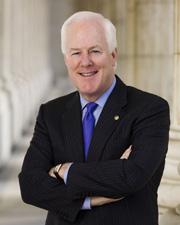
United States · Official source
4,950 records where Sen. Cornyn, John [R-TX] is listed as a sponsor, author, or other actor. Search with topics and years
United States · United States Congress · 25 June 2025
United States · United States Congress · 18 June 2025
United States · United States Congress · 18 June 2025
United States · United States Congress · 18 June 2025
United States · United States Congress · 18 June 2025
United States · United States Congress · 17 June 2025
United States · United States Congress · 11 June 2025
United States · United States Congress · 10 June 2025
United States · United States Congress · 10 June 2025
United States · United States Congress · 10 June 2025
United States · United States Congress · 5 June 2025
United States · United States Congress · 5 June 2025
United States · United States Congress · 5 June 2025
Licensing Aerospace Units to New Commercial Heights Act or the LAUNCH Act This bill makes changes to, and requires certain evaluations of, regulatory processes for licensing commercial space launch and reentry activities and private remote sensing systems. The Federal Aviation Administration (FAA) Office of Commercial Space Transportation regulates the launch and reentry of commercial spacecraft. In 2020, the FAA consolidated launch and reentry licensing requirements for all types of space vehicles into a single set of regulations, known as Part 450. The bill requires the FAA to evaluate and report on the implementation of Part 450 and its impacts on the commercial spaceflight industry, including whether the rule has resulted in uncertainty or operational delays. The FAA must also continue an aerospace rulemaking committee comprised of launch and reentry service providers. Further, the FAA must develop a digital system to accept commercial space launch and reentry applications and provide status information and notifications to applicants. The bill elevates the Office of Commercial Space Transportation to a modal administration reporting directly to the Department of Transportation (DOT). The administration must exercise all of DOT’s authorities related to commercial space launch and reentry. Finally, the bill revises the licensing process for private remote sensing systems and requires the Government Accountability Office to report on the Department of Commerce’s regulation of the private remote sensing industry. ( Remote sensing generally refers to the collection of data by instruments in Earth’s orbit, such as satellites, that can be processed into imagery of Earth’s surface.)
United States · United States Congress · 3 June 2025
United States · United States Congress · 22 May 2025
United States · United States Congress · 22 May 2025
United States · United States Congress · 22 May 2025
Don’t Sell My DNA Act This bill establishes protections for genetic information (e.g., information about an individual's genetic tests) in bankruptcy, particularly genetic information held by companies. In bankruptcies, a trustee is appointed to arrange for the use, sale, or lease of property of the debtor’s estate. The bill provides that if the property of the estate includes genetic information, all affected persons—including those not involved in the bankruptcy—must consent in writing to the use, sale, or lease of the genetic information after the commencement of the bankruptcy case. The trustee or debtor in a Chapter 11 (reorganization) bankruptcy must delete such genetic information if it is not disposed of in accordance with this bill.
United States · United States Congress · 22 May 2025
United States · United States Congress · 22 May 2025
United States · United States Congress · 22 May 2025
United States · United States Congress · 22 May 2025
Holocaust Expropriated Art Recovery Act of 2025 This bill permanently extends and expands judicial authority under the Holocaust Expropriated Art Recovery Act of 2016. The law allows and establishes procedures for civil claims and causes of action to recover artwork and other property lost between 1933 and 1945 because of Nazi persecution. Among the changes, the bill removes the deadline for filing civil claims or causes of action. Currently, the filing deadline is December 31, 2026. (Claims must still be filed within six years of the claimant's discovery of the property in question.) The bill permits courts to exercise jurisdiction over civil claims or causes of action against a foreign state without regard to the nationality or citizenship of the alleged victim. The art or property at issue must still have a connection to the foreign state's commercial activities in the United States. Additionally, the bill authorizes nationwide service of process, which allows courts to exercise personal jurisdiction over defendants in any judicial district where they may be found, reside, have an agent, or transact business. Finally, the bill limits the defenses that may be asserted against civil claims or causes of action, including by prohibiting defenses based on the passage of time, including equitable defenses such as laches (i.e., unreasonable delays); and discretionary bases for dismissal that are unrelated to the merits of the claim, including international comity (i.e., deference to the laws of other countries). These changes apply to pending and future civil claims or causes of action.
United States · United States Congress · 22 May 2025
United States · United States Congress · 22 May 2025
United States · United States Congress · 22 May 2025
United States · United States Congress · 21 May 2025
Second Chance Reauthorization Act of 2025 This bill reauthorizes through FY2030 various federal grants for state, local, and tribal governments, nonprofit organizations, and service providers to support individuals who reenter the community following a period of incarceration. Specifically, the bill reauthorizes the following: grants for adult and juvenile offender reentry demonstration projects; grants for family-based substance abuse treatment programs; grants to evaluate and improve educational methods at prisons, jails, and juvenile facilities; grants for career training education; the offender reentry substance abuse and criminal justice collaboration program; and grants to nonprofit organizations for community-based mentoring and transitional services.
United States · United States Congress · 21 May 2025
This resolution supports the designation of May 2025 as National Beef Month.
United States · United States Congress · 21 May 2025
United States · United States Congress · 20 May 2025
United States · United States Congress · 20 May 2025
Black Vulture Relief Act of 2025 This bill allows livestock producers and their employees to take certain actions against black vultures to protect livestock. (Black vultures are protected under the Migratory Bird Treaty Act.) Specifically, livestock producers and their employees may (1) take (i.e., capture, kill, or disperse, or transport the carcass of) a black vulture that they reasonably believe will cause death, injury, or destruction to livestock; or (2) in the course of taking or attempting to take the black vulture, cause injury to the bird. However, they may not take or attempt to take a black vulture through the use of poison. Livestock producers and their employees must submit an annual report to the U.S. Fish and Wildlife Service (FWS) on black vultures taken under this bill. The FWS must develop a reporting form and make this reporting form available on its website. Currently, the FWS has a permit process under the Migratory Bird Treaty Act for the taking of black vultures.
United States · United States Congress · 20 May 2025
United States · United States Congress · 20 May 2025
United States · United States Congress · 20 May 2025
Improving Seniors' Timely Access to Care Act of 2025 This bill establishes several requirements and standards relating to prior authorization processes under Medicare Advantage (MA) plans. Specifically, MA plans must (1) establish an electronic prior authorization program that meets specified standards; (2) annually submit to the CMS for publication specified prior authorization information, including the percentage of requests approved and the average response time; and (3) meet other standards, as set by the Centers for Medicare & Medicaid Services (CMS), relating to the quality and timeliness of prior authorization determinations. The CMS and the Office of the National Coordinator for Health Information Technology must publish on the CMS' website a report that analyzes the information received from MA plans, the feasibility of implementing real-time decision making with respect to prior authorization requests, and the impact of decisions that are made using artificial intelligence on patient access.
United States · United States Congress · 15 May 2025
United States · United States Congress · 15 May 2025
Empower Charter School Educators to Lead Act This bill makes changes to the Charter Schools Program (CSP), which authorizes competitive grants to state entities (e.g., state educational agencies and state charter school boards) to support high-quality charter schools. Specifically, the bill allows state entities to use up to 5% of their CSP grant funds to make pre-charter planning subgrants to certain prospective charter applicants. The bill specifies that state entities may also (1) fund a revolving loan fund or similar mechanisms for expenses prior to an eligible applicant receiving reimbursement, and (2) provide assistance to eligible applicants in locating and accessing a charter school facility. Under the current CSP, state entities must use at least 7% of their CSP grant funds to provide technical assistance to eligible applicants and authorized public chartering agencies. The bill instead allows state entities to use not more than 10% of these funds for technical assistance. Additionally, under the current CSP, state entities may not use more than 3% of CSP grant funds for administrative costs. This bill raises the cap to 5%.
United States · United States Congress · 15 May 2025
United States · United States Congress · 15 May 2025
United States · United States Congress · 15 May 2025
Livestock Indemnity Program Enhancement Act of 2025 or the LIP Enhancement Act of 2025 This bill expands coverage under the Livestock Indemnity Program (LIP) to include unborn livestock as LIP-eligible livestock losses. The bill applies to unborn livestock death losses (i.e., losses of any livestock that was gestating on the date of the death of the livestock) incurred on or after January 1, 2024. LIP is a Farm Service Agency program that provides indemnity payments to eligible livestock owners and contract growers for livestock deaths in excess of normal mortality or reduced sales prices due to specified events (e.g., adverse weather, disease, or animal attack).
United States · United States Congress · 14 May 2025
United States · United States Congress · 14 May 2025
United States · United States Congress · 14 May 2025
Kids Online Safety Act This bill requires covered online platforms, including social media platforms, to implement tools and safeguards to protect users and visitors under the age of 17. Covered platforms are online platforms, video games, messaging applications, or video streaming services used or likely to be used by individuals under the age of 17, with specified exceptions. The bill generally requires covered platforms to exercise reasonable care in the design and use of features that increase minors’ online activity in order to prevent and mitigate harm to minors (e.g., mental health disorders and severe harassment). Covered platforms are also required to provide certain safeguards to minors, such as protections for minors’ data; tools for parents of minors, such as access to minors’ privacy settings; and a mechanism for account holders and visitors to report harm to minors on the platform. Covered platforms are prohibited from conducting market or product research on children under the age of 13, and may only conduct such research on those under the age of 17 with parental consent. The bill provides for enforcement through the Federal Trade Commission and states. The bill also requires online platforms to meet certain requirements before using algorithms that select, order, or prioritize information presented to users based on user-specific data not provided for that purpose. Specifically, such platforms must (1) provide users with notice of the use of such algorithms, and (2) permit users to switch to an algorithm that does not rely on such user-specific data.
United States · United States Congress · 13 May 2025
United States · United States Congress · 13 May 2025
United States · United States Congress · 13 May 2025
United States · United States Congress · 13 May 2025
Dismantling Ideological Policies for Semiconductors and Science Act This bill repeals requirements and eliminates positions related to diversity, equity, and inclusion (DEI) in various federal programs and offices focused on science. Each of the repealed provisions was originally included in the CHIPS and Science Act. Among other modifications, the bill repeals a provision authorizing the National Institute for Standards and Technology to conduct outreach to and develop research collaborations with historically Black colleges and universities, tribal colleges and universities, and other minority-serving institutions; eliminates the position of Chief Diversity Officer within the National Science Foundation (NSF); repeals an NSF grant program to enable institutions of higher education and nonprofit organizations to increase the participation of women and underrepresented minorities in science, technology, engineering, and math (STEM) studies and careers; and eliminates references to diversity in the purposes and responsibilities of the Office of STEM Engagement within the National Aeronautics and Space Administration. The bill also prohibits executive branch agencies from requiring entities seeking federal funding to have certain policies in place, unless such a requirement is imposed by a federal statute. Such policies include those related to hiring, training, and retaining a diverse workforce; providing childcare for employees; minimizing adverse impacts on the environment and local communities; and consultation with labor organizations. (On January 20, 2025, President Trump issued an executive order titled Ending Radical and Wasteful Government DEI Programs and Preferencing , which directed the termination of all federal DEI programs, offices, and positions, including Chief Diversity Officer positions.)
United States · United States Congress · 13 May 2025
United States · United States Congress · 12 May 2025
United States · United States Congress · 12 May 2025
Safeguarding Transit Operations to Prohibit China Act or the STOP China Act This bill prohibits federal transportation funds from being used to purchase rolling stock (e.g., rail cars or buses) or fueling or charging infrastructure from entities with ties to China, North Korea, Russia, or Iran (i.e., a covered nation). In general, this replaces a current prohibition on the use of Federal Transportation Administration (FTA) funds for rolling stock from manufacturers owned or controlled by corporations based in certain countries. Specifically, Department of Transportation (DOT) funds, which include FTA funds, may not be used for the purchase of rolling stock or bus fueling or charging infrastructure from entities with ties to a covered nation. This prohibition also applies to vehicles that incorporate electric power trains from such entities. The prohibition broadly applies to corporations, joint ventures, individuals, and organizations with ties to covered nations. Examples of applicable entities include an individual whose activities are directed or financed by a covered nation or an entity that is owned or controlled by a covered nation or such an individual. The United States Trade Representative (USTR) must publish a list of the applicable entities and update the list annually. The bill includes an exception for motor vehicles or fueling and charging stations used for (1) inspecting or investigating vehicles or equipment; or (2) vehicle safety research, development, or testing.
United States · United States Congress · 8 May 2025
United States · United States Congress · 8 May 2025
This resolution honors and commends the Blinded Veterans Association for its 80 years of dedicated service, advocacy, and support for blind and low-vision veterans. The resolution also urges the Department of Veterans Affairs (VA) to (1) guarantee safe access for guide dogs and guide dog users at VA facilities, and (2) ensure that each VA medical center has a trained and capable Service Dog Champion (i.e., a designated staff member who addresses service animal access and issues) on site. Further, the resolution reaffirms the commitment of the Senate to supporting and improving services and opportunities available to all veterans.
United States · United States Congress · 8 May 2025