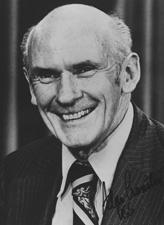
United States · United States Congress · 19 February 1987
Extends adverse action provisions of Federal law regarding Federal employees (concerning removal, suspension for more than 14 days, reduction in grade or pay, or furlough for 30 days or less) to Postal Service employees who: (1) are preference eligibles; (2) are supervisors or employees engaged in confidential personnel work; and (3) have completed one year of continuous service in the same or similar positions. Authorizes the Director of the Office of Personnel Management to obtain judicial review in the United States Court of Appeals for the Federal Circuit if: (1) the Director determines that the Board of Governors of the Postal Service erred in interpreting a civil service law, rule, or regulation affecting personnel management, and that the Board's decision will have a substantial impact on a civil service law, rule, regulation, or policy directive; or (2) the Postal Service makes such determination regarding postal personnel management.
United States · United States Congress · 19 February 1987
Requires the President to direct the Secretary of Defense, the Secretary of Health and Human Services, and the Administrator of Veterans Affairs to submit to the appropriate committees of the Congress, no later than 180 days after the enactment of this Act, a joint report addressing the question of Government responsibility for providing benefits and services to individuals who served with volunteer organizations in support of U.S. armed forces stationed in Vietnam during the Vietnam era.
United States · United States Congress · 19 February 1987
Expresses the sense of the Senate that the proposed rescission of budget authority for community development block grants (R87-46) should be disapproved.
United States · United States Congress · 19 February 1987
Supports the President in seeking global measures regarding the adverse effects resulting from the release of chlorofluorocarbons and other manufactured chemicals that may deplete the ozone layer, including negotiating an immediate international reduction in the use of chlorofluorocarbons and the expeditious elimination of fully halogenated chlorofluorocarbons and other manufacturing chemicals that may deplete the ozone layer.
United States · United States Congress · 17 February 1987
Establishes the Veterans Administration as an executive department redesignated as the Department of Veterans' Affairs. Makes technical and conforming changes, including the redesignation of the Administrator as the Secretary of Veterans' Affairs.
United States · United States Congress · 17 February 1987
Amends the National Housing Act to make authority permanent for: (1) title I financial institution insurance for housing renovation and modernization; (2) general mortgage insurance; (3) low and moderate income and displaced families mortgage insurance; (4) mortgage co-insurance, including rental rehabilitation and development projects; (5) mortgage insurance for armed forces' civilian employees and defense housing for impacted areas; (6) mortgage insurance for land development; (7) mortgage insurance for medical and dental group practice facilities; and (8) graduated payment and indexed mortgage insurance. Amends the Housing Act of 1964 to make authority permanent for urban rehabilitation loans. Amends the Housing Act of 1949 to make authority permanent for: (1) insured loans for rental and cooperative housing and related facilities for elderly persons and families in rural areas; and (2) mutual and self-help housing grants and loans. Amends the National Flood Insurance Act of 1986 to make national flood insurance authority, including emergency implementation provisions, permanent.
United States · United States Congress · 17 February 1987
Declares that the American people reaffirm our commitment to promote the development of democracy for all Korean people. Expresses the sense of the Congress that: (1) the U.S. interest in securing democracy and human rights in the Republic of Korea would be best served by the peaceful establishment of democratic institutions; (2) a necessary condition for achieving democracy is an electoral system that gives the Korean people confidence that the outcome of such elections will reflect their will; and (3) the necessary conditions of such elections are freedom of expression, freedom of the press, due process of law, an independent judiciary, an end to the use of torture, the release of all political prisoners, and the restoration of full political and civil rights.
United States · United States Congress · 5 February 1987
Digital Audio Recorder Act of 1987 - Requires digital audio recording devices in commerce to contain a copy-code scanner. Prohibits the deactivation or bypassing of such scanners. Entitles an aggrieved party to damages which can include actual or statutory damages and impoundment, destruction, or modification of the violating device. Permits the Secretary of Commerce to exempt certain devices used exclusively for legitimate business purposes. Terminates this requirement after three years.
United States · United States Congress · 5 February 1987
Jobs for Employable Dependent Individuals Act - Amends the Job Training Partnership Act to entitle each State to the payment of a bonus for the successful job placement of certain employable dependent individuals. Makes an individual who is a head of a household eligible to be counted for an incentive bonus if the individual: (1) has received benefits continuously under part A (Aid to Families with Dependent Children) (AFDC) of title IV of the Social Security Act or under cash and medical assistance to refugees, for at least two years prior to participation in education, training, and support activities designed to provide jobs for such individuals and has no work experience for the year preceding the year for which the eligibility determination is made; or (2) receives benefits at the time the determination of eligibility is made under aid to families with dependent children, or under cash and medical assistance to refugees, and has not attained 22 years of age, has not completed secondary school or its equivalent, and has no work experience for the year preceding the year for which the eligibility determination is made. Requires that such individual: (1) participate in education, training, and support activities designed to provide jobs for such individuals; (2) be placed in nonsubsidized employment for at least one year after such participation; (3) receive from such employment an income equal to or greater than cash benefits under aid to families with dependent children or under cash and medical assistance to refugees; and (4) no longer qualify for such benefits. Provides that the amount of the incentive bonus paid to each State shall be equal to: (1) 75 percent of the placement bonus base for each successful placement; (2) 50 percent of the placement bonus base for the second continuous year of such employment; and (3) 25 percent of the placement bonus base for the third continuous year of employment. Sets forth formulas for determination of the placement bonus base. Sets forth State application requirements. Requires adequate verification of placements for approval of applications. Directs the Governor to reserve an amount equal to the amount the State receives for incentive bonuses. Directs the Governor to set aside up to 15 percent of such amount for distribution to participating State agencies to support the costs of establishing and maintaining systems necessary for the operation of the incentive bonus program. Directs the Governor to distribute the remainder of the reserved amount to participating agencies, private industry councils in service delivery areas, and service providers who contribute to the incentive bonus program for education, training, and support activities designed to provide jobs. Directs the Secretary of Labor to evaluate the program under this Act and to report to the Congress within three years after enactment of this Act on the costs and savings of such program. Provides for targeted assistance for employable dependent individuals. Provides for reallocation to States of certain available amounts based on the number of AFDC recipients and on the number of placements of individuals who are heads of households who receive AFDC benefits and job training under programs conducted with Federal financial assistance. Provides that the reallocated amounts shall be targeted to training activities, including outreach activities and preemployment support activities for employable dependent individuals. Authorizes appropriations for the program of incentive bonus payments for employable dependent individuals.
United States · United States Congress · 5 February 1987
Declares that the Senate: (1) reaffirms U.S. support for Philippine President Corazon Aquino on the occasion of the approval of the new Philippine constitution; (2) commends President Aquino for progress toward democracy in the Philippines; and (3) praises the continued commitment of the Philippine Government and people to strengthen their democracy and achieve economic, political, and military reform.
United States · United States Congress · 4 February 1987
Food Irradiation Safety and Labeling Requirement Act of 1987 - Prohibits the Secretary of Agriculture from implementing pork irradiation regulations and the Secretary of Health and Human Services from implementing other food irradiation regulations. Requires the Secretary of Health and Human Services to arrange for and report within two years on a study of the risks to human health and the environment presented by food irradiation. Amends the Federal Food, Drug, and Cosmetic Act to require that food for domestic use or export which has been irradiated be labeled in a prescribed fashion. Requires restaurant menus to indicate when foods have been irradiated. Requires persons irradiating food to report semiannually to the Secretary.
United States · United States Congress · 4 February 1987
Homeless Veterans Assistance Act of 1987 - Authorizes the Administrator of Veterans Affairs to enter into certain agreements with public or private organizations for the purpose of providing shelter for homeless veterans and their families, as long as such action does not adversely affect the Veterans Administration (VA). Outlines preferences in choosing among such organizations. Directs the Administrator to conduct a pilot program and study, for a period of not less than 24 months and in not less than ten geographic areas in which there are significant numbers of homeless veterans, of activities designed to assist homeless veterans and their families. Directs the Administrator, within 90 days after the enactment of this Act, to submit to the Senate and House Veterans' Affairs Committees a report describing and evaluating the provision of outreach services to homeless veterans. Directs the Administrator, within 180 days after the enactment of this Act, to report to the same Committees on the extent to which veterans are represented in the population of homeless individuals. Requires the Administrator to submit a specified implementation plan in relation to the above report within 30 days after the enactment of this Act. Amends the Veterans' Benefits and Health-Care Authorization Act of 1986 to require a report required under such Act to include specified information relating to the treatment of chronically mentally ill veterans by the VA during FY 1984 through 1987. Requires the Administrator to contract for care and treatment and rehabilitative services in halfway houses, therapeutic communities, psychiatric residential treatment centers, and other eligible facilities for the treatment of chronically mentally ill veterans, and to assist such veterans in being placed in such facilities.
United States · United States Congress · 4 February 1987
Civil Rights Amendments Act of 1987 - Amends the Civil Rights Act of 1964 to prohibit discrimination on the basis of affectional or sexual orientation. Provides that this Act shall not be construed to permit a finding of discrimination based on statistical differences or the fashioning of any remedy requiring a quota.
United States · United States Congress · 4 February 1987
Repeals provisions of the Department of Defense Authorization Act, 1985 which: (1) provide a remedy against the United States for loss of property, personal injury, or death due to exposure to radiation based on acts or omissions by a contractor conducting atomic weapons tests under a contract with the United States; and (2) preclude any other civil action by individuals against a contractor for the purpose of determining civil liability from acts or omissions of such contractor. Makes the period during which such provision was in effect inapplicable for purposes of the tolling of any statute of limitations for claims. Adjusts the statute of limitations for any actions brought under such provisions.
United States · United States Congress · 4 February 1987
Requires the Secretary of Health and Human Services to approve the application for a demonstration project submitted by Fresno County, California, and the California Department of Social Services to promote the employment of principal earners in the Aid to Families with Dependent Children (part A of title IV of the Social Security Act) program. Limits Federal funding for such project.
United States · United States Congress · 4 February 1987
Mutual Nuclear Warhead Testing Moratorium Act - Expresses the sense of the Congress that the President should declare that the United States: (1) will, as soon as in-country reciprocal monitoring arrangements are implemented, stop testing nuclear warheads; and (2) will invite the Soviet Union to stop testing nuclear warheads and meet with the United States to enter into negotiations for the conclusion of a Comprehensive Test Ban Treaty at the earliest possible date. Declares that the United States should continue the cessation of the testing of nuclear warheads so long as the Soviet Union refrains from the testing of nuclear warheads and substantive Comprehensive Test Ban Treaty negotiations are in progress. Expresses the sense of the Congress that during such cessation the President should seek resumption of the comprehensive test ban talks. Prohibits the United States from obligating or spending any money for testing nuclear warheads outside a designated test area or for testing certain larger warheads within such a test area during the 12-month period beginning 90 days after enactment of this Act if the President does not declare a cessation of nuclear testing. Declares that such prohibition shall cease to apply if the President certifies that: (1) the Soviet Union has carried out such tests; or (2) after the prohibition takes effect, the Soviet Union refuses to accept and implement reciprocal in-country monitoring arrangements. Sets forth information to be included in such certification. Declares that the limitation on nuclear explosions shall be supplanted by a U.S.-Soviet agreement establishing significant limits on nuclear explosions that is negotiated after enactment of this Act. Requires the President to report annually to the Congress on progress in negotiating a U.S.-Soviet Comprehensive Test Ban Treaty.
United States · United States Congress · 4 February 1987
Requires that $40,000,000 in aid to the Nicaraguan democratic resistance shall be withheld until the special congressional committees that are investigating the arms sales to Iran, the alleged diversion of proceeds from those sales to the Nicaraguan democratic resistance, and related matters have completed their investigations. Reduces the amount of aid made available to the resistance following completion of such investigations by the amount of the proceeds from the arms sales, if any, that were illegally used for aid to the resistance.
United States · United States Congress · 3 February 1987
Directs the Secretary of the Interior, acting through the Director of the National Park Service, to conduct a study of the proper minimum altitude which should be maintained by aircraft flying over areas within units of the national park system. Directs the Secretary of Transportation, acting through the Federal Aviation Administration, to provide technical assistance to the Secretary of the Interior for such study. Requires the Secretary of the Interior to report to the Congress within two years after enactment of this Act regarding the study results. Requires the Administrator of the Federal Aviation Administration to: (1) review, on the basis of aviation safety, current regulations pertaining to aircraft flights over units of the national park system addressed in the study conducted by the Secretary of the Interior; and (2) report to the Congress the results of such review together with recommendations for changes. Authorizes appropriations for such studies. Prohibits any fixed wing aircraft or helicopter from flying below specified minimum altitudes during such study and review periods over the surfaces of Yosemite National Park and Haleakala National Park. Requires the Secretary of the Interior to submit a final plan for air traffic management and noise abatement over Grand Canyon National Park to the Administrator. Prescribes guidelines under which the Administrator is required to implement such plan. Requires the Secretary of the Interior to report to the Congress whether such final plan has succeeded in substantially restoring the natural quiet in the Grand Canyon National Park. Exempts certain helicopter flights of river runners from prohibition under the noise abatement plan.
United States · United States Congress · 3 February 1987
Amends the Tax Reform Act of 1986 to repeal provisions relating to the taxation of both individual and corporate capital gains. Provides that the Internal Revenue Code shall be applied and administered as if such provisions had not been enacted. Amends the Deficit Reduction Act of 1984 to increase the holding period required for long-term capital gain tax treatment of property acquired after 1986. Amends the Internal Revenue Code to revise the method of calculating the deduction for capital gains. Allows a capital gains deduction of 60 percent for assets held three years or more, and 40 percent for assets held for more than one but less than three years.
United States · United States Congress · 3 February 1987
Title I: General Provisions - Emergency Housing Act of 1987 - Creates the Emergency Housing National Board (Board), which shall exist until October 1, 1992. Mandates that the Secretary of Housing and Urban Development (Secretary) and the Federal Emergency Management Agency enter into an interagency agreement to establish such Board and to administer the programs under this Act. Provides for designated local boards to determine which local organizations shall receive grants to act as service providers and to monitor and oversee local programs. Designates the Secretary as Federal liaison to the Board and directs the Secretary to provide specified support services to it. Mandates an annual independent audit of the Board and establishes guidelines to govern recordkeeping pertinent to such audit. Requires that the Board submit an annual report to the Congress. Title II: Emergency Housing Grants - Directs the Secretary, within 30 days of enactment of appropriations to implement this title, to grant the full amount of such funds to the Board for the purpose of providng emergency housing and associated services to needy persons through units of local government and certain private nonprofit organizations. Specifies eligible uses of such grants by the Board to include: (1) expanding and supplementing ongoing efforts to provide shelter for the homeless; (2) serving as a national clearinghouse for information relating to homelessness; (3) providing financial encouragement to effective and innovative local programs; and (4) conducting minimum rehabilitation of existing eligible temporary housing facilities. Limits the Board's administrative costs to a specified percentage of total emergency housing appropriations in any given year. Requires the Board to establish and publish annually written guidelines for various board responsibilities, including methods for determining those localities having the greatest need for emergency housing assistance and for allocating grant funds to them. Exempts the Board from the procedural rulemaking requirements generally applicable to Federal agencies. Requires that grants made by the Board be allocated to localities on the basis of relative need, determined according to objective criteria and in consultation with the States. Authorizes appropriations for FY 1988 and 1989. Authorizes additional FY 1988 and 1989 appropriations for programs to which non-Federal sources contribute at least half of the cost. Title III: Transitional Housing Demonstration Program - Directs the Secretary to carry out a demonstration project designed to determine the acquisition costs, operating costs, and advantages, social and otherwise, associated with housing and supportive services to assist homeless persons, especially those in transition toward independent living. Authorizes the Secretary to provide assistance in the form of: (1) non-interest-bearing advances, subject to non-repayment under specified conditions and subject to specific budget authority; (2) annual payments for operating costs; and (3) technical assistance. Lists criteria to be considered by the Secretary in selecting recipients for assistance. Requires that such recipients comply with specified conditions relating to the operation of housing and the provision of supportive services for the homeless. Directs the Secretary to issue and publish annually guidelines for the demonstration program. Mandates that the Secretary submit to the Congress both an interim and a final report on the program. Title IV: Emergency Shelter Grants Program - Establishes a program under which the Secretary shall make grants to States, local governments, and certain private nonprofit organizations to pursue activities relating to emergency shelter for the homeless, including renovation of buildings, and provision of certain essential services. Sets forth general requirements applicable to the allocation and reallocation of grant funds, the submission of plans by eligible grantees, the timetable governing the granting of funds, and the responsibility of grantees to generate matching funds. Authorizes appropriations for FY 1988 and 1989 for implementation of titles III and IV of this Act.
United States · United States Congress · 2 February 1987
Gives special recognition to the achievements of wilderness ecologist Aldo Leopold. Urges Federal land management agencies to model their activities after the conservation ethic he inspired.
United States · United States Congress · 29 January 1987
SALT II Sublimit Mutual Restraint Act of 1987 - Prohibits, within 60 days after enactment of this Act, the obligation or expenditure of funds through December 31, 1987, which would cause the United States to exceed the numerical sublimits on strategic launchers and platforms contained in the SALT II Treaty. Requires the President, within 30 days after enactment of this Act, to notify the Congress of his plans for carrying out this provision. Directs the President, by October 15, 1987, to report to the Congress concerning dismantling actions taken by the United States and the Soviet Union to comply with the SALT II numerical sublimits. Reaffirms the sense of the Congress that it is in U.S. national security interests to comply with the numerical sublimits of the SALT II Treaty as long as the Soviet Union does likewise. Encourages the President to pursue restraints on offensive nuclear forces with the Soviet Union until a new comprehensive nuclear arms agreement is concluded. Waives all such numerical compliance if the President notifies the Congress, with an accompanying report, that the Soviet Union has exceeded the numerical sublimits.
United States · United States Congress · 21 January 1987
Amends the Housing and Community Development Act of 1974 to permit community development block grants to be used for uniform emergency telephone number systems.
United States · United States Congress · 21 January 1987
Authorizes the President to call a White House Conference on Library and Information Services, to be held not later than 1989, to develop recommendations for improvement of such services and their public use. Requires that the Conference be planned and conducted by the National Commission on Libraries and Information Sciences. Authorizes the Librarian of Congress, the Director of the National Library of Medicine, and the Director of the National Agricultural Library, upon request, to detail personnel to the Commission. Requires the Conference to submit a final report to the President within 120 days following its close. Directs that the final report be made public, and within 90 days after receipt by the President transmitted to the Congress with recommendations. Establishes an advisory committee to assist in planning and conducting the Conference. Includes among its appointed members the Secretary of Education and the Librarian of Congress. Authorizes appropriations as necessary.
United States · United States Congress · 21 January 1987
Designates January 28, 1987, as National Challenger Center Day. (The Challenger Center is an institution offering children and teachers activities and information derived from American space research.)
United States · United States Congress · 21 January 1987
Expresses the sense of the Congress that the Government of South Africa should take necessary steps to secure the release of Reverend Tshenuwani Simon Farisani from detention in Venda, a homeland in South Africa.
United States · United States Congress · 20 January 1987
Prompt Payment Act Amendments of 1987 - Revises Federal law to deem the head of a Federal agency to have received an invoice on the later of: (1) the date on which the designated office or employee of an agency actually receives it; or (2) the fifth day after the date on which a property is actually delivered, or final performance of a service is actually completed, unless the contract specifies otherwise. Makes Federal prompt payment provisions applicable to the United States Postal Service. Makes the Postmaster General responsible for issuing procurement regulations, solicitation provisions, and contract clauses. Reduces the 15-day grace period for payment of interest penalties to eight days for solicitations (other than meat products and agricultural commodities) issued before October 1, 1990. Eliminates such grace period for procurement solicitations issued on or after October 1, 1990. Requires an agency to pay a double interest penalty if: (1) the agency owes the interest penalty; (2) the interest penalty is not paid to the business concern on or after the date the penalty is due; (3) the agency does not pay the penalty within ten days after such payment is made; and (4) a written demand is made within 40 days after such payment is made. Requires regulations on interest penalties, in the case of construction contracts, to provide for the payment of interest on: (1) progress payments due for more than seven days, or a longer period if the prevailing practice in private construction contracts is to provide such longer period; and (2) amounts retained during the performance of a contract, if such amounts are not paid by the required payment date. Requires regulations on interest penalties to provide for periodic payments in the case of supply or service contracts upon: (1) the submission of an invoice for supplies delivered or services performed; and (2) acceptance of supplies or services by an authorized employee or certification of performance by such an employee. Requires Government construction contractors to include a payment provision in their agreements with their subcontractors which provides for payment in accordance with prevailing industry standards. Requires the contractor to pay a late payment interest penalty to the subcontractor at the rate applicable between the prime contractor and the Government. Declares that a prime contractor's obligation to pay an interest penalty to a subcontractor may not be construed to be an obligation of the United States. Specifies the calculation of time for interest penalties on discount payments. Revises agency reporting requirements on interest penalty payments to include a description of agency payment practices. Requires the modification of the Federal acquisition regulation to implement Federal prompt payment provisions.
United States · United States Congress · 20 January 1987
Title I: General Accounting Office Investigation and Report - Requires the Comptroller General to begin an investigation, within 60 days after enactment of this Act, concerning displaced nationals of El Salvador. Requires a report to the Congress within one year after initiation of such study. Title II: Congressional Review - Provides for the referral of such report to the appropriate congressional committees for committee hearings and committee reports. Title III: Temporary Stay of Deportation - Provides for a temporary stay of detention and deportation for certain nationals of El Salvador.
United States · United States Congress · 20 January 1987
Fair Deposit Availability Act of 1987 - Sets forth depository institution disclosure requirements concerning: (1) the availability for withdrawal of funds deposited by check or similar instrument into a deposit account; and (2) the computation of interest on deposited funds pending the receipt of provisional credit for the check or instrument. Requires the computation of interest on such deposited funds to begin no later than the date the institution receives provisional credit, unless the computation of interest begins at a later date for all deposits, including cash deposits, made to the account. Requires the Federal Reserve Board to promulgate regulations, to become effective within 48 months after enactment of this Act, which will expedite customer access to funds deposited by check either by: (1) improving the check clearing system by expediting the process for returning unpaid items in order to ensure that receiving depository institutions can expect to learn of the nonpayment of any item and provide for the availability of funds deposited by check within four days after such deposit; or (2) limiting the length of time within which funds deposited by check shall be available for withdrawal, with certain exceptions, based upon the number of days necessary to provide provisional credit and considering such factors as the type of instrument, type of institution, and geographic location. Sets forth circumstances under which such regulations shall not apply. Permits the Board to suspend the applicability of such regulations to any class of checks if necessary to diminish an unacceptable level of losses due to check-related fraud. Requires depositors to receive notice of when funds will be available for withdrawal whenever exceptions to such regulations are invoked. Requires the Board to establish an Expedited Funds Availability Council to advise and consult with the Board in the exercise of its functions under this Act. Requires the Board to promulgate regulations, to become effective within 48 months after enactment of this Act, which require that funds deposited by check shall be available for withdrawal on the date the depository institution receives provisional credit where that check is: (1) endorsed only by the payee; and (2) drawn on the U.S. Treasury or the treasury of any State or local government located in the same State as the receiving depository institution. Sets forth provisions governing the administrative enforcement of this Act and the civil liability of institutions that fail to comply with this Act. Provides that State regulations that require funds deposited at State-chartered institutions to be available for withdrawal in a shorter period of time than required pursuant to this Act shall supersede this Act and shall apply to all federally insured depository institutions located in such State. Requires the Board to conduct a study and submit findings to the Congress on: (1) the effect of changes in fund availability and check clearing made by this Act; (2) the advisability of further changes; (3) an assessment of possible improvements in the check collection system; (4) an assessment of the use of electronics in payments; and (5) the need for improvements in the payments system. Amends the Federal Reserve Act to authorize all depository institutions to receive for deposit any evidences of transaction accounts from other institutions or from any office of any Federal Reserve bank without regard to any Federal or State law restricting the number or the physical location of such institutions.
United States · United States Congress · 20 January 1987
Amends the Internal Revenue Code to allow homeowners to deduct the full amount of prepaid interest in connection with the refinancing of their principal residences for the taxable year in which paid.
United States · United States Congress · 20 January 1987
Anti-Piracy and Market Access Act - Title I: Actions to Increase International Intellectual Property Protection - Requires the U.S. Trade Representative (USTR) to publish annually: (1) a list of all foreign countries and instrumentalities that deny adequate and effective protection of intellectual property rights to U.S. persons; and (2) a list of the above countries that the USTR identifies as priority foreign countries. Sets forth factors for determining whether a country is a priority foreign country. Authorizes the USTR to make additions to the list of priority foreign countries in certain circumstances. Requires the President to enter into negotiations with priority foreign countries to establish protection for intellectual property rights for U.S. persons in such countries. Grants the President the authority to enter into compensation agreements in order to maintain the general level of reciprocal and mutually advantageous concessions. Sets forth the objectives of such negotiations, including the improvement of foreign protection of intellectual property and the development of international rules to protect such property. Authorizes the President to exclude a country from such negotiations and remedial provisions if the negotiations would be unlikely to significantly advance, or would be detrimental to, U.S. economic interests. Requires the President, if the United States is unable to enter into an agreement with a priority foreign country, to take some action, including but not limited to suspension of certain trade agreements and changes in the tariff treatment of imports from such country. Requires the President to impose trade measures that have an economic impact substantially equivalent to lost U.S. revenues resulting from inadequate and ineffectual intellectual property protection in such country. Authorizes the President to defer action for six months if the President certifies to the Congress that negotiations are making substantial progress. Requires the President to consult with interested parties, including Members of Congress, on such negotiations. Title II: Actions to Open Foreign Markets - Requires the USTR to publish annually: (1) a list of all foreign countries and instrumentalities that deny fair and equitable market access to U.S. companies that rely on intellectual property protection; and (2) a list of the above countries that the USTR identifies as priority foreign countries. Sets forth factors for determining whether a country is a priority foreign country. Requires the USTR, in determining whether a country denies such market access, to consider: (1) whether there are restrictions on investments by, or the establishment of, U.S. companies that rely on intellectual property protection in such country; (2) whether there are licensing or certification restrictions in such country that inhibit such U.S. companies from functioning freely; and (3) whether such U.S. companies suffer from discriminatory or monopolistic practices of such country's organizations. Authorizes the USTR to make additions to the list of priority foreign countries in certain circumstances. Requires the President to enter into negotiations with such priority foreign countries on agreements setting specific terms to provide U.S. companies that rely on intellectual property protection with fair and equitable market access in such countries. Grants the President the authority to enter into compensation agreements in order to maintain the general level of reciprocal and mutually advantageous concessions. Requires the objectives of such market access negotiations to be to: (1) obtain agreements that provide U.S. companies that rely on intellectual property protection fair and equitable market access in all substantial foreign markets; and (2) prevent foreign restrictions from causing continued harm to such companies. Authorizes the USTR, upon consultation with interested U.S. companies, to exclude a specific sector and/or country from negotiations and remedial provisions if such negotiations would be detrimental to such companies. Requires the President, if the United States is unable to enter into an agreement with a priority foreign country, to take some action, including but not limited to suspension of certain trade agreements and changes in tariff treatment of imports from such country. Requires the President to impose trade measures that have an economic impact substantially equivalent to lost U.S. revenues resulting from unfair and inequitable market access in such country. Authorizes the President to defer action for 30 days if the President certifies to the Congress that negotiations are making substantial progress. Requires the President to consult with interested parties, including Members of Congress, on such market access negotiations. Title III: Generalized System of Preferences - Amends the Trade Act of 1974 to require the President to terminate benefits previously extended to a country under the Generalized System of Preferences if such country is identified as having inadequate protection of intellectual property or inadequate market access unless the President certifies to the Congress that such country has taken substantial action toward providing intellectual property protection and market access for U.S. persons. Prohibits the President from granting tariff preferences to, or requires the President to remove tariff preferences from, an import which a court or Federal agency has determined infringes a patent, copyright, trademark, mask work, or trade secret. Title IV: Caribbean Basin Economic Recovery Act - Amends the Caribbean Basin Economic Recovery Act to require the USTR to exclude from benefits under such Act articles imported from countries that do not provide adequate and effective intellectual property protection or fair and equitable market access to U.S. persons, unless the President certifies to the Congress that such country has taken substantial action toward providing such protection and access for U.S. persons. Requires the value of benefits withdrawn by the USTR to have an economic impact substantially equivalent to lost U.S. revenues resulting from the denial of intellectual property protection or market access. Title V: Improvement of Enforcement of United States Rights - Establishes an Office of Enforcement within the Office of the U.S. Trade Representative to administer section 301 of the Trade Act of 1974 and the provisions of this Act. Authorizes appropriations for such Office.