Bill· SJRESS.J.Res. 55 (99th)referred
A joint resolution to designate May 24, 1985, as "National Self-Help Housing Day".
United States · United States Congress · 20 February 1985
Designates May 24, 1985, as National Self-Help Housing Day.
The world's political record
Person
United States · Official source
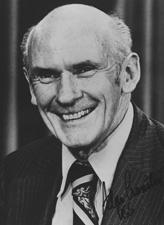
4,407 records where Sen. Cranston, Alan [D-CA] is listed as a sponsor, author, or other actor. Search with topics and years
United States · United States Congress · 20 February 1985
Designates May 24, 1985, as National Self-Help Housing Day.
United States · United States Congress · 20 February 1985
Designates the week of October 20 through October 26, 1985, as Lupus Awareness Week.
United States · United States Congress · 20 February 1985
Expresses the sense of the Congress that: (1) the Job Corps Program should be retained as a separate component of the Job Training Partnership Act; and (2) sufficient appropriations should be made to maintain the Job Corps as a viable Federal youth program.
United States · United States Congress · 19 February 1985
Amends title V (Maternal and Child Health Services Block Grant) of the Social Security Act to strike out the word "crippled" wherever it appears and replace it with the term "physically disabled."
United States · United States Congress · 19 February 1985
Authorizes the President to award a prisoner of war medal to any member of the Army, Navy, Marines, or Air Force who has been taken prisoner and held captive by a hostile opposing armed force.
United States · United States Congress · 19 February 1985
Designates the week of November 24 through November 30, 1985, as National Adoption Week.
United States · United States Congress · 19 February 1985
Designates: (1) the week of April 1 through April 7, 1985, as World Health Week; and (2) the day of April 7, 1985, as World Health Day.
United States · United States Congress · 19 February 1985
Expresses the sense of the Congress that: (1) Paraguay should carry out an investigation to locate and arrest Josef Mengele and extradite him to the Federal Republic of Germany; and (2) the United States should take actions to ensure that Josef Mengele is brought to justice.
United States · United States Congress · 7 February 1985
Electric Consumers Protection Act of 1985 - Amends the Federal Power Act to require the Federal Energy Regulatory Commission to issue a new license to an existing licensee for a hydroelectric project authorized under such Act if the United States does not, upon the expiration of the existing license, exercise its right to take over, maintain, and operate such licensee's project, unless the Commission determines that such licensee's project will not meet the licensing standards under such Act. Provides that if the Commission determines that such licensee's project does not meet such standards, the Commission is authorized to issue a new license to a new licensee which may cover the existing licensee's project provided that the new licensee pays just compensation determined by the Commission and enters into any contracts required under the Federal Power Act. (Under current law, the Commission is authorized to issue a new license to the original licensee or to a new licensee if the United States does not exercise its rights with respect to an expired license.)
United States · United States Congress · 7 February 1985
Civil Rights Restoration Act of 1985 - Amends the Education Amendments of 1972, the Rehabilitation Act of 1973, the Age Discrimination Act of 1975, and the Civil Rights Act of 1964 to provide a definition of the phrase "program or activity." Defines such term as all of the operations of: (1) a department or agency of a State or of a local government; (2) the entity of such State or local government that distributes Federal assistance and each such department or agency to which the assistance is extended; (3) a university or a system of higher education; (4) a local educational agency or other school system; (5) a corporation, partnership, or other private organization; or (6) any other entity consistent with the coverage provided above.
United States · United States Congress · 7 February 1985
National Institute of Arthritis and Musculoskeletal and Skin Diseases Act of 1985 - Amends title IV (National Research Institutes) of the Public Health Service Act to establish a National Institute (Institute) of Arthritis and Musculoskeletal and Skin Diseases in the National Institutes of Health (NIH). Authorizes appropriations for FY 1986 for such establishment and related functions transfers. States that the Institute shall conduct research and related activities concerning arthritis and musculoskeletal and skin diseases, including sports-related disorders. Requires the Director of the Institute, with the advice of the National Arthritis and Musculoskeletal and Skin Diseases Advisory Council, to establish a plan to coordinate such activities within 180 days. Requires the periodic review and revision of such plan and the transmission of such revisions to the Congress and the Director of NIH. Establishes within the Institute a National Arthritis and Musculoskeletal and Skin Diseases Advisory Council. Establishes within the Institute a National Arthritis Advisory Board (Advisory Board). Defines the responsibilities of the Advisory Board. Authorizes appropriations through FY 1988. Terminates the existing National Arthritis Advisory Board. Establishes within the Institute: (1) an Arthritis and Musculoskeletal Diseases Interagency Coordinating Committee; and (2) a Skin Diseases Interagency Coordinating Committee. Requires annual reports to: (1) the Secretary of Health and Human Services; (2) the Director of NIH; (3) the Director of the Institute; and (4) the Advisory Council. Establishes within the Institute: (1) the National Arthritis and Musculoskeletal and Skin Diseases Data System; and (2) the National Arthritis and Musculoskeletal and Skin Diseases Information Clearinghouse. Authorizes appropriations through FY 1988. Authorizes appropriations through FY 1988 for arthritis and musculoskeletal demonstration projects. Authorizes appropriations through FY 1988 for new and existing multipurpose arthritis and musculoskeletal diseases centers. Requires the Institute to submit a biennial report to the President and the Congress. Transfers arthritis and musculoskeletal and skin diseases functions, funds, personnel, and assets to the Institute from the existing National Institute of Arthritis, Diabetes, and Digestive and Kidney Diseases. Redesignates the existing National Institute of Arthritis, Diabetes, and Digestive and Kidney Diseases as the National Institute of Diabetes and Digestive and Kidney Diseases.
United States · United States Congress · 7 February 1985
Designates the week beginning November 10, 1985, as National Women Veterans Recognition Week.
United States · United States Congress · 7 February 1985
Designates 1986 as the Year of the Teacher.
United States · United States Congress · 6 February 1985
Handicapped Children's Protection Act of 1985 - Amends the Education of the Handicapped Act to authorize the award of a reasonable attorney's fee as part of the costs to a parent or legal representative of a handicapped child or youth who is the prevailing party in a civil suit under such Act to protect the child's right to a free appropriate public education. Provides that such amendment shall apply to actions and proceedings brought on or after July 4, 1984, and actions and proceedings brought prior to such date which were pending on such date. Provides that nothing in the Education of the Handicapped Act shall be construed to restrict or limit the rights, procedures, and remedies under the Constitution, title V of the Rehabilitation Act of 1973, or other Federal statutes prohibiting discrimination.
United States · United States Congress · 6 February 1985
Amends the Small Business Act to authorize Small Business Administration (SBA) program levels for FY 1986 through 1988 for direct and immediate participation loans for small business plant acquisition, construction, conversion, or expansion. Makes funds available out of such authorization for direct and immediate participation loans to handicapped persons and organizations for the handicapped and Vietnam veterans. Authorizes funding for FY 1986 through 1988 for deferred participation loans and debenture guarantees for small business plant acquisition, construction, conversion, or expansion and small business development companies under the Small Business Investment Act of 1958. Makes funds available out of such authorization for deferred participation loans to: (1) handicapped persons and organizations for the handicapped; (2) small businesses either located in urban or rural areas with high unemployment and low incomes or owned by low-income individuals; (3) small businesses which design, manufacture, and distribute energy measures; and (4) guarantees of debentures with respect to State and local development companies. Authorizes funding for FY 1986 through 1988 for: (1) direct purchases and guarantees of debentures and purchases of preferred securities with respect to small business investment companies; (2) surety bond guarantees under the Small Business Investment Act of 1958; and (3) payment guarantees for the installation of pollution control facilities by small businesses. Authorizes appropriations for FY 1986 through 1988 for disaster loans to small businesses and permits the transfer of funds from the disaster loan revolving funds for the payment of SBA administrative expenses. Authorizes appropriations to the SBA for FY 1986 through 1988. Makes such funds available for: (1) direct and immediate participation loans for small business plant acquisition, construction, conversion, or expansion; (2) loans to handicapped persons and organizations for the handicapped; (3) Vietnam veterans' loans; (4) deferred participation loans and debenture guarantees for small business plant acquisition, construction, conversion, or expansion and small business development companies; (5) deferred participation loans to handicapped persons and organizations for the handicapped; (6) small businesses either located in urban or rural areas with high unemployment and low incomes or owned by low-income individuals; (7) small businesses which design, manufacture, and distribute energy measures; (8) guarantees of debentures with respect to State and local development companies; (9) direct purchases and guarantees of debentures and purchases of preferred securities with respect to small business investment companies; (10) surety bond guarantees under the Small Business Investment Act of 1958; and (11) SBA salaries and expenses. Repeals specified provisions relating to disaster loans to small businesses that are affected by Federal action.
United States · United States Congress · 6 February 1985
Fair Tax Act of 1985 - Title I: Reduction of Individual and Corporate Tax Rates - Subtitle A: Reduction of Rates - Amends the Internal Revenue Code to revise individual tax rates. Imposes a flat tax rate of 14 percent on the taxable income of individuals. Imposes a surtax of 12 and 16 percent of the amount by which adjusted gross income exceeds specified levels. Imposes a flat tax rate of 30 percent on the taxable income of estates and trusts. Imposes a flat tax rate of 30 percent on the taxable income of corporations. Subtitle B: Increase in Personal Exemption for Taxpayer and Standard Deduction - Increases the personal exemption to $1,600 for an individual taxpayer and spouse and to $1,800 for an individual who is a head of a household. Raises the standard deduction to $6,000 in the case of a joint return or a surviving spouse or $3,000 in the case of an individual or a married individual filing a separate return. Subtitle C: Repeals Related to Reduction in Rates - Repeals provisions relating to: (1) tax tables for individuals; (2) minimum tax for tax preferences; (3) personal service corporations; (4) special averaging rules for lump-sum distributions; (5) accumulated corporate surplus; (6) personal holding companies; (7) income averaging; and (8) graduated corporate tax rates. Repeals the indexing of tax rates. Applies the trust throwback rules only to amounts distributed from foreign trusts. Title II: Base Broadening-Subtitle A: Credits - Repeals the general tax credit, the investment tax credit, the possessions tax credit and the income tax credits relating to: (1) the elderly and the permanently and totally disabled; (2) contributions to candidates for public office; (3) home purchases; (4) residential energy conservation; (5) producing fuel from a nonconventional source; (6) alcohol used as fuel; (7) increasing research activities; (8) employee stock ownership; and (9) clinical testing for certain drugs. Allows an income tax deduction for household and dependent care expenses necessary for employment. (Present law allows an income tax credit for such expenses.) Subtitle B: Exclusions - Repeals the partial income tax exclusion for interest and dividends. Repeals the exclusion for: (1) qualified transportation furnished by an employer; (2) cafeteria plans furnished by an employer; (3) dependent care assistance programs; (4) dividend reinvestment in public utilities; (5) payments to encourage mining for defenses purposes; (6) earned income of citizens living abroad; (7) certain allowances; (8) income earned from sources within possessions of the United States; and (9) income earned from sources within Puerto Rico. Treats as taxable income: (1) amounts paid by an employer for group-term life insurance; (2) unemployment compensation; (3) the annual increase in the cash surrender value of life insurance policies; (4) interest on industrial development bonds and mortgage subsidy bonds; and (5) amounts contributed by an employer to accident and health plans. Provides a limited exclusion from income for scholarships and fellowships. Imposes the surtax on the gain from the sale of a principal residence. Amends the Merchant Marine Act to repeal the tax exemption for deposits into, and withdrawals from, a capital construction fund. Subtitle C: Deductions - Repeals the deduction for two-earner married couples and the deduction for adoption expenses. Limits the amount of the interest deduction for individuals. Repeals the deduction for State and local personal property and sales taxes. Restricts the charitable contribution for corporations to 50 percent of the charitable contributions made during the year. Increases the floor on the deduction for medical and dental expenses from five percent to ten percent. Subtitle D: Repeal of Special Capital Gains Treatment - Repeals the alternative tax on capital gains for corporations and the deduction for individuals for capital gains. Limits the amount of the capital loss deduction without regard to distinctions between short term and long term capital losses. Eliminates the distinction between short-term and long-term gains and losses. Title III: Capital Cost Recovery-Subtitle A: Simplified Cost Recovery Systems - Allows individuals and corporations a deduction from gross income for a percentage of the balance in a recovery account for each year. Includes in the recovery account the cost of recovery property which is depreciable property used in a trade or business or held for the production of income which is placed in service after December 31, 1986. Establishes six classes of recovery property and specifies a class life for each. Assigns property to each class according to the class life of the property. Sets forth rules for the calculation of the recovery percentage on the basis of the class life of the property. Allows individuals and corporations a deduction for depletable property determined as a percentage of the balance in a recovery account for each year. Establishes six classes of depletable property and assigns a class life to each. Assigns a ten-year class life for oil, gas, and geothermal wells. Subtitle B: Other Changes - Repeals the income tax deductions for: (1) intangible drilling and development costs for oil, gas, and geothermal wells; (2) depreciation; (3) amortization of pollution control facilities; (4) improvements made by a lessee on a lessor's property; (5) certain depreciable assets; (6) amortization of reforestation expenditures; (7) percentage depletion; (8) development expenditures; and (9) mining and exploration expenditures. Allows a ten-year period for the amortization of construction period interest and taxes. Allows a deduction of circulation expenses for a newspaper, magazine, or other periodical ratably over a ten-year period. Excludes amounts chargeable to a capital account from such treatment. Provides for the deduction of 50 percent of tertiary injectant expenses in the taxable year and 50 percent of such expenses in the succeeding taxable year. Title IV: Miscellaneous Provisions - Subtitle A: Foreign Income - Requires an individual who owns stock in a corporation which is a controlled foreign corporation to include in income a pro rata share of the corporations's earnings and profits for such year. Reduces such amount by any amount required to be included in income by reason of the amount being foreign personal holding company income. Repeals the foreign sales corporations (FSC) provisions for taxable years beginning after December 31, 1986. Repeals the domestic international sales corporations (DISC) provisions for taxable years beginning after December 31, 1986. Subtitle B: Other Miscellaneous Provisions - Repeals the tax exemption for credit unions. Reduces the limit on benefits which may be paid to a participant under defined benefit plans and defined contribution plans. Repeals the cost-of-living adjustment for defined benefit plans. Continues the cost-of-living adjustment for purposes of calculating a participant's average compensation for his or her high three years. Requires farmers to compute their taxable income using the accrual method of accounting with the capitalization of preproduction expenses. Exempts taxpayers who do not have gross receipts exceeding $1,000,000. Requires farming syndicates to use the accrual method of accounting without regard to gross receipts. Provides that farmers who must use the accrual method cannot expense the following: (1) soil and water conservation expenditures; (2) fertilizer; and (3) expenses for clearing land. Requires the deferral of income or loss must be taken into account in determining tax liability under the completed contract method of accounting. Requires that the taxpayer with adjusted gross income in excess of $100,000 must make estimated payments equal to 90 percent of current year tax. Requires the recognition of the gain or loss on distributions of property by corporations. Eliminates the special bad debt reserves of financial institutions. Title V: Effective Dates - Sets forth the effective dates for the provisions of this Act.
United States · United States Congress · 6 February 1985
Expresses the sense of the Congress that the President should direct the Administrator of the National Aeronautics and Space Administration, in consultation with the Secretary of State, to: (1) explore opportunities for cooperation with the Soviet Union on specified Mars exploration missions; (2) prepare a report, in association with nongovernmental space scientists, examining opportunities for joint East-West Mars-related activities; and (3) report to the Congress by October 1, 1985, on steps taken to carry out this Act.
United States · United States Congress · 6 February 1985
Expresses the Senate's commendation of the Soil Conservation Service on its 50th anniversary, and the Senate's commitment to vigorous soil and water conservation efforts. Expresses the Senate's commendation of the Soil Conservation Service on its 50th anniversary, and the Senate's commitment to vigorous soil and water conservation efforts.
United States · United States Congress · 6 February 1985
Expresses the sense of the Congress that the Taiwan authorities should cooperate by delivering to the United States for trial those citizens of Taiwan charged by U.S. authorities with the murder of Henry Liu.
United States · United States Congress · 6 February 1985
States that the Congress supports the restoration of democratic institutions and human rights in Chile. Calls upon Chile to negotiate with the democratic opposition. Provides that until Chile returns to democracy: (1) U.S. military and economic assistance to Chile should be denied and all joint military activities ceased; (2) the Overseas Private Investment Corporation should not issue additional investment insurance to Chile; and (3) the United States should oppose all loans and grants to Chile by certain international financial institutions unless such assistance is directed to programs which serve the needs of the people.
United States · United States Congress · 5 February 1985
Title I: General Accounting Office Investigation and Report - Directs the General Accounting Office to investigate the situation of displaced nationals of El Salvador, including determinations of those Salvadorans in Central America, unlawfully in the United States, or returned from the United States to El Salvador. Requires a report to the Congress. Title II: Congressional Review - Provides that such report shall be referred to the appropriate committees for hearings and committee reports. Title III: Temporary Stay of Deportation - Provides for a temporary stay of detention and deportation for specified Salvadorans presently in the United States.
United States · United States Congress · 5 February 1985
Designates October 1985 as National Down Syndrome Month.
United States · United States Congress · 5 February 1985
Authorizes and requests the President to designate the week of March 10 through March 16, 1985, as National Employ the Older Worker Week.
United States · United States Congress · 5 February 1985
Commends Medicare on its 20th anniversary.
United States · United States Congress · 31 January 1985
Veterans' Administration Adjudication Procedure and Judicial Review Act - Title I: Adjudication Procedures - Codifies, for Veterans Administration (VA) adjudication purposes, the burden of proof and reasonable doubt standards currently provided for by VA regulation. States that a claimant has the burden of submitting sufficient evidence to justify his or her claim, and that if an approximate balance of positive and negative evidence exists regarding the merits of a claim, the VA is to resolve such doubt in favor of the claimant. States that VA subpoenas may be served either by personal delivery or by registered or certified mail. Requires the chairman of the Board of Veterans' Appeals to submit an annual report to the appropriate congressional committees concerning the Board's current handling of cases and projections for the subsequent fiscal year. Requires the Board to: (1) provide notice to a claimant and an opportunity for a hearing before a decision may be based on "additional official information" received after a Board decision has previously been made; and (2) make its decision exclusively on evidence and material of record in the proceeding. Removes the requirement that new material sufficient to allow the Board to reopen a previously disallowed claim be in the form of official reports. Provides that the Board's discretionary authority to reopen a claim will not be diminished by a judicial decision following an appeal as provided for by this Act. Requires the Board to mail to the claimant notice of its decision and the reasons for such decision. Provides that, upon the request of a claimant, the Board shall provide an independent advisory medical opinion when there exists substantial medical disagreement with respect to a material issue in a veteran's appeal. Sets forth new procedural rules for adjudication hearings regarding: (1) oaths, affirmations, and witness examination; (2) admissibility of evidence; (3) procedural rights of claimants; (4) disqualification of a hearing officer; (5) the record of the proceedings and the claimant's right to examine and obtain a copy of such record; and (6) the exclusiveness of veterans' adjudication procedures and rights prescribed by the Administrator. Requires the Administrator to provide at each stage of the appeal proceedings written notice to a claimant of the claimant's procedural rights. Authorizes the Administrator to conduct a study of two alternative claims resolution methods: one a new intermediate-level adjudication process; the other an enhanced schedule of formal Appeals Board hearings. Directs the Administrator to report to the Congress on such studies. Title II: Veterans Administration Rule Making - Includes the VA's rulemaking procedures under the relevant provisions of the Administrative Procedure Act. Title III: Judicial Review - Provides for judicial review of VA decisions in the Federal court system. States with regard to jurisdiction: (1) the definition of final decision; (2) that judicial review of a final decision in a claim for benefits may be obtained in a civil action brought within 180 days of the Board's mailing of notice of its decision, and that such action shall be brought in Federal district court; (3) that the VA shall file the various materials constituting the record in a case together with its answer to the claimant's complaint; (4) that the court may render a decision on the pleadings; and (5) that the judicial review procedures established under this Act shall not apply to insurance and home loans. States, with regard to the reviewing court's scope of review, that such court: (1) shall decide questions of law and interpret constitutional, statutory, and regulatory provisions, but that questions of fact (unless unsupported by substantial evidence) will not be subject to a trial de novo; and (2) in reviewing a final decision of the VA which is adverse to a party solely because such party failed to comply with VA procedures, may only review questions concerning such procedures. Sets out provisions regarding remand, survival of actions, and appellate review. Title IV: Attorneys' Fees - Authorizes the Administrator to allow attorneys' fees above the present $10 maximum if the appealing party's claim is allowed by the VA after an initial denial. States that such fee shall be the lesser of: (1) the fee agreed upon by the party and attorney; (2) $500, unless the Administrator approves a greater amount; or (3) if the party and attorney have entered into a contingent-fee agreement, not more than 25 percent of the total of any past-due benefits awarded on the basis of such party's claim. Provides for the approval of attorneys' fees in successful veterans' claims brought before a court as provided for under this Act. States that such fees shall be determined by such court, and in contingent-fee agreements such fees shall not exceed 25 percent of the total of any past-due benefits awarded on the basis of such claim. Authorizes attorneys' fees of up to $750 in certain unsuccessful veterans' claims. Prohibits the VA from authorizing payment to a claimant's attorney based on past-due benefits unless such benefits are owed as of the date of the VA's or a court's award. States that such provisions regarding attorneys' fees shall only apply to claims for benefits under the laws administered by the VA and shall not apply in cases in which the VA is the plaintiff or in which other attorneys' fees statutes are otherwise controlling. Title V: Effective Dates - Sets forth the effective dates for this Act.
United States · United States Congress · 31 January 1985
Amends the Internal Revenue Code to make permanent the deduction for charitable contributions by taxpayers who do not itemize deductions.
United States · United States Congress · 31 January 1985
Authorizes and requests the President to designate the week of April 21 through April 27, 1985, as National Organ Donation Awareness Week.
United States · United States Congress · 29 January 1985
Federal Insecticide, Fungicide, and Rodenticide Reform Act - Amends the Federal Insecticide, Fungicide, and Rodenticide Act to expand the definition of "active ingredient" to include any ingredient of a pesticide which will endanger human beings. Revises Environmental Protection Agency (EPA) information requirements for pesticide registration. Provides that waivers and variation in data requirements may be granted only if the advisability of the waiver or variation is clearly established. Requires the Administrator of EPA to make the data submitted in support of registration applications and petitions to establish tolerances publicly available. Specifies the procedures and provisions governing the joint development and sharing of defensive data as required by the Administrator to fill a data gap. Extends the application comment period from 30 to 90 days. Requires the Administrator, when registering a pesticide, to make a written determination of active and inert ingredients. Requires the Administrator to consider potential chronic health effects in determining whether a pesticide will endanger human beings. Eliminates the Administrator's authority to waive efficiency data requirements. Requires the Administrator to publish in the Federal Register a summary of the factual basis supporting registration actions. Requires, rather than allows, the Administrator to deny registrations when certain requirements are not met. Prohibits the Administrator from granting a conditional registration for a previously canceled or suspended pesticide. Requires the Administrator to make the data submitted in support of a conditional registration publicly available. Repeals provisions specifying the conditions which must be met before initiating an interim administrative review. Directs the Administrator, in all decisions pertaining to classification, to consider the potential contamination of groundwater in determining whether a pesticide should be classified for restricted use. Provides that registration of a pesticide constitutes prima facie evidence that such pesticide is in compliance only if the active ingredient has been registered after enactment of this Act or re-registered since October 21, 1972, and provided that a cancellation proceeding is not in progress and that no required studies are outstanding. Requires the Administrator to publish in the Federal Register a list of pesticide active ingredients not re-registered since September 31, 1978, in order of their priority for re-registration, and a list of active ingredients and data gaps. Requires the Administrator to issue a notice of intent to suspend a pesticide's registration if there are outstanding data gaps on the pesticide and the Administrator has failed to include the ingredient on the re-registration priority list. Provides that a registrant must conduct studies to fill data gaps and report the results of the studies to the Administrator within three years of the publication of the list and data gaps. Requires the Administrator to issue regulations specifying what tests shall be undertaken on inert ingredients. Allows information on inert ingredients to be disclosed under specified circumstances. Revises requirements for restricted use certification. Eliminates provisions that prohibit a State from requiring a written examination as part of the certification process. Prohibits the Administrator from granting an experimental use permit if the use has previously been canceled, suspended, or voluntarily withdrawn for health or environmental reasons. Requires the Administrator to revoke an experimental use permit if such permit will not yield certain registration data. Authorizes the Administrator to immediately issue a notice of intent to cancel a pesticide's registrations, or revoke tolerances, if it appears that false, misleading, or inaccurate supporting information has been submitted. Requires, rather than allows, the Administrator to issue a notice of intent to hold a hearing or cancel a pesticide's registration if it may reasonably be expected to endanger human beings (including children permitted to work in areas treated with pesticides). Restricts the scope of a hearing held to consider data not available to the Administrator either when the hearing for registration of a previously canceled use of a pesticide was terminated or upon issuance of a cancellation decision. Provides that when a use or uses of a pesticide have been canceled, suspended, or voluntarily withdrawn because of health or environmental concerns, such use or uses shall not be eligible for registration unless there are no alternatives to control new or expanding pest infestation. Authorizes the Administrator to issue commercial applicators' recordkeeping regulations. Repeals certain EPA indemnification provisions. Establishes a private right of action against any person (including the United States or any other governmental instrumentality or agency), or against the Administrator for violations under this Act. Specifies time limits and conditions for such an action. Revises the foreign government notification requirement to include cases where a pesticide's registration has been voluntarily withdrawn. Authorizes the Administrator to grant a public health danger exemption to a State or Federal agency when no other pesticide alternatives are available. Provides that such an exemption may not be issued for more than one year or renewed more than twice. Revises requirements regarding the comprehensive national plan for monitoring pesticides. Provides that the plan shall be proposed by rule not later than June 1, 1984, and be effective not later than October 1, 1984. Transfers responsibility for regulating occupational exposure to pesticides to the Occupational Safety and Health Administration. Authorizes States to impose or continue in effect requirements for pesticide labelling or packaging in order to enforce a prohibition on the use of a federally registered pesticide or device in the State. Eliminates the Administrator's discretion to disapprove a special local need registration that is inconsistent with the Federal Food, Drug, and Cosmetic Act. Allows a rebuttable presumption that a special local need for a pesticide does not exist if five or more States seek the same pesticide for the same local need. Revises provisions pertaining to the appointment of members of the Scientific Advisory Panel. Directs the Administrator to appoint members from specified scientific disciplines. Requires the Administrator to promulgate safe use regulations within one year. Allows States to impose enforcement provisions and regulations more stringent than required by Federal law. Allows States two years to adopt an enforcement program responsive to the new requirements and regulations established pursuant to the National Pesticide Hazard Prevention Act. Directs the Administrator to collect registration fees. Provides certain protections for employees who have commenced actions, testified, or otherwise participated in an enforcement action or complaint. Authorizes the Administrator to establish and enforce standards for indoor human exposure to pesticides. Makes certain technical and conforming amendments.
United States · United States Congress · 29 January 1985
Interstate Cost Estimate Act of 1985 - Revises Federal procedures regarding the establishment of interstate cost estimates to direct the Secretary of Transportation to apportion interstate construction funds and interstate substitute highway and public mass transit funds at the beginning of each fiscal year if the Congress has not approved such cost estimates to make such apportionment by that time. Directs the Secretary to apportion: (1) the interstate cost estimate sums remaining to be apportioned for FY 1985 and 1986; and (2) the interstate substitute cost estimate sums remaining to be apportioned for FY 1984 and 1985.
United States · United States Congress · 29 January 1985
Authorizes and requests the President to designate the week of November 24 through November 30, 1985, as National Family Week.
United States · United States Congress · 24 January 1985
Indian Health Care Amendments of 1985 - Title I: Indian Health Manpower - Amends the Indian Health Care Improvement Act to authorize appropriations for specified Indian health programs for FY 1986 through 1989, including scholarship programs. Prohibits the Secretary of Health and Human Services (the Secretary) from denying scholarship assistance solely on the basis of an applicant's scholastic achievement if such applicant has been admitted to, or maintained good standing at, an accredited health professions institution. Directs the Secretary to grant Indian Health Scholarships to Indians enrolled full-time in certain schools for health professionals. States that the active duty service requirements of the Public Health Service can be met by specified services, including: (1) service under a contract pursuant to the Indian Self-Determination and Education Assistance Act; and (2) the private practice of a health professional if such practice is in a health professional shortage area and addresses the health care needs of a substantial number of Indians. Directs the Secretary to maintain a Community Health Representative Program to provide for the training and the use of Indians as health paraprofessionals to Indian communities. Title II: Health Services - Enumerates the health services for which the Secretary is authorized to expend Indian Health Care Improvement Fund appropriations. Prohibits the use of such funds to offset or limit appropriations made under other Acts. Conditions the allocation of such funds upon the health resource deficiency level of the affected Indian tribes. Permits the allocation of such funds on a service unit basis. Requires the Secretary to submit to the Congress a current health services priority system report, including the methodology for determining tribal health resources deficiencies, and the funds needed to raise all tribes to a zero level deficiency. Directs the Secretary to establish a review mechanism for tribal petitions regarding the health resource deficiency level of a tribe. Requires the Secretary to provide a current update of tribal specific health plans. Requires at least one percent of the Indian Health Care Improvement Fund appropriation to be expended for research. Makes programs administered by tribal organizations under the Indian Self-Determination and Education Assistance Act eligible for specified funds on an equal basis with programs administered directly by the Indian Health Service. Directs the President to include with the submission of the budget a separate statement which specifies the amounts obligated to implement enumerated health services. Authorizes appropriations for FY 1986 through 1989 for specified health services. Designates such appropriations the Indian Health Care Improvement Fund. Establishes an Indian Catastrophic Health Emergency Fund to meet extraordinary medical costs for victims of disasters or catastrophic illness. Authorizes appropriations. Authorizes the Secretary to waive the competitive procurement requirements for health services upon certification by the responsible Chief Medical Officer that such requirements would compromise the quality of health services. Requires the Secretary to provide health promotion and disease prevention services to Indians. Requires each Indian tribe to include within any tribal specific health plan that such tribe is required to submit to the Secretary a comprehensive plan developed by such tribe for health promotion and disease prevention among its members. Title III: Health Facilities - Requires the Secretary to submit to the Congress a health facilities priority system report regarding the construction or renovation needs of the ten top priority inpatient and ambulatory care facilities. Requires the Secretary to consult with any Indian tribe that might be affected by an expenditure for health facilities before the Secretary makes a commitment for such an expenditure. Conditions the closure of any health care facility upon the Secretary's submission to the Congress of an impact assessment one year prior to the contemplated closing. Enumerates the data to be included in such assessment. Directs the President to include with the budgets submitted for FY 1986 through 1989 planning information documents for the construction of ten Indian health facilities. Directs the Secretary to implement a ten-year plan to provide safe water and sanitary sewage and solid waste disposal facilities to Indian homes and communities. Requires the Secretary to report to the Congress regarding the Indian Health Service's current Indian sanitation facility priority system and the funds needed to raise all communities or tribes to a zero level of deficiency. Authorizes specified appropriations to provide sanitation facilities. Authorizes the Secretary to provide financial and technical assistance for the operation and maintenance of sanitation facilities, utility organizations, and emergency repairs of sanitation facilities. Authorizes appropriations for FY 1986 through 1989. Authorizes tribes to expend certain non-Indian Health Service funds for the renovation of Indian health facilities, subject to specified conditions. Title IV: Access to Health Services - Extends the authorization for specified appropriations for grants and contracts with tribal organizations from FY 1986 through 1989. Amends the Social Security Act to make certain providers of the Indian Health Service eligible for Medicare and Medicaid payments. Directs the Secretary to ensure that each service unit of the Indian Health Service receives at least half of the amounts to which its facilities are entitled, if such amounts are necessary to bring the facilities into compliance with this Act. Directs the Secretary to establish a demonstration project in which certain Indian (and Alaska Native) health organizations which provide health care services shall bill for Medicare and Medicaid payments directly. Requires the Secretary to monitor such organizations and to require quarterly reports on their operations. Sets forth eligibility and participation guidelines for such health service facilities. Requires a final report to the Congress by September 30, 1989. Directs the Secretary to conduct a study in consultation with Indian tribes regarding barriers to Indian participation in Medicare or Medicaid programs. Requires the Secretary to report to the Congress regarding such study. Title V: Urban Indian Health Services - Directs the Secretary to contract with urban Indian organizations to administer health services programs in urban areas. Sets forth specified requirements to be included in such contracts. Details eligibility criteria for the selection of such organizations. Authorizes the Secretary to enter into contracts with urban Indian organizations to determine the health status and unmet health care needs of urban Indians in affected urban areas. Delineates the requirements of such contracts. Requires the Secretary to: (1) develop evaluation procedures for the performance of such contracts; and (2) conduct annual onsite evaluations of each contracting urban Indian organization. Prescribes guidelines for the renewal of health care or referral services contracts. Prohibits renewal of contracts for determination of unmet health needs if their performance has been non-compliant or otherwise unsatisfactory and problems cannot be resolved. Requires certain reports to the Congress. Title VI: Organizational Improvements - Requires the Secretary to establish an automated management information system for the Indian Health Service. Establishes the Indian Health Service within the Public Health Service of the Department of Health and Human Services (thus terminating the Indian Health Service as part of the Health Resources and Services Administration). Places the Indian Health Service under the direction of a Director of the Indian Health Service who shall report only to the Secretary through the Assistant Secretary of Health and Human Services for Health. Directs the Secretary to implement through the Director all health programs and authorities which are provided specifically for Indians. Directs the Secretary to submit to the Congress a plan for the implementation of the amendments made by this section. Title VII: Miscellaneous - Authorizes the Secretary to enter into legal agreements with Indian tribes or tribal organizations in order to provide compensation for facility space costs associated with the administration and delivery of health services by the Indian Health Service or tribally operated programs. Directs the Secretary to coordinate efforts with the Secretary of the Interior and the Secretary of Education to develop programs to combat alcohol and drug abuse among Indian juveniles, including preventive education programs in schools operated by or under the Bureau of Indian Affairs. Directs the Secretary to establish an Office of Alcohol and Drug Abuse within the Indian Health Service. Authorizes appropriations for FY 1986 through 1989. Directs the Secretary to arrange with the National Academy of Sciences, in consultation with the Office of Technology Assessment, to conduct a study of health hazards faced by Indians and Indian miners exposed to nuclear resource developments on or near Indian communities. Directs the Secretary and the Indian Health Service to develop a health care plan which addresses the results of such study. Directs the Secretary to submit to the Congress both the health hazard study and the ensuing health care plan, within certain times. Authorizes appropriations for such study. Extends from FY 1984 to 1989 the time during which Arizona is designated as a contract health service delivery area. Authorizes appropriations. Extends eligibility for health services of specified Indians in the State of California from FY 1984 through 1988. Establishes eligibility guidelines for certain California Indian and for certain persons who are otherwise ineligible for medical benefits provided by either the Indian Health Service or by tribes contracting with the Service. Designates the State of California as a contract health service delivery area. Lists programs eligible for Indian Health Service funds. Restricts circumstances under which the Secretary may remove a member of the National Health Service Corps who is performing obligated service in a health facility operated by or under the Indian Health Service. Sets a deadline by which the Secretary must develop and implement a plan to reduce Indian infant and maternal mortality rates to that of the general population. Requires the Secretary to: (1) complete within one year implementation of a program to prevent and control hepatitis-B in Alaska; (2) report to the Congress about the status of such program; and (3) request budget authority for a hepatitis-B control program in Alaska. Directs the Secretary to provide contract health services to the Turtle Mountain Band of Chippewa Indians who reside in the Trenton Service Area of specified counties in the States of North Dakota and Montana. Directs the Secretary to conduct a population survey of Indians residing in such Service Area in order to determine the basis for distributing equity health care funds and providing contract health care. Provides for the designation of additional counties in the Trenton Service area based upon the population survey results. Directs the Secretary to conduct a study of the physical and mental health care needs of Native Hawaiians and other Native American Pacific Islanders, and to report the results of such study to the Congress by a certain time.
United States · United States Congress · 24 January 1985
Acid Deposition Control Act - Amends the Clean Air Act to establish an interstate transport and acid precursor reduction program. Designates an acid deposition impact region comprising a long-range transport corridor of 31 States east of the Mississippi and the District of Columbia. Directs the Administrator of the Environmental Protection Agency to report to the Congress within two years on a study of long-range transport of pollutants problems in the remaining States. Prohibits the increase of emissions of sulfur dioxide and of oxides of nitrogen from stationary sources in the acid deposition impact region over total actual emissions there as of January 1, 1981. Sets forth sulfur dioxide emmission reduction standards for the acid deposition impact region of ten million tons below 1980 levels by the beginning of 1994. Requires each impact region State to reduce its emissions proportionately to its share of the region's total excess emissions, permitting States to reallot reductions among themselves so long as the total reductions of the States invovled meet the required standards. Requires each State to adopt enforceable emission reduction measures for sulfur dioxide, including compliance schedules, within two years. Requires the Administrator's approval and the other Governors' perusal of such measures. Requires each major stationary source subject to an emission limitation to notify the Governor of the State, and in turn, the Administrator, within four years of its intended method of compliance. Requires sources choosing fuel substitution to be in compliance with applicable emission limitations within six years. Requires those sources complying through the installation of a technological system of continuous emission reduction or the replacement of facilities to have entered into binding contracts for such system or replacement facilities within six years. Requires owners of major stationary sources of sulfur dioxide emissions to submit to the Administrator a compliance plan and schedule if their State has not done so. Provides that failure to do so constitutes a violation of emission limitations under the Clean Air Act. Permits the use of the following measures to reduce emissions in addition to enforceable continuous emission reduction measures if such measures are enforceable by entities and persons other than the State in which the emissions occur: (1) least emissions dispatch to meet electric generating demand at existing generating capacity; (2) retirement of major stationary sources at an earlier than provided for date; (3) investments in energy conservation where emission reductions can be identified with such investments; (4) trading of emission reduction requirements and actual reductions through emission reduction banks or brokerage institutions; and (5) precombustion cleaning of fuels. Permits a State or the owner or operator of a source required to reduce sulfur dioxide emissions to substitute oxides of nitrogen reductions at a rate of two for one out measure by weight. Makes it a violation of the Clear Air Act to emit an air pollutant which adversely affects the public health or welfare of another State or foreign country.
United States · United States Congress · 24 January 1985
Proclaims September 8 through September 14, 1985, as National Independent Retail Grocer Week.
United States · United States Congress · 24 January 1985
Designates the week containing March 8, 1985, as Women's History Week.
United States · United States Congress · 24 January 1985
Designates the week of November 11 through November 17, 1985, as National Reye's Syndrome Week.
United States · United States Congress · 24 January 1985
Expresses the sense of the Senate that the Job Corps Program has been successful in assisting disadvantaged young persons in obtaining and holding employment. Reaffirms the Senate's commitment to the program. Declares that no significant reduction in the level of the program should be made.
United States · United States Congress · 22 January 1985
Energy Conservation Daylight Saving Act of 1985 - Amends the Uniform Time Act of 1966 to start daylight savings time the first Sunday in March rather than the last Sunday of April. Continues a State's right to preempt such time changes. Directs the Federal Communications Commission to make necessary adjustments in the operation of daytime standard amplitude modulation broadcast stations.
United States · United States Congress · 22 January 1985
Statue of Liberty-Ellis Island Commemorative Coin Act - Requires the Secretary of the Treasury to issue a specified number of: (1) five dollar gold coins, emblematic of the centennial of the Statue of Liberty; (2) one dollar silver coins, emblematic of the use of Ellis Island; and (3) half dollar coins, emblematic of the contributions of immigrants to America. Sets forth certain features of such coins; and provides for their sale and issuance. Provides for the distribution and use of such sale funds to the Statue of Liberty-Ellis Island Foundation. Terminates the minting of such coins on December 31, 1986.
United States · United States Congress · 22 January 1985
Designates the month of October 1985 as National Make-A-Wish Month.
United States · United States Congress · 22 January 1985
Designates 1985 as the Year of Social Security.
United States · United States Congress · 22 January 1985
Directs the President to designate March 1985 as National Mental Retardation Awareness Month.
United States · United States Congress · 21 January 1985
Declares a named individual to have been lawfully admitted to the United States for permanent residence under the Immigration and Nationality Act.
United States · United States Congress · 21 January 1985
Amends the Immigration and Nationality Act to eliminate the "sexual deviation" exclusion provision.
United States · United States Congress · 3 January 1985
Children's Justice Act - Amends the Child Abuse Amendments of 1984 to authorize a Children's Justice Grant Program. Authorizes the Secretary of Health and Human Services to make additional grants to States under specified provisions of the Child Abuse Prevention and Treatment Act for identification, treatment, and prevention of sexual abuse. Makes a State eligible for such assistance if the Secretary determines that the State, within one year after the enactment of this Act, has enacted specified legal and administrative changes with respect to the investigation and prosecution of child sexual abuse cases. Requires a State, to be eligible for such assistance, to have in effect a child sexual abuse program which includes at least one statute or administrative procedure to carry out the following categories of reforms: (1) handling such cases so as to reduce the trauma to the child victim; (2) improving the chances of successful prosecution or legal action against child molesters; and (3) improving procedures to protect children from sexual abuse. Directs the Secretary to issue necessary regulations for such assistance program. Authorizes appropriations for FY 1986 and 1987.
United States · United States Congress · 3 January 1985
Amends the Federal criminal code to define "armor-piercing ammunition." Excludes from the definition: (1) shot gun shot required by Federal or State regulations for hunting; (2) frangible projectiles for target shooting; and (3) projectiles that the Secretary of the Treasury determines are primarily intended for sporting purposes. Makes it unlawful for any person to manufacture or import armor-piercing ammunition. Allows for: (1) the manufacture or importation of armor piercing ammunition for the use of the United States or any State or local government; and (2) manufacture for the sole purpose of exportation. Establishes a licensing fee of $1,000 per year for manufacturers and importers of armor-piercing ammunition. Imposes an additional mandatory sentence of not less than five years for any person who uses or carries a firearm and is in possession of armor-piercing ammunition during the commission of a violent felony. Provides that such sentence shall not be suspended nor probation nor parole be granted.
United States · United States Congress · 3 January 1985
Olmsted Heritage Landscapes Act of 1985 - Requires the Secretary of the Interior, acting through the Director of the National Park Service, to prepare a State-by-State inventory of Olmsted heritage landscapes. Provides that all properties on the inventory shall be part of an Olmsted heritage landscape system. Requires periodic updating of the inventory. Directs the Secretary to: (1) promulgate general standards for preservation of historic landscapes; (2) provide technical assistance to Federal agencies, State and local governments, private organizations, and other interested individuals on the identification, commemoration, and preservation of Olmsted heritage landscapes; (3) conduct and submit to Congress a thematic study of historic landscapes to identify those landscapes which would qualify as national historic landscapes; (4) encourage a program for the use of the Frederick Law Olmsted National Historic Site in Massachusetts as a center for research and establish an advisory committee for the site; and (5) encourage appropriate international activities related to the Olmsted heritage landscapes. Requires the Secretary to provide for the coordination of applications for grants for the preservation of Olmsted heritage landscapes. Requires the Secretary to encourage maximum public participation in carrying out the purposes of this Act. Requires the Secretary to conduct appropriate activities during the decade of 1985 to 1995 to commemorate the Olmsted achievements and influence on American life. Establishes the Advisory Committee on Olmsted Heritage Landscapes, which shall assist the Advisory Council on Historic Preservation in carrying out those of its duties under the National Historic Preservation Act that relate to Olmsted heritage landscapes. Terminates such Committee after December 31, 1995. Authorizes appropriations.
United States · United States Congress · 3 January 1985
Grants a Federal charter to the Vietnam Veterans of America, Inc.
United States · United States Congress · 3 January 1985
Superfund Improvement Act of 1985 - Amends the Comprehensive Environmental Response, Compensation, and Liability Act of 1980 (CERCLA) (Superfund) to specify how such program operates within Indian lands. Exempts remedial actions on Indian lands from the cost-sharing and future maintenance requirements imposed on States and requires the President to assure the availability of off-site disposal capability. Authorizes Indian tribes to recover damages for injury to or loss of natural resources resulting from releases of hazardous substances. Treats Indian tribes substantially like States for certain information, notification, and planning provisions. Includes household water supplies within the scope of alternative water supplies for replacement purposes. Permits a State to apply a credit for certain cleanup expenditures to a site other than the one at which the credit was earned, including credits earned at a National Priority List (NPL) site before the commitment of Federal funds. Requires the State to enter into a cooperative agreement or contract for this purpose. Limits the 50 percent (or greater) cost-sharing of cleanup obligations of a State or local government which owns a targeted facility to those situations where the State or local government both owns and operates such facility. Requires the President to consider long-term as well as short-term costs and to stress permanent solutions to waste contamination when selecting cost-effective remedial responses. Establishes a general cleanup standard for remedial actions which at least provides for the protection of human health and the environment. Requires site specific solutions where needed. States that on-site cleanup must comply with this standard but permits are not required under the Resource Conservation and Recovery Act of 1976 (RCRA) (Solid Waste Disposal Act). Makes the cleanup of contaminated ground and surface water at NPL sites remedial action requiring State and Federal participation. Limits such designation and Federal involvement to five years or until the general protection standard is met. Requires as a condition of receiving Superfund money for remedial actions that a State provide assurances that there will be adequate capacity and access to hazardous waste management facilities in compliance with RCRA for a State's hazardous waste for the next 20 years. Permits the President to enter into cooperative agreements with States for hazardous waste cleanup on a multi-site basis with reimbursement of costs associated with securing site responses from responsible parties. Revises the health-related authorities of the Agency for Toxic Substances and Disease Registry (ATSDR) to require ATSDR to: (1) provide State and local governments with consultations on toxic or hazardous substances health-related issues; (2) perform health assessments at all NPL sites and certain RCRA hazardous waste disposal facilities; (3) provide health assessments for certain individuals upon request; (4) establish a priority system for assessing CERCLA and RCRA sites based upon the degree of risk to human health; (5) receive and if necessary act upon State and local health assessments as well as its own; (6) report results and recommendations on assessments to the applicable State and the Administrator of the Environmental Protection Agency (EPA); (7) recover assessment costs from the site owner or operator; (8) conduct pilot epidemiological studies; (9) establish a registry of exposed persons if necessary; and (10) study and report to the Congress on the cost-effectiveness of medical surveillance programs. Directs the President to reduce exposures which an assessment or study finds present significant risks to human health and to mitigate such risks by providing alternative water supplies and individual relocations among other steps. Prohibits health-related activities from impeding cleanup activities. Directs the Administrator of ATSDR to prepare and update a list of hazardous substances which present the most significant potential threat to human health because of their pervasiveness or toxicity. Requires the Administrator to initiate research programs for substances about which not much is known and to coordinate them with toxicological testing techniques. Requires such research to be coordinated with other research efforts of EPA. Expresses the sense of the Congress that the costs of such research should be borne by the manufacturers of the substance in question or, where this is not practical, by the parties responsible for the release of such substance. Directs the Administrator to prepare and update toxicological profiles on each listed substance. Subjects all such research findings to peer review before dissemination. Authorizes the Administrator to establish and report to the Congress on a toxic substance diagnostic education program for health professionals. Earmarks funding from Superfund for the expenses of ATSDR. Amends the Solid Waste Disposal Act to require owners and operators of landfills and surface impoundments to submit to EPA or a State with an authorized program an assessment of the potential for public exposure to hazardous substances released from their units. Makes such information available to ATSDR, which may then conduct its own assessment of a particular site if necessary. Amends CERCLA to require an opportunity for public comment before a particular remedial action is chosen for any site or any settlement agreement is made. Directs the Administrator of EPA to place a high priority on purchasing the remaining properties in the Love Canal emergency declaration area, Niagara Falls, New York. Directs the President to revise the National Hazardous Substance Plan part of the National Contingency Plan to provide procedures and standards for remedial actions pursuant to this Act. Requires the President to amend the hazard ranking system to accurately reflect the relative degree of risk to human health and the environment posed by sites and facilities subject to review. Requires such system to be applied to sites and facilities newly listed on the NPL. Renders State or local governments not liable for damages from non-negligent actions taken in response to emergencies created by the release of a hazardous substance, pollutant, or contaminant from a site or facility owned by another person. Authorizes the Administrator to indemnify contractors engaged to respond to the release of hazardous substances. Permits direct claims against the financial guarantor of certain vessels carrying hazardous substances only if the owner or operator is in bankruptcy, insolvency, or out of the jurisdiction of the Federal courts. Entitles the guarantor to use all defenses that such guarantor would have available if an action has been brought by the owner or operator against such guarantor. Limits the liability of guarantors acting in good faith. Authorizes the President to specify conditions for establishing evidence of financial responsibility. Permits the use of Superfund to pay for alternative water supplies in cases involving federally owned facilities where groundwater contamination exists beyond the Federal boundary and such facility is not the only potentially responsible party. Extends the statute of limitations for filing claims against Superfund or responsible parties for damages to natural resources until the later of three years after discovery or the promulgation of damage assessment regulations. Permits the review of CERCLA regulations in any U.S. Court of Appeals. Provides a procedure to determine the forum when more than one appeal has been made. Declares that States are not preempted by Superfund from taxing the same hazardous substances as Superfund does. Requires the Administrator and States that have entered into cooperative agreements to concur in the selection of cleanup actions at Federal facilities. Deems consistent with CERCLA, and directs the Administrator to consider using, recommendation 84-4 of the Administrative Conference of the United States relating to facilitating negotiated private party cleanup of hazardous substances. Reauthorizes Superfund through FY 1990. Sets forth funding transfers and limitations.
United States · United States Congress · 3 January 1985
Veterans' Administration Housing Program Amendments of 1985 - Authorizes the Administrator of Veterans Affairs to provide home loan guarantees in cases in which the parties agree to abide by a qualified adjustable rate mortgage (a mortgage in which the interest rate is adjusted periodically by the lender). Specifies means of accomplishing such adjustments. States that such adjustments shall: (1) correspond to a national interest rate index; (2) be made not more often than annually; and (3) be limited to a maximum amount of increase. Provides for notification to the veteran applicant of the features of such adjustable rate mortgage. Increases the maximum amount of VA home loan guarantees.
United States · United States Congress · 3 January 1985
Veterans' Administration Health-Care Amendments of 1985 - Redefines "Vietnam era" for purposes of the determination of Vietnam veterans by the Veterans Administration (VA). Prohibits the Administrator of Veterans Affairs from implementing a grade reduction for VA employees unless he or she first submits to specified congressional committees a report of justification for such reduction. Requires such report to be submitted at least 90 days prior to the implementation of any such reduction. Requires a follow-up report by the Comptroller General of the United States to the same congressional committees. Extends health-care eligibility based on exposure to toxic substances in Vietnam or to nuclear radiation until September 30, 1989. Extends by three years the alcohol and drug abuse treatment program for Vietnam-era veterans. Requires three annual reports by the Administrator to such congressional committees on the operation of such program. Directs the Administrator to conduct a pilot program to evaluate the accessibility of needed health and medical care for eligible veterans in noninstitutional settings. Requires the Administrator, in selecting veterans for participation in the program, to give priority to those with service-connected disabilities. Directs the Administrator, in implementing such program, to: (1) utilize services of appropriate public and private agencies that provide health-related services; and (2) appoint a VA employee to serve as case manager for each veteran participant in order to coordinate the provision of services to such veteran. Requires a report to the Congress by the Administrator concerning such program within 39 months of its implementation. Authorizes appropriations for FY 1986 through 1990. Delays authorization for one year if funds are not available. Directs the Secretaries of Defense and of Health and Human Services and the Administrator, within 180 days after the enactment of this Act, to report jointly to the Congress on the Government's responsibility to provide benefits and services for individuals who incurred disabilities related to their service with voluntary organizations in Vietnam during the Vietnam era.