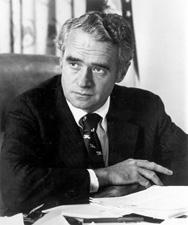
United States · United States Congress · 6 March 1986
Thomas P. O'Neill, Junior, Aid to Ireland and Northern Ireland Act of 1986 - Earmarks a specified amount of the funds authorized for the Economic Support Fund for FY 1986 through 1990 for a U.S. contribution to the International Fund (the Fund) established pursuant to the Anglo-Irish Agreement signed in November 1985. Authorizes providing assistance from other U.S. programs for Ireland and Northern Ireland in support of such Agreement. Permits using such contributions only to support economic and social reconstruction and redevelopment in Ireland and Northern Ireland. Requires the President to make every effort to ensure that there is U.S. representation on the Board of the Fund. Authorizes the United States to make contributions to the Fund only if the President each fiscal year makes a specified certification to the Congress relating to the Board of the Fund and to the disbursements from the Fund. Requires the President to report annually to the Congress on the degree to which: (1) the Fund has contributed to reconciliation between the communities in Northern Ireland; (2) the U.S. contribution to the Fund is meeting its objectives; and (3) the Fund has increased respect for the freedoms of all people in Northern Ireland. Imposes certain requirements relating to funds for international organizations and conferences.
United States · United States Congress · 6 March 1986
Expresses the sense of the Congress that the United States should: (1) pursue with the Soviet Union the resolution of concerns with respect to compliance with existing strategic arms control agreements and seek corrective actions through confidential diplomatic channels such as the Standing Consultative Commission and summit meetings between U.S. and Soviet leaders; and (2) continue to refrain from undercutting existing strategic offensive arms agreements so long as the Soviet Union does the same or until a new agreement is concluded. Urges the Soviet Union to take positive steps to resolve U.S. concerns with regard to compliance with such agreements. Urges the President to: (1) submit a report to the Congress regarding U.S. and Soviet no-undercut policies with respect to strategic arms control agreements and the reduction of strategic weapons in both countries' arsenals; (2) consider the impact of any change to the current policy with regard to existing strategic offensive arms agreements on the long-term security interests of the United States and its allies and to consult with the Congress before making such change in policy; and (3) ensure that future reports to the Congress regarding Soviet compliance with arms control commitments present an assessment that identifies limitations and adherence to such agreements. Provides that nothing in this resolution should be construed as: (1) endorsing unilateral U.S. compliance with existing strategic arms agreements; (2) prohibiting the United States from exercising its rights under international law with respect to treaty compliance; and (3) prohibiting the development, flight-testing, or deployment of small intercontinental ballistic missiles.
United States · United States Congress · 26 February 1986
Amends the Internal Revenue Code to limit the reduction in the credit against the unemployment tax for employers in States which have outstanding loans from the Federal unemployment insurance trust fund and which have a specified rate of unemployment. Allows such limitation only in States which: (1) have not decreased unemployment tax efforts; (2) have not taken any action to reduce the solvency of unemployment compensation programs; and (3) have an unemployment rate of at least eight percent and 25 percent or more above the national average unemployment rate.
United States · United States Congress · 26 February 1986
Farm Emergency Credit Act of 1986 - Amends the Agricultural Act of 1949 to direct the Secretary of Agriculture to make advance (recourse) price support loans available for 1986 to producers unable to secure sufficient credit elsewhere. Makes up to one-third of such crop eligible for advance payments. Permits loan conversion to nonrecourse status upon harvest and availability as loan collateral. Administers such program through the Commodity Credit Corporation and the local farmer committees. Requires a participating producer to: (1) obtain crop insurance if available; and (2) use his crop as loan collateral. Limits loans to any single person to $50,000.
United States · United States Congress · 20 February 1986
Human Services Reauthorization Act of 1986 - Amends the Head Start Act, the Low-Income Home Energy Assistance Act of 1981, the Community Services Block Grant Act, and the Omnibus Budget Reconciliation Act of 1981 (relating to dependent care services) to authorize FY 1987 through 1990 appropriations under such Acts.
United States · United States Congress · 18 February 1986
Disapproves the proposed deferral of budget authority (D-86-48) for community development block grants set forth in the special message of the President to the Congress on February 5, 1986, under the Impoundment Control Act of 1974.
United States · United States Congress · 5 February 1986
Establishes a veterans' home loan guaranty limitation amount of $17,600,000,000 reduced by 4.3 percent for purposes of implementing any sequestration order issued by the President for FY 1986 calling for a reduction of such loan commitments.
United States · United States Congress · 5 February 1986
Expresses the sense of the Congress that certain amounts appropriated for the Office of Juvenile Justice and Delinquency Prevention of the Department of Justice which have been proposed for rescission by the President shall be made available for obligation and expended as originally intended.
United States · United States Congress · 3 February 1986
Fair Housing Amendments Act of 1986 - Amends specified Acts to rename them the Civil Rights Act of 1968 and the Fair Housing Act. Amends the Fair Housing Act to make it unlawful to: (1) refuse to sell or rent a dwelling to an individual because that individual, or someone associated with that individual, is handicapped; (2) discriminate against a handicapped individual in the conditions of sale or rental, or in the provision of a related service or facility; (3) refuse to permit reasonable modifications to permit access to the premises (provided the renter agrees to restore the premises to their original condition); or (4) make reasonable accommodations in rules, policies, or services to afford handicapped individuals equal use and enjoyment of a dwelling. Makes it unlawful for anyone engaged in residential real estate-related transactions to discriminate in the provision or terms of a transaction because of race, color, religion, sex, handicap, familial status, or national origin. States that nothing in this Act limits the applicability of any reasonable local, State, or Federal restrictions on the maximum number of occupants permitted to occupy a dwelling unit. States that nothing in this Act regarding familial status applies to any State or Federal program aimed at assisting the elderly. Establishes new administrative enforcement authority in addition to existing enforcement provisions. Directs the Secretary of Housing and Urban Development to transmit an annual report to the Congress on the progress made in eliminating discriminatory housing practices. Allows an aggrieved person to file a complaint with the Secretary alleging a discriminatory housing practice. Allows the Secretary to file such a complaint on his own initiative or investigate a housing practice to determine whether such a complaint should be brought. Requires the Secretary to attempt to correct the discriminatory practice by informal methods of conciliation. Requires the Secretary to refer matters to the Attorney General, recommending that civil actions be filed, where a respondent has failed to comply with conciliation agreements. Allows the Secretary to refer matters to the Attorney General for prompt judicial action when necessary. Makes certain changes in the current requirements for referring charges to State or local agencies for investigation and enforcement. Specifies the elements of "substantial equivalency" which permit certification and referrals of discrimination charges. Permits the Secretary to file an administrative complaint or refer the matter to the Attorney General for civil action if the investigation supports a finding of reasonable cause, except with respect to matters involving land use control, which must be referred. Specifies the hearing procedures to be utilized if an administrative complaint is issued. Permits criminal penalties of up to a $100,000 fine and/or imprisonment for not more than one year for noncompliance with subpoenas or other lawful orders. Permits the administrative law judge to award appropriate relief, including punitive damages. Permits the filing of a petition for review of a final order in an appropriate court of appeals within 30 days of service of such order. Permits any prevailing party to be awarded reasonable attorney's fees. Makes certain revisions in the private right of action for aggrieved persons. Extends the statute of limitations from 180 days to two years. Disallows simultaneous administrative and judicial proceedings involving the same charge. Allows the Attorney General to intervene upon certification that the civil action is of general public importance. Continues the authority of the Attorney General to initiate civil actions where there is reasonable cause to believe that a pattern or practice of resistance to fair housing rights has occurred. Permits the Attorney General to commence a civil action for appropriate temporary or preliminary relief pending final disposition of the complaint. Describes the types of relief which may be granted in civil actions under such Act.
United States · United States Congress · 29 January 1986
Expresses the sense of the Senate that the present three-year basis recovery rule on the taxation of retirement annuities for public employees should be maintained and provisions requiring the repeal of such treatment contained in certain tax reform legislation (H.R. 3838) should be deleted.
United States · United States Congress · 22 January 1986
Inspector General Act Amendments of 1986 - Amends the Inspector General Act of 1978 to establish an Office of Inspector General in the Departments of Energy and of Health and Human Services. Provides for uniform salaries for inspectors general at level IV of the Executive Schedule. Provides for the salary of the Deputy Inspector General of the Synthetic Fuels Corporation at level V. Authorizes inspectors general to administer to or take from any person an oath, affirmation, or affidavit when necessary. Restricts each Federal agency without a statutorily established inspector general to one audit unit. Requires the audit unit director to be appointed by, report to, and be under the general supervision of the head of each Federal entity governed by this Act. Requires the head of any Federal entity who removes an audit unit director from office to communicate the reasons for such removal to the Congress. Establishes the Inspector General Interagency Committee to study the extent and effectiveness of internal audit and investigative activities at Federal entities. Requires the Committee to report to the President and the Congress with findings and recommendations.
United States · United States Congress · 22 January 1986
Government Management Report Act of 1986 - Directs the President to submit with each Federal budget a report on the management of the executive branch with respect to the most recently completed fiscal year, the current fiscal year, and the fiscal year for which the budget is submitted. Sets forth areas to be addressed in such report. Requires the Comptroller General to submit an analysis of such report to the Congress.
United States · United States Congress · 18 December 1985
Declares that the President should, at the earliest possible date: (1) endorse and request Senate consent to ratification of the Threshold Test Ban and the Peaceful Nuclear Explosions Treaties; (2) call upon the Soviet Union to agree to reduce the permitted yields of explosions to the lowest verifiable levels; and (3) express to the Soviet Union and to Great Britain the U.S. desire to resume negotiations to conclude a mutual and verifiable ban on nuclear explosions and a moratorium of finite duration on such explosions.
United States · United States Congress · 17 December 1985
Expresses the sense of the Senate that the executive branch should: (1) employ the quickest, most cost efficient means to return the air traffic control system to prestrike experience levels; and (2) rehire those experienced air traffic controllers fired from the Federal Aviation Administration in 1981, who meet the Federal employment standards, necessary to return the air traffic control system to such prestrike experience levels.
United States · United States Congress · 10 December 1985
Calls upon the President to direct the Agency for International Development to work in a global effort to provide universal access to childhood immunization by 1990 by: (1) assisting in the delivery, distribution, and use of vaccines; and (2) performing and supporting research and development activities that will be targeted at developing new vaccines and at modifying existing vaccines to make them more appropriate for use in developing countries. Declares that the President should appeal to the public to provide the necessary resources to achieve universal access to childhood immunization by 1990. Amends the Foreign Assistance Act of 1961 to increase the authorization of appropriations for FY 1987 for the Child Survival Fund.
United States · United States Congress · 9 December 1985
Amends the Deficit Reduction Act of 1984 to extend from August 1, 1985, until June 30, 1986, the special rules concerning the allocation of research and experimental expenditures to income from sources within the United States. Amends the Internal Revenue Code to extend from December 31, 1985, until June 30, 1986, the income tax credit for increased research and experimental expenditures. Extends from December 31, 1985, until June 30, 1986, the income tax deduction for expenditures to remove architectural and transportation barriers to the handicapped and elderly. Extends from December 31, 1985, until June 30, 1986, the moratorium on net operating loss carryover rules. Extends from January 1, 1986, until July 1, 1986, the moratorium on the issuance of regulations relating to faculty housing. Extends the targeted jobs income tax credit from December 31, 1985, until June 30, 1986. Extends the authorization for appropriations for administrative and publicity expenses through FY 1986. Extends from December 31, 1985, through June 30, 1986, provisions relating to the awarding of attorney's fees to a prevailing taxpayer in a Federal tax case. Extends from December 31, 1985, until June 30, 1986, the limited income tax exclusion for employer-provided educational assistance. Extends from December 31, 1985, until June 30, 1986, the income tax exclusion for amounts received under qualified group legal services plans. Extends from January 1, 1986, until July 1, 1986, the income tax exclusion for certain employer-provided commuting transportation. Extends from December 31, 1985, until June 30, 1986, the limited exclusion of dividends from a public utility that are reinvested in common stock of the utility. Extends from December 31, 1985, (until June 30, 1986, the investment tax credit for specified types of energy property. Extends from December 31, 1985, until June 30, 1986, the residential energy income tax credit. Extends from December 31, 1985, until June 30, 1986, social security coverage of retired Federal judges on active duty.
United States · United States Congress · 6 December 1985
Establishes a Senate Special Panel on Asylum to conduct a study of the general problems of persons from Communist countries seeking asylum in the United States. Requires a final report to the Senate within one year. Sets forth a specified limit on the expenses that such Panel may incur.
United States · United States Congress · 4 December 1985
Commends the McDonnel Douglas Aircraft Company upon the fiftieth anniversary of service of the DC-3 transport aircraft for its leadership in creating and producing the DC-3 transport aircraft.
United States · United States Congress · 2 December 1985
Public Lands Cleanup Act of 1985 - Designates the first Saturday after Labor Day as Public Lands Cleanup Day. Requires each Federal land management agency to organize and participate in intergovernmental and private efforts to clean and maintain Federal public lands under their jurisdiction in observance of such day.
United States · United States Congress · 7 November 1985
Trade Policy Act of 1985 - Declares the United States should: (1) coordinate Federal activities in order to form a systematic trade policy; (2) provide for the collection and evaluation of data necessary to form such a policy; and (3) build a new system of international trade and financial agreements. Establishes the National Trade Data Committee which shall: (1) establish and maintain a National Trade Data Bank; and (2) provide for the analysis and effective dissemination of information in the National Trade Data Bank. Requires the National Trade Data Bank to consist of international economic and trade data and to serve as a clearinghouse for such data. Requires the National Trade Data Committee to report to the Congress annually on the Data Bank and the information it contains. Excludes the actions of the National Trade Data Committee from certain provisions governing coordination of activities with the Office of Information and Regulatory Affairs. Amends the Trade Expansion Act of 1962 to establish in the Executive Office of the President a National Trade Council which will advise the President on coordinating national and international policies relating to trade. Terminates the Trade Policy Committee upon enactment of this Act. Establishes the Commission on U.S. Trade in the 1990's which shall study and make recommendations concerning U.S. international trade and export policies. Requires the Commission to report to the Congress by July 1, 1987. Authorizes appropriations for FY 1986 and 1987. Amends the Trade Act of 1974 to require the President, by December 31, 1995, to take such action as may be necessary to: (1) revise all U.S. trade and financial agreements in order to meet specified objectives; or (2) replace such agreements with new agreements that meet such objectives. Requires such agreements to: (1) provide for the reciprocal exchange of obligations that are likely to be mutually economically advantageous to the signatories; (2) provide a reasonable likelihood that the United States can enforce the obligations of such agreements; (3) complement and reinforce other agreements; and (4) be subject to certain withdrawal provisions and fulfill certain objectives. Authorizes entering into a replacement agreement only if the President, before starting formal negotiations of such agreement: (1) notified specified congressional committees of such negotiations; and (2) consulted with such committees on such negotiations. Sets forth special provisions governing congressional consideration of a bill implementing such agreement.
United States · United States Congress · 24 October 1985
Declares that no letter of offer, prior to March 1, 1986, shall be valid with respect to any proposed sales to Jordan of advanced weapons systems, including advanced aircraft and advanced air defense systems, that are described in the notification pursuant to the Arms Export Control Act, unless direct peace negotiations between Israel and Jordan are underway.
United States · United States Congress · 22 October 1985
Prohibits the President from issuing a letter of offer relating to proposed sales to Jordan of certain advanced weapons systems before the start of direct bilateral negotiations between Jordan and Israel. Prohibits delivery of any weapons if such a letter of offer is issued and accepted before enactment of this Act.
United States · United States Congress · 20 September 1985
Export Promotion and Information Center Act - Establishes within the Office of the Secretary of Commerce the Export Promotion and Information Center. Requires the Director of the Center to develop and maintain an export information system and to coordinate the gathering and dissemination of international trade information conducted by various Federal, State, and local agencies. Establishes an Export Promotion and Information Policy Board to advise the Director. Sets forth administrative provisions governing the Center and the Policy Board. Provides for fees to be charged by the Center for information. Establishes in the Treasury an Export Promotion and Information Trust Fund. Authorizes appropriations for the Trust Fund for FY 1986 through 1992. Terminates the Center on September 30, 1992.
United States · United States Congress · 12 September 1985
Gold Bullion Coin Act of 1985 - Directs the Secretary of the Treasury to mint and issue gold coins in 50-dollar, 25-dollar, ten-dollar, and five-dollar denominations. Requires the Secretary to acquire the gold for such coins by purchase only from natural deposits in the United States or a U.S. territory or possession or from U.S. reserves. Repeals a provision prohibiting the Government from delivering any gold coin. Requires any profit from the sale of such coins to be deposited in the Treasury and applied toward reducing the national debt. Directs the Secretary to ensure that the issuance of such coins results in no net cost to the Government.
United States · United States Congress · 1 August 1985
Expresses the sense of the Senate that no recess appointments should be made when the Senate stands adjourned or recessed within a session for a period of less than 30 days. Expresses the sense of the Senate that no recess appointments should be made of any person if: (1) such person has been nominated during the present presidential term; (2) the Senate has voted not to give its advice and consent; or (3) the appropriate committee has voted not to report such nomination to the Senate.
United States · United States Congress · 1 August 1985
Expresses the sense of the Senate that it condemns the growing incidence of violence against health care facilities (most of which provide abortion services). Encourages the Bureau of Alcohol, Tobacco, and Firearms and the Department of Justice to intensify their efforts and apprehend and convict the perpetrators of such violence. Urges the Department of Justice to use all applicable Federal criminal statutes against such persons.
United States · United States Congress · 31 July 1985
Declares that: (1) a renewed national investment to strengthen the research and advanced education capabilities of institutions of higher education is needed; and (2) the major Federal research agencies (the Departments of Agriculture, Defense, and Energy, the National Aeronautics and Space Administration, the National Institutes of Health, and the National Science Foundation) should strengthen their investment in research and graduate education programs in specified ways (including investment in scientific and engineering research and education programs for graduate students and faculty in modernization of university research facilities and laboratories).
United States · United States Congress · 30 July 1985
Civil Service Pension Reform Act of 1985 - Title I: Civil Service Pension System - Establishes the Civil Service Pension System for Federal employees, postal employees, and Members of Congress who began service after December 31, 1983. Sets forth provisions for the basic plan, including: (1) entitlements to retirement based on age and years of service; (2) the formulas for computing an annuity; and (3) funding. Establishes a Thrift Savings Plan under which a participant may contribute up to ten percent of his or her annual basic pay or disability benefits. Requires the employing agency of such participant to match such contribution up to five percent. Excludes amounts contributed to such plan from an employee's gross income for income tax purposes. Provides a vesting schedule for the plan. Describes the optional ways an employee may elect to receive entitlements upon separation from Government. Establishes in the Treasury the Thrift Savings Fund for deposit of amounts contributed under the plan. Prescribes how money in such Fund shall be invested. Describes the survivor benefits of the basic plan and the thrift plan. Describes the disability benefits available to a participant with at least 18 months of service. Establishes in the Treasury the Federal Employee's Disability Insurance Fund to which agencies must make payments from salary appropriations. Sets forth general and administrative provisions. Directs the Office of Personnel Management to pay all benefits payable under the basic plan of the pension system and administer provisions not specifically assigned to another entity. Authorizes the Office to enter into contracts for the performance of such administrative services. Provides for annual cost-of-living adjustments in basic pensions based upon an increase in the Consumer Price Index. Sets forth transition provisions for certain individuals subject to the Civil Service Retirement and Disability System who elect to participate in the Civil Service Pension System. Establishes in the executive branch the Civil Service Thrift Investment Board to be responsible for policies and regulations for, and review of, the investment and management of the Thrift Savings Fund. Directs the Board (headed by an Executive Director) to establish a Civil Service Thrift Advisory Committee to advise the Board on matters relating to investment policies for the Fund. Title II: Amendments Relating to Social Security - Amends the Social Security Act and the Internal Revenue Code of 1954 to cover service by an individual who participates in the pension system. Title III: Miscellaneous and Conforming Amendments - Makes miscellaneous, technical, and conforming amendments as a result of provisions of this Act. Title IV: Authorization and Effective Dates - Authorizes appropriations to the Civil Service Thrift Investment Board for FY 1986 and 1987. Declares the effective date of this Act to be January 1, 1987, except certain other specified provisions.