Law· SJRESS.J.Res. 163 (103rd)enacted
A joint resolution to proclaim March 20, 1994, as "National Agriculture Day".
United States · United States Congress · 10 February 1994
Designates March 20, 1994, as National Agriculture Day.
The world's political record
Person
United States · Official source
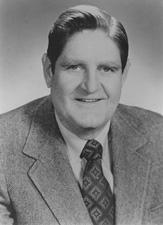
2,803 records where Sen. Heflin, Howell [D-AL] is listed as a sponsor, author, or other actor. Search with topics and years
United States · United States Congress · 10 February 1994
Designates March 20, 1994, as National Agriculture Day.
United States · United States Congress · 10 February 1994
Designates June 4, 1994, as National Trails Day.
United States · United States Congress · 9 February 1994
Designates March 25, 1994, as Greek Independence Day: A National Day of Celebration of Greek and American Democracy.
United States · United States Congress · 7 February 1994
Expresses the sense of the Congress that a postage stamp should be issued to honor the 100th anniversary of the Jewish War Veterans of the United States and that the Citizens' Stamp Advisory Committee of the U.S. Postal Service should make such recommendation to the Postmaster General.
United States · United States Congress · 3 February 1994
Tax Fairness for Main Street Business Act of 1994 - Authorizes a State or local jurisdiction to require certain out-of-State businesses to collect sales taxes on tangible personal property sold to residents of the State or local jurisdiction. Provides an in-lieu fee rate where local taxes are not uniform. Requires a State to distribute taxes collected under this Act proportionately to taxes collected separate from this Act. Prohibits a State from requiring out-of-State businesses to file reporting returns more than once every calendar quarter. Requires a State to establish toll-free information services to provide such businesses with necessary forms and instructions.
United States · United States Congress · 2 February 1994
Prohibits the Department of Transportation or any other Federal department, agency, or instrumentality from requiring any State or political subdivision thereof to convert highway signs to metric units.
United States · United States Congress · 27 January 1994
Amends the Omnibus Budget Reconciliation Act of 1993 to provide that the initial month for which a cost of living increase in retired pay that becomes effective on December 1 of 1993 through 1995 is payable shall be March of the following year.
United States · United States Congress · 20 November 1993
Amends the Judicial Improvements and Access to Justice Act to extend through December 31, 1994 (currently November 19, 1993) provisions allowing U.S. district courts to utilize arbitration in any civil action, including adversary proceedings in bankruptcy. Extends through FY 1996 (currently FY 1993) the authorization of appropriations for carrying out such arbitration.
United States · United States Congress · 20 November 1993
Amends the Internal Revenue Code to exempt manufacturers, producers, and importers of fewer than 50 firearms per year from the firearms excise tax.
United States · United States Congress · 20 November 1993
National Child Protection Act of 1993 - Establishes a national criminal background check system to which a designated criminal justice agency in each State is required to report or index child abuse crime information, for purposes of background checks of child care providers. Directs the Attorney General to establish: (1) guidelines for the reporting or indexing of such information; and (2) timetables for each State to provide such information to such system (with a three-year deadline for all States to be reporting at a specified level of currency). Requires State agencies to maintain close liaison for the exchange of technical assistance in cases of child abuse with the National Centers: (1) on Child Abuse and Neglect; (2) for Missing and Exploited Children; and (3) for the Prosecution of Child Abuse. Directs the Attorney General to publish annually: (1) a statistical summary of the child abuse crime information reported under this Act; and (2) a summary of each State's progress in reporting child abuse crime information to the national criminal background check system. Requires the Administrator of the Office of Juvenile Justice and Delinquency Prevention to conduct a study to determine various factors relating to potential child abuse crimes and offenders. Requires a report on such study. Provides for background check procedures. Directs the Attorney General to establish guidelines for State background check procedures. Directs the Attorney General to encourage use of the best technology available in conducting background checks. Amends the Omnibus Crime Control and Safe Streets Act of 1968 to provide for use of certain formula grants to improve State record systems and the sharing of records of child abuse crime information to implement this Act. Directs the Attorney General to make additional grants to States to improve specified aspects of the child abuse crime information system. Authorizes appropriations for such additional grants. Authorizes the Attorney General, beginning one year after enactment of this Act, to reduce by up to ten percent the allocation to a State for a fiscal year under title I of the Omnibus Crime Control and Safe Streets Act of 1968 if the State is not in compliance with the child abuse crime information timetable established for it under this Act.
United States · United States Congress · 19 November 1993
Equitable Escheatment Act of 1993 - Amends specified Federal law to prescribe guidelines under which unclaimed distributions of security interests shall be subject to the custodial taking (escheatment) by the State which contains the principal executive offices of either the issuer or the holder of those securities.
United States · United States Congress · 19 November 1993
Designates 1994 as The Year of Gospel Music.
United States · United States Congress · 19 November 1993
Designates August 1994 and August 1995 as National Slovak American Heritage Month.
United States · United States Congress · 18 November 1993
Designates the weeks of November 21 through 27, 1993, and November 20 through 26, 1994, as National Family Caregivers Week.
United States · United States Congress · 17 November 1993
Amends the Internal Revenue Code to allow certain spouses a full deduction for contributions to an individual retirement account.
United States · United States Congress · 16 November 1993
Designates April 10 through 16, 1994, as Primary Immune Deficiency Awareness Week.
United States · United States Congress · 8 November 1993
Municipal Solid Waste Flow Control Act of 1993 - Authorizes a State or a political subdivision to which a State has delegated authority, if conditions under this Act are met, to: (1) direct, limit, regulate, or prohibit the movement of municipal solid waste generated or imported within its boundaries; and (2) designate waste management facilities to which such waste shall be transported. Permits States or political subdivisions to exercise such authorities only if: (1) recyclable materials will be removed from the waste through separation at the source or at facilities unless the political subdivision in which the waste is generated is exempt from recycling requirements; and (2) the designated waste management facilities are not in violation of Federal and State environmental laws and regulations. Bars States or political subdivisions from prohibiting persons from selling, conveying, or arranging for the transportation of recyclable materials that have been separated from municipal solid waste.
United States · United States Congress · 2 November 1993
Grants the consent of the Congress to the amendment to articles I, II, and III of the Historic Chattahoochee Compact between Alabama and Georgia which: (1) provide that the purpose of the Compact is to promote the cooperative development of the Chattahoochee valley's full potential for historic preservation and tourism; (2) make such Compact effective immediately as to the States ratifying it whenever Alabama and Georgia have ratified it and the Congress has given its consent; and (3) permit the two States to establish a joint agency to be known as the Historic Chattahoochee Commission.
United States · United States Congress · 27 October 1993
Designates October 23 through 30, 1993, as National Red Ribbon Week for a Drug-Free America.
United States · United States Congress · 20 October 1993
Designates May 1 through 7, 1994, as National Walking Week.
United States · United States Congress · 13 October 1993
1995 Franklin Delano Roosevelt Commemorative Coin Act - Directs the Secretary of the Treasury to issue commemorative one-dollar silver coins bearing a likeness of Franklin Delano Roosevelt. Requires the Secretary to distribute proceeds from surcharges ($10 per coin) in equal allocations to: (1) the National Park Foundation Restricted Account for the Franklin Delano Roosevelt Memorial; and (2) the National Park Service Restricted Construction Account for the Franklin Delano Roosevelt Memorial.
United States · United States Congress · 13 October 1993
Designates the week beginning November 7, 1993, as National Women Veterans Recognition Week.
United States · United States Congress · 6 October 1993
TABLE OF CONTENTS: Title I: Ensuring the Integrity of the Listing, Critical Habitat Designation, and Consultation Processes Title II: Providing Significance to the Recovery Planning Process Title III: Ensuring that the Compliance Procedures and Standards for Non-Federal Persons Are Not More Burdensome than the Procedures and Standards Applicable to Federal Agencies Title IV: Providing for Habitat Conservation Incentive Programs Title V: Reauthorization and Other Amendments Endangered Species Act Procedural Reform Amendments of 1993 - Title I: Ensuring the Integrity of the Listing, Critical Habitat Designation, and Consultation Processes - Amends the Endangered Species Act of 1973 to establish a peer review (upon request) requirement with respect to a determination of endangered or threatened species status. (Sec. 103) Establishes discretionary priorities for determining and conserving endangered or threatened species. (Sec. 105) Requires that the economic impact be considered in making a critical habitat determination. (Sec. 107) Revises consultation and related provisions, including establishing procedures with respect to private actions. Title II: Providing Significance to the Recovery Planning Process - Requires the Secretary of the Interior to develop and implement a recovery plan for each endangered or threatened species, unless the Secretary determines such plan to be unnecessary. Gives priority to multispecies plans. Title III: Ensuring that the Compliance Procedures and Standards for Non-Federal Persons Are Not More Burdensome than the Procedures and and Standards Applicable to Federal Agencies - Establishes consultation and permit conditions for non-Federal activities concerning endangered or threatened species. (Sec. 306) Exempts non-Federal persons under specified circumstances from prohibitions against the taking of an endangered species. (Sec. 307) Provides for compensation of property owners adversely affected by specified determinations pursuant to such Act. Title IV: Providing for Habitat Conservation Incentive Programs - Authorizes the Secretary to: (1) enter into an agreement (Cooperative Management Agreement) with any affected non-Federal person (currently, only with a State) for the management of a species' habitat; and (2) provide grants to any non-Federal person for habitat preservation of endangered or threatened species. Title V: Reauthorization and Other Amendments - Sets forth provisions regarding: (1) experimental population release; (2) captive propagation, including grants; and (3) citizen suits. (Sec. 505) Authorizes appropriations for activities under such Act.
United States · United States Congress · 5 October 1993
Designates December 7, 1993, as National Pearl Harbor Remembrance Day. Requests the President to urge that the U.S. flag be flown at half staff on December 7, 1993, in honor of the individuals who died as a result of their service at Pearl Harbor.
United States · United States Congress · 4 October 1993
Designates the third Sunday in November of 1993 as National Children's Day.
United States · United States Congress · 23 September 1993
Designates October 16, 1993, and October 16, 1994, as World Food Day.
United States · United States Congress · 22 September 1993
Satellite Carrier Compulsory License Extension Act of 1993 - Amends copyright law with respect to satellite carrier compulsory licenses to require the subscriber information list submitted by a satellite carrier that makes secondary transmissions of a primary transmission by a network station to include the names of the subscribers. Requires, upon the request of a network, such a satellite carrier to conduct, jointly with the network, measurements of the reception of over-the-air television broadcast signals of network-affiliated stations. Prescribes guidelines for conducting such measurements. Revises: (1) the formula used by the satellite carrier to compute the royalty fee to be deposited semiannually with the Register of Copyrights; and (2) dates and procedures regarding the adjustment of such royalty fee. Makes provisions governing such royal fees permanent. Defines, for purposes of cable and satellite carrier compulsory license provisions, "network station" as a television broadcast station, including any translator station or terrestrial satellite station that rebroadcasts all or substantially all of the programming broadcast by a network station, that is owned or operated by or affiliated with, one or more of the U.S. television networks which offer an interconnected program service on a regular basis for 15 or more hours per week to at least 25 of its affiliated television licensees in ten or more States. Revises the definition of: (1) "satellite carrier" to specify that such a carrier operates in the Fixed Satellite Service or the Direct Broadcast Satellite Service; and (2) "cable system" to include a facility that makes secondary transmissions of broadcast signals by microwave cables and terrestrially based transmission paths.
United States · United States Congress · 21 September 1993
TABLE OF CONTENTS: Title I: Data Collection and Procedures to Ensure that Tolerances Safeguard the Health of Infants and Children Title II: Cancellation and Suspension Title III: Amendments to the Federal Food, Drug, and Cosmetic Act Food Quality Protection Act of 1993 - Title I: Data Collection and Procedures to Ensure that Tolerances Safeguard the Health of Infants and Children - Directs the Administrator of the Environmental Protection Agency and the Secretaries of Agriculture and Health and Human Services to establish procedures to ensure that pesticide tolerances adequately safeguard the health of infants and children based on the recommendations of a specified report prepared by the National Research Council of the National Academy of Sciences. (Sec. 102) Directs the Secretary of Agriculture to collect pesticide use data of statewide or regional significance for all the major crops and crops of dietary significance. (Sec. 103) Amends the Federal Insecticide, Fungicide, and Rodenticide Act (FIFRA) to mandate research, development, and dissemination of integrated pest management techniques and other pest control methods that enable producers to reduce or eliminate application of pesticides which pose a greater than negligible dietary risk to humans. Title II: Cancellation and Suspension - Amends FIFRA provisions relating to cancellations, changes in classifications, or other terms of registration with respect to the authority of the Administrator. Requires that a rulemaking under such provisions be based on a validated test or other significant evidence raising prudent concerns of unreasonable adverse effects to the environment. Denies registration applications that are not in compliance with this Act. Title III: Amendments to the Federal Food, Drug, and Cosmetic Act - Amends the Federal Food, Drug, and Cosmetic Act (FDCA) to define, subject to exception, "pesticide chemical" as it is defined in FIFRA. (Sec. 304) Deems a food adulterated if it bears or contains: (1) a pesticide chemical residue that is unsafe; or (2) a new animal drug or conversion product that is unsafe. (Sec. 305) Sets forth requirements relating to tolerances and exemptions from tolerances for pesticide chemical residues in food, including residues of degradation products. Prohibits establishment of a tolerance higher than a level the Administrator determines is adequate to protect the public health. Allows a greater than negligible dietary risk if: (1) use protects from greater adverse health effects to humans or the environment; (2) use avoids greater risks from another pesticide; or (3) the unavailability of the pesticide would reduce the availability of an adequate, wholesome, and economical domestic supply of the food, and the adverse effects from the reduction would outweigh the risk posed by the residue. Allows the Administrator to issue an exemption from the requirement for a tolerance only if a tolerance is not needed to protect the public health, in view of the levels of dietary exposure that could reasonably be expected to occur. Prohibits a final rule that revokes, modifies, or suspends a tolerance or exemption until the Administrator has taken any necessary action under FIFRA with respect to the registration of the pesticide involved. Requires the Administrator, if the Administrator takes certain actions with respect to the registration of a pesticide, to revoke any tolerance or exemption that allows the presence of the chemical or chemical residue. Requires the suspension of any tolerance or exemption upon the suspension of the use of an associated registered pesticide. Provides for: (1) tolerances for unavoidable residues in the case of a residue of a canceled or suspended pesticide chemical that will unavoidably persist in the environment and be present in or on a food; and (2) residues resulting from an application which was lawful at the time of application. Prohibits, subject to exception, a State from enforcing any limit on a qualifying pesticide chemical residue in or on any food which is not identical to Federal requirements. Prohibits a State from enforcing a residue limit which was lawful at the time of application. (Sec. 306) Authorizes appropriations for increased monitoring of pesticide residues in imported and domestic food.
United States · United States Congress · 20 September 1993
TABLE OF CONTENTS: Title I: Rural School Improvement Title II: School Building Repair and Renovation Title III: Evaluation of Results Title IV: General Provisions Rural Schools of America (RSA) Act of 1993 - Title I: Rural School Improvement - Establishes, and authorizes appropriations for, a rural school improvement (RSI) grants program to help meet national educational goals. (Sec. 102) Directs the Secretary of Education, under such program, to: (1) reserve specified funds for competitive grant awards to exemplary school programs; and (2) make allotments to State educational agencies (SEAs), for suballotment to local educational agencies (LEAs), based on relative Chapter 1 funding (for educationally disadvantaged students under the Elementary and Secondary Education Act of 1965). Requires recipient LEAs to make subgrants to community-based organizations or nonprofit partnerships between the LEA, local colleges or universities, or area-wide collaboratives of private sector businesses. (Sec. 103) Sets forth: (1) requirements for applications, local planning, uses of funds, accountability, and local advisory groups; and (2) special rules for ranking schools within an LEA by need, flexibility, and coordination with Chapter 1 planning. (Sec. 107) Authorizes incentive awards to individual schools that demonstrate exemplary progress. (Sec. 108) Directs the Secretary to report on the impact of Federal regulations, guidelines, and policies on rural public schools. Title II: School Building Repair and Renovation - Establishes, and authorizes appropriations for, a program of assistance for rural school building repair and renovation. (Sec. 202) Allots program funds to SEAs based on relative Chapter 1 funding, with suballotments to LEAs based on number of: (1) children from families below the poverty line; (2) school buildings used for instructional purposes; and (3) school buildings more than 25 years old used for instructional purposes. (Sec. 204) Requires eligible LEAs to use half of their suballotment for programs for school building repair and renovation, and half for programs for school environmental concerns and safety improvements. Authorizes SEA waivers of such requirement. Applies Davis-Bacon Act requirements to such programs. Title III: Evaluation of Results - Establishes, and authorizes appropriations for, a program of rural school research and evaluation. (Sec. 302) Directs the Secretary to establish for each region a National Rural Regional Education Research Center, to be operated by the appropriate regional educational laboratory. (Sec. 303) Requires each Center to make direct grants to rural LEAs in its region participating in a program assisted under title I of this Act, to conduct local schoool district research and evaluation of efforts toward meeting the national education goals. Title IV: General Provisions - Establishes the Interagency Council on Rural Schools. (Sec. 402) Directs the President to conduct a White House Conference on Rural Education. Authorizes appropriations. (Sec. 403) Requires eligible LEAs to use Federal funds received under this Act only to supplement but not supplant non-Federal funds.
United States · United States Congress · 15 September 1993
Designates the week beginning October 25, 1993, as World Population Awareness Week.
United States · United States Congress · 15 September 1993
Designates October 19, 1993, as National Mammography Day.
United States · United States Congress · 13 September 1993
Designates the weeks beginning November 14, 1993, and November 13, 1994, as Geography Awareness Week.
United States · United States Congress · 10 September 1993
TABLE OF CONTENTS: Title I: Police Corps Program Title II: Enforcement Scholarship and Employment Program Police Corps and Law Enforcement Scholarship and Employment Act - Requires a State that desires to participate in the Police Corps program or the Law Enforcement Scholarship program (established pursuant to this Act) to designate a lead agency and submit a State plan containing assurances with respect to: (1) lead agency cooperation with other State and local agencies; (2) the State advertising of the assistance available; (3) State screening and selection of law enforcement personnel for participation in the program; and (4) compliance with other specified requirements. Title I: Police Corps Program - Establishes within the Department of Justice (DOJ) an Office of the Police Corps to be headed by a Director. (Sec. 103) Authorizes the Director to award scholarships (including direct payments to institutions and reimbursement of educational costs) to participants who agree to work for four years in a State or local police force after completion of a baccalaureate program and police corps training, subject to specified conditions. Sets forth provisions with respect to: (1) scholarship assistance for dependent children of law enforcement officers; (2) the selection of participants; (3) minority recruitment; and (4) leaves of absence. (Sec. 105) Requires the Director to establish up to three training centers to provide basic law enforcement training to State Police Corps program participants. Requires participants to attend two eight-week training sessions at such training centers and to meet certain performance standards in order to remain in the Police Corps program. Requires the Director to pay participants a weekly stipend during training. (Sec. 107) Requires a State, in order to participate in the Police Corps program, to submit a plan for implementing such program to the Director for approval. Requires such plan to: (1) include assurances that participants will receive additional State or local training after completing Federal training which shall count toward the four-year service obligation; and (2) provide that program participants shall be assigned to community and preventive patrol in geographic areas with the greatest need for additional law enforcement personnel. Sets forth provisions regarding: (1) the swearing in of participants as members of the police force which they are assigned after completing Federal training and meeting the requirements of that police force; (2) layoffs; and (3) assistance to States and localities employing Police Corps officers. (Sec. 110) Authorizes appropriations. Title II: Law Enforcement Scholarship and Employment Program - Directs each State to pay from funds under this Act the Federal share (not more than 60 percent) of the costs of: (1) awarding scholarships to in-service law enforcement personnel for further education; and (2) providing full-time employment in the summer or part-time (up to 20 hours per week) employment for a period not to exceed one year. (Sec. 206) Sets forth application requirements. Grants priority in awarding scholarships to persons who are members of underrepresented groups, are pursuing an undergraduate degree, and are not receiving financial assistance under the Higher Education Act of 1965. (Sec. 208) Requires each scholarship recipient to work in a law enforcement position in the State for a period of one month for each credit hour for which funds are received under the scholarship (with a six-month minimum and two-year maximum). (Sec. 210) Authorizes appropriations.
United States · United States Congress · 6 August 1993
USDA National Appeals Division Act of 1993 - Directs the Secretary of Agriculture (Secretary) to establish and maintain a National Appeals Division within the Office of the Secretary to hear appeals of adverse decisions made by certain agencies within the Department of Agriculture. Requires the Secretary to develop a subject-matter index of all significant final determinations and make such index available to the public. Sets forth administrative appeal and transfer provisions. Authorizes appropriations.
United States · United States Congress · 6 August 1993
Church Retirement Benefits Simplification Act of 1993 - Amends the Internal Revenue Code to recodify and revise qualifications for church retirement and pension plans. Makes employee contributions to such plans nonforfeitable. Requires the plan to meet minimum vesting requirements. Recodifies the authority of a church or a convention or association of churches to be treated as an employer making contributions to retirement income accounts. Subjects church-related hospitals and universities to certain coverage and related rules in the case of a contract purchased by a church. Requires distributions from retirement income accounts provided by churches to be in accordance with distributions under cash or deferred arrangements. Provides for determining the beginning date for such distributions. Allows self-employed ministers and chaplains who work for non-church employers to participate in their church plans. Provides that certain rules aggregating employees do not apply to churches. Restores qualified voluntary employee contributions to church plans. Treats self-employed ministers as employees for purposes of certain welfare benefit plans and retirement income accounts. Allows a deduction for contributions to retirement income accounts by such ministers. Provides that a church plan maintained by more than one employer shall not be treated as a single plan. Provides that accounting methods of deferred compensation plans of State and local governments and tax-exempt organizations do not apply to a church plan. Exempts a church plan from the requirement to maintain separate accounts for medical benefits for key employees. Provides that the special rules for computing employee contributions to pension plans do not apply to certain foreign missionaries. Repeals the elective deferral catch-up limitation for church retirement income accounts. Allows church plans to annuitize benefits and increase benefit payments. Provides that rules for self-insured medical reimbursement plans are not applicable to church plans. Provides that retirement benefits of ministers are not subject to the tax on net earnings from self-employment.
United States · United States Congress · 6 August 1993
Youth Apprenticeship Act of 1993 - Establishes an Institute for Youth Apprenticeship as an independent establishment to administer youth apprenticeship demonstration programs set up under this Act. Directs the Institute Board Chairperson to establish guidelines, criteria, and procedures for such programs. Directs the Institute Executive Director to enter into contracts with public and nonprofit private organizations to develop and evaluate youth apprenticeship demonstration programs. Requires each eligible entity entering into such a contract with the Institute Board to establish partnerships among secondary and postsecondary schools and employers, labor organizations, and community and civic leaders to provide apprenticeship training to students. Requires at least: (1) one secondary school wage incentive demonstration program under which the Institute shall pay 50 percent of the apprenticeship wage; and (2) one secondary school disadvantaged youth demonstration program. Authorizes two postsecondary school demonstration programs. Requires training for various levels of secondary school students. Requires employers to pay: (1) 100 percent of the apprentice wage rate in secondary school programs (but 50 percent in the wage incentive program); (2) 100 percent of the apprentice wage rate and costs of continuing basic skills courses in postsecondary programs; and (3) costs of on-the-job training. Does not require employers to hire apprentices upon completion of the apprenticeships. Requires program coordination and assistance by the Institute, including operating a clearinghouse for the partnerships and gathering information on labor mobility of apprentices. Authorizes appropriations. Terminates the Board, Institute, and these programs within 69 months.
United States · United States Congress · 6 August 1993
Designates September 1993 as Childhood Cancer Month.
United States · United States Congress · 6 August 1993
Designates the week beginning November 6, 1994, as National Elevator and Escalator Safety Awareness Week.
United States · United States Congress · 6 August 1993
Requests the Occupational Safety and Health Administration to publish, within one year, proposed amended regulations that specify the components of an adequate operator training program and that provide that only trained employees be authorized to operate powered industrial trucks.
United States · United States Congress · 5 August 1993
Provides that funds authorized to be appropriated under the Foreign Assistance Act of 1961 or the Support for East European Democracy (SEED) Act of 1989 shall remain available for obligation and expenditure not more than 36 months after the close of the fiscal year in which they are appropriated. Authorizes the President to waive such limitation if in the national interest.
United States · United States Congress · 5 August 1993
Designates December 1993 as National Drunk and Drugged Driving Prevention Month.
United States · United States Congress · 4 August 1993
Repeals a provision of the Federal criminal code denying the United States Court of Federal Claims jurisdiction over claims for which the plaintiff or his assignee has pending in any other court any suit or process against the United States or any person who, at the time the cause of action alleged arose, was, in respect thereto, acting or professing to act under the authority of the United States.
United States · United States Congress · 4 August 1993
Designates October 6, 1993 and 1994, as German-American Day.
United States · United States Congress · 2 August 1993
Designates the week of October 17 through 23, 1993, as National Radon Action Week.
United States · United States Congress · 30 July 1993
Directs the President to: (1) investigate and report to the Congress on the whereabouts of U.S. citizens and others who have been missing from Cyprus since 1974; and (2) do everything possible to return such persons (including remains of those no longer alive) to their families.
United States · United States Congress · 27 July 1993
National Aquaculture Development, Commercialization, and Promotion Act of 1993 - Amends the National Aquaculture Act of 1980 to establish the Department of Agriculture as the lead Federal agency for the development of national policy and programs for private aquaculture. (Sec. 5) Directs the Secretary of Agriculture to: (1) establish within the National Agricultural Library a National Aquaculture Information Center; (2) assign new aquaculture programs to the appropriate Federal agencies; and (3) use specified funds for aquaculture development, research and marketing, and export promotion programs. (Sec. 7) Authorizes the Secretary to pay the Federal share of grants and contracts for aquaculture commercialization research. (Sec. 8) Directs the Secretary to: (1) implement a national policy for private aquaculture; (2) implement a Department Aquaculture Plan; (3) revise the National Aquaculture Development Plan; and (4) treat private aquaculture as a form of agriculture. (Sec. 9) Authorizes the Administrator of the Environmental Protection Agency to carry out grant and cooperative agreement programs to demonstrate aquaculture's application to environmental enhancement, including a pollution assessment program. (Sec. 10) Authorizes the Secretary to carry out grant and cooperative agreement programs for Native American fishpond revitalization. (Sec. 11) Directs the Secretary to provide disaster assistance to eligible aquaculture farmers for weather-related losses. (Secs. 12 and 13) Authorizes the Secretary to: (1) establish aquaculture education programs in secondary and postsecondary vocational schools; and (2) support international aquaculture scientific exchanges. (Sec. 14) Authorizes appropriations. (Sec. 15) Amends the Consolidated Farm and Rural Development Act to make aquaculture farmers eligible for farm credit assistance. (Sec. 16) Amends the Agricultural Trade Act of 1978 to direct the Administrator of the Foreign Agricultural Service to establish an international aquaculture information and data collection program. (Sec. 17) Amends the Agricultural Credit Act of 1978 to make aquaculture farms eligible for the emergency conservation program.
United States · United States Congress · 22 July 1993
Designates November 22, 1993, as National Military Families Recognition Day.
United States · United States Congress · 21 July 1993
Small Business Credit Reform Act of 1993 - Amends the Small Business Act (the Act) to increase, for each of FY 1993 through 1996, the funding under such Act for: (1) disaster loans; (2) loans under the Small Business Investment Act of 1958; and (3) loans for other programs under the Act. Revises the loan funding authority and adds FY 1995 and 1996 funding authority for the Microloan Demonstration Program (the provision of loans and grants to start up, newly established, or growing small businesses). Amends the Small Business Administration Reauthorization and Amendments Act of 1988 to remove limitations on the commercial loan interest rates to be charged by a State for private debenture sales authorized under such Act. Authorizes the Small Business Administration (SBA) to charge an additional loan guarantee fee for loans made under the Act which are sold on the secondary market. Makes miscellaneous changes with respect to other loans guaranteed by the SBA under the Act, including the Microloan Program. Revises the dates of conferences to be held by the National White House Conference on Small Business. Increases the authorization of appropriations for Conference activities.
United States · United States Congress · 13 July 1993
Designates August 1, 1993, as Helsinki Human Rights Day. Authorizes the President to reassert America's commitment to the Helsinki Accords and requests him to: (1) convey to all signatories of the Accords that respect for human rights and fundamental freedoms is a vital element of further progress in the ongoing Helsinki process; and (2) develop new proposals to advance the human rights objectives of such process to address the major problems that remain.
United States · United States Congress · 1 July 1993
Authorizes the Secretary of Defense, in order to assist the United States Space Camp, the United States Space Academy, or the Aviation Challenge in achieving their educational goals, to sell, lease, lend, or give aircraft, vehicles, communications, training, or other equipment, supplies, or other materials to such entities and to permit such entities to use, on a reimbursable basis, Department of Defense facilities and, without reimbursement, the services of Department members or employees.