Bill· SS. 1756 (119th)open
Conscience Protection Act of 2025
United States · United States Congress · 14 May 2025
The world's political record
Person
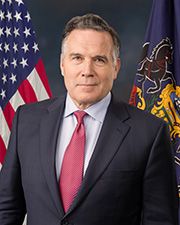
United States · Official source
449 records where Sen. McCormick, David [R-PA] is listed as a sponsor, author, or other actor. Search with topics and years
United States · United States Congress · 14 May 2025
United States · United States Congress · 14 May 2025
United States · United States Congress · 14 May 2025
Kids Online Safety Act This bill requires covered online platforms, including social media platforms, to implement tools and safeguards to protect users and visitors under the age of 17. Covered platforms are online platforms, video games, messaging applications, or video streaming services used or likely to be used by individuals under the age of 17, with specified exceptions. The bill generally requires covered platforms to exercise reasonable care in the design and use of features that increase minors’ online activity in order to prevent and mitigate harm to minors (e.g., mental health disorders and severe harassment). Covered platforms are also required to provide certain safeguards to minors, such as protections for minors’ data; tools for parents of minors, such as access to minors’ privacy settings; and a mechanism for account holders and visitors to report harm to minors on the platform. Covered platforms are prohibited from conducting market or product research on children under the age of 13, and may only conduct such research on those under the age of 17 with parental consent. The bill provides for enforcement through the Federal Trade Commission and states. The bill also requires online platforms to meet certain requirements before using algorithms that select, order, or prioritize information presented to users based on user-specific data not provided for that purpose. Specifically, such platforms must (1) provide users with notice of the use of such algorithms, and (2) permit users to switch to an algorithm that does not rely on such user-specific data.
United States · United States Congress · 14 May 2025
United States · United States Congress · 13 May 2025
United States · United States Congress · 13 May 2025
United States · United States Congress · 12 May 2025
United States · United States Congress · 8 May 2025
Chip Security Act This bill requires covered integrated circuit products (e.g., advanced computing chips) to incorporate certain security mechanisms. Specifically, the bill directs the Department of Commerce to require any covered integrated circuit product to have chip security mechanisms that implement location verification before the product is exported, reexported, or in-country transferred to or in a foreign country. Commerce must require any person that has received a license or other authorization under the Export Control Reform Act of 2018 to export, reexport, or in-country transfer a covered product to promptly report to Commerce's Bureau of Industry and Security if the person obtains credible information that the product has been diverted away from its intended location or has been subjected to tampering. Commerce must, in coordination with the Department of Defense (DOD), conduct an assessment and report to Congress on whether additional chip security mechanisms should be adopted. If Commerce determines additional security measures are necessary, then Commerce must require any covered product to include the secondary chip security mechanisms before the product is exported, reexported, or in-country transferred to or in a foreign country. The bill authorizes Commerce to take certain enforcement actions, such as verifying the ownership and location of a covered product that has been exported, reexported, or in-country transferred to or in a foreign country. Commerce must coordinate with DOD, within two years of the bill's enactment and annually thereafter for three years, to assess new chip security mechanisms and report to Congress.
United States · United States Congress · 8 May 2025
United States · United States Congress · 8 May 2025
United States · United States Congress · 8 May 2025
United States · United States Congress · 8 May 2025
United States · United States Congress · 6 May 2025
United States · United States Congress · 6 May 2025
Producing Responsible Energy and Conservation Incentives and Solutions for the Environment Act of 2025 or the PRECISE Act of 2025 This bill incorporates support for precision agriculture into various programs of the Department of Agriculture (USDA). Precision agriculture refers to managing, tracking, or reducing crop or livestock production inputs, including seed, feed, fertilizer, chemicals, water, and time, at a heightened level of spatial and temporal granularity to improve efficiencies, reduce waste, and maintain environmental quality. Precision agriculture technology includes any technology and equipment that directly contributes to a reduction in, or improved efficiency of, inputs used in crop or livestock production. Specifically, the bill makes changes to eligibility criteria, payments, and other aspects of the Environmental Quality Incentives Program and the Conservation Stewardship Program. These changes include allowing the programs to support the adoption of precision agriculture practices and acquisition of precision agriculture technologies. In addition, the bill expands a program through which USDA makes and insures loans to for-profit and nonprofit organizations that invest in rural areas by allowing the loans to be used for precision agriculture practices. Also, USDA must emphasize the use of third-party providers when providing technical assistance on matters related to soil health for participants in certain USDA conservation programs. This includes planning related to the use of cover crops, precision agriculture practices, and comprehensive nutrient management.
United States · United States Congress · 6 May 2025
United States · United States Congress · 1 May 2025
United States · United States Congress · 1 May 2025
United States · United States Congress · 1 May 2025
United States · United States Congress · 30 April 2025
This bill increases the annual limit on the tax credit for qualified railroad track maintenance expenses (also referred to as the short line railroad tax credit) and expands eligibility for claiming the credit. Under current law, the tax credit is limited each tax year to $3,500 multiplied by the sum of the number of miles of railroad track owned or leased by the taxpayer (miles owned or leased) and the number of railroad track miles assigned to the taxpayer by a Class II or III railroad (miles assigned). This bill increases the annual limit to $6,100 multiplied by the sum of miles owned or leased and miles assigned. The $6,100 amount used in the calculation of the tax credit limit is adjusted for inflation for tax years beginning after 2025. The bill also expands eligibility for the tax credit to include gross expenses for maintaining railroad tracks owned or leased as of January 1, 2024. Under current law, the tax credit is limited to gross expenses for maintaining railroad tracks owned or leased as of January 1, 2015.
United States · United States Congress · 30 April 2025
United States · United States Congress · 30 April 2025
United States · United States Congress · 30 April 2025
Housing Affordability Act This bill increases the Federal Housing Administration’s (FHA's) multifamily housing loan limits for mortgage insurance and requires the use of a more specific inflation index for these limits. Specifically, the bill increases the loan limits to qualify for FHA mortgage insurance for rental housing, cooperative housing, rehabilitation and neighborhood conservation housing, housing for moderate income and displaced families, housing for elderly persons, and condominiums, and it requires these limits to be indexed to the Price Deflator Index of Multifamily Residential Units Under Construction released by the Bureau of the Census. Currently, these limits are indexed to the Consumer Price Index for All Urban Consumers.
United States · United States Congress · 29 April 2025
United States · United States Congress · 29 April 2025
United States · United States Congress · 29 April 2025
United States · United States Congress · 10 April 2025
Combating Organized Retail Crime Act This bill expands federal enforcement of criminal offenses related to organized retail and supply chain crime. The term organized retail and supply chain crime includes criminal offenses involving the interstate transportation of stolen property, the sale or receipt of stolen goods, or theft from an interstate or foreign shipment that is committed by, in coordination with, or at the instruction of an organization. First, with respect to criminal offenses involving the interstate transportation of stolen property or the sale or receipt of stolen goods, the bill broadens the scope of conduct that qualifies as offenses by allowing prosecutions to be based on the aggregate value of stolen items over a 12-month period. Additionally, the bill makes the offenses predicate offenses (i.e., underlying offenses) for prosecutions under the federal money laundering statute and authorizes the criminal forfeiture of any property obtained from the proceeds of an offense. Second, with respect to criminal offenses involving theft from an interstate or foreign shipment, the bill also makes an offense an underlying offense for prosecution under the federal money laundering statute and authorizes the criminal forfeiture of any associated property. Third, the bill expands the federal money laundering statute to include offenses involving general-use prepaid cards, gift certificates, or store gift cards. Finally, the bill temporarily establishes a center within the Department of Homeland Security to coordinate federal law enforcement activities related to organized retail and supply chain crime.
United States · United States Congress · 10 April 2025
United States · United States Congress · 10 April 2025
United States · United States Congress · 10 April 2025
United States · United States Congress · 10 April 2025
United States · United States Congress · 9 April 2025
United States · United States Congress · 9 April 2025
Abortion Funding Awareness Act of 2025 This bill establishes reporting requirements for states regarding certain Medicaid payments to abortion providers. Specifically, the bill requires states that make Medicaid payments using federal funds for any items or services furnished by an abortion provider to annually (1) submit a report to the Centers for Medicare & Medicaid Services on all such payments, and (2) publish the report on the state's website. The report must include specified information, including the number of abortions performed by the providers and the gestational age with respect to each such abortion. (Current law restricts the use of federal funds for abortions to cases of rape, incest, or life endangerment of the woman. States may use their own funds to cover abortions in other cases.)
United States · United States Congress · 9 April 2025
United States · United States Congress · 8 April 2025
United States · United States Congress · 7 April 2025
Fallen Servicemembers Religious Heritage Restoration Act This bill requires the American Battle Monuments Commission (ABMC) to establish the Fallen Servicemembers Religious Heritage Restoration Program to identify deceased members of the Armed Forces who were Jewish and buried in a U.S. military cemetery located outside of the United States under a marker indicating the member was not Jewish. The program must contact survivors and descendants of such members. The ABMC must seek to enter into a contract with a nonprofit organization to carry out the program during the first 10 fiscal years beginning after the date of enactment of the bill.
United States · United States Congress · 7 April 2025
United States · United States Congress · 4 April 2025
Veterans Education and Technical Skills Opportunity Act of 2025 or the VETS Opportunity Act of 2025 This bill modifies which independent study programs are covered under veterans’ educational assistance benefits. The bill requires independent study programs that lead to a certificate that reflects graduation from a course of study to include regular and substantive interaction between students and instructors. The bill allows such independent study programs to be offered by any institutions of higher education, including for-profit institutions, that are approved to participate in the Department of Education’s financial assistance programs.
United States · United States Congress · 3 April 2025
Rural Development Hospital Technical Assistance Program Act of 2025 This bill provides statutory authority for the Rural Hospital Technical Assistance Program within the Department of Agriculture (USDA). Under the bill, USDA must establish and maintain (directly or by grant, contract, or cooperative agreement) a program to help eligible hospital facilities in rural areas (i.e., an area with a population of 50,000 inhabitants or less). The program must provide tailored technical assistance and training to hospital facilities to identify development needs for maintaining essential health care services and support action plans for financial, operational, and quality improvement projects to meet these needs. Development needs include (1) constructing, expanding, and modernizing health care facilities; (2) increasing telehealth capabilities; and (3) acquiring or upgrading health care information systems (e.g., electronic health records). The program must also provide technical assistance and training to help hospital facilities to better manage their financial and business strategies and identify, and apply for assistance from, USDA loan and grant programs. In selecting eligible hospital facilities to participate in the program, USDA must give priority to borrowers of loans and recipients of grants from certain USDA rural assistance programs. USDA must also submit an annual report to Congress on the progress and results of the program.
United States · United States Congress · 3 April 2025
United States · United States Congress · 3 April 2025
United States · United States Congress · 3 April 2025
Defending Education Transparency and Ending Rogue Regimes Engaging in Nefarious Transactions Act or the DETERRENT Act This bill expands oversight and disclosure requirements related to foreign sources and institutions of higher education (IHEs). Specifically, the bill requires an IHE to annually disclose to the Department of Education (ED) any year in which the IHE receives a gift from a foreign country of concern (e.g., China or Russia) or foreign entity of concern of any dollar amount; receives a gift or contract from a foreign source (other than a foreign country of concern or foreign entity of concern) that is valued at $50,000 or more, considered alone or in combination with all other gifts or contracts within a calendar year (current disclosure threshold is $250,000 or more), or which has an undetermined monetary value; enters into a contract with a foreign country of concern or foreign entity of concern after receiving a waiver for such contract; or is substantially controlled by a foreign source. Additionally, the bill prohibits IHEs from entering into contracts with a foreign country of concern or with a foreign entity of concern without obtaining a waiver, and requires certain IHEs to disclose gifts or contracts between covered individuals (e.g., researchers) and foreign sources. The bill requires ED to investigate possible violations of this bill and outlines the various penalties for each violation. Penalties may include losing eligibility for federal student financial aid.
United States · United States Congress · 2 April 2025
United States · United States Congress · 2 April 2025
Creating Opportunities Now for Necessary and Effective Care Technologies (CONNECT) for Health Act of 2025 or the CONNECT for Health Act of 2025 This bill expands coverage of telehealth services under Medicare. Among other provisions, the bill permanently removes geographic restrictions on originating sites (i.e., the location of the beneficiary) and allows the home of the beneficiary to serve as the originating site for all services; permanently allows federally qualified health centers and rural health clinics to serve as the distant site (i.e., the location of the health care practitioner); and allows the Centers for Medicare & Medicaid Services (CMS) to generally waive coverage restrictions during any public health emergency. Additionally, the CMS must post certain information about the effects of Medicare telehealth services on its website, including information about utilization, costs, and the outcome of services. The CMS must also (1) provide resources to health care professionals about the requirements for furnishing telehealth services under Medicare, including with respect to payment, patient privacy, and support for underserved populations; and (2) ensure certain quality measures are applied to telehealth services.
United States · United States Congress · 1 April 2025
Safeguarding American Food and Export Trade Yields Act of 2025 or the SAFETY Act of 2025 This bill directs the Department of Agriculture (USDA) to secure foreign markets for goods using common names. In general, the bill defines common name as a name that (1) is ordinarily or customarily used for an agricultural commodity or food product, (2) is typically placed on the packaging and product label of the agricultural commodity or food product, and (3) the use of which is consistent with standards of the Codex Alimentarius Commission. The bill includes a list of names that will be considered common names for (1) food products (e.g., basmati, bratwurst, and parmesan); (2) wine, including grape varietal terms, grape variety designations, and non-varietal descriptors such as chateau and vintage; and (3) beer (e.g., bitter, pale ale, and hefeweizen). Specifically, USDA must coordinate efforts with the Office of the U.S. Trade Representative (USTR) to secure the right of U.S. agricultural producers, processors, and exporters to use common names for agricultural commodities or food products in foreign markets. Through the negotiation of bilateral, plurilateral, or multilateral agreements, memoranda of understanding, or exchanges of letters, USDA and the USTR must assure the current and future use of each common name in connection with U.S. agricultural commodities or food products. USDA and the USTR must jointly brief Congress on these efforts on a semi-annual basis.
United States · United States Congress · 1 April 2025
Sanctioning Russia Act of 2025 This bill imposes penalties on certain persons (individuals and entities) if the President determines that the Russian government or a person acting at Russia's direction is involved with (1) refusing to negotiate a peace agreement with Ukraine; (2) violating a negotiated peace agreement; (3) initiating another invasion of Ukraine; or (4) overthrowing, dismantling, or seeking to subvert the Ukrainian government. If the President makes such a determination, the bill requires certain actions including the President must impose visa- and property-blocking sanctions on specified persons such as the Russian president, certain Russian military commanders, and any foreign person that knowingly provides defense items to the Russian armed forces; the President must increase the rate of duty on all goods and services imported from Russia into the United States to at least 500% relative to the value of such goods and services; the President must increase the rate of duty on all goods and services imported into the United States from countries that knowingly engage in the exchange of Russian-origin uranium and petroleum products to at least 500% relative to the value of such goods and services; the Department of the Treasury must impose property-blocking sanctions on any financial institution organized under Russian law and owned wholly or partly by Russia, and any financial institution that engages in transactions with those entities; and the Department of Commerce must prohibit the export, reexport, or in-country transfer to or in Russia of any U.S.-produced energy or energy product.
United States · United States Congress · 27 March 2025
United States · United States Congress · 27 March 2025
United States · United States Congress · 27 March 2025
United States · United States Congress · 26 March 2025
United States · United States Congress · 26 March 2025