Bill· SS. 2476 (119th)referred
Disability and Age in Jury Service Nondiscrimination Act
United States · United States Congress · 28 July 2025
The world's political record
Person
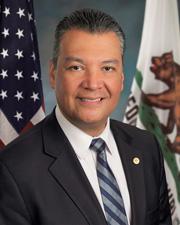
United States · Official source
2,637 records where Sen. Padilla, Alex [D-CA] is listed as a sponsor, author, or other actor. Search with topics and years
United States · United States Congress · 28 July 2025
United States · United States Congress · 24 July 2025
United States · United States Congress · 24 July 2025
United States · United States Congress · 24 July 2025
This bill designates the facility of the United States Postal Service located at 6444 San Fernando Road in Glendale, California, as the "Paul Ignatius Post Office".
United States · United States Congress · 24 July 2025
United States · United States Congress · 23 July 2025
United States · United States Congress · 23 July 2025
United States · United States Congress · 22 July 2025
United States · United States Congress · 17 July 2025
Space Exploration Research Act This bill explicitly authorizes the National Aeronautics and Space Administration (NASA) to lease its properties to states and localities, universities, and nonprofit organizations to conduct space research and training. (Under current law, NASA is authorized to lease property to individuals and entities subject to specified conditions.) Under the bill, NASA may use existing authorities to lease property under its jurisdiction to (1) the state in which the property is located or a subdivision thereof, (2) a nonprofit organization founded for educational or scientific purposes, or (3) an institution of higher education. NASA may also enter into agreements to lease back such property. Construction and operations on leased property must serve a space-related purpose relevant to NASA’s mission. NASA may provide administrative, instructional, and other appropriate support to lessees. NASA must report annually to Congress on the relevance, value, and other quantifiable benefits of the lease agreements.
United States · United States Congress · 17 July 2025
Ensuring Safe and Toxic-Free Foods Act of 2025 This bill limits the circumstances in which a food additive may be considered generally recognized as safe (GRAS) and requires the Food and Drug Administration (FDA) to review the safety of all such additives. Under current law, food additives generally require pre-market FDA approval unless they are considered GRAS (generally recognized among qualified experts as safe for their intended use). When a manufacturer determines that an additive is GRAS, it may, but is not required to, notify the FDA of that determination. Under the bill, before an additive may be used in food, it must be (1) approved by the FDA, or (2) the subject of a GRAS notification submitted up to two years after the bill’s enactment to which the FDA has not objected. GRAS notifications submitted after enactment must include specified supporting information. The FDA must publish and seek public comment on such notifications. The FDA must ultimately publish a written determination stating whether it objects to the GRAS determination along with its reasoning. The FDA may also reassess GRAS notifications submitted before the bill’s enactment and require a manufacturer to submit the same supporting information required of post-enactment notifications. The FDA must annually review or reassess at least 50 GRAS notifications until all notifications have been reviewed or reassessed. Separately, the FDA must regularly reassess the safety of approved food additives and those considered GRAS. Finally, the bill makes toxic and carcinogenic substances ineligible to be considered GRAS.
United States · United States Congress · 17 July 2025
United States · United States Congress · 17 July 2025
United States · United States Congress · 17 July 2025
United States · United States Congress · 17 July 2025
Equal Health Care for All Act This bill prohibits the inequitable provision of health care (i.e., failure to meet a high-quality care standard that is discriminatory in intent or effect) based on race, religion, or other characteristics. It also revises reporting requirements, adds equity-related measures to certain Medicare programs, and makes other changes to reduce health disparities. To enforce the prohibition, the Department of Health and Human Services (HHS) must establish an administrative process to resolve complaints about inequitable health care. HHS must investigate these complaints and mediate agreements to resolve issues. In the event of noncompliance with a mediated agreement, an aggrieved individual may bring a civil action. HHS may exclude from federal health care programs providers HHS determines engaged in the inequitable provision of health care. The Department of Justice may bring civil actions against health care providers to enforce the prohibition, including for punitive damages. Health care providers must also report data in formats that allow disaggregation by demographic factors. Within 90 days after the bill's enactment, HHS must issue proposed regulations to carry out this requirement. Additionally, the Centers for Medicare & Medicaid Services must include measures related to equitable health care in the Medicare value-based purchasing program for hospitals. This program provides incentive payments based on quality of care. The bill also establishes (1) the Federal Health Equity Commission to monitor implementation of the bill, and (2) grants for hospitals to promote equitable health care.
United States · United States Congress · 16 July 2025
United States · United States Congress · 16 July 2025
United States · United States Congress · 16 July 2025
United States · United States Congress · 16 July 2025
United States · United States Congress · 16 July 2025
United States · United States Congress · 15 July 2025
This resolution designates June 2025 as National Post-Traumatic Stress Awareness Month and June 27, 2025, as National Post-Traumatic Stress Awareness Day. The resolution also supports the efforts of the Department of Veterans Affairs (VA), Department of Defense (DOD), and the medical community to educate people about the causes, symptoms, and treatment of post-traumatic stress. Additionally, it supports efforts by the VA and DOD to foster cultural change around post-traumatic stress.
United States · United States Congress · 15 July 2025
United States · United States Congress · 15 July 2025
United States · United States Congress · 14 July 2025
United States · United States Congress · 14 July 2025
Tribal Access to Clean Water Act of 2025 This bill expands access to water resources for Indian tribes and Native Hawaiian communities. Under a current program, the Department of Agriculture (USDA) makes loans and grants to provide water and waste disposal facilities and services to low-income rural areas whose residents are facing significant health risks. This bill expands eligibility for the program to include Native Hawaiian organizations. Additionally, these loans and grants may be used to provide water or waste services to residents on tribal lands. The bill authorizes USDA to make additional loans and grants under existing programs to tribes and Native Hawaiian organizations to develop, use, and control water. The bill also allows USDA to support technical assistance for tribes and Native Hawaiian organizations. Additionally, the bill allows the Indian Health Service to (1) provide and maintain essential sanitation facilities for noncommercial community structures (e.g., schools, hospitals, and tribal offices), (2) provide technical assistance, and (3) provide financial assistance to operate and maintain drinking water and sanitation facilities serving tribes that are owned and operated by a tribe. The bill also increases the authorization of appropriations for the Bureau of Reclamation's Native American Affairs Technical Assistance Program through FY2030.
United States · United States Congress · 14 July 2025
United States · United States Congress · 10 July 2025
United States · United States Congress · 10 July 2025
United States · United States Congress · 10 July 2025
United States · United States Congress · 10 July 2025
United States · United States Congress · 9 July 2025
United States · United States Congress · 9 July 2025
United States · United States Congress · 8 July 2025
United States · United States Congress · 8 July 2025
United States · United States Congress · 8 July 2025
United States · United States Congress · 30 June 2025
United States · United States Congress · 28 June 2025
United States · United States Congress · 27 June 2025
United States · United States Congress · 26 June 2025
United States · United States Congress · 26 June 2025
United States · United States Congress · 26 June 2025
United States · United States Congress · 26 June 2025
United States · United States Congress · 26 June 2025
United States · United States Congress · 26 June 2025
Strengthening Protections for Domestic Violence and Stalking Survivors Act of 2025 This bill extends federal restrictions on the receipt, possession, shipment, and transportation of firearms and ammunition to new types of stalking and domestic violence offenders. Specifically, the bill extends federal firearms-related restrictions to individuals who are convicted of a misdemeanor crime of stalking. The term misdemeanor crime of stalking means a federal, state, tribal, or local offense involving harassment, intimidation, or surveillance that (1) causes emotional distress; or (2) places a person in reasonable fear of harm to themselves, an immediate family member, a current or former cohabitant, an intimate partner, or a pet. Additionally, the bill extends federal firearms-related restrictions to individuals who are subject to a domestic violence protection order that restrains them from harassing, stalking, or threatening a current or former dating partner (regardless of when the relationship occurred) or an individual similarly situated to a spouse. Currently, the restrictions only apply if the domestic violence protection order restrains the individual from harassing, stalking, or threatening a co-parent, a current or former spouse, or a current or former cohabitant. Finally, the bill extends federal firearms-related restrictions to individuals who commit a misdemeanor crime of domestic violence against the child of a current or recent former dating partner. Currently, the restrictions only apply if the offense is committed against a current or recent former dating partner.
United States · United States Congress · 26 June 2025
United States · United States Congress · 25 June 2025
United States · United States Congress · 25 June 2025
United States · United States Congress · 24 June 2025
United States · United States Congress · 24 June 2025
United States · United States Congress · 24 June 2025
Keeping Gun Dealers Honest Act of 2025 This bill broadens the authority of the Bureau of Alcohol, Tobacco, Firearms and Explosives (ATF) to administer federal laws governing the licensing, inspection, and enforcement of federally licensed dealers, importers, and manufacturers of firearms (federal firearms licensees, or FFLs). The bill also increases criminal penalties for FFLs and licensed collectors who commit certain recordkeeping violations. With respect to licensing, the bill allows the ATF to deny an application for a federal firearms license if it would endanger public safety or if the applicant is unlikely to comply with the law. Additionally, the bill enhances the ATF's inspection authority, including by increasing the maximum number of annual compliance inspections to three (currently, one) and by authorizing an additional 80 personnel to conduct inspections. The bill also expands the ATF's enforcement authority, including by allowing it to suspend the license of or impose a civil penalty on an FFL who violates federal firearms laws or regulations and by allowing it to require an FFL to conduct physical inventories if the FFL unlawfully transfers a firearm or if 10 or more firearms used in a crime are traced back to the FFL. Finally, the bill increases the maximum prison term to five years (currently, one year) for an FFL or licensed collector who knowingly makes a false statement or representation in required firearms records.
United States · United States Congress · 24 June 2025