Bill· SS. 2765 (119th)referred
Advisory Committee on the Records of Congress Sunset Act
United States · United States Congress · 10 September 2025
The world's political record
Person
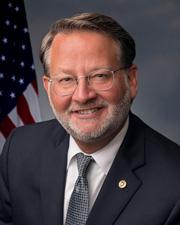
United States · Official source
4,175 records where Sen. Peters, Gary C. [D-MI] is listed as a sponsor, author, or other actor. Search with topics and years
United States · United States Congress · 10 September 2025
United States · United States Congress · 4 September 2025
United States · United States Congress · 1 August 2025
United States · United States Congress · 1 August 2025
United States · United States Congress · 1 August 2025
United States · United States Congress · 31 July 2025
United States · United States Congress · 31 July 2025
United States · United States Congress · 30 July 2025
United States · United States Congress · 30 July 2025
United States · United States Congress · 30 July 2025
Protecting Health Care and Lowering Costs Act This bill makes permanent temporary provisions that generally expand eligibility for and increase the amount of the premium tax credit. This bill also repeals multiple Medicaid, Medicare, and health-related tax provisions enacted by the One Big Beautiful Bill Act (OBBBA). Currently, eligible taxpayers may claim the premium tax credit, which applies toward the cost of obtaining health insurance through health insurance exchanges. To qualify, a taxpayer’s household income must meet or exceed 100% of the federal poverty level (FPL) and, after 2025, may not exceed 400% of the FPL (maximum income limit). For 2021-2025, the maximum income limit is eliminated, which generally expands eligibility for the premium tax credit. Further, under current law, the amount of the premium tax credit is partially based on the taxpayer’s household income multiplied by the applicable percentage. The applicable percentage varies depending on which of six income ranges (adjusted for inflation after 2025) the taxpayer’s household income falls within. For 2021-2025, the applicable percentages are lowered and the adjustment of the applicable percentages for inflation is eliminated, which generally increases the amount of the premium tax credit. The bill permanently eliminates the 400% maximum income limit, lowers the applicable percentages, and eliminates the inflation adjustment for the applicable percentages. Finally, the bill repeals multiple Medicaid, Medicare, and health-related tax provisions enacted by the OBBBA, including certain Medicare and Medicare eligibility and verification requirements, the reduced window for retroactive Medicaid coverage, and premium tax credit verification requirements.
United States · United States Congress · 30 July 2025
United States · United States Congress · 29 July 2025
United States · United States Congress · 29 July 2025
John R. Lewis Voting Rights Advancement Act of 2025 This bill establishes new criteria for determining which states and political subdivisions must obtain preclearance before changes to voting practices may take effect. Preclearance is the process of receiving preapproval from the Department of Justice (DOJ) or the U.S. District Court for the District of Columbia before making legal changes that would affect voting rights. A state and all of its political subdivisions shall be subject to preclearance of voting practice changes for a 10-year period if, during the previous 25 years: 15 or more voting rights violations occurred in the state; or 10 or more violations occurred, at least 1 of which was committed by the state itself. A political subdivision as a separate unit shall also be subject to preclearance for a 10-year period if three or more voting rights violations occurred there during the previous 25 years. States and political subdivisions that meet certain thresholds regarding minority groups must preclear covered practices before implementation, such as redistricting. States and political subdivisions must notify the public of changes to voting practices. The bill authorizes DOJ to require states or political subdivisions to provide certain documents or answers to questions for enforcing voting rights. The bill outlines factors courts must consider when hearing challenges to voting practices, such as the extent of any history of official voting discrimination in the state or political subdivision. The bill also includes certain protections for election workers, polling places, and election infrastructure.
United States · United States Congress · 24 July 2025
Equitable Community Access to Pharmacist Services Act This bill provides for permanent coverage under Medicare of certain pharmacist services. Specifically, the bill provides for permanent coverage of testing and treatment services provided by pharmacists relating to (1) COVID-19, influenza, respiratory syncytial virus (RSV), and streptococcal pharyngitis (strep throat); and (2) other public health needs in relation to a declared public health emergency. (Similar authorities were temporarily granted during the COVID-19 public health emergency.) Such services must be provided in accordance with the applicable state laws governing pharmacists' scope of practice.
United States · United States Congress · 24 July 2025
United States · United States Congress · 22 July 2025
United States · United States Congress · 17 July 2025
United States · United States Congress · 17 July 2025
United States · United States Congress · 16 July 2025
United States · United States Congress · 16 July 2025
United States · United States Congress · 15 July 2025
United States · United States Congress · 14 July 2025
United States · United States Congress · 9 July 2025
United States · United States Congress · 8 July 2025
United States · United States Congress · 8 July 2025
United States · United States Congress · 30 June 2025
United States · United States Congress · 26 June 2025
United States · United States Congress · 26 June 2025
United States · United States Congress · 26 June 2025
United States · United States Congress · 26 June 2025
Securing Our Propane Supply Act This bill requires the Department of Energy (DOE) to study and evaluate methods of addressing disruptions to propane supplies, which are used to heat homes. Specifically, DOE must study the feasibility and effectiveness of establishing a national strategic propane reserve that is separate from the Strategic Petroleum Reserve. If the study recommends the establishment of a reserve, then DOE must develop an implementation plan. The plan must include the most practicable method for establishing the reserve.
United States · United States Congress · 25 June 2025
Grand River Bands of Ottawa Indians Restoration Act of 2025 This bill affirms federal recognition of the Grand River Bands of Ottawa Indians of Michigan. Specifically, the bill makes the tribe and its members eligible for services and benefits provided to federally recognized tribes, without regard to the existence of a reservation for the tribe or the location of the residence of any member on or near a reservation. The service area of the tribe shall be Newaygo, Oceana, Kent, Muskegon, and Ottawa Counties in Michigan. Further, the tribe must submit a membership roll to the Department of the Interior as a condition of receiving recognition, services, and benefits. The tribe must maintain the membership roll. The bill directs Interior to (1) acquire, for the benefit of the tribe, trust title to land within Muskegon, Newaygo, or Oceana Counties; and (2) accept into trust any real property located in those counties for the benefit of the tribe if the property is conveyed to Interior and, at the time of such acceptance, there are no adverse legal claims on such property (e.g., outstanding liens, mortgages, or taxes owed). Additionally, the bill allows Interior to (1) acquire additional land for the benefit of the tribe, and (2) take into trust land in specified counties for the benefit of the tribe. Any land taken into trust for the benefit of the tribe shall, upon request of the tribe, be considered part of the tribe's reservation.
United States · United States Congress · 25 June 2025
United States · United States Congress · 24 June 2025
United States · United States Congress · 18 June 2025
Election Worker Protection Act of 2025 This bill establishes certain protections for election workers. Specifically, the bill makes it a crime to intimidate, threaten, coerce, or harass an election worker with the intent to interfere with the official duties of, or retaliate against, the worker. The bill extends (1) the prohibition on certain types of intimidation in federal elections to also prohibit intimidation for processing ballots or tabulating, canvassing, or certifying votes; and (2) the prohibition on public disclosure of restricted personal information to also prohibit the disclosure of information about election officials, poll workers, or election volunteers in connection with a federal election. The bill also authorizes election officials to remove poll observers who are interfering with or attempting to disrupt the administration of an election. Additionally, the bill directs the Election Assistance Commission to award grants to states (or local governments under specified circumstances) for (1) recruiting and training individuals to serve as poll workers and election volunteers on dates of elections for public office, and (2) physical security services and social media threat monitoring for election workers. The bill directs the Department of Justice to (1) provide training to law enforcement and federal attorneys on addressing threats to election workers, and (2) establish a grant program to support programs to prevent the disclosure of personally identifiable information of election workers.
United States · United States Congress · 18 June 2025
United States · United States Congress · 18 June 2025
Broadcast Varied Ownership Incentives for Community Expanded Service Act or the Broadcast VOICES Act This bill establishes tax incentives for certain transactions that facilitate the ownership and management of broadcast radio stations by socially disadvantaged individuals and imposes related reporting requirements. Under the bill, a socially disadvantaged individual is a woman or an individual who has been subjected to racial or ethnic prejudice or cultural bias because of their membership in a group. (A similar tax incentive, known as the Minority Tax Certificate Program, was in effect from 1978 to 1995.) Specifically, the bill permits individuals and entities engaged in the qualifying sale of a radio station to elect nonrecognition of the gain or loss resulting from the sale. A qualifying sale is (1) a sale of an interest in a station that results in or preserves ownership of the station by socially disadvantaged individuals, or (2) a sale of some or all of an interest in a station that is owned by socially disadvantaged individuals by an individual or entity that contributed capital in exchange for the interest (e.g., an investor that contributed startup capital). Such sales must also meet other requirements, including a cap on the value of the sale. The bill also establishes a tax credit for contributions of radio stations for the training of socially disadvantaged individuals in station management and operations. Finally, the bill requires the Federal Communications Commission to report to Congress with recommendations for increasing ownership of radio stations by socially disadvantaged individuals.
United States · United States Congress · 16 June 2025
United States · United States Congress · 12 June 2025
United States · United States Congress · 11 June 2025
United States · United States Congress · 10 June 2025
United States · United States Congress · 5 June 2025
United States · United States Congress · 5 June 2025
Treat and Reduce Obesity Act of 2025 This bill expands Medicare coverage of intensive behavioral therapy for obesity. Specifically, the bill allows coverage for therapy that is provided by (1) a physician who is not a primary care physician; or (2) other health care providers (e.g., physician assistants and nurse practitioners) and approved counseling programs, if provided upon a referral from, and in coordination with, a physician or primary care practitioner. Currently, such therapy is covered only if provided by a primary care practitioner. The bill also allows coverage under Medicare's prescription drug benefit of drugs used for the treatment of obesity or for weight loss management for individuals who are overweight.
United States · United States Congress · 4 June 2025
United States · United States Congress · 4 June 2025
United States · United States Congress · 4 June 2025
Strengthening Agency Management and Oversight of Software Assets Act This bill requires federal agencies to assess their software inventory and develop software management plans. The bill requires each agency (which includes any executive department, military department, or other establishment in the executive branch) to complete a comprehensive assessment of the software paid for by, in use at, or deployed throughout the agency. The assessment must include information such as (1) the current inventory of software; (2) contracts and other arrangements used to acquire, build, deploy, or use the software; (3) costs and fees not included in the initial contract or agreement; and (4) the interoperability of the software and restrictions on its use. Each agency must use their assessment to develop a plan to consolidate software entitlements, develop procedures for cost-effective acquisition strategies, and restrict subordinate entities from using any software entitlement without approval. (A software entitlement is software that has been purchased, leased, or licensed by or billed to an agency and that is subject to use limitations.) Such plans must be submitted to the Office of Management and Budget (OMB) and Congress. Within two years of enactment, OMB must submit recommendations to Congress regarding government software procurement policies and practices to • increase the interoperability of software licenses, • consolidate licenses when appropriate, • reduce costs, • improve performance, and • modernize the management and oversight of agency software. The GAO must report on certain related topics, including governmentwide trends in agency software asset management practices and comparisons of such practices among agencies.
United States · United States Congress · 22 May 2025
Streamlining Federal Cybersecurity Regulations Act of 2025 This bill establishes an interagency committee to review and align cybersecurity regulations and requirements imposed by executive agencies. The committee, to be led and administered by the Office of the National Cyber Director, must include the heads of each executive agency with statutory authority to enforce mandatory cybersecurity requirements. Agencies must generally consult with the committee before promulgating or amending cybersecurity requirements. The committee must develop a regulatory framework for the harmonization of agencies’ cybersecurity requirements. Under the bill, harmonization means the alignment of cybersecurity requirements to consist of a common set of minimum requirements that are applicable across sectors and sector-specific requirements as necessary. Specifically, the framework must contain processes for (1) establishing a reciprocal compliance mechanism for minimum requirements applicable to entities regulated by more than one agency; and (2) identifying and developing recommendations to address cybersecurity requirements that are overly burdensome, inconsistent, or contradictory. In developing this framework, the committee must seek public comment and consult with industry experts and stakeholders. Once the framework is developed and published, the committee must select agencies to carry out a pilot program to apply the framework to a sampling of their cybersecurity requirements. In consultation with the committee, the Office of Management and Budget must issue guidance to federal agencies on coordinating with the committee and, after the pilot program is complete, on ensuring cybersecurity requirements are consistent with the framework and lessons learned from the pilot program.
United States · United States Congress · 22 May 2025
United States · United States Congress · 22 May 2025
United States · United States Congress · 22 May 2025
United States · United States Congress · 20 May 2025