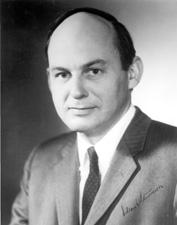
United States · United States Congress · 13 September 1973
Elementary and Secondary Education Assistance Act - Title I: General Grants for Elementary and Secondary Education Grants Authorized - Directs the Commissioner of Education to make payments to State educational agencies for the Federal share of the cost of grants to local educational agencies and for other elementary and secondary education programs. Authorizes to be appropriated to the Commissioner, for the purpose of carrying out this title, $4,500,000 annually for fiscal year 1974, and for each of the two succeeding fiscal years. Provides for the reservation of specified precentages for enumerated purposes, and for the apportionment of sums not reserved. Sets forth the definitions of terms used in this Act. Provides that any State desiring to receive financial assistance shall submit a plan to reduce disparities in per pupil expenditures among local educational agencies within such State. Enumerates the criteria to be met by such plan. Requires the chief State officer to submit annually to the Commissioner an application in such detail and containing or accompanied by such information as the Commissioner deems necessary. States that a local educational agency may receive a grant from the appropriate State educational agency under this title for any fiscal year only upon an application approved by the appropriate State educational agency, upon its determination consistent with such basic criteria as the Commissioner may establish, including: (1) that the programs and activities will be administered by or under the supervision of the applicant; and (2) that such agency will make provisions for the benefit of children in schools of secular, neutral, and nonideological educational services, materials, and equipment. Provides that the State shall not finally disapprove any application for funds without first affording the local educational agency reasonable notice and opportunity for a hearing. Provides that the Commissioner shall pay to each State which has established eligibility under this Act, in advance or by way of reimbursement, the amount of such State's apportionment. States that no payments shall be made to any State in which per pupil expenditures for elementary and secondary education for the preceding year from State sources, excluding the payment of the State share for grants, programs, and activities undertaken pursuant to this Act, are less in such State than such expenditures for the second preceding fiscal year. States that if any State or local educational agency is dissatisfied with the Commissioner's final action with respect to the approval of its application, they may file with the United States court of appeals for the circuit for which such agency is located a petition for review of that action. Title II: Experimental Achievement Progress Test - States that, after consultation with the Director of the National Institute of Education, the Commissioner is directed, on an experimental basis, to conduct a program to demonstrate the feasibility of administrating achievement progress tests in reading and mathematics to be given by local educational agencies to the elementary and secondary school children, in order to provide financial assistance to such agencies, in accordance with this Act, based upon the improvement reflected in such achievement progress tests.
United States · United States Congress · 13 September 1973
Export Priorities Act - Title I: General Provisions - Makes technical amendments to the Export Administration Act of 1969. Title II: Agricultural Export Controls - Directs the Secretary of Agriculture, within ninety days after the beginning of the crop year for any agricultural commodity, to determine the quantity of the crop of such commodity, if any, that will be available for export and inform the Secretary of Commerce thereof, who shall publicly announce such determination. States that no agricultural commodity may be exported to any foreign country unless the person exporting has been issued a license or unless the commodity has been exempted. States that the quantity of any commodity available for export shall be allocated among foreign countries by the Secretary. Specifies the basis for determining such allocation. Provides that the Secretary may reserve not more than 10 percent of a commodity for export in order to meet unexpected foreign demand resulting from natural disaster, crop failure, and changes in existing trading patterns in that commodity. Prescribes the procedures for: (1) issuance of export licenses; (2) administrative revision of quantities available for export; and (3) exports to developing countries. Confers authority on the Secretary to issue such rules or regulations as may be necessary to carry out the provisions of this Act. States that fees collected by the Secretary on export licenses shall be deposited in a special account in the Treasury and shall be available to carry out the National School Lunch Act, the Child Nutrition Act of 1966, the Food Stamp Act of 1964, and the commodity distribution program of the Agricultural Act of 1949, with specified exceptions.
United States · United States Congress · 10 September 1973
States that the increases in the monthly benefits and lump-sum death payments under title II of the Social Security Act shall be increased by 7 percent beginning January 1974 (presently increased by the percentage by which the Consumer Price Index for June 1973 exceeds that for June 1972, beginning April 1974).
United States · United States Congress · 3 August 1973
Establishes a temporary, select committee of the Senate to be known as the Select Committee on Regulatory Commissions and the United States Economy to conduct a complete study and investigation on regulatory commissions and agencies of the United States Government, including: (1) the influence and impact of the activities, procedures, rules, orders, and decisions of such regulatory commissions and agencies, in particular, the Civil Aeronautics Board, the Federal Communications Commission, the Federal Power Commission, the Federal Trade Commission, the Interstate Commerce Commission, and the Securities and Exchange Commission; (2) the accountability of such regulatory commissions and agencies to the Congress, the relationships of these commissions and agencies to other departments, agencies, and independent establishments of the executive branch of the United States Government, the relationship of each such commission or agency to any sectors of private or public enterprise the commission or agency is charged by statute with regulating, and the relationships of those commissions and agencies to the United States consumer; (3) the appropriateness of regulation for given sectors of the economy, the adequacy of current legislative statutes, and the economic consequences of commission and and agency regulatory activities for the United States consumer; and (4) such other matters as the committee considers appropriate. Directs the committee to submit a final report to the Senate not later than January 20, 1976, containing a comprehensive summary of the work of the committee and to include such recommendations as the committee deems appropriate. Provides that the Committee shall have no authority to report any legislative measure to the Senate nor shall it otherwise have legislative jurisdiction.
United States · United States Congress · 3 August 1973
Declares that the United States Senate does hereby congratulate and felicitate the distinguished Senator from Mississippi, the Honorable John C. Stennis, on his birthday and expresses the wish that he will enjoy many other such anniversaries in the future. Declares that members of the Senate greatly miss the distinguished Senator and wish for him an early return to the Senate Chamber and to his duties in the Senate. Directs that a copy of this Resolution be spread upon the Journal of the Senate and a copy furnished to Mr. Stennis.
United States · United States Congress · 1 August 1973
Freedom from Surveillance Act - States that, except as expressly provided, whoever, being a civil officer of the United States or an officer of the Armed Forces of the United States, employs any part of the Armed Forces or the militia of any State to conduct investigations into, maintain surveillance over, or record or maintain information regarding, the beliefs, associations, or political activities of any person not a member of the Armed Forces of the United States, or of any civilian organization, shall be fined not more than $10,000, or imprisoned not more than two years, or both. Exempts from such provisions the use of the Armed Forces of the United States or the militia of any State: (1) when they have been actually and publicly assigned by the President to the task of repelling invasion or suppressing rebellion, insurrection, or domestic violence pursuant to the Constitution or specified sections of the United States Code; or (2) to investigate criminal conduct committed on a military installation or involving the destruction, theft, or trespass of the property of the United States; or (3) to determine the suitability for employment of any individual for the Armed Forces of the United States, by the militia of any State, or by a defense facility; or (4) whenever the militia of any State is under the command of the chief executive of that State or any other appropriate authorities of that State. Sets forth the definitions of the terms used in this Act, including "surveillance". Prescribes procedures for the bringing of civil actions and special class actions against illegal surveillance.
United States · United States Congress · 31 July 1973
National Forest Environmental Management Act - Declares that comprehensive planning is needed to secure the greatest net public benefit from the National Forest System. Sets forth definitions of terms used in this Act, including differentiations between "forest land," "rangeland," and "recreational land." Title I: General Management Authority - Directs the Secretary of Agriculture to manage the National Forest System in a manner which will assure payment of fair market value by users of such lands and which will provide maximum opportunities for the public to participate in decisionmaking concerning such lands. Prescribes rules regarding the management of national forest lands and the authority for promulgation of such rules. Requires the Secretary to prepare an inventory of all national forest lands, and their tangible and intangible resource values. Specifies the content and currency of such inventory. Provides that the Secretary shall develop, maintain, and revise land use plans for the National Forest System. States that in the development and maintenance of such land use plans, the Secretary shall: (1) use a systematic interdisciplinary approach integrating physical, biological, economic, and social sciences considerations; (2) give priority to the protection of areas of critical environmental concern; (3) consider the relative scarcity of the values involved; (4) weigh long-term public benefits against short-term local or individual benefits; and (5) consider the requirements of applicable pollution control laws. Provides that the Secretary shall present to the Congress a long-range natural resources physical budget for the National Forest System which sets forth specified factors. Enumerates such factors. States that in fiscal year 1975 and thereafter at the start of each decade the Secretary shall present to the Congress his estimate of the natural resources physical budget of the National Forest System along with his recommendations for each of the next 5 decades ahead. Provides for public hearings and a joint resolution by Congress on such policy. Requires that there be included in the annual fiscal budget for the management of the National Forest System a request for funding sufficient to assure a high level of resource growth and production under high environmental standards. Requires that as part of this goal each annual budget contain a request for funds sufficient to reforest an acreage equal to at least 110 percent of the area on which it is estimated timber will be harvested in the preceding fiscal year plus an amount to improve the stands of young growing forests with trees between the ages of five years and seventy-five years on an acreage equal to at least 110 percent of the areas computed above. Directs the Secretary to determine an environmentally sound level of timber harvest for the commercial forest land within each national forest management unit. Provides that the Secretary shall determine an environmentally sound level of grazing, water, soil, recreation, and wildlife management for each national forest management unit. Title II: Other Acts Amended - Specifies new procedures for the sale of trees and forest products. Provides that the Secretary shall maintain a long-term, decade ahead, and annual transportation plan for the national forests. States that the on-the-ground field offices, district rangers and forest supervisors, and the field supervisory offices and regional offices shall be so situated as to provide the optimum level of convenient, useful services to the public.
United States · United States Congress · 25 July 1973
Authorizes to be appropriated to the President $30,000,000 for emergency and recovery needs, including drought, famine and disaster relief and rehabilitation, for the Sahelian Nations of Africa.
United States · United States Congress · 23 July 1973
Declares that the Senate disapproves the recommendations of the President with respect to rates of pay transmitted to the Congress during calendar year 1973, pursuant to the Federal Salary Act of 1967.
United States · United States Congress · 17 July 1973
Makes it the sense of the Senate that: (1) the President should recommend, with respect to his recommendations to be transmitted to Congress during fiscal year 1974 under the Federal Salary Act of 1967, that specified salaries not be increased, and (2) if recommendations are made during fiscal year 1974 for increases in such salaries, those recommendations should be disapproved.
United States · United States Congress · 13 July 1973
National Fuels and Energy Conservation Act - Establishes in the Department of the Interior the Office of Energy Conservation which shall have a Director appointed by the President, by and with the advice and consent of the Senate. Provides that the Secretary of the Interior, acting through the Office, shall: (1) work with the Council on Environmental Quality in developing new energy conservation initiatives for the Federal Government; (2) cooperate with private industry in developing energy conversation programs in industry; and (3) provide assistance to State governments in developing State energy conservation programs. Authorizes appropriations of $8,000,000 for each of the three fiscal years following enactment of this Act for the Secretary of Commerce to establish within the National Bureau of Standards an energy conservation research and development program to stimulate new or improved manufacturing and industrial processes, better building construction, materials, and techniques. Authorizes $4,000,000 for each of the three years following enactment for the Secretary of the Interior to establish development and testing centers for more efficient equipment for transmission of electrical energy. Directs the Administrator of the General Services Administration to use equipment, construction methods and management policies which make the maximum efficient use of energy in design, construction and operation of Federal buildings. Directs the Secretary of Housing and Urban Development to develop improved design, lighting, and insulation standards to promote efficient energy use in residential, commercial and industrial buildings. Directs the Secretary of Commerce to establish and publish standards of efficiency for electrical appliances and equipment. Directs the Federal Trade Commission to promulgate standards for labeling major electrical appliances and equipment so that shoppers may compare the efficiency of energy usage of such appliances and equipment. Prohibits manufacturers, distributors, wholesalers and retailers of electrical appliances and equipment from: (1) selling in interstate commerce any electrical appliance or equipment which is not labeled according to the FTC standard; and (2) advertising any electrical appliance or equipment unless the advertisement contains a statement in accord with the labeling standard. Establishes a $5,000 civil penalty for each violation of such selling and advertising requirements. Directs the Secretary of Transportation to prepare proposed minimum standards for average degree of fuel use for motor vehicles, and such standards shall be designed to achieve a substantial increase in degree of fuel use by motor vehicles not in compliance with such standards within three years from the enactment of such standards by Congress, with all motor vehicles being required to meet such standards within five years. Requires manufacturers of motor vehicles to conduct tests and make such reports as the Secretary may require for the purpose of establishing such standards. Requires that all motor vehicles sold or manufactured in the United States shall bear a label stating in nontechnical language the degree of fuel use, and prohibits the advertisement of such vehicles unless the advertisement states the degree of fuel use. Establishes a $1,000 civil penalty for offering an improperly labeled vehicle for sale and a $50,000 penalty for each advertisement not disclosing degree of fuel use. Directs the Federal Power Commission to promulgate regulations requiring electric and gas public utilities to submit to the Commission annual reports on energy conservation policies. Directs each agency of the Federal Government engaged in the sale of electrical energy to submit to the Congress a study of the impact of the rate structure of such agency on the consumption and conservation of energy. Requires the Federal Trade Commission to promulgate regulations for advertising and promotion of energy and fuels which: (1) shall be designed to prohibit advertising or promotion of energy or fuels by any person or corporation when such person or corporation is unwilling or unable to meet customers' requirements for energy or fuel; and (2) shall generally prohibit advertising and promotion which are calculated or likely to result in unnecessary energy consumption. Establishes a $50,000 civil penalty for each violation of such advertising and promotion regulations. Directs the Council on Environmental Quality to submit to the Congress: (1) a report evaluating the impact on fuel consumption of national and regional systems of freight transportation; and (2) a study of the relationships between motor vehicle sizes, the needs of motor vehicle users, and the public interest. Authorizes for each fiscal year such additional sums as may be necessary to carry out the provisions of the Act.
United States · United States Congress · 11 July 1973
Federal Statistical Information Act - Establishes the United States Statistical Commission. States that the Commission shall have the primary function of establishing, coordinating, and executing a statistical policy for the United States Government. Transfers to the Commission those functions carried out by: (1) the Bureau of Labor Statistics, Department of Labor; (2) the Social and Economic Statistics Administration, Department of Commerce; (3) the National Technical Information Service, Department of Commerce; (4) the Statistical Reporting Service, Department of Agriculture; and (5) the Economic Research Service, Department of Agriculture. States that neither the Commission, nor any other officer or employee of the Commission may: (1) use the information furnished to carry out this Act for any purpose other than the statistical purposes for which it is supplied; (2) make any publication whereby the data furnished by any particular establishment or individual to carry out this Act may be identified; or (3) permit anyone other than the sworn officers and employees of the Commission thereof to examine the individual reports. Establishes within the Commission an Advisory Committee on Statistical Policy. States that the Committee shall advise the Commission with respect to the statistical policy of the U.S. Government. Establishes a temporary Commission to make a complete study and investigation with respect to other functions and units of the United States Government that should be transferred to the United States Statistical Commission in order to carry out its functions and the purposes of this Act.
United States · United States Congress · 29 June 1973
Federal Mine Safety and Health Amendments - Title I: Amendments to the General Provisions of the Federal Coal Mine Health and Safety Act of 1969 - Sets forth the definition of "mine" under this Act. Transfers the functions of the Secretary of the Interior in developing health and safety standards to the Secretary of Labor. Title II: Mine Safety and Health Standard Amendments - Establishes the duty of: (1) each mine operator and miner to comply with the health and safety standards of this Act, and (2) each mine operator to furnish a place of employment free from recognized hazards causing or likely to cause death or physical harm. Provides that the Secretary may by rule promulgate, modify, or revoke any health and safety standard. Provides that the Secretary may request the recommendations of an advisory committee whenever he determines that a rule should be promulgated. Sets forth the time period for the reporting of any recommendations by the Committee. Prescribes procedures for publication and public hearings with respect to any rules proposed by the Secretary, prior to its issuance. Requires the Secretary, in promulgating standards, to set the standard which assures that miners will not suffer impairment of health, functional capacity, or diminished life expectancy even if regularly exposed to the hazards throughout their working lives. Directs the Secretary to consider (1) the latest available scientific data in the field; (2) the feasibility of the standards; and (3) experience gained under this and other health and safety statutes. Provides that any standard promulgated must prescribe the use of labels or other warnings necessary to ensure that miners are apprised of all hazards to which they are exposed, relevant symptoms and appropriate emergency treatment and proper conditions and precautions of safe use or exposure. Sets forth additional factors which must be prescribed in specified instances. Requires that no safety or health standard promulgated under this Act shall reduce the protection afforded miners below that provided by any safety or health standard previously in effect. States that where the Secretary determines that miners are potentially subjected to physical or mental impairment from exposure to toxic substances, he may promulgate an emergency standard. Sets forth the procedures for the promulgation of such emergency standard. Allows any operator to apply to the Secretary for a temporary order permitting limited non-compliance with a standard. Specifies the circumstances under which such order shall be originally granted and renewed. Allows an operator to apply for a variance from a standard. Permits persons adversely affected by a standard to challenge its validity, within 60 days of its promulgation, in the appropriate U.S. Court of Appeals. Empowers the Secretary to appoint advisory committees to assist him in his standard setting functions and advise him on other health and safety matters. Sets forth the composition and compensation of the members of any such committee. Authorizes the Secretary, or the Secretary of HEW,: (1) to enter any mine subject to this Act and (2) to make reasonable inspections and investigations and to question privately employers, owners, operators, agents, or employees. Requires inspections of underground mines at least four times a year. States that no advance notice of inspections shall be given. Sets forth rules regarding the maintenance of records by operators with regard to work-related deaths, injuries, illness, miner exposure to toxic substances, and all accidents, except specified unintentional roof falls. Provides that if any miner or their representative believes that a standard violation exists that threatens physical harm or that an imminent danger exists, he may request an inspection by the Secretary. Requires the Secretary to provide a minimum of one spot inspection of all or part of a mine during every 5 working days at irregular intervals, if the mine contains some especially hazardous conditions. Provides that if, upon inspection or investigation, the Secretary or his representative believes an operator has violated any standard, he shall issue a citation to the operator, describing the nature of the violation, and fixing a reasonable time for the violation's abatement. Prescribes rules governing (1) gross violations of standards; (2) follow-up inspections; and (3) withdrawal from the area of unabated violations of all but specified personnel. Requires the Secretary to notify within a reasonable time an operator issued a citation of any penalty to be assessed, and that the operator has 15 working days to notify the Secretary that he wishes to contest the citation or proposed penalty. Prohibits discharging, discriminating against, or interfering with the exercise of statutory rights by any mine employee or applicant for employment because he filed a complaint or instituted or caused to be instituted any proceeding under or related to this Act or testified or is about to testify in any such for himself or others. Provides that if an operator notifies the Secretary that he intends to contest a citation, the Secretary shall immediately so advise the Commission, which must then provide an opportunity for a hearing and issue an order affirming, modifying, or vacating the Secretary's order. Permits any person adversely affected or aggrieved by an order of the Commission to obtain review of such order in any appropriate U.S. Court of Appeals and specifies the procedures to be followed after a petition for review is filed. Provides procedures for counteracting dangerous conditions, including: (1) issuance of withdrawal orders barring all except specified persons from an area, and (2) issuance of notices where less than imminent dangers exist and investigations into such conditions. Authorizes the Secretary to institute civil action for relief, including a permanent or temporary injunction in any appropriate United States district court whenever an operator or his agent: (a) violates or does not comply with any order or decision issued under this Act, (b) hinders the Secretary or the Secretary of Health, Education, and Welfare or their representatives in carrying out the provisions of the Act, (c) refuses to admit such representatives to the mine, (d) refuses to permit the inspection of the mine, or the investigation of an accident or occupational disease related to such mine, (e) refuses to furnish any information or report requested by the Secretary or the Secretary of Health, Education, and Welfare in furtherance of the Act's provisions, or (f) refuses to permit access to and copying of such records as the Secretary or the Secretary of Health, Education, and Welfare determines necessary in carrying out provisions of the Act. Provides that a civil penalty of up to $10,000 shall be assessed for each violation of any standard, rule, order or regulation promulgated pursuant to this Act. Provides that any operator who willfully violates any standard shall upon conviction be punished by a fine of not more than $25,000 or imprisonment for not more than 1 year, or both. Sets forth additional penalties for specified violations of this Act. Provides that if a mine is closed by an order issued under this Act, all miners working during the shift when the order was issued who are idled shall be entitled to full compensation at their regular rates of pay for the period they are idled, but not more than the balance of the shift. Authorizes the Secretary to administer this Act through the Mine Safety and Health Administration. Authorizes the appropriations of any moneys in the Treasury not otherwise appropriated that may be necessary to carry out the provisions of this title. Title III: Relationship to Occupational Safety and Health Program - Provides that nothing in this Act applies the provisions of the Occupational Safety and Health Act of 1972 to the working conditions in the mines. Increases the Occupational Safety and Health Review Commission from 3 to 5 members appointed by the President with the Senate's consent. Sets forth the duties and procedure for operation of the Commission. Directs the Commission to prescribe rules of procedures for its review of decisions in cases under this Act and the Occupational Safety and Health Act of 1970 which shall meet specified standards for review. Authorizes the National Institute for Occupational Safety and Health to conduct research related to the development of safety and health standards under this Act and to perform all functions with respect to mines that it performs with respect to employments subject to the Occupational Safety and Health Act of 1970. Provides that the Secretary, in carrying out his functions under the Occupational Safety and Health Act of 1970, shall include accurate statistics on the work injuries and illness occurring in the mines. States that nothing in this Act prohibits the application of the Occupational Safety and Health Act of 1970 to sand and gravel mines. Title IV: Miscellaneous Provisions - Transfers the functions of the Secretary of the Interior under the Federal Coal Mine Health and Safety Act of 1969, and the Federal Metallic and Nonmetallic Mine Safety Act of 1966 to the Secretary of Labor, except those expressly transferred to the Commission by this Act. Provides that the mandatory and advisory standards relating to mines, which are in effect on the date of enactment of this Act, shall remain in effect as mandatory standards under Title I of this Act until the Secretary issues new or revised standards. Establishes in the Labor Department, a Mine Administration for Safety and Health to be headed by an Administrator appointed by the President, with the Senate's advice and consent. Provides that research activities relating to mine health will be carried out by the Secretary of Health, Education, and Welfare through the National Institute for Occupational Safety and Health, and the Secretary's research activities relating to safety are extended to all mines now covered by this Act. Extends to all mines covered by this Act, the Secretary of Health, Education and Welfare's authorization to conduct studies and research involving the protection of life and prevention of diseases relating to certain non-miners who work with or around mine products. Prescribes that any State law or regulation providing for health and safety standards applicable to any mine now covered by this Act and that (1) is more stringent than Federal law, or (2) applies to any area not covered by Federal law, shall not be held to be in conflict with this Act. Repeals the Federal Metal and Nonmetallic Mine Safety Act of 1966.
United States · United States Congress · 29 June 1973
Scrap Iron and Steel Export Administration Act - Declares it to be the policy of the United States to alleviate the harmful effects of the excessive exportation of scrap iron and steel during periods of supply-demand imbalance by limiting the volumes of scrap that may be exported from the United States during such periods. Provides that if the Secretary of Commerce determines that a critical shortage of scrap iron or steel has occurred, he will take such action as is necessary to limit scrap exports for six months so that total exports for the six-month period will not exceed one-quarter of the preceding five-year annual export average.
United States · United States Congress · 27 June 1973
Horse Protection Act Amendment - Sets forth the definitions of terms used in this Act. Prohibits specified acts, or the causing thereof, including: (1) shipping a horse which is sore with knowledge that such horse will probably be shown; (2) showing, selling or offering for sale any horse which is sore; (3) conducting a horse show if any shown horse is sore; and (4) refusing to permit entry to a horse show for purposes of determining compliance with this Act. Provides for the keeping of records by persons who organize or conduct a horse show or exhibition. Requires horse show judges to send a written list, specifying enumerated items, to the Secretary of Agriculture following any such show. Imposes criminal penalties of up to a $3,000 fine and/or six months imprisonment for violations of this Act. Imposes a civil penalty on persons who are in violation of this Act. Authorizes United States district courts and magistrates to have jurisdiction to order forfeiture of property and disqualification of persons from engaging in horse show activities for up to two years. Empowers the Secretary of Agriculture to file an action against (1) a horse which is allegedly sore; and (2) the owner, trainer or person having custody of any horse which is allegedly sore. Authorizes to be appropriated up to $500,000 for fiscal years 1974, 1975 and 1976 for carrying out the provisions of this Act.
United States · United States Congress · 26 June 1973
National Tay-Sachs Disease Screening and Counseling Act - Provides that it is the purpose of this Act to establish a national program, under the Public Health Service Act, for voluntary Tay-Sachs disease screening and counseling. Authorizes appropriations of $2,500,000 for fiscal year 1974 for the making of grants to public and nonprofit entities to establish and operate such screening programs. Sets forth the procedure for applications for and administration of such grants.
United States · United States Congress · 25 June 1973
Campaign Gift Tax Act - Provides for rules governing the application of gift tax laws to political contribuitons made to more than one political committee. Requires the Secretary of the Treasury to notify political committees that they must preserve their financial records for tax purposes. (Amends 26 U.S.C. 2503(b))
United States · United States Congress · 22 June 1973
Provides, under the Securities and Exchange Act, that no broker or dealer shall make use of the mails or of any instrumentality of interstate commerce to effect any transaction in, or induce the purchase or sale of any security (other than an exempted security or commercial paper, bankers' acceptances, or commercial bills) in contravention of such rules and regulations as the Securities Exchange Commission shall prescribe as necessary in the public interest, or for the protection of investors or for the development of an integrated national system for the prompt and accurate processing and settlement of securities transactions to regulate the time and method of making settlements, payments, and deliveries and of opening, maintaining, and closing accounts. Makes it unlawful for any person, directly or indirectly, to make use of the mails or any means or instrumentality of interstate commerce to perform the function of a clearing agency with respect to any security unless it is registered under the Act. Provides that applications for such registration shall contain the rules of such agency together with such other information as the Securities and Exchange Commission may by rule require. Prescribes requirements to be met by clearing agencies for eligibility for registration and rule changes. Provides that if any registered clearing agency takes any disciplinary action against any participant therein, such action shall be subject to review by the appropriate regulatory agency. Sets forth guidelines governing such proceedings, and permits the regulatory agency after full review to suspend the clearing agency for a violation of the Act or any regulations thereunder. Directs the Commission to, on or before December 31, 1976, take such steps as are within its power to bring about the elimination of the negotiable stock certificate as a means of settlement among brokers or dealers of transactions consummated on national securities exchanges or by means of the mails or other means or instrumentalities of interstate commerce. Provides that no person shall make use of the mails or of any means or instrumentality of interstate commerce in order to perform the function of a transfer agency with respect to any security unless such person is registered in accordance with the Act. Sets forth the requirements for such registration. Provides that compliance with the requirements of this part shall be enforced under the Federal Deposit Insurance Act by the appropriate regulatory agencies other than the Securities and Exchange Commission. Authorizes the Commission, after appropriate notice and opportunity for hearing, to censure, bar, suspend, or place limitations upon any transfer agent. Provides that it shall be unlawful for an issuer who is registered under the Act, by use of any means or instrumentality of interstate commerce, or of the mails, to issue any securities whose form or format contravenes such rules and regulations as the Commission may prescribe as necessary or appropriate for the prompt and accurate processing of transactions in such securities. Requires a study and investigation to be made of the practice of registration of securities other than in the name of the beneficial owner and to determine whether such registration is consistent with the policies and purposes of the Securities and Exchanges Act, and if consistent whether steps can be taken to facilitate communications between corporations and their shareholders while at the same time retaining the benefits of such registration. Prohibits a State from taxing the beneficial or record ownership of securities effected through a registered clearing agency unless otherwise taxable by such State if the facilities of such agency were not physically located in the taxing State.
United States · United States Congress · 20 June 1973
Authorizes the President, under the Foreign Assistance Act, to provide assistance for the purpose of aiding South Vietnamese children through (1) governmental agencies of South Vietnam; (2) day care centers, orphanages, and health and welfare programs; and (3) adoption by United States citizens of South Vietnamese children. Allocates specified amounts of funds appropriated under the Foreign Assistance Act for the purpose carrying out this Act.
United States · United States Congress · 7 June 1973
Makes it the sense of the Senate that the President is urged and requested to submit proposals to the Congress, beginning with extending the coverage provided under the supplementary medical insurance program of part B of Medicare to cover essential out-of-hospital prescription drugs. Requests the President to submit additional recommendations to the Congress for legislation to strengthen and improve Medicare coverage by September 1, 1973. Provides that the recommendation of the President to increase out-of-pocket payments for the aged and disabled under Medicare should be withdrawn.
United States · United States Congress · 6 June 1973
Federal Election Finance Act - Sets forth the definition of terms employed in this Act. Establishes, as an independent establishment of the Government of the United States, a commission to be known as the Federal Election Commission, which shall be composed of seven members consisting of the Comptroller General of the United States, and six appointive members. Sets forth the administrative functions and duties, authorization of the Commission under this Act. Authorizes the Commission to institute, prosecute, defend, or appeal, in the name of the Commission and through its own legal representatives, any civil or criminal action deemed necessary for the enforcement of any provision of this Act in any district court of the United States in which jurisdiction over the person or subject matter of such proceeding may be lawfully obtained and any such court shall, upon a proper showing and without bond, grant any appropriate relief, including a permanent or temporary injunction, restraining order, or other appropriate order, and may punish any refusal or failure to obey such order, or any noncompliance with any subpoena or order of the Commission, as a contempt. Establishes on the books of the Treasury of the United States a special fund to be known as the Federal Election Campaign Fund which shall be available without fiscal year limitation for disbursement to candidates for Federal offices in general election campaigns by the Federal Election Commission and shall consist of such amounts as may be appropriated to it. Authorizes to be appropriated into the Fund from the Treasury of the United States $40,000,000 in Fiscal 1974 and in subsequent fiscal years such sums as may be necessary to carry out the provisions of this Act. States that the amount which may be paid out of the Fund to the account of a major party candidate for election to Federal office shall not exceed one-third of the expenditure ceiling applicable to such office under this title. Provides that the maximum amount which may be paid out of the Fund to the account of a minor party candidate shall be determined by a specified formula. States that no amount shall be transferred under this Act to the account of any candidate in excess of the amount by which that candidate's outstanding campaign debts exceed the campaign funds available to that candidate other than under this Act. Sets forth the procedure to be followed in applying for advances of funds. States that upon application made by a qualified candidate, the Commission shall transfer to the central depository bank account designated by the candidate, the amount to which he is entitled from the Fund for payment of his campaign expenses. States that all payments received from the Fund, and all personal resources of the candidate shall be deposited in the candidate's central campaign account. Provides that other receipts and contributions may be deposited either in the central depository account or in a secondary depository account as provided for in this Act. States that no person authorized to make withdrawals from the candidate campaign account shall pay any amount out of that account for goods or services furnished, other than staff salaries, except upon the presentation of an invoice submitted by the person to whom the payment is to be made. Provides that such invoices and statements shall be preserved by the candidate and made available for reasonable inspection by employees of the Commission. States that amounts received by a candidate from the Federal Elections Campaign Fund may be retained for the liquidation of all obligations incurred during the campaign for a period not exceeding six months after the date of the election; and all obligations having been liquidated, that portion of any unexpended balance remaining in the candidate's accounts which bears the same ratio to the total unexpended balance as the total amount received from the Funds bears to the total of all deposits made into the candidate's accounts shall promptly be repaid to the Fund. Sets forth formulae for determining the limitations on campaign expenditures for Federal officers. States that no candidate for nomination for, or election to, Federal office shall; (1) receive contributions from any person in connection with his primary election campaign or his general election campaign, which, in the aggregate, exceed $3,000; and (2) receive contributions from all donors which, in the aggregate, exceed the maximum amount expendable by a candidate for nomination for, or election to, that office under this Act, less the amounts received by him from the fund. Provides that no person shall make contributions to any candidate which, in the aggregate, exceed the limitations imposed by this Act. States that in the event that a candidate, his agent or political committees shall receive either an anonymous contribution in excess of $25, a contribution in violation of this Act, or a contribution which, in conjunction with other contributions received exceeds the maximum amount of contributions that candidate is permitted to receive under this Act, such contribution or excess portion thereof shall be paid to the Commission for covering into the fund. Provides that each candidate shall designate one political committee as his central campaign committee, which shall receive all reports made by any other political committee accepting contributions or making expenditures for the purpose of influencing the nomination for election, or election, of the candidate who designated it as his central campaign committee. Provides that no political committee may be designated as the central campaign committee of more than one candidate. States that each candidate shall designate one central campaign treasurer who shall be the treasurer of the candidate's central campaign committee. Requires each candidate to designate one (1) bank insured by the Federal Deposit Insurance Corporation as the central campaign depository for the central campaign treasurer and may designate an additional secondary depository in the District, State, or States in which he seeks election. Requires all contributions and other funds received and all expenditures made by the candidate or his campaign treasurer to pass through accounts in the central campaign depository or secondary depository. States that no contribution or expenditure, including contributions or expenditures of a candidate himself or of his family, or transfer of funds shall be directly or indirectly made or received, in furtherance of the candidacy of any person for nomination or election to political office or on behalf of any political committee except by check through the duly appointed campaign treasurer of the candidate or political committee and the appropriate designated depository except as provided in this Act. Sets forth restrictions upon the operation of campaign petty cash funds. Provides for the reporting of contributions and details the information to be reported. Provides that copies of such reports shall be available from the Commission.
United States · United States Congress · 4 June 1973
Makes it a crime, in connection with the sale or distribution of goods, services, or other property in interstate or foreign commerce or by the use of the mails, to sell, offer, or attempt to sell a participation or the right to participate in a pyramid sales scheme. Provides for a fine of not more than $10,000 or imprisonment for not more than five years, or both for anyone who violates the provisions of this Act. Makes any contract made in violation of this Act void and provides that any person who induces another person to participate in such a sales scheme liable to that person in an amount equal to the sum of twice the amount of consideration paid, plus a reasonable attorney's fee. Authorizes the Attorney General or the chief law enforcement officer of the State in which any person is engaged in a pyramid sales scheme to bring an action in the appropriate United States district court to enjoin such act or practice.
United States · United States Congress · 31 May 1973
Board for International Broadcasting Act - Establishes a Board for International Broadcasting Provides that the Board shall consist of seven members, two of whom shall be ex officio members. States that the President shall appoint, by and with the advice and consent of the Senate, five voting members, one of whom he shall designate as chairman. Sets forth the terms and compensation of the Board. Authorizes the Board to perform specified functions, including: (1) to make grants to Radio Free Eupope and to Radio Liberty; (2) to review and evaluate the mission and operation of Radio Free Europe and Radio Liberty, and to assess the quality, effectiveness and professional integrity of their broadcasting within the context of the broad foreign policy objectives of the United States; and (3) to encourage the most efficient utilization of available resources by Radio Free Europe and Radio Liberty and to undertake, or request that Radio Free Europe or Radio Liberty undertake, such studies as may be necessary to identify areas in which the operations of Radio Free Europe and Radio Liberty may be made more efficient and economical. Provides for an audit of the books, documents, papers, and records of Radio Free Europe and Radio Liberty by the Board and the Comptroller General. Authorizes to be appropriated, to remain available until expended, $50,300,000 for fiscal year 1974 and such sums as may be necessary for fiscal year 1975 to carry out the purposes of this Act.
United States · United States Congress · 31 May 1973
Provides that Federal agencies keep standing congressional committees fully and currently informed of matters relating to that agency which are within the jurisdiction of such committee.
United States · United States Congress · 29 May 1973
Empowers the Export - Import Bank to arrange for publication of documents, reports, contracts and other materials necessary to the conduct of its business without regard to any other statutory provisons requiring that such printing be accomplished through the U.S. Government Printing Office. Authorizes the Bank to maintain fractional reserves for guarantees and insurance and increases the limitation on the aggregate amount of such guarantees and insurance which can be charged on a fractional reserve basis against the total commitment authority from the present ceiling of $10 billion to $20 billion. Increases the aggregate amount of loans, guarantees and insurance which the Bank can have outstanding at any one time from the present limitation of $20 billion to $30 billion. Extends the life of the Bank from June 30, 1974 to June 30, 1978. Permits national banks to exclude borrowings from the Export-Import Bank from the limitation on their aggregate indebtedness permitted under the National Bank Act.
United States · United States Congress · 23 May 1973
Hobby Protection Act - Makes it unlawful to manufacture in the United States, import into the United States, or introduce or distribute in commerce: (1) any imitation political item which is not plainly and permanently marked with the calendar year in which such item was manufactured; and/or (2) any imitation numismatic item which is not plainly and permanently marked :COPY:. Directs the Federal Trade Commission to prescribe rules for the required markings. Permits any person to commence a civil action for injunctive relief and damages in any United States District Court for a district in which the defendant resides or has an agent.
United States · United States Congress · 23 May 1973
Rehabilitation Act - Declares that it is the purpose of this Act to provide a statutory basis for the establishment of a Rehabilitation Services Administration and to authorize specified programs. Establishes within the Department of Health, Education and Welfare a Rehabilitation Services Administration which shall be administered by a Commissioner. Provides that the Commissioner shall carry out and administer all programs and direct the performance of all services for which authority is provided to the Secretary of HEW under this Act. Authorizes the inclusion of appropriations under this Act in the appropriation Act for the fiscal year preceding the fiscal year for which they are available for obligation. Provides that where funds are provided for a single project by more than one Federal agency to an agency or organization assisted under this Act, the Federal agency principally involved may be designated to act for all in administering such funds, pursuant to regulations prescribed by the President. Sets forth definitions of terms used in this Act. Title I: Vocational Rehabilitation Services - Part A: General Provisions - Authorizes to be appropriated in order to make grants to States under part B of this title $590,000,000 for fiscal year 1973; $610,000,000 for fiscal year 1974, and $640,000,000 for fiscal year 1975. Authorizes to be appropriated for the purpose of making grants to States and public and nonprofit agencies to assist them in meeting the costs of projects to initiate or expand services to handicapped individuals $35,860,000 for fiscal year 1973. $37,000,000 for fiscal year 1974; and $39,000,000 for fiscal year 1975. Sets forth conditions which shall be included in a State plan for vocational and comprehensive rehabilitation services submitted to the Commissioner for approval under this title. Provides for judicial review of an adverse decision of the Commissioner with respect to a State plan submitted for approval under this title. Part B: Basic Vocational and Comprehensive Rehabiliation Services - Provides for the allocation of the funds appropriated under Part A for Part B to the several States. States that the allocation to any State shall not be less than l/4 of 1 percent of the amount appropriated, or $2,000,000, whichever is greater. Provides that for each fiscal year the Commissioner shall pay to each State from each State's allotment an amount equal to the Federal share of the cost of vocational rehabilitation services under an approved State plan. States that this payment shall not exceed such State's allocation under this part. Requires the Commissioner to set aside funds in an amount between $500,000 and $l,500,000 for fiscal year 1973, and up to $2,500,000 but no less than $1,000,000 annually for fiscal years 1974-1975, to establish a system of client assistance pilot projects to advise clients of benefits available under this Act. Part C: Innovation and Expansion Grants - Entitles States to grants for special programs to expand vocational rehabilitation services to individuals with the most severe handicaps, particularly those who are poor and responsibility for whose treatment is shared by the State. Sets forth provisions for allotments among the States. Directs the Commissioner to conduct a comprehsensive study, which may include a research and demonstration project of the feasibility of methods designed to prepare and assist individuals with the most severe handicaps for entry into programs under this Act. States that the commissioner shall report the findings of the study, research, and demonstrations to the Congress and to the President together with such recommendations for legislative or other action. Title II: Research and Training - Provides that the Commissioner may make grants to, and contracts with, State public and nonprofit organizations to pay part of the cost of research projects which bear directly on the provision of services under this Act. Authorizes the Commissioner to make grants to pay all or part of the cost of specialized activities including the establishment and support of Rehabilitation Research and Training Centers and Rehabilitation Engineering Research Centers. Authorizes the Secretary to pay part of the cost of projects for training, traineeships, and related activities designed to assist in increasing the numbers of personnel trained in providing vocational and comprehensive rehabilitation services. Authorizes appropriations to carry out the purpose of this title. Title III: Special Federal Responsibilities - Authorizes the Commissioner to make grants and contracts to assist in meeting the costs of construction of public or nonprofit rehabilitation facilities, initial staffing, and planning assistance. Authorizes to be appropriated for such grants and contracts $550,000 for fiscal year 1973, $500,000 for fiscal year 1974, and $500,000 for fiscal year 1975. Authorizes the Commissioner to make grants to States and public or nonprofit organizations and agencies to pay up to 90 percent of the cost of projects for providing vocational training services to handicapped individuals, especially those with the most severe handicaps, in public or nonprofit rehabilitation facilities. Authorizes to be appropriated for such grants and contracts $10,300,000 for fiscal year 1973, $10,300,000 for fiscal year $l0,300,000 for fiscal year 1974, and $12,000,000 for fiscal year 1975. Authorizes the Commissioner to make grants to States and public or nonprofit agencies and organizations for paying part of the cost of special projects and demonstrations: (1) for establishing facilities and providing services which hold promise of expanding or otherwise improving rehabilitation services to handicapped individuals, especially those with the most severe handicaps; and (2) for applying new types or patterns of services or devices. Allows the Commissioner to make grants to pay up to 90 percent of the cost of projects or demonstrations for the provision of vocational or comprehensive rehabilitation services to handicapped individuals who are migratory agricultrual workers or seasonal farmworkers, and to members of their families who are with them. Provides that the Commissioner may make contracts or jointly finance cooperative arrangements with employers and organizations for the establishment of projects designed to prepare handicapped individuals for gainful and suitable employment in the competitive labor market under which such handicapped individuals are provided training and employment in a realistic work setting and such other services as may be necessary for such individuals to continue to engage in such employment. Authorizes the Commissioner to provide technical assistance to rehabilitation facilities, and for the purpose of removal of architectural and transportation barriers, to any public or nonprofit agency, institution, organization or facility. Authorizes to be appropriated, for the purpose of making grants for special projects and demonstrations, as necessary $12,200,000 for fiscal year 1973, $15,000,000 for fiscal year 1974 and $17,500,000 for fiscal year 1975. Authorizes to be appropriated a total of $1,200,000 for construction for fiscal years 1973-1975, and such sums as necessary for operations for fiscal years 1973-1975 establishing and operating a National Center for Deaf-Blind Youths and Adults. Title IV: Administration and Program and Project Evaluation - Provides that, in carrying out his duties under this Act, the Commissioner shall: (1) cooperate with, and render technical assistance to, States in matters relating to the rehabilitation of handicapped individuals; (2) provide short-term training and instruction in technical matters relating to vocational and comprehensive rehabilitation services; and (3) disseminate information relating to vocational and comprehensive rehabilitation services, and otherwise promote the cause of the rehabilitation of handicapped individuals and their greater utilization in gainful and suitable employment. Directs the Secretary to measure and evaluate the impact of all programs authorized by this Act. Title V: Miscellaneous - Provides that the Vocational Rehabilitation Act is repealed ninety days after the date of enactment of this Act. Establishes an Interagency Committee on Handicapped Employees to insure the adequacy of hiring, placement, and advancement practices with respect to handicapped individuals by each department, agency, and instrumentality of the executive branch of Government. Establishes an Architectural and Transportation Barriers Compliance Board to investigate and examine alternative approaches to the architectural, transportation, and attitudinal barriers confronting handicapped individuals. Authorizes such appropriations as necessary for fiscal years 1973-1975 to carry out the duties and functions of the Board.
United States · United States Congress · 22 May 1973
Provides that the provisions of the Strategic and Critical Materials Stock Piling Act concerning the importation of chrome shall not apply to prohibitions or regulations issued under the United Nations Participation Act of 1954. (Amends 22 U.S.C. 287e(a))
United States · United States Congress · 21 May 1973
Authorizes the Secretary of Commerce in cooperation with the Interagency Craft Committee to establish and administer a program to promote the development of American arts and handicrafts in the U.S. and abroad. Establishes an office of American Arts and Handicrafts within the Department of Commerce to assist the Secretary in carrying out his responsibilities under this Act. Outlines the functions of such office and authorizes the Secretary in cooperation with the Interagency Craft Committee to promulgate such rules and regulations as may be necessary to carry out this Act.
United States · United States Congress · 17 May 1973
American Folklife Preservation Act - Creates an American Folklife Center in the Library of Congress. Provides that the Center shall be subject to the supervision and direction of a Board of Trustees. Provides that such Board shall be composed of four members appointed by the President eight members appointed by the Librarian of Congress the Librarian of Congress ex officio and the Director of the Center ex officio. Authorizes the Center to establish and implement a program of contracts, grants, revitalize and scholarships to preserve, protect, revitalize and disseminate American folklife traditions and arts. Provides that no payment shall be made pursuant to this Act to carry out any research or training over a period in excess of two years. States that such research or training may be extended to a period not to exceed five years with the concurrance of at least two-thirds of the members of the Board. Provides that no former employee of the Federal Govermnent shall be eligible to receive any grant or other assistance under this Act in the two year period following the termination of such employment. Requires the Center to submit to the Library of Congress, for inclusion in its annual report to the Congress, an annual report of its operations under this Act. Authorizes such sums as may be necessary to carry out the provisions of this Act.
United States · United States Congress · 17 May 1973
Authorizes the President to call a White House Conference on Amateur Athletics, within six months of the date of enactment of this joint resolution, to make recommendations relating to organizing or regulating amateur athletics in the United States, including United States participation in international competition. Empowers the Secretary of Commerce to plan and conduct such a conference. Provides that the conference shall include representatives of Federal, State, and local governments, professional and lay people who are working in the field of amateur athletics, representatives of high schools and colleges and high school and college athletics, representatives of other organizations in the field of amateur athletics, and representatives of the general public. Requires a report to be submitted to the President within ninety days after the conference is called. Requires the Secretary, within sixty days after the submission of the final report, to transmit to the President and the Congress his recommendations for administrative action and any legislation necessary to implement the recommendations in the report. Authorizes the Secretary to establish an Advisory Committee to the White House Conference on Amateur Athletics. Sets forth the compensation rates for the members of such Committee. Terminates the existence of such Advisory Committee ninety days after the submission of the final report. Authorizes appropriations of such funds as may be necessary to carry out the purposes of this resolution.
United States · United States Congress · 9 May 1973
Establishes the select committee to study the Senate Committee system to conduct a thorough study of the Senate committee system, the structure, jurisdiction, number and optimum size of Senate committees, the number of subcommittees, committee rules and procedures, media coverage of meetings, staffing, space, equipment, and other committee facilities, and to make recommendations which promote optimum utilization of Senators' time, optimum effectiveness of committees in the creation and oversight of Federal programs, clear and consistent procedures for the referral of legislation falling within the jurisdiction of two or more committees, and workable methods for the regular review and revision of committee jurisdictions. Limits the expenses of the select committee under this Resolution to not exceed $900,000. Requires the select committee to submit to the Senate a report of its findings, together with such recommendations as it deems advisable, at the earliest practicable date, but not later than June 1, 1974.
United States · United States Congress · 8 May 1973
Authorizes the Secretary of Health, Education and Welfare to make grants to, or enter into contracts with, public or private nonprofit institutions to pay the Federal share of the cost of research designed to identify the causes and to develop preventive measures to eliminate sudden infant death syndrome. Sets forth the activities for which a payment may be made under this Act. Provides that payment in any fiscal year to any single institution under this Act may not exceed $50,000. States that the Federal share of the cost of any activities for which application is made under this Act shall be 50 percent. Authorizes to be appropriated $2,000,000 for the fiscal year ending June 30, 1974, to carry out the provisions of this Act.
United States · United States Congress · 8 May 1973
Declares that the Attorney General-Designate should vest the special prosecutor to investigate the Watergate case with all necessary attributes of independence, including but not limited to the following: (1) final authority over questions of convening and conducting proceedings before grand juries, subpoenaing witnesses, initiating prosecutions, framing indictments and seeking in court grants of immunity from prosecution for witnesses; (2) final authority over the selection of an adequate staff of attorneys, investigators and other personnel answerable only to himself; (3) assurance that the investigatory and other resources of the Department of Justice and funds to defray all expenses incurred in connection with the activities of the special prosecutor will remain available for the time necessary to complete the investigation and prosecute any offenders; (4) assurance that he will not be subject to removal from his position except for malfeasance in office; (5) assurance that he will enjoy full access to the relevant documents and personnel of the Department of Justice and all other officials and agencies of the Executive Branch; and (6) assurance that the special prosecutor can freely, and upon their request, appear before, consult with and cooperate in other respects with all Congressional committees having jurisdiction over any aspect of the special prosecutor's activities.
United States · United States Congress · 3 May 1973
Makes it the sense of the Senate that: (1) the United States prisoners of war have been released; (2) all United States combat forces have been withdrawn from Indochina; (3) the United States has no commitment to Cambodia to provide for its defense; (4) the bombing of Cambodia and elsewhere in Indochina is an act of war; and (5) the territory of the United States or its vital national interests are not endangered by any nation in Indochina. Makes it the sense of Congress that any combat actions by the United States Armed Forces in, over, or off the shores of Indochina are contrary to the laws of the United States. Declares that the Senate advises the President: (1) to cease immediately any hostilities in Indochina by United States Armed Forces, and (2) that any future engagement of United States Armed Forces in Indochina only be undertaken in conformity with statutes and in accordance with constitutional processes.
United States · United States Congress · 2 May 1973
Authorizes the President to proclaim June 17, 1973, as a day of commemoration of the opening of the upper Mississippi River by Jacques Marquette and Louis Jolliet in 1673.
United States · United States Congress · 30 April 1973
Prohibits any material to be enclosed with any social security check which contains the name, signature, or title of any Federal officer other than the Commissioner of the Social Security Administration. (Adds 42 U.S.C. 405(n))
United States · United States Congress · 18 April 1973
Provides that the President shall no longer be a member of the Council on International Economic Policy established under the International Economic Policy Act. States that the chairman of such Council shall be appointed by the President. Provides for the repeal of the Act's expiration date. Authorizes to be appropriated such sums as may be necessary to carry out the provisons of this Act.
United States · United States Congress · 18 April 1973
Extends until November 1, 1978, the existing exemption of the steamboat Delta Queen from specified vessel laws requiring construction of large passenger boats to be of fire retardant material.
United States · United States Congress · 18 April 1973
Directs the President, after public hearing, to provide for the establishment of priorities of use and for systematic allocation of supplies of petroleum products including crude oil in order to meet the essential needs of various sections of the Nation and to prevent anticompetitive effects resulting from shortages of such products. Creates in the Executive Office of the President an Emergency Fuels Allocation Board, composed of five members, to expedite the implementation of directives by the President, as authorized by this resolution. Grants the Board necessary powers to carry out the functions of this joint resolution. Requires the Board to implement specific programs to promote the expansion of domestic refinery capacity consistent with reasonable requirements of environmental protection, and public awareness of the dimensions of the fuel shortage crisis in the United States, and voluntary action to curtail nonessential use of private transportation and of living conveniences requiring electric power. Directs the Attorney General to take such steps as may be necessary to assure that during the existing fuel shortage emergency, marketing practices by major refiners and fuel allocation polices by the Government of the United States are not detrimental to the maintenance of a viable competitive domestic petroleum industry and do not result in a foreclosure to independent marketers of supplies from major oil companies. Provides that the authorities provided for in this resolution shall be effective through the fiscal year ending June 30, 1975. Authorizes to be appropriated such sums as may be necessary to carry out the purposes of this resolution.
United States · United States Congress · 17 April 1973
Equal Consumer Credit Act - Provides that it shall be unlawful for any creditor or card issuer to discriminate on account of sex or marital status against any individual with respect to the approval or denial of terms of credit in connection with an consumer credit sale whether or not under an open credit plan, or with respect to the issuance, renewal, denial, or terms of any credit card. Sets forth civil penalties for such an offense.
United States · United States Congress · 13 April 1973
Authorizes the Secretary of Agriculture to allow participants in the plan B feed grain set-aside program to transfer into the plan A set aside program.
United States · United States Congress · 12 April 1973
North Slope Energy Resources Act - Authorizes the Secretary of the Interior, under the Mineral Leasing Act of 1920, to grant, issue, or renew rights-of-way over, upon, or through the Federal lands for any purpose authorized by said Act except for those purposes prohibited by this Act, in such widths as he may deem necessary and proper, after complying with all existing applicable statutes, regulations, and proceedings pertaining to granting, issuance, or renewal of such permits, for a period of two years from the date of enactment of this Act. Directs the Secretary of the Interior to submit to Congress a catalog of existing rights-of-way laws; a description of the extent to which Federal lands are now dedicated to private rights-of-way; a comprehensive Federal plan for the granting of rights-of-way across the Federal lands; and the required environmental impact statements thereon, pursuant to the National Environmental Policy Act of 1969. Requests the President of the United States, utilizing the services of the Secretary of State, to enter into negotiations with the appropriate officials of the Government of Canada to ascertain within one hundred and eighty days of the date of enactment of this Act the feasibility of construction, operation, and maintenance of a transportation corridor for the North Slope oil and gas. Directs the Director of the National Science Foundation to undertake a study of the feasibility of alternatives for a corridor for the delivery of North Slope oil and natural gas insofar as such a corridor: (1) affects the national interest and welfare of the United States, and (2) poses environmental risks along the length of its route. Provides that the Secretary of the Interior, within three hundred and thirty days of the date of enactment of this Act, shall submit to the Committee on the Interior of the House and Senate his recommendations as to the most desirable route for transmission of North Slope Alaska oil and natural gas to the other States of the United States. Authorizes necessary appropriations to carry out the provisions of this Act.
United States · United States Congress · 10 April 1973
Establishes the National Commission on Executive Security to: (1) conduct a study of all laws, and of all rules, regulations, and orders, relating to the classification and protection of information, and the practices and procedures of Federal agencies with respect to such matters for the purpose of determining what reorganization, if any, of the executive branch needs to be made to insure full disclosure of information, consistent with the security of the United States; (2) determine which such laws, rules, regulations, orders, and procedures are necessary, appropriate, and consistent with the freedom of speech, press, and assembly guaranteed by the first amendment to the Constitution, the freedom of information, and the efficient and equitable operation of Government; (3) determine what, if any, modifications of existing laws, rules, regulations, orders, and procedures are required to insure a more efficient, equitable, and uniform system for maximum possible disclosure of information, consistent with the security of the United States; (4) make recommendations for legislation or other governmental action to preserve and protect the security of the United States in a manner consistent with the right of the people of the United States to full disclosure of information relating to their Government; and (5) determine whether an independent agency should be established to insure the maximum disclosure of information. Directs the Chairman of the Commission to hold such hearings, sit and act at such times and places, administer such oaths, and require by subpena or otherwise the attendance and testimony of such witnesses and the production of such books, records, correspondence, memorandums, papers, and documents as the Commission may deem advisable. Authorizes to be appropriated such sums as may be necessary to carry out the provisions of this Act.
United States · United States Congress · 2 April 1973
District of Columbia Charter Act - Title I: Definitions - Sets forth definitions of various terms used in the Act. Title II: Status of the District - Provides that all the territory constituting the permanent seat of the Government of the United States shall continue to be designated as the District of Columbia. Title III: The District Council - Creates a Council of the District of Columbia consisting of eleven members, of whom the Chairman, and two members shall be elected at large and the other eight members shall be elected one from each of the eight election wards established under the District of Columbia Elections Act. Provides that the term of office for members of the Council be four years. Requires Members of the Council to be: (1) a qualified voter; (2) domiciled in the District and if elected from a ward, to reside in the ward; (3) domiciled in the District for a period of 3 years prior to the election; (4) no holder of another elective public office; (5) no holder of a position as an officer or employee of the District of Columbia; and (6) no holder of an office in which compensation is from Federal or District funds. Permits the Council by Act to change qualifications and compensation of the Members if such act is assented to by a majority of the voters in an election. Abolishes the Officers of the District of Columbia established by Reorganization Plan No. 3 of 1967 and transfers powers of the officers to the District of Columbia Council. Establishes an Armory Board to be composed of three Members to be appointed by the Mayor by and with the advice and consent of the Council who shall serve at the pleasure of the Mayor. Vests the legislative power of the District in the District Council and in the qualified voters of the District of Columbia. Prohibits the Council or the voters from passing any act: (1) to impose any tax on property of the United States; (2) to lend public credit for support of any private undertaking; (3) to authorize the issuance of bonds except in compliance with title VI; (4) to amend or repeal any act of Congress which concerns the functions or property of the United States inconsistent with or contrary to any provision of any Act of Congress; or (5) to impose a parking tax on nonresident of the District of Columbia in excess of that paid by District residents. Permits the Mayor to veto an Act of the Council within 10 days after presentment to him. Provides that the Council may override a Mayor's veto by a vote of two thirds. Provides for the appointment of municipal court judges. Sets forth the organization and procedure of the District Council. Grants the Council powers to investigate any matter relating to the affairs of the District. Gives the Council powers over zoning in the District. Title IV: Mayor - Creates the Office of Mayor of the District of Columbia for a term of office of four years to be elected as provided in title VIII. Sets the qualifications of the Mayor similar to those for the Members of the Council. Sets the compensation of the Mayor at an amount which the Council provides. Vests the executive powers of the District of Columbia in the Office of the Mayor. Directs him to administer all laws relating to the appointment, promotion, discipline, separation, and other conditions of employment of personnel in the Office of Mayor, personnel in the executive offices of the District, and members of boards, commissions, and other agencies of the District. Requires him to make annual reports to the Council on the fiscal affairs of the District. Provides for the appointment of a City Administrator to be appointed by the Mayor. Authorizes the Mayor to issue and enforce administrative orders as are necessary to carry out his functions and duties. Title V: The District Budget - Provides that the fiscal year of the District of Columbia shall begin on the 1st day of July and end on the 30th day of June of the succeeding calendar years. Requires the Mayor to prepare and submit to the Council not later than March 15 his annual budget with a budget message. Requires the Council by act to adopt a budget each fiscal year. Details the fiscal responsibilities of the Mayor and the Council. Title VI: Borrowing - Permits the District of Columbia to incur indebtedness by issuing bonds in either coupon or registered form to fund or refund indebtedness of the District at any time outstanding and to pay the costs of constructing or acquiring any capital projects requiring an expenditure greater than the amount of taxes or other revenues allowed for such capital projects by the annual budget. Sets forth limitations on such bonds. Sets forth the procedures on borrowing legislation and provides for referendum on the bond issue. Requires the Mayor to publish any act authorizing the issuance of bonds at least once within five days after enactment thereof. Requires such bonds to be sold at public sale upon sealed proposals. Authorizes short-term borrowing to meet supplemental appropriations and in anticipation of revenues. Provides that all bonds and notes issued by the Council shall be exempt from all Federal and District taxation except estate, inheritance, and gift taxes. Title VII: Federal Payment - Provides for an annual Federal payment to the District of Columbia based upon a specified computation. Title VIII: Amendments to the District of Columbia Elections Act - Creates a Board of Elections for the District of Columbia to be composed of 3 members appointed by the Mayor, by and with the advice and consent of the District Council for terms of 3 years. Sets forth the nominating procedures for each candidate in a general election for members of the Board of Education, members of the District Council, the Office of Mayor and the Office of District Delegate. Requires for nomination at least 40 percent of the vote or requires a runoff election. Title IX: Miscellaneous - Authorizes agreements with the United States for purposes of preventing duplication of offer or for the purpose of otherwise promoting efficiency and economy. Provides for forfeit of office for violations of laws relating to personal interest in contracts or transactions. Prohibits compensation by offices of the District of Columbia from more than one source. Authorizes assistance of the United States Civil Service Commission in the development of the District of Columbia merit system. Title X: Succession in Government - Provides for the transfer of personnel, property, and funds to the new District Government and sets forth procedures relating to existing statutes, regulations, and other actions. Title XI: Separability of Provisions - Provides that if any provision of this Act is held invalid, the remainder of the Act, shall not be affected thereby. Title XII: Temporary Provisions - Sets forth the powers of the President of the United States during the transition period. Authorizes reimbursable appropriations of $750,000 in paying expenses of the Board of Elections. Title XIII: Effective Dates - Sets forth the effective dates of various titles of this Act. Title XIV: Submission of Charter for Referendum - Requires a referendum on the charter not more than four months after enactment of this Act to determine whether the registered qualified voters of the District of Columbia accept the charter. Title XV: Title of Act - Cites the Act as the District of Columbia Charter Act.
United States · United States Congress · 2 April 1973
Provides that children's benefits received by an individual under the Social Security Act shall be disregarded in determining whether that individual is a dependent of a taxpayer under the Internal Revenue Code. (Amends 26 U.S.C. 152)