Bill· SS. 2594 (119th)referred
IEIS Act
United States · United States Congress · 31 July 2025
The world's political record
Person
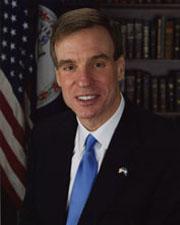
United States · Official source
2,896 records where Sen. Warner, Mark R. [D-VA] is listed as a sponsor, author, or other actor. Search with topics and years
United States · United States Congress · 31 July 2025
United States · United States Congress · 30 July 2025
United States · United States Congress · 30 July 2025
Protecting Health Care and Lowering Costs Act This bill makes permanent temporary provisions that generally expand eligibility for and increase the amount of the premium tax credit. This bill also repeals multiple Medicaid, Medicare, and health-related tax provisions enacted by the One Big Beautiful Bill Act (OBBBA). Currently, eligible taxpayers may claim the premium tax credit, which applies toward the cost of obtaining health insurance through health insurance exchanges. To qualify, a taxpayer’s household income must meet or exceed 100% of the federal poverty level (FPL) and, after 2025, may not exceed 400% of the FPL (maximum income limit). For 2021-2025, the maximum income limit is eliminated, which generally expands eligibility for the premium tax credit. Further, under current law, the amount of the premium tax credit is partially based on the taxpayer’s household income multiplied by the applicable percentage. The applicable percentage varies depending on which of six income ranges (adjusted for inflation after 2025) the taxpayer’s household income falls within. For 2021-2025, the applicable percentages are lowered and the adjustment of the applicable percentages for inflation is eliminated, which generally increases the amount of the premium tax credit. The bill permanently eliminates the 400% maximum income limit, lowers the applicable percentages, and eliminates the inflation adjustment for the applicable percentages. Finally, the bill repeals multiple Medicaid, Medicare, and health-related tax provisions enacted by the OBBBA, including certain Medicare and Medicare eligibility and verification requirements, the reduced window for retroactive Medicaid coverage, and premium tax credit verification requirements.
United States · United States Congress · 30 July 2025
United States · United States Congress · 29 July 2025
Rotorcraft Operations Transparency and Oversight Reform Act or the ROTOR Act This bill addresses aviation safety by increasing requirements for aircraft tracking and communication using Automatic Dependent Surveillance-Broadcast (ADS-B) technology and expanding oversight. As background, ADS-B for broadcasting (Out) and receiving (In) transmits information (e.g., location and weather information) between aircraft and air traffic control. Under the bill, aircraft must generally operate with ADS-B In equipment to provide the aircraft with location information of other aircraft and traffic advisories. Current law does not require this equipment. Current Federal Aviation Administration (FAA) regulations allow aircraft performing a sensitive government mission to be excepted from requirements for using ADS-B Out equipment. This bill limits which flights may be considered sensitive government missions (e.g., not training flights) and requires additional reporting and notifications for the exception. The Government Accountability Office must review the use of the ADS-B Out exception and the Office of the Inspector General (OIG) of the Department of Transportation must annually audit FAA oversight of operations that use the exception. Further, the bill repeals a 2025 law that exempts certain military helicopters from the ADS-B Out requirements for the Washington, DC, metropolitan area. The bill also requires the OIG of the Army to audit the Army’s coordination with the FAA, the FAA to establish an office to coordinate airspace usage of military aircraft and review the safety of flight operations and routes around airports, and the FAA to enter into memoranda of understanding with military agencies for safety information sharing.
United States · United States Congress · 29 July 2025
Protecting Air Ambulance Services for Americans Act of 2025 This bill authorizes payment changes under Medicare for air ambulance services based on certain collected data and requires additional reporting from providers of these services. Current law requires providers of air ambulance services to report certain information regarding general costs and utilization to the Department of Health and Human Services; private health insurers are also required to report information relating to coverage of these services. The bill authorizes the Centers for Medicare & Medicaid Services to revise payment rates under Medicare for air ambulance services based on this data, and it requires providers of air ambulance services to specifically report information relating to costs and utilization under Medicare. The bill also requires the Government Accountability Office to report on the data that is collected under current law requirements and to recommend changes to Medicare payment rates accordingly.
United States · United States Congress · 29 July 2025
John R. Lewis Voting Rights Advancement Act of 2025 This bill establishes new criteria for determining which states and political subdivisions must obtain preclearance before changes to voting practices may take effect. Preclearance is the process of receiving preapproval from the Department of Justice (DOJ) or the U.S. District Court for the District of Columbia before making legal changes that would affect voting rights. A state and all of its political subdivisions shall be subject to preclearance of voting practice changes for a 10-year period if, during the previous 25 years: 15 or more voting rights violations occurred in the state; or 10 or more violations occurred, at least 1 of which was committed by the state itself. A political subdivision as a separate unit shall also be subject to preclearance for a 10-year period if three or more voting rights violations occurred there during the previous 25 years. States and political subdivisions that meet certain thresholds regarding minority groups must preclear covered practices before implementation, such as redistricting. States and political subdivisions must notify the public of changes to voting practices. The bill authorizes DOJ to require states or political subdivisions to provide certain documents or answers to questions for enforcing voting rights. The bill outlines factors courts must consider when hearing challenges to voting practices, such as the extent of any history of official voting discrimination in the state or political subdivision. The bill also includes certain protections for election workers, polling places, and election infrastructure.
United States · United States Congress · 29 July 2025
United States · United States Congress · 29 July 2025
United States · United States Congress · 29 July 2025
United States · United States Congress · 24 July 2025
United States · United States Congress · 24 July 2025
Equitable Community Access to Pharmacist Services Act This bill provides for permanent coverage under Medicare of certain pharmacist services. Specifically, the bill provides for permanent coverage of testing and treatment services provided by pharmacists relating to (1) COVID-19, influenza, respiratory syncytial virus (RSV), and streptococcal pharyngitis (strep throat); and (2) other public health needs in relation to a declared public health emergency. (Similar authorities were temporarily granted during the COVID-19 public health emergency.) Such services must be provided in accordance with the applicable state laws governing pharmacists' scope of practice.
United States · United States Congress · 24 July 2025
Recovery of Stolen Checks Act This bill requires the Department of the Treasury to establish procedures that allow an eligible taxpayer to elect to receive by direct deposit a replacement of a federal tax refund amount that was originally issued as a paper check and was lost or stolen. (Currently, taxpayers eligible to receive a replacement of a lost or stolen federal tax refund check are generally issued another paper check.)
United States · United States Congress · 24 July 2025
United States · United States Congress · 24 July 2025
United States · United States Congress · 23 July 2025
United States · United States Congress · 23 July 2025
United States · United States Congress · 17 July 2025
United States · United States Congress · 17 July 2025
United States · United States Congress · 16 July 2025
United States · United States Congress · 16 July 2025
United States · United States Congress · 14 July 2025
United States · United States Congress · 8 July 2025
United States · United States Congress · 30 June 2025
United States · United States Congress · 26 June 2025
WWII Nurses Congressional Gold Medal Act This bill provides for the award of a Congressional Gold Medal to World War II Army and Navy Nurse Corps members in recognition of their critical military service and devotion to duty.
United States · United States Congress · 26 June 2025
United States · United States Congress · 26 June 2025
United States · United States Congress · 26 June 2025
United States · United States Congress · 24 June 2025
United States · United States Congress · 23 June 2025
United States · United States Congress · 18 June 2025
Election Worker Protection Act of 2025 This bill establishes certain protections for election workers. Specifically, the bill makes it a crime to intimidate, threaten, coerce, or harass an election worker with the intent to interfere with the official duties of, or retaliate against, the worker. The bill extends (1) the prohibition on certain types of intimidation in federal elections to also prohibit intimidation for processing ballots or tabulating, canvassing, or certifying votes; and (2) the prohibition on public disclosure of restricted personal information to also prohibit the disclosure of information about election officials, poll workers, or election volunteers in connection with a federal election. The bill also authorizes election officials to remove poll observers who are interfering with or attempting to disrupt the administration of an election. Additionally, the bill directs the Election Assistance Commission to award grants to states (or local governments under specified circumstances) for (1) recruiting and training individuals to serve as poll workers and election volunteers on dates of elections for public office, and (2) physical security services and social media threat monitoring for election workers. The bill directs the Department of Justice to (1) provide training to law enforcement and federal attorneys on addressing threats to election workers, and (2) establish a grant program to support programs to prevent the disclosure of personally identifiable information of election workers.
United States · United States Congress · 18 June 2025
Safe Environment from Countries Under Repression and Emergency Act or the SECURE Act This bill allows qualified nationals of a country that has or had a temporary protected status designation (certain countries in which nationals experience conflict or other unsafe conditions) to obtain lawful permanent residence (sometimes referred to as a green card ). To qualify for a green card, such an individual must (1) have or had temporary protected status, (2) have qualified for such status on certain dates, or (3) have been present in the United States due to having been granted deferred enforced departure status that extended past a certain date. Furthermore, the individual must (1) have been continuously present in the United States for three years before applying for a green card or before being removed after a certain date, (2) not be inadmissible or deportable for certain reasons, and (3) pass applicable background checks. The continuous presence requirement may be waived in certain instances. Such an individual's spouse, domestic partner, child, or unmarried child may also obtain a green card under this bill upon meeting certain requirements. An individual with a pending application shall receive work authorization and be eligible for travel authorization. An individual may not be removed if the individual (1) has a pending application, or (2) is prima facie eligible for a green card under this bill and intends to apply. Information from applications may not be used or shared for immigration enforcement, with limited exceptions such as for identifying fraudulent claims.
United States · United States Congress · 18 June 2025
Healthy Food Financing Initiative Reauthorization Act of 2025 This bill reauthorizes and provides specified funds for the Department of Agriculture's Healthy Food Financing Initiative (HFFI) through FY2029 and for each fiscal year thereafter. As background, HFFI provides loans, grants, and technical assistance resources to eligible healthy food retailers and food supply chain enterprises to improve and support access to fresh, healthy, and affordable food in urban and rural underserved communities.
United States · United States Congress · 17 June 2025
United States · United States Congress · 16 June 2025
United States · United States Congress · 12 June 2025
United States · United States Congress · 12 June 2025
United States · United States Congress · 11 June 2025
United States · United States Congress · 11 June 2025
United States · United States Congress · 11 June 2025
United States · United States Congress · 10 June 2025
United States · United States Congress · 5 June 2025
United States · United States Congress · 5 June 2025
United States · United States Congress · 5 June 2025
Safe Operations of Shared Airspace Act of 2025 This bill addresses aviation safety, such as through increasing requirements for aircraft tracking, communication, and coordination with the military. The bill also addresses Federal Aviation Administration (FAA) workforce issues. For example, the bill revises and increases requirements for using Automatic Dependent Surveillance-Broadcast (ADS-B) equipment, which transmits information (e.g., location and weather information) between aircraft and air traffic control. Under the bill, aircraft must generally operate with ADS-B In (receiving) equipment. The FAA must issue performance requirements for the equipment to provide safety-enhancing capabilities (e.g., facilitating aircraft collision avoidance) for flight crews. Further, current FAA regulations allow aircraft performing a sensitive government mission to be excepted from requirements for using ADS-B Out (broadcasting) equipment. This bill limits which flights may be considered sensitive government missions (e.g., not training flights). The FAA must also (1) establish an office to coordinate airspace usage of military aircraft, (2) review the safety of certain flight operations and routes around airports, and (3) enter into memoranda of understanding with military agencies for safety information sharing. The FAA must conduct a Transport Airplane Risk Assessment Methodology analysis for any transport airplane accidents in the United States that result in a fatality. The bill also addresses FAA workforce issues, such as by excluding the FAA workforce from a federal hiring freeze, deferred resignation program, voluntary furlough, or reduction in force; supporting the recruitment and training of air traffic controllers; and requiring strict adherence to federal conflict of interest requirements.
United States · United States Congress · 3 June 2025
United States · United States Congress · 3 June 2025
United States · United States Congress · 22 May 2025
United States · United States Congress · 22 May 2025
United States · United States Congress · 22 May 2025
United States · United States Congress · 22 May 2025
CDFI Bond Guarantee Program Improvement Act of 2025 This bill reauthorizes the Community Development Financial Institutions (CDFI) Bond Guarantee Program for four years and revises it to allow for a greater number of participants. CDFIs are financial institutions serving low-income communities. Designation as a CDFI allows an institution to participate in programs such as the CDFI Bond Guarantee Program. The program provides CDFIs with financing for community and economic development projects through federal credit subsidies that allow CDFIs to issue bonds. The bill (1) reduces the program’s minimum loan amount from $100 million to $25 million, (2) eliminates the cap on the annual number of guarantees, and (3) revises the maximum amount that may be held in a CDFI's relending account for secondary loans.