Bill· SS. 1335 (119th)referred
Secure Family Futures Act of 2025
United States · United States Congress · 8 April 2025
The world's political record
Person
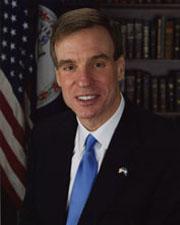
United States · Official source
2,896 records where Sen. Warner, Mark R. [D-VA] is listed as a sponsor, author, or other actor. Search with topics and years
United States · United States Congress · 8 April 2025
United States · United States Congress · 7 April 2025
United States · United States Congress · 3 April 2025
Trade Review Act of 2025 This bill requires congressional notification and review of new or increased duties (i.e., tariffs) imposed by the President on articles imported into the United States. Specifically, the President must notify Congress within 48 hours of imposing or increasing a duty on articles imported into the United States. This notification must include (1) the rationale for imposing or increasing the duty, and (2) an assessment of the duty's potential impact on U.S. businesses and consumers. The bill limits the duration of a duty to 60 days, unless a joint resolution of approval is enacted into law. A duty shall cease to have force or effect if a joint resolution of disapproval is enacted into law.
United States · United States Congress · 3 April 2025
United States · United States Congress · 3 April 2025
Save Our Seafood Act This bill establishes that the annual numerical cap on temporary nonagricultural worker (H-2B) visas does not apply to fish processors. Under current law, up to 66,000 H-2B visas may be issued in a year, with additional visas available to certain classes of workers who are exempt from this cap, including fish roe processors.
United States · United States Congress · 2 April 2025
United States · United States Congress · 2 April 2025
United States · United States Congress · 2 April 2025
United States · United States Congress · 2 April 2025
Creating Opportunities Now for Necessary and Effective Care Technologies (CONNECT) for Health Act of 2025 or the CONNECT for Health Act of 2025 This bill expands coverage of telehealth services under Medicare. Among other provisions, the bill permanently removes geographic restrictions on originating sites (i.e., the location of the beneficiary) and allows the home of the beneficiary to serve as the originating site for all services; permanently allows federally qualified health centers and rural health clinics to serve as the distant site (i.e., the location of the health care practitioner); and allows the Centers for Medicare & Medicaid Services (CMS) to generally waive coverage restrictions during any public health emergency. Additionally, the CMS must post certain information about the effects of Medicare telehealth services on its website, including information about utilization, costs, and the outcome of services. The CMS must also (1) provide resources to health care professionals about the requirements for furnishing telehealth services under Medicare, including with respect to payment, patient privacy, and support for underserved populations; and (2) ensure certain quality measures are applied to telehealth services.
United States · United States Congress · 1 April 2025
United States · United States Congress · 1 April 2025
This resolution designates April 2025 as Preserving and Protecting Local News Month.
United States · United States Congress · 1 April 2025
Sanctioning Russia Act of 2025 This bill imposes penalties on certain persons (individuals and entities) if the President determines that the Russian government or a person acting at Russia's direction is involved with (1) refusing to negotiate a peace agreement with Ukraine; (2) violating a negotiated peace agreement; (3) initiating another invasion of Ukraine; or (4) overthrowing, dismantling, or seeking to subvert the Ukrainian government. If the President makes such a determination, the bill requires certain actions including the President must impose visa- and property-blocking sanctions on specified persons such as the Russian president, certain Russian military commanders, and any foreign person that knowingly provides defense items to the Russian armed forces; the President must increase the rate of duty on all goods and services imported from Russia into the United States to at least 500% relative to the value of such goods and services; the President must increase the rate of duty on all goods and services imported into the United States from countries that knowingly engage in the exchange of Russian-origin uranium and petroleum products to at least 500% relative to the value of such goods and services; the Department of the Treasury must impose property-blocking sanctions on any financial institution organized under Russian law and owned wholly or partly by Russia, and any financial institution that engages in transactions with those entities; and the Department of Commerce must prohibit the export, reexport, or in-country transfer to or in Russia of any U.S.-produced energy or energy product.
United States · United States Congress · 27 March 2025
United States · United States Congress · 27 March 2025
United States · United States Congress · 27 March 2025
This joint resolution proposes a constitutional amendment authorizing Congress and the states to set reasonable limits on the raising and spending of money by candidates and others to influence elections. The amendment grants Congress and the states the power to implement and enforce this amendment by legislation. They are allowed to distinguish between natural persons and corporations or other artificial entities created by law, including by prohibiting such entities from spending money to influence elections.
United States · United States Congress · 27 March 2025
United States · United States Congress · 27 March 2025
United States · United States Congress · 26 March 2025
This resolution celebrates the successes of American Indian, Alaska Native, and Native Hawaiian women and the contributions they have made in the United States. The resolution also recognizes the importance of providing for the safety and upholding the interests of these women.
United States · United States Congress · 25 March 2025
United States · United States Congress · 25 March 2025
United States · United States Congress · 25 March 2025
United States · United States Congress · 25 March 2025
Performing Artist Tax Parity Act of 2025 This bill increases the income limit and makes other modifications to the above-the-line tax deduction for business expenses of qualified performing artists. (Above-the-line deductions are subtracted from gross income to calculate adjusted gross income.) Under current law, a qualified performing artist (who may deduct certain business expenses from gross income) is defined as an individual who (1) performs services in the performing arts as an employee for at least two employers during the tax year and receives at least $200 from each employer (minimum payment), (2) has business deductions attributable to such services exceeding 10% of the gross income received from such services, and (3) has adjusted gross income of $16,000 or less. The bill modifies the definition of a qualified performing artist (for purposes of the business expense deduction) to eliminate the $16,000 adjusted gross income limitation and increase the minimum payment amount to $500 (adjusted for inflation beginning in 2026). However, under the bill, the tax deduction for business expenses of qualified performing artists phases out for individuals with gross income exceeding $100,000 (or $200,000 for joint filers) such that the tax deduction completely phases out for individuals with gross income exceeding $120,000 (or $240,000 for joint filers). (The phase-out threshold is adjusted for inflation beginning in 2026.) Finally, the bill provides that commissions paid to a manager or agent by a qualified performing artist are deductible business expenses.
United States · United States Congress · 14 March 2025
United States · United States Congress · 14 March 2025
District of Columbia Local Funds Act, 2025 This bill appropriates FY2025 local funds to the District of Columbia for programs and activities included in the District's Fiscal Year 2025 Local Budget Act of 2024. Under current law, Congress is required to approve the District's annual budget. This bill approves the budget and allows the District to spend local funds for programs and activities that are included in the budget at the rates specified in the budget.
United States · United States Congress · 13 March 2025
United States · United States Congress · 13 March 2025
United States · United States Congress · 13 March 2025
Preserving Patient Access to Home Infusion Act This bill specifically includes pharmacy services and home infusion drugs that are administered without a pump as part of covered home infusion therapy under Medicare. The bill also allows nurses and physician assistants to establish and review the plan of care for home infusion therapy, and it specifies that payment may be made regardless of whether a practitioner is physically present in the home at the time the drug is administered.
United States · United States Congress · 12 March 2025
Alleviating Spaceport Traffic by Rewarding Operators Act of 2025 This bill allows the Department of Transportation (DOT) to establish a pilot grant program for projects to construct, repair, maintain, or improve transportation infrastructure and facilities for space launch and reentry sites. Launch and reentry site operators may use the grants for projects that (1) are located at, or adjacent to, a launch or reentry site; (2) directly enable or support transportation safety or transportation activities (i.e., the movement of people or property to, from, or within a launch site); and (3) are made generally available, subject to reasonable commercial terms. DOT may also issue a supplemental matching grant to an operator of a launch or reentry site.
United States · United States Congress · 12 March 2025
Safe Schools Improvement Act This bill requires states to direct their local educational agencies (LEAs) to establish policies that prevent and prohibit bullying and harassment of elementary and secondary school students. In particular, these policies must prohibit bullying and harassment based on race, color, national origin, disability, religion, or sex. Sex includes sexual orientation, gender identity, and sex characteristics (including intersex traits). Further, LEAs must provide (1) students, parents, and educational professionals with annual notice of the conduct prohibited in their disciplinary policies; (2) students and parents with grievance procedures that target such conduct; and (3) the public with annual data on the incidence and frequency of that conduct at the school and LEA level. The Department of Education must conduct and report on an independent biennial evaluation of programs and policies to combat bullying and harassment in elementary and secondary schools. The National Center for Education Statistics must collect state data to determine the incidence and frequency of the conduct prohibited by LEA disciplinary policies.
United States · United States Congress · 11 March 2025
Protecting Pharmacies in Medicaid Act This bill provides funds beginning in FY2026 for the Centers for Medicare & Medicaid Services to survey retail and non-retail pharmacies (e.g., mail-order pharmacies) to determine average prices of covered outpatient drugs under Medicaid. Pharmacies that fail to participate in the surveys are subject to civil penalties. The bill additionally provides funds for FY2026 for the Office of the Inspector General of the Department of Health and Human Services to study the results of the survey and report accordingly to Congress. The bill also requires pass-through pricing models, and prohibits spread-pricing, for payment arrangements with pharmacy benefit managers under Medicaid.
United States · United States Congress · 11 March 2025
United States · United States Congress · 11 March 2025
This joint resolution terminates the national emergency declared by President Donald J. Trump on February 1, 2025, which imposed an additional 25% tariff on most imports from Canada (except for Canadian energy or energy resources, which have an additional 10% tariff).
United States · United States Congress · 11 March 2025
United States · United States Congress · 11 March 2025
Tariff Transparency Act of 2025 This bill requires the U.S. International Trade Commission to investigate and report to Congress on the impact of additional tariffs on imports from Canada and Mexico. (President Donald J. Trump issued executive orders on February 1, 2025, to impose an additional 25% tariff on most imports from Canada and Mexico. These tariffs applied to all imports, except for Canadian energy or energy resources, which have an additional 10% tariff.) Specifically, the report must assess (1) the impact of these tariffs on consumer prices; (2) the impact of any retaliation (e.g., retaliatory tariffs and export restrictions) imposed by Canada and Mexico on U.S. consumers, small businesses, farmers, and ranchers; and (3) the impact of the threat of tariffs and associated uncertainty with respect to the trade relationship between the United States, Canada, and Mexico on U.S. businesses.
United States · United States Congress · 11 March 2025
United States · United States Congress · 11 March 2025
United States · United States Congress · 11 March 2025
United States · United States Congress · 10 March 2025
United States · United States Congress · 10 March 2025
United States · United States Congress · 10 March 2025
United States · United States Congress · 6 March 2025
Patients Before Middlemen Act This bill establishes certain standards and reporting requirements for prescription drug plan (PDP) sponsors, pharmacy benefit managers (PBMs), and pharmacies under the Medicare prescription drug benefit and Medicare Advantage. Specifically, the Centers for Medicare & Medicaid Services (CMS) must develop reasonable and relevant standards for contracts between PDP sponsors and pharmacies. The CMS must seek input from interested stakeholders when developing these standards. PDP sponsors are subject to civil penalties for violating these standards; PBMs must reimburse PDP sponsors for civil penalties that result from their responsibilities. The bill also requires the CMS to report periodically on essential retail pharmacies (i.e., pharmacies that serve as the only pharmacy within a certain radius) with respect to costs, contracts, and other specified information, particularly in relation to other types of pharmacies. Additionally, PBMs may not receive any income other than flat, bona fide service fees. PBMs must turn over any excess amounts they receive to PDP sponsors; PDP sponsors must turn over these amounts to the CMS. In addition, PBMs must report to PDP sponsors and to the CMS an itemized list of prescription drugs that were dispensed during the previous year and related data about costs, claims, affiliated pharmacies, and other specified information. PDP sponsors may audit PBMs to ensure compliance with these requirements and must annually certify their compliance; PBMs are responsible for any associated civil penalties for violations. The bill's changes generally apply beginning in 2028.
United States · United States Congress · 4 March 2025
This resolution expresses the sense of the Senate that the mass terminations of employees at the Department of Veterans Affairs should be condemned. The resolution also expresses that all affected employees should be reinstated.
United States · United States Congress · 4 March 2025
United States · United States Congress · 3 March 2025
This bill designates the outdoor amphitheater at the Blue Ridge Music Center, located at 700 Foothills Road in Galax, Virginia, as the Rick Boucher Amphitheater.
United States · United States Congress · 27 February 2025
United States · United States Congress · 27 February 2025
Critical Minerals Security Act of 2025 This bill establishes requirements for the Department of the Interior related to securing U.S. access to critical minerals and rare earth element (REE) resources. Critical minerals mean any mineral, element, substance, or material designated as critical by the U.S. Geological Survey. REEs mean cerium, dysprosium, erbium, europium, gadolinium, holmium, lanthanum, lutetium, neodymium, praseodymium, promethium, samarium, scandium, terbium, thulium, ytterbium, and yttrium. First, Interior must report on the critical mineral and REE resources, including recyclable or recycled materials containing those resources, around the world. Among other information, the report must include an assessment of the global ownership and supply of critical mineral and REE resources. Interior must submit the report within a year and every two years thereafter. Next, Interior must establish a process to assist a U.S. person—a U.S. citizen, a non-U.S. National (alien under federal law) lawfully admitted for permanent residence, or an entity organized under U.S. laws—seeking to divest stock in mining, processing, or recycling operations for critical minerals and REEs in a foreign country with finding a purchaser that is not under the control of North Korea, China, Russia, or Iran. Finally, Interior must develop (1) a strategy to collaborate with U.S. allies and partners to develop advanced mining, refining, separation, processing, and recycling technologies; and (2) a method for sharing related intellectual property with U.S. allies and partners to enable those countries to license those technologies and develop their resources.
United States · United States Congress · 27 February 2025
United States · United States Congress · 27 February 2025
United States · United States Congress · 27 February 2025
United States · United States Congress · 26 February 2025
Maintaining American Superiority by Improving Export Control Transparency Act This bill requires the Department of Commerce's Bureau of Industry and Security (BIS) to annually report to Congress on export control licensing. Under current law, BIS administers and enforces controls on the export of dual-use goods (e.g., items with both civilian and military uses) and certain military parts and components. These export controls are implemented primarily under the Export Control Reform Act of 2018 (ECRA) through the Export Administration Regulations (EAR). Under this bill, BIS must annually report to Congress on license applications, enforcement actions, and other requests for authorization for the export, reexport, release, and in-country transfer of items subject to the EAR to covered entities. A covered entity is any entity that (1) is located or operating in a country listed in Country Group D:5 (countries that are identified by the Department of State as subject to U.S. arms embargoes), and (2) is included on the Entity List or the Military End-User List (two of the lists published by BIS containing information on the individuals, organizations, and addresses subject to restrictions involving items subject to the EAR). The bill requires this report to include specified information, such as the name of the entity submitting the application, where the item is being exported, the decision with respect to the license application or authorization, and information on related enforcement activities to ensure compliance with U.S. export controls. The information shall be exempt from public disclosure (except for aggregate statistics).