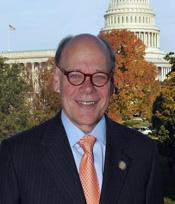
United States · United States Congress · 31 July 2013
Support Educators and Reinvest in Valuable Education Act or the SERVE Act - Amends title IV (Student Assistance) of the Higher Education Act of 1965 to increase, from $5,000 to $17,500, the amount of loan forgiveness available under the Federal Family Education Loan (FFEL) and Direct Loan (DL) programs to highly qualified teachers who have been employed at a low income school in the same local educational agency (LEA) for five consecutive complete school years. Requires those low income schools to be schools: (1) at which more than 30% of the students are impoverished, and (2) located within the school district of an LEA that is eligible for school improvement funds under title I of the Elementary and Secondary Education Act of 1965. Excepts PLUS loans under the FFEL and DL programs that are provided to the parents of dependent undergraduate students from that loan forgiveness program. Includes consolidation loans in that loan forgiveness program, but only to the extent they are used to repay eligible FFELs or DLs.
United States · United States Congress · 31 July 2013
Keep Teachers Teaching Act of 2013 - Amends the Elementary and Secondary Education Act of 1965 to direct the Secretary of Education to award competitive, renewable grants to local educational agencies (LEAs), states, and partnerships of LEAs, nonprofit organizations, and institutions of higher education for the development and implementation of innovative teacher retention programs that include: (1) professional development; (2) teacher mentoring; (3) advanced certification or credentialing; (4) research, travel, or fellowship opportunities; and (5) pairing teachers with research or industry professionals. Requires the Secretary to: (1) identify the most promising teacher retention strategies, and (2) make information about those strategies publicly available and easily accessible to states and LEAs.
United States · United States Congress · 31 July 2013
Communities United with Religious leaders for the Elimination of HIV/AIDS Act of 2013 or CURE Act of 2013 - Authorizes the Secretary of Health and Human Services (HHS), acting through the Deputy Assistant Secretary for Minority Health, to make grants to eligible health entities (i.e., a public health agency, a health center, including a center operated by an Indian tribe or organization, a community-based organization, or a faith-based organization) for: (1) HIV/AIDS education and outreach activities, (2) HIV/AIDS prevention and access to treatment, and (3) HIV/AIDS testing activities. Grants priority to grant applications that serve one or more minority groups (i.e., American Indians [including Alaska Natives, Eskimos, and Aleuts], Asian Americans, Native Hawaiians and other Pacific Islanders, Blacks, and Hispanics) with a specified HIV occurrence rate. Authorizes the Secretary, acting through the Administrator of the Substance Abuse and Mental Health Services Administration, to make grants to eligible health entities to provide HIV testing, counseling, and referral for medical treatment to youth who are members of minority groups, are not more than age 18, are HIV positive or at risk for HIV/AIDS, including young men of racial minorities who have sex with men, and are engaged in substance abuse. Authorizes the Secretary, acting through the Director of the Centers for Disease Control and Prevention (CDC), to make grants to eligible health entities for public health intervention and prevention activities with respect to one or more minority groups, including: (1) rapid HIV testing, (2) measures and activities to prevent the spread of HIV/AIDS and minimize its symptoms, (3) outreach activities targeting both females and males, and (4) referrals to health and mental health resources and health organizations. Directs the Secretary, acting through the Director of the CDC, to: (1) expand and intensify HIV/AIDS prevention and education activities for minority groups, and (2) implement a national media outreach campaign that urges sexually active individuals who are members of minority groups to be tested for and know their HIV/AIDS status. Authorizes the Secretary, acting through the Director of the National Center on Minority Health and Health Disparities, to make grants to public or private organizations with one or more published studies on behaviors to study behavioral factors that lead to increased HIV/AIDS prevalence in minority groups.
United States · United States Congress · 31 July 2013
Women, Peace, and Security Act of 2013 - Expresses the sense of Congress that: (1) implementation of the United States National Action Plan on Women, Peace, and Security (NAP) is paramount in improving the lives of women around the world and increasing global stability and prosperity, (2) Congress is committed to advancing NAP principles, and (3) the President should ensure NAP's implementation and coordinate with the international community to reaffirm global commitments to implementation of United Nations Security Council Resolution 1325. States that it is U.S. policy to implement NAP. Directs the Secretary of State and the Administrator of the U.S. Agency for International Development (USAID) to: (1) integrate gender goals into diplomatic and development efforts, and into agency guidance and contracting; (2) include gender in strategic and budget planning processes; and (3) review existing U.S. policies and programs on women and girls in foreign countries from a gender perspective. Directs the heads of federal departments and agencies to ensure that NAP's tenets are incorporated into all programs related to: (1) conflict prevention, (2) humanitarian and disaster response, (3) conflict mediation, (4) peacekeeping, (5) post-conflict reconstruction, (6) institution building, and (7) democracy promotion. Urges the Secretary to promote the inclusion of women in coordination and consultation with international partners. Directs the Secretary, the Administrator, the Secretary of Defense (DOD) and representatives of other federal agencies to implement NAP and ensure relevant personnel training. Directs the Secretary to facilitate the efforts of partner governments to improve women's participation in peace and security processes, conflict prevention, peace-building, transitional processes, and decision making institutions in conflict-affected environments. Directs the Secretary and the Administrator to establish guidelines for overseas U.S. personnel to consult with specified stakeholders regarding U.S. efforts to: (1) prevent, mitigate, or resolve violent conflict; and (2) enhance the success of mediation and negotiation processes by ensuring women's meaningful participation.
United States · United States Congress · 30 July 2013
Fairness and Accuracy in Employment Background Checks Act of 2013 - Requires the Attorney General to: (1) establish and enforce procedures to ensure the prompt release of accurate federal criminal background records and information exchanged for employment-related purposes; and (2) report to Congress on the exchange of records or information for employment-related purposes under this Act and on all federal statutes, regulations, and policies providing employment restrictions and disqualifications based on criminal records.
United States · United States Congress · 30 July 2013
End Racial Profiling Act of 2013 - Prohibits any law enforcement agent or agency from engaging in racial profiling. Defines "racial profiling" to mean the practice of a law enforcement agent or agency relying, to any degree, on race, ethnicity, national origin, gender, or religion in selecting which individual to subject to routine or spontaneous investigatory activities, or in deciding upon the scope and substance of law enforcement activity following the initial investigatory activity, except when there is trustworthy information relevant to the locality and timeframe that links a person of a particular race, ethnicity, national origin, gender, or religion to an identified criminal incident or scheme. Authorizes the United States or an individual injured by racial profiling to enforce this Act in a civil action for declaratory or injunctive relief. Requires: (1) federal law enforcement agencies to maintain adequate policies and procedures to eliminate racial profiling and to cease existing practices that permit racial profiling; and (2) state or local governmental entities or state, local, or tribal law enforcement agencies that apply for grants under the Edward Byrne Memorial Justice Assistance Grant Program and the Cops on the Beat Program to certify that they maintain adequate policies and procedures for eliminating racial profiling and have eliminated any existing practices that permit or encourage racial profiling. Requires the Attorney General to issue regulations to ensure that administrative complaint procedures and independent audit programs provide an appropriate response to allegations of racial profiling by law enforcement agents or agencies. Authorizes the Attorney General to award grants and contracts for the collection of data relating to racial profiling and for the development of best practices and systems to eliminate racial profiling. Requires: (1) the Attorney General to issue regulations for the collection and compilation of data on racial profiling, and (2) the Department of Justice Bureau of Justice Statistics to analyze the data collected for any statistically significant disparities. Requires the Attorney General to submit annual reports on racial profiling by law enforcement agencies.
United States · United States Congress · 30 July 2013
Wounded Warrior Service Dog Act of 2013 - Directs the Secretaries of Defense (DOD) and Veterans Affairs (VA) to jointly establish the K-9 Companion Corps program for the awarding of grants to assist nonprofit organizations in establishing, planning, designing, and/or operating programs to provide assistance dogs to certain members of the Armed Forces and veterans who have certain disabilities. Defines "assistance dog" to mean a dog specifically trained to perform physical tasks to mitigate the effects of such a disability, except that such term does not include a dog specifically trained for comfort or personal defense.
United States · United States Congress · 30 July 2013
Captive Primate Safety Act - Amends the Lacey Act Amendments of 1981 to add nonhuman primates to the definition of "prohibited wildlife species" for purposes of the prohibition against the sale or purchase of such species in interstate or foreign commerce. Makes it unlawful for a person to import, export, transport, sell, receive, acquire, or purchase a live animal of any prohibited wildlife species in interstate or foreign commerce (i.e., for pet trade purposes). Modifies exceptions to such prohibition, including by making it inapplicable to a person who is: (1) a licensed and inspected person who does not allow direct contact between the public and prohibited wildlife species, and (2) transporting a single primate of the genus Cebus that was obtained from and trained by a charitable organization to assist a permanently disabled individual with a severe mobility impairment. Sets forth civil and criminal penalties for violations of the requirements of this Act.
United States · United States Congress · 30 July 2013
Amends the Internal Revenue Code to make permanent the taxpayer election to deduct state and local general sales taxes in lieu of state and local income taxes.
United States · United States Congress · 30 July 2013
Recognizes Bayard Rustin for his leadership in the civil rights, labor, and lesbian, gay, bisexual, and transgender rights movements and for his dedication to realizing equality and freedom in the United States.
United States · United States Congress · 25 July 2013
Restore Honor to Service Members Act - Requires appropriate military record correction boards or discharge review boards to review the discharge characterization of any former members of the Armed Forces requesting a review who were discharged because of their sexual orientation. Permits such boards to change a characterization to honorable if such characterization is any characterization except honorable. Directs the Secretary of Defense (DOD) to ensure that any such changes are carried out consistently and uniformly across the military departments using specified criteria, including that: (1) the original discharge was based on the policy of Don't Ask Don't Tell (as in effect before it was repealed pursuant to the Don't Ask, Don't Tell Repeal Act of 2010) or a similar earlier policy; and (2) the discharge characterization will be changed if, with respect to the original discharge, there were no aggravating circumstances, such as misconduct, that would have independently led to any discharge characterization except honorable. Prohibits "aggravating circumstances" from including: (1) an offense of sodomy committed by the member against a consenting person of the same sex; or (2) statements, consensual sexual conduct, or consensual acts relating to sexual orientation or identity, or the disclosure of such statements, conduct, or acts, that were prohibited at the time of discharge but that became permitted after such discharge. Directs the Secretary of each military department to ensure that oral historians of the department: (1) review discharges between World War II and September 2011 based on sexual orientation, and (2) receive oral testimony of individuals who personally experienced discrimination and discharge because of actual or perceived sexual orientation so that such testimony may serve as an official record of such discriminatory policies and their impact on American lives. Requires the reissuance of specified military personnel records and discharge forms in a manner that shall not reflect the sexual orientation of the member. Amends the Uniform Code of Military Justice to remove from the offense of sodomy specified activity referred to as unnatural carnal copulation with another person of the same or opposite sex.
United States · United States Congress · 25 July 2013
Global Food Security Act of 2013 - Directs the President to designate an individual to serve as the Special Coordinator for Food, Nutrition, and Agricultural Development to: (1) advise the President on global food security, nutrition security, and agricultural development; and (2) ensure coordination of related U.S. programs. Makes the U.S. Agency for International Development (USAID) the lead agency in implementing a comprehensive food security, nutrition security, and agricultural development strategy. Sets forth the elements of such strategy. Amends the Foreign Assistance Act of 1961 to revise bilateral agriculture, rural development, and nutrition assistance programs.
United States · United States Congress · 25 July 2013
CLEANER Act of 2013 or the Closing Loopholes and Ending Arbitrary and Needless Evasion of Regulations Act of 2013 - Amends the Solid Waste Disposal Act, with respect to the regulation of wastes associated with the exploration, development, or production of crude oil, natural gas, or geothermal energy, to require the Administrator of the Environmental Protection Agency (EPA), within one year, to: determine whether drilling fluids, produced waters, and other wastes associated with such activities meet the criteria promulgated for the identification or listing of hazardous waste; identify or list as hazardous waste any of such energy-associated wastes that the Administrator determines meet the identification or listing criteria; and promulgate regulations regarding standards applicable to generators, transporters, and owners and operators of facilities for the treatment, storage, or disposal of wastes described under this Act (except that the Administrator may modify the requirements for such regulations to consider such wastes' special characteristics so long as the requirements protect human health and the environment). Directs the Administrator to promulgate revisions of the criteria regarding sanitary landfills and practices of open dumping for facilities that receive the energy-associated wastes described under this Act not identified as hazardous waste. Requires such revisions to: be those necessary to protect human health and the environment, allowing consideration of the practicable capability of such facilities; and include, at minimum, groundwater monitoring as necessary to detect contamination, criteria for the acceptable location of new or existing facilities, and provision for corrective action and financial assurance.
United States · United States Congress · 25 July 2013
Amends the Internal Revenue Code to deny a tax deduction for any business expenses for marketing directed at children (age 17 or younger) to promote the consumption of food of poor nutritional quality and for related expenses, including for travel, goods or services constituting entertainment, amusement, or recreation, gifts, or other promotion expenses. Defines "food of poor nutritional quality" to mean food and beverages that are determined by the Secretary of the Treasury, in consultation with the Secretary of Health and Human Services (HHS) and the Federal Trade Commission (FTC), to be inconsistent with the most recent government dietary guidelines.
United States · United States Congress · 24 July 2013
American Jobs Act of 2013 - Prohibits the use of funds made available by this Act for a project for the construction, alteration, maintenance, or repair of a public building or public work unless all of the iron, steel, and manufactured goods used in such project are produced in the United States (Buy American). Waives such prohibition in cases where: (1) the prohibition would be inconsistent with the public interest; (2) iron, steel, and the relevant manufactured goods are not produced in the United States in sufficient and reasonably available quantities of a satisfactory quality; or (3) inclusion of iron, steel, and manufactured goods produced in the United States will increase the cost of the overall project by more than 25%. Requires all laborers and mechanics employed by contractors and subcontractors on federally-assisted projects to be paid wages at the locally prevailing rates (Davis-Bacon Act). Amends the Internal Revenue Code to: (1) restore the making work pay tax credit in 2014, and (2) extend the additional allowance for depreciation (bonus depreciation) for 3 years. Amends the Small Business Investment Act of 1958 to increase from $2 million to $5 million through FY2014 the limit on the guarantee for contract surety bonds and on the liability for bonds obtained by fraud or misrepresentation. Directs the Secretaries of Education and the Interior (for schools operated by the Bureau of Indian Education) to reserve through FY2014 appropriated amounts to provide educational assistance to outlying areas based on their respective needs. Provides for allocations to states and local educational entities for early childhood learning programs in FY2014-FY2015 at specified levels. Directs the Attorney General to carry out a competitive grant program pursuant to the Omnibus Crime Control and Safe Streets Act of 1968 for the hiring, rehiring, or retention of career law enforcement officers. Makes appropriations to the Community Oriented Policing Stabilization Fund to carry out such program and provides for a transfer to a First Responder Stabilization Fund, from which the Secretary of Homeland Security (DHS) shall make competitive grants for hiring additional firefighters pursuant to the Federal Fire Prevention Control Act of 1974. Directs the Secretary of Education to award grants to states to modernize, renovate, or repair early learning or elementary or secondary education facilities and existing facilities at community colleges. Makes specified funds available to the Secretary of Transportation (DOT) for: (1) grants-in-aid for airport planning and development and noise compatibility planning projects under the airport improvement program (AIP); (2) Federal Aviation Administration (FAA) Next Generation air traffic control system advancements; (3) highway and bridge restoration, repair, and construction projects and for passenger and freight rail transportation and port infrastructure projects; (4) grants for high-speed rail projects, capital investment grants for intercity passenger rail service, and grants to reduce congestion on intercity rail passenger transportation; (5) capital grants to the National Railroad Passenger Corporation (Amtrak); (6) transit capital assistance grants; (7) capital projects for existing fixed guideway system modernization, replacement and repair of buses and bus-related equipment, and construction of bus-related facilities; and (8) discretionary capital investment grants for surface transportation infrastructure. Building and Upgrading Infrastructure for Long-Term Development Act - Establishes the American Infrastructure Financing Authority (AIFA) as a wholly-owned government corporation to make direct loans and loan guarantees to facilitate transportation, water, or energy infrastructure projects. Requires infrastructure projects assisted under this Act to have costs that are reasonably anticipated to equal or exceed $100 million ($25 million for rural infrastructure projects). Sets forth special requirements for infrastructure projects in rural areas. Requires the AIFA Chief Lending Officer to establish: (1) an Office of Rural Assistance to provide technical assistance in the development and financing of rural infrastructure projects, and (2) a Center for Excellence to provide such assistance to public sector borrowers in the development and financing of infrastructure projects. Establishes an Office of Special Inspector General to audit and investigate the business activities of AIFA. Makes private projects for which no public benefit is created ineligible for financial assistance. Sets forth terms for loans or loan guarantees for infrastructure projects. Requires the Chief Executive Officer of AIFA to establish and collect fees sufficient to cover all or a portion of AIFA administrative costs. Amends the Internal Revenue Code to extend through 2014 the exemption from the alternative minimum tax (AMT) for certain tax-exempt private activity bonds. Appropriates funds for assistance to eligible entities, including state and local governments, qualified nonprofit organizations, businesses, or eligible consortia, for the redevelopment of abandoned and foreclosed-upon properties and for stabilization of affected neighborhoods (Project Rebuild). Allows the use of funds to: (1) establish financing mechanisms for the purchase and redevelopment of such properties; (2) purchase and rehabilitate such properties; (3) establish and operate land banks for them; (4) demolish blighted structures (except public housing); and (5) redevelop abandoned, foreclosed, demolished, or vacant properties. Requires each state to receive at least $20 million of formula funds, all of which shall be used with respect to low and moderate-income individuals and families. Requires each state and local government grantee to establish procedures to create preferences for development of affordable rental housing. Allows a grantee to use up to 10% of a grant to create jobs by establishing and operating a program to maintain eligible neighborhood properties. Supporting Unemployed Workers Act of 2013 - Amends the Supplemental Appropriations Act, 2008 to extend the emergency unemployment compensation (EUC) program until January 1, 2016. Amends the Assistance for Unemployed Workers and Struggling Families Act to extend through December 31, 2015, requirements that federal payments to states cover 100% of EUC. Amends the Railroad Unemployment Insurance Act to extend through December 31, 2015, the temporary increase in extended unemployment benefits for employees with 10 or more years of service and for employees with less than 10 years of service. Permits the use of pre-existing appropriated funds under such Act to cover the cost of additional extended unemployment benefits and the cost of current benefits. Establishes the Reemployment NOW program to facilitate the reemployment of individuals receiving emergency unemployment compensation (EUC claimants). Requires a state to submit for approval by the Secretary of Labor a plan meeting certain minimum requirements in order to be eligible for an allotment of federal funds under such program. Authorizes a state to use its allotted funds to: (1) establish a Bridge to Work program to provide EUC claimants with short-term work experience placements with eligible employers; (2) provide a wage insurance program to pay, for up to two years, an EUC claimant who obtains reemployment up to 50% of the difference between the wages received at the time of work separation and the wages received for reemployment; and (3) provide a program of enhanced reemployment services to EUC claimants, including unemployed individuals who have exhausted their EUC rights. Provides for federal financing of state short-time compensation programs. Requires the Secretary of Labor to: (1) award grants to states that enact such programs; (2) develop model legislative language for use by states in developing, enacting, and implementing such programs; and (3) report to Congress and the President on the implementation of such programs. Allows an increased work opportunity tax credit for long-term unemployed individuals (individuals who are unemployed and receiving unemployment compensation for six months or more). Pathways Back to Work Act of 2013 - Establishes programs to subsidize employment for unemployed, low-income adults, to provide summer and year-round employment opportunities to low-income youth, and for work-based training. Provides for an initial appropriation of $5 billion, with funds available for obligation by the Secretary of Labor until December 31, 2014, and for expenditure by grantees and subgrantees until September 30, 2015. Subjects activities funded under this Act to federal labor standards and nondiscrimination protections. Fair Employment Opportunity Act of 2013 - Makes it an unlawful practice for certain employers to: (1) publish a job advertisement or announcement that includes provisions indicating that an individual's status as unemployed disqualifies the individual for employment or that the employer will not consider or hire an individual for employment based on such status, (2) fail or refuse to consider or hire an individual because of such status, or (3) direct or request that an employment agency take an individual's status into account to disqualify an applicant for consideration for employment or when screening or referring employees. Makes it an unlawful practice for an employment agency to commit similar acts, including to: (1) screen, or fail or refuse to consider or refer, an individual for employment because of the individual's unemployed status; or (2) limit, segregate, or classify any such individual in any manner that would limit access to job information or consideration, screening, or referral for jobs. Makes it unlawful for any employer or employment agency to: (1) interfere with, restrain, or deny the exercise of any right provided under this Act; or (2) fail or refuse to hire, discharge, or otherwise discriminate against an employee because such individual opposed any practice made unlawful by this Act or asserted any right under it. Prescribes enforcement authorities and legal remedies for violations of this Act. Amends the Internal Revenue Code to provide for offsets against decreases in revenue by: (1) limiting tax deductions and other tax exclusions for taxpayers whose adjusted gross income exceeds $200,000 ($250,000 for married taxpayers filing a joint return), (2) treating income received by a partner from an investment services partnership interest as ordinary income for income tax purposes, and (3) treating all general aviation aircraft (including corporate jets) as seven-year property for depreciation purposes. Repeals, after 2013, certain tax expenditures for the oil and gas industry, including: (1) the tax deduction for intangible drilling and development costs for oil and gas wells; (2) the tax deduction for tertiary injectant expenditures; (3) percentage depletion for oil and gas wells; (4) the tax deduction for income from activities relating to oil, natural gas, or any primary product thereof; (5) the exemption from limitations on passive activity losses; and (6) the tax credits for enhanced oil recovery and for producing oil and gas from marginal wells. Increases from two to seven years the period for amortizing geological and geophysical expenditures. Denies the foreign tax credit for amounts paid or accrued by a dual capacity taxpayer to a foreign country or U.S. possession. Defines "dual capacity taxpayer" as a person who is subject to a levy of a foreign country or U.S. possession and who receives a specific economic benefit from such country or possession. Sets forth a special rule for the treatment of taxes paid on foreign oil and gas income for purposes of the foreign tax credit. Amends the Balanced Budget and Emergency Deficit Control Act of 1985 (Gramm--Rudman-Hollings Act), as amended by the Budget Control Act of 2011, to repeal its budget goal enforcement requirements (sequestration mandate).
United States · United States Congress · 24 July 2013
Conservation Easement Incentive Act of 2013 - Amends the Internal Revenue Code to make permanent the tax deduction for charitable contributions by individuals and corporations of real property interests for conservation purposes.
United States · United States Congress · 24 July 2013
Justice Exists for All of Us Act of 2013 - Prohibits a state, for each fiscal year beginning three years after enactment of this Act, from having in effect a law or policy that: (1) allows a person to use deadly force when such person is threatened and that does not impose a duty to retreat before using such force in any place where that person is lawfully present (commonly known as a "stand your ground law"), except where the person is a victim of domestic violence; or (2) allows the establishment, organization, or operation of, or participation in, a Neighborhood Watch program that is not registered with the local law enforcement agency and the Department of Justice (DOJ). Allows the Attorney General to authorize up to two one-year extensions of such deadline. Provides that a state that fails to substantially implement this Act for any fiscal year shall not receive 20% of the funds that would otherwise be allocated to it under the Edward Byrne Memorial Justice Assistance Grant program. Provides for alternative procedures for compliance by a state that is unable to substantially implement this Act because of a conflict with the state's constitution. Directs the Attorney General to conduct a study of state stand your ground laws, including by examining: (1) the effect that such laws have on rates of violent deaths, and (2) whether women and minorities are targets of the force authorized by such laws at a higher rate than the general population.
United States · United States Congress · 24 July 2013
Research First Act of 2013 - Appropriates, for FY2013, an additional $1.55 billion to the National Institutes of Health (NIH). Rescinds: (1) $400 million from the Department of Defense--Overseas Contingency Operations--Operation and Maintenance--Afghanistan Infrastructure Fund account, and (2) $1.15 billion from the Department of Defense (DOD) account.
United States · United States Congress · 22 July 2013
Rape Survivor Child Custody Act - Directs the Attorney General to make grants to states that have in place a law that allows the mother of any child that was conceived through rape to seek court-ordered termination of the parental rights of her rapist with regard to that child, which the court shall grant upon clear and convincing evidence of rape. Limits such a grant to: (1) an amount that is not greater than 10% of the average of the total funding of the 3 most recent awards a state received under the STOP Violence Against Women Formula Grant Program and the Sexual Assault Services Program; and (2) a 1-year term, subject to renewal for not more than 3 additional years. Requires a state that receives such a grant to use: (1) 25% of grant funds for permissible uses under the STOP Violence Against Women Formula Grant Program, and (2) 75% of funds for permissible uses under the Sexual Assault Services Program.
United States · United States Congress · 22 July 2013
Pathways Back to Work Act of 2013 - Establishes in the Treasury the Pathways Back to Work Fund, with an initial appropriation of $12.5 billion. Requires the Secretary of Labor to make certain Fund allocations to states with approved plans, qualifying outlying areas (U.S. Virgin Islands, Guam, American Samoa, the Commonwealth of the Northern Mariana Islands, and the Republic of Palau), and Native American program grantees to provide: (1) subsidized employment to unemployed, low-income adults; and (2) summer and year-round employment opportunities to low-income youth. Requires the Secretary to award competitive grants to local entities for work-based training and other work-related and educational strategies and activities of demonstrated effectiveness to provide unemployed, low-income adults and low-income youths with skills that will lead to employment. Subjects activities funded under this Act to federal labor standards and nondiscrimination protections.
United States · United States Congress · 19 July 2013
Redistricting and Voter Protection Act of 2013 - Requires a state that enacts a congressional redistricting plan prior to the next decennial census and apportionment of Representatives to obtain a declaratory judgment or preclearance from the Attorney General that such plan does not have the purpose or effect of denying or abridging the right to vote on account of race or color or in contravention of the guarantees of the Voting Rights Act of 1965.
United States · United States Congress · 18 July 2013
Global Democracy Promotion Act - States that, with respect to eligibility for assistance under part I of the Foreign Assistance Act of 1961, foreign nongovernmental organizations shall not be ineligible for such assistance solely on the basis of health or medical services provided by such organizations with non-U.S. government funds if such services do not violate the laws of the country in which they are being provided and would not violate U.S. federal law if provided in the United States. Declares in addition that foreign nongovernmental organizations shall not be subject to requirements relating to the use of non-U.S. government funds for advocacy and lobbying activities other than those that apply to U.S. nongovernmental organizations receiving assistance under part I of such Act.
United States · United States Congress · 18 July 2013
Segal AmeriCorps Education Award Tax Relief Act of 2013 - Amends the Internal Revenue Code to exclude from gross income any AmeriCorps educational awards provided under the National and Community Service Act of 1990.
United States · United States Congress · 18 July 2013
Songwriters Tax Simplification Reauthorization Act - Amends the Internal Revenue Code, with respect to the tax deduction for depreciation, to make permanent the taxpayer election to amortize over a five-year period expenses incurred in creating or acquiring a musical composition or any copyright with respect to such composition.
United States · United States Congress · 17 July 2013
Literacy Education for All, Results for the Nation Act or the LEARN Act - Authorizes the Secretary of Education to award grants to states to develop or improve a comprehensive plan to improve the literacy of children from birth through grade 12. Directs the Secretary to award grants to states to implement their comprehensive literacy plans for such children through: competitive subgrants to local educational agencies (LEAs) or early learning programs for specified activities that support early language and literacy development in children from birth through kindergarten entry; competitive subgrants to LEAs that have the highest numbers or percentages of disadvantaged students and students reading or writing below grade level for specified activities to improve the literacy of students in kindergarten through grade 12, including the provision of family literacy services; and additional state activities that include providing technical assistance to subgrantees, coordinating literacy programs and resources throughout the state, disseminating information on promising literacy programs, and enhancing the credentials of literacy instructors. Allots implementation grants to states on the basis of each state's share of disadvantaged students. Requires the Secretary to: (1) perform a five-year national evaluation of the implementation and effect of the literacy initiatives supported by this Act, and (2) provide technical assistance and information on literacy instruction to educational entities. Authorizes the Secretary to withhold this Act's funding from states and subgrantees, and states to withhold funding from subgrantees, whose initiatives are not making significant progress in improving student literacy.
United States · United States Congress · 16 July 2013
Airline Pilot Pension Fairness Act - Amends the Employee Retirement Income Security Act of 1974 (ERISA), with regard to both single-employer and multiemployer plan guaranteed benefits, to require the Pension Benefit Guaranty Corporation (PBGC), in the case of commercial airline pilots required by Federal Aviation Administration (FAA) regulation to retire before age 65, to compute the actuarial value of monthly benefits in the form of a life annuity commencing at the required retirement age.
United States · United States Congress · 16 July 2013
Saving America's Pollinators Act of 2013 - Requires the Administrator of the Environmental Protection Agency (EPA) to suspend the registration of imidacloprid, clothianidin, thiamethoxam, dinotafuran, and any other members of the nitro group of neonicotinoid insecticides to the extent such insecticide is registered under the Federal Insecticide, Fungicide, and Rodenticide Act (FIFRA) for use in seed treatment, soil application, or foliar treatment on bee attractive plants, trees, and cereals until the Administrator has made a determination that such insecticide will not cause unreasonable adverse effects on pollinators. Requires such a determination to be based on: (1) an evaluation of the published and peer-reviewed scientific evidence on whether the use or uses of such neonicotinoids cause unreasonable adverse effects on pollinators, including native bees, honeybees, birds, bats, and other species of beneficial insects; and (2) a completed field study that meets the criteria required by the Administrator and evaluates residues, including residue build-up after repeated annual application, chronic low-dose exposure, and cumulative effects of multiple chemical exposures. Prohibits the Administrator from issuing any new registrations of the pesticides listed in this Act for any seed treatment, soil application, and foliar treatment on bee attractive plants, trees, and cereals under FIFRA until the Administrator has made such determination with respect to such insecticide. Requires the Secretary of the Interior, in coordination with the Administrator, to: (1) regularly monitor the health and population status of native bees, (2) identify the scope and likely causes of unusual native bee mortality, and (3) submit to Congress and make public an annual report on such health and population status.
United States · United States Congress · 11 July 2013
Community-Based Gang Intervention Act - Expresses the sense of Congress that the United States should acknowledge and address social conditions such as poverty, homelessness, inadequate educational systems, and limited economic opportunities in developing a comprehensive gang violence reduction strategy. Amends the Juvenile Justice and Delinquency Prevention Act of 1974 to: (1) require the Administrator of the Office of Juvenile Justice and Delinquency Prevention to award grants to nonprofit community-based gang intervention agencies to provide services for reducing and stopping gang-related and gang-motivated violence and crime, (2) include representatives of community-based gang intervention agencies in juvenile justice and delinquency prevention advisory groups established by state plans, and (3) include community-based gang intervention and prevention activities in state and local grant programs for delinquency prevention.
United States · United States Congress · 11 July 2013
Family Engagement in Education Act of 2013 - Amends title I (Improving the Academic Achievement of the Disadvantaged) of the Elementary and Secondary Education Act of 1965 (ESEA) to authorize states to reserve school improvement funds to: award a grant to a statewide nonprofit organization to establish a Statewide Family Engagement Center that provides comprehensive training, technical assistance, and capacity building to local educational agencies (LEAs), organizations that support family-school partnerships, and other organizations that carry out parent education and family engagement in education programs; award grants to nonprofit organizations or Indian tribes or organizations that partner with LEAs or schools to establish and operate Local Family Engagement Centers that assist families in becoming engaged in their childrens' education; and develop and implement a statewide family engagement in education plan. Requires each state school improvement plan to include a plan for strengthening family engagement in education. Requires each LEA and school receiving school improvement funds to develop policies and practices for family engagement in education that meet specified principles and standards. Increases the percentage of school improvement funds that LEAs must reserve for family engagement activities. Requires at least 75% of those reserved funds to be distributed to schools served under the school improvement program. Requires states and correctional facilities to work with family members and aftercare providers in developing educational services and transition plans for youth following their stay in state and local institutions for neglected or delinquent youth. Requires the Director of the Institute of Education Sciences to develop recommended metrics on family engagement in education for states and LEAs and to make recommendations on the integration of those metrics into state accountability and longitudinal data systems. Directs the Secretary of Education to conduct research on effective family engagement in education. Requires states to use part of their grant under part A (Teacher and Principal Training and Recruiting Fund) of title II of the ESEA to train teachers and principals to effectively engage families in their children's education. Repeals programs authorizing the Secretary to award grants to: (1) nonprofit organizations and consortia of those organizations and LEAs to establish parental information and resource centers, and (2) local nonprofit parent organizations to support local family information centers.
United States · United States Congress · 11 July 2013
Public Safety Enhancement Act of 2013 - Directs the Attorney General to: (1) develop a Post-Sentencing Risk and Needs Assessment System; (2) make recommendations regarding recidivism reduction programs and productive activities (programs); (3) conduct ongoing research and data analysis on the best practices relating to the use of offender risk and needs assessment tools, the best available tools, the most effective and efficient uses of such tools, and the most effective programs for prisoners classified at different recidivism risk levels and for addressing the specific needs of prisoners; (4) develop risk and needs assessment tools for such System based on such research and analysis; and (5) review the System, recommendations, and research biennially to determine whether any revisions or updates should be made. Requires the System to provide: (1) tools to classify the recidivism risk level of prisoners and assign appropriate programs, reassess such risk level periodically and make appropriate reassignments, and determine when a prisoner is ready to transfer into pre-release custody; (2) guidance on the programs that should be assigned for each classification of prisoner; (3) incentives and rewards for prisoners to participate in and complete programs, including family phone and visitation privileges, time credits, and transfers into pre-release custody; and (4) guidelines for the Bureau of Prisons to reduce rewards earned by prisoners who violate prison or program rules. Bars prisoners convicted of specified offenses from receiving time credits. Directs the Attorney General to: (1) develop training programs for Bureau officials and employees responsible for administering the System; (2) monitor and assess the use of the System; (3) review the effectiveness of existing programs in prisons operated by the Bureau and in state-operated prisons; and (4) make recommendations to the Bureau regarding the expansion of programming and activity capacity, the replication of effective programs, and the addition of any new programs that would help to reduce recidivism. Directs the Bureau to: (1) implement the System and complete a risk and needs assessment for each prisoner; (2) expand the effective programs it offers and add any new ones necessary to effectively implement the System; (3) phase in such programs according to a specified schedule; and (4) develop policies for the warden of each prison to enter into partnerships with specified nonprofit organizations, institutions of higher education, and private entities to expand such programs. Sets forth procedures for the transfer into pre-release custody of a prisoner classified as having a low risk of recidivating.
United States · United States Congress · 11 July 2013
Veterans and Servicemembers Employment Rights and Housing Act of 2013 - Prohibits employment practices that discriminate based on an individual's military service and amends the Fair Housing Act and the Civil Rights Act of 1968 to prohibit housing discrimination against members of the uniformed services. Declares that it shall be an unlawful employment practice for an employer to fail to hire, to discharge, or to otherwise discriminate against individuals because of their military service. Prohibits employers, employment agencies, labor organizations, and job training programs from engaging in specified practices that adversely affect an applicant or employee because of such service. Exempts certain hiring and employment practices from being considered unlawful if the occupancy of the position is subject to national security requirements that an individual does not fulfill. Permits an employer to apply different standards of compensation or terms of employement pursuant to a bona fide seniority or merit system, a system which measures earnings by quantity or quality of production or to employees who work in different locations, or a professionally developed ability test. Declares that an unlawful employment practice based on disparate impact is established only if: (1) the complaining party demonstrates that a respondent uses a particular employment practice that causes a disparate impact on the basis of military service and the respondent fails to demonstrate that the challenged practice is job-related and consistent with business necessity, or (2) the complaining party makes a demonstration with respect to an alternative employment practice and the respondent refuses to adopt such practice. Prohibits business necessity from being used as a defense against a claim of intentional discrimination. Declares that an unlawful employment practice is established when the complaining party demonstrates that military service was a motivating factor for any employment practice, even though other factors also motivated such practice. Grants enforcement powers, remedies, and procedures under the Civil Rights Act of 1964 to the Equal Employment Opportunity Commission (EEOC), Attorney General (DOJ), and persons alleging such discrimination. Amends the Fair Housing Act to prohibit housing discrimination against a member of the uniformed services with respect to: (1) the sale or rental of housing, (2) residential real estate-related transactions, and (3) the provision of brokerage services. Prohibits religious organizations engaging in housing transactions from giving preferences to persons of the same religion in cases where membership in such religion is restricted to persons who are not members of the uniformed services. Amends the Civil Rights Act of 1968 to impose a fine, imprisonment, or both on persons who violate prohibitions on housing discrimination under such Act against members of the uniformed services.
United States · United States Congress · 11 July 2013
Openness in Political Expenditures Now Act or OPEN Act - Amends the Federal Election Campaign Act of 1971 to require a corporation which submits regular, periodic reports to its shareholders and a labor organization which submits similar reports to its members to include in each such report specified information on disbursements it has made for certain political activity (including independent expenditures and electioneering communications) during the period covered by the report. Limits the amount of disbursements reported, however, to the amount that equals or exceeds the applicable threshold for the covered political activity. Defines "applicable threshold" for a disbursement as: (1) $250 for an independent expenditure, (2) $10,000 for an electioneering communication or another kind of communication meeting specified criteria, and (3) the amount of the applicable limitation on contributions in effect for payment of dues or other amounts to a trade association or to a tax-exempt non-profit civic league meeting certain criteria (501[c][4] organization). Requires a corporation or labor organization reporting such expenditures to: (1) file a statement about them with the Election Assistance Commission (EAC), and (2) post on its website (if any) a hyperlink from its homepage to this statement on the EAC website. Amends the Internal Revenue Code to subject a 501(c)(4) organization to the income tax on corporations if: (1) its expenditures for the taxable year for covered political activity exceed the lesser of 10% of its total expenditures or $10 million, and (2) its governing instrument does not effectively prohibit its expenditures for a covered political activity from exceeding these thresholds.
United States · United States Congress · 11 July 2013
Amends the Congressional Budget and Impoundment Control Act of 1974 to require the Director of the Congressional Budget Office (CBO), upon a request by the chairman or ranking minority member of specified congressional committees, to determine if a proposed measure would result in reductions in budget outlays in budgetary outyears through the use of preventive health and preventive health services. Requires CBO, if the measure would result in such substantial reductions, to include in any CBO projection a description and estimate of such reductions and a description of the basis for such conclusions. Authorizes CBO to prepare a budget projection that includes some or all of the budgetary outyears.
United States · United States Congress · 10 July 2013
Marijuana Businesses Access to Banking Act of 2013 - Prohibits a federal banking regulator from: (1) terminating or limiting the deposit insurance of a depository institution solely because it either provides or has provided financial services to a marijuana-related legitimate business; or (2) prohibiting, penalizing, or otherwise discouraging a depository institution from providing financial services to a marijuana-related legitimate business. Prohibits a federal banking regulator, in addition, from recommending, motivating, providing incentives, or encouraging a depository institution not to offer financial services to an individual, or to downgrade or cancel financial services offered to an individual, solely because the individual: (1) is or later becomes a manufacturer, producer, owner or operator of a marijuana-related legitimate business; or (2) the depository institution was not aware that the individual is the owner or operator of a marijuana-related legitimate business. Prohibits a federal banking regulator from taking any action on a loan to an owner or operator of: (1) a marijuana-related legitimate business, or (2) real estate or equipment that is leased to a marijuana-related legitimate business. Grants immunity from federal criminal prosecution or investigation to a depository institution providing financial services to a marijuana-related legitimate business. Prohibits the Secretary of the Treasury from requiring a depository institution, and any director, officer, employee, or agent of a depository institution, to report a transaction as suspicious solely because a party to the transaction is a marijuana-related legitimate business.
United States · United States Congress · 9 July 2013
Thirteenth Amendment Commemorative Coin Act - Directs the Secretary of the Treasury to mint and issue the following coins in commemoration of the sesquicentennial anniversary of the passage of the Thirteenth Amendment to the Constitution (formally abolished slavery in the United States): up to 250,000 $50 bi-metallic platinum and gold coins, up to 250,000 $20 gold coins, and up to 500,000 $1 silver coins. Requires such coins to be considered legal tender and numismatic items. Permits the Secretary to issue such coins only during the calendar year beginning January 1, 2016, except that sales may be initiated, without issuance, before such date. Requires specified surcharges received by the Secretary from the sale of such coins to be paid to the Smithsonian National Museum of African American History and Culture. Directs the Secretary to ensure that: (1) the minting and issuing of such coins will not result in any net cost to the U.S. government; and (2) no funds, including applicable surcharges, are disbursed to the Museum until the total cost of designing and issuing all such coins is recovered by the Treasury.
United States · United States Congress · 8 July 2013
Medicare Respiratory Therapist Access Act of 2013 - Amends title XVIII (Medicare) of the Social Security Act to provide Medicare coverage of pulmonary self-management education and training services furnished by a qualified respiratory therapist in a physician practice to patients with chronic lung disease (chronic obstructive pulmonary disease [COPD], including emphysema and bronchitis, as well as asthma, pulmonary hypertension, pulmonary fibrosis, and cystic fibrosis).
United States · United States Congress · 28 June 2013
Amends the FAA Modernization and Reform Act of 2012, with respect to rollovers to a traditional or Roth individual retirement account (IRA) of payments to qualified airline employees in commercial airline carrier bankruptcy cases, to: (1) extend the period for filing a claim for refund of an overpayment of tax resulting from the receipt of such payments (i.e., by the later of April 15, 2015, or the expiration of the limitation period for filing refund claims); (2) modify the definition of "airline payment amount" to include payments in an airline carrier bankruptcy case filed after September 11, 2001, and before January 1, 2007, or on November 29, 2011; and (3) modify the definition of "qualified airline employee" to include an employee who was a participant in a defined benefit plan maintained by an airline carrier that was frozen effective November 1, 2012.
United States · United States Congress · 28 June 2013
Keep Student Loans Affordable Act of 2013 - Amends title IV (Student Assistance) of the Higher Education Act of 1965 to extend the 3.4% interest rate on Direct Stafford loans first disbursed to undergraduate students between July 1, 2011, and July 1, 2013, to Direct Stafford loans first disbursed to undergraduate students between July 1, 2011, and July 1, 2014. Amends the Internal Revenue Code to modify rules for required distributions from tax-exempt pension plans to an employee who dies before such employee's entire interest is distributed to require such interest to be distributed within five years after the death of such employee, subject to exceptions for an eligible designated beneficiary and surviving spouse of such employee. Defines "eligible designated beneficiary" to include a disabled or chronically-ill individual. Exempts from such modification a binding annuity contract in effect on the enactment date of this Act.
United States · United States Congress · 28 June 2013
FISA Court Accountability Act - Amends the Foreign Intelligence Surveillance Act of 1978 (FISA) to require the Foreign Intelligence Surveillance Court to consist of 11 publicly designated district court judges, of whom 3 judges are designated by the Chief Justice of the Supreme Court and 2 judges each are designated, respectively, by the Speaker of the House of Representatives, the minority leader of the House of Representatives, and the majority and minority leaders of the Senate. (Currently, the Chief Justice designates all 11 judges.) Requires any authority exercised by the court en banc (consisting of all judges who constitute the court when an en banc proceeding is ordered by a majority of the judges in certain circumstances) to be exercised only when agreed to by at least 60% of the judges sitting en banc. Directs the Chief Justice, the Speaker, and the majority leader of the Senate (or, if the majority leader is a member of the same political party as the Speaker, the minority leader of the Senate) to each publicly designate one judge from the U.S. district courts or courts of appeals who together shall comprise the Foreign Intelligence Surveillance Court of Review. (Currently, the Chief Justice designates all three of such judges.) Allows such court to decide in favor of the government only if the decision of the reviewing judges is unanimous. Directs the Attorney General (DOJ) to submit to Congress a copy of any decision, order, or opinion issued by each court (currently, only those issuances with a significant construction or interpretation of FISA) along with an unclassified summary of each such decision, order, or opinion.
United States · United States Congress · 28 June 2013
Caroline Pryce Walker Conquer Childhood Cancer Reauthorization Act - Amends the Public Health Service Act to reauthorize through FY2018 cancer research programs under the Caroline Pryce Walker Conquer Childhood Cancer Act of 2008. Replaces the current pediatric cancer research and awareness grant program carried out by the Secretary of Health and Human Services (HHS) with a comprehensive children's cancer biorepositories program. Authorizes the Director of the National Institutes of Health (NIH) to make awards to eligible applicants to build upon existing initiatives to collect biospecimens and clinical and demographic information (including date of diagnosis, age at diagnosis, and patient's gender, race, and ethnicity) for at least 90% of all children, adolescents, and young adults with cancer in Comprehensive Children's Cancer Biorepositories for the purpose of achieving a better understanding of the cause of such cancers and the effects of treatments. Permits award amounts to be used to: (1) acquire, preserve, and store high quality, donated biospecimens and associated clinical and demographic information on children, adolescents, and young adults diagnosed with cancer in the United States; (2) maintain a secure searchable database for scientists and qualified health care professionals to research such biospecimens and data; and (3) make available and distribute such biospecimens and data to researchers and professionals for peer-reviewed research. Revises the national childhood cancer registry grant program to require the Director of the Centers for Disease Control and Prevention (CDC) to award grants to state cancer registries to enhance and expand infrastructure to track the epidemiology of cancer in children, adolescents, and young adults. Requires a Comptroller General (GAO) report regarding the barriers to conducting pediatric studies of oncologic therapies in applications for new drugs or biological products under the Federal Food, Drug, and Cosmetic Act, including recommendations to improve development and access to new therapies as well as assessments of: (1) the feasibility of requiring studies for a pediatric oncologic indication if the therapeutic target of a drug or biologic product for an adult oncologic indication is highly relevant to any pediatric cancer to which it could apply, and (2) the impact of altering the current exemption for orphan drug designations relating to rare diseases or conditions.
United States · United States Congress · 28 June 2013
Expresses the sense of the House of Representatives that the United States should ban and prevent the importation of shark fins from sharks caught through the practice of finning. Recognizes the threat shark finning poses to sharks and condemns the practice worldwide.
United States · United States Congress · 27 June 2013
Electrify Africa Act of 2013 - Directs the President to establish a multiyear strategy to assist countries in sub-Saharan Africa develop an appropriate mix of power solutions to provide sufficient electricity access to people living in rural and urban areas in order to alleviate poverty and drive economic growth. Expresses the sense of Congress that the U.S. Agency for International Development (USAID) should: (1) prioritize where loan guarantees to African financial institutions would facilitate involvement in African power projects, and where partnerships and grants would increase access to electricity; and (2) consider providing grants to develop national, regional, and local energy and electricity policy plans, and expand electricity access to the poorest. Urges: (1) the Secretary of the Treasury to use U.S. influence at each institution in the World Bank Group and the African Development Bank to encourage power sector and electrification investments in sub-Saharan Africa, (2) the Overseas Private Investment Corporation (OPIC) to prioritize investment in the electricity sector of sub-Saharan Africa, and (3) the Trade and Development Agency to promote U.S. private sector participation in energy sector development projects in sub-Saharan Africa.
United States · United States Congress · 27 June 2013
End Discriminatory State Taxes for Automobile Renters Act of 2013 - Prohibits states or local governments from levying or collecting a discriminatory tax (generally, a tax or tax assessment that is applicable to the rental of motor vehicles or motor vehicle businesses or property, but not to the majority of other rentals of tangible personal property within a state or locality) on the rental of motor vehicles, motor vehicle rental businesses, or motor vehicle rental property.
United States · United States Congress · 27 June 2013
Expedited Hiring for VA Trained Psychiatrists Act of 2013 - Authorizes the Secretary of Veterans Affairs (VA) to appoint a psychiatrist who completes a residency at a Veterans Health Administration (VHA) facility to a VHA health care position immediately after such residency, without regard to civil service or classification laws, if: (1) the psychiatrist meets the qualifications established in regulations prescribed for the position, and (2) such position has been unfilled for at least 35 days.
United States · United States Congress · 27 June 2013
Veteran Spouses Equal Treatment Act - Amends the definition of "spouse" for purposes of veterans' benefits provisions to require an individual to be considered a spouse if the marriage of the individual is valid in the state in which the marriage was entered into or, in the case of a marriage entered into outside any state, if the marriage is valid in the place in which the marriage was entered into and the marriage could have been entered into in a state. Includes as a state the District of Columbia, the Commonwealths of Puerto Rico and the Northern Mariana Islands, and U.S. territories and possessions.
United States · United States Congress · 27 June 2013
National Infrastructure Development Bank Act of 2013 - Establishes the National Infrastructure Development Bank as a wholly owned government corporation. Makes the Bank's Board of Directors responsible for monitoring and overseeing energy, environmental, telecommunications, and transportation infrastructure projects. Authorizes the Board to: (1) make senior and subordinated direct loans and loan guarantees to assist in the financing or refinancing of an infrastructure project, (2) issue public benefit bonds and provide financing to infrastructure projects, and (3) pay an interest subsidy to the issuer of American Infrastructure Bonds. Requires the Board to establish an Executive Committee, headed by the chief executive officer, to establish requirements and make recommendations for project proposals to be considered for financial assistance. Requires the Bank to establish a Risk Management Committee, headed by the chief risk officer, which shall: (1) create financial, credit, and operational risk management guidelines for the Bank; (2) set guidelines to ensure diversification of lending activities by both geographic region and infrastructure project type; (3) create conforming standards for all financial assistance provided by the Bank; (4) monitor financial, credit, and operational exposure of the Bank; (5) provide financial recommendations to the Board; and (6) ensure that the aggregate amount of interest subsidies provided for American Infrastructure Bonds in a given calendar year do not exceed 28% of interest payable under all such Bonds. Requires the Bank to establish an audit committee, headed by a chief compliance officer, to be responsible for auditing and accounting activities. Requires the Board to approve criteria established by the Executive Committee, with public input, for determining project eligibility for financial assistance. Sets forth criteria to be considered by the Board for each type of infrastructure project. Requires the Executive Committee to conduct an analysis that considers the economic, environmental, and social benefits and costs of each project under consideration, prioritizing projects that contribute to economic growth, lead to job creation, and are of regional or national significance. Requires any financial assistance for an infrastructure project to be repayable from dedicated revenue sources that also secure the infrastructure project obligations. Limits the amount of assistance under this Act to 50% of reasonably anticipated project costs. Exempts all bonds issued by the Bank, and the interest on or credits with respect to such bonds, from state or local government taxation. Sets forth requirements regarding compliance of assisted projects with wage rate, domestic content, and buy American statutes. Requires the Board to establish an American Infrastructure Bond program. Establishes in the Treasury the National Infrastructure Development Bank Trust Fund into which an amount estimated to equal the tax receipts attributable to interest payable under such Bonds is to be appropriated.
United States · United States Congress · 27 June 2013
Prioritizing Energy Efficient Renewables Act of 2013 - Amends the Internal Revenue Code to: (1) make permanent the tax credit for producing electricity from wind, geothermal and solar energy, hydropower, and marine and hydrokinetic renewable energy facilities; (2) repeal the tax deduction for intangible drilling and development costs for oil and gas wells; (3) repeal the tax deduction for income attributable to the production, refining, transportation, or distribution of oil, natural gas, or any primary product thereof; and (4) repeal the percentage depletion allowance for oil and gas wells.
United States · United States Congress · 27 June 2013
Calls on China (PRC) to end the practice of organ harvesting from prisoners, and particularly from Falun Gong prisoners of conscience and members of other religious and ethnic minority groups. Calls for a Department of State investigation into organ transplant practices in China, and for the prosecution of those found to have engaged in such practices. Demands an end to the persecution of the Falun Gong spiritual practice by the Communist Party of China and the release of all Falun Gong practitioners and other prisoners of conscience. Recommends that: (1) the Department issue a travel warning for U.S. citizens traveling to China for organ transplants informing them that the organ source for their operation may be a prisoner of conscience; and (2) the U.S. government condemn organ transplantation abuses in China, ban the entry of those who have participated in such activities, and prosecute such individuals should they be found on U.S. soil.