Bill· HRH.R. 5951 (119th)referred
No Nuclear Testing Without Approval Act
United States · United States Congress · 7 November 2025
The world's political record
Person
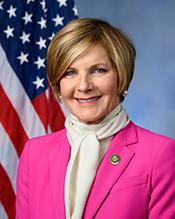
United States · Official source
1,380 records where Rep. Lee, Susie [D-NV-3] is listed as a sponsor, author, or other actor. Search with topics and years
United States · United States Congress · 7 November 2025
United States · United States Congress · 4 November 2025
This resolution expresses the sense of the House of Representatives that the Trump Administration is legally obligated to fund the Supplemental Nutrition Assistance Program (SNAP) through the use of the contingency fund, the Administration has the legal authority and the funds to finance SNAP through November 2025, exercising this power is extremely important for the health and wellness of families experiencing hunger, and the Administration should immediately exercise this authority.
United States · United States Congress · 31 October 2025
Fight Illicit Pill Presses Act This bill broadens the scope of pill machines that are subject to regulation under the Controlled Substances Act (CSA). The bill also requires regulated machines to have serial numbers and imposes criminal penalties for conduct involving the removal of serial numbers or the transportation of regulated machines knowing the serial numbers have been removed. Currently, the CSA requires persons who manufacture, distribute, import, export, or purchase certain regulated machines to keep records of and report on transactions involving the machines. Currently, the term regulated machines includes tableting machines and encapsulating machines. This bill requires persons who sell or deliver regulated machines to comply with the CSA's recordkeeping and reporting requirements, in addition to persons who manufacture, distribute, import, export, or purchase them. The bill also expands regulated machines , for which transactions must be recorded and reported, to include critical parts of tableting and encapsulating machines such as dies used to mold pills and punches used to imprint markings and logos onto pills. The bill requires serial numbers to be permanently affixed to encapsulating machines, tableting machines, and critical parts of tableting and encapsulating machines. Finally, the bill prohibits, subject to criminal penalties, the (1) removal, alteration, or obliteration of any serial number affixed to a tableting machine, encapsulating machine, or a critical part; or (2) transportation, shipment, receipt, possession, distribution, delivery, sale, import, or export of any tableting machine, encapsulating machine, or critical part knowing the serial number has been removed, altered, or obliterated.
United States · United States Congress · 17 October 2025
United States · United States Congress · 14 October 2025
United States · United States Congress · 14 October 2025
United States · United States Congress · 10 October 2025
This resolution requires the House of Representatives to convene and hold recorded quorum calls during a government shutdown. It also limits recesses and adjournments during a government shutdown. Under the resolution, a government shutdown occurs when there is a lapse in appropriations for any federal agency or department as a result of a failure to enact a regular appropriations bill or a continuing resolution. The resolution requires the House to convene on each day on which a government shutdown is in effect unless a recess or adjournment is permitted. Under the resolution, such a recess or adjournment is only permitted if the House has met for each of the first five consecutive calendar days on which the government shutdown is in effect, the proposed period of adjournment or recess does not last for more than two consecutive calendar days, and the House has met for at least five consecutive calendar days since the expiration of the most recent period of adjournment or recess. The resolution also requires the House to hold at least one recorded quorum call on each day that the House is in session during a government shutdown. Members of the House who fail to record their presence during a quorum call on two or more consecutive days must be fined $500 for a first offense and $2,500 for any subsequent offense unless the failure is due to an illness. A Member may not use official or campaign funds to pay the fine.
United States · United States Congress · 8 October 2025
United States · United States Congress · 30 September 2025
Geothermal Ombudsman for National Deployment and Optimal Reviews Act This bill establishes a geothermal ombudsman and task force to oversee geothermal project permitting and authorizations on federal land. The Department of the Interior must appoint a geothermal ombudsman from within the Bureau of Land Management (BLM). The ombudsman must act as a liaison among different parts of BLM, provide dispute resolution services between BLM and geothermal project applicants, and facilitate permit processing in different BLM field offices regarding geothermal projects on federal land. The ombudsman must also lead the Geothermal Permitting Task Force established by this bill. The task force must support the ombudsman’s duties. Through the task force, the ombudsman may reassign employees from other Interior bureaus or offices to assist in the completion of geothermal authorizations. The ombudsman may pay a retention allowance to reassigned employees.
United States · United States Congress · 30 September 2025
United States · United States Congress · 26 September 2025
United States · United States Congress · 26 September 2025
This bill prohibits the removal of federal employees from the civil service during a government shutdown due to a lapse in discretionary appropriations. If an employee is removed from the civil service in violation of this bill, the employee may elect to be reinstated with back pay on the date on which the lapse in appropriations ends.
United States · United States Congress · 19 September 2025
United States · United States Congress · 19 September 2025
United States · United States Congress · 18 September 2025
United States · United States Congress · 18 September 2025
Dismantle Foreign Scam Syndicates Act This bill requires the President to (1) impose applicable sanctions on foreign persons (individuals or entities) responsible for online financial scams against U.S. nationals, and (2) establish an interagency task force to shut down the criminal syndicates perpetuating such scams. Under the bill, the President must determine whether 43 specified foreign persons, and any other foreign persons the President determines are responsible for or complicit in online financial scams against U.S. nationals, are subject to sanctions under specified laws and Executive Order 13581 . Upon such determination, the President must impose applicable sanctions (for example, blocking the sanctioned person's property transactions within the United States). The President must also establish an interagency task force to shut down transnational criminal syndicates that use large scam centers and forced labor of trafficked persons to perpetuate mass online scams against Americans. The task force must (1) submit a comprehensive strategy to Congress to combat these scam centers and dismantle the criminal elements involved with them, and (2) coordinate and oversee implementation of the strategy. Within 360 days of submitting the strategy to Congress and annually thereafter for five years the task force must submit to Congress a report addressing various topics related to such scam centers including a list of all foreign persons sanctioned by the United States for their scam center involvement. The Department of State is authorized to provide trauma-informed care, shelter, reintegration, and support services for victims of trafficking in persons within online scam centers.
United States · United States Congress · 17 September 2025
This joint resolution proposes a constitutional amendment authorizing Congress and the states to (1) regulate and impose reasonable viewpoint-neutral limitations on the raising and spending of money by candidates and others to influence elections; and (2) regulate and enact public campaign financing systems, including those designed to restrict the influence of private wealth by offsetting the raising and spending of money by candidates and others with increased public funding. The amendment grants Congress and the states the power to implement and enforce this amendment by legislation. They are allowed to distinguish between natural persons and corporations or other artificial entities created by law, including by prohibiting such entities from spending money to influence elections.
United States · United States Congress · 16 September 2025
United States · United States Congress · 16 September 2025
Pay Our Troops Act of 2026 This bill provides continuing appropriations for military pay for any period during which interim or full-year appropriations for FY2026 are not in effect (i.e., a government shutdown). Specifically, the bill provides FY2026 continuing appropriations for the pay and allowances of (1) members of the Armed Forces, including reserve components, who perform active service during the period; and (2) civilian personnel and contractors of the Department of Defense (and the Department of Homeland Security in the case of the Coast Guard) who are providing support to such members of the Armed Forces. If a government shutdown occurs, the bill provides the continuing appropriations until the earlier of (1) the enactment into law of specified appropriations legislation, or (2) January 1, 2027.
United States · United States Congress · 16 September 2025
United States · United States Congress · 15 September 2025
NSF AI Education Act of 2025 This bill establishes, or authorizes the National Science Foundation (NSF) to establish, various scholarship, fellowship, and grant programs to promote education and professional development related to artificial intelligence (AI). The bill authorizes NSF to award scholarships and fellowships to college students focusing their studies on AI. NSF may also support AI-related professional development fellowships for (1) students and faculty, (2) K-12 teachers and school professionals, and (3) industry professionals seeking short-term appointments to teach AI. NSF must also establish up to eight centers of AI excellence at community colleges or area career and technical education schools. Designated centers must develop best practices for AI research and education, integrating AI into the classroom, and facilitating partnerships with the private sector, among other topics. This program must be administered in coordination with the Department of Commerce Regional Technology and Innovation Hubs program. NSF may make merit-based grants to eligible entities, including institutions of higher education and nonprofit organizations, for research on AI teaching models, integration of AI in the classroom, and AI’s impact on educational outcomes for students through grade 12. Awards must be used to (1) prepare K-12 teachers to integrate AI into their classrooms; and (2) research, test, and implement AI-related instructional materials, teaching models, and professional development for teachers. Finally, NSF may establish a pilot program through which regional cohorts will provide AI-related peer support, mentoring, and research experiences to K-12 teachers and school leaders.
United States · United States Congress · 11 September 2025
United States · United States Congress · 10 September 2025
Reauthorizing Support and Treatment for Officers in Crisis Act of 2025 This bill reauthorizes through FY2029 grants for state and local law enforcement agencies and other organizations to provide family support services and mental health services to law enforcement personnel.
United States · United States Congress · 10 September 2025
United States · United States Congress · 10 September 2025
Pay Our Border Patrol and Customs Agents Act This bill provides FY2026 appropriations for the salaries and expenses of certain U.S. Customs and Border Protection (CBP) employees who are required to work during a lapse in appropriations (i.e., government shutdown) in FY2026. Specifically, the bill provides appropriations to CBP for the salaries and expenses of agents of the U.S. Border Patrol and officers of the Office of Field Operations who are excepted from furlough (i.e., required to work) during a lapse in discretionary appropriations in FY2026.
United States · United States Congress · 10 September 2025
Heroes Earned Affordable Lifts Act or the HEAL Act This bill modifies the administration of the Department of Veteran Affairs (VA) beneficiary travel benefit available to individuals traveling for vocational rehabilitation, required counseling, or for examination, treatment, or care. The bill increases the mileage reimbursement rate for beneficiary travel to or from VA facilities in connection with vocational rehabilitation, required counseling, or for the purpose of examination, treatment or care. Specifically, the bill raises the rate from 41.5 cents per mile to the rate for a privately owned automobile when no government vehicle is available (currently 70 cents per mile). The bill prohibits the VA from requiring a deductible for beneficiary travel for examination, treatment, or care. The bill also provides that veterans service organizations and veterans service agencies that provide transportation for examinations, treatment, or care to veterans may be allowed expenses of travel upon the same basis as such veteran beneficiaries.
United States · United States Congress · 9 September 2025
United States · United States Congress · 4 September 2025
Bipartisan Premium Tax Credit Extension Act This bill extends for one year, through 2026, temporary changes enacted by the American Rescue Plan Act of 2021 (ARPA) and the Inflation Reduction Act of 2022 (IRA) that generally expand eligibility for and increase the amount of the premium tax credit. Currently, eligible taxpayers may be able to claim the premium tax credit, which applies toward the cost of obtaining health insurance through health insurance exchanges. To be eligible for the premium tax credit, a taxpayer’s household income must meet or exceed 100% of the federal poverty level (FPL) and, after 2025, may not exceed 400% of the FPL (maximum income limit). For 2021-2025, the ARPA and IRA eliminated the maximum income limit, which generally expands eligibility for the premium tax credit. Further, under current law, the amount of the premium tax credit is (1) generally the plan premium (conditions apply), minus (2) the taxpayer’s household income multiplied by the applicable percentage. The applicable percentage is a specific percentage that varies depending on which of six income ranges (adjusted for inflation after 2025) the taxpayer’s household income falls within. For 2021-2025, the ARPA and IRA lowered the applicable percentages and eliminated the adjustment of the applicable percentages for inflation, which generally increases the amount of the premium tax credit. The bill extends for one year, through 2026, the elimination of the 400% maximum income limit, the lower applicable percentages, and the elimination of the inflation adjustment for the applicable percentages.
United States · United States Congress · 4 September 2025
United States · United States Congress · 2 September 2025
United States · United States Congress · 26 August 2025
United States · United States Congress · 22 August 2025
United States · United States Congress · 5 August 2025
WWII Nurses Congressional Gold Medal Act This bill provides for the award of a Congressional Gold Medal to World War II Army and Navy Nurse Corps members in recognition of their critical military service and devotion to duty.
United States · United States Congress · 23 July 2025
United States · United States Congress · 22 July 2025
United States · United States Congress · 22 July 2025
United States · United States Congress · 22 July 2025
United States · United States Congress · 21 July 2025
United States · United States Congress · 15 July 2025
Dignity for Immigrants while Guarding our Nation to Ignite and Deliver the American Dream Act of 2025 or as the DIGNIDAD (Dignity) Act of 2025 This bill addresses various immigration-related issues, including by requiring higher pay for U.S. Border Patrol agents, deferring the removal of eligible individuals without lawful immigration status, and implementing a mandatory electronic employment eligibility verification system patterned off the E-Verify system. The bill establishes several programs for individuals present in the United States without lawful status, including a path to lawful permanent resident status for qualified individuals, including those with deferred action for childhood arrival (DACA) status. In addition, the bill establishes the Dignity Program, which defers the removal of eligible individuals without lawful immigration status on a seven-year, renewable basis, provided individuals meet employment or education requirements, pay restitution, and satisfy other conditions. The bill also makes various changes to penalties and processes applicable to individuals entering the United States, for example by increasing the maximum criminal penalty for individuals previously removed or denied admission to the United States who attempt to reenter, authorizing the use of DNA testing to verify family relationships of immigrants, and establishing campuses at the border to process asylees. The Department of Homeland Security (DHS) must create, and U.S. employers must use, a nationwide electronic employment eligibility verification system. Furthermore, DHS may grant relatives of U.S. citizens relief from removal. The bill also increases the per country percentage ceiling for family-sponsored and employment-based visas.
United States · United States Congress · 15 July 2025
United States · United States Congress · 14 July 2025
United States · United States Congress · 10 July 2025
This resolution expresses support for the designation of Journeyman Lineworkers Recognition Day. (A journeyman lineworker is a person who builds and maintains electrical power systems.)
United States · United States Congress · 7 July 2025
United States · United States Congress · 26 June 2025
United States · United States Congress · 26 June 2025
United States · United States Congress · 24 June 2025
Women's Health Protection Act of 2025 This bill prohibits governmental restrictions on the provision of, and access to, abortion services. Before fetal viability, governments may not restrict providers from using particular abortion procedures or drugs, offering abortion services via telemedicine, or immediately providing abortion services if delaying risks the patient's health. Furthermore, governments may not require providers to perform unnecessary medical procedures, provide medically inaccurate information, or comply with credentialing or other conditions that do not apply to providers who offer medically comparable services to abortions. Additionally, governments may not require patients to make medically unnecessary in-person visits before receiving abortion services or disclose their reasons for obtaining services. After fetal viability, governments may not restrict providers from performing abortions when necessary to protect a patient's life and health. The same provisions that apply to abortions before viability also apply to necessary abortions after viability. Additionally, states may authorize post-viability abortions in circumstances beyond those that the bill considers necessary. Further, the bill recognizes an individual's right to interstate travel, including for abortion services. The bill also prohibits governments from implementing measures that are similar to those restricted by the bill or that otherwise target and impede access to abortion services, unless the measure significantly advances the safety of abortion services or health of patients and cannot be achieved through less restrictive means. The Department of Justice, individuals, or providers may sue states or government officials to enforce this bill, regardless of certain immunity that would otherwise apply.
United States · United States Congress · 17 June 2025
United States · United States Congress · 12 June 2025
United States · United States Congress · 12 June 2025
United States · United States Congress · 12 June 2025
This bill grants a federal charter to the Veterans Association of Real Estate Professionals, which is a nonprofit organization that provides housing counseling to veterans and active members of the Armed Forces.