Bill· HRH.R. 4876 (119th)open
Reproductive Freedom for Veterans Act
United States · United States Congress · 5 August 2025
The world's political record
Person
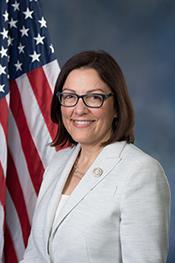
United States · Official source
3,502 records where Rep. DelBene, Suzan K. [D-WA-1] is listed as a sponsor, author, or other actor. Search with topics and years
United States · United States Congress · 5 August 2025
United States · United States Congress · 5 August 2025
Time Off to Vote Act This bill requires an employer, upon the request of an employee, to provide the employee with a minimum of two consecutive hours of paid leave while polls or sites that facilitate voting-related activity are open on the day of a federal election. This allotted time may be used to vote, return a mail-in ballot, or perform other voting-related activities. The employer may determine the two-hour period, excluding any lunch break or other break. Taking such leave shall not result in the employee losing accrued employment benefits. The bill makes it unlawful for an employer to interfere with the right to take such leave or for an employer to discriminate against an employee for taking such leave. Further, the bill makes it unlawful for any employer to retaliate against an employee for (1) opposing any practice made unlawful by this bill; (2) filing a charge, or instituting or causing to be instituted any proceeding, under or related to this bill; or (3) testifying or preparing to testify in an inquiry or proceeding relating to such leave. The bill specifies penalties for employers who violate these provisions.
United States · United States Congress · 5 August 2025
United States · United States Congress · 5 August 2025
Unhoused Voter Opportunity Through Elections Act or the Unhoused VOTE Act This bill expands voter registration and voting access for unhoused individuals. The bill specifies that no state or political subdivision may deny or abridge the right of any U.S. citizen to vote because the citizen resides at or in a nontraditional abode. Additionally, the bill requires jurisdictions that allow for ballot drop boxes to ensure that these drop boxes are available for in-person use and are accessible and clearly labeled. If a state requires individuals to show proof of residence in order to vote in a federal election, then the state must accept the individual’s written attestation of residence. A state may not prohibit an individual who is residing in a homeless shelter from using the shelter as the individual’s residence for purposes of voting in a federal election. The bill requires chief state election officials to conduct outreach to unhoused individuals. The bill directs the Election Assistance Commission to (1) develop best practices for election officials regarding voter registration and voting access for unhoused individuals, and (2) make grants to eligible states and local governments for programs and activities to support access to voting for unhoused individuals. The bill also revises the National Voter Registration Act of 1993, including by (1) treating emergency shelters as voter registration agencies, and (2) allowing an unhoused individual to use an unsheltered street location as the individual's place of residence for purposes of a voter registration application.
United States · United States Congress · 5 August 2025
People Over Long Lines Act or the POLL Act This bill sets forth provisions related to voting and the administration of federal elections. Specifically, the bill requires states to ensure that voters wait no more than 30 minutes at any polling place to cast their vote in a federal election, establishes a private right of action for voters who experience longer waiting times, and directs the Election Assistance Commission to make payments to eligible states to prevent unreasonable waiting times. Next, the bill requires each state to provide for the minimum required number of voting systems, poll workers, and other election resources for each polling location on the day of any federal election and each day of early voting. The Department of Justice's Civil Rights Division must issue uniform standards regarding the minimum number and distribution of such systems, workers, and other resources. The bill also prohibits a chief state election administration official from taking an active part in political management or in a political campaign with respect to any federal election over which the official has supervisory authority, with certain exceptions.
United States · United States Congress · 5 August 2025
Sustaining Our Democracy Act This bill establishes and provides funds through FY2035 for the State Election Assistance and Innovation Trust Fund for purposes of promoting election activities. Specifically, the bill establishes the Democracy Advancement and Innovation Program, through which the Office of Democracy Advancement and Innovation (also established by this bill) shall make allocations to states for carrying out democracy promotion activities. These activities include improving the administration of federal elections, recruiting and training nonpartisan election officials and poll workers, and increasing voting access. The bill requires each state, in order to receive allocated funds, to (1) submit a plan for approval that describes how the state will distribute resources and carry out democracy promotion activities, and (2) establish uniform and nondiscriminatory state-based administrative complaint procedures. The bill prohibits states from using funds for certain activities, including any activity that diminishes the ability of any eligible voter to participate in the electoral process.
United States · United States Congress · 5 August 2025
United States · United States Congress · 1 August 2025
Protecting Health Care and Lowering Costs Act 2025 This bill makes permanent temporary provisions that generally expand eligibility for and increase the amount of the premium tax credit. This bill also repeals multiple Medicaid, Medicare, and health-related tax provisions enacted by the One Big Beautiful Bill Act (OBBBA). Currently, eligible taxpayers may claim the premium tax credit, which applies toward the cost of obtaining health insurance through health insurance exchanges. To qualify, a taxpayer’s household income must meet or exceed 100% of the federal poverty level (FPL) and, after 2025, may not exceed 400% of the FPL (maximum income limit). For 2021-2025, the maximum income limit is eliminated, which generally expands eligibility for the premium tax credit. Further, under current law, the amount of the premium tax credit is partially based on the taxpayer’s household income multiplied by the applicable percentage. The applicable percentage varies depending on which of six income ranges (adjusted for inflation after 2025) the taxpayer’s household income falls within. For 2021-2025, the applicable percentages are lowered and the adjustment of the applicable percentages for inflation is eliminated, which generally increases the amount of the premium tax credit. The bill permanently eliminates the 400% maximum income limit, lowers the applicable percentages, and eliminates the inflation adjustment for the applicable percentages. Finally, the bill repeals multiple Medicaid, Medicare, and health-related tax provisions enacted by the OBBBA, including certain Medicare and Medicare eligibility and verification requirements, the reduced window for retroactive Medicaid coverage, and premium tax credit verification requirements.
United States · United States Congress · 1 August 2025
United States · United States Congress · 29 July 2025
Enhance Access To SNAP Act of 2025 or the EATS Act of 2025 This bill expands eligibility for the Supplemental Nutrition Assistance Program (SNAP) for certain students. Specifically, the bill removes the restriction on SNAP eligibility for students to allow otherwise eligible students who are attending institutions of higher education (IHEs) at least half time to participate in SNAP. Under current law, students 18-49 years old are restricted from participating in SNAP, with exceptions (e.g., caring for a child under the age of 6 or employed for at least 20 hours a week). The Consolidated Appropriations Act, 2021 temporarily exempted some students from certain SNAP eligibility requirements; these temporary student exemptions expired after the end of the COVID-19 public health emergency on May 11, 2023. Further, the bill provides that students enrolled at least half time in a recognized school, training program, or IHE constitute individual households (not residents of institutions ) and may be eligible for SNAP benefits. (Participation in SNAP is limited to households.)
United States · United States Congress · 29 July 2025
United States · United States Congress · 29 July 2025
United States · United States Congress · 29 July 2025
Protecting Air Ambulance Services for Americans Act of 2025 This bill authorizes payment changes under Medicare for air ambulance services based on certain collected data and requires additional reporting from providers of these services. Current law requires providers of air ambulance services to report certain information regarding general costs and utilization to the Department of Health and Human Services; private health insurers are also required to report information relating to coverage of these services. The bill authorizes the Centers for Medicare & Medicaid Services to revise payment rates under Medicare for air ambulance services based on this data, and it requires providers of air ambulance services to specifically report information relating to costs and utilization under Medicare. The bill also requires the Government Accountability Office to report on the data that is collected under current law requirements and to recommend changes to Medicare payment rates accordingly.
United States · United States Congress · 25 July 2025
United States · United States Congress · 25 July 2025
ACO Assignment Improvement Act of 2025 This bill establishes additional requirements for assigning Medicare fee-for-service beneficiaries to accountable care organizations (ACOs) under the Medicare shared savings program. Under current law, the program enables ACOs to receive payments for savings stemming from care coordination and management. The bill requires the basis for assignment to reflect beneficiaries' utilization of not only primary care services provided by ACO physicians, but also those provided by other ACO practitioners—specifically, physician assistants, nurse practitioners, and clinical nurse specialists.
United States · United States Congress · 23 July 2025
United States · United States Congress · 23 July 2025
United States · United States Congress · 23 July 2025
United States · United States Congress · 23 July 2025
United States · United States Congress · 23 July 2025
United States · United States Congress · 23 July 2025
Resident Physician Shortage Reduction Act of 2025 This bill increases the number of residency positions eligible for graduate medical education payments under Medicare for qualifying hospitals, including hospitals in rural areas and health professional shortage areas. The bill provides for an additional increase of 2,000 positions per fiscal year from FY2026-FY2032; during this period, each hospital may receive up to 75 additional positions in total under the bill and current law. Additionally, one-third of the positions that are made available under the bill must be allocated to hospitals that are already operating above applicable resident limits. The bill also requires the Government Accountability Office to report on strategies to increase the diversity of the health professional workforce, including with respect to representation from rural, low-income, and minority communities.
United States · United States Congress · 23 July 2025
United States · United States Congress · 22 July 2025
United States · United States Congress · 22 July 2025
United States · United States Congress · 22 July 2025
United States · United States Congress · 22 July 2025
United States · United States Congress · 22 July 2025
United States · United States Congress · 17 July 2025
United States · United States Congress · 17 July 2025
United States · United States Congress · 17 July 2025
Accelerating the Development of Advanced Psychology Trainees Act or the ADAPT Act This bill provides for Medicare coverage of services that are furnished by advanced psychology trainees. It also requires the Centers for Medicare & Medicaid Services to issue guidance for states on coverage options for such services under Medicaid and the Children's Health Insurance Program (CHIP).
United States · United States Congress · 17 July 2025
United States · United States Congress · 16 July 2025
Preventive Health Savings Act This bill requires the Congressional Budget Office (CBO), upon receiving a request from Congress, to determine if proposed legislation would reduce spending outside of the 10-year budget window through the use of preventive health care. Under the bill, the term preventive health care generally refers to an action that focuses on the health of the public, individuals, and defined populations in order to protect, promote, and maintain health and wellness and prevent disease, disability, and premature death. If CBO determines that the proposed legislation would result in net reductions in budget outlays from the use of preventive health care, any CBO projection regarding the legislation must include (1) a description and estimate of the reductions in outlays, and (2) a description of the basis for these conclusions. Any estimate provided by CBO pursuant to this bill must be used as a supplementary estimate and may not be used to determine compliance with the Congressional Budget Act of 1974 or any other budgetary enforcement controls.
United States · United States Congress · 16 July 2025
United States · United States Congress · 16 July 2025
United States · United States Congress · 15 July 2025
United States · United States Congress · 14 July 2025
United States · United States Congress · 10 July 2025
United States · United States Congress · 10 July 2025
This resolution expresses support for the designation of Journeyman Lineworkers Recognition Day. (A journeyman lineworker is a person who builds and maintains electrical power systems.)
United States · United States Congress · 30 June 2025
United States · United States Congress · 30 June 2025
United States · United States Congress · 27 June 2025
Prohibition of Medicaid Funding for Conversion Therapy Act This bill prohibits state Medicaid programs from covering conversion therapy. The bill defines conversion therapy as any practice or treatment that seeks to change a person's sexual orientation or gender identity in exchange for monetary compensation.
United States · United States Congress · 27 June 2025
Treat and Reduce Obesity Act of 2025 This bill expands Medicare coverage of intensive behavioral therapy for obesity. Specifically, the bill allows coverage for therapy that is provided by (1) a physician who is not a primary care physician; or (2) other health care providers (e.g., physician assistants and nurse practitioners) and approved counseling programs, if provided upon a referral from, and in coordination with, a physician or primary care practitioner. Currently, such therapy is covered only if provided by a primary care practitioner. The bill also allows coverage under Medicare's prescription drug benefit of drugs used for the treatment of obesity or for weight loss management for individuals who are overweight.
United States · United States Congress · 26 June 2025
United States · United States Congress · 26 June 2025
United States · United States Congress · 26 June 2025
United States · United States Congress · 26 June 2025
United States · United States Congress · 26 June 2025
United States · United States Congress · 26 June 2025
United States · United States Congress · 26 June 2025
United States · United States Congress · 26 June 2025