Bill· HRH.R. 2029 (119th)referred
Stop Comstock Act
United States · United States Congress · 11 March 2025
The world's political record
Person
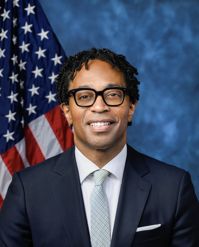
United States · Official source
552 records where Rep. Bell, Wesley [D-MO-1] is listed as a sponsor, author, or other actor. Search with topics and years
United States · United States Congress · 11 March 2025
United States · United States Congress · 11 March 2025
United States · United States Congress · 11 March 2025
United States · United States Congress · 11 March 2025
Medicare Dental, Vision, and Hearing Benefit Act of 2025 This bill provides for Medicare coverage of dental, vision, and hearing care. Coverage includes (1) routine dental cleanings and exams, basic and major dental services, emergency dental care, and dentures; (2) routine eye exams, eyeglasses, and contact lenses; and (3) routine hearing exams, hearing aids, and exams for hearing aids. With respect to such care, the bill establishes special payment rules, limitations, and coinsurance requirements.
United States · United States Congress · 11 March 2025
Caring for Survivors Act of 2025 This bill increases the monthly rate of dependency and indemnity compensation payable to surviving spouses through the Department of Veterans Affairs (VA). Dependency and indemnity compensation is a monthly payment made to eligible survivors (i.e., spouses, parents, or children) of (1) certain veterans who died as a result of a service-connected condition; (2) service members killed while on active military duty or active or inactive duty for training; or (3) veterans who did not die from a service-connected condition, but were totally disabled by a service-connected disability for a certain period of time. The bill also (1) reduces, from 10 years to 5 years, the period of time that certain veterans must have been rated totally disabled due to a service-connected disability in order for a survivor to qualify for benefits; and (2) specifies the amount that is payable to survivors of veterans who were rated totally disabled for a period of less than 10 years before their death.
United States · United States Congress · 11 March 2025
United States · United States Congress · 10 March 2025
25th Anniversary of 9/11 Commemorative Coin Act This bill directs the Department of the Treasury to mint and issue coins to commemorate the 25th anniversary of the September 11, 2001, terrorist attacks on the United States and the establishment of the National September 11 Memorial and Museum at the World Trade Center. The sale of all coins issued under this bill must include a surcharge to be paid to the National September 11 Memorial and Museum at the World Trade Center to support operations and maintenance. However, if the issuance of this commemorative coin exceeds certain annual limits, no surcharge may be included.
United States · United States Congress · 10 March 2025
American Teacher Act This bill establishes grants to increase the minimum salary of public elementary and secondary school teachers. It also authorizes a national campaign regarding the value of the teaching profession. First, the bill directs the Department of Education (ED) to award four-year grants to state educational agencies (SEAs) and, through them, subgrants to local educational agencies to establish a minimum annual salary of $60,000 (to be adjusted annually for inflation) for these teachers. Second, the bill directs ED to award grants to eligible SEAs to provide cost-of-living adjustments to the annual base salary of teachers. Finally, the bill authorizes ED to carry out a national campaign to (1) increase awareness about the importance of teachers and the value of the teaching profession, (2) encourage secondary school and college students to consider teaching as a professional career, and (3) diversify the pool of individuals who enter the teaching profession.
United States · United States Congress · 10 March 2025
Feed Our Families Act of 2025 This bill provides appropriations for carrying out the Food and Nutrition Act of 2008 during the first 90-day period of a lapse in discretionary appropriations for carrying out the act during any fiscal year beginning after FY2024. The Food and Nutrition Act of 2008 is the authorizing statute for several Department of Agriculture nutrition and food assistance programs, including the Supplemental Nutrition Assistance Program (SNAP).
United States · United States Congress · 10 March 2025
Pay Federal Workers and Servicemembers Act This bill makes federal civilian and military personnel who are excepted from furlough during a government shutdown eligible for unemployment compensation benefits. During a government shutdown due to a lapse in appropriations, federal employees who are excepted from furlough are required to report for work and perform duties, but their pay is delayed until appropriations legislation is enacted. Under guidance issued by the Department of Labor, excepted employees who are performing services (but whose payment for that work is delayed) are generally ineligible for unemployment compensation benefits based on states' definitions of unemployment. This bill provides that, for the purpose of determining eligibility for unemployment compensation during a government shutdown, excepted employees are deemed to be (1) totally separated from federal service, and (2) eligible for unemployment compensation benefits with no waiting period for the eligibility to accrue. The bill applies to the following federal personnel who are excepted from furlough and are not being paid due to a government shutdown: (1) any member of the Armed Forces or the Commissioned Corps of the National Oceanic and Atmospheric Administration, and (2) any federal civilian employee who is an excepted employee or an employee performing emergency work.
United States · United States Congress · 6 March 2025
Mamas and Babies in Underserved Communities Act of 2025 This bill establishes Department of Health and Human Services grants for public or nonprofit private health care providers to expand and improve maternal health care services (including prenatal, postnatal, and postpartum care) and reduce disparities in access to such care. Health care providers are eligible to apply if they serve one or more minority, low-income, or medically underserved communities.
United States · United States Congress · 6 March 2025
United States · United States Congress · 5 March 2025
United States · United States Congress · 5 March 2025
Protecting Americans’ Social Security Data Act This bill prohibits political appointees and special government employees from accessing Social Security data systems that contain personally identifiable information about Social Security beneficiaries. Specifically, political appointees and special government employees may not access systems maintained by the Social Security Administration (SSA) that issue or record Social Security account numbers, that are used to determine eligibility for or to pay Social Security benefits, or that otherwise contain personally identifiable information about individuals receiving or applying for benefits. The bill also establishes a civil right of action for an individual whose information was negligently accessed or disclosed in violation of these provisions. The individual may bring suit against the United States if the violator was a U.S. employee or officer, or against the violator if they were not a U.S. employee or officer. Such a claim must be brought within two years of the affected individual’s discovery of the violation. Upon a finding of liability, defendants are liable for specified monetary damages. If an individual is criminally charged or subject to proposed disciplinary or adverse action by a federal or state agency for having accessed or disclosed information in violation of these provisions, SSA must notify the individual whose information was accessed or disclosed of the violation as soon as practicable. Finally, the bill requires the SSA Office of the Inspector General to investigate and report to Congress on any unauthorized access to or disclosure of information in a beneficiary data system.
United States · United States Congress · 5 March 2025
Keeping Our Field Offices Open Act This bill temporarily prohibits the closure or consolidation of, or other limitation of access to, Social Security Administration (SSA) offices and stations, and sets forth procedural requirements for future changes to office and station availability. Specifically, the bill prohibits through at least January 21, 2029, the closure or consolidation of, or other limitation of access to, SSA field offices, hearing offices, and resident stations. On or after that date, SSA must submit a report to Congress justifying its process for selecting stations and offices to be closed, consolidated, or limited. The prohibition is lifted 180 days after the submission of such report. The bill also sets forth requirements that must be met before SSA may close, consolidate, or otherwise limit access to an office or station after the initial moratorium expires. At least 120 days before such a change takes effect, SSA must provide public notice to individuals in affected areas, including information on how lost access to SSA services will be replaced. SSA must also conduct at least two public hearings on each such change. Further, SSA must provide a hearing to any individual who makes a timely showing that a determination to close, consolidate, or limit an office or station is arbitrary, capricious, or deficient in another specified manner. Finally, a closure, consolidation, or limitation may not result in the total number of SSA offices or stations falling below the number of such offices or stations in operation on January 20, 2025.
United States · United States Congress · 5 March 2025
John R. Lewis Voting Rights Advancement Act of 2025 This bill establishes new criteria for determining which states and political subdivisions must obtain preclearance before changes to voting practices may take effect. Preclearance is the process of receiving preapproval from the Department of Justice (DOJ) or the U.S. District Court for the District of Columbia before making legal changes that would affect voting rights. A state and all of its political subdivisions shall be subject to preclearance of voting practice changes for a 10-year period if, during the previous 25 years: 15 or more voting rights violations occurred in the state; 10 or more violations occurred, at least 1 of which was committed by the state itself; or 3 or more violations occurred and the state administers the elections. A political subdivision as a separate unit shall also be subject to preclearance for a 10-year period if three or more voting rights violations occurred there during the previous 25 years. States and political subdivisions that meet certain thresholds regarding minority groups must preclear covered practices before implementation, such as redistricting. States and political subdivisions must notify the public of changes to voting practices. The bill authorizes DOJ to require states or political subdivisions to provide certain documents or answers to questions for enforcing voting rights. The bill outlines factors courts must consider when hearing challenges to voting practices, such as the extent of any history of official voting discrimination in the state or political subdivision.
United States · United States Congress · 5 March 2025
United States · United States Congress · 4 March 2025
United States · United States Congress · 4 March 2025
United States · United States Congress · 4 March 2025
United States · United States Congress · 3 March 2025
Supporting all Healthy Options when Purchasing Produce Act of 2025 or the SHOPP Act of 2025 This bill modifies the Gus Schumacher Nutrition Incentive Program (GusNIP) to include fresh frozen fruits and vegetables. GusNIP is a Department of Agriculture (USDA) program that provides grants for projects that increase low-income consumers' purchases of fruits and vegetables. It is made up of three competitive grant programs, including the GusNIP Nutrition Incentive Program, which provides grants for projects that provide incentives for Supplemental Nutrition Assistance Program (SNAP) participants to purchase fruits and vegetables. The bill directs USDA, in awarding GusNIP Nutrition Incentive Program grants, to give priority to projects that increase year-round availability of nutrition incentives by offering fresh frozen fruits or vegetables in the program. In addition, the bill amends another GusNIP program, the Produce Prescription Program, to include fresh frozen fruits and vegetables, as well as fresh and fresh frozen legumes. Currently, only fresh fruits and vegetables are covered under the program. The GusNIP Produce Prescription Program supports projects that demonstrate and evaluate the impact of fruit and vegetable prescriptions on increasing procurement and consumption of fruits and vegetables, reducing individual and household food insecurity, and reducing healthcare usage and associated costs.
United States · United States Congress · 3 March 2025
United States · United States Congress · 3 March 2025
United States · United States Congress · 3 March 2025
Safe Schools Improvement Act This bill requires states to direct their local educational agencies (LEAs) to establish policies that prevent and prohibit bullying and harassment of elementary and secondary school students. In particular, these policies must prohibit bullying and harassment based on race, color, national origin, disability, religion, or sex. Sex includes sexual orientation, gender identity, and sex characteristics (including intersex traits). Further, LEAs must provide (1) students, parents, and educational professionals with annual notice of the conduct prohibited in their disciplinary policies; (2) students and parents with grievance procedures that target such conduct; and (3) the public with annual data on the incidence and frequency of that conduct at the school and LEA level. The Department of Education must conduct and report on an independent biennial evaluation of programs and policies to combat bullying and harassment in elementary and secondary schools. The National Center for Education Statistics must collect state data to determine the incidence and frequency of the conduct prohibited by LEA disciplinary policies.
United States · United States Congress · 27 February 2025
Judicial Understaffing Delays Getting Emergencies Solved Act of 2025 or the JUDGES Act of 2025 This bill creates 64 U.S. district court judgeships—63 permanent and 1 temporary—and expands the jurisdictional coverage of two district courts. Specifically, the bill creates 63 new permanent judgeships across 14 states over a 10-year period beginning in 2025. The state and total number of judgeships added over the 10-year period are as follows: Arizona (1), California (20), Colorado (2), Delaware (2), Florida (9), Georgia (2), Idaho (1), Indiana (1), Iowa (1), Nebraska (1), New Jersey (3), New York (5), Oklahoma (2), and Texas (13). Additionally, the bill creates one temporary judgeship in the Eastern District of Oklahoma in 2025. Finally, the bill adds locations where court must be held in two district courts—one in California and one in Texas. Specifically, the bill adds College Station to the list of places where court must be held in the Houston Division of the Southern District of Texas. Also, the bill adds El Centro to the list of places where court must be held in the Southern District of California. The bill directs the Government Accountability Office to submit reports to Congress on judicial caseloads and detention space. The bill also directs the Administrative Office of the U.S. Courts to make available on its website the biennial report by the Judicial Conference of the United States on judgeship recommendations.
United States · United States Congress · 27 February 2025
Affordable PLUS Repayment Options for Parents Act of 2025 This bill allows borrowers of Parent PLUS Loans to repay their loans under an income-contingent repayment (ICR) plan or an income-based repayment (IBR) plan. Under current law, borrowers of Parent PLUS Loans are only eligible for the following repayment plans: the standard repayment plan, the graduated repayment plan, and the extended repayment plan. These borrowers are generally prohibited from repaying their loans under ICR or IBR plans. However, borrowers may become eligible for the ICR plan upon consolidation of their loans into a Direct Consolidation Loan. This bill removes these restrictions to allow a borrower of a Parent PLUS Loan to repay the loan under an ICR plan (even without consolidation) or an IBR plan. The bill allows these expanded repayment options to be available to new and existing borrowers of Parent PLUS Loans.
United States · United States Congress · 27 February 2025
Governing Unaccredited Representatives Defrauding VA Benefits Act or the GUARD VA Benefits Act This bill imposes fines on individuals for soliciting, contracting for, charging, or receiving any unauthorized fee or compensation with respect to the preparation, presentation, or prosecution of any claim for Department of Veterans Affairs benefits. The attempted commission of such offenses is also punishable by fine.
United States · United States Congress · 27 February 2025
Keep Americans Safe Act This bill establishes a new criminal offense for the import, sale, manufacture, transfer, or possession of a large capacity ammunition feeding device (LCAFD). The bill does not prohibit certain conduct with respect to an LCAFD, including the following: importation, sale, manufacture, transfer, or possession related to certain law enforcement efforts, or authorized tests or experiments; importation, sale, transfer, or possession related to securing nuclear materials; and possession by a retired law enforcement officer. The bill permits continued possession of, but prohibits sale or transfer of, a grandfathered LCAFD. Newly manufactured LCAFDs must display serial number identification and the date of manufacture. Additionally, the bill allows a state or local government to use Edward Byrne Memorial Justice Assistance Grant Program funds to compensate individuals who surrender an LCAFD under a buy-back program.
United States · United States Congress · 27 February 2025
United States · United States Congress · 27 February 2025
Save America's Forgotten Equines Act of 2025 or the SAFE Act of 2025 This bill permanently prohibits the slaughter of equines (e.g., horses and mules) for human consumption. (Current law prohibits the slaughter of dogs and cats for human consumption. This bill extends the prohibition to equines.) Specifically, this bill prohibits a person from knowingly (1) slaughtering an equine for human consumption; or (2) shipping, transporting, possessing, purchasing, selling, or donating an equine to be slaughtered for human consumption or equine parts for human consumption. The bill subjects a violator to a fine. The bill applies to conduct in or affecting interstate or foreign commerce or within the special maritime and territorial jurisdiction of the United States. However, it does not apply to an activity carried out by an Indian for a religious ceremony. As background, in recent years, the appropriations acts have prohibited the Department of Agriculture (USDA) from using federal funds to inspect horses before they are slaughtered for human consumption. Therefore, there are currently no USDA-inspected horse slaughter facilities in the United States.
United States · United States Congress · 27 February 2025
This joint resolution redesignates the memorial to Robert. E. Lee in Arlington National Cemetery as the Arlington House National Historic Site.
United States · United States Congress · 27 February 2025
This bill directs the Department of Homeland Security to designate Haiti for temporary protected status (TPS) for 18 months beginning August 3, 2025. (Eligible nationals of a TPS-designated country may obtain employment authorization, may not be detained on the basis of their immigration status, and are not subject to removal while they retain TPS.)
United States · United States Congress · 26 February 2025
United States · United States Congress · 26 February 2025
Respect, Advancement, and Increasing Support for Educators Act of 2025 or the RAISE Act of 2025 This bill establishes a refundable federal tax credit for eligible educators and increases and expands the federal tax deduction for certain classroom and professional development expenses. The bill also increases federal funding for programs that support effective instruction. Specifically, the bill allows (1) eligible educators (elementary and secondary public school teachers and early childhood educators) to claim a tax credit of $1,000, and (2) eligible educators employed at a qualifying school to claim an additional tax credit of up to $14,000 ($9,000 for an early childhood educator without a bachelor’s degree) based on the qualifying school’s student poverty ratio. The bill generally defines a qualifying school as a public elementary or secondary school served by a local education agency eligible for federal grants that support the education of disadvantaged children, an elementary school or secondary school funded by the Bureau of Indian Education, or an early childhood education program serving children who are eligible for certain financial or food assistance. Further, the bill increases to $500 ($300 in 2025) and continues to adjust annually the above-the-line tax deduction for certain classroom and professional development expenses of educators. The bill also expands eligibility for the credit to include early childhood educators. (Above-the-line tax deductions are subtracted from gross income to calculate adjusted gross income.) Finally, the bill provides additional funding for education programs, including teacher salary incentive grants and professional development, certificate, and credentialing programs.
United States · United States Congress · 26 February 2025
Creating a Respectful and Open World for Natural Hair Act of 2025 or the CROWN Act of 2025 This bill prohibits discrimination based on a person's hair texture or hairstyle if that style or texture is commonly associated with a particular race or national origin. Specifically, the bill prohibits this type of discrimination against those participating in federally assisted programs, housing programs, public accommodations, and employment. Persons shall not be deprived of equal rights under the law and shall not be subjected to prohibited practices based on their hair texture or style. The bill provides for enforcement procedures under the applicable laws (e.g., the Civil Rights Act of 1964).
United States · United States Congress · 26 February 2025
United States · United States Congress · 26 February 2025
United States · United States Congress · 26 February 2025
American Dream and Promise Act of 2025 This bill provides certain non-U.S. nationals ( aliens under federal law) with a path to receive permanent resident status and contains other immigration-related provisions. The Department of Homeland Security (DHS) or the Department of Justice (DOJ) shall provide conditional permanent resident status for 10 years to a qualifying individual who entered the United States as a minor and (1) is deportable or inadmissible, (2) has deferred enforced departure (DED) status or temporary protected status (TPS), or (3) is the child of certain classes of nonimmigrants. The bill imposes various qualifying requirements, such as the individual being continuously physically present in the United States since January 1, 2021, passing a background check, and being enrolled in or having completed certain educational programs. DHS shall remove the conditions placed on permanent resident status granted under this bill if the individual applies and meets certain requirements, such as completing certain programs at an educational institution, serving in the military, or being employed. Furthermore, DHS or DOJ shall provide lawful permanent resident status to certain individuals who had TPS, were eligible for TPS, or were eligible for DED status on certain dates. Such individuals must meet certain requirements and apply for such status within three years of this bill's enactment. This bill also repeals a restriction that bars a state from providing higher education benefits to undocumented individuals unless those benefits are available to all U.S. nationals without regard to residency in the state.
United States · United States Congress · 25 February 2025
Taxpayer Funds Oversight and Accountability Act This bill requires the Office of Management and Budget (OMB) to take certain actions to improve financial management systems across the federal government and expands the responsibilities of federal agency Chief Financial Officers (CFOs). The bill requires OMB to submit a four-year governmentwide financial management plan to Congress within six months of enactment and thereafter with the budget submitted in the first full fiscal year following the start of a presidential term. Such plans must address certain topics, including strategies for (1) improving financial management systems; (2) strengthening the financial management workforce; and (3) reporting performance and cost information. OMB must annually submit related status reports to Congress and the Government Accountability Office. Each agency CFO is assigned new responsibilities, including preparing the agency plan to implement OMB's governmentwide financial management plan; overseeing and providing leadership in the areas of budget formulation and execution, planning and performance, risk management, internal controls, financial systems, accounting, and other areas designated by OMB; coordinating with designated agency personnel on the strategic planning, performance measurement and reporting, and risk management functions of the agency; managing the formulation and financial execution of the agency budget; linking performance and cost information; and preparing annual reports on progress in implementing the governmentwide financial management plan and transmitting such reports to the agency head, OMB, and Congress. The bill establishes new requirements for audits of agency accounts, such as having auditors evaluate the design of the agency's internal controls over financial reporting.
United States · United States Congress · 25 February 2025
Ethan's Law This bill establishes a framework to regulate the storage of firearms on residential premises at the federal, state, and tribal levels. At the federal level, the bill establishes statutory requirements for firearms on residential premises to be safely stored if a minor is likely to gain access without permission or if a resident is ineligible to possess a firearm. An individual who violates the requirements is subject to criminal penalties. A firearm stored in violation of the requirements is subject to seizure and forfeiture. At the state and tribal levels, the bill requires the Department of Justice to award grants to implement functionally identical requirements for the safe storage of firearms.
United States · United States Congress · 24 February 2025
This resolution supports the designation of Public Schools Week.
United States · United States Congress · 21 February 2025
United States · United States Congress · 18 February 2025
Enhanced Iran Sanctions Act of 2025 This bill imposes sanctions on certain foreign persons (individuals and entities) that are involved in Iran's petroleum sector as well as certain associated persons. The bill also requires or authorizes actions to facilitate the enforcement of sanctions on Iran. Specifically, the bill requires the President to impose visa- and property-blocking sanctions on any foreign person that, after the bill's enactment, knowingly engages in any transaction related to the processing, export, or sale of oil, condensates, gas, liquefied natural gas, or other petrochemical products in whole or in part from Iran. The President must also impose sanctions on certain foreign persons associated with a sanctioned individual or entity. For example, the President must sanction the subsidiaries and corporate officers of a sanctioned business. The bill provides certain exceptions to these sanctions, including specifying that sanctions do not apply to the importation of goods or to conducting or facilitating transactions for humanitarian assistance. The Department of State must establish an interagency working group that shall seek to establish a multilateral contact group to coordinate international efforts to enforce sanctions on Iran. The bill expands the State Department rewards program to authorize a reward payment to any individual who furnishes information leading to the identification of a person (1) subject to sanctions under this bill, or (2) that has attempted or is attempting to evade sanctions under this bill.
United States · United States Congress · 14 February 2025
United States · United States Congress · 14 February 2025
Secure Rural Schools Reauthorization Act of 2025 This bill extends and modifies the Secure Rural Schools and Community Self-Determination Act of 2000, including by extending payments made to states and counties containing federal land through FY2026, providing for payments for FY2024 and FY2025, extending the authority of counties to initiate projects using such funds through FY2028, and extending the authority to initiate projects proposed by resource advisory committees through FY2028.
United States · United States Congress · 13 February 2025
Black History Matters Act This bill directs the National Museum of African American History and Culture to study and report on Black history education in public elementary and secondary schools. Among other elements, the study must (1) identify the states and local educational agencies that require (and those that do not require) Black history education as part of the curriculum taught in public elementary and secondary schools, (2) assess the quality of Black history education provided by schools, and (3) assess the types and quality of instructional material used to teach students about Black history.
United States · United States Congress · 13 February 2025
United States · United States Congress · 13 February 2025
More Homes on the Market Act This bill increases the amount of gain from the sale of a principal residence that an individual may exclude from gross income (for federal tax purposes). Under the bill, an individual may exclude from gross income gain from the sale of a principal residence of up to $500,000 (currently $250,000), and taxpayers who are married and file a joint federal income tax return may exclude up to $1 million (currently $500.000). The bill also requires these amounts to be adjusted annually for inflation.
United States · United States Congress · 13 February 2025
United States · United States Congress · 13 February 2025
Nationwide Consumer and Fuel Retailer Choice Act of 2025 This bill amends the Clean Air Act to address the limitations on Reid Vapor Pressure (a measure of gasoline's volatility) that are placed on gasoline during the summer ozone season. Specifically, the bill applies the waiver for Reid Vapor Pressure requirements that is applicable to gasoline blended with 10% ethanol (E10) to gasoline blended with up to 15% ethanol (E15). This change allows gasoline that is blended with 10% to 15% ethanol to be sold year-round. Currently, states may be excluded from the waiver for Reid Vapor Pressure requirements by submitting documentation supporting that the waiver would increase air pollution. The bill nullifies existing state exclusions, but states may submit documentation after enactment of the bill to be excluded going forward. The bill also modifies the Renewable Fuel Standard Program, which requires transportation fuel sold or introduced into commerce in the United States to contain minimum volumes of renewable fuel. Under the existing program, obligated parties, such as small refineries, must satisfy the volume obligations by either blending renewable fuels into their gasoline or diesel fuel products or by acquiring credits that represent the required renewable fuel volume. The bill directs the Environmental Protection Agency to return compliance credits to small refineries under certain circumstances.