Bill· HRH.R. 4996 (119th)referred
FORWARD Act
United States · United States Congress · 19 August 2025
The world's political record
Person
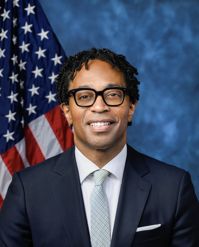
United States · Official source
552 records where Rep. Bell, Wesley [D-MO-1] is listed as a sponsor, author, or other actor. Search with topics and years
United States · United States Congress · 19 August 2025
United States · United States Congress · 15 August 2025
United States · United States Congress · 12 August 2025
Keep Seniors Fed Act This bill amends the Supplemental Nutrition Assistance Program (SNAP) to exempt certain Social Security benefits (e.g., retirement and disability benefits) from household income for the purposes of determining program eligibility.
United States · United States Congress · 12 August 2025
United States · United States Congress · 5 August 2025
Expanding the Voluntary Opportunities for Translations in Elections Act or the Expanding the VOTE Act This bill expands access to voting materials for individuals with limited proficiency in the English language. Section 203 of the Voting Rights Act of 1965 (VRA) requires covered states and political subdivisions to provide voting materials and other language assistance to persons who are American Indian, Asian American, Alaskan Natives, or of Spanish heritage and whose ability to speak or understand English limits electoral participation. A state or political subdivision that is subject to Section 203 is prohibited from providing English-only voting materials in an election. Among other requirements, this bill (1) requires the Department of Justice to issue a notice of prohibition, including the trigger threshold at which the prohibition applies, to certain states and political subdivisions; and (2) requires covered states and political subdivisions to provide written translations of all voting materials, with the consent of any applicable tribal government, to election workers. Additionally, the bill requires the Election Assistance Commission to make incentive grants for states and political subdivisions to provide translated voting materials. The bill also directs the Government Accountability Office to study and report on the impact of (1) reducing the threshold requirement under Section 203 of the VRA, and (2) expanding the definition of language minorities to include native speakers of additional languages.
United States · United States Congress · 5 August 2025
United States · United States Congress · 5 August 2025
Youth Voting Rights Act This bill expands voting access for youth. Specifically, the bill establishes a private right of action to enforce the Twenty-Sixth Amendment, which prohibits denying or abridging the right to vote based on age. Further, the bill authorizes the Department of Justice to enforce the Twenty-Sixth Amendment against age-based restrictions for voting by mail. Additionally, the bill directs each state to designate as voter registration agencies all offices within public institutions of higher education (IHEs) that provide assistance to students, implement a preregistration process to allow minors who are 16 years or older to register to vote in federal elections that take place when or after the preregistered individual turns age 18, and ensure the availability of polling places on campuses of IHEs (with the availability of waivers). The bill prohibits durational residency requirements for voting in all federal elections. Currently, this prohibition applies only to voting for the offices of President and Vice President. States and local jurisdictions with voter identification requirements must treat IHE-issued student identification cards as voter identification. The Election Assistance Commission (EAC) must make grants to states to increase the involvement of individuals under age 18 in public election activities. The Government Accountability Office must report to Congress on trends related to voter registration, absentee voting, and provisional voting. The EAC must also collect and make publicly available certain data from states.
United States · United States Congress · 5 August 2025
Election Mail Act This bill addresses the delivery and processing of election mail for federal elections, including by establishing certain standards for mail-in ballots. Specifically, the bill requires the U.S. Postal Service (USPS) to ensure (to the maximum extent practicable) same-day processing of mail-in ballots, postmark each ballot, carry election mail (e.g., voter registration applications and mail-in ballots) as first-class mail that is free of postage, appoint an election mail coordinator at each area office and district office, and consult annually with Indian tribes regarding barriers to voting for eligible voters living on Indian lands. The bill prohibits the USPS, within 120 days of a federal election, from making any operational change that would restrict the prompt and reliable delivery of election mail. Each state and jurisdiction must provide with each mail-in ballot a return envelope with an intelligent mail barcode. This requirement does not apply to a state or jurisdiction that uses an alternative system that enables voters to track the ballot through the mail. The bill requires election officials to count mail-in ballots that are postmarked by election day and arrive within seven days after the election.
United States · United States Congress · 5 August 2025
United States · United States Congress · 5 August 2025
United States · United States Congress · 5 August 2025
United States · United States Congress · 5 August 2025
United States · United States Congress · 5 August 2025
Unhoused Voter Opportunity Through Elections Act or the Unhoused VOTE Act This bill expands voter registration and voting access for unhoused individuals. The bill specifies that no state or political subdivision may deny or abridge the right of any U.S. citizen to vote because the citizen resides at or in a nontraditional abode. Additionally, the bill requires jurisdictions that allow for ballot drop boxes to ensure that these drop boxes are available for in-person use and are accessible and clearly labeled. If a state requires individuals to show proof of residence in order to vote in a federal election, then the state must accept the individual’s written attestation of residence. A state may not prohibit an individual who is residing in a homeless shelter from using the shelter as the individual’s residence for purposes of voting in a federal election. The bill requires chief state election officials to conduct outreach to unhoused individuals. The bill directs the Election Assistance Commission to (1) develop best practices for election officials regarding voter registration and voting access for unhoused individuals, and (2) make grants to eligible states and local governments for programs and activities to support access to voting for unhoused individuals. The bill also revises the National Voter Registration Act of 1993, including by (1) treating emergency shelters as voter registration agencies, and (2) allowing an unhoused individual to use an unsheltered street location as the individual's place of residence for purposes of a voter registration application.
United States · United States Congress · 5 August 2025
People Over Long Lines Act or the POLL Act This bill sets forth provisions related to voting and the administration of federal elections. Specifically, the bill requires states to ensure that voters wait no more than 30 minutes at any polling place to cast their vote in a federal election, establishes a private right of action for voters who experience longer waiting times, and directs the Election Assistance Commission to make payments to eligible states to prevent unreasonable waiting times. Next, the bill requires each state to provide for the minimum required number of voting systems, poll workers, and other election resources for each polling location on the day of any federal election and each day of early voting. The Department of Justice's Civil Rights Division must issue uniform standards regarding the minimum number and distribution of such systems, workers, and other resources. The bill also prohibits a chief state election administration official from taking an active part in political management or in a political campaign with respect to any federal election over which the official has supervisory authority, with certain exceptions.
United States · United States Congress · 5 August 2025
Sustaining Our Democracy Act This bill establishes and provides funds through FY2035 for the State Election Assistance and Innovation Trust Fund for purposes of promoting election activities. Specifically, the bill establishes the Democracy Advancement and Innovation Program, through which the Office of Democracy Advancement and Innovation (also established by this bill) shall make allocations to states for carrying out democracy promotion activities. These activities include improving the administration of federal elections, recruiting and training nonpartisan election officials and poll workers, and increasing voting access. The bill requires each state, in order to receive allocated funds, to (1) submit a plan for approval that describes how the state will distribute resources and carry out democracy promotion activities, and (2) establish uniform and nondiscriminatory state-based administrative complaint procedures. The bill prohibits states from using funds for certain activities, including any activity that diminishes the ability of any eligible voter to participate in the electoral process.
United States · United States Congress · 1 August 2025
Protecting Health Care and Lowering Costs Act 2025 This bill makes permanent temporary provisions that generally expand eligibility for and increase the amount of the premium tax credit. This bill also repeals multiple Medicaid, Medicare, and health-related tax provisions enacted by the One Big Beautiful Bill Act (OBBBA). Currently, eligible taxpayers may claim the premium tax credit, which applies toward the cost of obtaining health insurance through health insurance exchanges. To qualify, a taxpayer’s household income must meet or exceed 100% of the federal poverty level (FPL) and, after 2025, may not exceed 400% of the FPL (maximum income limit). For 2021-2025, the maximum income limit is eliminated, which generally expands eligibility for the premium tax credit. Further, under current law, the amount of the premium tax credit is partially based on the taxpayer’s household income multiplied by the applicable percentage. The applicable percentage varies depending on which of six income ranges (adjusted for inflation after 2025) the taxpayer’s household income falls within. For 2021-2025, the applicable percentages are lowered and the adjustment of the applicable percentages for inflation is eliminated, which generally increases the amount of the premium tax credit. The bill permanently eliminates the 400% maximum income limit, lowers the applicable percentages, and eliminates the inflation adjustment for the applicable percentages. Finally, the bill repeals multiple Medicaid, Medicare, and health-related tax provisions enacted by the OBBBA, including certain Medicare and Medicare eligibility and verification requirements, the reduced window for retroactive Medicaid coverage, and premium tax credit verification requirements.
United States · United States Congress · 29 July 2025
Enhance Access To SNAP Act of 2025 or the EATS Act of 2025 This bill expands eligibility for the Supplemental Nutrition Assistance Program (SNAP) for certain students. Specifically, the bill removes the restriction on SNAP eligibility for students to allow otherwise eligible students who are attending institutions of higher education (IHEs) at least half time to participate in SNAP. Under current law, students 18-49 years old are restricted from participating in SNAP, with exceptions (e.g., caring for a child under the age of 6 or employed for at least 20 hours a week). The Consolidated Appropriations Act, 2021 temporarily exempted some students from certain SNAP eligibility requirements; these temporary student exemptions expired after the end of the COVID-19 public health emergency on May 11, 2023. Further, the bill provides that students enrolled at least half time in a recognized school, training program, or IHE constitute individual households (not residents of institutions ) and may be eligible for SNAP benefits. (Participation in SNAP is limited to households.)
United States · United States Congress · 29 July 2025
United States · United States Congress · 29 July 2025
United States · United States Congress · 29 July 2025
United States · United States Congress · 25 July 2025
United States · United States Congress · 23 July 2025
United States · United States Congress · 23 July 2025
Fixing Emergency Management for Americans Act of 2025 or the FEMA Act of 2025 This bill reestablishes the Federal Emergency Management Agency (FEMA) (currently within the Department of Homeland Security) as an independent, cabinet-level agency. It also makes broad changes to FEMA’s disaster and hazard mitigation assistance programs. The bill generally transfers FEMA’s current functions and authorities to the independent FEMA, except for certain security-related programs. The bill makes various changes to the Public Assistance program, including by establishing new grants for expedited funding to repair or replace disaster-damaged facilities, establishing block grants that recipients may choose instead of Public Assistance for smaller disasters, expediting and expanding uses of funding for emergency response and debris removal, and allowing use of excess administrative funds for increasing recipients’ disaster management capacity. The bill makes various changes to the Individual Assistance program, including by expanding eligibility for housing assistance, expanding mitigation and direct (non-financial) assistance for residences, reducing certain restrictions on funds duplicating program benefits, and establishing a unified disaster application system. The bill makes various changes to FEMA’s mitigation programs, including by establishing mitigation plans with preapproved projects, authorizing an entire Hazard Mitigation Grant Program grant to be provided before costs are incurred, changing pre-disaster mitigation assistance to noncompetitive formula grants, and allowing recipients to combine mitigation project funds from multiple federal programs. Additionally, federal entities must publish various information relating to disaster assistance and conduct various studies on related topics (e.g., preliminary damage assessments, fast-moving disasters, and government emergency alerting systems).
United States · United States Congress · 23 July 2025
United States · United States Congress · 23 July 2025
United States · United States Congress · 23 July 2025
United States · United States Congress · 22 July 2025
United States · United States Congress · 22 July 2025
United States · United States Congress · 22 July 2025
United States · United States Congress · 21 July 2025
United States · United States Congress · 17 July 2025
United States · United States Congress · 17 July 2025
United States · United States Congress · 17 July 2025
United States · United States Congress · 17 July 2025
United States · United States Congress · 16 July 2025
United States · United States Congress · 16 July 2025
United States · United States Congress · 15 July 2025
This resolution provides a special rule for consideration of H.R. 185 and amends that bill to direct the Department of Justice (DOJ) to make publicly available certain records related to Jeffrey Epstein or Ghislaine Maxwell. Under H.R. 185, as amended by the resolution, DOJ must publicly disclose all unclassified records, documents, communications, and investigative materials in its possession that relate to Epstein or Maxwell. The records include unclassified records referring or relating to Epstein's detention and death; flight logs of aircraft owned or used by Epstein; individuals named in connection with Epstein’s criminal activities, civil settlements, or immunity or plea agreements; immunity deals, sealed settlements, or plea bargains of Epstein or his associates; entities with ties to Epstein’s trafficking or financial networks; and internal Department of Justice communications concerning decisions to investigate or charge Epstein or his associates. However, under the amended bill, DOJ may withhold or redact portions of records with written justification that such portions contain (1) victims' personally identifiable information; (2) child sexual abuse materials; (3) images of death, physical abuse, or injury; (4) information which would jeopardize an active federal investigation or prosecution; or (5) classified information. DOJ may not withhold or redact records on the basis of embarrassment, reputational harm, or political sensitivity. Further, within 15 days of completing the required disclosures, DOJ must provide Congress with a report listing all categories of records released and withheld, all redactions made and their legal basis, and all government officials and politically exposed persons named or referenced in the released materials.
United States · United States Congress · 15 July 2025
Epstein Files Transparency Act This bill requires the Department of Justice (DOJ) to publish (in a searchable and downloadable format) all unclassified records, documents, communications, and investigative materials in DOJ's possession that relate to the investigation and prosecution of Jeffrey Epstein. This includes (1) materials that relate to Ghislaine Maxwell, (2) flight logs and travel records, and (3) individuals named or referenced (including government officials) in connection with the investigation and prosecution of Jeffrey Epstein. DOJ is permitted to withhold certain information such as the personal information of victims and materials that would jeopardize an active federal investigation. Additionally, not later than 15 days after the required publication, DOJ must report to Congress (1) all categories of information released and withheld, (2) a summary of any redactions made, and (3) a list of all government officials and politically exposed individuals named or referenced in the published materials.
United States · United States Congress · 14 July 2025
United States · United States Congress · 10 July 2025
United States · United States Congress · 10 July 2025
United States · United States Congress · 10 July 2025
This resolution expresses support for the designation of Journeyman Lineworkers Recognition Day. (A journeyman lineworker is a person who builds and maintains electrical power systems.)
United States · United States Congress · 30 June 2025
United States · United States Congress · 27 June 2025
Prohibition of Medicaid Funding for Conversion Therapy Act This bill prohibits state Medicaid programs from covering conversion therapy. The bill defines conversion therapy as any practice or treatment that seeks to change a person's sexual orientation or gender identity in exchange for monetary compensation.
United States · United States Congress · 27 June 2025
United States · United States Congress · 26 June 2025
United States · United States Congress · 26 June 2025
United States · United States Congress · 26 June 2025
United States · United States Congress · 26 June 2025
United States · United States Congress · 26 June 2025