Bill· HRH.R. 3304 (119th)referred
Providing Child Care for Police Officers Act of 2025
United States · United States Congress · 8 May 2025
The world's political record
Person
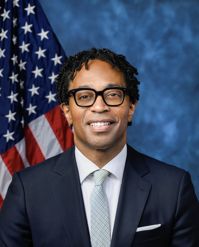
United States · Official source
552 records where Rep. Bell, Wesley [D-MO-1] is listed as a sponsor, author, or other actor. Search with topics and years
United States · United States Congress · 8 May 2025
United States · United States Congress · 7 May 2025
United States · United States Congress · 7 May 2025
United States · United States Congress · 7 May 2025
United States · United States Congress · 6 May 2025
United States · United States Congress · 5 May 2025
United States · United States Congress · 5 May 2025
United States · United States Congress · 1 May 2025
Improving SCRA Benefit Utilization Act This bill expands interest rate protections under the Servicemembers Civil Relief Act (SCRA) and requires expanded training for and outreach to servicemembers regarding financial literacy and SCRA protections. The SCRA caps the maximum interest charged on any debt incurred by a servicemember prior to entering active duty at 6% annually if the servicemember's ability to pay is materially affected by active-duty status; servicemembers must provide notice and other documentation to creditors to receive this cap. The bill requires creditors to apply this cap to all of a servicemember’s obligations or liabilities with that creditor, regardless of whether a certain obligation or liability was specifically mentioned in the required notice provided by the member to invoke SCRA rights. Further, the bill requires creditors to provide all necessary mechanisms to ensure a servicemember is able to submit any required documentation. The bill also requires that the financial literacy training program provided to servicemembers include information about consumer financial protections afforded to such members and their dependents, including protections regarding interest rate limits under the SCRA. Additionally, the bill requires the military department concerned to provide written notice of benefits under the SCRA to servicemembers at the time they first enter military service and, for members of the reserve components, at the time they first enter service in the reserves and at any time when they are mobilized or ordered to active duty for more than 30 days.
United States · United States Congress · 1 May 2025
United States · United States Congress · 1 May 2025
United States · United States Congress · 30 April 2025
United States · United States Congress · 30 April 2025
United States · United States Congress · 30 April 2025
United States · United States Congress · 30 April 2025
Assault Weapons Ban of 2025 This bill makes it a crime to knowingly import, sell, manufacture, transfer, or possess a semiautomatic assault weapon (SAW) or large capacity ammunition feeding device (LCAFD). The prohibition does not apply to a firearm that is (1) manually operated by bolt, pump, lever, or slide action, except for certain shotguns; (2) permanently inoperable; (3) an antique; (4) only capable of firing rimfire ammunition; or (5) a rifle or shotgun specifically identified by make and model. The bill also exempts from the prohibition the following, with respect to a SAW or LCAFD: importation, sale, manufacture, transfer, or possession related to certain law enforcement efforts, or authorized tests or experiments; importation, sale, transfer, or possession related to securing nuclear materials; and possession by a retired law enforcement officer. The bill permits continued possession, sale, or transfer of a grandfathered SAW, which must be securely stored. A licensed gun dealer must conduct a background check prior to the sale or transfer of a grandfathered SAW between private parties. The bill permits continued possession of, but prohibits sale or transfer of, a grandfathered LCAFD. Newly manufactured LCAFDs must display serial number identification. Newly manufactured SAWs and LCAFDs must display the date of manufacture. The bill also allows a state or local government to use Edward Byrne Memorial Justice Assistance Grant Program funds to compensate individuals who surrender a SAW or LCAFD under a buy-back program.
United States · United States Congress · 30 April 2025
United States · United States Congress · 30 April 2025
United States · United States Congress · 29 April 2025
Equality Act This bill prohibits discrimination based on sex, sexual orientation, or gender identity with respect to businesses, employment, housing, federally funded programs, and other settings. Specifically, the bill expands Title II and Title VI of the Civil Rights Act of 1964 to prohibit public accommodations and federally funded programs, respectively, from discriminating based on sex, sexual orientation, or gender identity. It also includes stores, transit services, recreational facilities, and establishments that provide health care, accounting, or legal services as public accommodations under Title II. The bill also expands Title IV (desegregation of public schools) and Title VII (employment discrimination) to specifically include sexual orientation and gender identity. (The Supreme Court held in Bostock v. Clayton County that Title VII's prohibition of employment discrimination based on sex also prohibits employment discrimination based on sexual orientation or gender identity.) The bill similarly expands the Fair Housing Act (discrimination in public and private housing) to include sexual orientation and gender identity. It also prohibits discrimination based on sexual orientation or gender identity by creditors and with respect to jury selection. The bill defines sex for purposes of the aforementioned provisions to include sex stereotypes, pregnancy, childbirth, sexual orientation, gender identity, and sex characteristics.
United States · United States Congress · 29 April 2025
Medicare for All Act This bill establishes a national health insurance program that is administered by the Department of Health and Human Services (HHS). Among other requirements, the program must (1) cover all U.S. residents; (2) provide for automatic enrollment of individuals upon birth or residency in the United States; and (3) cover items and services that are medically necessary or appropriate to maintain health or to diagnose, treat, or rehabilitate a health condition, including hospital services, prescription drugs, mental health and substance abuse treatment, dental and vision services, long-term care, gender affirming care, and reproductive care, including contraception and abortions. The bill prohibits cost-sharing (e.g., deductibles, coinsurance, and copayments) and other charges for covered services. Additionally, private health insurers and employers may only offer coverage that is supplemental to, and not duplicative of, benefits provided under the program. Health insurance exchanges and specified federal health programs terminate upon program implementation. However, the program does not affect coverage provided through the Department of Veterans Affairs or the Indian Health Service. The bill also establishes a series of implementing provisions relating to (1) health care provider participation; (2) HHS administration; and (3) payments and costs, including the requirement that HHS negotiate prices for prescription drugs. Individuals who are age 18 or younger, age 55 or older, or already enrolled in Medicare may enroll in the program starting one year after enactment of this bill; other individuals may buy into the program at this time. The program must be fully implemented two years after enactment.
United States · United States Congress · 28 April 2025
United States · United States Congress · 28 April 2025
United States · United States Congress · 24 April 2025
This resolution supports the designation of Parkinson's Awareness Month.
United States · United States Congress · 21 April 2025
Training and Nutrition Stability Act This bill excludes specific employment and training program funds from income when determining eligibility for the Supplemental Nutrition Assistance Program (SNAP). As background, a household must have an income below a certain level to qualify for SNAP program benefits. Certain allowances, earnings, and payments do not count towards a household's income. Under this bill, examples of programs excluded from income include Workforce Innovation and Opportunity Act (WIOA) programs, vocational rehabilitation programs, and refugee employment programs. This bill also removes the requirement that earnings from on-the-job training be considered earned income for purposes of determining SNAP eligibility.
United States · United States Congress · 21 April 2025
United States · United States Congress · 17 April 2025
United States · United States Congress · 17 April 2025
Disclosing Aid Spent to Ensure Relief Act of 2025 or the DISASTER Act of 2025 This bill requires the Office of Management and Budget to submit an annual report to Congress on all disaster-related assistance provided by the federal government. The report must include all federal obligations related to disaster response, recovery, mitigation efforts, and administrative costs associated with these activities for specified agencies and programs.
United States · United States Congress · 17 April 2025
Drone Espionage Act This bill makes it a federal crime under the Espionage Act to engage in certain activities related to obtaining, receiving, or transmitting video of national defense information. The term national defense information means information or other material that is related to national defense. The Espionage Act prohibits certain activities related to obtaining, receiving, or transmitting national defense information that could harm the United States or aid a foreign nation. Under current law, the prohibitions only apply if national defense information is obtained, received, or transmitted by certain means, such as a sketch, photograph, photographic negative, blueprint, plan, map, model, instrument, appliance, document, writing, or note. Under current law, a violator is subject to criminal penalties—a fine, a prison term of up to 10 years, or both. This bill makes the criminal prohibitions under the Espionage Act applicable if national defense information is obtained, received, or transmitted by means of video. Under this bill, a violator is subject to the same penalties as under existing law—a fine, a prison term of up to 10 years, or both.
United States · United States Congress · 17 April 2025
United States · United States Congress · 17 April 2025
United States · United States Congress · 14 April 2025
Ukraine Support Act This bill addresses the war between Russia and Ukraine by (1) providing assistance to Ukraine and certain European countries, and (2) establishing penalties for Russia and certain foreign persons (individuals and entities). Assistance provided under the bill includes establishing a reconstruction trust fund for Ukraine, requiring the U.S. International Development Finance Corporation to prioritize support for Ukraine, reviving the President’s authority to lend or lease defense articles to Ukraine or Eastern European countries affected by the war through FY2028, extending through 2027 the Department of Defense’s authority to provide security assistance and intelligence support to Ukrainian forces, and requiring the Department of State to take certain actions to build the capacity of the militaries and border forces of Baltic countries. Additionally, the President must periodically determine if the Russian government or any proxy is waging a war of aggression against Ukraine, refusing to sincerely negotiate a peace agreement with Ukraine, or acting in violation of a negotiated peace agreement with Ukraine. If the President makes such a determination, the President must impose certain penalties including property- and visa-blocking sanctions on certain Russian officials; property-blocking sanctions on Russian companies in the oil and mining sectors, Rosatom (Russia's state-owned nuclear enterprise) and its subsidiaries, and certain Russian financial institutions; and increasing the rate of duty on all goods and services imported from Russia into the United States to at least 500% relative to the value of such goods and services.
United States · United States Congress · 14 April 2025
United States · United States Congress · 14 April 2025
United States · United States Congress · 10 April 2025
United States · United States Congress · 10 April 2025
United States · United States Congress · 10 April 2025
Shell Company Abuse Act This bill makes it unlawful to establish or use a corporation, company, or other entity with the intent to conceal an election contribution or donation by a foreign national. A violator is subject to criminal penalties—a fine, a prison term of up to five years, or both.
United States · United States Congress · 10 April 2025
United States · United States Congress · 10 April 2025
United States · United States Congress · 10 April 2025
United States · United States Congress · 10 April 2025
Daniel J. Harvey, Jr. and Adam Lambert Improving Servicemember Transition to Reduce Veteran Suicide Act This bill requires the Department of Veterans Affairs (VA) and Department of Defense (DOD) to provide additional information and assistance related to mental health care to veterans in the Solid Start program and members of the Armed Forces in the Transition Assistance Program. Specifically, the bill requires that counseling provided under DOD’s Transition Assistance Program include additional mental health information, including information about the risk of suicide and other potential stressors associated with separation from the Armed Forces. The bill also expands the activities that must be carried out by the VA under the Solid Start program, which is an outreach program for veterans in their first year of separation from service. Specifically, under the program, the VA must (1) assist eligible veterans who elect to enroll in the VA health care system, and (2) educate veterans about mental health and counseling services available through the Veterans Health Administration.
United States · United States Congress · 9 April 2025
Gas-Operated Semi-Automatic Firearms Exclusion Act or the GOSAFE Act This bill establishes a framework to regulate gas-operated semiautomatic firearms and large capacity ammunition feeding devices under federal firearms laws. First, the bill generally prohibits the import, sale, manufacture, transfer, receipt, or possession of a firearm that is or is modified to operate as a prohibited gas-operated semiautomatic firearm; a combination of parts that modify or can be assembled into a prohibited gas-operated semiautomatic firearm, or that produce an unlawful gas-operated semiautomatic cycling action; a device or combination of parts designed to materially increase the rate of fire of a semiautomatic firearm; or a firearm that is modified to materially increase the rate of fire. Second, the bill generally prohibits (1) the import, sale, manufacture, transfer, or receipt of a large capacity ammunition feeding device; or (2) the possession of a large capacity ammunition feeding device manufactured after the date of enactment. A violation is subject to criminal penalties—a fine, a prison term of up to 12 months, or both, for each violation. In addition, an individual who possesses a prohibited gas-operated semiautomatic firearm during a federal felony offense is subject to additional penalties—a fine, a mandatory minimum prison term of two years, or both. Finally, the bill allows a state or local government to use Edward Byrne Memorial Justice Assistance Grant Program funds to compensate individuals who surrender gas-operated semiautomatic firearms and large capacity ammunition feeding devices under a buy-back program.
United States · United States Congress · 9 April 2025
United States · United States Congress · 9 April 2025
United States · United States Congress · 9 April 2025
United States · United States Congress · 9 April 2025
Closing the Bump Stock Loophole Act of 2025 This bill generally prohibits the import, sale, manufacture, transfer, receipt, or possession of a device that is primarily designed, or redesigned, to increase the rate of fire when attached to a semiautomatic firearm; a device, part, or combination of parts that is designed and functions to increase the rate of fire of a firearm; or a semiautomatic firearm that has been modified to materially increase the rate of fire or to approximate the action or rate of fire of a machine gun. Additionally, the bill adds to the list of firearms subject to regulation under the National Firearms Act semiautomatic firearms that have been modified to materially increase the rate of fire or approximate the action or rate of fire of a machine gun.
United States · United States Congress · 9 April 2025
Hands Off Medicaid and SNAP Act of 2025 This bill establishes a budget point of order against considering budget reconciliation legislation in the House or the Senate that (1) reduces enrollment or benefits for individuals enrolled in the Medicaid program, or (2) reduces eligibility or benefits for households that participate in the Supplemental Nutrition Assistance Program (SNAP). (Under current law, reconciliation bills are considered by Congress using expedited legislative procedures that prevent a filibuster and restrict amendments in the Senate.) The point of order expires on January 20, 2029.
United States · United States Congress · 8 April 2025
United States · United States Congress · 8 April 2025
United States · United States Congress · 8 April 2025
United States · United States Congress · 8 April 2025
United States · United States Congress · 8 April 2025
United States · United States Congress · 7 April 2025