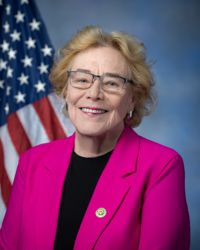
United States · United States Congress · 4 January 2005
Declares that the House honors Shirley Chisholm (a former Representative from New York) for her service to the Nation, her work to improve the lives of women and minorities, her steadfast commitment to demonstrating the power of compassion, and her dedication to justice and equality. Expresses its deepest condolences upon her death to her family, friends, and supporters.
United States · United States Congress · 19 November 2004
Provides immigration relief for aliens who are determined by the Secretary of Homeland Security to have: (1) obtained nonimmigrant status on or after January 1, 1980, and who at that time were nationals of the Republic of Korea; (2) applied before January 1, 1999, through one or more immigration brokers for adjustment of status to that of a lawful permanent resident (LPR) through the Immigration and Naturalization Service (INS) office in San Jose, California; (3) obtained approval for adjustment as the result of bribery by such brokers of an INS supervisor; and (4) had no actual knowledge of the fraud at the time of adjustment. Extends relief to the spouse and children of eligible aliens granted derivative LPR status. Prohibits the immigration fraud reflected by such bribery from being considered in determining the admissibility or removability of eligible aliens. Requires the Secretary to: (1) restore an eligible alien's status as if the original adjustment had been lawful, including where LPR status and naturalization were rescinded on the basis of the fraud; and (2) parole into the United States eligible aliens who were removed or who voluntarily departed in connection with charges relating to the fraud for purposes of filing an application for relief under this Act. Prohibits the Secretary of State from reducing the number of available immigrant visas as the result of the approval of such an application for relief.
United States · United States Congress · 18 November 2004
Constitutional Amendment - Provides for the popular election of the President and Vice President under a new electoral system. (Abolishes the electoral college.)
United States · United States Congress · 17 November 2004
Designates the facility of the United States Postal Service located at 30777 Rancho California Road in Temecula, California, as the "Dalip Singh Saund Post Office Building."
United States · United States Congress · 16 November 2004
Designates the facility of the United States Postal Service located at 5505 Stevens Way in San Diego, California, as the "Earl B. Gilliam/Imperial Avenue Post Office Building."
United States · United States Congress · 7 October 2004
Providing Reliable Officers, Technology, Education, Community Prosecutors, and Training In Our Neighborhoods Act of 2004 or PROTECTION Act - Modifies provisions of the Omnibus Crime Control and Safe Streets Act of 1968 regarding public safety and community policing ("cops on the beat" program, COPS) to authorize the Attorney General to use COPS grants to: (1) increase prosecutor presence and to enhance law enforcement access to new technologies; (2) pay overtime to existing career law enforcement officers for community policing; and (3) promote higher education among in-service State and local law enforcement officers by reimbursing them for certain educational costs. Includes among permitted additional grant projects: (1) specialized integrity and ethics training; and (2) innovative proactive crime control and prevention programs involving school officials and religiously-affiliated organizations. Authorizes the Attorney General to use up to five percent of appropriated funds for technical assistance and training to States, local governments, Indian tribal governments, and other entities. Repeals provisions of the Act regarding termination of grants for hiring officers. Allows grants to be used to assist: (1) police departments in employing specified professional, scientific, and technological advancements; (2) State, local, or tribal prosecutors' offices in implementation of community-based prosecution programs that build on local community policing efforts; and (3) in paying overtime to existing career law enforcement officers. Reserves specified funds for local governmental units with a population of less than 50,000. Authorizes the Attorney General to use no more than 50 percent of grant renewal funds to award grants targeted for police officer retention.
United States · United States Congress · 30 September 2004
Commemorates the 60th anniversary of the Port Chicago (California) Naval Magazine tragedy. Calls upon all Americans to honor the memory of those who served and those who gave their lives at Port Chicago in defense of the United States.
United States · United States Congress · 24 September 2004
Designates the facility of the United States Postal Service located at 23055 Sherman Way in West Hills, California, as the "Evan Asa Ashcraft Post Office Building."
United States · United States Congress · 23 September 2004
Preservation of Orphan Works Act - Provides that the limitation on rights of reproduction and distribution of copyrighted works does not apply to the authority of libraries or archives, during the last 20 years of any term of copyright of a published work to reproduce, distribute, display, or perform in facsimile or digital form a copy or phonorecord of such work for purposes of preservation, scholarship, or research when certain conditions apply.
United States · United States Congress · 23 September 2004
Amends the Internal Revenue Code to repeal the alternative minimum tax treatment of incentive stock options. Makes this repeal applicable to options exercised in 2000 or thereafter regardless of when such options were granted. Allows a waiver of any rule of law preventing the payment of a refund or credit resulting from the enactment of this Act if a claim for a refund or credit is made within one year after enactment.
United States · United States Congress · 23 September 2004
States that the House of Representatives urges the interim Government of Iraq to ensure: (1) that the charges brought against Saddam Hussein include the crimes his government committed against the people of Iran during the 1980-1988 Iran-Iraq war, including the use of chemical weapons; and (2) a transparent and fair trial against Saddam Hussein.
United States · United States Congress · 13 September 2004
Department of Homeland Security Cybersecurity Enhancement Act of 2004 - Amends the Homeland Security Act of 2002 to establish in the Department of Homeland Security's (DHS) Directorate for Information Analysis and Infrastructure Protection a National Cybersecurity Office, headed by an Assistant Secretary for Cybersecurity, who shall assist the Secretary in promoting cybersecurity for the Nation. Grants the Assistant Secretary primary authority within DHS for all cybersecurity-related critical infrastructure programs of DHS. Includes among the responsibilities of the Assistant Secretary to: (1) establish and manage a national cybersecurity response system, a national cybersecurity threat and vulnerability reduction program, a national cybersecurity awareness and training program, a government cybersecurity program, and a national security and international cybersecurity cooperation program; (2) coordinate specified activities with the private sector, with other directorates and offices within DHS (including with the Chief Information Officer), and with the Under Secretary for Emergency Preparedness and Response; (3) develop processes for information sharing with the private sector; (4) consult with the Secret Service's Electronic Crimes Task Force on private sector outreach and information activities and with the Office for Domestic Preparedness to ensure that realistic cybersecurity scenarios are incorporated into tabletop and recovery exercises; and (5) consult and coordinate with other Federal agencies on cybersecurity-related programs, policies, and operations and with other relevant Federal agencies and within DHS on security of digital control systems. Grants the Assistant Secretary primary authority within DHS over the National Communications System.
United States · United States Congress · 13 September 2004
Department of Homeland Security Science and Technology Enhancement Act of 2004 - Amends the Homeland Security Act of 2002 to authorize the Secretary of Homeland Security to establish and maintain special access programs associated with research, development, test and evaluation, and acquisition of technology. Directs: (1) the Secretary to submit to Congress certain budget request information for the Directorate of Science and Technology; and (2) the Under Secretary for Science and Technology to transmit to Congress a summary of the solicitations and resulting contracts and grants awarded in the past fiscal year. Requires the Secretary to conduct an assessment of: (1) the development of national capabilities in homeland security science and technology; and (2) the methods used by the Directorate for the prioritization of science and technology projects among and within research portfolios. Directs the Secretary, acting through the Assistant Secretary for Cybersecurity, to establish a program to award grants to institutions of higher education for: (1) the establishment or expansion of professional development programs and associate degree programs in cybersecurity; and (2) the purchase of equipment to provide training in cybersecurity for either professional development or degree programs. Authorizes the Secretary to enter into agreements or partnerships with foreign governments that are U.S. allies in the war on terrorism and have extensive experience in counterterrorism. Directs the Secretary to establish: (1) a Geospatial Management Office; and (2) a program to enhance public safety interoperable communications. Provides for the establishment of a homeland security technology and equipment transfer program.
United States · United States Congress · 9 September 2004
Increases the death gratuity payable with respect to members of the Armed Forces from $12,000 to $50,000. Makes this increase applicable to deaths occurring on or after September 11, 2001. Requires the Secretary of Defense to derive funds for payments under this Act in FY 2005 from travel funds for personnel of the Office of the Secretary.
United States · United States Congress · 22 July 2004
Federal Regulatory Improvement Act of 2004 - Revises the purpose of the Administrative Conference of the United States to include: (1) promoting more effective public participation and efficiency in the rulemaking process; (2) reducing unnecessary litigation in the regulatory process; (3) improving the use of science in the regulatory process; and (4) improving the effectiveness of laws applicable to the regulatory process. Authorizes appropriations for FY 2005 through FY 2007.
United States · United States Congress · 22 July 2004
Ocean and Coastal Observation Systems Act of 2004 - Directs the President, acting through the National Ocean Research Leadership Council (NORLC), to carry out a pilot program to establish an integrated ocean and coastal observing system (IOOS) of monitoring, data communication and management, analysis, modeling, and research to provide data and information for the timely detection and prediction of changes occurring in the marine and coastal environment that impact the Nation's social, economic, and ecological systems. Establishes within NORLC an interagency program office (OceanUS) which shall be responsible for program planning and coordination of the IOOS. Requires the National Oceanic and Atmospheric Administration (NOAA) to be the lead Federal agency for implementation and operation of the IOOS. Requires regional associations to be responsible for the development and operation of regional ocean and coastal observing systems to meet the information needs of the users groups in the region while adhering to national standards.
United States · United States Congress · 22 July 2004
ESRD Modernization Act of 2004 - Amends title XVIII (Medicare) of the Social Security Act, as amended by the Medicare Prescription Drug, Improvement, and Modernization Act of 2003, to provide for an annual update mechanism under the Medicare end stage renal disease (ESRD) program to adjust the payment rates for changes in input prices and inflation. Directs the Secretary of Health and Human Services to establish demonstration projects to: (1) increase public awareness about the factors that lead to chronic kidney disease, and how to prevent and treat it; and (2) enhance chronic kidney disease surveillance systems and research. Requires the Secretary to establish demonstration projects to enable individuals with ESRD to develop self-management skills. Provides for Medicare coverage of kidney disease patient education services. Directs the Secretary to: (1) establish demonstration projects to evaluate how blood flow monitoring affects care for Medicare beneficiaries with ESRD; (2) provide appropriate incentives to improve the home dialysis benefit; (3) arrange with the Institute of Medicine of the National Academy of Sciences to evaluate the barriers to increasing the number of individuals with ESRD who elect to receive home dialysis services under Medicare; (4) cover surgical procedures the full range of dialysis access procedures for Medicare-entitled individuals with ESRD; and (5) establish demonstration projects evaluating methods that improve the quality of care provided to Medicare beneficiaries with ESRD. Directs the Comptroller General to study and report to Congress on the impact of the temporary codes for nephrologists' services applicable under the fee schedule for physicians' services.
United States · United States Congress · 22 July 2004
Children's Health Protection and Improvement Act of 2004 - Amends title XXI (State Children's Health Insurance Program) (SCHIP) of the Social Security Act (SSA) to revise the extended availability through FY 2004 of SCHIP allotments for FY 1998 through 2001. Specifies formulae for amounts to be used in computing redistributions for FY 2003, 2003, and 2004. Provides for reallocation of 70 percent of the expiring FY 1998, 1999, and 2000 funds to States that have fully expended their annual allotments. Extends the availability of the remaining 30 percent of such expiring funds with the States that currently have them. Permits 50 percent of the total amount of a State's unexpended FY 2002 SCHIP allotments to remain available through FY 2006. Permits 50 percent of the total amount of a State's unexpended FY 2003 and 2004 SCHIP allotments to remain available through the end of FY 2007. Requires redistribution of the other 50 percent of such funds to States that have fully spent their allotments during the three-year period they were available. Requires a second redistribution according to the same 70-30 formula of any retained or redistributed funds still unexpended at the end of the two-year extention or redistribution. Provides for continued authority for qualifying States to use certain funds for Medicaid expenditures.
United States · United States Congress · 20 July 2004
Commission to Establish a National Museum of the American Latino Act of 2004 - Establishes the Commission to Establish a National Museum of the American Latino. Directs the Commission to: (1) report to the President and Congress with recommendations on a plan of action to establish and maintain, in Washington, DC, the National Museum of the American Latino within the Smithsonian Institution; (2) develop a fundraising plan, examine specified issues, and make legislative recommendations; and (3) convene a national conference on the Museum. Directs the Secretary of the Interior to provide administrative support services and facilities necessary for performance of Commission functions.
United States · United States Congress · 13 July 2004
Amends the Immigration and Nationality Act to authorize the admission of aliens who are foreign media representatives under the B (temporary visitor for business) nonimmigrant visa classification.
United States · United States Congress · 13 July 2004
Smuggled Tobacco Prevention Act of 2004 - Amends the Internal Revenue Code to require all packages of tobacco products to carry a unique legibly printed serial number by which the Secretary of the Treasury can identify the manufacturer or importer and the location and date of manufacture or importation. Requires tobacco products sold on Indian reservations to be labeled as such. Requires a person to post a bond with the Secretary in order to export tobacco products. Requires a tobacco wholesaler to have a permit and to maintain certain records. Requires export warehouse proprietors to file certain reports with the Secretary. Authorizes the Secretary to enter into certain tobacco related information exchange agreements with foreign countries. Establishes new criminal offenses relating to the distribution of tobacco products. Raises the $1,000 civil penalty for violations relating to tobacco products to $10,000. Amends the Contraband Cigarette Trafficking Act to: (1) expand the applicability of such Act from cigarettes only to tobacco products (cigars, cigarettes, smokeless tobacco, pipe tobacco, and roll-your-own tobacco); (2) define a "contraband tobacco product" as a quantity of tobacco product that is equivalent to or more than 2,000 cigarettes (currently, 60,000) which bear no evidence of the payment of applicable State tobacco taxes and that is possessed illegally; and (3) establish new unlawful acts. Allows a State tobacco tax authority to bring a civil action in U.S. district court for the collection of State cigarette taxes. Prohibits retaliation against employees (whistleblowers) who provide information in contraband tobacco cases. Provides for administrative and judicial remedies for such whistleblowers.
United States · United States Congress · 9 July 2004
Designates the facility of the United States Postal Service located at 140 Sacramento Street in Rio Vista, California, as the "Adam G. Kinser Post Office Building."
United States · United States Congress · 25 June 2004
Promoting Responsible Interrogation Standards Enforcement Act of 2004 or PRISE Act of 2004 - Prohibits subjecting any person in U.S. custody to torture or cruel, inhuman, or degrading treatment or punishment that is prohibited by the U.S. Constitution, laws, or treaties. Requires the Secretary of Defense to: (1) prescribe and submit to specified congressional committees the rules, regulations, or guidelines necessary to ensure compliance by members of the Armed Forces and by Department of Defense contractors; and (2) report to Congress at least twice each year on the circumstances surrounding any investigation of possible violations of such prohibition. Prohibits an officer or employee of the United States from: (1) providing assistance to the government of a foreign country for the purpose of obtaining information from an individual held in custody by that government if there is reason to believe that torture or cruel, inhuman, or degrading treatment or punishment will be utilized to obtain the information; and (2) encouraging or otherwise assisting such a government to transfer, render, expel, return, or extradite an individual to another country if there is reason to believe that the individual would be in danger of being subjected to torture. Modifies the definition of "United States" for purposes of the prohibition against torture to mean the several States, the District of Columbia, and U.S. commonwealths, territories, and possessions.
United States · United States Congress · 24 June 2004
Stem Cell Research Enhancement Act of 2004 - Amends the Public Health Service Act to require the Secretary of Health and Human Services to conduct and support research that utilizes human embryonic stem cells if: (1) the stem cells were derived from human embryos donated from in vitro fertilization clinics for the purpose of fertility treatment and were in excess of the needs of the individuals seeking such treatment; (2) the embryos will never be implanted in a woman and would otherwise be discarded; and (3) such individuals donate the embryos with written informed consent and receive no financial or other inducements.
United States · United States Congress · 24 June 2004
Meaningful Expression of Democracy in America (MEDIA) Act - Amends the Communications Act of 1934 to require broadcast licensees to afford reasonable opportunity for the discussion of conflicting views on issues of public importance.
United States · United States Congress · 24 June 2004
Fisheries Management Reform Act of 2004 - Amends the Magnuson-Stevens Fishery Conservation and Management Act to require the Administrator of the National Oceanic and Atmospheric Administration (NOAA) (currently, the Secretary of Commerce) to appoint members to the Regional Fishery Management Councils who, by reason of their occupational or other experience, are knowledgeable regarding the conservation and management, or the commercial or recreational harvest, of fishery resources. Revises requirements for the composition of such councils and the qualifications of voting Council members. Sets forth certain requirements with respect to: (1) training of appointed Council members; and (2) disclosure of financial interest and recusal of Council members. Directs the Secretary to establish regional science and technical teams to make recommendations on certain matters, on the basis of which the Secretary shall provide Councils conservation and management measures for incorporation into fishery management plans that establish: (1) catch and bycatch limits; (2) specific habitat and area protections to protect essential fish habitats; and (3) specific requirements necessary to protect endangered species.
United States · United States Congress · 24 June 2004
States that Congress: (1) declares that the atrocities unfolding in Darfur, Sudan, are genocide; (2) reminds the international community, including the U.S. Government, of their international legal obligations, as affirmed in the 1948 United Nations Convention on the Prevention and Punishment of the Crime of Genocide; (3) calls on the Bush Administration to lead an international effort to prevent genocide in Darfur; (4) urges the Bush Administration to consider multilateral or even unilateral intervention to prevent genocide should the United Nations Security Council fail to act; (5) demands that the Bush Administration impose targeted sanctions, including visa bans and the freezing of assets of the National Congress and affiliated business and individuals directly responsible for the atrocities in Darfur; and (6) calls on the U.S. Agency for International Development (USAID) to establish a Darfur Resettlement, Rehabilitation, and Reconstruction Fund.
United States · United States Congress · 23 June 2004
Internet Spyware (I-SPY) Prevention Act of 2004 - Amends the Federal criminal code to prohibit intentionally accessing a protected computer without authorization, or exceeding authorized access, by causing a computer program or code to be copied onto the protected computer, and intentionally using that program or code: (1) in furtherance of another Federal criminal offense; (2) to obtain or transmit personal information with intent to defraud or injure a person or cause damage to a protected computer; or (3) to impair the security protection of that computer. Prohibits any person from bringing a civil action under State law premised upon the defendant's violating this Act.
United States · United States Congress · 23 June 2004
Iraqi Women and Children's Liberation Act of 2004 - Expresses the sense of Congress that: (1) the United States should ensure that women and children in Iraq benefit from the liberation of Iraq; (2) women of all ethnic groups in Iraq should be included in the economic and political reconstruction of Iraq; and (3) the Government of Iraq should adhere to internationally accepted standards on human rights and rights of women and children. Authorizes the President to provide assistance for: (1) education and health care for Iraqi women and children living in Iraq or living as refugees in other countries; and (2) enhancement of political participation, economic empowerment, civil society, and personal security of women in Iraq. Expresses the sense of Congress that the President should ensure that such assistance is: (1) provided in a manner that protects and promotes the human rights of all people in Iraq, utilizing indigenous institutions and nongovernmental organizations, especially women's organizations; and (2) conditioned on the government of Iraq making continued progress toward internationally accepted standards of human rights and the rights of women.
United States · United States Congress · 23 June 2004
Creates the Select Committee to Investigate Detainee Abuses to conduct a full and complete investigation of the abuses of detainees held in U.S. custody in connection with Operation Iraqi Freedom, Operation Enduring Freedom, or any operation within the Global War on Terrorism, in particular those documented abuses at Abu Ghraib prison, and to make appropriate findings and recommendations to the House of Representatives. Requires the Select Committee to assess, analyze, and evaluate relevant persons, policies, procedures, reports, and events during the course of its investigation, including but not limited to those specified in this Resolution. Sets forth procedures and authorities of the Select Committee. Requires the Select Committee to submit its final report to the House within six months of adoption of this Resolution and to cease to exist one month thereafter.
United States · United States Congress · 17 June 2004
Arthritis Prevention, Control, and Cure Act of 2004 - Amends the Public Health Service Act to require the Secretary of Health and Human Services: (1) to develop and implement a National Arthritis Action Plan; and (2) acting through the Director of the Centers for Disease Control and Prevention (CDC), to conduct, support, and promote the coordination of arthritis and other rheumatic diseases research. Requires the Secretary to award grants to: (1) support arthritis-specific research projects at the Centers for Prevention Research by the CDC; (2) support State comprehensive arthritis control and prevention programs and public health surveillance, prevention, and control activities; and (3) assist in the implementation of a national strategy for arthritis control and prevention. Requires the Secretary to coordinate a national education and outreach program on arthritis and other rheumatic diseases. Requires the Secretary to establish an Arthritis and Rheumatic Diseases Interagency Coordinating Committee to: (1) improve coordination of Federal research activities related to arthritis and rheumatic diseases; and (2) convene a summit to provide a detailed overview of such current Federal research. Requires the Director of the National Institutes of Health to expand and intensify juvenile arthritis research and related programs, including by awarding grants to establish new research programs. Allows the Secretary, acting through the Director of the CDC, to award grants to support the collection, analysis, and reporting of data on juvenile arthritis. Requires the Secretary, acting through the Director of the CDC, to support the development of a National Juvenile Arthritis Patient Registry to collect data for follow-up studies regarding the prevalence and incidence of juvenile arthritis, as well as capturing information on evidence-based health outcomes related to specific therapies and interventions. Requires the Secretary to promote and support pediatric rheumatology training, including by allowing the Secretary to establish a loan repayment program. Requires the Comptroller General of the United States to conduct a study on the economic impact of arthritis in the workplace.
United States · United States Congress · 16 June 2004
Honors and recognizes the American labor movement. Supports the designation of a National Labor History Month. Urges government officials, educators, the media, and all Americans to observe a National Labor History Month with ceremonies, activities, and programs that encourage reflection on the labor movement's heritage and contributions to the creation and maintenance of a just America.
United States · United States Congress · 15 June 2004
Children's Hospitals Education Equity and Research (CHEER) Act of 2004 - Amends the Public Health Service Act to require the Secretary of Health and Human Services to make payments through FY 2010 (currently, through FY 2005) to children's hospitals for costs associated with operating approved graduate medical resident training programs.
United States · United States Congress · 14 June 2004
Amends the Immigration and Nationality Act to allow foreign children adopted while under age 18 for whom adoption proceedings were initiated while they were under the age of 16 (currently, children adopted while under age 16) to be treated as children for immigration and naturalization purposes.
United States · United States Congress · 8 June 2004
Expresses the House of Representatives deepest appreciation for the profound public service of President Ronald Reagan and its condolences to his wife, Nancy, and to his surviving children, Patti, Michael, and Ron, and the entire Reagan family. Calls on the people of the United States to reflect on President Reagan's record as President of the United States during this national period of remembrance.
United States · United States Congress · 3 June 2004
Providing Resources and Education for Kids Act (Pre-K) - Authorizes the Secretary of Education to provide grants to applicant State educational agencies to make subgrants to local educational agencies to establish or expand prekindergarten early learning programs, which meet specified requirements, for children ages five and younger.
United States · United States Congress · 1 June 2004
Designates the facility of the United States Postal Service located at 5505 Stevens Way in San Diego, California, as the "Earl B. Gilliam Post Office Building."
United States · United States Congress · 20 May 2004
Angel Island Immigration Station Restoration and Preservation Act - Authorizes appropriations to the Secretary of the Interior for restoring the Angel Island Immigration Station in San Francisco Bay, in coordination with the Angel Island Immigration Station Foundation and the California Department of Parks and Recreation. Requires funds appropriated by this Act to be used first for restoration of the Immigration Station Hospital on Angel Island.
United States · United States Congress · 20 May 2004
Family Smoking Prevention and Tobacco Control Act - Amends the Federal Food, Drug, and Cosmetic Act to provide for the regulation of tobacco products by the Secretary of Health and Human Services through the Food and Drug Administration, including through disclosure, annual registration, inspection, recordkeeping, and user fee requirements. Sets forth criteria by which tobacco products are deemed adulterated or misbranded. Allows the Secretary to require prior approval of all label statements. Allows the Secretary to restrict the sale or distribution of tobacco products, including advertising and promotion, if the Secretary determines that such regulation would be appropriate for the protection of the public health. Prohibits such regulations from: (1) limiting product sales or distribution to authorization of a practitioner licensed to prescribe medical products; (2) prohibiting product sales in face-to-face transactions by a specific category of retail outlets; or (3) establishing a minimum age greater than 18 years of age for product purchases. Prohibits cigarettes from containing any artificial or natural flavor (other than tobacco or menthol) or an herb or spice, including strawberry, cinnamon, or coffee. Requires the Secretary to establish tobacco product standards to protect the public health, but reserves to Congress the power to ban any tobacco products or reduce the nicotine level to zero. Allows the Secretary to take specified actions, including public notification and recall, against unreasonably harmful products. Requires premarket approval of all new tobacco products. Sets forth standards for the sale of modified risk tobacco products. Sets forth provisions regarding: (1) judicial review; (2) coordination with the Federal Trade Commission (FTC); (3) congressional review of regulations; and (4) state and local authority. Requires the Secretary to establish a Tobacco Products Scientific Advisory Committee. Amends the Federal Cigarette Labeling and Advertising Act to change cigarette warning label and advertising requirements. Amends the Comprehensive Smokeless Tobacco Health Education Act of 1986 to change smokeless tobacco warning label and advertising requirements.
United States · United States Congress · 20 May 2004
Strengthening Homeland Innovation to Emphasize Liberty, Democracy, and Privacy Act or SHIELD Privacy Act - Directs the President to designate a senior official within the Office of Management and Budget as the Chief Privacy Officer, who shall have primary responsibility for privacy policy throughout the Federal Government. Directs the head of each department and independent agency in the executive branch to appoint a senior official of the department or independent agency, respectively, to assure primary responsibility for privacy policy. Requires the official appointed for the department or independent agency to: (1) assess the impact on privacy of each proposed action of the Department or agency that will require collecting, using, or accessing personally identifiable information from ten or more persons; and (2) make the results of such assessments publicly available through the Department's web site. Establishes the Commission on Privacy, Freedom, and Homeland Security to conduct a legal and factual study relating to U.S. efforts to further homeland security in a manner that protects privacy, civil liberties, and individual freedoms. Requires the Commission to: (1) conduct at least two field hearings in the five geographical regions of the United States; and (2) appoint a Director. Instructs the Commission to arrange with the National Research Council of the National Academy of Sciences for assistance in studying specified matters respecting such study, including the impact of Federal legislation enacted since September 11, 2001, or pending before Congress, on civil liberties. Terminates the Commission 30 days after the Commission submits a report of its findings, recommendations, and conclusions.
United States · United States Congress · 20 May 2004
Military Reserve Mobilization Income Security Act of 2004 - Amends the Internal Revenue Code to allow members of the National Guard or the Ready Reserve who have been activated for military duty a refundable income tax credit for the lesser of: (1) the excess of such reservist's daily civilian compensation over the reservist's daily military pay while on active duty or full-time National Guard duty; or (2) $54.80 per day. Includes the amount of such credit in the reservist's gross income.
United States · United States Congress · 18 May 2004
Calls for the establishment of a National Health Center Week (beginning on August 8, 2004) to raise awareness of the health services provided by community, migrant, public housing, and homeless health centers.
United States · United States Congress · 17 May 2004
Urges the Citizen's Stamp Advisory Committee to recommend to the Postmaster General that a commemorative postage stamp be issued by the United States Postal Service honoring Charles Hamilton Houston, the first African American to earn a Doctor of Juridical Science degree from Harvard University and to serve as editor of the Harvard Law Review.
United States · United States Congress · 13 May 2004
Safe Transit and Rail Awareness and Investments for National Security Act of 2004 (Safe TRAINS Act) - Authorizes the Secretary of Homeland Security to make grants to improve the security of public transportation systems (including passenger, commuter, and light rail) against acts of terrorism. Sets forth grant uses and requirements. Directs grant recipients to submit to the Secretary their emergency response plan as well as a plan for conducting exercises for emergency response and public transportation employee training pursuant to guidelines published by the Secretary. Directs the Secretary to: (1) develop and disseminate to appropriate owners, operators, and providers of public transportation systems (including public transportation employees), and Federal, State, and local officials, a report containing best practices for the security of public transportation systems; (2) develop a national plan for public outreach and awareness of measures the public can take to increase public transportation system security; (3) develop a strategic plan for the security of the Nation's public transportation systems; (4) execute in conjunction with the Secretary of Transportation, a Memorandum of Agreement governing the responsibilities of the Department of Homeland Security and the Department of Transportation, respectively, in addressing security matters for public transportation systems; and (5) establish National Transportation Security Centers at institutions of higher education to assist in carrying out this Act, to conduct research and education, and to develop or provide professional training of public transportation employees. Sets forth certain whistleblower protections for employees or other persons who have commenced, testified at, or participated in, a proceeding to enhance public transportation security, or who have refused to violate or assist in the violation of any regulation related to public transportation security.
United States · United States Congress · 12 May 2004
Women's Health Office Act of 2004 - Amends the Public Health Service Act, the Social Security Act, and the Federal Food, Drug, and Cosmetic Act to require the establishment of separate Offices on Women's Health within the Office of the Secretary of Health and Human Services, the Office of the Director of the Centers for Disease Control and Prevention, the Office of the Administrator of the Health Resources and Services Administration, and the Office of the Commissioner of the Food and Drug Administration to carry out specified activities relating to the health of women. Directs the lead officers of each Office of Women's Health to establish goals, provide information, serve as a consultant, and establish a Coordinating Committee on Women's Health within their respective agencies. Requires the Director of the Agency of Healthcare Research and Quality to designate an official of the Office of Priority Populations to carry out similar responsibilities relating to women's health. Requires the Secretary, acting through the Office of Women's Health, to establish a National Women's Health Information Center to facilitate the exchange of information, access to such information, and the analysis of issues and problems relating to women's health. Transfers the functions of the Office on Women's Health of the Public Health Service to the Office of Women's Health within the Department of Health and Human Services.
United States · United States Congress · 6 May 2004
Medicare Preservation and Anti-Privatization Act - Amends title XVIII (Medicare) of the Social Security Act (SSA), as added by the Medicare Prescription Drug, Improvement, and Modernization Act of 2003, to eliminate the MA Regional Plan Stabilization Fund. Directs the Secretary of Health and Human Services to provide, beginning with 2005, for adjustment of payment rates to Medicare+Choice organizations so that they reflect only the payment at 100 percent of the fee-for-service rate. Provides that, in applying risk adjustment factors to payment to Medicare+Choice organizations in a budget neutral manner, the Secretary of Health and Human Services shall assure that such factors, in the aggregate, take into account the actual characteristics of the entire Medicare population, and not merely the population of individuals enrolled under a Medicare+Choice plan under part C (Medicare+Choice) of SSA title XVIII.
United States · United States Congress · 6 May 2004
Safe Passengers and Lading in Aviation for the National Enhancement of Security Act - Directs the Secretary of Homeland Security to: (1) study and report to Congress on the workforce size needed to conduct adequate passenger and baggage screening operations at airports; and (2) certify to Congress that security will be preserved at an airport that has been authorized by the Department of Homeland Security (DHS) to opt out of federalized screening of passengers and property at the airport and contract with a qualified private screening company. Directs the Secretary, in entering into agreements with airports to install electronic detection equipment or to alter airport structures to facilitate explosive detection equipment, to give priority to those airports that have not met specified Federal requirements to screen all checked baggage with explosive detection system (EDS). Amends Federal transportation law to eliminate a bag-match program (ensuring that no checked baggage is placed aboard an aircraft unless the passenger who checked the baggage is aboard the aircraft) as an acceptable alternative to screening of checked baggage by an EDS. Directs the Secretary, as part of the DHS budget request for FY 2006, to report to Congress on: (1) the status and technical maturity of aviation security technologies; (2) the planned schedule for their deployment; (3) the expected costs for development, testing, evaluation, procurement, and installation, and projected annual costs for operation and maintenance; (4) potential deployment problems in an airport setting; and (5) the advisability of deploying such technologies to airports in a manner that maximizes the number of technologies that Federal and airport security personnel can effectively operate. Requires the Secretary, acting through the head of the Transportation Security Administration (TSA), the Under Secretary for Science and Technology, and the Under Secretary for Information Analysis and Infrastructure Protection, to: (1) issue updated technical specifications governing the use of EDS for baggage screening; (2) determine compliance with such specifications of currently deployed baggage screening equipment; (3) use such specifications for future certification of new technologies for use in baggage screening; and (4) issue technical specifications governing the use of technology for screening air cargo if the Secretary determines that explosive detection technologies for passenger and baggage screening do not meet the needs for screening air cargo in accordance with the following system. Amends the Homeland Security Act of 2002 to direct the Secretary to establish and begin to implement a system to screen or inspect all cargo that is to be transported in passenger aircraft operated by an air carrier or foreign air carrier in air transportation. Directs the Secretary to: (1) complete a database containing the names and other relevant information of all known shipping companies; and (2) make it available as appropriate to TSA personnel, freight forwarders, airport authorities, air carriers, and other relevant entities. Directs the Secretary to establish training standards that all Federal law enforcement officers must meet in order to serve as Federal air marshals. Requires the head of the Federal Air Marshal Service, in determining on which flights to place one or more Federal air marshals, to: (1) have access to information on whether Federal law enforcement officials meeting such training standards are scheduled to travel on commercial flights; and (2) not substitute Federal law enforcement officials that have not met such training standards for Federal air marshal personnel. Directs the Secretary to collaborate with foreign governments to coordinate air marshal activities, including air marshal scheduling on international flights, weapons training, use and protocols for nonlethal weapons, threat recognition, communications, and other appropriate issues. Directs the Secretary to issue regulations to: (1) require that overflying aircraft meet or exceed the level of flight deck security for passenger and cargo as required in specified Federal regulations; and (2) govern daily preflight searches of aircraft for foreign materials that might be used in a terrorist attack. Directs the Secretary to require, to the greatest extent technically feasible, air carriers to provide flight attendants with a discreet and wireless method of communicating with pilots that meets such standards as the Secretary may establish by regulation. Requires such a system to be accessible by any Federal air marshal on a flight of an air carrier, appropriate Government security officials, and air carrier personnel. Requires the head of TSA to report to Congress on TSA implementation of specified requirements of the Aviation and Transportation Security Act regarding: (1) improved airport perimeter access security; (2) short-term assessment and deployment of emerging security technologies and procedures; and (3) employment investigations and restrictions. Requires all personnel accessing airport sterile areas (any parts of an airport regularly accessible to passengers after having cleared a passenger security screening checkpoint) from unrestricted areas to undergo security screening. Requires TSA to ensure that all personnel accessing airport secure areas have successfully undergone a TSA-conducted background check consisting of all measures required of TSA passenger screener personnel. Requires the Secretary, acting through the head of TSA and the Under Secretary for Science and Technology of the Department of Homeland Security, to report to Congress on defending against the threat of attacks on commercial aircraft from man-portable air defense systems (MANPADS) (shoulder-fired, surface-to-air missile systems that can be carried and transported by a person).
United States · United States Congress · 6 May 2004
Amends the Immigration and Nationality Act to authorize both handwritten and electronic signatures on attestation forms required by the employment verification system. Authorizes the retention of paper or electronic versions of such forms.
United States · United States Congress · 4 May 2004
Rapid Pathogen Identification to Delivery of Cures Act - Amends the Homeland Security Act of 2002 to require the Secretaries of Homeland Security, Health and Human Services, and Defense to submit a report setting forth a strategy to reduce the time frame from the identification of a pathogen to the development and emergency approval of a safe and effective countermeasure, which should include: (1) technical impediments to reducing this time frame; (2) research, development, and technology needs to address these impediments; (3) existing efforts to address such needs; (4) a proposal to establish a coordinated and integrated Federal program to address such needs; and (5) potential liability concerns stemming from distribution of rapidly developed priority countermeasures. Allows the Secretary of Homeland Security to contract with any firm or institution to conduct research and analysis needed for this report. Requires the Secretary of Health and Human Services to establish a system to rapidly: (1) establish clinical research programs to examine the safety and efficacy of treatments for novel, unknown, or bioengineered pathogens; and (2) disseminate results and recommendations to clinicians. Authorizes establishment of a fund to support such clinical research. Amends the Public Health Service Act to add the Secretary of Homeland Security to the working group on bioterrorism and to require the working group to assist in developing such a strategy. Requires the Secretaries of Health and Human Services, Defense, and Homeland Security to conduct programs to develop the capability to rapidly identify, develop, produce, and approve countermeasures.