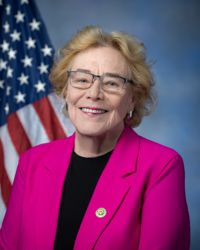
United States · United States Congress · 18 March 2015
Medicare CGM Access Act of 2015 - This bill amends title XVIII (Medicare) of the Social Security Act to provide Medicare coverage of continuous glucose monitoring (CGM) devices furnished to a CGM qualified individual. The Department of Health and Human Services must establish a fee schedule and ensure that CGM qualified individuals are furnished with appropriate device components.
United States · United States Congress · 18 March 2015
Family and Medical Insurance Leave Act Establishes the Office of Paid Family and Medical Leave within the Social Security Administration (SSA), to be headed by the Deputy SSA Commissioner. Entitles every individual to a family and medical leave insurance (FMLI) benefit payment for each month beginning on the first day of the first month in which the individual meets the criteria specified below and ending 365 days later (benefit period), not to exceed 60 qualified caregiving days per period. Qualifies for such a benefit payment any individual who: is insured for disability insurance benefits under the Social Security Act at the time his or her application is filed; has earned income from employment during the 12 months before filing it; has filed an application for a FMLI benefit in accordance with this Act; and was engaged in qualified caregiving (any activity, except regular employment, for a reason entitled to leave under the Family and Medical Leave Act of 1993), or anticipates being so engaged, during the 90-day period before the application is filed or within 30 days after. Prescribes a formula for determination of an individual's monthly FMLI benefit payment, as well as for the maximum and the minimum monthly benefit amounts. Requires a FMLI benefit payment to be coordinated with any periodic benefits received from temporary disability insurance or family leave insurance programs under any state law or plan, local government, or an instrumentality of two or more states. Prescribes criteria that makes an individual ineligible for a FMLI benefit payment. Specifies prohibited acts by an employer, and penalties for violations. Establishes the Federal Family and Medical Leave Insurance Trust Fund in the Treasury. Requires FMLI benefit payments to be made only from this Fund. Prohibits the use of amounts from the Social Security Trust Fund or appropriated to the SSA to administer Social Security programs for FMLI benefits or administration. Amends the Internal Revenue Code to impose a tax on every individual and employer, all self-employment income, and every railroad employee, employee representative, or railroad employer to finance the Federal Family and Medical Leave Insurance Trust Fund in the Treasury for FMLI benefits.
United States · United States Congress · 18 March 2015
Calls on the President to work toward: (1) equitable and durable Armenian-Turkish relations based upon Turkey's acknowledgment of the facts and consequences of the Armenian Genocide, and (2) a comprehensive international resolution of this crime against humanity.
United States · United States Congress · 18 March 2015
Recognizes the cultural and historical significance of Nowruz. Expresses appreciation for the contributions of Iranian-Americans to U.S. society in observance of Nowruz. Recognizes the aspirations of all people, including the people of Iran, for human rights and religious tolerance as embodied in the spirit of Nowruz. Wishes Iranian-Americans, the people of Iran, and all those who observe this holiday a prosperous new year.
United States · United States Congress · 17 March 2015
American Innovation Act This bill amends the Balanced Budget and Emergency Deficit Control Act of 1985 to require certain adjustments to discretionary spending limits in FY2016-FY2021 to accommodate increases in appropriations for agencies that perform basic science research. Adjustments are required for the National Science Foundation, the Department of Energy Office of Science, Department of Defense science and technology programs, National Institute of Standards and Technology Scientific and Technical Research and Services, and the National Aeronautics and Space Administration (NASA) Science Mission Directorate. The bill also requires annual appropriations for each of the programs and agencies referenced in this bill to be at least the amount appropriated in FY2015. The bill exempts appropriations provided pursuant to this bill from sequestration. Sequestration is a process of automatic, usually across-the-board spending reductions under which budgetary resources are permanently cancelled to enforce specific budget policy goals.
United States · United States Congress · 17 March 2015
Social Security 2100 Act Amends title II (Old Age, Survivors and Disability Insurance) (OASDI) of the Social Security Act (SSAct) to: increase the primary insurance amount formula factor from 90% to 93% for all eligible beneficiaries, beginning in 2016; revise computation of cost-of-living adjustments to use the Consumer Price Index for Elderly Consumers; increase the special minimum primary insurance amount for lifetime low earners based on years in the workforce. Amends the Internal Revenue Code (IRC) to increase the gross income threshold for taxation of Social Security benefits from $25,000 to $50,000 for single taxpayers and from $32,000 to $100,000 for married taxpayers filing joint returns, beginning in 2016. Amends the IRC and SSAct title II to impose the employment tax on all wage income above $400,000, effective in 2016. Requires incremental increases, up to 15.3% in 2084, in the employment and self-employment taxes. Amends SSAct title II to include 2% of an individual's excess average indexed monthly earnings (over $400,000 per annum) in the formula for determining primary insurance amounts. Amends IRC to increase the Social Security tax rate on employees and employers and with respect to self-employment income. Requires reallocation of a portion of employment tax revenues from the OASDI Trust Fund to the Federal Disability Insurance Trust Fund for wages paid after 2014.
United States · United States Congress · 17 March 2015
Preserving American Privacy Act of 2015 Amends the federal criminal code to require a governmental entity operating a public unmanned aircraft system to minimize the collection or disclosure of covered information. Defines "covered information" as: (1) information that is reasonably likely to enable identification of an individual, or (2) information about an individual's property that is not in plain view. Requires such entity to submit to the Attorney General, with an application for a certificate or license to operate such a system in national airspace, a data collection statement that describes the purpose for which the system will be used, the length of time the collected information will be retained, the entity responsible for operating the system, the data minimization policies barring the collection of information unrelated to the investigation and requiring the destruction of information that is no longer relevant, and applicable audit and oversight procedures. Authorizes the Attorney General to request that the Secretary of Transportation revoke such a certificate or license if the operator's activity contravenes such statement. Directs the Attorney General to issue regulations to establish a database indexing such certificates, licenses, and statements. Prohibits a government entity from operating a public unmanned aircraft system and collecting or disclosing covered information for a law enforcement purpose, except: (1) pursuant to a warrant or court order meeting specified requirements; (2) for the purpose of patrolling or securing the border within 25 miles from any external land boundary of the United States; (3) with the prior written consent of the individual to whom the covered information pertains; or (4) where an emergency situation exists that involves immediate danger of death or serious physical injury to any person, or conspiratorial activities threatening the national security interest or characteristic of organized crime, and that requires action before a warrant or order can be obtained. Bars covered information obtained otherwise from being received as evidence in any trial, hearing, or other proceeding. Requires federal judges and state and local prosecuting attorneys to report on such warrants or orders issued or denied each year to the Administrative Office of the United States Courts, which shall report a summary of such information to Congress. Provides for administrative discipline proceedings when there is a serious question about whether a U.S. officer or employee acted intentionally with respect to a violation of this Act. Prohibits: (1) intentionally operating a private unmanned aircraft system to capture, in a manner that is highly offensive to a reasonable person, any type of visual image, sound recording, or other physical impression of an individual engaging in personal or familial activity under circumstances in which the individual had a reasonable expectation of privacy; and (2) any investigative or law enforcement officer or private individual from operating an unmanned aircraft system that is armed with a firearm within U.S. airspace.
United States · United States Congress · 16 March 2015
Honor America's Guard-Reserve Retirees Act Honors as a veteran any person who is entitled to retired pay for nonregular (reserve) service or who, but for age, would be so entitled. Provides that such person shall not be entitled to any benefit by reason of such recognition.
United States · United States Congress · 16 March 2015
Child Nicotine Poisoning Prevention Act of 2015 Directs the Consumer Product Safety Commission to promulgate a rule requiring liquid nicotine containers to be designed with special packaging that is difficult for children under five years of age to open or to obtain harmful contents from. Requires the rule to be treated as a standard applicable to a household substance under the Poison Prevention Packaging Act of 1970.
United States · United States Congress · 10 March 2015
Establishing Beneficiary Equity in the Hospital Readmission Program Act of 2015 This bill amends title XVIII (Medicare) of the Social Security Act (SSAct) with respect to the hospital readmissions reduction program under the inpatient (hospital) prospective payment system (IPPS). The Secretary of Health and Human Services, in determining a hospital's excess readmission ratio for purposes of making payments for discharges occurring during FY2016-FY2017, is required to make a risk adjustment to the ratio that takes into account both: (1) a hospital's proportion of inpatients who are full-benefit dual eligible individuals (eligible for both Medicare and Medicaid under SSAct title XIX), and (2) the socioeconomic status of patients served by the hospital. The Secretary must base the risk adjustment under the readmission program for subsequent fiscal years on specified reports required by the Improving Medicare Post Acute Care Transformation Act of 2014 as well as a report the Medicare Payment Advisory Commission shall submit on the appropriateness of using a threshold of 30 days for readmissions under the program. The Administrator of the Centers for Medicare & Medicaid Services must then incorporate report recommendations in carrying out risk adjustments for discharges occurring in such fiscal years in order to ensure that the most vulnerable populations are not unfairly penalized by the program. The Secretary shall consider the use of V or other International Classification of Diseases-related codes for potential exclusion of noncompliant patient cases when promulgating related regulations for FY2017. The Secretary must: (1) assess whether to exclude from the calculation of excess readmissions any patients whose clinical conditions or diagnoses may require frequent hospitalizations; then (2) exclude, starting in FY2018, any relevant clinical conditions identified in the assessment recommendations when determining a hospital's publicly reported readmission rate and excess readmissions ratio. The Secretary is directed to make a payment adjustment to subsection (d) hospitals necessary to ensure that the implementation of this Act does not result in any increase in aggregate expenditures under the IPPS. (Generally, a subsection (d) hospital is an acute care hospital, particularly one that receives payment under the IPPS when providing covered inpatient services to eligible beneficiaries.)
United States · United States Congress · 6 March 2015
Home Health Care Planning Improvement Act of 2015 Amends title XVIII (Medicare) of the Social Security Act to revise conditions of and limitations on payment for home health care services. Allows payment for home health services to Medicare beneficiaries by: (1) a nurse practitioner, (2) a clinical nurse specialist working in collaboration with a physician in accordance with state law, (3) a certified nurse-midwife, or (4) a physician assistant under a physician's supervision.
United States · United States Congress · 6 March 2015
Fair Access to Health Care Act of 2015 This bill amends the Internal Revenue Code, with respect to the health care insurance premium assistance tax credit, to adjust by a specified percentage the poverty line cap used to determine the eligibility of low-income taxpayers whose principal residence is located in a high cost area for such credit. The bill defines "specified percentage" as the product of 400% (the current poverty line cap) and the Supplemental Poverty Measure for high cost areas as determined by the Bureau of the Census.
United States · United States Congress · 4 March 2015
Microbead-Free Waters Act of 2015 This bill amends the Federal Food, Drug, and Cosmetic Act to ban cosmetics that contain synthetic plastic microbeads beginning on January 1, 2018.
United States · United States Congress · 4 March 2015
Campus Accountability and Safety Act Amends provisions of the Higher Education Act of 1965 (HEA) known as the Jeanne Clery Disclosure of Campus Security Policy and Campus Crime Statistics Act to require institutions of higher education (IHEs) that participate in title IV (Student Assistance) programs to include in their annual campus security reports provided to current and prospective students and employees: the memorandum of understanding that this Act requires IHEs to enter into with local law enforcement agencies (and update, as necessary, every two years) to clearly delineate responsibilities and share information about certain serious crimes, including sexual violence, occurring against students or other individuals on campus; and specified information regarding the number of sex offenses reported to the IHE and the IHE's disposition of sex offense cases. Requires IHEs to provide new students and employees with a statement that identifies domestic violence, dating violence, sexual assault, and stalking as crimes which will be reported and with respect to which, based on the victim's wishes, the IHE will cooperate with local law enforcement. Requires an IHE's disciplinary procedures for such offenses to comply with its campus security policy and provide both the accuser and accused written notice of the outcome of such procedures or a change in an outcome within 24 hours after it occurs. Directs the Secretary to develop and administer through an online portal a standardized, online, and biannual survey of students regarding their experiences with sexual violence and harassment. Omits survey responses from the annual crime statistics IHEs must report, but requires the Secretary to publish survey information that includes campus-level data for each school on the Department of Education's (ED's) website biannually. Requires IHEs to publish the campus-level results of the survey on their websites and in their annual security reports. Requires ED to make publicly available guidance regarding the intersection of the campus security and crime statistics reporting requirements under title IV and requirements under title IX of the Education Amendments of 1972. Requires each IHE that receives funding under the HEA to establish a campus security policy that includes: the designation of one or more confidential advisors at the IHE to whom non-employee victims of sexual harassment, domestic violence, dating violence, sexual assault, or stalking can report, including anonymously; provision on the IHE's website of specified information to assist the victims of such crimes, including contact information for the confidential advisor; authorization for the IHE to provide an online reporting system to collect anonymous disclosures of crimes and track patterns of crime on campus; an amnesty policy for any student who, in good faith, reports sexual violence to a higher education responsible employee, with respect to a non-violent student conduct violation revealed in the course of such a report; a training program, developed by the Secretary, for IHE employees who are involved in implementing the school's student grievance procedures or responsible for interviewing alleged sexual assault victims; a uniform process (for each of the IHE's campuses) for student disciplinary proceedings relating to claims of sexual violence against a student attending the IHE; the annual provision of information to ED's Office for Civil Rights and the Civil Rights Division of the Department of Justice (DOJ) regarding the IHE's title IX coordinator; the provision of written notice to the accuser and accused student within 24 hours of the IHE's decision to proceed with an institutional disciplinary process regarding an allegation of sexual misconduct; and the provision of written notice to the accuser and accused student within 24 hours of the determination of responsibility made by the disciplinary board and any sanctions. Directs the Secretary to establish a title IX website that includes: the name and contact information for the title IX coordinator at each IHE, including a brief description of the coordinator's role and the roles of other officials who may be contacted regarding sexual harassment; and ED's pending investigations and the actions it has taken regarding all title IX complaints and compliance reviews related to sexual harassment. Directs the Secretary to develop online training materials for training higher education responsible employees, title IX coordinators, and individuals involved in implementing an IHE's student conduct grievance procedures. Authorizes the Secretary to impose civil penalties upon IHEs that fail to: (1) enter into memorandums of understanding with their local law enforcement agencies, (2) carry out campus security and crime statistics reporting requirements, or (3) establish the requisite campus security policy. Amends the Violence Against Women and Department of Justice Reauthorization Act of 2005 to: (1) increase the minimum grant that may be provided to IHEs to combat domestic violence, dating violence, sexual assault, and stalking on campuses; and (2) authorize the use of such grants to train campus personnel in how to use victim-centered, trauma-informed interview techniques. Amends the HEA to authorize the Secretary, using amounts collected under this Act's penalty provisions, to award competitive grants to IHEs to enhance their ability to address sexual harassment, sexual assault, domestic violence, dating violence, and stalking, on campus. Amends the Education Amendments of 1972 to authorize the Secretary or DOJ to impose civil penalties on IHEs that violate or fail to carry out title IX requirements regarding sexual violence. Gives individuals 180 days after their graduation or disaffiliation with an IHE to file a complaint regarding such a violation with ED's Office for Civil Rights.
United States · United States Congress · 4 March 2015
ZZZ's to A's Act Directs the Secretary of Education to conduct a study examining the relationship between school start times and adolescent health, well-being, and performance that: comprehensively reviews the scientific evidence relating to that relationship; compares adolescent health, well-being, and performance among local educational agencies with different school start times; and evaluates factors that contribute to or affect school start times. Requires the Secretary to report the study's findings to Congress, including any recommendations the Secretary has that are based on those findings.
United States · United States Congress · 4 March 2015
Global Free Internet Act of 2015 Establishes a Task Force on the Global Internet to be hosted by the Department of Commerce. Requires the Task Force to develop and implement strategies in response to foreign and domestic government policies that: (1) unjustifiably or unreasonably burden or restrict international trade in Internet-related goods, services, and content; (2) mandate or prefer certain Internet-related technology standards; (3) impede the free flow of information on the Internet; or (4) otherwise threaten the open, global nature of the Internet, the interests of Internet users, and the United States in Internet-related international trade and discourse. Directs the Task Force to: (1) coordinate federal agencies' implementation of such strategies, and (2) consult and share timely information with the Internet Corporation for Assigned Names and Numbers and civil society policy groups. Instructs the U.S. Trade Representative to initiate investigations and consider imposing sanctions in accordance with the Trade Act of 1974 for any practices of a foreign government or international body identified as priority concerns. Directs the Federal Trade Commission and the Department of Justice to investigate whether U.S. antitrust laws are violated by identified practices or the related actions of nongovernmental entities. Requires the Task Force to report to Congress and the President regarding the sufficiency of existing multilateral and bilateral trade agreements in advancing a single open, global Internet. Instructs the Task Force to organize training of foreign and domestic government officials and national standard-setting and conformity assessment bodies, including coordination with nongovernmental international and domestic standards bodies.
United States · United States Congress · 4 March 2015
Water Infrastructure Resiliency and Sustainability Act of 2015 This bill requires the Environmental Protection Agency (EPA) to establish the Water Infrastructure Resiliency and Sustainability Program to provide grants in each of FY2016-FY2020 for programs or projects to increase the resiliency or adaptability of water systems to any ongoing or forecasted changes to the hydrologic conditions of a U.S. region. A water system is a community water system, a treatment works, a decentralized wastewater treatment system for domestic sewage, a groundwater storage and replenishment system, a system for transport and delivery of water for irrigation or conservation, or a natural or engineered system that manages floodwaters. The EPA must give priority to owners or operators of water systems that are at the greatest and most immediate risk of facing significant negative impacts due to changing hydrologic conditions. The EPA must ensure, to the maximum extent practicable, that the list of grant applications funded includes a substantial number that propose to utilize innovative approaches that meet at least one of these goals: promote more efficient water use, conservation, reuse, or recycling; use decentralized, low-impact development technologies and nonstructural approaches; reduce stormwater runoff or flooding by protecting or enhancing natural ecosystem functions; modify, upgrade, enhance, or replace existing water system infrastructure in response to changing hydrologic conditions; improve water quality or quantity for agricultural and municipal uses; and provide multiple benefits, including water supply enhancement or demand reduction, water quality protection or improvement, increased flood protection, and ecosystem protection or improvement.
United States · United States Congress · 4 March 2015
Climate Change Health Protection and Promotion Act Directs the Department of Health and Human Services (HHS) to: (1) publish and implement a national strategic action plan to assist health professionals in preparing for and responding to the impact of climate change on public health in the United States and other nations, particularly developing nations; (2) revise the plan periodically to reflect new information; (3) establish a permanent science advisory board; and (4) contract with the National Research Council and the Institute of Medicine to assess the need for health professionals to prepare for and respond to the impact of climate change on public health.
United States · United States Congress · 4 March 2015
Vision Zero Act of 2015 This bill authorizes the Secretary of Transportation to award grants to a city, town, township, borough, county, parish, district, village, or other political subdivision of a state to develop a Vision Zero plan to eliminate transportation-related fatalities and serious injuries in its jurisdiction within 10 years. The total number of grants awarded is limited to 5. At least 25% of funds made available for this Act shall be used to make grants to eligible entities serving a jurisdiction with a population of under 200,000. The federal share of projects costs shall not exceed 80%.
United States · United States Congress · 4 March 2015
Horse Transportation Safety Act of 2015 Prohibits a person from transporting a horse in interstate commerce in a motor vehicle (except a vehicle operated exclusively on rail or rails) containing two or more levels stacked on top of one another. Prescribes civil penalties for persons who knowingly violate such prohibition.
United States · United States Congress · 4 March 2015
Disabled Veterans Commissary and Exchange Store Benefits Act Permits a veteran with any compensable service-connected disability (and the veteran's dependents) to use commissary and exchange stores on the same basis as a member of the Armed Forces entitled to retired or retainer pay.
United States · United States Congress · 4 March 2015
World War II Merchant Mariner Service Act Directs the Secretary of Homeland Security to accept additional documentation for verifying that an individual performed honorable service as a coastwise merchant seaman during the period beginning on December 7, 1941, and ending on December 31, 1946, for purposes of eligibility for veterans' benefits under the GI Bill Improvement Act of 1977. Requires such documentation to include Social Security Administration records and validated testimony in the case of the absence of Coast Guard shipping or discharge forms, ship logbooks, documents, or other official employment records. Requires the Secretary, when determining whether to recognize service allegedly performed during such period, to recognize masters of seagoing vessels or other command officers who were authorized to document an individual for purposes of hiring for or discharging from the merchant marine. Considers any service so recognized as active-duty service for purposes of veterans' burial benefits. Makes such veterans eligible for any appropriate military medals, ribbons, and decorations. Requires the Secretary to verify that an individual performed such service under honorable conditions without regard to their sex, age, or disability during the service period.
United States · United States Congress · 4 March 2015
Stop Militarizing Law Enforcement Act Revises the Department of Defense's (DOD's) authority to transfer excess personal property to federal and state law enforcement agencies. Removes DOD's authority to transfer property for counter-drug activities. Requires recipients of DOD property to certify that they: (1) have personnel, technical capacity, and training to operate the property; and (2) will return to DOD any property that is surplus to the recipient's needs. Requires recipients that are not federal agencies to certify that they have notified their local community of requests for DOD property with a notice on a publicly accessible Internet website and postings at prominent locations in the jurisdiction. Requires DOD to submit annually to Congress a description of property to be transferred along with a certification that the transfers are not prohibited by law. Prohibits transfers of: controlled (i.e., military grade) firearms, ammunition, grenades, and explosives; controlled vehicles, certain trucks, and other highly mobile or mine-resistant ambush-protected vehicles; armored or weaponized drones; controlled aircraft that are combat configured or combat coded, or that have no established commercial flight application; silencers; long range acoustic devices; and items in the Federal Supply Class of banned items. Prohibits transfers conditioned upon the agency demonstrating the use of any small arms or ammunitions. Prohibits transfers of previously transferred DOD property from one federal or state agency to another such agency. Allows DOD to waive transfer prohibitions for certain trucks and vehicles (other than mine-resistant ambush-protected vehicles) if necessary for disasters, rescues, or other purposes where life and public safety are at risk. Requires notice of such a waiver to be provided to Congress and the public. Permits DOD to exempt aircraft parts transferred for regular maintenance of aircraft in an existing fleet. Prohibits obligations or expenditures of appropriations to carry out DOD's property transfer program unless specified conditions have been met, including requirements to verify: (1) that in-person inventories of transferred property have been conducted at each agency, and (2) that 100% of such property was accounted for during the inventories or that agencies unable to account for such property have been suspended from the program. Prohibits federal or state agencies that receive controlled equipment from taking ownership of the property. Requires the Defense Logistics Agency to maintain an Internet website to make available to the public: (1) information on each transfer, broken down by state, county, and recipient; (2) during the 30-day period preceding the date on which any property is transferred, information on the property to be transferred and the recipient; and (3) information on any use of controlled equipment by the transfer recipient.
United States · United States Congress · 4 March 2015
Pet and Women Safety Act of 2015 Amends the federal criminal code to prohibit threats or acts of violence against a person's pet under the offenses of stalking and interstate violation of a protection order. Defines "pet" to mean a domesticated animal that is kept for pleasure rather than for commercial purposes. Requires the "full amount of the victim's losses" for purposes of restitution in domestic violence and stalking offenses to include any costs incurred for veterinary services relating to physical care for the victim's pet. Directs the Department of Agriculture to award grants to eligible entities to carry out programs to provide specified housing assistance, support services, and training of relevant stakeholders to victims of domestic violence, dating violence, sexual assault, or stalking and their pets. Expresses the sense of Congress that states should encourage the inclusion of protections against violent or threatening acts against the pet of the person in domestic violence protection orders.
United States · United States Congress · 4 March 2015
Rafael Ramos and Wenjian Liu National Blue Alert Act of 2015 Directs the Attorney General to: (1) establish a national Blue Alert communications network within the Department of Justice (DOJ) to issue Blue Alerts through the initiation, facilitation, and promotion of Blue Alert plans for the dissemination of information received as a Blue Alert, in coordination with states, local governments, and law enforcement agencies; and (2) assign an existing DOJ officer to act as the national coordinator of the network. Defines "Blue Alert" as information sent through the network relating to: (1) the serious injury or death of a law enforcement officer in the line of duty, (2) an officer who is missing in connection with the officer's official duties, or (3) an imminent and credible threat that an individual intends to cause the serious injury or death of a law enforcement officer. Sets forth the duties of the national coordinator, including: providing assistance to states and local governments that are using Blue Alert plans; establishing voluntary guidelines for states and local governments to use in developing such plans; developing protocols for efforts to apprehend suspects; working with states to ensure appropriate regional coordination of various elements of the network; establishing an advisory group to assist states, local governments, law enforcement agencies, and other entities in initiating, facilitating, and promoting Blue Alert plans; acting as the nationwide point of contact for the development of the network and the regional coordination of Blue Alerts through the network; and determining what procedures and practices are in use for notifying law enforcement and the public of a Blue Alert and which procedures and practices are effective and do not require the expenditure of additional resources to implement. Requires the guidelines to: (1) provide that appropriate information relating to a Blue Alert is disseminated to officials of law enforcement, public health, and other agencies; (2) provide mechanisms that ensure that Blue Alerts comply with all applicable federal, state, and local privacy laws and regulations; and (3) include standards that specifically provide for the protection of the civil liberties of law enforcement officers and their families. Directs the coordinator to report annually on the coordinator's activities and the effectiveness and status of the Blue Alert plans that are in effect or being developed.
United States · United States Congress · 4 March 2015
Saving America's Pollinators Act of 2015 This bill requires the Environmental Protection Agency (EPA) to suspend the registration of members of the nitro group of neonicotinoid insecticides that are registered under the Federal Insecticide, Fungicide, and Rodenticide Act (FIFRA) for use in seed treatment, soil application, or foliar treatment on bee-attractive plants, trees, and cereals until the EPA determines that the insecticides will not cause unreasonable adverse effects on pollinators. The determination must be based on: an evaluation of the published and peer-reviewed scientific evidence on whether the use or uses of those neonicotinoids cause unreasonable adverse effects on pollinators, including native bees, honeybees, birds, bats, and other species of beneficial insects; and a completed field study that meets the criteria required by the EPA and evaluates residues, chronic low-dose exposure, and cumulative effects of multiple chemical exposures. The EPA may not issue new registrations of the neonicotinoid pesticides for any seed treatment, soil application, and foliar treatment on bee-attractive plants, trees, and cereals under FIFRA until it has made the determination with respect to the insecticide. For purposes of protecting and ensuring the long-term viability of native bees and other pollinators, the Department of the Interior must: (1) regularly monitor the health and population status of native bees, (2) identify the scope and likely causes of unusual native bee mortality, and (3) submit to Congress and make public an annual report on the health and population status of native bees.
United States · United States Congress · 4 March 2015
Coastal State Climate Change Planning Act This bill amends the Coastal Zone Management Act of 1972 to direct the Department of Commerce to establish a coastal climate change adaptation planning and response program which shall assist coastal states with the voluntary development of coastal climate change adaptation plans in order to: (1) minimize contributions to climate change, and (2) prepare for and reduce the negative consequences that may result from climate change in the coastal zone. The program must also provide financial and technical assistance and training to implement the plans through enforceable state policies. Commerce may make grants to coastal states for developing the plans and supporting projects that implement strategies contained in approved plans. Commerce must promote and encourage the use of National Estuarine Research Reserves as sites for pilot or demonstration projects carried out with the grants.
United States · United States Congress · 4 March 2015
Expresses the sense of the House of Representatives that: (1) the full realization of the rights of women is vital to the development and well-being of people of all nations; and (2) the Senate should, therefore, give its advice and consent to the ratification of the Convention on the Elimination of All Forms of Discrimination Against Women.
United States · United States Congress · 4 March 2015
National Health Service Corps Improvement Act of 2015 This bill amends the Public Health Service Act to include optometry services in primary health services for purposes of the National Health Service Corps. Optometrists are eligible for the fellowship program for the delivery of primary health services in health professional shortage areas, the National Health Service Corps Scholarship Program, and the National Health Service Corps Loan Repayment Program.
United States · United States Congress · 4 March 2015
Expresses the sense of Congress that the U.S. Postal Service should issue a commemorative postage stamp honoring the 50th anniversary of the three civil rights marches from Selma, Alabama, to Montgomery, Alabama.
United States · United States Congress · 4 March 2015
Income Equity Act of 2015 Amends the Internal Revenue Code to: (1) deny employers a tax deduction for payments of excessive compensation to any full-time employee (i.e., compensation for services exceeding the greater of 25 times the median compensation paid to full-time employees during such taxable year or $500,000); and (2) require such employers to file a report with the Secretary of the Treasury on excessive compensation (as defined by this Act) paid to their employees. Defines "compensation" to include wages, salary, deferred compensation, retirement contributions, options, bonuses, property, and any other form of compensation that the Secretary determines is appropriate.
United States · United States Congress · 3 March 2015
Improving Access to Maternity Care Act This bill amends the Public Health Service Act to require the Health Resources and Services Administration to designate maternity care health professional shortage areas and review these designations at least annually. The Department of Health and Human Services must collect and publish data on health professional shortage areas so availability of maternal health professionals can be compared by professional category and geographic region. A maternity care health professional shortage area is: (1) an area determined to have a shortage of providers of full scope maternity care health services or of hospital or birth center labor and delivery units, or (2) a population group determined to have a shortage of such providers or facilities. Full scope maternity care health services include care during labor, birthing, prenatal care, and postpartum care.
United States · United States Congress · 3 March 2015
Public Safety and Second Amendment Rights Protection Act of 2015 Amends the Brady Handgun Violence Prevention Act to reauthorize for FY2016-FY2019 the grant program for improvements to the criminal history record system. Amends the NICS Improvement Amendments Act of 2007 to: (1) establish a four-year implementation plan to ensure maximum coordination and automation of reporting of records or making records available to the National Instant Criminal Background Check System; (2) direct the Attorney General to make grants to states, Indian tribal governments, and state court systems to improve the automation and transmittal of mental health records and criminal history dispositions; (3) provide for withholding grant funds from states that have not implemented a relief from disabilities program and the reallocation of such funds to states that are in compliance; (4) make federal court information available for inclusion in the System; and (5) allow the submission to the System of mental health records that would otherwise be protected by the Health Insurance Portability and Accountability Act. Provides that nothing in this Act shall be construed to: (1) expand the enforcement authority or jurisdiction of the Bureau of Alcohol, Tobacco, Firearms, and Explosives; (2) allow the establishment, directly or indirectly, of a federal firearms registry; or (3) extend background check requirements to transfers of firearms other than those made at gun shows or over the Internet, or to temporary transfers for purposes including lawful hunting or sporting, or to temporary possession of a firearm for purposes of examination or evaluation by a prospective transferee. National Commission on Mass Violence Act of 2015 Establishes the National Commission on Mass Violence to study the availability and nature of firearms, including the means of acquiring firearms, issues relating to mental health, and the impacts of the availability and nature of firearms on incidents of mass violence or in preventing mass violence. Requires the Commission to conduct a comprehensive factual study of incidents of mass violence, including incidents not involving firearms, to determine the root causes of such mass violence.
United States · United States Congress · 3 March 2015
Removing Barriers to Colorectal Cancer Screening Act of 2015 This bill amends title XVIII (Medicare) of the Social Security Act to waive coinsurance for colorectal cancer screening tests (in order to cover 100% of their cost under Medicare part B [Supplementary Medical Insurance Benefits for the Aged and Disabled]), regardless of the code billed for a diagnosis as a result of a test, or for the removal of tissue or other procedure furnished in connection with, as a result of, and in the same clinical encounter as the screening test.
United States · United States Congress · 3 March 2015
Helping Ensure Life- and Limb-Saving Access to Podiatric Physicians Act or the HELLPP Act Amends title XIX (Medicaid) of the Social Security Act (SSAct) to include podiatrists as physicians in order to cover their services under the Medicaid program. Amends SSAct title XVIII (Medicare) to revise requirements for coverage of therapeutic shoes for individuals with diabetes regarding the processes of: (1) documentation by a physician of, and certification of a comprehensive plan of care related to, the diabetic condition; (2) prescription by a podiatrist or other qualified physician upon a finding of the medical necessity for the therapeutic shoes, including findings communicated to a certifying doctor of medicine or osteopathy of certain related foot conditions; and (3) fitting and supplying the shoes. Amends the Internal Revenue Code to subject to the continuing levy upon property and property rights, for collection of unpaid taxes, any payments made to a Medicaid provider or supplier.
United States · United States Congress · 3 March 2015
Mental Health in Schools Act of 2015 Amends the Public Health Service Act to revise a community children and violence program to assist local communities and schools in applying a public health approach to mental health services, including by: (1) revising eligibility requirements for a grant, contract, or cooperative agreement; and (2) providing for comprehensive school mental health programs that are culturally and linguistically appropriate, trauma-informed, and age appropriate. Requires a comprehensive school mental health program funded under this Act to assist children in dealing with trauma and violence. Makes only a partnership between a local educational agency and at least one community program or agency that is involved in mental health eligible for funding. Requires the Substance Abuse and Mental Health Services Administration to develop a fiscally appropriate process for evaluating grant program activities, including the development of: (1) guidelines for the submission of program data by recipients; and (2) outcome measures to be applied by recipients in evaluating programs, including student and family measures and local educational measures.
United States · United States Congress · 3 March 2015
Personal Health Investment Today Act or the PHIT Act Amends the Internal Revenue Code to allow a medical care tax deduction for up to $1,000 ($2,000 for a joint return or a head of household) of qualified sports and fitness expenses. Defines "qualified sports and fitness expenses" as amounts paid for fitness facility memberships, physical exercise programs, and exercise equipment.
United States · United States Congress · 3 March 2015
Expresses support for the goals and ideals of National Women's History Month. Recognizes and honors the women and organizations in the United States that have fought for and continue to promote the teaching of women's history.
United States · United States Congress · 2 March 2015
National Diabetes Clinical Care Commission Act This bill amends the Public Health Service Act to establish within the Department of Health and Human Services (HHS) the National Diabetes Clinical Care Commission to evaluate and recommend solutions regarding better coordination and leveraging of federal programs that relate to supporting appropriate clinical care for people with pre-diabetes, diabetes, and the chronic diseases and conditions that are complications of or caused by diabetes. The duties of the Commission include: evaluating HHS programs regarding the utilization of preventive health benefits, identifying current activities and critical gaps in federal efforts to support clinicians in providing integrated care, making recommendations regarding the development and coordination of federally funded clinical practice support tools, recommending clinical pathways for new technologies and treatments, evaluating and expanding education and awareness to health care professionals regarding prevention of diabetes, and reviewing and recommending appropriate methods for outreach and dissemination of educational resources. The Commission must submit an operating plan to HHS and Congress within 90 days of its first meeting.
United States · United States Congress · 2 March 2015
Prohibits uniformed service agencies or the Department of Defense (DOD) from altering the amount of the locality-based travel and transportation per diem allowances or reimbursements to which certain uniformed service members or civilian DOD employees are entitled based on the duration of temporary duty assignments or official travel in a locality. Nullifies the DOD policy implemented on November 1, 2014, regarding reductions in per diem allowances based on the duration of temporary duty assignments or civilian travel.
United States · United States Congress · 2 March 2015
Family Engagement in Education Act of 2015 Amends title I (Improving the Academic Achievement of the Disadvantaged) of the Elementary and Secondary Education Act of 1965 (ESEA) to authorize states to reserve school improvement funds to: award a grant to a statewide nonprofit organization to establish a Statewide Family Engagement Center that provides comprehensive training, technical assistance, and capacity building to local educational agencies (LEAs), organizations that support family-school partnerships, and other organizations that carry out parent education and family engagement in education programs; award grants to nonprofit organizations or Indian tribes or organizations that partner with LEAs or schools to establish and operate Local Family Engagement Centers that assist families in becoming engaged in their childrens' education; and develop and implement a statewide family engagement in education plan. Requires each state school improvement plan to include a plan for strengthening family engagement in education. Requires each LEA and school receiving school improvement funds to develop policies and practices for family engagement in education that meet specified principles and standards. Increases the percentage of school improvement funds that LEAs must reserve for family engagement activities. Requires at least 75% of those reserved funds to be distributed to schools served under the school improvement program. Requires states and correctional facilities to work with family members and aftercare providers in developing educational services and transition plans for youth following their stay in state and local institutions for neglected or delinquent youth. Requires the Director of the Institute of Education Sciences to develop recommended metrics on family engagement in education for states and LEAs and to make recommendations on the integration of those metrics into state accountability and longitudinal data systems. Directs the Secretary of Education to conduct research on effective family engagement in education. Requires states to use part of their grant under part A (Teacher and Principal Training and Recruiting Fund) of title II of the ESEA to train teachers and principals to effectively engage families in their children's education. Repeals programs authorizing the Secretary to award grants to: (1) nonprofit organizations and consortia of those organizations and LEAs to establish parental information and resource centers, and (2) local nonprofit parent organizations to support local family information centers.
United States · United States Congress · 2 March 2015
Health Savings Act of 2015 Amends the Internal Revenue Code, with respect to health savings accounts (HSAs), to: (1) allow an additional tax deduction for amounts paid to the HSA of a taxpayer's child or grandchild; (2) allow a rollover of HSA funds to the child, parent, or grandparent of an account holder; (3) increase the maximum HSA contribution limit to match the amount of the deductible and out-of-pocket expenses under a high deductible health plan; and (4) expand the definition of an HSA compatible plan to include bronze, silver, and catastrophic plans on an insurance exchange. Amends the federal bankruptcy code to treat HSAs in the same manner as individual retirement accounts for purposes of determining exemptions from the bankruptcy estate.
United States · United States Congress · 2 March 2015
Medicare Patient Access to Hospice Act of 2015 Amends title XVIII (Medicare) of the Social Security Act to recognize attending physician assistants as attending physicians to serve hospice patients.
United States · United States Congress · 2 March 2015
Accelerating the End of Breast Cancer Act of 2015 Directs the President to establish the Commission to Accelerate the End of Breast Cancer to help end breast cancer by January 1, 2020. Directs the Commission to: (1) identify opportunities and ideas within government and the private sector that are key components in achieving the end of breast cancer and which have been overlooked, yet are ripe for collaboration and investment; (2) recommend projects to leverage such opportunities and ideas in the areas of the primary prevention of breast cancer and the causes and prevention of breast cancer metastasis; and (3) ensure that its activities are coordinated with, and do not duplicate the efforts of, programs and laboratories of other government agencies. Directs the President to enter into an agreement with the Institute of Medicine for an evaluation of the Commission's progress. Terminates the Commission on June 1, 2020.
United States · United States Congress · 2 March 2015
Postal Employee Appeal Rights Amendments Act Extends federal employee protections against adverse personnel actions, including the right to appeal such actions to the Merit Systems Protection Board, to any officer or employee of the U.S. Postal Service who is not represented by a bargaining representative and is in a supervisory, professional, technical, clerical, administrative, or managerial position covered by the Executive and Administrative Schedule.
United States · United States Congress · 2 March 2015
Credit Union Small Business Jobs Creation Act Amends the Federal Credit Union Act to prohibit an insured credit union from making any member business loan that would result in the total amount of such loans outstanding at that credit union at any one time exceeding either: (1) 1.75 times the actual net worth of the credit union, or (2) 12.25% of the total assets of the credit union. Authorizes the National Credit Union Administration Board to approve an application by an insured credit union to make one or more member business loans that would result in a total amount of such loans outstanding at any one time of up to 27.5 % of the total assets of the credit union, if the credit union meets specified safety and soundness criteria. Prohibits an insured credit union that has made such a member business loan but that is not well capitalized from making any new member business loans until it becomes well capitalized and obtains Board approval. Directs the Board to develop a tiered approval process, including lending standards, under which an insured credit union gradually increases the amount of member business lending in a manner consistent with safe and sound operations. Directs the Comptroller General to study the status of member business lending by insured credit unions.
United States · United States Congress · 27 February 2015
Frank R. Wolf International Religious Freedom Act of 2015 Amends the International Religious Freedom Act of 1998 (IRFA) to locate the Office on International Religious Freedom in the Office of the Secretary of State. Directs the Ambassador at Large for International Religious Freedom to seek to coordinate religious freedom policies and religious engagement strategies across all U.S. programs, projects, and activities. Specifies additional foreign government actions violating religious freedom for the Ambassador's Annual Report on International Religious Freedom, including a Special Watch List of countries or violent nonstate actors that have engaged in or tolerated such violations but do not yet meet the criteria for designation as countries of particular concern for religious freedom. Amends the Foreign Service Act of 1980 to direct the Secretary to develop a curriculum for, and the Director of the George P. Shultz National Foreign Affairs Training Center to begin, mandatory training on religious freedom for all Foreign Service officers. Amends IRFA to require the Commission on International Religious Freedom to compile and make publicly available regularly updated lists of persons imprisoned, detained, disappeared, placed under house arrest, tortured, or subject to forced renunciations of faith by: (1) a foreign government recommended for designation as a country of particular concern for religions freedom, or (2) a violent nonstate actor. Extends the Commission's termination date. Amends the National Security Act of 1947 to direct the President to appoint in the National Security Council a Special Adviser for Global Religion Engagement and International Religious Freedom (in lieu of the Special Adviser to the President on International Religious Freedom) who shall assist the Ambassador at Large for International Religious Freedom to coordinate executive branch international religious freedom policies and global religion engagement strategies. Establishes within the National Security Council: (1) the Interagency Policy Committee on Religious Freedom and Engagement; and (2) the Interagency Policy Committee on Religion, International Religious Freedom, and National Security. Amends IRFA to revise requirements, including reporting requirements, for presidential actions with respect to country and violent nonstate actor designations, in particular those countries on the Special Watch List. Declares the sense of Congress that: ongoing and persistent waivers for designated countries, especially those engaging in particularly severe violations of religious freedom, do not fulfill IRFA purposes; and the President, the Secretary, and other executive branch officials, in consultation with Congress, should seek to find ways to address existing violations, on a country-by-country basis, through specified actions. Repeals the automatic termination of a presidential designation after two years. States that it should be U.S. policy that violent nonstate actors should be eligible for designation as countries of particular concern and that specified presidential actions should apply to them or individual members of such groups. Makes funds available for FY2016-FY2021 for the Human Rights and Democracy Fund. Establishes in the State Department the Religious Freedom Defense Fund, to be administered by the Ambassador at Large. Authorizes the President to take specified actions against foreign persons: (1) responsible for committing or supporting systemic violations of religious freedom, or (2) supporting violence or terrorist acts targeting members of religious groups. Declares the sense of Congress about: (1) adoption of codes of conduct by U.S. institutions of higher education outside the United States, and (2) national security strategy to promote religious freedom through U.S. foreign policy.
United States · United States Congress · 27 February 2015
Science Prize Competitions Act Amends the Stevenson-Wydler Technology Innovation Act of 1980 regarding prize competitions, including to allow an agency to waive insurance requirements. Requires each prize competition to be published on a publicly accessible government website rather than in the Federal Register.
United States · United States Congress · 27 February 2015
Changes the maximum amount of a veteran's home loan of more than $144,000 that is guaranteed by the Department of Veterans Affairs to 25% of the loan amount.
United States · United States Congress · 27 February 2015
Ensuring Equal Access to Treatments Act of 2015 Amends title XVIII (Medicare) of the Social Security Act, with respect to the prospective payment system for hospital outpatient department (OPD) services, to direct the Secretary of Health and Human Services to create certain additional groups of covered OPD services that classify separately, from those that do not utilize such a drug, procedures that utilize a drug (other than contrast agents, diagnostic radiopharmaceutical, or anesthesia drugs) that both has a cost above the drug packaging threshold and functions as a supply when used in a diagnostic test or procedure.