Bill· HRH.R. 6175 (118th)referred
NO GOTION Act
United States · United States Congress · 2 November 2023
The world's political record
Person
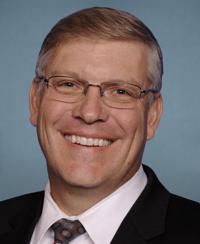
United States · Official source
1,142 records where Rep. Loudermilk, Barry [R-GA-11] is listed as a sponsor, author, or other actor. Search with topics and years
United States · United States Congress · 2 November 2023
United States · United States Congress · 1 November 2023
Recycling Infrastructure and Accessibility Act of 2023 This bill requires the Environmental Protection Agency (EPA) to establish a pilot grant program for improving recycling accessibility in communities. The EPA may award grants to states, local governments, Indian tribes, or public-private partnerships.
United States · United States Congress · 1 November 2023
Israel Security Supplemental Appropriations Act, 2024 This bill provides FY2024 supplemental appropriations to the Department of Defense (DOD) and the Department of State for activities to respond to the attacks in Israel. The bill designates the funding as emergency spending, which is exempt from discretionary spending limits. The bill provides appropriations to DOD for Operation and Maintenance; Procurement; and Research, Development, Test and Evaluation. The funding is provided for purposes such as replacing defense articles that were provided to Israel, reimbursing DOD for defense services and training provided to Israel, procuring Israel's Iron Dome and David's Sling defense systems, and developing Israel's Iron Beam defense system. The bill provides appropriations to the State Department for Diplomatic Programs, including Worldwide Security Protection; Emergencies in the Diplomatic and Consular Service; and the Foreign Military Financing Program. In addition, the bill includes provisions that expand the authorities of the President to transfer defense articles and services from DOD to Israel. Finally, the bill rescinds specified unobligated funds that were provided for activities of the Internal Revenue Service.
United States · United States Congress · 30 October 2023
United States · United States Congress · 30 October 2023
Bring Americans Home Act This bill prohibits the Department of State from requiring U.S. citizens to pay for costs associated with a government assisted evacuation or departure from a crisis situation in a foreign country.
United States · United States Congress · 25 October 2023
Standing Against Houthi Aggression Act This bill requires the Department of State to designate Ansarallah as a foreign terrorist organization and the President to impose property- and visa-blocking sanctions with respect to Ansarallah and any foreign person who is a member, agent, or affiliate of, or owned or controlled by Ansarallah.
United States · United States Congress · 25 October 2023
United States · United States Congress · 24 October 2023
Exchange Regulatory Improvement Act of 2023 This bill revises the definition of facility for purposes of regulation under the Securities Exchange Act of 1934. Specifically, the bill provides that a facility does not include any property, premises, or service that can legally be offered by a person or entity that is not required to be registered as an exchange.
United States · United States Congress · 12 October 2023
This bill terminates the presidential waiver of certain sanctions on Iran and the licenses issued by the Department of the Treasury that allowed for the transfer of previously blocked Iranian funds (namely, the approximately $6 billion of Iranian funds that the Biden Administration permitted to be transferred from restricted accounts in South Korea to restricted accounts in Qatar to facilitate the release of five U.S. citizens detained in Iran). Furthermore, the President may not exercise waiver authority related to certain accounts belonging to Iran.
United States · United States Congress · 11 October 2023
Iran-China Energy Sanctions Act of 2023 This bill requires the President to periodically determine whether any Chinese financial institution has engaged in the purchase of petroleum or petroleum products from Iran. U.S. financial institutions shall not open or maintain certain accounts with such Chinese financial institutions.
United States · United States Congress · 11 October 2023
No U.S. Financing for Iran Act of 2023 This bill prohibits certain actions related to exports, imports, and financing with respect to Iran. Specifically, the bill prohibits the Department of the Treasury from authorizing U.S. financial institution transactions in connection with the importation from or exportation to Iran of goods, services, or technology. This prohibition does not apply to the sale of agricultural commodities, food, medicine, or medical devices benefitting the civilian population of Iran. The bill requires Treasury to instruct U.S. representatives to the International Monetary Fund (IMF) to (1) oppose IMF financial assistance, and the allocation of Special Drawing Rights (SDR), to Iran; and (2) seek to ensure that IMF member countries prohibit the exchange of SDR held by Iran. (The SDR is an international reserve asset maintained by the IMF based on contributions from IMF member countries. SDRs may be exchanged between member countries and may also be exchanged for currencies.) Further, the bill provides statutory authority for the prohibition on Export-Import Bank financing with respect to Iran. The bill's provisions shall be in effect until the earlier of (1) 30 days after the President certifies to Congress that Iran has ceased providing support for acts of international terrorism and is not a jurisdiction of primary money laundering concern, or (2) 10 years after this bill's enactment.
United States · United States Congress · 11 October 2023
This resolution states that the House of Representatives stands with Israel as it defends itself against the barbaric war launched by Hamas and other terrorists, reaffirms Israel's right to self-defense, and condemns Hamas' brutal war against Israel. The resolution also reaffirms the United States' commitment to Israel's security, supports emergency resupply and certain other types of assistance to Israel, and urges full enforcement of sanctions against Iran to prevent Iran's funding of terrorist groups.
United States · United States Congress · 10 October 2023
This resolution states that the House of Representatives stands with Israel as it defends itself against the barbaric war launched by Hamas and other terrorists, reaffirms Israel's right to self-defense, and condemns Hamas' brutal war against Israel. The resolution also reaffirms the United States' commitment to Israel's security, supports emergency resupply and certain other types of assistance to Israel, and urges full enforcement of sanctions against Iran to prevent Iran's funding of terrorist groups.
United States · United States Congress · 3 October 2023
Government Service Delivery Improvement Act This bill requires that certain government officials be responsible for improving government service delivery (i.e., providing benefits or services to individuals, businesses, and organizations via agencies or programs). The bill requires the Office of Management and Budget (OMB) to designate or appoint a senior official within OMB as the Federal Government Service Delivery Lead. The primary responsibility of this individual shall be to coordinate government-wide efforts to improve government service delivery. The bill also requires the heads of certain executive branch agencies to be responsible for their respective agency's government service delivery, including continuously improving and enhancing government services. Each such agency head shall also designate or appoint a senior official of the agency whose duties shall include coordinating and executing efforts to improve and enhance the agency's government service delivery.
United States · United States Congress · 21 September 2023
Pay Our Troops Act This bill provides continuing appropriations for military pay for any period during which interim or full-year appropriations for FY2024 are not in effect (i.e., a government shutdown). Specifically, the bill provides FY2024 continuing appropriations for the pay and allowances of (1) members of the Armed Forces, including reserve components, who perform active service during the period; and (2) civilian employees and contractors of the Department of Defense (and the Department of Homeland Security in the case of the Coast Guard when the Coast Guard is not operating as a service in the Department of the Navy) who are providing support to such members of the Armed Forces. If a government shutdown occurs, the bill provides the continuing appropriations until the earlier of (1) the enactment into law of specified appropriations legislation, or (2) January 1, 2025.
United States · United States Congress · 18 September 2023
Insurance Data Protection Act This bill limits the ability of federal entities to compel insurance companies to share information. Specifically, the bill eliminates the subpoena power of the Federal Insurance Office. Under current law, the office has the power to subpoena information from insurers to, among other purposes, identify issues that could contribute to a systemic crisis in the insurance industry or the U.S. financial system. The bill also eliminates the ability of the Office of Financial Research to subpoena insurance companies. When seeking to collect insurance company data under specified consumer protection laws, a financial regulator must obtain the data from other regulators or from publicly available sources if possible. Otherwise, the financial regulator may only collect this data directly from the insurance company if it complies with the Paperwork Reduction Act.
United States · United States Congress · 14 September 2023
This resolution condemns the actions of Governor Michelle Lujan Grisham for violating the Second Amendment to the Constitution and depriving the citizens of New Mexico of their right to bear arms.
United States · United States Congress · 12 September 2023
CBDC Anti-Surveillance State Act This bill prohibits a Federal Reserve bank from offering products or services directly to an individual, maintaining an account on behalf of an individual, or issuing a central bank digital currency (i.e., a digital dollar) directly or indirectly to an individual. Further, The Board of Governors of the Federal Reserve System and the Federal Open Market Committee are prohibited from using a central bank digital currency to implement monetary policy.
United States · United States Congress · 5 September 2023
This joint resolution nullifies the final rule submitted by the Department of Education titled Improving Income Driven Repayment for the William D. Ford Federal Direct Loan Program and the Federal Family Education Loan (FFEL) Program and published on July 10, 2023. The rule creates a new income-driven repayment plan called the Saving on a Valuable Education (SAVE) plan.
United States · United States Congress · 27 July 2023
This resolution condemns Iran for the 1988 massacre of political prisoners. It also urges the Biden Administration and U.S. allies to publicly condemn the massacre and to pressure Iran to provide information to the families of the victims.
United States · United States Congress · 24 July 2023
American Financial Institution Regulatory Sovereignty and Transparency Act of 2023 or the American FIRST Act of 2023 This bill establishes reporting requirements for the Board of Governors of the Federal Reserve System, the Office of the Comptroller of the Currency, the Federal Deposit Insurance Corporation, the National Credit Union Administration, and the Federal Housing Finance Administration. Specifically, the bill requires these entities to report to Congress prior to implementing a non-binding recommendation from the Financial Stability Oversight Council or a recommendation contained in an Executive Order. Further, these entities must report to Congress regarding activity associated with certain nongovernmental international organizations, including the Basel Committee on Banking Supervision. Specifically, when proposing or finalizing major rules to conform with recommendations from these organizations, entities must submit to Congress notice, testimony, and a detailed economic analysis with respect to the proposed or final rule prior to its issuance. Additionally, in order to engage with these organizations about climate-related financial risks, entities must report on any participation with the organization’s activities and on the organization's funding sources. Entities must also report on any recommendations received from international organizations for international standardization regarding open-market policies and operations, discount lending and operations, or supervisory policies and operations. The bill also eliminates the position of Vice Chairman for Supervision from the Board of Governors of the Federal Reserve System. Currently, the Vice Chairman for Supervision develops policy recommendations for depository institution holding companies and other entities and oversees the supervision and regulation of these entities.
United States · United States Congress · 18 July 2023
Main Street Tax Certainty Act This bill makes permanent the tax deduction for qualified business income. (Under current law, the deduction expires after December 31, 2025.) Qualified business income is defined as the net amount of qualified items of income, gain, deduction and loss with respect to any trade or business, excluding capital gains or losses, dividends, interest income, or income earned outside the U.S.
United States · United States Congress · 14 July 2023
Ensuring U.S. Authority over U.S. Banking Regulations Act This bill requires specified banking regulatory entities to make certain disclosures when engaging with or implementing major rules to conform with recommendations from certain non-governmental international organizations. Specifically, the Board of Governors of the Federal Reserve System, the Office of the Comptroller of the Currency, the Federal Deposit Insurance Corporation, the National Credit Union Administration, and the Federal Housing Finance Agency must submit to Congress notice, testimony, and a detailed economic analysis with respect to the proposed or final rule prior to its issuance. Further, in order to engage with certain international organizations about climate-related financial risks, these entities must report on the entity's activities with the organization and the organization's funding sources.
United States · United States Congress · 14 July 2023
This bill requires certain institutional investment managers that use proxy advisory firms to disclose information related to voting on shareholder proposals. (Proxy advisory firms provide voting services and advice to institutional investors in public companies for proposals presented at shareholder meetings.) Generally, institutional investment managers must report annually (1) how the manager voted on each shareholder proposal, (2) the percentage of votes cast in accordance with proxy advisory firm recommendations, and (3) explanations such as how votes are reconciled with fiduciary duties. Managers must also certify that votes were based solely on the best economic interest of the shareholders. In addition, large institutional investment managers must (1) inform customers that shareholders are not required to vote on every proposal; (2) on certain votes, determine through an economic analysis the vote that is in the best economic interest of shareholders; and (3) report any such analysis annually.
United States · United States Congress · 14 July 2023
United States · United States Congress · 14 July 2023
This bill requires the Department of the Treasury to issue a report when it uses extraordinary measures to meet federal funding obligations without issuing additional Treasury securities. (The term extraordinary measures generally refers to actions that Treasury may implement to allow the United States to borrow additional funds without exceeding the statutory debt limit. The measures generally include suspensions or delays of debt sales and suspensions or redemptions of investments in certain government funds.) The bill requires Treasury to issue the report to the voting members of the Financial Stability Oversight Council, the Office of Financial Research, the House Committee on Financial Services, and the Senate Committee on Banking, Housing, and Urban Affairs upon notifying Congress that it has begun using extraordinary measures. The report must include a list of available extraordinary measures, stated as a dollar amount; a projection of the headroom under the debt limit (i.e., the difference between the current debt limit and the projected operating cash balance of the Treasury) afforded by each extraordinary measure; a projection of the date on which all available headroom afforded by the use of extraordinary measures will be exhausted, the Treasury will have an operating cash balance at or below $50 billion, the debt will be within $50 billion of reaching the limit, and Treasury will be unable to make timely payments on the debt; and an attestation by the Secretary of the Treasury as to whether the debt approaching the limit is an emerging threat to U.S. financial stability.
United States · United States Congress · 11 July 2023
American Confidence in Elections Act or the ACE Act This bill addresses election administration and security, campaign finance, and other related provisions. Specifically, the bill directs the Election Assistance Commission's (EAC's) Standards Board and Local Leadership Council to issue voluntary considerations for states about various aspects of election administration. Additionally, the bill reduces certain election assistance payments for states and local jurisdictions that allow noncitizens to vote; requires states to provide designated congressional election observers with full access to observe the administration procedures of federal elections; prohibits federal agencies from using funds made available for salaries and expenses to solicit or enter into agreements with nongovernmental organizations to conduct voter registration or voter mobilization activities on the agency's property or website; prohibits federal funds for election administration for states that allow ballot harvesting, with exceptions; establishes various requirements for elections in the District of Columbia; makes various changes to the EAC; and prohibits foreign nationals from making contributions or donations in connection with state or local ballot initiatives or referenda. The bill also establishes the Twentieth Amendment Section Four Panel, which must recommend to Congress model legislation to resolve any vacancy created by the death of a candidate in a contingent presidential or vice-presidential election. The bill makes changes to campaign finance, including by (1) repealing limits on coordinated party expenditures, and (2) prohibiting federal funds from being used to make payments in support of a congressional election campaign. It also makes changes to the Federal Election Commission.
United States · United States Congress · 11 July 2023
Protecting Investors' Personally Identifiable Information Act This bill prohibits the Securities and Exchange Commission (SEC) from requiring a national securities exchange, association, or a member of either to provide a market participant's personally identifiable information to satisfy the reporting requirements of the Consolidated Audit Trail (i.e., data used to track market activity). However, this information must be provided to the SEC upon request if the information is related to a securities investigation. The SEC must destroy the information not later than one day after the conclusion of the matter for which this information was required.
United States · United States Congress · 11 July 2023
This resolution expresses support for the designation of Journeyman Lineworkers Recognition Day. (A journeyman lineworker is a person who builds and maintains electrical power systems.)
United States · United States Congress · 11 July 2023
United States · United States Congress · 3 July 2023
Non-citizens: Outlawed from Voting in Our Trusted Elections Act of 2023 or the NO VOTE for Non-Citizens Act of 2023 This bill establishes additional requirements related to noncitizens and voting and addresses related issues. Currently, each state must conduct a general program that makes a reasonable effort to remove the names of ineligible voters from the official eligible voter lists by reason of the death of the voter or a change in the residence of the voter. In addition to these requirements, states must also make reasonable efforts to remove noncitizens from the official eligible voter lists. The bill requires states that allow noncitizens to vote in state or local elections to maintain separate state voter registration lists for noncitizens. Additionally, the bill requires states and local jurisdictions that allow noncitizens to vote in their elections to ensure that the ballot used for casting votes by noncitizens may only include the candidates for state or local elections for which noncitizens are permitted to vote. Further, the bill reduces election assistance payments to states and local jurisdictions that allow noncitizens to vote. If a U.S. district court recuses an individual from jury duty on the grounds that the individual is a noncitizen, then the court shall transmit a notice of such recusal to the chief state election official and the Department of Justice. The bill also references current federal law prohibiting noncitizens from voting in federal elections and related criminal penalties for violations.
United States · United States Congress · 23 June 2023
United States · United States Congress · 23 June 2023
This resolution supports the nomination of the Okefenokee National Wildlife Refuge in Georgia as a UNESCO World Heritage Site.
United States · United States Congress · 22 June 2023
Restore Department of Veterans Affairs Accountability Act of 2023 or the Restore VA Accountability Act of 2023 This bill modifies personnel action procedures regarding certain employees and executives of the Department of Veterans Affairs (VA). The bill authorizes the VA to remove from civil service, demote, or suspend VA employees that are supervisors or managers if the VA determines by substantial evidence that the performance or misconduct of such individual warrants such action. This authority does not apply to certain appointees or individuals in their probationary or trial period. Supervisors or managers who are subject to a removal, demotion, or suspension under this bill are entitled to (1) advance notice of the action and supporting evidence, (2) representation by an attorney or representative, and (3) grieve the action in accordance with an internal grievance process. The bill also provides protections from removal, demotion, or suspension for supervisor or managers who are whistleblowers or are seeking corrective action for an alleged prohibited personnel practice such as discrimination. The bill also modifies the procedures to remove, demote, or suspend VA employees or senior executives based on performance or misconduct, specifically by requiring the VA to determine by substantial evidence that the performance or misconduct of the individual warrants such removal, demotion, or suspension. Such procedures must apply retroactively, beginning on the date of enactment of the Department of Veterans Affairs Accountability and Whistleblower Protection Act of 2017 (June 23, 2017).
United States · United States Congress · 21 June 2023
Enforce the Caps Act This bill establishes annual discretionary spending limits for FY2026-FY2029.
United States · United States Congress · 15 June 2023
This joint resolution proposes a constitutional amendment prohibiting total outlays for a fiscal year from exceeding total receipts for that fiscal year or 18% of the U.S. gross domestic product unless Congress authorizes the excess by a two-thirds vote of each chamber. The prohibition excludes outlays for repayment of debt principal and receipts derived from borrowing. The amendment requires a two-thirds vote of each chamber of Congress to levy a new tax, increase the rate of any tax, or increase the debt limit. The amendment provides any Member of Congress with standing and a cause of action to seek judicial enforcement of this amendment if authorized by a petition signed by one-third of the Members of either chamber of Congress. Courts are prohibited from ordering any increase in revenue to enforce this amendment.
United States · United States Congress · 9 June 2023
Designates the facility of the United States Postal Service located at 120 West Church Street in Mount Vernon, Georgia, as the "Second Lieutenant Patrick Palmer Calhoun Post Office."
United States · United States Congress · 9 June 2023
United States · United States Congress · 1 June 2023
U.S.-Israel Partnership and Abraham Accords Enhancement Act of 2023 This bill modifies and extends certain authorities related to Israel. For example, the bill extends the authorization for the Department of Defense (DOD) to transfer certain defense items to Israel; extends the authorization to finance cooperative projects among the United States, Israel, and developing countries related to water resources, agriculture, and energy storage; extends energy cooperation and authorizes the Department of Energy to make grants to Israel to support advanced nuclear technologies, as well as for carbon capture, utilization, and storage; requires the U.S. Agency for International Development to ensure that applicants from Abraham Accord countries are eligible for Middle East Regional Cooperation grants; and requires the Department of State to report to Congress on U.S. diplomatic efforts to oppose politically motivated investigations against the United States and Israel at the International Criminal Court.
United States · United States Congress · 31 May 2023
Stop Harboring Iranian Petroleum Act or the SHIP Act This bill requires the President to impose visa- and property-blocking sanctions against foreign persons that knowingly transport, process, refine, or otherwise deal in petroleum and petroleum products originating in Iran. These sanctions also extend to certain foreign persons associated with the sanctioned individual, such as adult family members and any entities owned or controlled by the sanctioned individual.
United States · United States Congress · 22 May 2023
Increasing Financial Regulatory Accountability and Transparency Act This bill establishes new disclosure, approval, and notification requirements for financial regulators, including the Federal Deposit Insurance Corporation (FDIC), the Board of Governors of the Federal Reserve System, and the Financial Stability Oversight Council (FSOC). For example, FDIC must notify Congress prior to taking action or providing certain assistance to an insured depository institution in receivership that risks serious adverse effects on economic conditions or financial stability. Further, the board must disclose on a more frequent basis information about emergency credit facilities, discount window lending programs, and open market operations. The bill requires congressional approval before subjecting a nonbank financial company to enhanced prudential supervision. Currently, the FSOC makes this determination upon an evaluation and vote that requires two-thirds of the council's approval. The bill also eliminates the emergency exception to this authority that allows the FSOC to waive or modify certain requirements. The bill establishes qualification requirements for the Vice Chairman for Supervision of the Board of Governors of the Federal Reserve System. Specifically, an individual must have primary experience working in or supervising insured depository institutions, bank holding companies, or savings and loan holding companies. Finally, the bill requires specified financial agencies to testify in front of and report to the appropriate congressional committees semi-annually regarding the efforts, activities, objectives, and plans for the supervision and regulation of entities under their supervision.
United States · United States Congress · 22 May 2023
Middle Class Borrower Protection Act of 2023 This bill rolls back changes made by the Federal Housing Finance Agency (FHFA) to the fees charged by Fannie Mae and Freddie Mac for a conventional single-family mortgage (i.e., loan-level pricing adjustments) and restricts future fee adjustments. These changes, effective May 1, 2023, revised the fee charts that provide percentage adjustments based on a mortgagor's credit score and down payment. The bill reinstates the fee structure that was in place prior to May 1, 2023. The Government Accountability Office (GAO) must report on the changes made by the FHFA. Further adjustments to the fee structure by FHFA are prohibited until 90 days after the publication of the GAO report. After this period, FHFA must follow Administrative Procedure Act requirements when proposing adjustments to the fee structure. The bill also requires that, to the greatest extent feasible, revisions to the fee schedule must be based on risk. Further, FHFA, Fannie Mae, and Freddie Mac are prohibited from imposing any loan-level pricing adjustment fee that is based on the ratio of the debt of the mortgagor to the income of the mortgagor.
United States · United States Congress · 18 May 2023
United States · United States Congress · 18 May 2023
Reinstate Our Troops Act This bill addresses the reinstatement of members of the Armed Forces who requested an exemption from an order to receive a COVID-19 vaccination and were involuntarily separated solely on the basis of the refusal to receive such vaccination. Specifically, at the election of the separated individual, the bill requires the military department concerned to reinstate the individual, in the same rank and grade the individual held at the time of separation. An individual must elect to be reinstated within the one-year period following the enactment of this bill. Additionally, such individuals (enlisted members and officers) are not required to repay a bonus for failure to complete a period of service solely because such service was incomplete due to the exemption request and involuntary separation. The military department concerned must return a bonus repaid by an individual if the individual elects to be reinstated. If an individual does not elect reinstatement, the military department concerned must ensure the discharge of the individual is characterized as honorable. The military department concerned must also expunge from an individual's military service record any reference to adverse action related to the refusal to receive a COVID-19 vaccination.
United States · United States Congress · 18 May 2023
This bill requires the Federal Reserve Board to disclose on a more frequent basis information about emergency credit facilities, discount window lending programs, and open market operations. It also moves up the termination date of board-authorized credit facilities. The bill requires certain nonpublic data related to credit facilities be made available, with some limitations, to the appropriate congressional committees. The bill revises the definition of a liquidity event. Currently, a liquidity event is defined as (1) an exceptional and broad reduction in the ability of financial market participants to sell financial assets without an unusual and significant discount or to borrow using financial assets as collateral without an unusual and significant increase in margin, or (2) an unusual and significant reduction in the ability of financial market participants to obtain unsecured credit. The bill eliminates this definition and instead requires the board, the Federal Deposit Insurance Corporation (FDIC), and the Department of the Treasury to define the term through a joint rulemaking. Under the bill, Congress must be notified when the board or the FDIC makes a determination as to whether a liquidity event exists that warrants the use of a guarantee program (a program to guarantee obligations of insured depository institutions or holding companies during times of severe economic distress). The bill also requires congressional notification of the cost to the taxpayer of such guarantee program.
United States · United States Congress · 18 May 2023
This bill requires additional notice and reporting by agencies when providing assistance to an insured depository institution. First, the Federal Deposit Insurance Corporation (FDIC) must notify the appropriate congressional committees prior to taking action or providing assistance for the purpose of winding up an institution in receivership that presents the risk for serious adverse effects on economic conditions or financial stability. The bill also revises the basis for determining the least costly approach to satisfy the FDIC's obligations to depositors. The Department of the Treasury must preserve specified information that documents a determination of an institution's potential to cause serious adverse effects on economic conditions or financial stability. The Board of Directors of the FDIC, Treasury, and Board of Governors of the Federal Reserve System must report to the appropriate congressional committees additional information on emergency determinations.
United States · United States Congress · 18 May 2023
This bill makes several changes to the Financial Stability Oversight Council (FSOC), including by requiring congressional approval before certain activities, eliminating certain duties, and by capping FSOC assessments. The FSOC monitors threats to U.S. financial stability through cross-agency information sharing, regulatory coordination, and the designation of certain companies and activities as significant. The bill requires congressional approval before subjecting a nonbank financial company to enhanced prudential supervision. Currently, the FSOC makes this determination upon an evaluation and vote that requires two-thirds of the council's approval. The bill also eliminates the emergency exception to this authority that allows the FSOC to waive or modify certain requirements. The bill eliminates several of the FSOC's duties and activities, including its duty to make recommendations to the Federal Reserve Board to establish certain heightened prudential standards for nonbank financial companies and large bank holding companies supervised by the Federal Reserve Board. FSOC assessments are capped at current levels. The bill requires that the FSOC notify Congress before performing several actions, including gathering information from bank holding companies and nonbank financial companies. In addition, the bill adds an independent member to the FSOC that serves for six years and who must be from a different political party than the President. The Government Accountability Office must audit the FSOC annually.
United States · United States Congress · 17 May 2023
American Battlefield Protection Program Enhancement Act This bill expands the National Park Service's American Battlefield Protection Program. The bill expands the battlefield acquisition grant program to allow grants to be (1) awarded to Indian tribes and nonprofit organizations, and (2) awarded to acquire certain Revolutionary War or War of 1812 battlefields. The bill expands eligibility for the battlefield restoration grant program to include battlefield land that is owned by a state, tribe, local government, or nonprofit organization. Not later than 2 years after this bill's enactment and every 10 years thereafter, the American Battlefield Protection Program must report to Congress on preservation activities and the condition of battlefields.
United States · United States Congress · 17 May 2023
AM Radio for Every Vehicle Act of 2023 This bill requires the Department of Transportation (DOT) to issue a rule that requires all new motor vehicles to have devices that can access AM broadcast stations installed as standard equipment. (AM broadcast stations are often used to deliver emergency alerts and news and entertainment programming; some newer vehicles do not include AM equipment.) Specifically, this bill applies to motor vehicles manufactured in the United States, imported into the United States, or shipped in interstate commerce after the rule's effective date. The DOT rule must require all such vehicles to have devices that can receive signals and play content transmitted by AM broadcast stations or digital audio AM broadcast stations installed as standard equipment. Prior to the effective date of the rule, manufacturers that do not include devices that can access AM broadcast stations as standard equipment must inform purchasers of this fact through clear and conspicuous labeling. DOT may assess civil penalties against any manufacturer that fails to comply with the mandate. The Department of Justice may also bring a civil action to enjoin a violation. Further, the Government Accountability Office must study and report on whether a reliable alternative communication system exists for delivering emergency alerts and consider the (1) cost to drivers and passengers of receiving communications through an alternative system, and (2) cost and time required to develop and implement an alternative.
United States · United States Congress · 16 May 2023
National Law Enforcement Officers Remembrance, Support and Community Outreach Act This bill directs the Department of Justice (DOJ) to establish a National Law Enforcement Officers Remembrance, Support, and Community Outreach Program. The bill further directs DOJ to award a grant under the program to the National Law Enforcement Officers Memorial Fund for the expenses associated with community outreach, public education, and officer safety and wellness programs operated by the of the National Law Enforcement Officers Memorial Fund and National Law Enforcement Museum.