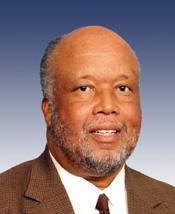
United States · United States Congress · 5 April 1995
Prohibits the shipment in interstate or foreign commerce of steel jaw leghold traps and of articles of fur derived from animals trapped in such traps. Prescribes criminal penalties for violations of this Act. Directs the Secretary of the Interior to reward nongovernment informers for information leading to a conviction under this Act. Empowers enforcement officials to detain, search, and seize suspected merchandise or documents and to make arrests with and without warrants. Subjects seized merchandise to forfeiture.
United States · United States Congress · 3 April 1995
Makes eligible for the award of the Purple Heart members of the armed forces killed or wounded on or after January 1, 1994, by weapon fire while engaged in a peacekeeping activity.
United States · United States Congress · 3 April 1995
TABLE OF CONTENTS: Title I: Voluntary Environmental Cleanup Title II: National Environmental Business Development Program Title III: National Environmental Response, Remediation, and Restoration Training Programs Subtitle A: National Environmental Response Training Program Subtitle B: National Environmental Remediation and Restoration Training Program Title IV: National Environment-Related Employment Program Comprehensive Economic and Environmental Recovery Act of 1995 - Title I: Voluntary Environmental Cleanup - Authorizes innocent landowners or responsible owners to submit cleanup plans for affected sites to the Administrator of the Environmental Protection Agency for approval. Defines: (1) an "affected site" as a facility that has environmental contamination that could prevent its use, development, reuse, or redevelopment and is limited in scope and can be comprehensively characterized and readily analyzed; (2) an "innocent landowner" as a person who intends to own or who owns an affected site and did not contribute to any contamination or the release of hazardous substances; and (3) a "responsible owner" as a person who owns an affected site on which industrial activities take place. Establishes a Cleanup Loan Fund to provide funding to persons undertaking the development and implementation of approved cleanup plans. Requires liens in favor of the United States to arise on contaminated property subject to a loan. Authorizes civil actions to enforce loan agreements. Provides for the annual transfer of a specified amount of funds from the Hazardous Substance Superfund to the Cleanup Loan Fund. Amends the Internal Revenue Code to include within the tax deduction allowed for trade and business expenses all amounts paid or incurred in preparing and implementing cleanup plans. Title II: National Environmental Business Development Program - Exempts wages paid to an owner-employee (any employee who is a principal shareholder) of an employer which is a new environmental business from social security taxes. Makes such exemption inapplicable to amounts after the first $100,000 paid to such employee. Defines a "new environmental business" as any corporation which: (1) is a small business concern; (2) meets requirements similar to those under the Internal Revenue Code for targeted urban areas; (3) is a new business for the calendar year; and (4) during such year, trains and certifies environmental response employees and emergency responders, employs such individuals, or performs environmental assessments, remediation, or restoration. Provides for a similar exemption from social security taxes for self-employed new environmental businesses. Terminates such exemptions after 2000. Title III: National Environmental Response, Remediation, and Restoration Training Programs - Subtitle A: National Environmental Response Training Program - Directs the Secretary of Labor to establish a National Environmental Response Training Program for purposes of: (1) training and certifying targeted urban area residents who are unemployed and underemployed to become environmental response employees and emergency responders; and (2) providing grants to environmental training providers. Requires the Secretaries of Labor and Education to develop an academic or work-site experience curriculum cooperatively with local educational agencies to enable 11th and 12th grade students to become environmental response employees or emergency responders. Provides for grants to communities for purposes of implementing such curriculum. Subtitle B: National Environmental Remediation and Restoration Training Program - Directs the Administrator to establish an education and training program in qualified institutions of higher education to enable qualified individuals to acquire career training in environmental engineering, environmental sciences, or environmental project management as it relates to hazardous waste response, cleanup, and restoration. Makes eligible for such program persons who have a high school diploma or its equivalence, are enrolled in or accepted into a qualified institution of higher education, and reside in targeted areas. Directs the Secretaries of Defense and Energy and the Administrator to provide grants to qualified institutions of higher education, subject to certain conditions. Requires such institutions to use such funds for purposes of establishing consortium programs to provide education and training in environmental restoration to qualified individuals. Title IV: National Environment-Related Employment Program - Requires Federal agencies authorized to award contracts to carry out environmental or emergency response to give preference to firms that: (1) meet the requirements of the contract; (2) are located in a targeted urban area; and (3) have a payroll in which at least 25 percent of their certified environmental response employees and responders reside in a targeted urban area or, in cases where availability of certified environmental response employees and responders does not allow firms to comply, actively participate in a youth apprenticeship program.
United States · United States Congress · 28 March 1995
Waterways Restoration Act of 1995 - Amends the Watershed Protection and Flood Prevention Act to delete the requirement that each watershed improvement under such Act must contain benefits directly related to agriculture that account for at least 20 percent of the total project benefits. Directs the Secretary of Agriculture to establish and implement a Waterways Restoration Program which provides technical assistance and grants, on a competitive basis, to eligible entities for carrying out waterway restoration projects. Requires such projects to achieve ecological restoration or protection and one or more of the following objectives: (1) flood damage reduction; (2) erosion control; (3) stormwater management; or (4) water quality enhancement. Provides project descriptions and priorities, including the location of projects in low-income or economically depressed areas adversely affected by poor watershed management. Outlines other project requirements, including a cost-benefit analysis. Requires the Secretary to designate Program administrators for each participating State (including a State agency if approved by the Secretary). Requires program grants to be awarded on an annual basis. Provides project application and selection requirements, including the establishment in each participating State of an interdisciplinary team of specialists to assist in reviewing project applications under the Program. Outlines conditions for receiving assistance under the Program, with sponsor and cosponsor requirements. Requires a non-Federal share of 25 percent of project costs, with a waiver for economically depressed communities. Limits the administrative and technical assistance costs of the Program. Requires the Governor of each participating State to establish a citizens oversight committee to evaluate management of the Program in that State. Requires program administrators to issue annual reports summarizing the Program evaluations of the oversight committees. Requires the Secretary to give a priority to waterways restoration projects in making funding decisions under such Act.
United States · United States Congress · 28 March 1995
Disadvantaged Minority Health Improvement Authorization Extension Act of 1995 - Amends the Public Health Service Act to authorize appropriations for: (1) the Office of Minority Health in the Office of the Assistant Secretary for Health; (2) health statistical and epidemiological activities of the National Center for Health Statistics; (3) grants for surveys or studies, data analysis, and research regarding ethnic and racial populations; (4) grants to States for demonstration programs to increase the availability of primary health care in health professional shortage areas; (5) grants to provide public housing residents with primary health services and health counseling and education services; (6) Federal capital contributions to student loan funds for individuals from disadvantaged backgrounds; (7) grants to schools of medicine, osteopathic medicine, and dentistry for scholarships for students of exceptional financial need; (8) grants to health professions schools for scholarships; (9) educational loan repayments for those agreeing to serve as members of the faculties of specified types of health professions schools; (10) grants and contracts with health or educational entities to assist in increasing the number of underrepresented minority faculty members; (11) grants to health professions schools to support programs of excellence in health professions education for minority individuals; and (12) grants and contracts to assist individuals from disadvantaged backgrounds to undertake education to enter a health profession. Declares that provisions of the National Health Service Corps Loan Repayment Program, except as inconsistent, shall apply to provisions regarding educational loan repayments of health professionals who agree to conduct clinical research as employees of the National Institutes of Health. (Current law applies some but not all of the provisions that would be applied under the amendment made by this Act.)
United States · United States Congress · 23 March 1995
Honors the memory of the victims of the Armenian genocide. Calls for the United States to encourage the Republic of Turkey to acknowledge and commemorate the atrocity committed against the Armenian population of the Ottoman Empire from 1915 to 1923.
United States · United States Congress · 22 March 1995
TABLE OF CONTENTS: Title I: Federal Commitment to Urban Economic Development Title II: Tax Incentives to Stimulate Urban Economic Development Title III: Community-Based Housing Development Title IV: Response to Urban Environmental Challenges Subtitle A: Environmental Cleanup Subtitle B: Environmental-Economic Recovery New Urban Agenda Act of 1995 - Title I: Federal Commitment to Urban Economic Development - Amends the Office of Federal Procurement Policy Act to require executive agencies to expend not less than 15 percent in a fiscal year for the purchase of goods from businesses located in empowerment zones, enterprise communities, or enterprise zones. Requires agencies, to the maximum extent practicable, to purchase recycled products from businesses located in such zones. (Sec. 102) Requires not less than 15 percent of foreign assistance provided in a fiscal year to be in the form of credits for the purchase of U.S. goods produced, manufactured, or assembled in such zones. (Sec. 103) Directs the Secretary of Commerce, in designating and providing financial assistance to Manufacturing Technology Outreach Centers, to give preference to centers located in such zones. (Sec. 104) Establishes a preference for the construction, improvement, or relocation of Federal facilities in distressed urban areas. Title II: Tax Incentives to Stimulate Urban Economic Development - Amends the Internal Revenue Code with respect to the offset for rental real estate activities under passive activity rules to increase the rehabilitation credit under such rules. (Sec. 202) Allows the rehabilitation investment credit to offset a portion of tentative minimum tax. (Sec. 203) Allows the issuance of tax-exempt facility bonds for sports facilities, convention or trade show facilities, freestanding parking facilities, air or water pollution control facilities, or industrial parks. Makes termination dates on such tax-exempt bonds inapplicable to bonds issued to finance manufacturing facilities. (Sec. 204) Increases the permitted amount of qualified small issue bonds for facilities to be used by related persons. (Sec. 205) Provides an exception to arbitrage interest rebate provisions if 100 percent of available construction proceeds are spent for governmental purposes within three years of the issuance of the tax-exempt bonds. Title III: Community-Based Housing Development - Provides, subject to the approval of both the unit of general local government and the local public housing agency, for the reconstruction of public housing dwelling units on the same property on which such units were demolished or disposed, and for the relocation of displaced tenants to such new units. Title IV: Response to Urban Environmental Challenges - Subtitle A: Environmental Cleanup - Amends the Comprehensive Environmental Response, Compensation, and Liability Act of 1980 to exclude local governments that are owners or operators of facilities in distressed urban areas from liability under such Act. Requires the President to establish standards for the degree of cleanup of hazardous substances, pollutants, and contaminants released into the environment for facilities located in distressed urban areas. Subtitle B: Environmental-Economic Recovery - Authorizes the Secretary of Energy to make no more than three loans to units of local government for distressed urban areas for the establishment of facilities to dispose of, and obtain inexpensive electrical power and steam from, solid waste. Requires a report to the Congress on the results of financing such facilities.
United States · United States Congress · 22 March 1995
Newborn Infant HIV Notification Act - Requires a State, if it requires that the results of the human immunodeficiency virus (HIV) testing of an infant be reported to it (or if the State conducts an HIV test of the infant), to disclose such results to: (1) the biological mother of the infant if the mother is the legal guardian; or (2) specified State agencies if the State is the legal guardian of the infant. Directs the State, in disclosing such results (other than to State agencies), to ensure that appropriate counseling on HIV is provided to the individual.
United States · United States Congress · 21 March 1995
Corporate Welfare Reduction Act of 1995 - Amends the Internal Revenue Code, with respect to determining the foreign tax credit, to replace the formula for reducing the amount of oil and gas extraction taxes taken into account. Disallows as creditable amounts: (1) any taxes paid or accrued to a foreign country with respect to foreign oil and gas income (including extraction income) which are not imposed under the country's generally applicable income tax law; and (2) any other taxes on such income to the extent that the country's law is structured or operates so that the tax amount imposed will generally be materially greater, over a reasonable period, than the amount generally imposed on other income. Separates such income, for purposes of certain limitations on the application of the credit, into foreign oil and gas extraction income and foreign oil related income. Removes the deferral, for purposes of taxation of controlled foreign corporations, of tax on extraction income or income from consumption in the foreign country. Provides that the Secretary of the Treasury's authority, in allocating income, deductions, credits, and allowances among taxpayers owned or controlled by the same interests, shall not be limited by any restriction on the ability of the entities to transfer or receive money or property. Terminates, effective with taxable years beginning January 1, 1996, the exclusion of foreign earned income and the housing cost amounts of U.S. citizens or residents living abroad. Treats the gain or loss of a nonresident alien individual or foreign corporation that is a ten-percent shareholder in a domestic corporation upon disposition of such a corporation's stock as if the taxpayer were engaged during the taxable year in a trade or business within the United States and such gain or loss attributable to a permanent U.S. trade or business establishment. Imposes a 26-percent minimum tax on nonresident alien individuals. Provides for the withholding of tax on such dispositions, except in the case of stock which is not regularly traded. Excepts such gain from the branch profits tax imposed on foreign corporations. Requires notice to the Secretary upon distributions by a U.S. person to a foreign person in redemption of stock or complete liquidation of a subsidiary. Removes the exemption of ten-percent shareholders from the tax on interest of nonresident alien individuals received from portfolio debt investments. Redefines portfolio interest as only interest paid on obligations issued by governmental entities. Provides special rules for determining the source of income from the sale of inventory property.
United States · United States Congress · 21 March 1995
Expresses the sense of the Congress that: (1) if Department of Defense (DOD) commissary and exchange systems are reduced or eliminated, derived funds should be used to increase other forms of compensation for current and retired military personnel in order to offset the decrease in indirect pay for such personnel; and (2) if exchange stores are reduced, eliminated, or privatized, funds should be provided to DOD to upgrade and avoid the erosion of morale, welfare, and recreation activities and other facilities provided to current and retired military personnel and their dependents.
United States · United States Congress · 16 March 1995
Requires nonlethal excess supplies of the Department of Defense to be made available to a State, local government, territory, or possession, upon request, before being made available for humanitarian relief purposes.
United States · United States Congress · 16 March 1995
Crack-Cocaine Equitable Sentencing Act of 1995 - Amends the Controlled Substances Act and the Controlled Substances Import and Export Act to eliminate specified mandatory minimum penalties relating to the trafficking in, and possession, importation, or distribution of, crack cocaine.
United States · United States Congress · 16 March 1995
Declares that it is the sense of the House of Representatives that the Government should not establish any policy restricting medical professionals from providing women full and accurate medical information on their reproductive health options, including the provision of nondirective abortion counseling.
United States · United States Congress · 15 March 1995
TABLE OF CONTENTS: Title I: Improving Aid to Families with Dependent Children Title II: Making Work Pay Title III: Improving Child Support Enforcement Title IV: Reauthorization of Child Care and Development Block Grant Title V: Amendments to the Internal Revenue Code Title VI: Effective Date Family Stability and Work Act of 1995 - Title I: Improving Aid To Families With Dependent Children - Amends parts A (Aid to Families with Dependent Children) (AFDC) and F (Job Opportunities and Basic Skills Training Program) (JOBS) of title IV of the Social Security Act (SSA) to make various specified changes with regard to AFDC benefits, including changes: (1) increasing the standard earned income disregard under AFDC and State flexibility regarding recipient participation in the JOBS program; (2) eliminating the different treatment of two-parent families; (3) extending the transitional child care guarantee under AFDC; (4) increasing the Federal matching rates for child care under AFDC; (5) increasing JOBS program funding; (6) adding requirements for State JOBS program participation rates; (7) increasing JOBS and transitional child care matching rates for States whose recipients leave AFDC for paid employment; (8) increasing at-risk child care funding; and (9) establishing a jobs creation and work experience program under JOBS. Title II: Making Work Pay - Amends Medicaid and the Food Stamp Act of 1977 to provide for transitional Medicaid benefits and the continuation of food stamps in order to make work pay for former AFDC recipients. (Sec. 202) Provides for the temporary exclusion of earned income for purposes of determining rent paid for units in federally assisted housing. Title III: Improving Child Support Enforcement - Amends SSA title IV part D (Child Support and Establishment of Paternity) to make various specified changes with regard to: (1) State obligations to provide paternity establishment and child support enforcement services; (2) distribution of payments; (3) due process rights; (4) privacy safeguards; (5) program administration and funding, including funding for Secretarial assistance to State programs; (6) locate and case tracking, including providing for centralized collection and disbursement of support payments and an expanded Federal Parent Locator Service; and (7) State law requirements, including interstate enforcement of child support orders, expedited administrative and judicial procedures, and paternity establishment. (Sec. 351) Establishes a National Child Support Guidelines Commission to develop a national child support guideline for consideration by the Congress that is based on a study of various guideline models, the benefits and deficiencies of such models, and any needed improvements. (Sec. 361) Amends the Internal Revenue Code to provide for a change in the order of refund distributions and make other specified changes with regard to the enforcement of support orders, including providing for the Internal Revenue Service to collect child support arrears and revising the authority for support collection with respect to Federal employees. (Sec. 364) Provides for the enforcement of child support obligations of members of the armed forces through the establishment of a centralized personnel locator service. (Sec. 365) Makes other specified changes with regard to child support enforcement matters, including establishing State procedures for: (1) placing liens for arrears of child support on motor vehicle titles of individuals owing such arrears; (2) voiding fraudulent transfers in cases where a debtor transferred income or property to avoid payment of a child support creditor; (3) suspending driver's and other types of licenses in arrearage cases; and (4) charging for the collection of interest and penalties on arrearages. (Sec. 368) Modifies arrearage reporting to credit bureaus. (Sec. 389) Extends the statute of limitations for collection of arrearages. (Sec. 371) Provides for the denial of passports for nonpayment of child support. (Sec. 372) Expresses the sense of the Congress that the United States should ratify the United Nations Convention of 1956. Provides for the treatment of international child support cases as interstate cases. (Sec. 381) Makes a technical correction to the definition of medical child support order under the Employee Retirement Income Security Act of 1974. Title IV: Reauthorization of Child Care And Development Block Grant - Amends the Child Care and Development Block Grant Act of 1990 to reauthorize the child care and development block grant program. Title V: Amendments to the Internal Revenue Code - Amends the Internal Revenue Code to increase from 35 percent to 36.25 percent of a corporation's taxable income over $10 million the top marginal corporate tax rate. Title VI: Effective Date - Sets forth the effective date of this Act.
United States · United States Congress · 15 March 1995
Electronic Terminal Disclosure Act of 1995 - Amends the Electronic Fund Transfer Act to mandate that fee disclosure regulations require an electronic terminal operator to disclose to consumers at the time of an electronic fund transfer transaction the amount of any fee imposed for providing the service.
United States · United States Congress · 14 March 1995
Student Loan Affordability Act of 1995 - Amends the Internal Revenue Code to allow a tax deduction for the interest paid on qualified higher education loans. Allows such deduction in computing adjusted gross income.
United States · United States Congress · 10 March 1995
Captive Exotic Animal Protection Act of 1995 - Amends the Federal criminal code to prohibit and set penalties for knowingly transferring, transporting, or possessing a confined exotic animal for purposes of allowing the killing or injuring of that animal for entertainment or the collection of a trophy.
United States · United States Congress · 9 March 1995
Historically Black Colleges and Universities Historic Building Restoration and Preservation Act - Directs the Secretary of the Interior to administer a program of grants-in-aid, from amounts authorized to be appropriated to carry out the National Historic Preservation Act for FY 1996 through 1999, to eligible historically black colleges and universities for the preservation and restoration of historic buildings and structures on their campuses. Requires a grantee to covenant, for the period of time specified by the Secretary, that: (1) no alteration will be made in the property with respect to which the grant is made without the concurrence of the Secretary; and (2) reasonable public access will be permitted to such property for interpretive and educational purposes. Authorizes the Secretary to: (1) obligate funds for a grant with respect to a building or structure listed on the National Register of Historic Places only if the grantee agrees to match the amount of such grant with funds derived from non-Federal sources; and (2) waive this matching requirement if an extreme emergency exists or if such a waiver is in the public interest to assure the preservation of historically significant resources. Earmarks funds for FY 1996 for grants to: (1) Fisk University; (2) Knoxville College; and (3) historically black colleges and universities identified for inclusion in the Department of the Interior Historically Black College and University Historic Preservation Initiative.
United States · United States Congress · 6 March 1995
Filipino Veterans Equity Act of 1995 - Amends Federal veterans' benefits provisions to include certain service in the organized military forces of the Philippines and service as Philippine Scouts within the definition of active U.S. military service for purposes of eligibility for various veterans' benefits for former active-duty military personnel.
United States · United States Congress · 3 March 1995
Amends the National Trails System Act to designate the route from Selma to Montgomery, Alabama (traveled by the march dramatizing the need for voting rights legislation), as a National Historic Trail.
United States · United States Congress · 28 February 1995
Amends part B (Supplemental Medical Insurance) of title XVIII (Medicare) of the Social Security Act to include within Medicare coverage the use of blood-testing strips for individuals with Type I or II diabetes. Requires such strips to be included within a payment methodology covering inexpensive and routinely purchased equipment.
United States · United States Congress · 28 February 1995
Federal Employees Health Benefits Access Act - Prohibits a Government health services contract from being made or a plan approved unless the carrier agrees to offer to the general public the same benefits as would be offered under such contract or plan to Federal employees and annuitants and their family members. Requires premiums for coverage to be established in conformance with such requirements as the Office of Personnel Management (OPM) shall prescribe. Specifies that in no event shall this Act's enactment result in any: (1) increase in the level of individual or Government contributions required, including copayments or deductibles; (2) decrease in the types of benefits offered; or (3) other change that would adversely affect the coverage afforded to employees and annuitants and their family members. Permits a carrier to file an application with OPM setting forth reasons why it, or a plan provided by such carrier, should be excluded from the requirements of this Act. Allows OPM, in reviewing any such application, to consider such factors as: (1) any bona fide enrollment restrictions which would make the application of this Act inappropriate; (2) whether compliance would jeopardize the financial solvency of the plan or carrier or otherwise compromise its ability to offer health benefits; and (3) the anticipated duration of the requested exclusion and what efforts the plan or carrier proposes to take in order to be able to comply with this Act. Requires a claim for payment or reimbursement to be submitted on a standard form or in a standard manner as may be required by OPM in relation to health benefit plans. Directs OPM to: (1) prepare information relating to the use of advance directives regarding the type or intensity of care which an individual desires in the event that such individual becomes unable to communicate by reason of incapacity due to illness or injury; and (2) require, as a condition for contract approval, that appropriate provisions be included so that such information may be made available to enrollees of the plan involved. Requires OPM to conduct a demonstration project to assess the feasibility and desirability of offering the use of arbitration, instead of litigation, to resolve medical malpractice claims arising out of covered health care services. Sets forth provisions regarding project requirements and evaluation.
United States · United States Congress · 28 February 1995
Authorizes the Alpha Phi Alpha Fraternity to establish a memorial on Federal land in the District of Columbia or its environs to honor Martin Luther King, Jr. Prohibits the United States from paying any expense of establishing the memorial.
United States · United States Congress · 24 February 1995
Colorectal Cancer Screening Act of 1995 - Amends title XVIII (Medicare) of the Social Security Act to prescribe frequency and payment limits under Medicare part B (Supplementary Medical Insurance) for screening fecal-occult blood tests, flexible sigmoidoscopies, barium enemas, and colonoscopy.
United States · United States Congress · 24 February 1995
Young American Workers' Bill of Rights - Amends the Fair Labor Standards Act of 1938 to revise and increase requirements relating to child labor standards, including: (1) reporting, recordkeeping, and certification; (2) orders and regulations; (3) penalties; (4) coverage regardless of sales volume; (5) civil actions; and (6) migrant or seasonal agricultural labor. Directs the Secretary of Labor to: (1) compile annual data relating to child labor (jointly with the Census Bureau); (2) provide for coordination among enforcement personnel for Federal and State labor standards, occupational health and safety laws, and Federal immigration laws; (3) establish an Advisory Committee for Child Labor; and (4) publicize violators of child labor laws. Authorizes appropriations.
United States · United States Congress · 23 February 1995
Ricky Ray Hemophilia Relief Fund Act of 1995 - Establishes in the U.S. Treasury the Ricky Ray Hemophilia Relief Fund. Authorizes appropriations. Specifies that any individual who submits to the Attorney General written medical documentation that the individual has a human immunodeficiency virus (HIV) infection shall receive $125,000 from amounts available in the Fund if the individual: (1) has a blood-clotting disorder and was treated with blood-clotting agents between January 1, 1980, and December 31, 1987; (2) is the lawful spouse of such individual or the former lawful spouse and was the lawful spouse of the individual at any time after a date within such period on which the individual was treated; or (3) acquired the HIV infection through perinatal transmission from a parent who is such an individual. Requires that a claim for payment be filed with the Attorney General by or on behalf of such individual and that the Attorney General determine that the claim meets the requirements of this Act. Specifies that a claim under this Act shall not be assignable or transferable. Sets limits regarding the number of claims per victim. Prohibits the Attorney General from paying claims filed under this Act unless filed within three years after this Act's enactment.
United States · United States Congress · 21 February 1995
Amends the Internal Revenue Code to restore the business meal expense deduction to 80 percent (currently 50 percent) for individuals subject to the hours of service limitations of the Department of Transportation.
United States · United States Congress · 21 February 1995
Deems the Greenville Inner Harbor, Mississippi, to be a portion of the navigable waters of the United States for which the Secretary of the Army maintains a ten-foot navigable channel.
United States · United States Congress · 14 February 1995
Low-Income Housing Preservation Act of 1995 - Amends the Internal Revenue Code to provide a 15-year recovery period for the depreciation deduction for new investments to rehabilitate qualified low-income housing projects. Exempts $50,000 ($25,000 in the case of a separate return by a married individual) of such rehabilitation costs from the passive loss limitations. Provides a special rule for computing the depreciation deduction for such housing projects.
United States · United States Congress · 14 February 1995
Working Wage Increase Act of 1995 - Amends the Fair Labor Standards Act of 1938 to increase the minimum wage per hour to: (1) $4.70 during the year beginning July 4, 1995; and (2) $5.15 after July 3, 1996.
United States · United States Congress · 13 February 1995
Volunteer Protection Act of 1995 - Prescribes circumstances under which volunteers working for nonprofit organizations or government entities shall be immune from personal financial liability for acts on behalf of the organization or entity. Sets forth exceptions and conditions that a State may impose on the granting of such immunity. Requires the Secretary of Health and Human Services to increase by one percent the fiscal year allotment which would otherwise be made to a State to carry out the Social Services Block Grant Program under title XX of the Social Security Act if such State has, within two years, certified to the Secretary that it has enacted a State law which provides such immunity. Provides for the continuation of such increase based on an annual recertification.
United States · United States Congress · 13 February 1995
Environmental Lender and Fiduciaries Liability Amendments Act of 1995 - Amends the Comprehensive Environmental Response, Compensation, and Liability Act of 1980 to exclude from the definition of "owner or operator," for purposes of limiting liability for releases of hazardous substances, a person who, without participating in the management of a vessel or facility, holds indicia of ownership primarily to protect a security interest in such vessel or facility. Defines "indicia of ownership" as an interest in property acquired: (1) for securing payment of a loan or indebtedness or the performance of an obligation; (2) evidencing ownership under a lease financing transaction where the lessor does not initially select or ordinarily control the daily operation or maintenance of the property; or (3) in the course of protecting a security interest or right of reimbursement or subrogation under a guaranty. Makes liable for any release or threatened release of a hazardous substance attributable to their activities: (1) a holder of a security interest who takes certain actions concerning transfer, protection, or abandonment of property; and (2) a fiduciary or trustee who acquires ownership or control of a property. Makes conforming amendments to the Solid Waste Disposal Act.
United States · United States Congress · 13 February 1995
Directs the Secretary of State to establish guidelines which U.S. nationals should use in conducting business operations in any foreign country. Requires such guidelines to be based on principles contained in guidelines or standards of the Organization for Economic Cooperation and Development, the International Labor Organization, and the General Agreement on Tariffs and Trade as well as on the MacBride, Sullivan, Minnesota or Caux, and Slepak Principles. Directs U.S. nationals conducting business operations in any foreign country to submit a statement to the Secretary indicating whether they are complying with such guidelines and to register with the Secretary. Authorizes Federal agencies to intercede with foreign governments or nationals regarding export marketing activities on behalf of a U.S. national only if such national is in compliance with the guidelines.
United States · United States Congress · 13 February 1995
Colon Cancer Screening and Prevention Act - Amends title XVIII (Medicare) of the Social Security Act to prescribe frequency and payment limits under Medicare part B for screening fecal-occult blood tests, flexible sigmoidoscopies, and colonoscopy.
United States · United States Congress · 8 February 1995
Firefighters Pay Fairness Act of 1995 - Amends Federal law to provide that, for Federal fire fighters, the annual rate of basic pay shall be calculated on the basis of 26 administrative biweekly work periods of up to 106 hours each. Prescribes a formula for computing the basic biweekly pay of Federal employees who are not fire fighters but perform fire fighting duties. Extends existing biweekly pay period and pay computation requirements to Federal fire fighters and employees in and under the judicial branch. Removes employees of the District of Columbia government from coverage by such requirements. Repeals the current exception from such requirements for employees on the Isthmus of Panama in the service of the Panama Canal Commission. Requires compensation at time-and-a-half per hour for any hours worked in excess of 106 during a biweekly pay period by fire fighters subject to the Fair Labor Standards Act of 1938. Prescribes basic rates of pay for fire fighters: (1) promoted to a supervisory position; and (2) selected and assigned for training. Adds certain pay retention rights for Federal firefighters subject to a reduction or termination of a rate of pay established under this Act. Authorizes a Federal agency to pay cash awards of up to five percent of basic pay to fire fighters or other employees performing fire fighting duties who make substantial use of: (1) special skills, such as handling hazardous materials; or (2) a certification or license, such as certification as an emergency medical technician. Requires the Office of Personnel Management to report to the Congress with respect to transition and funding increase plans and regulatory or legislative modifications necessary to prevent diminution in retirement benefits under this Act.
United States · United States Congress · 7 February 1995
Truth in Budgeting Act - Prohibits the receipts and disbursements of the Highway Trust Fund, the Airport and Airway Trust Fund, the Inland Waterways Trust Fund, and the Harbor Maintenance Trust Fund from being included in either the Federal budget as submitted by the President or in the congressional budget. Exempts such trust funds from any general statutory budget limitation. (Sec. 3) Amends Federal transportation law to require the Secretary of Transportation to estimate annually what, but for this Act, would be at the close of the next fiscal year: (1) the amount of unfunded aviation authorizations; and (2) the net aviation receipts. Requires the Secretary to: (1) determine the amount by which unfunded aviation authorizations does or does not exceed net aviation receipts; and (2) make appropriate adjustments to amounts authorized to be appropriated and the amounts available for obligation from the Airport and Airway Trust Fund based on the difference. (Sec. 4) Sets forth similar provisions with respect to the Inland Waterways and the Harbor Maintenance Trust Funds.
United States · United States Congress · 6 February 1995
Lupus Research Amendments of 1995 - Amends the Public Health Service Act to require the Director of the National Institute of Arthritis and Musculoskeletal and Skin Diseases to expand and intensify research and related activities of the Institute with respect to lupus. Requires the Director to: (1) coordinate such activities with similar activities conducted by other national research institutes and agencies of the National Institutes of Health; and (2) conduct or support research to expand the understanding of the causes of, and to find a cure for, lupus, including research to determine the reasons underlying the elevated prevalence of the disease among African-American and other women. Authorizes appropriations.
United States · United States Congress · 3 February 1995
Superfund Recycling Equity Act of 1995 - Amends the Comprehensive Environmental Response, Compensation, and Liability Act of 1980 to absolve persons (other than owners or operators) who arranged for the recycling of recyclable material from liability for environmental response actions. Deems transactions involving scrap paper, plastic, glass, textiles, or rubber (other than whole tires) to be arranging for recycling if the person who arranged the transaction demonstrates that the following criteria were met: (1) the recyclable material met a commercial specification grade and a market existed for the material; (2) a substantial portion of the material was made available for use as a feedstock for the manufacture of a new saleable product; (3) the material (or product to be made from the material) could have been a replacement for a virgin raw material; and (4) with respect to transactions occurring 90 days after this Act's enactment, the person exercised reasonable care to determine that the facility where the material would be managed by another was in compliance with Federal, State, or local environmental laws or regulations. Deems transactions involving scrap metal to be arranging for recycling if the person who arranged the transaction demonstrates that: (1) the criteria for scrap materials were met; (2) he or she complied with applicable standards regarding activities associated with the recycling of scrap metals; and (3) the scrap metal was not melted prior to the transaction. Deems transactions involving spent lead-acid, nickel-cadmium, or other batteries to be arranging for recycling if the person involved demonstrates that: (1) the criteria for scrap materials were met; and (2) he or she complied with applicable Federal environmental regulations or standards regarding such batteries. Makes the exemptions from liability under this Act inapplicable if the person: (1) had an objectively reasonable basis to believe at the time of the recycling transaction that the recyclable material would not be recycled or would be burned as fuel or for energy recovery or incineration or that the consuming facility was not in compliance with Federal, State, or local environmental laws or regulations; (2) added hazardous substances to the material for purposes other than processing for recycling; or (3) failed to exercise reasonable care with respect to the management of the material. Makes such exemptions inapplicable if the recyclable material contained polychlorinated biphenyls in excess of 50 parts per million or any new Federal standard.
United States · United States Congress · 3 February 1995
Expresses the sense of the Congress that the current link should be maintained between: (1) the levels of earnings allowed for blind individuals entitled to disability insurance benefits; and (2) the exempt amounts allowed for purposes of the social security earnings test for individuals who have attained retirement age.
United States · United States Congress · 2 February 1995
Directs the Secretary of Veterans Affairs, in order to provide information for the detection of patterns of illnesses among military personnel and veterans, to maintain a database of the medical histories, service histories, and relevant personal information of military personnel deployed for any operational mission (beginning with the operation in Somalia in 1992-1993) and their spouses and children. Requires permission of the individual before inclusion in the database of information concerning such individual. Requires confidentiality of individual identities represented in the database. Directs the Secretary to maintain a toll-free telephone number to allow military personnel and veterans to report information for inclusion in the database. Allows the Secretary to make database information available to accredited institutions of higher education and other appropriate institutions for medical studies and related research. Directs the Secretary to report annually to appropriate congressional committees on the operation of the database and the toll-free telephone number.
United States · United States Congress · 1 February 1995
National African American Museum Act - Establishes within the Smithsonian Institution the National African American Museum to be operated as a center for scholarship and a location for museum training, public education, exhibits, and collection and study of items and materials relating to the life, art, history, and culture of African Americans. Authorizes the Board of Regents of the Smithsonian Institution to plan, design, reconstruct, and renovate the Arts and Industries Building to house the Museum. Establishes a Board of Trustees of the Museum in the Smithsonian Institution. Directs the Secretary of the Smithsonian Institution to appoint a Director to manage the Museum. Authorizes appropriations.
United States · United States Congress · 1 February 1995
Liveable Wage Act of 1995 - Amends the Fair Labor Standards Act of 1938 to increase the minimum wage per hour to: (1) $4.60 in 1996; (2) $4.85 in 1997; (3) $5.00 in 1998; (4) $5.15 in 1999; and (5) $5.30 in 2000 and thereafter.
United States · United States Congress · 1 February 1995
Code of Conduct on Arms Transfers Act of 1995 - Prohibits U.S. military assistance and arms transfers to a foreign government unless the President certifies to the Congress that the government: (1) meets specified conditions regarding democracy, including that it was chosen by free and fair elections and promotes civilian control of the military, the rule of law, and respect for individual rights; (2) does not engage in human rights violations, investigates and prosecutes those responsible for human rights violations, permits access to political prisoners by international organizations, and provides access to such organizations in situations of conflict or famine; (3) is not engaged in acts of armed aggression in violation of international law; and (4) is participating in the United Nations Register of Conventional Arms. Authorizes an exemption from such prohibition for a fiscal year if: (1) the President requests an exemption from the Congress stating that it is in the national security interest to provide military assistance and arms transfers to a government; and (2) the Congress enacts a law approving such request. Requires the President to submit initial certifications and requests for exemptions in conjunction with the submission of the annual request for enactment of authorizations and appropriations for foreign assistance. Expresses the sense of the Congress that the House International Relations Committee and the Senate Foreign Relations Committee should hold hearings on controversial certifications and all requests for exemptions.
United States · United States Congress · 30 January 1995
Directs the Secretary of the Army to convey to Seaside, California, all rights and interest to a portion of the former Fort Ord Military Complex. Requires the fair market value of such property to be paid by Seaside. Directs the Secretary to deposit part of the amount so paid into the Army's Morale, Welfare, and Recreation Fund and the remaining part into the Department of Defense Base Closure Account 1990.
United States · United States Congress · 30 January 1995
Expresses the sense of the House of Representatives that: (1) the Secretary of State should include a full report on slavery where it exists throughout the world in the annual human rights report; (2) the U.S. Government should work with regional organizations and appropriate United Nations organizations to draw up a multinational plan to put an end to slavery; and (3) the eradication of slavery should be an important goal of the Government in all of its activities.
United States · United States Congress · 26 January 1995
Rural Community Wastewater Treatment Affordability Act of 1995 - Amends the Federal Water Pollution Control Act to make activities involving the acquisition of lands, easements, and rights-of-way necessary for construction of publicly owned treatment works eligible for assistance from State revolving loan funds (SRFs). Makes certain nonprofit associations and other entities eligible for wastewater treatment and supply services under the Consolidated Farm and Rural Development Act eligible for SRF assistance as well. Adds to the list of conditions that a State must meet to receive a capitalization grant that the State will encourage the use of innovative and cost-effective technologies in the construction of treatment works financed with SRF assistance. Requires loans made from SRFs to be made to rural and disadvantaged communities at or below market interest rates for terms of up to 40 years or the useful life of the project being financed, whichever is earlier. Permits up to 15 percent of all loans made from an SRF to be used for negative-interest loans to rural and disadvantaged communities. Allows SRFs to be used to make grants to such communities for up to 75 percent of planning and predevelopment costs incurred with respect to construction or improvement of treatment works without regard to whether actual construction is carried out. Limits amounts available for grants per fiscal year. Authorizes the Administrator of the Environmental Protection Agency to make grants to the National Rural Water Association, the Rural Community Assistance Program, the Small Flows Clearinghouse, and other qualified organizations to provide training and technical assistance to rural and disadvantaged communities with respect to the planning, construction, and operation of treatment works. Authorizes appropriations.
United States · United States Congress · 26 January 1995
Bartlett-Mfume Health Insurance Deduction Act - Amends the Internal Revenue Code to restore the 25-percent deduction for health insurance costs of self-employed individuals for the taxable year 1994.
United States · United States Congress · 24 January 1995
Entrepreneurship Promotion Act of 1995 - Amends the Internal Revenue Code to provide for the nonrecognition of gain from the sale of eligible small business stock if the proceeds are used to purchase other eligible small business stock.