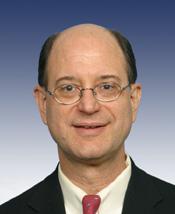
United States · United States Congress · 6 January 1999
Directs the Commissioner of Social Security to improve the social security card (card) for purposes of carrying out illegal alien employment provisions under the Immigration and Nationality Act. Provides that cards issued pursuant to this Act shall not be required to be carried upon one's person, and that nothing in this Act shall be construed as authorizing the establishment of a national identification card. Directs the Commissioner of Immigration and Naturalization to conduct an education campaign aimed at educating employers about card security features and how to detect fraudulently used cards. Authorizes appropriations. Amends the Federal criminal code to provide for criminal penalties for fraud and related activities concerning work authorization documents.
United States · United States Congress · 6 January 1999
Breast Cancer Patient Protection Act of 1999 - Amends the Public Health Service Act to prohibit group health plans and health insurance issuers offering group health insurance coverage, with regard to hospital stays in connection with breast cancer treatment, from: (1) covering less than 48 hours after mastectomies or less than 24 hours after lymph node dissections; or (2) requiring plan or issuer authorization for prescribing any length of stay. Prohibits: (1) denying eligibility, enrollment, or renewal to avoid these requirements; (2) providing payments or rebates to women; or (3) penalizing or providing incentives to providers. Applies the same requirements to issuers in the individual market.
United States · United States Congress · 6 January 1999
Affordable Housing Opportunity Act of 1999 - Amends the Internal Revenue Code to increase, and link to the cost-of-living adjustment, the State low-income housing credit ceiling.
United States · United States Congress · 6 January 1999
Self-Employed Health Affordability Act of 1999 - Amends the Internal Revenue Code to increase the deduction allowed for the health insurance costs of self-employed individuals to 100 percent.
United States · United States Congress · 6 January 1999
Declares that Congress: (1) recognizes the severity of the issue of cervical health; (2) calls on the United States to support individuals with cervical cancer and their families and loved ones through public awareness and education; and (3) calls on the U.S. people to learn about cervical cancer and how they can lower their risk and ensure early detection.
United States · United States Congress · 6 January 1999
Expresses the sense of the Congress that the current Federal income tax deduction for interest paid on debt secured by a first or second home should not be further restricted.
United States · United States Congress · 13 October 1998
Holocaust Victim Insurance Relief Act of 1998 - Directs the Secretary of the Treasury, the Secretary of State, and the Secretary of Commerce jointly to establish a central public registry containing records and information relating to insurance policies of living and deceased victims of the Holocaust, to be known as the Holocaust Insurance Registry. Requires any insurer currently doing business in the United States that sold life, property, liability, health, annuity, dowry, educational, or casualty insurance policies, directly or through a related company, to persons in Europe, which were in effect between 1920 and 1945, to file with the Departments of the Treasury, State, or Commerce for entry into the Registry: (1) the number of such insurance policies; (2) the holder, beneficiary, and current status of such policies; and (3) a comparison of the names of holders and beneficiaries of such policies and the names of Holocaust victims. Requires each such insurer to certify under penalty of perjury to any of the following: (1) the proceeds of the policies have been paid to the designated beneficiaries or their heirs where that person or persons could be located and identified; (2) the proceeds of the policies, where the beneficiaries or heirs could not be located or identified, have been distributed to Holocaust survivors or to qualified charitable nonprofit organizations for the purpose of assisting Holocaust survivors; (3) a court of law has certified in a legal proceeding resolving the rights of unpaid policyholders, their heirs, and beneficiaries, a plan for the distribution of the proceeds; or (4) the proceeds have not been distributed and the amounts of those proceeds. Exempts from such filing requirement any insurer currently doing business in the United States that did not sell any insurance policies in Europe before 1945, if a related company, whether or not authorized and currently doing business in the United States, has made such a filing. Makes any insurer that knowingly files false information liable for a civil penalty not to exceed $5,000 for each violation, which penalty is appropriated to the Departments of the Treasury, State, and Commerce to be used to aid in the resolution of Holocaust insurance claims. Declares that any insurance company that fails to comply with the requirements of this Act shall be suspended from practicing in the insurance business until the time that the insurer complies. Expresses the sense of the Congress that outstanding claims under insurance policies held by Holocaust victims and survivors be resolved at the earliest possible time.
United States · United States Congress · 2 October 1998
TABLE OF CONTENTS: Title I: Provisions Relating to Women's Health Research at National Institutes of Health Title II: Provisions Relating to Women's Health at Centers for Disease Control and Prevention Women's Health Research and Prevention Amendments of 1998 - Title I: Provisions Relating to Women's Health Research at National Institutes of Health - Amends the Public Health Service Act to extend the authorization of appropriations for programs regarding diethylstilbestrol (DES). Mandates a program of education of health professionals and the public concerning DES. Authorizes appropriations. (Sec. 102) Extends the authorizations of appropriations for: (1) research on osteoporosis, Paget's disease, and related bone disorders; (2) breast cancer programs; and (3) programs on ovarian and other cancers of the reproductive system of women. (Sec. 104) Mandates expansion, intensification, and coordination of research and related activities of the National Heart, Lung, and Blood Institute regarding heart attack, stroke, and other cardiovascular diseases in women. Authorizes appropriations. (Sec. 105) Authorizes appropriations for research into the aging processes of women. (Sec. 106) Requires that the Director of the National Institutes of Health (currently, the Director of the Office of Research on Women's Health) appoint members of the Advisory Committee on Women's Health. Title II: Provisions Relating to Women's Health at Centers for Disease Control and Prevention - Adds the provision of support services such as case management to the purposes of breast and cervical cancer programs (authorized under current provisions). Extends the authorization of appropriations for the National Center for Health Statistics and the National Program of Cancer Registries. (Sec. 203) Allows certain breast and cervical cancer programs to be carried out through grants to public and nonprofit private entities and contracts with public or private entities (currently, through grants and contracts with public or nonprofit private entities). Allows a State to give priority to a nonprofit entity over an entity that is not a nonprofit if the quality of the entities' applications are equivalent. Extends authorizations of appropriations for various preventive health measures relating to breast and cervical cancers. (Sec. 204) Extends the authorizations of appropriations for: (1) centers for research and demonstration regarding health promotion and disease prevention; and (2) community projects to coordinate intervention and prevention of domestic violence.
United States · United States Congress · 1 October 1998
Expresses the sense of the Congress that: (1) if the Government of Mexico does not take actions to recognize and mitigate the inadequacy of sewage infrastructure facilities in Mexico and the adverse environmental and economic impacts of sewage from Mexico on U.S. cities, the United States should review its obligations with Mexico under treaties and other international agreements and take actions to ensure that the Government of Mexico shares in the burdens caused by its sewage infrastructure problems; and (2) any measurement of the responsiveness of the Government of Mexico to requests to mitigate its sewage treatment problems should be based on risk assessment procedures developed in consultation with the San Diego County Health Officer.
United States · United States Congress · 28 September 1998
Recognizes the great responsibility which the United States has to Holocaust survivors and their families, many of whom are American citizens, to continue to treat the issue of Holocaust-era assets as a high priority and to encourage other governments to do the same. Commends: (1) U.S. Government agencies for their untiring efforts and for the example they have set, including the publication of the May 1997 and June 1998 reports on U.S. and Allied Efforts to Recover or Restore Gold and Other Assets Stolen or Hidden by Germany in World War II and the efforts to return such assets to their rightful owners; (2) those organizations which have played a critical role in the effort to assure compensation, restitution, or both for survivors of the Holocaust, and in particular to the World Jewish Congress and the World Jewish Restitution Organization; (3) those countries which have instituted procedures for the restitution of individual and communal property confiscated from Holocaust victims (and urges those governments which have not established such procedures to adopt fair and transparent legislation and regulations necessary for such restitution); (4) those countries which have established significant commissions to conduct research into matters relating to Holocaust-era assets, to assure that information developed by these commissions is publicly available, to complete their major historical research efforts, and to contribute to the major funds established to benefit needy Holocaust survivors no later than December 31, 1999; and (5) those countries and organizations which have opened their archives and made public records and documents relating to the Nazi era (and urges all countries and organizations to assure that all materials relating to that era are fully accessible to the public). Welcomes the convening of the Washington Conference on Holocaust- Era Assets later this year by the U.S. Holocaust Memorial Museum and the Department of State. Urges: (1) countries in transition in Central and Eastern Europe to remove certain citizenship or residency prerequisites for individual survivors of the Holocaust seeking restitution of confiscated property; (2) all countries to develop and include as a part of their educational curriculum material on the Holocaust, the history of the Second World War, the evils of discrimination and the persecution of racial, ethnic, or religious minorities, and the consequences of the failure to respect human rights; and (3) countries, especially Israel, Russia, Poland, and other Central and East European nations, and organizations such as the International Committee of the Red Cross and Israel's Jewish Agency to coordinate efforts to help reunite family members separated during the Holocaust. Notes that former Communist countries which seek to become members of the North Atlantic Alliance and other international organizations must recognize that a part of the process of international integration involves the enactment of laws which safeguard and protect property rights that are similar to those in democratic countries. Expresses congressional appreciation for the efforts of the Government of Germany for successfully concluding an agreement with the Conference on Material Claims Against Germany on matters concerning restitution for Holocaust survivors from Central and Eastern Europe who have not yet received restitution, and urges the German Government to continue to negotiate with the Claims Conference to expand the eligibility criteria to ensure that all needy Holocaust survivors receive restitution.
United States · United States Congress · 25 September 1998
Amends the Taxpayer Relief Act of 1997 to make effective on January 1, 1999, the empowerment zones designated after August 5, 1997, and before February 8, 1998. Amends the Internal Revenue Code to allow, with respect to such zones, the employment credit for 1999.
United States · United States Congress · 18 September 1998
Calls upon the President to: (1) pursue enhanced enforcement of U.S. trade laws with respect to the surge of steel imports into the United States, including offsetting duties, quantitative restraints, and other authorized remedial measures; (2) pursue a more equitable sharing of the burden of accepting imports of finished steel products from Asia and the countries within the Commonwealth of Independent States; (3) establish a task force with responsibility for closely monitoring U.S. imports of steel; and (4) report to the Congress by January 5, 1999, with a comprehensive plan for responding to the import surge, including ways of limiting its deleterious effects on employment, prices, and investment in the U.S. steel industry.
United States · United States Congress · 9 September 1998
Sherrice Iverson Act - Amends the Child Abuse Prevention and Treatment Act to require a State, to be eligible to receive Federal grants for child abuse and neglect prevention and treatment, to provide a certification that it has in effect and is enforcing a law providing for a criminal penalty on an individual age 18 or older who fails to report to a State or local law enforcement official that the individual has witnessed another individual in the State sexually abusing a child.
United States · United States Congress · 6 August 1998
Urges the Government of Germany to take necessary action to protect the right of freedom of religion or belief guaranteed to everyone in Germany by international human rights covenants. Declares that the Congress continues to hold the Government of Germany responsible for protecting the right of freedom of religion or belief of U.S. citizens, and for not barring such citizens from living, performing, doing business, or traveling in Germany because of their religious beliefs. Calls upon the President to assert the concern of the U.S. Government to the Government of Germany regarding government discrimination in Germany based on religion or belief.
United States · United States Congress · 4 August 1998
Declares that Members of Congress should: (1) follow the example of Jacob Chestnut and John Gibson of the U.S. Capitol Police by living lives of love, respect, and integrity every day at all times, including on the floor of the Senate and House of Representatives; and (2) deserve the title "Honorable" by setting an example so that such individuals did not die in vain.
United States · United States Congress · 22 July 1998
Torture Victims Relief Act of 1998 - Amends the Foreign Assistance Act of 1961 to authorize the President to provide assistance in the form of grants to treatment centers and programs in foreign countries that are carrying out projects or activities specifically designed to treat victims of torture for the physical and psychological effects of such torture. Authorizes appropriations. Authorizes the Secretary of Health and Human Services (HHS) to provide grants to U.S. programs to cover the costs of services for: (1) the rehabilitation of victims of torture, including treatment of the physical and psychological effects of torture; (2) social and legal services for victims of torture; and (3) research and training for health care providers outside of treatment centers. Authorizes appropriations. Authorizes appropriations to the United Nations Voluntary Fund for Victims of Torture. Expresses the sense of the Congress that the President should: (1) request the Fund to find new ways to support and protect treatment centers and programs (including the development of new centers and programs) that are carrying out rehabilitative services for victims of torture; (2) use the U.S. vote to support the work of the Special Rapporteur on Torture and the Committee Against Torture established under the Convention Against Torture and Other Cruel, Inhuman or Degrading Treatment or Punishment; and (3) use the U.S. vote to establish a country rapporteur or similar procedural mechanism to investigate human rights violations in a country if either the Special Rapporteur or the Committee Against Torture indicates that a systematic practice of torture is prevalent in such country. Directs the Secretary of State to provide training for consular officers with respect to torture victims, including gender-specific training on the subject of interacting with women and men who are victims of torture by rape or any other form of sexual violence.
United States · United States Congress · 22 July 1998
TABLE OF CONTENTS: Title I: Enhanced Source and Transit Country Coverage Title II: Enhanced Eradication and Interdiction Strategy in Source Countries Title III: Enhanced Alterative Crop Development Support in Source Zone Title IV: Enhanced International Law Enforcement Training Title V: Enhanced Drug Transit and Source Zone Law Enforcement Operations and Equipment Title VI: Relationship to Other Laws Western Hemisphere Drug Elimination Act - Declares that it is U.S. policy to: (1) reduce the supply of drugs and drug use through an enhanced drug interdiction effort in the major drug transit countries and a comprehensive supply country eradication and crop substitution program, because a commitment of increased resources in international drug interdiction efforts will create a balanced national drug control strategy among demand reduction, law enforcement, and international drug interdiction efforts; and (2) support policies and dedicate the resources necessary to reduce the flow of illegal drugs into the United States by not less than 80 percent by December 31, 2001. Title I: Enhanced Source and Transit Country Coverage - Authorizes appropriations for FY 1999 through 2001 for the Department of the Treasury and the Department of Defense (DOD) for the enhancement of air coverage and operation for drug source and transit countries. (Sec. 102) Authorizes appropriations for FY 1999 through 2001 for the Department of Transportation (DOT) for the enhancement of U.S. Coast Guard maritime coverage and operation in drug source and transit countries. (Sec. 103) Authorizes appropriations for FY 1999 through 2001 for the DOD for the enhancement of radar coverage in drug source and transit countries. Title II: Enhanced Eradication and Interdiction Strategy in Source Countries - Authorizes appropriations for FY 1999 through 2001 for the Department of State and the DOD for the enhancement of drug- related eradication efforts in Colombia. (Sec. 202) Authorizes appropriations for FY 1999 through 2001 for: (1) the Department of State for the establishment of a third drug interdiction site at Puerto Maldonado, Peru, to support air bridge and riverine missions for enhancement of drug-related eradication efforts there; and (2) the DOD for operation and maintenance, Defense-wide, for enhancement of drug interdiction efforts in Peru for support of multinational riverine and small boat maintenance training programs in Iquitos, Peru. Directs the Secretary of Defense to study and report to the Congress on Peruvian counternarcotics air interdiction requirements. (Sec. 203) Authorizes appropriations for FY 1999 through 2001 for the Department of State for enhancement of drug-related eradication efforts in Bolivia. (Sec. 204) Directs the Secretary of State to purchase six Bell 212 high altitude helicopters designated for opium eradication programs in Mexican states of Guerrero, Jalisco, and Sinaloa, for enhancement of drug-related eradication efforts there. Makes this purchase mandate contingent on Mexico's agreement to approve full diplomatic immunity for Drug Enforcement Administration (DEA) personnel serving in Mexico with privileges granted to U.S. Government officials to carry weapons necessary for the performance of their duties. Authorizes appropriations. Expresses the sense of the Congress that: (1) all U.S. law enforcement personnel serving in Mexico should be accorded the same status as diplomatic and consular personnel serving at U.S. posts in Mexico; and (2) all Mexican narcotics law enforcement personnel serving in the United States should be accorded the same diplomatic and consular status as DEA personnel serving in Mexico. (Sec. 205) Authorizes appropriations for FY 1999 through 2001 for enhanced precursor chemical control projects. (Sec. 206) Requires any individual serving as an assistant secretary of any Federal agency or department who has primary responsibility for international narcotics control and law enforcement (including the principal deputy of any such assistant) to have substantial professional qualifications in the fields of management and Federal law enforcement, or intelligence. Declares that the DOD shall have sole responsibility in implementation and processing of counternarcotics foreign military sales requests (with the Department of State having a consultative role in such requests). (Sec. 207) Expresses the sense of the Congress that the responsiveness and effectiveness of Department of State international narcotics assistance activities have been hampered due, in part, to the lack of law enforcement expertise by responsible Department of State personnel. Requires the Director of National Drug Control Policy to report to the appropriate congressional committees on: (1) the responsiveness and effectiveness of such activities; and (2) the feasibility costs and steps needed to achieve a transfer of the Department of State's Bureau of International Narcotics and Law Enforcement Affairs to the DEA. Authorizes appropriations. Title III: Enhanced Alternative Crop Development Support in Source Zone - Authorizes appropriations for FY 1999 through 2001 for the U.S. Agency for International Development (AID) for certain alternative crop development programs in Colombia, Peru, and Bolivia. Title IV: Enhanced International Law Enforcement Training - Authorizes appropriations for FY 1999 through 2001 for the Department of Justice for the establishment and operation of international law enforcement academies to carry out law enforcement training activities in Latin America and the Caribbean, Thailand, and South Africa. (Sec. 401) Authorizes appropriations for FY 1999 through 2001 for the DOT and the Department of the Treasury for the joint establishment, operation, and maintenance in San Juan, Puerto Rico, of a center for training law enforcement personnel of countries located in Latin America and the Caribbean in matters relating to maritime law enforcement (including customs-related ports management matters). Authorizes appropriations for FY 1999 through 2001 for the DOT for the establishment, operation, and maintenance of maritime training vessels. (Sec. 402) Authorizes appropriations for FY 1999 through 2001 for the Department of Justice for: (1) substantial exchanges for Mexican judges, prosecutors, and police; and (2) enhanced support for the Brazilian Federal Police Training Center. Authorizes appropriations for FY 1999 through 2001 for the DOD for operation and maintenance, Defense-wide, for locating and operating Coast Guard and Navy assets so as to strengthen the capability of the Coast Guard of Panama to patrol the Atlantic and Pacific coasts for drug enforcement and interdiction activities. Makes members of the national police of Panama eligible to receive training through the International Military Education Training (IMET) program. Authorizes appropriations for FY 1999 through 2001 for the DOD for operation and maintenance, Defense-wide, for support for the Venezuelan Joint National Guard and Judicial Technical Police Counterdrug Intelligence Center. Authorizes appropriations for FY 1999 through 2001 for the DOT and the Department of the Treasury for the buildup of local coast guard and port control in: (1) Guayaquil and Esmeraldas, Ecuador; (2) Haiti and the Dominican Republic; and (3) Belize, Costa Rica, El Salvador, Guatemala, Honduras, and Nicaragua (Central America). (Sec. 403) Authorizes the DEA Administrator to transfer or lease a specified amount of nonlethal equipment to foreign law enforcement organizations for the purpose of establishing and carrying out cooperative illicit narcotics control activities. Title V: Enhanced Drug Transit and Source Zone Law Enforcement Operations and Equipment - Authorizes appropriations for FY 1999 through 2001 for the DEA, the DOT, the DOD, and the Department of the Treasury for enhancement of counternarcotics operations in drug transit and source countries. (Sec. 501) Authorizes appropriations for FY 1999 through 2001 for the Department of State for the deployment of commercial unclassified intelligence and imaging data and a Passive Coherent Location System for counternarcotics and interdiction purposes in the Western Hemisphere. (Sec. 502) Expresses the sense of the Congress that the Secretary of Defense should revise the DOD's Global Military Force Policy in order to: (1) treat the international drug interdiction and counter- drug activities of the DOD as a military operation other than war (thus elevating its priority to just below that for war); and (2) allocate DOD assets to drug interdiction and counter-drug activities in accordance with such priority. Title VI: Relationship to Other Laws - Declares that funds authorized to be appropriated for any Federal department or agency for FY 1999 through 2001 are in addition to funds authorized to be appropriated for that department or agency for those fiscal years by any other provision of law.
United States · United States Congress · 22 July 1998
Expresses the sense of the Congress that: (1) Taiwan should be represented in the World Health Organization; and (2) it should be U.S. policy to support Taiwan's representation in the Organization.
United States · United States Congress · 21 July 1998
TABLE OF CONTENTS: Title I: Assistance for Sub-Saharan Africa Title II: Worldwide Food Assistance and Agricultural Programs Subtitle A: Nonemergency Food Assistance Programs Subtitle B: Bill Emerson Humanitarian Trust Act of 1998 Title III: Miscellaneous Provisions Africa: Seeds of Hope Act of 1998 - Declares it to be U.S. policy, consistent with title XII of part I of the Foreign Assistance Act, to support governments of sub-Saharan African countries, U.S. and African nongovernmental organizations, universities, businesses, and international agencies to help ensure the availability of basic nutrition and economic opportunities for sub-Saharan individuals, through sustainable agricultural and rural development. Title I: Assistance for Sub-Saharan Africa - Directs the Administrator of the U.S. Agency for International Development (AID), in providing development assistance under the Africa Food Security Initiative, or any comparable or successor program, to: (1) emphasize programs and projects that improve the food security of children, women, and food-insecure households, or that improve the agricultural productivity, incomes, and marketing of the rural poor in Africa; (2) solicit and take into consideration the views and needs of intended beneficiaries and program participants during the selection, planning, implementation, and evaluation phases of projects; and (3) ensure that programs are designed and conducted in cooperation with African and U.S. organizations and institutions (such as private and voluntary organizations, cooperatives, land-grant and other appropriate universities, and local producer-owned cooperative marketing and buying associations) that have expertise in addressing the needs of the poor, small-scale farmers, entrepreneurs, and rural workers, including women. (Sec. 101) Expresses the sense of the Congress that, if there is an increase in funding for sub-Saharan programs, the Administrator of AID should proportionately increase resources to the Africa Food Security Initiative, or any comparable or successor program, for FY 2000 and subsequent fiscal years in order to meet the needs of the countries participating in such Initiative. (Sec. 102) Directs the Administrator of AID to use, through bilateral and multilateral assistance, microenterprise assistance (including credit) to improve the capacity and efficiency of agricultural production in sub-Saharan Africa of small-scale farmers and small rural entrepreneurs (specifically taking into consideration the needs of women, and using the applied research and technical assistance capabilities of U.S. land-grant universities). (Sec. 103) Authorizes the Administrator of AID to utilize foreign assistance programs and initiatives for sub-Saharan Africa to support private producer-owned cooperative marketing associations there, including rural business associations owned by farmer shareholders. (Sec. 104) Expresses the sense of the Congress that the Overseas Private Investment Corporation (OPIC) should issue loans, guaranties, and insurance, and utilize existing equity funds and loan and insurance funds, to support private agricultural and rural development in sub-Saharan Africa (particularly intermediary organizations that directly serve the needs of small-scale farmers, small rural entrepreneurs, and rural producer-owned cooperative purchasing and marketing associations). (Sec. 105) Directs the Administrator of AID to develop a comprehensive plan to coordinate and build on the research and extension activities of U.S. land-grant universities, international agricultural research centers, and national agricultural research and extension centers in sub-Saharan Africa. Title II: Worldwide Food Assistance and Agricultural Programs - Subtitle A: Non-Emergency Food Assistance Programs - Sets forth general requirements for the administration of non-emergency assistance programs under title II of the Agricultural Trade Development and Assistance Act of 1954. Subtitle B: Bill Emerson Humanitarian International Food Security Trust Act of 1998 - Bill Emerson Humanitarian International Food Security Trust Act of 1998 - Amends the Food Security Commodity Reserve Act of 1996 and the Food Security Wheat Reserve Act of 1980 to rename specified provisions of the Food for Development Program as the Bill Emerson Humanitarian Trust Act. (Sec. 212) Includes, as part of the established trust stock of wheat, rice, corn, or sorghum used to meet emergency humanitarian food needs in developing countries, certain funds for Commodity Credit Corporation programs under the Agricultural Trade Development and Assistance Act of 1954 that are available, with respect to FY 2000 and subsequent fiscal years, to acquire such eligible commodities through purchases from producers or in the market to replenish the trust. Authorizes the release of eligible commodities from the trust for emergency food assistance to developing countries, provided such release is at levels consistent with maintaining the long-term value of the trust. Makes permanent the authority for the trust. Title III: Miscellaneous Provisions - Directs the Administrator of AID to report to the Congress on AID's plans for implementing the Africa Food Security Initiative and an estimate of all amounts expended or to be expended on related activities during the current and previous four years.
United States · United States Congress · 20 July 1998
Amends the Internal Revenue Code to repeal provisions providing for the application of the alternative minimum tax to stock transferred pursuant to an incentive stock option.
United States · United States Congress · 14 July 1998
India-Pakistan Sanctions Flexibility Act - Amends the Arms Export Control Act to exempt Department of Agriculture assistance for the purchase of food or other agricultural commodities, or Export-Import Bank of the United States or Overseas Private Investment Corporation assistance, from the prohibition against extensions of U.S. Government credit, credit guarantees, or other financial assistance to countries involved in the transfer or use of nuclear explosive devices. Declares that such assistance shall be available only to the extent that an official budget request that includes designation of such assistance as an emergency requirement as defined in the Balanced Budget and Emergency Deficit Control Act of 1985 (Gramm-Rudman- Hollings Act) is transmitted by the President to the Congress. Authorizes the President to suspend until March 1, 1999, the application of any sanction or prohibition contained in specified Federal laws with respect to India and Pakistan.
United States · United States Congress · 14 July 1998
Advancement in Pediatric Autism Research Act - Amends the Public Health Service Act to direct the Director of the National Institutes of Health (NIH) to expand, intensify, and coordinate the activities of NIH with respect to autism. Requires the Director, among other things to: (1) ensure that at NIH there is a committee to coordinate research on autism; and (2) make awards and grants to public or nonprofit entities for centers of excellence regarding research on autism. Authorizes appropriations.
United States · United States Congress · 25 June 1998
Stolen Artwork Restitution Act of 1998 - Authorizes the Attorney General to make grants to qualified research organizations to identify and relocate stolen artwork. Directs the Attorney General to require reports from grant recipients as necessary and to transmit an annual report to the Congress listing the recipients. (Sec. 3) Authorizes an individual to request an inquiry upon producing sufficient evidence, according to standards established by the Attorney General, that artwork was stolen from the individual or from a member of the individual's family. Requires the seller or purchaser of artwork with a sales price of $5,000 or more that has been shipped in interstate or foreign commerce, if such request is made before the sale, to undertake a documented, reasonable inquiry into the ownership history of the artwork, including obtaining information from one or more missing or stolen artwork registries. (Sec. 4) Directs the Attorney General to undertake a documented, reasonable, multisource inquiry, including obtaining information from one or more missing or stolen artwork registries to determine whether any artwork in the possession of the Government has been stolen. Sets forth reporting requirements. (Sec. 5) Expresses the sense of the Congress that: (1) a purchaser or seller of artwork who fails to undertake an inquiry required under this Act should not be permitted to assert in a court in the United States a claim, under Federal, State, or otherwise applicable law, to ownership or former ownership of the artwork; (2) all museums and auction houses should undertake documented, reasonable, multisource inquiries, including obtaining information from one or more missing or stolen artwork registries to determine whether the artwork in their possession has been stolen; (3) all governments in possession of artwork stolen from victims of the Holocaust should return that artwork to its rightful owners; and (4) parties disputing the ownership of stolen artwork should attempt to resolve their disputes by alternative means, such as by arbitration, before seeking judicial remedies. (Sec. 6) Specifies that published or unpublished literary works shall not be considered artwork for purposes of this Act. (Sec. 8) Authorizes appropriations.
United States · United States Congress · 25 June 1998
Amends the Congressional Budget and Impoundment Control Act of 1974 to replace provisions regarding the rescission of budget authority with those authorizing the President to propose the rescission of any budget authority provided in an appropriation Act or repeal of any targeted tax benefit provided in any revenue Act. Authorizes the President to transmit a draft bill to the Congress with such a proposal that clearly identifies the budget authority proposed to be rescinded or the targeted tax benefit to be repealed. Includes within such bill a Deficit Reduction Account. Permits the President to place in the Account an amount not to exceed total rescissions in the bill. Establishes expedited procedures in the Senate and the House of Representatives for consideration of such bill. Makes any amount of budget authority proposed to be rescinded available for obligation on the day after the date either House rejects such bill. Deems any targeted tax benefit proposed for repeal to be repealed unless either House rejects such bill during a prescribed time frame.
United States · United States Congress · 25 June 1998
Jerusalem and Berlin Embassy Relocation Act of 1998 - Expresses the sense of the Congress that the United States should proceed simultaneously with the design, construction, and occupancy of an embassy in Berlin, the capital of Germany, and in Jerusalem, the capital of Israel. Prohibits the expenditure of certain Department of State appropriations for the construction of chancery facilities in Berlin, Germany, unless construction of chancery facilities in Jerusalem, Israel, has either commenced or commences simultaneously in a manner to ensure comparable rates of construction and completion of the two facilities. Declares that no chancery facilities in Berlin, Germany, shall be occupied or used unless prior to or simultaneous with such occupancy and use, the United States has opened chancery facilities in Jerusalem, Israel.
United States · United States Congress · 25 June 1998
Entitles to an annuity under either the Civil Service Retirement System or the Federal Employee Retirement System a military reserve technician who is separated from service as a technician after either: (1) becoming 50 years of age and completing 20 years of such service; or (2) completing 25 years of such service.
United States · United States Congress · 24 June 1998
Condemns the repressive policies of the Government of the former Soviet Union during the Ukrainian Famine of 1932-1933. Expresses the sense of the Congress: (1) in remembrance of the victims of the Famine; and (2) that any supplemental material that will assist in disseminating information about the Famine should be compiled and made available worldwide.
United States · United States Congress · 19 June 1998
International Arms Sales Code of Conduct Act of 1998 - Directs the President to attempt, through negotiations with all Wassenaar Arrangement countries, to achieve the foreign policy goal of an international arms sales code of conduct that restricts or prohibits arms transfers to countries that: (1) do not respect democratic processes and the rule of law; (2) do not adhere to internationally recognized norms on human rights; or (3) are engaged in acts of armed aggression. Directs the President to report on such negotiations to the appropriate congressional committees.
United States · United States Congress · 19 June 1998
Calls on Eritrea and Ethiopia to declare a cease-fire and bring an end to the violence between the two countries. Commends: (1) the executive branch of the U.S. Government for brokering a moratorium on air raids between Eritrea and Ethiopia; and (2) the recent efforts of the U.S. facilitation team to resolve the crisis. Encourages continued U.S. engagement toward a peaceful resolution of the conflict. Calls on President Isaias Afewerki and Prime Minister Meles Zenawi to end the conflict peacefully.
United States · United States Congress · 17 June 1998
TABLE OF CONTENTS: Title I: The Children's Firearm Safety Act of 1998 Title II: The Children's Firearms Age Limit Act of 1998 Title III: The Children's Firearm Dealer's Responsibility Act of 1998 Title IV: The Children's Firearm Access Prevention Act of 1998 Title V: The Children's Firearm Injury Surveillance Act of 1998 Title VI: The Children's Firearm Education Act of 1998 Title VII: The Children's Firearm Tracking Act of 1998 Children's Gun Violence Prevention Act of 1998 - Title I: The Children's Firearm Safety Act of 1998 - Amends the Brady Handgun Violence Prevention Act to prohibit the manufacture or importation of an unsafe handgun. Defines "unsafe handgun" as any semiautomatic pistol which does not have a magazine safety disconnect that prevents the pistol from being fired once the magazine or clip is removed from the weapon and any handgun: (1) which the Secretary of the Treasury determines, when new, fires in any of five successive trials in which the handgun is dropped onto a solid slab of concrete from a height of one meter from each of several specified positions; (2) without a child resistant trigger mechanism reasonably designed to prevent a child who has attained age five from operating the weapon when it is ready to fire; and (3) sold without a mechanism reasonably designed, under rules determined by the Secretary, to prevent the discharge of the weapon by unauthorized users. Exempts the manufacture or importation by a licensed manufacturer or importer for use by a department or agency of the United States, a State, or a political subdivision thereof, or for purposes of testing or experimentation authorized by the Secretary. (Sec. 102) Directs the Consumer Product Safety Commission to study and report to the Congress on how handgun safety can be improved so as to prevent unauthorized use or discharge of firearms by children who have not attained age 18. Authorizes appropriations for FY 1999. Title II: The Children's Firearms Age Limit Act of 1998 - Prohibits the sale, delivery, or other transfer of a semiautomatic assault weapon to a person the transferor knows or has reasonable cause to believe is a juvenile. (Sec. 202) Increases the penalty for transferring a handgun or semiautomatic assault weapon to a juvenile for use in a crime of violence. Title III: The Children's Firearm Dealer's Responsibility Act of 1998 - Directs the Secretary, after notice and opportunity for hearing, to revoke the license of a dealer who willfully sells a firearm to a minor. (Sec. 302) Prohibits a licensed importer, manufacturer, or dealer, 30 days after the Attorney General notifies licensees that the national instant criminal background check system is established, from transferring a firearm to any unlicensed person without verifying the identity of a purchaser known or reasonably believed to be under age 24 by examining two valid photograph identification documents. (Sec. 303) Directs the Secretary to issue final regulations that establish minimum firearm safety and security standards that shall apply to dealers who are issued a license, which shall include minimum standards for: (1) a place of business in which a dealer covered by the regulations conducts business or stores firearms; (2) windows, the front door, storage rooms, containers, alarms, and specified other items of a place of business; and (3) the storage and handling of the firearms contained in such place of business. Authorizes the Secretary to enter the place of business of a licensed dealer: (1) under specified conditions, where there is reasonable cause to believe a violation has occurred, to examine records of the safety and security measures taken by the dealer to ensure compliance with such regulations; and (2) without such reasonable cause or warrant not more than once during any 12-month period to ensure compliance. Sets penalties for licensed dealers who knowingly fail to comply with any applicable regulation issued pursuant to this section. Title IV: The Children's Firearm Access Prevention Act of 1998 - Children's Firearm Access Prevention Act of 1998 - Prohibits and sets penalties for keeping a loaded firearm, or an unloaded firearm and ammunition for it, that has been shipped or transported in or otherwise substantially affects interstate or foreign commerce, on premises under the custody or control of a person who knows or reasonably should know that a juvenile is capable of gaining access to the firearm without the permission of a parent or legal guardian, if a juvenile obtains access to the firearm and thereby causes death or bodily injury or exhibits the firearm in a public place or in a school zone. Makes an exception if: (1) the juvenile obtains, or obtains and discharges, the firearm in a lawful act of self-defense or defense of others; (2) the person uses a secure gun storage or safety device for the firearm; (3) the person is a peace officer, member of the Armed Forces or National Guard, and the juvenile obtains the firearm during or incidental to the performance of official duties in that capacity; or (4) the person has no reasonable expectation that a juvenile is likely to be present on the premises on which the firearm is kept. Requires the Secretary to ensure that a copy of such prohibition and penalties appears on the form required to be obtained by a licensed dealer from a prospective firearm purchaser. Title V: The Children's Firearm Injury Surveillance Act of 1998 - Children's Firearm Injury Surveillance Act of 1998 - Directs the Secretary of Health and Human Services to: (1) make grants to State and local departments of health and law enforcement agencies for establishing and maintaining children's firearm-related injury surveillance systems; and (2) carry out this title through the Director of the Centers for Disease Control and Prevention, who shall carry out this title through the Director of the National Center for Injury Prevention and Control (Director). Requires the Director to: (1) ensure that such grants are used to establish systems for gathering information regarding fatal and nonfatal firearm injuries involving children who have not attained age 21; and (2) give priority to States and communities in which firearm- related injuries for children are a significant public health problem. Authorizes appropriations for FY 1999 through 2003. Title VI: The Children's Firearm Education Act of 1998 - Children's Firearm Education Act of 1998 - Authorizes the Secretary of Education or State educational agencies (if the amount appropriated to carry out this title exceeds $50 million) to award grants to eligible local educational agencies for purposes of educating children about preventing gun violence. Sets forth provisions regarding: (1) a formula for allocating appropriated funds to the States; (2) minimum allotments; (3) required assurances regarding the use of allocated funds; (4) priorities in awarding grants; (6) peer review of grant applications; (7) eligible grant recipients; (8) State and local applications, and reporting requirements; (9) authorized activities; and (10) requirements that funds received supplement, not supplant, funds that would otherwise be available from non-Federal sources and that persons hired by a local educational agency receiving a grant award not displace persons already employed. Authorizes appropriations for FY 1999 through 2001. (Sec. 603) Directs the Secretary of Education to: (1) include on the Internet site of the Department of Education a description of programs that receive grants pursuant to this title; and (2) publicize the competitive grant program through its Internet site, publications, and public service announcements. (Sec. 605) Amends the Safe and Drug-Free Schools and Communities Act of 1994 to provide for timely counseling and: (1) evaluations of any student who possesses, or threatens to bring or use, a weapon on school grounds; and (2) advice to public school students, staff, and administrators after an incident of gun-related violence on school grounds. Title VII: The Children's Firearm Tracking Act of 1998 - Directs the Secretary of the Treasury to: (1) endeavor to expand the number of cities and counties directly participating in the Youth Crime Gun Interdiction Initiative (YCGII) to 75 cities or counties by October 1, 2000, 150 by October 1, 2002, and 250 by October 1, 2003; (2) select cities and counties for participation in YCGII in consultation with Federal, State, and local law enforcement officials; (3) utilize the information provided by YCGII to facilitate the identification and prosecution of individuals illegally trafficking firearms to persons under age 24; (4) share information derived from YCGII with State and local law enforcement agencies through on-line computer access as soon as such capability is available; and (5) award grants to States, cities, and counties for purposes of assisting in the tracing of firearms and participation in YCGII. Authorizes such grants to be used to: (1) hire or assign additional personnel for the gathering, submission, and analysis of tracing data submitted to the Bureau of Alcohol, Tobacco and Firearms under YCGII; (2) hire additional law enforcement personnel to identify and arrest individuals illegally trafficking firearms; and (3) purchase additional equipment, including automatic data processing equipment and computer software and hardware, for the timely submission and analysis of tracing data.
United States · United States Congress · 17 June 1998
Declares that the House of Representatives: (1) recognizes the importance of achieving the goal of the 1997 Microcredit Summit to provide access to microcredit to 100 million of the world's poorest families; (2) urges international and regional financial institutions and other organizations to explore the use of microcredit programs as a method of eradicating poverty; (3) encourages appropriate public agencies to support the goal of the Summit by developing, announcing, and implementing institutional action plans to achieve that goal; (4) encourages the President to foster international support for the goal of the Summit in his communications with leaders of other Nations; and (5) calls upon the President to affirm his commitment to the goal of the Summit during annual meetings of the World Bank and International Monetary Fund.
United States · United States Congress · 11 June 1998
Drugs and Informed Consent Armed Forces Protection Act of 1998 - Amends the Federal Food, Drug, and Cosmetic Act to provide that if the Secretary of Defense submits to the Secretary of Health and Human Services (HHS) a request to waive the requirement of prior informed consent with respect to the administration of a drug to members of the armed forces for investigational use, then any determination by the Secretary of Defense that obtaining such consent is not feasible or is contrary to the best interests of the members involved shall not be effective unless the President provides to the HHS Secretary a written statement concurring in that determination.
United States · United States Congress · 11 June 1998
Persian Gulf War Veterans Health Act of 1998 - Presumes to be service-connected (and therefore compensable or treatable under Federal veterans' benefits provisions) an illness that: (1) the Secretary of Veterans Affairs determines to have a positive association with a biological, chemical, or other toxic agent or environmental or wartime hazard (agent or hazard) associated with service in the southwest Asia theater of operations during the Persian Gulf War; and (2) becomes manifest in a veteran who was exposed to such agent or hazard by reason of such service. Presumes such exposure unless there is conclusive evidence otherwise. Directs the Secretary to contract with an independent scientific body to establish a panel for reviewing medical and scientific literature to identify those diseases and illnesses associated with exposure of humans or animals to specified pesticides, agents, compounds, particulates, radiation, and pollutants. Requires each disease or illness identified that becomes manifest in a Gulf veteran to be presumed to be service-connected. Authorizes appropriations. Requires the updating of presumed exposures. Enumerates the pesticides, agents, compounds, particulates, radiation, and pollutants to which Gulf veterans shall be presumed to have been exposed. Directs the Secretary to submit to the Congress a plan for establishing a panel to review the statistical occurrence of both diagnosed and undiagnosed illnesses and symptoms among Gulf War veterans and their families. Directs the President to submit to the Congress a plan for the establishment of a permanent expert advisory group to advise the President and the congressional defense and intelligence committees on the adequacy of current U.S. chemical, biological, and radiological defense technologies, procurement practices, and doctrine for defending U.S. forces against both the immediate and chronic consequences of acute and subacute exposures to chemical, biological, radiological, or other genotoxic battlefield materials.
United States · United States Congress · 10 June 1998
Silicone Breast Implant Research and Information Act - Amends the Public Health Service Act to require the Director of the National Institutes of Health (NIH) to: (1) appoint an official of the Department of Health and Human Services to serve as the NIH coordinator regarding silicone breast implant research; (2) establish either a study section or special emphasis panel for NIH to review extramural silicone breast implant research grant applications to ensure research design and quality, as well as quality intramural research; and (3) conduct or support research to expand the understanding of the health implications of silicone breast implants. Directs the Commissioner of Food and Drugs to: (1) take specified steps to make updated information about the risks of silicone breast implant available to the public, via the toll-free Consumer Information Line and other means; (2) revise the breast implant information update to clarify the procedure for reporting implant problems; (3) require manufacturers to update implant package inserts and informed consent documents regularly with accurate information; and (4) require any manufacturer conducting an adjunct study on implants to take specified measures with respect to informed consent documents, including informing women on how to obtain a Medwatch form and encouraging women who withdraw from the study, or who would like to report a problem, to submit such a form. Establishes the President's Interagency Committee on Silicone Breast Implants to ensure strategic management, communication, and oversight of Federal policy formation, research, and activities regarding silicone breast implants. Authorizes appropriations.
United States · United States Congress · 10 June 1998
TABLE OF CONTENTS: Title I: Funding for Child Care Title II: Dependent Care Tax Credit Reform Title III: Grants to Business Consortia Subtitle A: Grant Program Subtitle B: General Provisions Title IV: After School Program Subtitle A: 21st Century Community Learning Centers Subtitle B: After School Snacks Subtitle C: After-School Prevention Programs Title V: Model States Early Learning Program Title VI: Standards Enforcement Program Title VII: Child Care Provider Scholarship Program Title VIII: Research and Demonstration Program Title IX: Miscellaneous Subtitle A: Child and Adult Food Program Subtitle B: Mortgage Insurance for Child Care and Development Facilities Subtitle C: Sense of the Congress Affordable and Quality Child Care Act of 1998 - Title I: Funding for Child Care - Amends the Social Security Act (SSA) to make appropriations for FY 1999 through 2003 for child care subsidy funding under the title IV part A program of Block Grants to States for Temporary Assistance for Needy Families (TANF). (Sec. 101) Reserves specified portions of such funds for payments to Indian tribes and for quality assurance and quality improvement activities relating to programs under the Child Care and Development Block Grant Act of 1990 (CCDBGA). Provides for allotment of funds among the States and territories according to a specified formula, or for matching payments based on certain portions of their expenditures for specified purposes authorized under CCDBGA. Requires targeting of such subsidy for child care assistance funds as follows: (1) at least 70 percent to working non-welfare families, who are not TANF recipients under a State or territory program; and (2) at least 40 percent for children who have not attained four years of age. Title II: Dependent Care Tax Credit Reform - Amends the Internal Revenue Code to increase the dependent care tax credit and to provide an equivalent benefit where one parent stays at home to provide child care for child under age four. (Sec. 202) Allows a business-related tax credit for employer expenses for employer-provided child care assistance. (Sec. 203) Allows the dependent care credit against the alternative minimum tax. Title III: Grants to Business Consortia - Subtitle A: Grant Program - Directs the Secretary to make grants to States to provide grants to eligible entities to improve access to affordable, local, quality child care services. (Sec. 301) Makes eligible for such a grant a consortium that: (1) has not received a grant under this title; and (2) consists of representatives from at least five businesses (or a nonprofit organization that represents at least five businesses), each of which, to the maximum extent practicable, is located in the same geographic region. Requires States to give priority, in providing such grants, to eligible entities that consist of a majority of representatives from small businesses. Sets a maximum limit on the amount of any such grant provided to an eligible entity for any fiscal year. (Sec. 302) Sets forth requirements for grant applications, use of funds, and matching funds. Subtitle B: General Provisions - Authorizes appropriations for such child care services grants to business consortia. Title IV: After School Program - Subtitle A: 21st Century Community Learning Centers - Amends the 21st Century Community Learning Centers Act to require that discretionary grants be awarded to local educational agencies (LEAs) for supporting certain programs of public elementary schools or secondary schools, including middle schools, that serve communities with substantial needs for expanded learning opportunities for children and youth. (Sec. 401) Increases the maximum duration of such a grant from three to five years. (Sec. 402) Requires the LEA to demonstrate that it will provide specified portions of the annual costs of project activities from sources other than such grant funds. (Sec. 403) Requires the use of grant funds to establish or expand community learning centers that provide activities that offer expanded learning opportunities for children and youth in the community (such as activities conducted before or after school), and which may include any of the currently authorized activities. (Sec. 405) Extends through FY 2003 the authorization of appropriations for such Act. Authorizes continuation awards of FY 1998 grants. Subtitle B: After School Snacks - Amends the National School Lunch Act to provide for participation by certain additional institutions under the child and adult care food program. Allows such institutions to claim reimbursements for meal supplements which they serve without charge to children in afterschool care. (Sec. 411) Revises eligibility requirements for meal supplements for children in afterschool care. Subtitle C: After-School Prevention Programs - Declares that certain provisions of the Omnibus Crime Control and Safe Streets Act of 1968, as set forth in specified legislation passed by the House of Representatives on May 8, 1997, and in effect for purposes of title I of the Departments of Commerce, Justice, and State Appropriations Act, 1998 (Public Law 105-119) (under the heading Violent Crime Reduction Programs, State and Local Law Enforcement Assistance) shall apply as though amended by this subtitle. Requires that 50 percent of specified amounts paid to a State, local government, or eligible unit be used to improve crime prevention programs in the juvenile justice system. (Sec. 421) Requires such programs to: (1) operate after-school, with high priority given to programs designed and operated by law enforcement personnel, such as police athletic leagues; (2) target high crime neighborhoods or at-risk juveniles; (3) operate educational or recreational activities designed to encourage law-abiding conduct, reduce the incidence of criminal activity, and teach juveniles alternatives to crime; and (4) coordinate with State or local juvenile crime control and juvenile offender accountability programs. Title V: Model States Early Learning Program - Amends SSA title IV part A (TANF) to make appropriations for FY 1999 through 2003 for model States early learning programs. Provides for allotment of funds among the States, territories, and Indian tribes according to a specified formula, or for matching payments based on portions of their expenditures for an early learning program under CCDBGA. (Sec. 501) Amends CCDBGA to establish the Model States Early Learning Program. Sets forth program requirements for State participation and plans, allowable activities, and annual reports. Title VI: Standards Enforcement Program - Amends CCDBGA to establish a program of annual payments to States for child care standards enforcement. (Sec. 601) Requires States, to be eligible for such payments for a fiscal year, to: (1) include a child care standards enforcement plan in their State plans; and (2) report specified data on enforcement of child care quality and safety plans. Authorizes appropriations. Subjects such program to specified requirements for basic grant payments and annual reports. Title VII: Child Care Provider Scholarship Program - Amends CCDBGA to establish a national child care provider scholarship program. (Sec. 701) Sets forth eligibility criteria for scholarship applicants, including: (1) demonstrated commitment to a child care career; (2) cost sharing by the applicant and employer; and (3) the employer's agreement to provide increased financial incentives to the employee upon completion of the education or training. Includes such program under requirements for State plans, allotments, payments, and annual reports. Authorizes appropriations. Title VIII: Research and Demonstration Program - Amends CCDBGA to authorize the Secretary of Health and Human Services, directly or through grants, contracts, or other arrangements, to carry out research, demonstration projects, and other activities relating to child care, including activities designed to improve the quality and increase the availability of child care. (Sec. 801) Includes among allowable activities under such research and demonstrations program: (1) research on child care needs of low-income families, on good policies and practices, and on retention of child care provider staff; (2) demonstrations of technology-based education and training; (3) demonstration projects for new methods; (4) a National Center on Child Care Statistics; and (5) a hotline to locate local child care resources, and child care consumer education activities. Authorizes appropriations. Title IX: Miscellaneous - Subtitle A: Child and Adult Food Program - Amends the National School Lunch Act to increase reimbursement rates for family or group day care homes under the child and adult care food program. Subtitle B: Mortgage Insurance for Child Care and Development Facilities - Children's Development Commission Act - Amends the National Housing Act to authorize the Secretary of Housing and Urban Development to insure mortgages for: (1) new or rehabilitated child care and development facilities, including mortgage insurance for fire safety equipment loans; and (2) purchase or refinance of existing child care and development facilities. (Sec. 955) Establishes the Children's Development Commission which shall: (1) issue facility standards and compliance certifications; and (2) make loans not in excess of $50,000 for facility rehabilitation or renovation. Authorizes appropriations. (Sec. 956) Directs the Secretary of the Treasury to study the availability of child care facility secondary mortgage markets. Subtitle C: Sense of the Congress - Expresses the sense of the Congress that funds should be appropriated under the amendments made by this Act to the maximum extent authorized and consistently with achieving a balanced Federal budget.
United States · United States Congress · 5 June 1998
Nazi War Crimes Disclosure Act - Establishes the Nazi War Criminal Records Interagency Working Group to locate, identify, inventory, recommend for declassification, and make available to the public at the National Archives and Records Administration, all classified Nazi war criminal records of the United States. Requires that: (1) Group members include the Director of the Holocaust Museum, the Historian of the Department of State, and the Archivist of the United States; and (2) the Group submit a report to the Congress describing all such records, their disposition, and the Interagency Group's activities. Authorizes appropriations. Requires such records to be released in their entirety, except that an agency head may exempt from release specific information that would compromise privacy, national security, or U.S. foreign policy, as specified. States that in applying the exemptions there shall be a presumption that the public interest in the release of Nazi war criminal records will be served by disclosure and release of the records. Permits assertion of such exemption only when the agency head determines that disclosure and release would be harmful to a specific interest identified. Requires such a determination to be promptly reported to the appropriate congressional committees, including the Senate Committee on the Judiciary and the House Committee on Government Reform and Oversight. Subjects such exemptions to the same standard of review that applies to records withheld under the Freedom of Information Act (FOIA) for matters that are specifically authorized by an executive order to be kept secret in the interest of national defense or foreign policy. Provides an additional exception from disclosure for records: (1) related to or supporting any investigation, inquiry, or prosecution by the Office of Special Investigations of the Department of Justice; or (2) solely in the possession or control of that office. Amends the National Security Act of 1947 to provide that the exemption from public disclosure authorized under such Act for operational files of the Central Intelligence Agency shall not apply to information regarding any operational file, or portion of any operational file that constitutes a Nazi war criminal record. Provides for expedited processing of FOIA requests for Nazi war criminal records.
United States · United States Congress · 5 June 1998
Congratulates the Republic of Korea on the 50th anniversary of its founding and commends the Korean people on the peaceful democratic transition that has taken place during the most recent presidential elections.
United States · United States Congress · 3 June 1998
Authorizes appropriations for the International Child Pornography Investigation and Coordination Center of the United States Customs Service for FY 1999 through 2002.
United States · United States Congress · 22 May 1998
Expresses grave concern regarding the findings of the report of the International Commission of Jurists on Tibet issued in December 1997 concerning religious and cultural repression in Tibet. Supports report recommendations that call on: (1) the People's Republic of China to enter into discussions with the Dalai Lama on a solution to the question of Tibet, to ensure respect for the fundamental human rights of the Tibetan people, to end practices which threaten to erode the distinct cultural, religious, and national identity of the Tibetan people, and to cease policies which result in the movement of Chinese people to Tibetan territory; (2) the United Nations General Assembly to resume its debate on the question of Tibet; and (3) the Dalai Lama to enter into discussions with the Chinese Government on a solution to the question of Tibet. Commends the appointment by the Secretary of State of a U.S. Special Coordinator for Tibetan Issues. Calls on: (1) the People's Republic of China to release from detention the nine-year old Panchen Lama, Gedhun Choekyi Nyima, to his home in Tibet from which he was taken on May 17,1995, and to allow him to pursue his religious studies; and (2) the President, as a central objective of the 1998 presidential summit meeting with Jiang Zemin in Beijing, to work toward securing an agreement to begin substantive negotiations between the People's Republic of China and the Dalai Lama.
United States · United States Congress · 14 May 1998
Class-Size Reduction and Teacher Quality Act of 1998 - Establishes a grants program to help States and local educational agencies recruit, train, and hire 100,000 additional teachers over a seven-year period in order to: (1) reduce class sizes nationally, in grades one through three, to an average of 18 students per classroom; and (2) improve teaching in the early grades so that all students can learn to read independently and well by the end of the third grade. Makes appropriations for FY 1999 through 2008 for such program. Sets forth program requirements for: (1) allocations to States; (2) grant applications; (3) within-State allocations; (4) State-level activities; (5) uses of funds; (6) cost-sharing; (7) carryover of funds; (8) accountability; (9) participation of private school teachers; (10) evaluation; and (11) waivers.
United States · United States Congress · 14 May 1998
TABLE OF CONTENTS: Title I: Price Increase to Discourage Child Tobacco Use Title II: FDA Jurisdiction Over Tobacco Products Title III: Performance Objectives to Reduce Child Tobacco Use Title IV: Smoke-Free Environments Title V: Tobacco Prevention Initiatives Title VI: International Tobacco Control Title VII: Tobacco Accountability Board Title VIII: Payments to States Subtitle A: Resolution of State Actions Subtitle B: State Grants Title IX: Definitions Bipartisan NO Tobacco for Kids Act of 1998 - Title I: Price Increase to Discourage Child Tobacco Use - Requires that the funds raised by this title be used to reduce the public debt, except as provided in titles V and VIII. (Sec. 102) Requires each tobacco manufacturer (defining manufacturer, for this Act, to include importers) to make initial ($10 billion allocated by the manufacturer's share of units manufactured or imported) and annual (50 cents per unit manufactured or imported) payments. Excludes exports. (Sec. 103) Provides for injunctions and civil monetary penalties for failure to comply with regulations under this title. Title II: FDA Jurisdiction Over Tobacco Products - Amends the Federal Food, Drug, and Cosmetic Act (FDCA) to add nicotine in tobacco products to the definition of "drug" and add tobacco products to the definition of "device." (Sec. 203) Declares a tobacco product misbranded if it does not comply with section 205 requirements. Amends restricted device provisions to authorize the Secretary of Health and Human Services, if the Secretary determines that there cannot otherwise be reasonable assurances of safety and effectiveness, to require tobacco advertising and promotion restrictions. Prohibits State and local requirements of warnings on labels and in advertising if this Act requires a warning. (Sec. 204) Requires that all provisions of specified existing tobacco regulations be considered lawful and lawfully promulgated under the FDCA. (Sec. 205) Deems, for tobacco products, an action providing appropriate protection of public health to provide a reasonable assurance of safety and effectiveness. Mandates regulations, conforming to specified provisions of the Proposed Resolution between manufacturers and State attorneys general on June 20, 1997: (1) restricting tobacco marketing, advertising, and access (but prohibits restrictions on marketing or advertising that would violate the First Amendment to the Constitution); (2) requiring warnings on cigarette and smokeless tobacco labeling and advertisements; and (3) regarding tobacco product ingredients. Makes it unlawful to advertise tobacco on any electronic medium subject to the jurisdiction of the Federal Communications Commission. Prohibits considering the Secretary of Health and Human Services' failure to approve or disapprove an ingredient's safety within the review period to be approval. Prohibits a manufacturer from stating or implying in labeling or advertising that a product has a reduced health risk unless the Secretary has so determined. Prohibits a State from receiving a grant under subtitle B of title VIII of this Act unless the State has put into law a tobacco control program conforming to the model State program established by the Secretary. Mandates establishment of that model program, including in its requirements State retail licensure, a prohibition of tobacco purchase for resale or distribution to individuals under 18, compliance inspection conduct and frequency, State performance objectives, and violations penalties. Requires, if a State fails to implement a conforming program or fails to achieve the performance objectives, that the Secretary withhold up to 20 percent of the grant to the State under subtitle B of title VIII of this Act. Mandates a Federal retail licensing program for retailers on Federal property, retailers in a State without an effective program conforming to the model program, and others as specified by the Secretary. Authorizes the Secretary to order a State-licensed retailer in violation of this Act to suspend or cease tobacco sales. Treats Indian tribes and tribal organizations as a State regarding retailers operating on Indian reservations. (Sec. 206) Adds violation of any FDCA tobacco requirement to the list of FDCA prohibited acts. Authorizes the Secretary to disclose tobacco information to the public if the Secretary determines it appropriate to protect public health. (Sec. 207) Repeals the Federal Cigarette Labeling and Advertising Act and the Comprehensive Smokeless Tobacco Health Education Act of 1986. Title III: Performance Objectives to Reduce Child Tobacco Use - Mandates an annual survey regarding the percentage of children using each manufacturer's tobacco product. (Sec. 302) Requires each manufacturer to have a performance objective of reducing its child tobacco use by specified percentages. Requires, if the reductions are not met, price increases and, for subsequent consecutive year failures, sales by carton minimum and packaging in black on a white background. (Sec. 306) Makes failure to comply with this title's requirements an FDCA prohibited act. (Sec. 307) Requires that the annual survey determine the use level for children of different racial and ethnic backgrounds. Mandates, if use is increasing (or not decreasing at a proportionate rate) among children of a racial or ethnic background, recommendations to the Congress regarding reducing the level for those children. Title IV: Smoke-Free Environments - Requires the responsible entity for each public facility (any building in which activities substantially affecting interstate commerce occur, subject to exceptions for locations such as residential buildings, on-sale alcoholic beverage establishments, and prisons) to implement a smoke-free environment policy meeting specified requirements. Allows smoking areas meeting certain requirements. (Sec. 402) Authorizes an action to enforce this title (by injunction or civil monetary penalty) by any aggrieved person, State or local governmental agency, or the Administrator of the Environmental Protection Agency, allowing the award of litigation costs (including attorney's and expert fees) to any prevailing party. Authorizes the court to order that the civil penalties be used for projects furthering this title. Prohibits compensatory and punitive damages. (Sec 403) Authorizes the Administrator to extend the smoke-free policy requirement to certain otherwise-exempt facilities if the Administrator determines that the extension is appropriate to protect the public health. (Sec. 405) Declares that this title does not preempt or affect any other Federal, State, or local law providing protection from environmental tobacco health hazards. Title V: Tobacco Prevention Initiatives - Requires that funds be made available (from annual manufacturer payments under section 102) to the Secretary of Health and Human Services, without fiscal year limitation, for: (1) a national public awareness campaign to discourage tobacco use; (2) the implementation of FDCA tobacco provisions, title III of this Act, and Tobacco Accountability Board provisions of this Act; (3) tobacco use cessation programs (mandating grants); (4) research on nicotine addiction, cessation, and prevention; and (5) tobacco surveillance and epidemiology research. Requires that certain programs under this title: (1) take into account the needs of minority populations; and (2) be age, culturally, and linguistically appropriate for those populations. Title VI: International Tobacco Control - Mandates regulations to prohibit domestic concerns from directly or indirectly: (1) selling or distributing tobacco in a foreign country without warning labels appropriate to protect public health; or (2) selling or distributing tobacco in a foreign country to children or advertising or promoting it in a way that appeals to children. Adds violations to the list of FDCA prohibited acts. (Sec. 602) Prohibits any U.S. officer, employee, department, or agency from: (1) promoting tobacco export or foreign sale, manufacture, promotion, distribution, or use; or (2) subject to exception, seeking the removal or reduction of foreign restrictions on tobacco importation, exportation, sale, manufacture, promotion, distribution, tariffs, or taxes. (Sec. 603) Establishes in the Treasury the International Tobacco Control Trust Fund, to be funded by payments under section 605. Provides for the use of Fund amounts for: (1) the American Center on Global Health and Tobacco; (2) grants and other assistance to foreign governments, nongovernmental organizations, and international organizations for foreign tobacco control; and (3) enforcement of any requirement regarding foreign tobacco sale, distribution, or promotion. (Sec. 604) Establishes the American Center on Global Health and Tobacco (ACT) as a private, nonprofit corporation, requiring it to assist foreign organizations to reduce and prevent tobacco use, including through public awareness campaigns and youth-oriented and community-based programs. (Sec. 605) Requires each domestic concern that manufactures tobacco in a foreign country (or controls a person who does so) to annually pay to the Fund a specified amount per unit manufactured. (Sec. 606) Mandates regulations to reduce tobacco smuggling in interstate and foreign commerce. (Sec. 607) Expresses the sense of the Congress that the Government should support implementation of the International Framework Convention on Tobacco Control through all available resources. Title VII: Tobacco Accountability Board - Establishes the Tobacco Accountability Board as an independent board. Requires each tobacco manufacturer to submit to the Board all documents in the manufacturer's possession: (1) relating to tobacco health effects (including addiction), the manipulation of nicotine, or tobacco sale or marketing to children; or (2) produced or ordered to be produced in a named civil action. Requires the Board to make the documents available to the public. Exempts trade secrets from public disclosure unless the Board determines that disclosure is appropriate to protect the public health. (Sec. 703) Requires the Board to investigate all matters relating to tobacco and public health and report to the Congress annually. (Sec. 705) Empowers the Board to bring an action to enjoin a failure to comply with this title or to impose a civil monetary penalty. (Sec 707) Prohibits discrimination against an individual as a reprisal for disclosing information regarding a violation of tobacco-related law. Applies to whistleblowers existing provisions of Federal law allowing whistleblowers to receive a portion of any false claims amounts recovered. Title VIII: Payments to States - Subtitle A: Resolution of State Actions - Allows a State to elect to receive payments under section 802 instead of seeking recovery from manufacturers for health care costs attributable to tobacco use. Prohibits a State that so elects from seeking recovery from manufacturers, except for actions after enactment of this Act or for criminal prosecutions. (Sec. 802) Directs the Secretary of the Treasury to pay to any State so electing the amount the State would have received under the Proposed Resolution between manufacturers and State attorneys general. Requires a State to pass payments through to local governments in proportion to the local government's tobacco use health care costs. Makes a State that fails to pass through payments ineligible for this section's future payments. (Sec. 803) Exempts a manufacturer from the portion of the section 102 payments that will be provided to States under this title if the manufacturer: (1) resolved tobacco-related civil actions with more than 25 States before 1998; (2) provided to all other States the opportunity to enter into substantially similar settlements; and (3) manufactures less than three percent of all cigarettes manufactured or imported in the United States. Subtitle B: State Grants - Requires that funds be made available annually from amounts paid under section 102, without fiscal year limitation, for grants to States with approved child-oriented or community-based programs to discourage tobacco use. (Sec. 812) Amends title XIX (Medicaid) of the Social Security Act to authorize payment to States for a specified percentage of the State's Medicaid expenditures for tobacco use cessation programs. Title IX: Definitions - Sets forth definitions for this Act.
United States · United States Congress · 14 May 1998
Expresses the sense of the Congress that: (1) the President and his emissaries should raise the kidnapping of Mark Rich, David Mankins, and Rick Tenenoff of the New Tribes Mission and other American victims in Colombia to all relevant foreign governments, nongovernmental organizations, and religious institutions at every opportunity until a favorable outcome is achieved; (2) the international community should encourage groups believed to have information on this case to come forward; and (3) all appropriate information obtained should be turned over in a timely basis to the New Tribes Mission crisis response team.
United States · United States Congress · 13 May 1998
Children's Hospitals Education and Research Act of 1998 - Directs the Secretary of Health and Human Services to make payment as specified to each children's hospital for each hospital cost reporting period beginning during FY 1999 or 2000 for the direct and indirect expenses associated with operating approved medical residency training programs. States that such payments are in lieu of certain Medicare payments to hospitals for inpatient hospital services, but shall not affect the amounts otherwise payable to such hospitals under a State Medicaid plan. Makes appropriations for such payments for such fiscal years.
United States · United States Congress · 12 May 1998
Children's Sleepwear Safety Act of 1998 - Requires the Consumer Product Safety Commission to issue a rule amending its Flammable Fabrics Act standards to revoke specified amendments to standards for the flammability of children's sleepwear. Declares that no statute or Executive order shall apply regarding the promulgation of the amendment prescribed by this Act.
United States · United States Congress · 7 May 1998
Amends the Internal Revenue Code to establish a limited credit for qualified medical innovation expenses for clinical testing research expenses attributable to academic medical centers and other qualified hospital research organizations.
United States · United States Congress · 6 May 1998
International Military Training Accountability Act - Amends the Arms Export Control Act to prohibit the sale, lease, loan, or grant of defense services and training to any foreign country that is prohibited from receiving international military education and training (IMET). Permits a foreign country eligible to receive only expanded IMET to receive defense services and training if it: (1) promotes dialogue between civilians and military officers of the armed forces on the proper role of such forces in a democratic society; or (2) provides for training of civilian officials and military officers on military justice and international human rights standards.