Bill· HRH.R. 7830 (119th)referred
WELLS Act
United States · United States Congress · 5 March 2026
The world's political record
Person
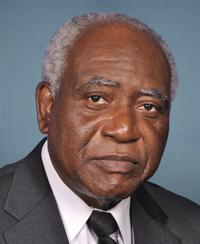
United States · Official source
8,143 records where Rep. Davis, Danny K. [D-IL-7] is listed as a sponsor, author, or other actor. Search with topics and years
United States · United States Congress · 5 March 2026
United States · United States Congress · 5 March 2026
United States · United States Congress · 5 March 2026
United States · United States Congress · 5 March 2026
United States · United States Congress · 4 March 2026
United States · United States Congress · 4 March 2026
Democracy Is Strengthened by Casting Light On Spending in Elections Act of 2026 or the DISCLOSE Act of 2026 This bill addresses campaign finance, including by expanding the prohibition on campaign spending by foreign nationals, requiring additional disclosures of campaign expenditures, and requiring additional disclosures regarding certain political advertisements. Specifically, the bill expands existing foreign money prohibitions to include disbursements for paid web-based or digital communications and federal judicial nomination communications. It also prohibits foreign nationals from contributing to campaigns related to ballot initiatives and referenda. The Government Accountability Office must, for each four-year election cycle, study and report on the incidence of illicit foreign money in federal elections. Next, the bill makes it unlawful to establish or use a corporation, company, or other entity with the intent to conceal an election contribution or donation by a foreign national. A violator is subject to criminal penalties—a fine, a prison term of up to five years, or both. Covered organizations (e.g., corporations, labor organizations, and political organizations) must, within 24 hours, file reports with the Federal Election Commission to disclose campaign expenditures of more than $10,000 during an election cycle. The bill also requires organizations to provide additional disclosures regarding political advertisements, including the donors who contributed the most money to that organization in the last year.
United States · United States Congress · 4 March 2026
United States · United States Congress · 4 March 2026
United States · United States Congress · 3 March 2026
United States · United States Congress · 3 March 2026
United States · United States Congress · 26 February 2026
United States · United States Congress · 26 February 2026
United States · United States Congress · 26 February 2026
United States · United States Congress · 26 February 2026
United States · United States Congress · 25 February 2026
United States · United States Congress · 25 February 2026
United States · United States Congress · 25 February 2026
United States · United States Congress · 25 February 2026
United States · United States Congress · 25 February 2026
United States · United States Congress · 25 February 2026
United States · United States Congress · 25 February 2026
United States · United States Congress · 24 February 2026
United States · United States Congress · 23 February 2026
United States · United States Congress · 20 February 2026
United States · United States Congress · 20 February 2026
United States · United States Congress · 20 February 2026
United States · United States Congress · 20 February 2026
This bill provides for the relief of Roberto Carlos Lopez.
United States · United States Congress · 20 February 2026
United States · United States Congress · 17 February 2026
Federal Extreme Risk Protection Order Act of 2026 This bill authorizes and establishes procedures for federal courts to issue federal extreme risk protection orders. Additionally, the bill establishes grants to support the implementation of extreme risk protection order laws at the state and local levels, extends federal firearms restrictions to individuals who are subject to extreme risk protection orders, and expands related data collection. Extreme risk protection order laws, or red flag laws, generally allow certain individuals (e.g., law enforcement officers or family members) to petition a court for a temporary order that prohibits an at-risk individual from purchasing and possessing firearms. Among its provisions, the bill authorizes a family or household member, or a law enforcement officer, to petition for a federal extreme risk protection order with respect to an individual who poses a risk to themselves or others; directs the Department of Justice to establish a grant program to help states, local governments, Indian tribes, and other entities implement extreme risk protection order laws; extends federal restrictions on the receipt, possession, shipment, and transportation of firearms and ammunition to individuals who are subject to extreme risk protection orders; and requires the Federal Bureau of Investigation to compile records from federal, tribal, and state courts and other agencies that identify individuals who are subject to extreme risk protection orders.
United States · United States Congress · 13 February 2026
This resolution expresses condolences to the families, friends, and loved ones of the individuals who were killed in the shooting in Aurora, Illinois, on February 15, 2019.
United States · United States Congress · 12 February 2026
United States · United States Congress · 12 February 2026
United States · United States Congress · 12 February 2026
United States · United States Congress · 11 February 2026
Department of Homeland Security Appropriations Act, 2026 This bill provides FY2026 appropriations for various agencies and offices within the Department of Homeland Security (DHS), except for U.S. Immigration and Customs Enforcement (ICE), U.S. Customs and Border Protection (CBP), and management and oversight activities of the Office of the Secretary. Specifically, the bill provides appropriations to DHS for the Federal Protective Service, the Office of Inspector General, the Transportation Security Administration, the U.S. Coast Guard, the U.S. Secret Service, the Cybersecurity and Infrastructure Security Agency, the Federal Emergency Management Agency (FEMA), U.S. Citizenship and Immigration Services, the Federal Law Enforcement Training Centers, and the Science and Technology Directorate. The bill does not provide appropriations for some agencies and activities that have been funded in prior DHS appropriations acts, including ICE, CBP, and management and oversight activities of the Office of the Secretary.
United States · United States Congress · 11 February 2026
United States · United States Congress · 11 February 2026
United States · United States Congress · 11 February 2026
Firearm Safety Act of 2025 This bill allows the Consumer Product Safety Commission (CPSC) to issue safety standards for firearms and firearm components. Under current law, firearms, shells, cartridges, and components thereof are excluded from the CPSC's rulemaking authority.
United States · United States Congress · 11 February 2026
United States · United States Congress · 10 February 2026
United States · United States Congress · 9 February 2026
United States · United States Congress · 9 February 2026
Foster Youth Housing Opportunity Act This bill expands states' permissible uses of federal funds under the John H. Chafee Foster Care Program for Successful Transition to Adulthood (Chafee program) to include supportive housing services. The Chafee program is administered by the Department of Health and Human Services (HHS) Children's Bureau and provides funding to support youth and young adults who are in, or were formerly in, foster care with their transition to adulthood. The program is funded through formula grants awarded to child welfare agencies in states, certain territories, and participating tribes. The bill allows states to use such funds to provide supportive services (e.g., financial counseling) for youth up to the age of 26 who are seeking to obtain or retain housing and who have experienced foster care and receive assistance under the Department of Housing and Urban Development (HUD) Section 8 Family Unification Program. Additionally, HHS and HUD must jointly develop and issue guidance to state public child welfare agencies and public housing authorities to improve alignment and coordination of housing supportive services. HHS, in consultation with HUD, also must report information about foster youth who are receiving federal housing assistance and the outcomes for such youth, including the extent to which such youth are able to access stable housing and the rates of homelessness. The report must include findings from any evaluations of state programs and recommendations for improving coordination between public child welfare agencies and federal housing programs.
United States · United States Congress · 9 February 2026
This resolution recognizes National Mentoring Month.
United States · United States Congress · 5 February 2026
United States · United States Congress · 5 February 2026
This resolution recognizes (1) the Greensboro Four for their contributions to the civil rights movement and the significant role they played as a catalyst for the formation of the Student Non-Violent Coordinating Committee, (2) the value of ethnic and racial diversity in the United States, and (3) the continued importance of sit-ins as an effective form of nonviolent resistance. The resolution also encourages states to include information about the Greensboro Four in their educational curriculums.
United States · United States Congress · 4 February 2026
United States · United States Congress · 4 February 2026
United States · United States Congress · 4 February 2026
United States · United States Congress · 4 February 2026
United States · United States Congress · 4 February 2026
United States · United States Congress · 4 February 2026