Resolution· HRESH.Res. 1200 (119th)referred
Supporting the designation of March 2026 as Endometriosis Awareness Month.
United States · United States Congress · 20 April 2026
The world's political record
Person
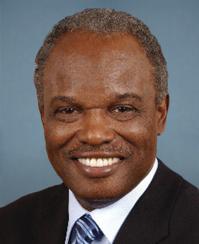
United States · Official source
3,665 records where David Scott is listed as a sponsor, author, or other actor. Search with topics and years
United States · United States Congress · 20 April 2026
United States · United States Congress · 30 March 2026
Provider Reimbursement Stability Act of 2026 This bill allows for larger annual adjustments to the Medicare physician fee schedule. It also requires the Centers for Medicare & Medicaid Services (CMS) to make certain corrections to compensate for expenditures under the fee schedule that exceed a certain amount in a given year, and it limits how much certain adjustment factors may vary each year. Current law prohibits annual adjustments to the Medicare physician fee schedule that would result in a more than $20 million difference between the adjusted amount and the non-adjusted amount of total expenditures. The bill increases this threshold to $54.3 million beginning in 2027, with adjustments for inflation every five years beginning in 2032. Additionally, for certain services, the bill requires the CMS to determine the difference between expenditures based on estimated utilization of the service and expenditures based on actual utilization. If this difference exceeds a certain percentage of total expenditures under the fee schedule, the CMS must reconcile this difference by adjusting payments for the following year. This requirement applies to services for which payment was bundled with another service and there was a separate or add-on payment during the previous year. Finally, the CMS must update the prices and rates of each category of direct costs that affect payments (e.g., prices of equipment) at least every five years, with updates made to each category in the same year. The bill also prohibits the CMS from varying a certain adjustment factor by more than 2.5% each year.
United States · United States Congress · 26 March 2026
United States · United States Congress · 25 March 2026
United States · United States Congress · 24 March 2026
Extending WIC for New Moms Act This bill amends the Special Supplemental Nutrition Program for Women, Infants, and Children (WIC) to extend the eligibility periods for breastfeeding and postpartum women. Specifically, a state program may elect to certify a breastfeeding woman for up to 24 months (currently 1 year) postpartum. The bill also expands the eligibility period for postpartum women to up to 24 months after termination of pregnancy (currently 6 months). The Department of Agriculture must submit a report to Congress evaluating the effect of these changes to the program on (1) maternal and infant health outcomes, (2) breastfeeding rates, and (3) qualitative evaluations of family experiences under WIC.
United States · United States Congress · 18 March 2026
United States · United States Congress · 18 March 2026
United States · United States Congress · 17 March 2026
United States · United States Congress · 16 March 2026
Grocery, Farm, and Food Worker Stabilization Grant Program Act of 2026 This bill directs the Agricultural Marketing Service (AMS) to establish a grant program to provide farmworkers, meat processing workers, and grocery workers stabilization payments in the case of a natural disaster or other disaster. Specifically, AMS must provide funding to membership organizations or labor unions representing farmworkers, meat processing workers, and grocery workers for the payments.
United States · United States Congress · 5 March 2026
United States · United States Congress · 4 March 2026
United States · United States Congress · 4 March 2026
Democracy Is Strengthened by Casting Light On Spending in Elections Act of 2026 or the DISCLOSE Act of 2026 This bill addresses campaign finance, including by expanding the prohibition on campaign spending by foreign nationals, requiring additional disclosures of campaign expenditures, and requiring additional disclosures regarding certain political advertisements. Specifically, the bill expands existing foreign money prohibitions to include disbursements for paid web-based or digital communications and federal judicial nomination communications. It also prohibits foreign nationals from contributing to campaigns related to ballot initiatives and referenda. The Government Accountability Office must, for each four-year election cycle, study and report on the incidence of illicit foreign money in federal elections. Next, the bill makes it unlawful to establish or use a corporation, company, or other entity with the intent to conceal an election contribution or donation by a foreign national. A violator is subject to criminal penalties—a fine, a prison term of up to five years, or both. Covered organizations (e.g., corporations, labor organizations, and political organizations) must, within 24 hours, file reports with the Federal Election Commission to disclose campaign expenditures of more than $10,000 during an election cycle. The bill also requires organizations to provide additional disclosures regarding political advertisements, including the donors who contributed the most money to that organization in the last year.
United States · United States Congress · 4 March 2026
United States · United States Congress · 3 March 2026
United States · United States Congress · 26 February 2026
United States · United States Congress · 12 February 2026
United States · United States Congress · 4 February 2026
Rebuild America's Schools Act of 2026 This bill provides support for long-term improvements to public elementary and secondary school facilities. First, the bill sets forth allocations to states and establishes a need-based grant program for local educational agencies (LEAs) to improve school facilities. Further, the bill specifies allowable uses of grant funds, including carrying out major repairs, improving indoor air quality, and making facilities accessible to individuals with disabilities. Additionally, the bill requires LEAs that receive funds for new construction, modernization, or renovation projects to comply with hazard-resistance building codes and performance criteria under the WaterSense program of the Environmental Protection Agency. Further, the bill requires such LEAs to adopt certain green practices (environmental standards) and requires the use of iron, steel, and manufactured products that are made in the United States (Buy America). The bill restores school infrastructure tax credit bonds. The bill also sets forth reporting requirements, including annual reports on grant program projects and a report by the Government Accountability Office that requires a study of the geographic distribution of projects, the impact of selected projects on student and staff health and safety, and the accessibility of projects to high-needs schools. The bill also establishes the Office of School Infrastructure and Sustainability within the Department of Education. Next, the bill extends through FY2031 the Impact Aid Construction program. Finally, the bill establishes a grant program to assist LEAs with repairing or replacing concrete foundations affected by pyrrhotite (an iron sulfide material linked to crumbling foundations).
United States · United States Congress · 27 January 2026
United States · United States Congress · 22 January 2026
United States · United States Congress · 22 January 2026
United States · United States Congress · 21 January 2026
United States · United States Congress · 13 January 2026
United States · United States Congress · 8 January 2026
United States · United States Congress · 19 December 2025
United States · United States Congress · 17 December 2025
United States · United States Congress · 15 December 2025
United States · United States Congress · 15 December 2025
United States · United States Congress · 11 December 2025
United States · United States Congress · 11 December 2025
United States · United States Congress · 11 December 2025
Keeping All Students Safe Act This bill prohibits the use of seclusion and limits the use of physical restraint in schools and Head Start programs that receive federal funding. Specifically, the bill prohibits the use of seclusion , which is the involuntary confinement of a student alone in a room or area from which the student is physically prevented from leaving. The term does not include a time out, which may involve separating the student from others in a non-locked setting. The bill prohibits the use of mechanical or chemical restraints or physical restraints that restrict breathing or are life threatening. The bill outlines the requirements for the use of physical restraint, including that the student's behavior must pose an imminent danger of serious physical injury to the student or other individual. Each state must ensure that a sufficient number of program personnel are trained and certified by a state-approved crisis intervention training program. Additionally, each program must establish procedures to follow after an incident involving physical restraint. Further, the bill establishes enforcement provisions, including a private right of action for a student who has been subjected to unlawful seclusion or restraint. The Department of Education and the Department of Health and Human Services must withhold payments from a program for unlawful seclusion or restraint. Finally, the bill requires each state educational agency (SEA) to establish, implement, and enforce policies and procedures required by the bill. It also creates a grant program to assist SEAs with these activities.
United States · United States Congress · 11 December 2025
Housing for the 21st Century Act This bill revises federal housing programs, including by expanding available financing for affordable housing and providing grants for planning and community development activities. For example, the bill increases the statutory maximum loan limits for mortgage insurance programs administered by the Federal Housing Administration for multifamily homes and requires the use of a more specific inflation index for such loans. The bill also increases the maximum eligible income for the Department of Housing and Urban Development's (HUD's) HOME Investment Partnerships Program (grants to states and localities to support housing for low-income households) and establishes a grant program to assist regional, state, and local entities with strategies to support affordable housing. In addition, the bill exempts certain housing-related activities from the environmental review process, including certain construction, improvement, or rehabilitation of residential buildings; excludes veterans' disability benefits from being considered as income for purposes of determining eligibility for the Veterans Affairs Supportive Housing (VASH) program; establishes a pilot program to provide grants to public housing agencies (PHAs) and other owners of federally assisted housing to test the efficacy of temperature sensors to support compliance with temperature requirements; eliminates the requirement that manufactured homes must be constructed with a permanent chassis; and authorizes HUD to conduct performance reviews of organizations that provide housing counseling services. The bill also expands oversight of HUD and PHAs, such as by requiring PHAs to post information about contracts on their websites. For more information about this bill, see CRS Report R48849 .
United States · United States Congress · 11 December 2025
United States · United States Congress · 10 December 2025
United States · United States Congress · 21 November 2025
United States · United States Congress · 20 November 2025
United States · United States Congress · 19 November 2025
United States · United States Congress · 19 November 2025
United States · United States Congress · 18 November 2025
United States · United States Congress · 17 November 2025
United States · United States Congress · 7 November 2025
Keep SNAP and WIC Funded Act of 2025 This bill provides FY2026 appropriations for the Department of Agriculture (USDA) to continue operating the Supplemental Nutrition Assistance Program (SNAP); the Special Supplemental Nutrition Program for Women, Infants, and Children (WIC); and a related block grant program if there is a lapse in FY2026 appropriations for USDA. Specifically, the bill provides appropriations to USDA for any period in which legislation to provide FY2026 interim continuing appropriations or full-year appropriations for USDA has not been enacted. If such a lapse in appropriations occurs, the bill provides the appropriations that are necessary to continue providing uninterrupted SNAP benefits, providing consolidated block grants to Puerto Rico and American Samoa for nutrition assistance programs, and carrying out WIC without interruption. In addition, the bill provides appropriations to pay any benefits under these programs that were missed on or after September 30, 2025, and before this bill is enacted. The appropriations for these purposes are available until the earlier of (1) the enactment into law of legislation to provide FY2026 appropriations for USDA (including continuing appropriations), or (2) September 30, 2026. The bill also requires USDA to use the funds provided by this bill to reimburse state agencies for costs that were incurred to carry out these programs during a lapse in appropriations, to the extent that the programs were carried out in accordance with federal law (including regulations) during the lapse.
United States · United States Congress · 7 November 2025
United States · United States Congress · 31 October 2025
United States · United States Congress · 31 October 2025
United States · United States Congress · 14 October 2025
Healthy Meals Help Kids Learn Act of 2025 This bill permanently increases the federal reimbursement rates for the school lunch and breakfast programs of the Department of Agriculture. Specifically, beginning November 1, 2025, the bill provides an additional 45 cents per lunch served in the National School Lunch Program and an additional 28 cents per breakfast served in the School Breakfast Program. These amounts must be adjusted annually for inflation beginning July 1, 2026.
United States · United States Congress · 8 October 2025
United States · United States Congress · 8 October 2025
United States · United States Congress · 8 October 2025
United States · United States Congress · 26 September 2025
United States · United States Congress · 23 September 2025
United States · United States Congress · 18 September 2025