Bill· HRH.R. 10301 (119th)referred
To award a Congressional Gold Medal to Peter McGuire in recognition of his contributions to the American Labor Movement.
United States · United States Congress · 4 September 2026
The world's political record
Person
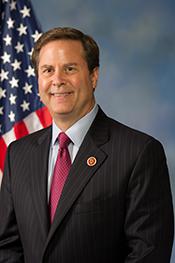
United States · Official source
1,950 records where Donald Norcross is listed as a sponsor, author, or other actor. Search with topics and years
United States · United States Congress · 4 September 2026
United States · United States Congress · 13 August 2026
United States · United States Congress · 23 July 2026
United States · United States Congress · 20 July 2026
United States · United States Congress · 16 July 2026
United States · United States Congress · 14 July 2026
United States · United States Congress · 13 July 2026
United States · United States Congress · 25 June 2026
United States · United States Congress · 23 June 2026
United States · United States Congress · 23 June 2026
United States · United States Congress · 23 June 2026
United States · United States Congress · 18 June 2026
United States · United States Congress · 11 June 2026
United States · United States Congress · 4 June 2026
United States · United States Congress · 29 May 2026
Country of Origin Labeling Requirement Act or the COOL Online Act This bill requires sellers of imported products online to conspicuously disclose the country of origin of the products and the country where the seller's principal place of business is located. This requirement does not apply to specified products, such as agricultural commodities, food or drugs, or previously owned items. The Federal Trade Commission must enforce violations of this requirement as unfair or deceptive trade practices.
United States · United States Congress · 20 May 2026
United States · United States Congress · 14 May 2026
United States · United States Congress · 13 May 2026
United States · United States Congress · 30 April 2026
United States · United States Congress · 29 April 2026
This resolution expresses support for the designation of a Motorcycle Safety Awareness Month. It also recognizes the contribution of motorcycles to transportation.
United States · United States Congress · 28 April 2026
United States · United States Congress · 28 April 2026
United States · United States Congress · 23 April 2026
United States · United States Congress · 16 April 2026
This bill designates the facility of the United States Postal Service located at 16 Rev Dr Martin Luther King Jr Drive in Willingboro, New Jersey, as the "James A. Cotten Post Office".
United States · United States Congress · 9 April 2026
United States · United States Congress · 26 March 2026
This resolution provides for the consideration of the bill (H.R. 5408) to accelerate workplace time-to-contract under the National Labor Relations Act.
United States · United States Congress · 26 March 2026
United States · United States Congress · 26 March 2026
United States · United States Congress · 19 March 2026
United States · United States Congress · 18 March 2026
United States · United States Congress · 18 March 2026
United States · United States Congress · 12 March 2026
United States · United States Congress · 4 March 2026
Democracy Is Strengthened by Casting Light On Spending in Elections Act of 2026 or the DISCLOSE Act of 2026 This bill addresses campaign finance, including by expanding the prohibition on campaign spending by foreign nationals, requiring additional disclosures of campaign expenditures, and requiring additional disclosures regarding certain political advertisements. Specifically, the bill expands existing foreign money prohibitions to include disbursements for paid web-based or digital communications and federal judicial nomination communications. It also prohibits foreign nationals from contributing to campaigns related to ballot initiatives and referenda. The Government Accountability Office must, for each four-year election cycle, study and report on the incidence of illicit foreign money in federal elections. Next, the bill makes it unlawful to establish or use a corporation, company, or other entity with the intent to conceal an election contribution or donation by a foreign national. A violator is subject to criminal penalties—a fine, a prison term of up to five years, or both. Covered organizations (e.g., corporations, labor organizations, and political organizations) must, within 24 hours, file reports with the Federal Election Commission to disclose campaign expenditures of more than $10,000 during an election cycle. The bill also requires organizations to provide additional disclosures regarding political advertisements, including the donors who contributed the most money to that organization in the last year.
United States · United States Congress · 20 February 2026
Airspace Location and Enhanced Risk Transparency Act of 2026 or the ALERT Act This bill addresses aviation safety by increasing requirements for aircraft tracking and communication using Automatic Dependent Surveillance-Broadcast (ADS-B) technology and expanding oversight. As background, ADS-B for broadcasting (Out) and receiving (In) transmits information (e.g., location and weather) among aircraft and air traffic control (ATC). The bill requires the Department of Defense (DOD) and the Department of Transportation (DOT) to enter into an agreement regarding the use of collision prevention technologies on DOD aircraft. The agreement must require the use of ADS-B Out as the default practice for DOD helicopters operating in the national airspace, unless such use would affect operational security. For DOD helicopters that are carrying out special missions in the Washington, DC, metropolitan area and are exempt from ADS-B Out transmission requirements, DOD must coordinate with DOT to conduct a safety risk assessment and implement appropriate mitigations. By December 31, 2031, DOD aircraft (other than certain special mission aircraft) must be equipped with and operating integrated ADS-B In technology. With respect to civil aircraft, by December 31, 2031, the Federal Aviation Administration (FAA) must generally require aircraft that are currently required to be equipped with ADS-B Out to also be equipped with ADS-B In. Additionally, among other requirements, the FAA must establish time-on-position limits for supervisory ATC personnel; establish a process to timely notify parties involved in certain near-miss incidents; and evaluate and revise, as necessary, helicopter routes around Ronald Reagan Washington National Airport.
United States · United States Congress · 12 February 2026
United States · United States Congress · 11 February 2026
Department of Homeland Security Appropriations Act, 2026 This bill provides FY2026 appropriations for various agencies and offices within the Department of Homeland Security (DHS), except for U.S. Immigration and Customs Enforcement (ICE), U.S. Customs and Border Protection (CBP), and management and oversight activities of the Office of the Secretary. Specifically, the bill provides appropriations to DHS for the Federal Protective Service, the Office of Inspector General, the Transportation Security Administration, the U.S. Coast Guard, the U.S. Secret Service, the Cybersecurity and Infrastructure Security Agency, the Federal Emergency Management Agency (FEMA), U.S. Citizenship and Immigration Services, the Federal Law Enforcement Training Centers, and the Science and Technology Directorate. The bill does not provide appropriations for some agencies and activities that have been funded in prior DHS appropriations acts, including ICE, CBP, and management and oversight activities of the Office of the Secretary.
United States · United States Congress · 10 February 2026
United States · United States Congress · 10 February 2026
United States · United States Congress · 4 February 2026
United States · United States Congress · 4 February 2026
Rebuild America's Schools Act of 2026 This bill provides support for long-term improvements to public elementary and secondary school facilities. First, the bill sets forth allocations to states and establishes a need-based grant program for local educational agencies (LEAs) to improve school facilities. Further, the bill specifies allowable uses of grant funds, including carrying out major repairs, improving indoor air quality, and making facilities accessible to individuals with disabilities. Additionally, the bill requires LEAs that receive funds for new construction, modernization, or renovation projects to comply with hazard-resistance building codes and performance criteria under the WaterSense program of the Environmental Protection Agency. Further, the bill requires such LEAs to adopt certain green practices (environmental standards) and requires the use of iron, steel, and manufactured products that are made in the United States (Buy America). The bill restores school infrastructure tax credit bonds. The bill also sets forth reporting requirements, including annual reports on grant program projects and a report by the Government Accountability Office that requires a study of the geographic distribution of projects, the impact of selected projects on student and staff health and safety, and the accessibility of projects to high-needs schools. The bill also establishes the Office of School Infrastructure and Sustainability within the Department of Education. Next, the bill extends through FY2031 the Impact Aid Construction program. Finally, the bill establishes a grant program to assist LEAs with repairing or replacing concrete foundations affected by pyrrhotite (an iron sulfide material linked to crumbling foundations).
United States · United States Congress · 3 February 2026
United States · United States Congress · 15 January 2026
United States · United States Congress · 15 January 2026
Ending Importation of Laundered Russian Oil Act This bill prohibits the importation of energy products that were produced at any refinery that uses crude oil originating in Russia. Current law prohibits the importation of Russian products that are classified under Chapter 27 of the Harmonized Tariff Schedule of the United States (which includes mineral fuels, mineral oils and products of their distillation, bituminous substances, and mineral waxes) unless the President terminates the prohibition after meeting certain requirements. The bill extends this prohibition and the termination provisions to products that were produced at any refinery that uses crude oil originating in Russia. Under the termination provisions, the President may terminate this prohibition, subject to congressional disapproval, if the President certifies that Russia (1) has reached an agreement with Ukraine to withdraw Russian forces and cease military hostilities in Ukraine, (2) poses no immediate military threat of aggression to any North Atlantic Treaty Organization member, and (3) recognizes the right of the Ukrainian people to independently and freely choose their own government.
United States · United States Congress · 15 January 2026
United States · United States Congress · 15 January 2026
United States · United States Congress · 15 January 2026
United States · United States Congress · 14 January 2026
United States · United States Congress · 13 January 2026
United States · United States Congress · 12 January 2026
United States · United States Congress · 8 January 2026