Bill· HRH.R. 4476 (119th)referred
Preventing Authoritarian Policing Tactics on America’s Streets Act
United States · United States Congress · 17 July 2025
The world's political record
Person
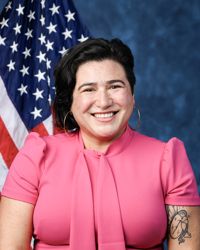
United States · Official source
431 records where Rep. Randall, Emily [D-WA-6] is listed as a sponsor, author, or other actor. Search with topics and years
United States · United States Congress · 17 July 2025
United States · United States Congress · 17 July 2025
United States · United States Congress · 16 July 2025
United States · United States Congress · 16 July 2025
United States · United States Congress · 15 July 2025
This resolution provides a special rule for consideration of H.R. 185 and amends that bill to direct the Department of Justice (DOJ) to make publicly available certain records related to Jeffrey Epstein or Ghislaine Maxwell. Under H.R. 185, as amended by the resolution, DOJ must publicly disclose all unclassified records, documents, communications, and investigative materials in its possession that relate to Epstein or Maxwell. The records include unclassified records referring or relating to Epstein's detention and death; flight logs of aircraft owned or used by Epstein; individuals named in connection with Epstein’s criminal activities, civil settlements, or immunity or plea agreements; immunity deals, sealed settlements, or plea bargains of Epstein or his associates; entities with ties to Epstein’s trafficking or financial networks; and internal Department of Justice communications concerning decisions to investigate or charge Epstein or his associates. However, under the amended bill, DOJ may withhold or redact portions of records with written justification that such portions contain (1) victims' personally identifiable information; (2) child sexual abuse materials; (3) images of death, physical abuse, or injury; (4) information which would jeopardize an active federal investigation or prosecution; or (5) classified information. DOJ may not withhold or redact records on the basis of embarrassment, reputational harm, or political sensitivity. Further, within 15 days of completing the required disclosures, DOJ must provide Congress with a report listing all categories of records released and withheld, all redactions made and their legal basis, and all government officials and politically exposed persons named or referenced in the released materials.
United States · United States Congress · 15 July 2025
United States · United States Congress · 14 July 2025
United States · United States Congress · 30 June 2025
United States · United States Congress · 30 June 2025
United States · United States Congress · 26 June 2025
United States · United States Congress · 26 June 2025
United States · United States Congress · 26 June 2025
United States · United States Congress · 24 June 2025
Women's Health Protection Act of 2025 This bill prohibits governmental restrictions on the provision of, and access to, abortion services. Before fetal viability, governments may not restrict providers from using particular abortion procedures or drugs, offering abortion services via telemedicine, or immediately providing abortion services if delaying risks the patient's health. Furthermore, governments may not require providers to perform unnecessary medical procedures, provide medically inaccurate information, or comply with credentialing or other conditions that do not apply to providers who offer medically comparable services to abortions. Additionally, governments may not require patients to make medically unnecessary in-person visits before receiving abortion services or disclose their reasons for obtaining services. After fetal viability, governments may not restrict providers from performing abortions when necessary to protect a patient's life and health. The same provisions that apply to abortions before viability also apply to necessary abortions after viability. Additionally, states may authorize post-viability abortions in circumstances beyond those that the bill considers necessary. Further, the bill recognizes an individual's right to interstate travel, including for abortion services. The bill also prohibits governments from implementing measures that are similar to those restricted by the bill or that otherwise target and impede access to abortion services, unless the measure significantly advances the safety of abortion services or health of patients and cannot be achieved through less restrictive means. The Department of Justice, individuals, or providers may sue states or government officials to enforce this bill, regardless of certain immunity that would otherwise apply.
United States · United States Congress · 24 June 2025
United States · United States Congress · 24 June 2025
United States · United States Congress · 23 June 2025
This concurrent resolution directs the President to remove U.S. Armed Forces from hostilities against Iran unless explicitly authorized by a declaration of war or a congressional authorization for use of military force against Iran. Elements of the U.S. Armed Forces needed to defend the United States, an ally, or a partner from imminent attack are not covered by this requirement provided the President complies with a specified provision of the War Powers Resolution. (The provision generally requires the President to remove U.S. Armed Forces from hostilities no more than 60 days after the President notifies or is required to notify Congress of such involvement, unless Congress authorizes such use. For more information on the War Powers Resolution, see CRS In Focus 13134 .)
United States · United States Congress · 23 June 2025
United States · United States Congress · 12 June 2025
United States · United States Congress · 12 June 2025
United States · United States Congress · 12 June 2025
United States · United States Congress · 11 June 2025
United States · United States Congress · 11 June 2025
United States · United States Congress · 10 June 2025
Bipartisan Background Checks Act of 2025 This bill establishes new background check requirements for firearm transfers between private parties (i.e., unlicensed individuals). Specifically, it prohibits a firearm transfer between private parties unless a licensed gun dealer, manufacturer, or importer first takes possession of the firearm to conduct a background check. The prohibition does not apply to certain firearm transfers or exchanges, such as a gift between spouses.
United States · United States Congress · 6 June 2025
United States · United States Congress · 5 June 2025
United States · United States Congress · 5 June 2025
Protection for Reservation Occupants against Trafficking and Evasive Communications Today Act of 2025 or the PROTECT Act of 2025 This bill expands special tribal criminal jurisdiction (STCJ) to include certain controlled substance-related offenses and firearms offenses. It also allows tribal courts to execute warrants for electronic material. STCJ allows participating tribes to investigate, prosecute, convict, and sentence both Indian and non-Indian offenders who commit covered crimes in Indian country against Indian victims. Covered crimes currently include assault of tribal justice personnel, child violence, dating violence, domestic violence, obstruction of justice, sexual violence, sex trafficking, stalking, and a violation of a protection order. The bill expands STCJ to allow participating tribes to prosecute individuals for controlled substance-related offenses (i.e., drug trafficking, unlawful drug possession, or unlawful possession of drug paraphernalia) and firearms offenses (i.e., use or possession of a firearm in furtherance of a covered crime or by a person who has been convicted of domestic violence). Additionally, the bill allows participating tribes to exercise STCJ over a controlled substance-related offense or a firearms offense if neither the defendant nor the alleged victim is an Indian. (Currently, this exception only applies in cases of obstruction of justice or assault of tribal justice personnel.) The bill allows offenders convicted pursuant to STCJ to be incarcerated through the Bureau of Prisons Tribal Prisoner Program. The bill gives tribal courts the same authority as state courts to compel service providers to disclose stored electronic communication information through court-issued warrants, court orders, or administrative subpoenas.
United States · United States Congress · 5 June 2025
United States · United States Congress · 4 June 2025
United States · United States Congress · 4 June 2025
United States · United States Congress · 4 June 2025
This resolution expresses the House of Representatives' grave concern with (1) the humanitarian crisis and acute suffering of Palestinian civilians in Gaza, and (2) the suffering of the hostages and hostage families. The resolution also calls on the White House, the Department of State, and other relevant federal agencies to use all available diplomatic tools to bring about the release of the hostages, the disbursement of food and humanitarian aid to Palestinian civilians, and a durable end to the Gaza conflict.
United States · United States Congress · 3 June 2025
United States · United States Congress · 29 May 2025
Menstrual Equity For All Act of 2025 This bill expands access to menstrual products (e.g., tampons) in certain locations and for particular groups, such as in schools and for low-income individuals, through federal programs and requirements. It also prohibits state or local sales taxes for these products. The bill expands access to menstrual products through federal programs by requiring Medicaid to cover such products, establishing grants within the Temporary Assistance for Needy Families (TANF) program to provide benefits to ensure access to such products, authorizing the Emergency Food and Shelter Program to provide menstrual products to homeless individuals, and increasing Social Services Block Grant funding to provide such products to low-income individuals. Also, the bill sets out requirements to make free menstrual products available in federal and state correctional facilities (including Department of Homeland Security detention facilities) and restrooms in federal buildings that are open to the public. Further, the bill (1) establishes grants to provide free menstrual products to students at institutions of higher education, and (2) permits elementary and secondary schools to use certain grant funds to provide menstrual products to students. In addition, the bill requires employers with at least 100 employees to provide free menstrual products for employees. Finally, the bill prohibits states and local governments from taxing retail sales of menstrual products.
United States · United States Congress · 29 May 2025
United States · United States Congress · 23 May 2025
United States · United States Congress · 21 May 2025
United States · United States Congress · 21 May 2025
This resolution declares mental health a national priority and supports the designation of Mental Health Awareness Month.
United States · United States Congress · 21 May 2025
United States · United States Congress · 21 May 2025
United States · United States Congress · 21 May 2025
United States · United States Congress · 20 May 2025
Improving Seniors' Timely Access to Care Act of 2025 This bill establishes several requirements and standards relating to prior authorization processes under Medicare Advantage (MA) plans. Specifically, MA plans must (1) establish an electronic prior authorization program that meets specified standards; (2) annually submit to the CMS for publication specified prior authorization information, including the percentage of requests approved and the average response time; and (3) meet other standards, as set by the Centers for Medicare & Medicaid Services (CMS), relating to the quality and timeliness of prior authorization determinations. The CMS and the Office of the National Coordinator for Health Information Technology must publish on the CMS' website a report that analyzes the information received from MA plans, the feasibility of implementing real-time decision making with respect to prior authorization requests, and the impact of decisions that are made using artificial intelligence on patient access.
United States · United States Congress · 15 May 2025
United States · United States Congress · 14 May 2025
United States · United States Congress · 14 May 2025
Nurse Staffing Standards for Hospital Patient Safety and Quality Care Act of 2025 This bill requires hospitals to implement and submit to the Department of Health and Human Services (HHS) a staffing plan that complies with specified minimum nurse-to-patient ratios by unit. Hospitals must post a notice regarding nurse-to-patient ratios in each unit and maintain records of actual ratios for each shift in each unit. The bill also requires hospitals to follow certain procedures regarding how ratios are determined, and other staff are prohibited from performing nurse functions unless specifically authorized within a state's scope of practice rules. HHS must adjust Medicare payments to hospitals to cover additional costs attributable to compliance with these ratios. Nurses may object to, or refuse to participate in, an assignment if it would violate minimum ratios or if they are not prepared by education or experience to fulfill the assignment without compromising the safety of a patient or jeopardizing their nurse's license. Hospitals may not (1) take adverse actions against a nurse based on the nurse's reasonable refusal to accept an assignment; or (2) discriminate against individuals for good faith complaints relating to the care, services, or conditions of the hospital or related facilities. HHS may impose civil monetary penalties on hospitals violating the ratio requirements and must publish the names of such hospitals. The bill provides stipends to the nurse workforce loan repayment and scholarship program and expands the nurse retention grant program to include nurse preceptorship and mentorship projects.
United States · United States Congress · 13 May 2025
United States · United States Congress · 13 May 2025
United States · United States Congress · 13 May 2025
United States · United States Congress · 13 May 2025
United States · United States Congress · 8 May 2025
United States · United States Congress · 8 May 2025
United States · United States Congress · 7 May 2025