Bill· HRH.R. 3204 (118th)referred
Universal School Meals Program Act of 2023
United States · United States Congress · 11 May 2023
The world's political record
Person
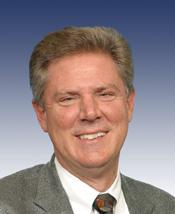
United States · Official source
7,304 records where Rep. Pallone, Frank [D-NJ-6] is listed as a sponsor, author, or other actor. Search with topics and years
United States · United States Congress · 11 May 2023
United States · United States Congress · 10 May 2023
U.S. Citizenship Act This bill establishes a path to citizenship for certain undocumented individuals. The bill also replaces the term alien with noncitizen in the immigration statutes and addresses other related issues. Specifically, the bill establishes a new status of lawful prospective immigrant . This status shall be available to an applying noncitizen who meets certain requirements, including being continually present in the United States from January 1, 2023, and passing background checks. After at least five years with this status, an eligible noncitizen may apply for and receive lawful permanent resident status. The bill also provides permanent resident status to certain applying noncitizens, specifically for eligible noncitizens who (1) entered the United States as a minor, (2) were eligible for temporary protected status or deferred enforced departure on January 1, 2017, or (3) worked a certain amount of agricultural labor in the five years before applying. Among other things, the bill also redefines for immigration purposes the term conviction to exclude convictions that have been expunged or vacated, requires the Department of State to implement a strategy to advance reforms in Central America and address key factors contributing to migration from the region to the United States, requires the State Department to establish refugee processing centers in Central America, requires U.S. Customs and Border Protection sectors and stations to have a certain number of employees with certain qualifications such as paramedic training, generally prohibits religious discrimination in granting or denying immigration benefits, and establishes grant programs for providing training and services to immigrants.
United States · United States Congress · 10 May 2023
Enhance Access To SNAP Act of 2023 or the EATS Act of 2023 This bill expands eligibility for the Supplemental Nutrition Assistance Program (SNAP) for certain students. Specifically, the bill removes the restriction on SNAP eligibility for students to allow otherwise eligible students who are attending institutions of higher education (IHEs) at least half time to participate in SNAP. Under current law, students 18-49 years old are restricted, with exceptions, from participating in SNAP. The Consolidated Appropriations Act, 2021 temporarily exempted some students from certain SNAP eligibility requirements; these temporary student exemptions are currently scheduled to expire after the end of the COVID-19 public health emergency on May 11, 2023. Further, the bill provides that students enrolled at least half time in a recognized school, training program, or IHE constitute individual households (not residents of institutions ) and may be eligible for SNAP benefits. (Participation in SNAP is limited to households.)
United States · United States Congress · 10 May 2023
Invest to Protect Act of 2023 This bill directs the Office of Community Oriented Policing Services within the Department of Justice to award grants to local and tribal governments that employ fewer than 200 law enforcement officers. Grant funds may be used for various activities, including to provide de-escalation training and improve recruitment and retention.
United States · United States Congress · 10 May 2023
Homes for Every Local Protector, Educator, and Responder Act of 2023 or the HELPER Act of 2023 This bill establishes a program administered by the Department of Housing and Urban Development to provide mortgage assistance to law enforcement officers, elementary and secondary school teachers, firefighters, or other first responders. Specifically, these individuals may be eligible for a first-time mortgage on a primary family residence with no down payment. Instead, the mortgage is subject to a one-time, up-front mortgage insurance premium.
United States · United States Congress · 9 May 2023
Fight and Combat Rampant Iranian Missile Exports Act or the Fight CRIME Act This bill imposes sanctions pertaining to Iran's missile program. The President must impose visa- and property-blocking sanctions on foreign persons (i.e., foreign individuals, entities, and states) that are knowingly involved with Iran or Iran-aligned entities in certain missile-related activities, such as (1) acquiring, possessing, developing, transporting, transferring, or deploying missiles or related items and technology that are covered by the Missile Technology Control Regime (MTCR), or (2) developing missile or drone technologies. (The MTCR is an informal political understanding among states that seek to limit missile proliferation.) The President must also impose sanctions on (1) certain adult family members of those who are subject to the sanctions discussed above, and (2) foreign persons who knowingly provide significant support to or engage in a significant transaction with those subject to the sanctions discussed above. The bill also requires the Department of State to report to Congress on various topics, including (1) a diplomatic strategy to renew international restrictions on certain missile-related activities set forth in Annex B of U.N. Security Council Resolution 2231, which concerns restrictions on arms transfers to and from Iran; (2) the identities of foreign persons engaging in restricted activity under Annex B; and (3) an analysis of the foreign and domestic supply chains that facilitate Iran's missile or drone programs.
United States · United States Congress · 9 May 2023
This resolution encourages the U.S. Holocaust Memorial Museum to continue its work in educating the public about the dangers of antisemitism and the origins of the Holocaust, congratulates those responsible for the creation of the museum, condemns antisemitism, supports educational and community-based programs that counter antisemitism and hate, and supports the designation of a U.S. Holocaust Memorial Museum Day.
United States · United States Congress · 5 May 2023
Prevent All Soring Tactics Act of 2023 or the PAST Act of 2023 This bill addresses the practice of soring horses. The soring of horses includes various actions taken on horses' limbs to produce higher gaits that may cause pain, distress, inflammation, or lameness. Specifically, the bill expands soring regulation and enforcement at horse shows, exhibitions, sales, and auctions, including by establishing a new system for inspecting horses for soring. In addition, the bill increases penalties for violations.
United States · United States Congress · 28 April 2023
Federal Extreme Risk Protection Order Act of 2023 This bill authorizes and establishes procedures for federal courts to issue federal extreme risk protection orders. Additionally, the bill establishes grants to support the implementation of extreme risk protection order laws at the state and local levels, extends federal firearms restrictions to individuals who are subject to extreme risk protection orders, and expands related data collection. Extreme risk protection order laws, or red flag laws, generally allow certain individuals (e.g., law enforcement officers or family members) to petition a court for a temporary order that prohibits an at-risk individual from purchasing and possessing firearms. Among its provisions, the bill authorizes a family or household member, or a law enforcement officer, to petition for a federal extreme risk protection order with respect to an individual who poses a risk to themselves or others; directs the Department of Justice to establish a grant program to help states, local governments, Indian tribes, and other entities implement extreme risk protection order laws; extends federal restrictions on the receipt, possession, shipment, and transportation of firearms and ammunition to individuals who are subject to extreme risk protection orders; and requires the Federal Bureau of Investigation to compile records from federal, tribal, and state courts and other agencies that identify individuals who are subject to extreme risk protection orders.
United States · United States Congress · 27 April 2023
New York-New Jersey Watershed Protection Act This bill establishes programs to restore and protect the New York-New Jersey Watershed. The watershed is composed of all land area the surface water of which drains into the New York-New Jersey Harbor, the waters contained within that land area, and associated estuaries. Specifically, the bill requires the U.S. Fish and Wildlife Service to establish the New York-New Jersey Watershed Restoration Program, a nonregulatory program, to coordinate restoration and protection activities among government entities and conservation partners throughout the watershed. The bill also establishes the New York-New Jersey Watershed Restoration Grant Program, a voluntary grant and technical assistance program, to provide competitive matching grants to certain entities to implement restoration and protection activities for the watershed. The federal government may not maintain ownership of any land acquired under the bill except for the purpose of promptly transferring ownership to grant recipients. The bill ceases to have force or effect on October 1, 2030.
United States · United States Congress · 26 April 2023
Food Labeling Modernization Act of 2023 This bill imposes additional labeling requirements for food and addresses related issues. A food intended for human consumption must include on its principal display panel a summary of nutritional information using a system that (1) clearly distinguishes between products of greater or lesser nutritional value; and (2) uses standardized symbols to provide information about products that are high in certain substances, such as saturated fats. The Food and Drug Administration (FDA) must promulgate regulations establishing the requirements for such a system. Labels that use certain terms, such as whole wheat , fruit , or vegetable , must include additional information, such as the amount or quantity of that item in the food. The FDA must promulgate certain regulations relating to the use of the terms natural or healthy on food labels. The bill also imposes labeling requirements for certain foods that contain added coloring, added flavoring, phosphorus, caffeine, gluten, allulose, polydextrose, sugar alcohols, or isolated fibers. The FDA may, by regulation, deem a food ingredient to be a major food allergen. The FDA must also impose certain restrictions on the types of beverages that may be identified as infant formula or formula. The FDA must require food manufacturers to submit all information on the label of a food offered for sale in package form and update such submissions as necessary. The information must be made available in a public database on the FDA's website.
United States · United States Congress · 26 April 2023
Raise the Age Act of 2023 This bill establishes new restrictions on the sale or transfer of certain semiautomatic firearms to individuals under 21 years of age. Specifically, this bill makes it unlawful for a licensed gun dealer, importer, manufacturer, or collector to sell or deliver a semiautomatic center-fire rifle or semiautomatic center-fire shotgun that has (or has the capacity to accept) an ammunition feeding device with a capacity of more than five rounds to an individual who the licensee knows or has reasonable cause to believe is under age 21. The prohibition does not apply if the individual under age 21 is a full-time law enforcement officer or active-duty member of the Armed Forces. The bill also requires the Federal Bureau of Investigation to report on the operation of its public access line, including a description of information sharing protocols and recommendations for improving such protocols.
United States · United States Congress · 24 April 2023
This resolution recognizes the independence of the Republic of Artaskh, also known as Nagorno-Karabakh (the region is internationally recognized to be part of Azerbaijan). The resolution also urges the United States to support international recognition of an independent Artaskh and to cease foreign and military assistance to Azerbaijan, condemns Azerbaijan's blockade and aggression, and supports Armenia's sovereignty and territorial integrity.
United States · United States Congress · 24 April 2023
Armenian Genocide Education Act This bill requires the Library of Congress to maintain a public website and otherwise support educational initiatives to promote understanding about the Armenian Genocide (the killing of Armenians by the Ottoman Empire from 1915 to 1923).
United States · United States Congress · 20 April 2023
Railroad Employee Equity and Fairness Act or the REEF Act This bill permanently exempts payments made from the Railroad Unemployment Insurance Account from sequestration. Sequestration is a process of automatic, usually across-the-board spending reductions under which budgetary resources are permanently cancelled to enforce specific budget policy goals. Currently, this exemption ends 30 days after the termination of the COVID-19 national emergency period.
United States · United States Congress · 20 April 2023
Dignity for Detained Immigrants Act of 2023 This bill directs the Department of Homeland Security (DHS) to establish standards for facilities holding non-U.S. nationals ( aliens under federal law) in its custody, phases out using non-DHS facilities for such purposes, and addresses related issues. The standards must comply with the American Bar Association's Civil Immigration Detention Standards. The DHS Office of Inspector General (OIG) must conduct periodic unannounced inspections of each facility and take various actions against noncompliant facilities, including imposing fines, cancelling contracts, and closing facilities. DHS must report to Congress any death of an individual in its custody within 24 hours and conduct an investigation within 30 days that identifies policy changes that could reduce the likelihood of such a death. DHS may not contract with third parties to operate detention facilities or alternatives to detention programs and must terminate existing contracts within three years of the bill's enactment. The bill establishes that OIG facility inspection reports and contracts for an outside entity to operate a detention facility are records available to the public under the Freedom of Information Act. DHS must maintain certain information relating to immigration-related detention, including the detained individual's location and whether the individual was separated from family. The bill provides for various requirements and procedures related to immigration-related detention, including (1) prohibiting DHS from detaining children, (2) imposing a presumption that a detained individual should be released, and (3) establishing that individuals in custody shall be subject to the least restrictive conditions. The bill also abolishes mandatory detention for asylum seekers.
United States · United States Congress · 19 April 2023
Do No Harm Act This bill prohibits the application of the Religious Freedom Restoration Act of 1993 (RFRA) to specified federal laws or the implementation of such laws. Currently, RFRA prohibits the government from substantially burdening a person's exercise of religion even if the burden results from a rule of general applicability, except in furtherance of a compelling governmental interest when using the least restrictive means. Under the bill, RFRA is inapplicable to laws or the implementation of laws that protect against discrimination or require the promotion of equal opportunity (e.g., the Civil Rights Act of 1964); require employers to provide wages, other compensation, or benefits, including leave; protect collective activity in the workplace; protect against child labor, abuse, or exploitation; or provide for access to, information about, referrals for, provision of, or coverage for any health care item or service. The bill prevents RFRA from being used to deny (1) goods or services the government has agreed to provide to a beneficiary of or participant in a program or activity funded by a government contract, grant, agreement, or other award; or (2) a person's full and equal enjoyment of a government-provided good, service, benefit, facility, privilege, advantage, or accommodation. In order for a person to assert a RFRA claim or defense in a judicial proceeding, the government must be a party to the proceeding.
United States · United States Congress · 18 April 2023
Transparent Prices Required to Inform Consumer and Employers Act or the Transparent PRICE Act This bill revises the hospital price transparency requirements and the health plan price transparency requirements. Specifically, the bill provides statutory authority for the requirement that hospitals publish specified pricing information for each item or service the hospital provides. It also requires the Centers for Medicare & Medicaid Services (CMS) to implement a standard method and format for hospitals to disclose such pricing information. The method and format may be similar to any template already established by the CMS. The bill requires the CMS to regularly monitor the accuracy of such pricing information and establishes civil penalties for violations of the requirements. The CMS also must establish and maintain on its website a list of each hospital that is not in compliance with the requirements (including whether it has been issued a warning or civil penalty) and a list of each hospital that is in compliance. Additionally, the bill requires health insurance plans to report every three months certain rate and payment information for in-network services, out-of-network services, and prescription drugs available under the plan. The bill requires the Government Accountability Office to report on the compliance with, and enforcement of, the requirements of this bill.
United States · United States Congress · 13 April 2023
Communities Before Air Tourism Act This bill requires a voluntary agreement for commercial air tour operations over a national park to address specific management issues necessary to protect the park without compromising the well-being of communities overflown by such aircraft. Currently, the voluntary agreement must only address these issues without compromising aviation safety or the air traffic control system. Further, the bill amends the public review requirements for a proposed voluntary agreement to require consultation with any community whose lands are, or may be, flown over by a commercial air tour operator. Currently, consultation is only required with any Indian tribe whose tribal lands are, or may be, flown over by an operator.
United States · United States Congress · 10 April 2023
Doctors of Community Act or the DOC Act This bill reauthorizes and provides mandatory funding for graduate medical education programs operated by teaching health centers. The bill sets out funding levels through FY2033. Funding for FY2034 and beyond equals the preceding fiscal year's amount adjusted for medical inflation.
United States · United States Congress · 10 April 2023
Securing Access to Lower Taxes by ensuring Deductibility Act or the SALT Deductibility Act This bill repeals the temporary restrictions in taxable years 2018 through 2025 on the deductibility of state and local taxes.
United States · United States Congress · 10 April 2023
This joint resolution proposes a constitutional amendment providing that the rights protected and extended by the Constitution are the rights of natural persons only. Artificial entities, such as corporations, shall have no rights under the Constitution and are subject to regulation. The amendment requires federal, state, and local governments to (1) regulate, limit, or prohibit election contributions and expenditures, including a candidate's own contributions and expenditures, to ensure equal access of citizens to the political process, regardless of economic status; and (2) require that any permissible contributions and expenditures be publicly disclosed. Additionally, the judiciary is prohibited from construing the spending of money to influence elections to be speech under the First Amendment.
United States · United States Congress · 6 April 2023
Sunset for the 2001 Authorization for Use of Military Force Act This bill repeals the Authorization for Use of Military Force signed into law September 18, 2001, with the repeal effective 240 days after the date of the enactment of the bill.
United States · United States Congress · 3 April 2023
This resolution supports the designation of National Sikh Day to honor and celebrate the important role played by the Sikh community in strengthening and inspiring the people of the United States.
United States · United States Congress · 30 March 2023
CHAMPVA Children's Care Protection Act of 2023 This bill provides that a child shall be eligible for medical care under the Civilian Health and Medical Program of the Department of Veterans Affairs (CHAMPVA) until the child's 26th birthday, regardless of the child's marital status.
United States · United States Congress · 30 March 2023
Enhanced Background Checks Act of 2023 This bill revises background check requirements applicable to proposed firearm transfers from a federal firearms licensee (e.g., a licensed gun dealer) to an unlicensed person. Specifically, it increases the amount of time, from 3 business days to a minimum of 10 business days, that a federal firearms licensee must wait to receive a completed background check prior to transferring a firearm to an unlicensed person. (This type of transaction is often referred to as a default proceed transaction.) If a submitted background check remains incomplete after 10 business days, then the prospective purchaser may submit a petition for a final firearms eligibility determination. If an additional 10 days elapse without a final determination, then the federal firearms licensee may transfer the firearm to the prospective purchaser. The Government Accountability Office must report on the extent to which the changes have prevented firearms transfers to prohibited persons. The Federal Bureau of Investigation must report on the number of petitions it receives for final federal firearms determinations. The Department of Justice, in consultation with the National Resource Center on Domestic Violence and Firearms, must report on further amendments to the background check process that would likely reduce the risk of death or great bodily harm to victims of domestic violence, domestic abuse, dating partner violence, sexual assault, and stalking.
United States · United States Congress · 30 March 2023
Women's Health Protection Act of 2023 This bill prohibits governmental restrictions on the provision of, and access to, abortion services. Before fetal viability, governments may not restrict providers from using particular abortion procedures or drugs, offering abortion services via telemedicine, or immediately providing abortion services if delaying risks the patient's health. Furthermore, governments may not require providers to perform unnecessary medical procedures, provide medically inaccurate information, or comply with credentialing or other conditions that do not apply to providers who offer medically comparable services to abortions. Additionally, governments may not require patients to make medically unnecessary in-person visits before receiving abortion services or disclose their reasons for obtaining services. After fetal viability, governments may not restrict providers from performing abortions when necessary to protect a patient's life and health. The same provisions that apply to abortions before viability also apply to necessary abortions after viability. Additionally, states may authorize post-viability abortions in circumstances beyond those that the bill considers necessary. Further, the bill recognizes an individual's right to interstate travel, including for abortion services. The bill also prohibits governments from implementing measures that are similar to those restricted by the bill or that otherwise single out and impede access to abortion services, unless the measure significantly advances the safety of abortion services or health of patients and cannot be achieved through less restrictive means. The Department of Justice, individuals, or providers may sue states or government officials to enforce this bill, regardless of certain immunity that would otherwise apply.
United States · United States Congress · 28 March 2023
International Human Rights Defense Act of 2023 This bill establishes in the Department of State a permanent Special Envoy for the Human Rights of LGBTQI+ (lesbian, gay, bisexual, transgender, queer, or intersex) Peoples who shall serve as the principal State Department advisor regarding human rights for LGBTQI+ people and represent the United States in diplomatic matters relevant to the human rights of LGBTQI+ people. The special envoy shall periodically provide Congress with a U.S. global strategy to prevent and respond to criminalization, discrimination, and violence against LGBTQI+ people. The State Department and the U.S. Agency for International Development may provide assistance to prevent and respond to such activities against LGBTQI+ people. The bill also requires that specified annual country reports on human rights practices include information on criminalization, discrimination, and violence based on sexual orientation and gender identity.
United States · United States Congress · 28 March 2023
This bill provides for the award of a Congressional Gold Medal to Billie Jean King in recognition of her courageous and groundbreaking leadership in advancing equal rights for women in athletics, education, and society.
United States · United States Congress · 28 March 2023
Global Health, Empowerment and Rights Act This bill establishes that a foreign nongovernmental organization shall not be disqualified from receiving certain U.S. international development assistance solely because the organization provides medical services using non-U.S. government funds if the medical services do not violate the laws of the country in which they are being provided. Such foreign organizations shall not be subject to requirements relating to their use of non-U.S. funds for advocacy or lobbying activities, other than those that apply to U.S. nongovernmental organizations.
United States · United States Congress · 24 March 2023
This resolution congratulates the people of Greece as they celebrate the 202nd anniversary of the War of Greek Independence. The resolution also expresses support for the principles of democracy, human rights, and the rule of law to which the people of the United States and Greece are committed.
United States · United States Congress · 24 March 2023
Historic Tax Credit Growth and Opportunity Act of 2023 This bill increases the rehabilitation tax credit and modifies certain requirements for the credit. The bill increases the rate of the credit for qualified rehabilitation expenditures in taxable years beginning after December 31, 2020, and before January 1, 2028, after which the rate reverts to 20%. The bill increases the rate of the credit to 30% for certain small projects whose qualified rehabilitation expenditures do not exceed $2.5 million. The bill also expands the types of buildings eligible for rehabilitation by decreasing the rehabilitation threshold from 100% to 50% of project expenses. It also eliminates the basis adjustment requirement for the credit and modifies rules relating to tax-exempt use property eligible for the credit.
United States · United States Congress · 24 March 2023
United States-Israel Future of Warfare Act of 2023 This bill requires the Department of Defense to establish the United States-Israel Future of Warfare Research and Development Fund to conduct collaborative defense projects between the United States and Israel in areas of emerging technologies (e.g., artificial intelligence). The purpose of the fund is to enable the Armed Forces of the United States and Israel to meet emerging defense challenges.
United States · United States Congress · 24 March 2023
Carnivals are Real Entertainment Act This bill makes certain workers with a traveling carnival or circus eligible for P visas (nonimmigrant visas for athletes, artists, and entertainers). Such visas shall be available for workers who perform functions that are integral and essential to the carnival or circus, such as transporting and assembling relevant structures and equipment. Such visas shall only be available for a position if (1) there are not sufficient U.S. workers available, and (2) employing a non-U.S. national ( alien under federal law) will not affect the wages and working conditions of similarly employed U.S. workers.
United States · United States Congress · 22 March 2023
Health Care Affordability Act of 2023 This bill revises the tax credit for health care premium assistance to expand the eligibility of low-income taxpayers for such credit and reduce the cost of health care premiums.
United States · United States Congress · 22 March 2023
Office of Gun Violence Prevention Act of 2023 This bill establishes an Office of Gun Violence Prevention within the Department of Justice's Office of Legal Policy. Among its duties, the office must coordinate various gun violence prevention efforts that are administered by the Department of Justice, recommend policy options to promote evidence-based gun violence prevention strategies, and promote related data collection.
United States · United States Congress · 22 March 2023
Abortion is Health Care Everywhere Act of 2023 This bill authorizes using certain foreign assistance funds to provide comprehensive reproductive health care services in developing countries, including abortion services, training, and equipment. The bill also removes a statutory prohibition on using such funds in developing countries to (1) pay for abortions performed as a method of family planning, or (2) motivate or coerce any person to practice abortions.
United States · United States Congress · 17 March 2023
Puppy Protection Act of 2023 This bill requires the Department of Agriculture to expand standards that govern the humane handling, care, treatment, and transportation of animals to include new requirements for commercial dog dealers. Specifically, the standards must require dog dealers to provide to dogs adequate housing, exercise, and veterinary care; appropriate and nutritious food; continuous access to potable water; and meaningful socialization with humans and compatible dogs for at least 30 minutes each day. The standards must also include requirements for breeders to use safe breeding practices and make all reasonable efforts to find humane placement for retired breeding dogs.
United States · United States Congress · 14 March 2023
Hello Girls Congressional Gold Medal Act of 2023 This bill provides for the award of a single Congressional Gold Medal in honor of the female telephone operators of the Army Signal Corps, commonly known as the Hello Girls , in recognition of their military service, devotion to duty, and 60-year struggle for veterans' benefits and recognition as soldiers.
United States · United States Congress · 14 March 2023
Secure Viable Banking Act or the SVB Act This bill increases the oversight of certain nonbank financial companies and bank holding companies by repealing Title IV of the Economic Growth, Regulatory Relief, and Consumer Protection Act (P.L. 115-174). (A nonbank financial company is a financial institution without a banking license that may be subject to supervision due to the company's size or risk profile. A bank holding company owns a controlling interest in one or more banks.) Specifically, the bill decreases from $250 billion to $50 billion the asset threshold at which enhanced prudential standards become mandatory, thereby requiring more companies to comply with these standards. These standards include stress testing, leverage limits, liquidity requirements, and resolution plan requirements (i.e., living will requirements). Under current law, the Federal Reserve has the discretion to determine the applicability of these standards to bank holding companies with assets between $100 billion and $250 billion. The bill also expands stress testing by increasing the number of board-run stress test scenarios from two to three; decreasing the asset threshold at which company-run stress tests are required from $250 billion to $10 billion; and requiring company-run stress tests to be performed annually or semiannually, depending on the amount of assets held. The bill also decreases from $50 billion to $10 billion the asset threshold for mandatory risk committees. Finally, the bill revises the supplemental leverage ratio applied to custodial banks and the asset treatment of certain municipal obligations.
United States · United States Congress · 10 March 2023
Paycheck Fairness Act This bill addresses wage discrimination on the basis of sex, which is defined to include pregnancy, sexual orientation, gender identity, and sex characteristics. Specifically, it limits an employer's defense that a pay differential is based on a factor other than sex to only bona fide job-related factors in wage discrimination claims, enhances nonretaliation prohibitions, and makes it unlawful to require an employee to sign a contract or waiver prohibiting the employee from disclosing information about the employee's wages. The bill also increases civil penalties for violations of equal pay provisions. Additionally, the Equal Employment Opportunity Commission (EEOC) and the Office of Federal Contract Compliance Programs must train EEOC employees and other affected parties on wage discrimination. The bill directs the Department of Labor to (1) establish and carry out a grant program to provide training in negotiation skills related to compensation and equitable working conditions, (2) conduct studies to eliminate pay disparities between men and women, and (3) make available information on wage discrimination to assist the public in understanding and addressing such discrimination. The bill establishes the National Award for Pay Equity in the Workplace for an employer who has made a substantial effort to eliminate pay disparities between men and women. It also establishes the National Equal Pay Enforcement Task Force to address compliance, public education, and enforcement of equal pay laws. Finally, the bill requires the EEOC to issue regulations for collecting from employers compensation and other employment data according to the sex, race, and national origin of employees for use in enforcing laws prohibiting pay discrimination.
United States · United States Congress · 9 March 2023
Good Jobs for Good Airports Act This bill modifies pay, benefits, and labor standards for certain airport service workers. Airport service workers include security officers, food service workers, cleaning staff, ticketing agents, and retail service workers. Specifically, the bill prohibits small, medium, and large hub airports from accessing certain federal funds for airport projects unless the airports certify that such airport service workers are paid no less than the higher of $15 per hour; the applicable federal, state, or local minimum wage and fringe benefits; or the prevailing wage and fringe benefits required under the Service Contract Act, which the bill requires the Department of Labor to establish.
United States · United States Congress · 9 March 2023
Improving Access to Nutrition Act of 20 2 3 This bill repeals certain work requirements for the Supplemental Nutrition Assistance Program (SNAP). The requirements apply to able-bodied adults who are ages 18-49 and have no dependent children. Individuals who do not meet certain work requirements are generally prohibited from receiving more than 3 months of SNAP benefits over a 36-month period. Under current law, some of the work requirements under SNAP are temporarily suspended due to COVID-19.
United States · United States Congress · 9 March 2023
This resolution recognizes the disparity between wages paid to men and women, and its impact on women, families, and the nation and reaffirms Congress' commitment to supporting equal pay and to narrowing the gender wage gap.
United States · United States Congress · 9 March 2023
Renewing Immigration Provisions of the Immigration Act of 1929 This bill expands eligibility for a program that authorizes the Department of Homeland Security to, at its discretion, provide lawful permanent resident status to certain long-term residents of the United States, including individuals who are unlawfully present. Currently, this program, sometimes referred to as the Registry program, is only available to eligible non-U.S. nationals ( aliens under federal law) who entered the United States before January 1, 1972. The bill removes this entry cutoff date and opens up the program to eligible individuals who have resided in the United States for at least seven years. Existing requirements (e.g., the individual must not be inadmissible or deportable due to certain grounds related to crime or terrorism) continue to apply.
United States · United States Congress · 7 March 2023
Sultana Steamboat Disaster Commemorative Coin Act of 2023 This bill directs the Department of the Treasury to mint and issue not more than 100,000 $5 gold coins, 500,000 $1 silver coins, and 750,000 half-dollar clad coins emblematic of the Sultana steamboat explosion that occured on April 27, 1865, on the Mississippi River. All surcharges received by Treasury from the sale of such coins must be paid to the Sultana Historical Preservation Society for the purpose of establishing, operating, and maintaining a museum.
United States · United States Congress · 3 March 2023
Satellite And Telecommunications Streamlining Act or the SAT Streamlining Act This bill directs the Federal Communications Commission (FCC) to revise its regulations that govern licenses and grants of U.S. market access for geostationary and non-geostationary orbital satellites. Geostationary orbital satellites maintain a stationary position in orbit while non-geostationary satellites move in relation to the Earth's surface; these satellites may be used to provide broadband and other telecommunications services. In particular, the bill specifies deadlines by which the FCC must decide whether to approve an application for a license or grant of market access. Generally, the FCC must make a decision on (1) an initial application or a major modification of an application within one year, (2) a renewal of an application within 180 days, and (3) a minor modification of an application within 90 days. The bill allows the FCC to extend the deadlines in some instances, such as when an application raises national security and law enforcement concerns. Furthermore, the FCC regulations must include performance objectives for space safety and orbital debris that are specific, measurable, and technology-neutral. The FCC must also include requirements related to the sharing of the electromagnetic spectrum band by licensees and grantees. For example, the FCC must (1) require licensees and grantees to make a good faith effort to coordinate their use of the spectrum with others, and (2) establish a quantifiable level of protection from harmful interference for other authorized users of the spectrum.
United States · United States Congress · 1 March 2023
Major Richard Star Act This bill provides that combat-disabled uniformed services retirees with fewer than 20 years of creditable service may concurrently receive, without reduction, veterans' disability compensation and retired pay or combat-related special compensation.
United States · United States Congress · 1 March 2023
Asylum Seeker Work Authorization Act of 2023 This bill directs the Department of Homeland Security to provide employment authorization for eligible asylum applicants. Currently, such individuals are not entitled to employment authorization but may be granted such by the Department of Justice. Such employment authorization is valid until the date on which an applicant is issued a final denial of the application, including administrative and judicial review. The bill also shortens the waiting period for receiving employment authorization to 30 days from the filing of the asylum application.
United States · United States Congress · 1 March 2023
Law Enforcement Officers Equity Act This bill expands the definition of law enforcement officer under provisions of the Federal Employees Retirement System (FERS) and the Civil Service Retirement System (CSRS). Specifically, the bill expands the definition to include (1) federal employees whose duties encompass the investigation or apprehension of suspected or convicted criminals and who are authorized to carry a firearm; (2) Internal Revenue Service employees whose duties are primarily the collection of delinquent taxes and the securing of delinquent returns; (3) U.S. Postal Inspection Service employees; (4) Department of Veterans Affairs police officers; and (5) certain U.S. Customs and Border Protection employees who are seized-property specialists with duties relating to custody, management, and disposition of seized and forfeited property. The bill deems service performed by an incumbent law enforcement officer on or after the enactment date of this bill to be service performed as a law enforcement officer for retirement purposes. The past service of such incumbents shall be treated as service performed by a law enforcement officer for retirement purposes only if a written election is submitted to the Office of Personnel Management within five years after the enactment of this bill or before separation from government service, whichever is earlier. An incumbent who makes an election before the enactment of this bill may pay a deposit into the Civil Service Retirement and Disability Fund to cover prior service. A law enforcement officer shall not be subject to mandatory separation during the three-year period beginning on the enactment of this bill.