Bill· HRH.R. 4443 (119th)referred
Asunción Valdivia Heat Illness, Injury, and Fatality Prevention Act of 2025
United States · United States Congress · 16 July 2025
The world's political record
Person
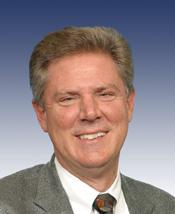
United States · Official source
7,304 records where Rep. Pallone, Frank [D-NJ-6] is listed as a sponsor, author, or other actor. Search with topics and years
United States · United States Congress · 16 July 2025
United States · United States Congress · 15 July 2025
United States · United States Congress · 14 July 2025
United States · United States Congress · 10 July 2025
United States · United States Congress · 10 July 2025
This resolution commends and congratulates Petty Officer Third Class Scott Ruskan for his bravery and heroic efforts to rescue 165 victims during the July 2025 catastrophic flooding in central Texas. It also extends gratitude to all members of the Coast Guard, other federal and state agencies, first responders, and volunteers who risked their lives to protect and rescue others.
United States · United States Congress · 30 June 2025
United States · United States Congress · 26 June 2025
United States · United States Congress · 26 June 2025
United States · United States Congress · 26 June 2025
United States · United States Congress · 26 June 2025
United States · United States Congress · 26 June 2025
United States · United States Congress · 26 June 2025
United States · United States Congress · 24 June 2025
Women's Health Protection Act of 2025 This bill prohibits governmental restrictions on the provision of, and access to, abortion services. Before fetal viability, governments may not restrict providers from using particular abortion procedures or drugs, offering abortion services via telemedicine, or immediately providing abortion services if delaying risks the patient's health. Furthermore, governments may not require providers to perform unnecessary medical procedures, provide medically inaccurate information, or comply with credentialing or other conditions that do not apply to providers who offer medically comparable services to abortions. Additionally, governments may not require patients to make medically unnecessary in-person visits before receiving abortion services or disclose their reasons for obtaining services. After fetal viability, governments may not restrict providers from performing abortions when necessary to protect a patient's life and health. The same provisions that apply to abortions before viability also apply to necessary abortions after viability. Additionally, states may authorize post-viability abortions in circumstances beyond those that the bill considers necessary. Further, the bill recognizes an individual's right to interstate travel, including for abortion services. The bill also prohibits governments from implementing measures that are similar to those restricted by the bill or that otherwise target and impede access to abortion services, unless the measure significantly advances the safety of abortion services or health of patients and cannot be achieved through less restrictive means. The Department of Justice, individuals, or providers may sue states or government officials to enforce this bill, regardless of certain immunity that would otherwise apply.
United States · United States Congress · 20 June 2025
CBP Canine Home Kenneling Pilot Act This bill requires the Office of Field Operations within U.S. Customs and Border Protection to establish a canine home kenneling pilot program. In home kenneling programs, canines used for law enforcement purposes are housed and cared for at the residences of their assigned handlers.
United States · United States Congress · 17 June 2025
United States · United States Congress · 12 June 2025
Enhancing Science, Treatment, and Upkeep of America’s Resilient and Important Estuarine Systems Act or the ESTUARIES Act This bill reauthorizes through FY2031 grants provided under the National Estuary Program to protect and restore estuaries of national significance. Estuaries are coastal waterbodies where freshwater from rivers and streams mixes with the ocean’s saltwater. Under the existing program, the Environmental Protection Agency provides grants for (1) developing and implementing comprehensive conservation and management plans for estuaries of national significance, and (2) addressing issues that threaten the ecological and economic well-being of such estuaries. The existing program provides grants to states, regional water pollution control agencies and entities, state coastal zone management agencies, interstate agencies, other public or nonprofit private agencies, institutions, organizations, and individuals.
United States · United States Congress · 12 June 2025
United States · United States Congress · 11 June 2025
United States · United States Congress · 10 June 2025
Bipartisan Background Checks Act of 2025 This bill establishes new background check requirements for firearm transfers between private parties (i.e., unlicensed individuals). Specifically, it prohibits a firearm transfer between private parties unless a licensed gun dealer, manufacturer, or importer first takes possession of the firearm to conduct a background check. The prohibition does not apply to certain firearm transfers or exchanges, such as a gift between spouses.
United States · United States Congress · 10 June 2025
Enhanced Background Checks Act of 2025 This bill establishes more stringent background check requirements for proposed firearm transfers from a federal firearms licensee (e.g., a licensed gun dealer) to an unlicensed person. Specifically, it increases the amount of time, from 3 business days to a minimum of 10 business days, that a federal firearms licensee must wait to receive a completed background check prior to transferring a firearm to an unlicensed person. (This type of transaction is often referred to as a default proceed transaction.) If a submitted background check remains incomplete after 10 business days, then the prospective purchaser may submit a petition for a final firearms eligibility determination. If an additional 10 days elapse without a final determination, then the federal firearms licensee may transfer the firearm to the prospective purchaser. The Government Accountability Office must report on the extent to which the changes have prevented firearms transfers to prohibited persons. The Federal Bureau of Investigation must report on the number of petitions it receives for final federal firearms determinations. The Department of Justice, in consultation with the National Resource Center on Domestic Violence and Firearms, must report on further amendments to the background check process that would likely reduce the risk of death or great bodily harm to victims of domestic violence, domestic abuse, dating partner violence, sexual assault, and stalking.
United States · United States Congress · 5 June 2025
This resolution condemns the June 1, 2025, targeted act of terror in Boulder, Colorado, as an act of ideologically motivated violence and reaffirms the House of Representatives' commitment to protecting the rights of all Americans to assemble peacefully and practice their faith without fear of violence.
United States · United States Congress · 4 June 2025
United States · United States Congress · 4 June 2025
Equal Access to Justice for Victims of Gun Violence Act of 2025 This bill removes limitations on the civil liability of gun manufacturers and the disclosure of gun trace data in civil actions. Specifically, the bill repeals the Protection of Lawful Commerce in Arms Act, which prohibits civil actions against a firearm or ammunition manufacturer, seller, importer, dealer, or trade association for damages resulting from the criminal or unlawful misuse of a firearm. Additionally, the bill states that firearms trace data maintained by the Bureau of Alcohol, Tobacco, Firearms and Explosives is not immune from legal process. Such data is subject to discovery; is admissible as evidence; and may be used, relied on, or disclosed in a civil action or administrative proceeding.
United States · United States Congress · 29 May 2025
This resolution congratulates the Jewish War Veterans of the United States on the 129th anniversary of its founding and recognizes the organization for its dedication to the welfare of veterans, the Jewish community, and the nation. The resolution also affirms the importance of the Jewish War Veterans’ ongoing work in ensuring the sacrifices of veterans and lessons of history are never forgotten.
United States · United States Congress · 23 May 2025
United States · United States Congress · 21 May 2025
College for All Act of 2025 This bill establishes measures to expand access to higher education, including by eliminating tuition and required fees for eligible students, revising the Federal Pell Grant program, and reauthorizing certain programs to assist students from disadvantaged backgrounds. Specifically, the bill provides funding to enable states and tribal colleges and universities, through a federal-state partnership, to eliminate tuition and required fees for (1) all students at community colleges and two-year tribal colleges and universities, and (2) working- and middle-class students at four-year public institutions of higher education and tribal colleges and universities. The bill provides funding to enable private, nonprofit historically Black colleges and universities and minority-serving institutions to eliminate tuition and required fees for eligible students. The bill permanently reauthorizes and otherwise revises the Federal Pell Grant program by providing funding to increase the maximum award for each eligible student, increasing the duration limit for the use of Pell Grants, allowing students to use their awards to cover living and nontuition expenses, and expanding eligibility to Dreamer students (i.e., students who have been granted Deferred Action for Childhood Arrivals status and who entered the United States before the age of 16) and students with other immigration statuses. Further, the bill requires the Department of Education to award grants to eligible states and tribal colleges and universities for improving student outcomes. The bill reauthorizes through FY2035 the Federal TRIO Programs and reauthorizes through FY2029 the Gaining Early Awareness and Readiness for Undergraduate Programs.
United States · United States Congress · 15 May 2025
Stronger Communities through Better Transit Act This bill requires the Department of Transportation (DOT) to establish a grant program to support operating projects for public transportation and related service improvements, particularly in underserved communities and areas of persistent poverty. Specifically, the bill requires DOT to allocate funding under the program for urbanized areas, states, and Indian tribes that are recipients of funds under either the Federal Transit Administration's (FTA's) Urbanized Area Formula Funding program or Formula Grants for Rural Areas program. Eligible recipients may use funding for operating costs associated with projects that improve public transportation service for transit-dependent populations and support increased transit ridership (e.g., service expansion, information technology enhancements, and workforce development). DOT must apportion the funding so that recipients receive funds that are proportional to their share of operating costs. The bill also provides for an increased federal cost share for operating assistance for projects or programs carried out in areas of persistent poverty or underserved communities. DOT must set up a multimodal access measurement interface for public agencies to aid transit agencies in determining and reporting on access to jobs and essential services. A grant recipient must (1) report specific information to the FTA for inclusion in the National Transit Database, and (2) survey transit riders and non-riding residents regarding transit service improvements. Further, the bill expands the purposes of the public transportation programs to include supporting public transportation's role in combating climate change through growing/retaining transit ridership.
United States · United States Congress · 13 May 2025
Improving Training for School Food Service Workers Act of 2025 This bill adds requirements regarding the availability of training that the Department of Agriculture provides under current law for local food service personnel in schools. The training must be scheduled during regular, paid working hours; provided at no cost to food service personnel; offered in-person whenever appropriate; and incorporate experiential learning. If the training is scheduled outside of working hours, food service personnel must be informed about the necessity of scheduling the program, consulted to schedule the program, and compensated for attending the program. Personnel may not be penalized for failing to attend a program outside of working hours.
United States · United States Congress · 8 May 2025
United States · United States Congress · 8 May 2025
United States · United States Congress · 7 May 2025
United States · United States Congress · 30 April 2025
United States · United States Congress · 30 April 2025
Assault Weapons Ban of 2025 This bill makes it a crime to knowingly import, sell, manufacture, transfer, or possess a semiautomatic assault weapon (SAW) or large capacity ammunition feeding device (LCAFD). The prohibition does not apply to a firearm that is (1) manually operated by bolt, pump, lever, or slide action, except for certain shotguns; (2) permanently inoperable; (3) an antique; (4) only capable of firing rimfire ammunition; or (5) a rifle or shotgun specifically identified by make and model. The bill also exempts from the prohibition the following, with respect to a SAW or LCAFD: importation, sale, manufacture, transfer, or possession related to certain law enforcement efforts, or authorized tests or experiments; importation, sale, transfer, or possession related to securing nuclear materials; and possession by a retired law enforcement officer. The bill permits continued possession, sale, or transfer of a grandfathered SAW, which must be securely stored. A licensed gun dealer must conduct a background check prior to the sale or transfer of a grandfathered SAW between private parties. The bill permits continued possession of, but prohibits sale or transfer of, a grandfathered LCAFD. Newly manufactured LCAFDs must display serial number identification. Newly manufactured SAWs and LCAFDs must display the date of manufacture. The bill also allows a state or local government to use Edward Byrne Memorial Justice Assistance Grant Program funds to compensate individuals who surrender a SAW or LCAFD under a buy-back program.
United States · United States Congress · 30 April 2025
Ukrainian Adjustment Act of 2025 This bill provides a streamlined process for certain Ukrainian nationals (including accompanying spouse and children) who are living in the United States to receive lawful permanent resident status. Specifically, the bill permits Ukrainian nationals who have been paroled into the United States after February 20, 2014, to apply for and receive lawful permanent resident status. Additionally, the Department of Homeland Security (DHS) may waive grounds for inadmissibility (excluding certain crimes or security related grounds) for individuals who apply for status adjustment. DHS must establish vetting requirements (including an interview) for applicants that are equivalent to those under the United States Refugee Admissions Program. The bill also preserves eligibility for the status adjustment of certain battered spouses whose eligibility for such status stemmed from a marriage that has terminated. Finally, the bill requires DHS to issue guidance to implement these requirements and establishes a deadline for eligible individuals to apply for adjustment.
United States · United States Congress · 30 April 2025
United States · United States Congress · 29 April 2025
Equality Act This bill prohibits discrimination based on sex, sexual orientation, or gender identity with respect to businesses, employment, housing, federally funded programs, and other settings. Specifically, the bill expands Title II and Title VI of the Civil Rights Act of 1964 to prohibit public accommodations and federally funded programs, respectively, from discriminating based on sex, sexual orientation, or gender identity. It also includes stores, transit services, recreational facilities, and establishments that provide health care, accounting, or legal services as public accommodations under Title II. The bill also expands Title IV (desegregation of public schools) and Title VII (employment discrimination) to specifically include sexual orientation and gender identity. (The Supreme Court held in Bostock v. Clayton County that Title VII's prohibition of employment discrimination based on sex also prohibits employment discrimination based on sexual orientation or gender identity.) The bill similarly expands the Fair Housing Act (discrimination in public and private housing) to include sexual orientation and gender identity. It also prohibits discrimination based on sexual orientation or gender identity by creditors and with respect to jury selection. The bill defines sex for purposes of the aforementioned provisions to include sex stereotypes, pregnancy, childbirth, sexual orientation, gender identity, and sex characteristics.
United States · United States Congress · 29 April 2025
United States · United States Congress · 29 April 2025
Medicare for All Act This bill establishes a national health insurance program that is administered by the Department of Health and Human Services (HHS). Among other requirements, the program must (1) cover all U.S. residents; (2) provide for automatic enrollment of individuals upon birth or residency in the United States; and (3) cover items and services that are medically necessary or appropriate to maintain health or to diagnose, treat, or rehabilitate a health condition, including hospital services, prescription drugs, mental health and substance abuse treatment, dental and vision services, long-term care, gender affirming care, and reproductive care, including contraception and abortions. The bill prohibits cost-sharing (e.g., deductibles, coinsurance, and copayments) and other charges for covered services. Additionally, private health insurers and employers may only offer coverage that is supplemental to, and not duplicative of, benefits provided under the program. Health insurance exchanges and specified federal health programs terminate upon program implementation. However, the program does not affect coverage provided through the Department of Veterans Affairs or the Indian Health Service. The bill also establishes a series of implementing provisions relating to (1) health care provider participation; (2) HHS administration; and (3) payments and costs, including the requirement that HHS negotiate prices for prescription drugs. Individuals who are age 18 or younger, age 55 or older, or already enrolled in Medicare may enroll in the program starting one year after enactment of this bill; other individuals may buy into the program at this time. The program must be fully implemented two years after enactment.
United States · United States Congress · 28 April 2025
United States · United States Congress · 14 April 2025
Ukraine Support Act This bill addresses the war between Russia and Ukraine by (1) providing assistance to Ukraine and certain European countries, and (2) establishing penalties for Russia and certain foreign persons (individuals and entities). Assistance provided under the bill includes establishing a reconstruction trust fund for Ukraine, requiring the U.S. International Development Finance Corporation to prioritize support for Ukraine, reviving the President’s authority to lend or lease defense articles to Ukraine or Eastern European countries affected by the war through FY2028, extending through 2027 the Department of Defense’s authority to provide security assistance and intelligence support to Ukrainian forces, and requiring the Department of State to take certain actions to build the capacity of the militaries and border forces of Baltic countries. Additionally, the President must periodically determine if the Russian government or any proxy is waging a war of aggression against Ukraine, refusing to sincerely negotiate a peace agreement with Ukraine, or acting in violation of a negotiated peace agreement with Ukraine. If the President makes such a determination, the President must impose certain penalties including property- and visa-blocking sanctions on certain Russian officials; property-blocking sanctions on Russian companies in the oil and mining sectors, Rosatom (Russia's state-owned nuclear enterprise) and its subsidiaries, and certain Russian financial institutions; and increasing the rate of duty on all goods and services imported from Russia into the United States to at least 500% relative to the value of such goods and services.
United States · United States Congress · 10 April 2025
United States · United States Congress · 10 April 2025
United States · United States Congress · 10 April 2025
United States · United States Congress · 9 April 2025
Gas-Operated Semi-Automatic Firearms Exclusion Act or the GOSAFE Act This bill establishes a framework to regulate gas-operated semiautomatic firearms and large capacity ammunition feeding devices under federal firearms laws. First, the bill generally prohibits the import, sale, manufacture, transfer, receipt, or possession of a firearm that is or is modified to operate as a prohibited gas-operated semiautomatic firearm; a combination of parts that modify or can be assembled into a prohibited gas-operated semiautomatic firearm, or that produce an unlawful gas-operated semiautomatic cycling action; a device or combination of parts designed to materially increase the rate of fire of a semiautomatic firearm; or a firearm that is modified to materially increase the rate of fire. Second, the bill generally prohibits (1) the import, sale, manufacture, transfer, or receipt of a large capacity ammunition feeding device; or (2) the possession of a large capacity ammunition feeding device manufactured after the date of enactment. A violation is subject to criminal penalties—a fine, a prison term of up to 12 months, or both, for each violation. In addition, an individual who possesses a prohibited gas-operated semiautomatic firearm during a federal felony offense is subject to additional penalties—a fine, a mandatory minimum prison term of two years, or both. Finally, the bill allows a state or local government to use Edward Byrne Memorial Justice Assistance Grant Program funds to compensate individuals who surrender gas-operated semiautomatic firearms and large capacity ammunition feeding devices under a buy-back program.
United States · United States Congress · 9 April 2025
United States · United States Congress · 9 April 2025
Closing the Bump Stock Loophole Act of 2025 This bill generally prohibits the import, sale, manufacture, transfer, receipt, or possession of a device that is primarily designed, or redesigned, to increase the rate of fire when attached to a semiautomatic firearm; a device, part, or combination of parts that is designed and functions to increase the rate of fire of a firearm; or a semiautomatic firearm that has been modified to materially increase the rate of fire or to approximate the action or rate of fire of a machine gun. Additionally, the bill adds to the list of firearms subject to regulation under the National Firearms Act semiautomatic firearms that have been modified to materially increase the rate of fire or approximate the action or rate of fire of a machine gun.
United States · United States Congress · 9 April 2025
United States · United States Congress · 9 April 2025
Hands Off Medicaid and SNAP Act of 2025 This bill establishes a budget point of order against considering budget reconciliation legislation in the House or the Senate that (1) reduces enrollment or benefits for individuals enrolled in the Medicaid program, or (2) reduces eligibility or benefits for households that participate in the Supplemental Nutrition Assistance Program (SNAP). (Under current law, reconciliation bills are considered by Congress using expedited legislative procedures that prevent a filibuster and restrict amendments in the Senate.) The point of order expires on January 20, 2029.
United States · United States Congress · 8 April 2025
United States · United States Congress · 8 April 2025