Bill· HRH.R. 2711 (119th)referred
Invest to Protect Act of 2025
United States · United States Congress · 8 April 2025
The world's political record
Person
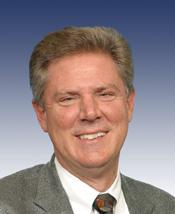
United States · Official source
7,304 records where Rep. Pallone, Frank [D-NJ-6] is listed as a sponsor, author, or other actor. Search with topics and years
United States · United States Congress · 8 April 2025
United States · United States Congress · 7 April 2025
United States · United States Congress · 7 April 2025
No Tax Breaks for Union Busting (NTBUB) Act This bill excludes from the tax deduction for ordinary and necessary business expenses amounts paid or incurred to influence employees with respect to labor organizations or labor organization activities. The bill also imposes information reporting requirements related to such expenses and imposes penalties for failure to comply. Under the bill, amounts paid to influence employees with respect to labor organizations include amounts paid (including wages and other costs) in connection with an action that results in a complaint or settlement related to an unfair labor practice or a finding of interference, influence, or coercion related to railway employees’ rights to organize and bargain collectively; for any meeting or training attended by employees and at which labor organizations are discussed; and that require certain employer disclosures and financial reporting. (Some exceptions apply.) The bill requires employers to file a return reporting certain information related to expenses paid to influence employees with respect to labor organizations and imposes a penalty for noncompliance. The amount of the penalty is the greater of (1) $10,000, or (2) $1,000 multiplied by the number full-time equivalent employees. Additional penalties apply for violations that continue for more than 90 days. The bill also imposes information reporting requirements on persons conducting activities on behalf of another person to influence employees with respect to labor organizations. The bill allows certain penalties for noncompliance with the reporting requirements to be waived if noncompliance is due to reasonable cause and not willful neglect.
United States · United States Congress · 7 April 2025
United States · United States Congress · 2 April 2025
United States · United States Congress · 1 April 2025
Protect America's Workforce Act This bill nullifies the Executive Order titled Exclusions from Federal Labor-Management Relations Programs (issued on March 27, 2025), which excludes specified executive agencies and subdivisions from the Federal Service Labor-Management Relations Statute. The statute authorizes federal employees' participation in collective bargaining and enforces collective bargaining rights. The bill also specifies that a covered collective bargaining agreement in place as of March 26, 2025, shall have full force and effect through the stated term of the agreement.
United States · United States Congress · 1 April 2025
United States · United States Congress · 1 April 2025
Sanctioning Russia Act of 2025 This bill imposes penalties on certain persons (individuals and entities) if the President determines that the Russian government or a person acting at Russia's direction is involved with (1) refusing to negotiate a peace agreement with Ukraine; (2) violating a negotiated peace agreement; (3) initiating another invasion of Ukraine; or (4) overthrowing, dismantling, or seeking to subvert the Ukrainian government. If the President makes such a determination, the bill requires certain actions including the President must impose visa- and property-blocking sanctions on specified persons such as the Russian president, certain Russian military commanders, and any foreign person that knowingly provides defense items to the Russian armed forces; the President must increase the rate of duty on all goods and services imported from Russia into the United States to at least 500% relative to the value of such goods and services; the President must increase the rate of duty on all goods and services imported into the United States from countries that knowingly engage in the exchange of Russian-origin uranium and petroleum products to at least 500% relative to the value of such goods and services; the Department of the Treasury must impose property-blocking sanctions on any financial institution organized under Russian law and owned wholly or partly by Russia, and any financial institution that engages in transactions with those entities; and the Department of Commerce must prohibit the export, reexport, or in-country transfer to or in Russia of any U.S.-produced energy or energy product.
United States · United States Congress · 31 March 2025
United States · United States Congress · 31 March 2025
Hot Foods Act of 2025 This bill expands the Supplemental Nutrition Assistance Program (SNAP) to permit the use of SNAP benefits to purchase hot foods or hot food products ready for immediate consumption.
United States · United States Congress · 27 March 2025
Secure Space Act of 2025 This bill prohibits the Federal Communications Commission (FCC) from granting satellite licenses or earth station authorizations, including U.S. market access for foreign-licensed satellites, to specified foreign entities of concern and their affiliates. (Earth stations, also commonly known as ground stations, are earth-based radio stations that communicate with satellites. A grant of U.S. market access permits one or more foreign-licensed satellites to communicate with one or more U.S.-licensed earth stations.) Specifically, the FCC may not grant a satellite license, an earth station authorization, or market access to any entity, or an affiliate thereof, that produces or provides communications equipment or services deemed to pose an unacceptable risk to the national security of the United States. (The FCC maintains a list of such equipment and services, known as the Covered List. Providers of such equipment and services include, for example, Huawei Technologies Company and ZTE Corporation.)
United States · United States Congress · 27 March 2025
Improving Newborns’ Food and Nutrition Testing Safety Act of 2025 or the INFANTS Act of 2025 This bill requires infant and toddler food to be tested periodically for contaminants and imposes other safety requirements on food and formula manufacturers. Specifically, the bill requires facilities that manufacture or process infant and toddler food in final form to conduct quarterly tests for contaminants, including lead and arsenic. The Food and Drug Administration (FDA) may subject other foods to this requirement as appropriate. If a facility that is subject to these requirements fails to comply, food manufactured or processed there is deemed adulterated and may not be introduced into interstate commerce. The bill also specifies that if the FDA determines an infant and toddler food, other than infant formula, contains a contaminant that renders the food adulterated, the FDA must provide the responsible party with an opportunity to initiate a voluntary recall. (Under current law, if a responsible party does not voluntarily recall an adulterated product, the FDA may impose a mandatory recall.) Further, if testing of an infant formula reveals the presence of certain pathogens, including Listeria monocytogenes or Salmonella , the manufacturer must (1) notify the FDA within 24 hours, (2) properly dispose of the product, and (3) provide the FDA with test results and isolates from the formula. Finally, the bill requires manufacturers of powdered infant formula to monitor the effectiveness of sanitation and hygiene controls where the formula has the potential to be exposed to Cronobacter spp . or Salmonella .
United States · United States Congress · 27 March 2025
United States · United States Congress · 26 March 2025
Raise the Age Act of 2025 This bill establishes new restrictions on the sale or transfer of certain semiautomatic firearms to individuals under 21 years of age. Specifically, this bill makes it unlawful for a licensed gun dealer, importer, manufacturer, or collector to sell or deliver a semiautomatic center-fire rifle or semiautomatic center-fire shotgun that has (or has the capacity to accept) an ammunition feeding device with a capacity of more than five rounds to an individual who the licensee knows or has reasonable cause to believe is under age 21. The prohibition does not apply if the individual under age 21 is a full-time law enforcement officer or active-duty member of the Armed Forces. The bill also requires the Federal Bureau of Investigation to report on the operation of its public access line, including a description of information sharing protocols and recommendations for improving such protocols.
United States · United States Congress · 25 March 2025
United States · United States Congress · 25 March 2025
United States · United States Congress · 25 March 2025
United States · United States Congress · 24 March 2025
This bill reauthorizes and modifies the National Oceanic and Atmospheric Administration's Integrated Ocean Observation System (IOOS). (The IOOS is made up of radar, gliders, buoys, vessels, and different models and forecasts that collect data points to monitor and report on conditions along the nation's coasts and in marine waters.) Specifically, the bill reauthorizes the IOOS through FY2030. The bill also directs the Interagency Ocean Observation Committee (which coordinates interagency planning, budgeting, and assessments for the system) to develop requirements and processes for regional offices and federally funded projects of the agencies of the committee to collaborate with the regional coastal observing systems for data sharing at regional levels.
United States · United States Congress · 24 March 2025
This joint resolution provides that the Equal Rights Amendment, which prohibits discrimination on the basis of sex, was ratified by three-fourths of the states and is therefore a valid constitutional amendment, regardless of any time limit that was in the original proposal. The Equal Rights Amendment was originally proposed to the states in 1972. The original proposal included a deadline for ratification of March 22, 1979; Congress subsequently extended the deadline to June 30, 1982. Although the requisite 38 states have ratified the amendment, three of these states did so after the deadlines, and five states subsequently rescinded their ratifications. The status of the amendment has been the subject of litigation.
United States · United States Congress · 21 March 2025
United States · United States Congress · 18 March 2025
This bill designates the community-based outpatient clinic of the Department of Veterans Affairs in Toms River, New Jersey, as the Leonard G. “Bud” Lomell VA Clinic.
United States · United States Congress · 14 March 2025
United States · United States Congress · 11 March 2025
United States · United States Congress · 11 March 2025
United States · United States Congress · 11 March 2025
United States · United States Congress · 10 March 2025
25th Anniversary of 9/11 Commemorative Coin Act This bill directs the Department of the Treasury to mint and issue coins to commemorate the 25th anniversary of the September 11, 2001, terrorist attacks on the United States and the establishment of the National September 11 Memorial and Museum at the World Trade Center. The sale of all coins issued under this bill must include a surcharge to be paid to the National September 11 Memorial and Museum at the World Trade Center to support operations and maintenance. However, if the issuance of this commemorative coin exceeds certain annual limits, no surcharge may be included.
United States · United States Congress · 10 March 2025
American Teacher Act This bill establishes grants to increase the minimum salary of public elementary and secondary school teachers. It also authorizes a national campaign regarding the value of the teaching profession. First, the bill directs the Department of Education (ED) to award four-year grants to state educational agencies (SEAs) and, through them, subgrants to local educational agencies to establish a minimum annual salary of $60,000 (to be adjusted annually for inflation) for these teachers. Second, the bill directs ED to award grants to eligible SEAs to provide cost-of-living adjustments to the annual base salary of teachers. Finally, the bill authorizes ED to carry out a national campaign to (1) increase awareness about the importance of teachers and the value of the teaching profession, (2) encourage secondary school and college students to consider teaching as a professional career, and (3) diversify the pool of individuals who enter the teaching profession.
United States · United States Congress · 6 March 2025
U.S. Engagement in Sudanese Peace Act This bill requires or authorizes certain actions related to the conflict in Sudan, including requiring sanctions on certain foreign persons (individuals or entities) and authorizing U.S. assistance for a multinational force in Sudan. The bill requires the President to select various sanctions to impose on each foreign person the President determines (1) has knowingly perpetrated, directed, or enabled genocide, war crimes, or crimes against humanity against civilians in Sudan since April 2023; (2) has knowingly engaged in systematic blocking of and interference with the delivery of humanitarian aid to civilians in Sudan since April 2023; or (3) is violating the UN arms embargo on Darfur, a region in western Sudan. Sanctions that may be imposed include blocking of property, blocking of visas, or bans on loans. The bill also authorizes the Department of State to provide assistance to deploy and sustain a multinational force to advance civilian protection, facilitate humanitarian operations, and monitor any prospective ceasefire in Sudan. No major defense equipment may be sold, exported, or transferred to any country the President identifies as supporting the Sudanese Armed Forces (Sudan's military) or the Rapid Support Forces (a paramilitary force in conflict with the Sudanese Armed Forces). The State Department and the U.S. Mission to the United Nations must advocate for and support certain policies in multilateral bodies, such as unimpeded humanitarian access in Sudan and the documentation of atrocities. The bill extends the position of special envoy for Sudan through December 23, 2029.
United States · United States Congress · 6 March 2025
End Veteran Homelessness Act of 2025 This bill requires the Department of Veterans Affairs (VA) to furnish case management to certain veterans who are eligible for the HUD-Veterans Affairs Supportive Housing (HUD-VASH) program administered by the Department of Housing and Urban Development (HUD) and the VA. Specifically, the VA must furnish case management to veterans who are eligible for HUD-VASH that the VA determines require case management. The VA must prioritize vulnerable homeless veterans in assigning case managers and providing services. The VA must take certain actions if a veteran refuses case management. HUD or a public housing authority may not revoke assistance solely on the basis that a veteran has refused case management. Additionally, a veteran may not be evicted or penalized by the owner of a property solely on the basis that they have refused case management or cannot be provided case management for health and safety reasons. The Government Accountability Office must report to Congress on veterans who are served by the HUD-VASH program, case managers and case management services provided under the program, and metrics about housing stability for veterans participating in federal housing assistance programs. The bill also provides statutory authority to expand eligibility for the HUD-VASH program to any veteran who is homeless, at risk of homelessness, or receiving assistance under another housing assistance program if the VA determines a voucher under HUD-VASH is more appropriate. (Currently, assistance is statutorily limited to certain veterans who have chronic mental illness or substance use disorders.)
United States · United States Congress · 6 March 2025
United States · United States Congress · 5 March 2025
Protecting Americans’ Social Security Data Act This bill prohibits political appointees and special government employees from accessing Social Security data systems that contain personally identifiable information about Social Security beneficiaries. Specifically, political appointees and special government employees may not access systems maintained by the Social Security Administration (SSA) that issue or record Social Security account numbers, that are used to determine eligibility for or to pay Social Security benefits, or that otherwise contain personally identifiable information about individuals receiving or applying for benefits. The bill also establishes a civil right of action for an individual whose information was negligently accessed or disclosed in violation of these provisions. The individual may bring suit against the United States if the violator was a U.S. employee or officer, or against the violator if they were not a U.S. employee or officer. Such a claim must be brought within two years of the affected individual’s discovery of the violation. Upon a finding of liability, defendants are liable for specified monetary damages. If an individual is criminally charged or subject to proposed disciplinary or adverse action by a federal or state agency for having accessed or disclosed information in violation of these provisions, SSA must notify the individual whose information was accessed or disclosed of the violation as soon as practicable. Finally, the bill requires the SSA Office of the Inspector General to investigate and report to Congress on any unauthorized access to or disclosure of information in a beneficiary data system.
United States · United States Congress · 5 March 2025
Keeping Our Field Offices Open Act This bill temporarily prohibits the closure or consolidation of, or other limitation of access to, Social Security Administration (SSA) offices and stations, and sets forth procedural requirements for future changes to office and station availability. Specifically, the bill prohibits through at least January 21, 2029, the closure or consolidation of, or other limitation of access to, SSA field offices, hearing offices, and resident stations. On or after that date, SSA must submit a report to Congress justifying its process for selecting stations and offices to be closed, consolidated, or limited. The prohibition is lifted 180 days after the submission of such report. The bill also sets forth requirements that must be met before SSA may close, consolidate, or otherwise limit access to an office or station after the initial moratorium expires. At least 120 days before such a change takes effect, SSA must provide public notice to individuals in affected areas, including information on how lost access to SSA services will be replaced. SSA must also conduct at least two public hearings on each such change. Further, SSA must provide a hearing to any individual who makes a timely showing that a determination to close, consolidate, or limit an office or station is arbitrary, capricious, or deficient in another specified manner. Finally, a closure, consolidation, or limitation may not result in the total number of SSA offices or stations falling below the number of such offices or stations in operation on January 20, 2025.
United States · United States Congress · 5 March 2025
John R. Lewis Voting Rights Advancement Act of 2025 This bill establishes new criteria for determining which states and political subdivisions must obtain preclearance before changes to voting practices may take effect. Preclearance is the process of receiving preapproval from the Department of Justice (DOJ) or the U.S. District Court for the District of Columbia before making legal changes that would affect voting rights. A state and all of its political subdivisions shall be subject to preclearance of voting practice changes for a 10-year period if, during the previous 25 years: 15 or more voting rights violations occurred in the state; 10 or more violations occurred, at least 1 of which was committed by the state itself; or 3 or more violations occurred and the state administers the elections. A political subdivision as a separate unit shall also be subject to preclearance for a 10-year period if three or more voting rights violations occurred there during the previous 25 years. States and political subdivisions that meet certain thresholds regarding minority groups must preclear covered practices before implementation, such as redistricting. States and political subdivisions must notify the public of changes to voting practices. The bill authorizes DOJ to require states or political subdivisions to provide certain documents or answers to questions for enforcing voting rights. The bill outlines factors courts must consider when hearing challenges to voting practices, such as the extent of any history of official voting discrimination in the state or political subdivision.
United States · United States Congress · 5 March 2025
United States · United States Congress · 4 March 2025
United States · United States Congress · 3 March 2025
United States · United States Congress · 3 March 2025
United States · United States Congress · 3 March 2025
Lower Costs for Everyday Americans Act This bill reauthorizes and establishes programs and requirements regarding health, commerce, and the environment. The bill reauthorizes and expands programs for health care, including by allowing individuals age 65 and over with a medically improved disability to qualify for Medicaid; extending payment increases for certain providers under Medicare, including physicians and rural hospitals; extending Medicare coverage of certain telehealth services; requiring pharmacy benefit managers to remit 100% of rebates for prescription drugs to group health plans; reauthorizing programs supporting health care in underserved communities, including the National Health Service Corps; expanding and reauthorizing programs for public health emergency preparedness and response, including pandemic preparedness; expanding and reauthorizing programs for prevention and treatment of certain conditions, including substance use disorders, traumatic brain injuries, and sickle cell disease; and expanding the Food and Drug Administration’s authority regarding research on rare pediatric diseases. The bill also establishes requirements relating to commerce, including by prohibiting nonconsensual online publication of intimate visual depictions of individuals, requiring manufacturers of internet-connected devices to disclose whether the device has a camera or microphone prior to purchase, banning products containing 10% or more of sodium nitrite by weight, and requiring additional disclosures relating to the prices of concert tickets and hotel rooms. Additionally, the bill establishes and reauthorizes programs relating to the environment, including grants for community recycling systems, drinking water infrastructure, and reducing diesel emissions. It also allows gasoline that is blended with 10% to 15% ethanol to be sold year-round.
United States · United States Congress · 3 March 2025
United States · United States Congress · 3 March 2025
Safe Schools Improvement Act This bill requires states to direct their local educational agencies (LEAs) to establish policies that prevent and prohibit bullying and harassment of elementary and secondary school students. In particular, these policies must prohibit bullying and harassment based on race, color, national origin, disability, religion, or sex. Sex includes sexual orientation, gender identity, and sex characteristics (including intersex traits). Further, LEAs must provide (1) students, parents, and educational professionals with annual notice of the conduct prohibited in their disciplinary policies; (2) students and parents with grievance procedures that target such conduct; and (3) the public with annual data on the incidence and frequency of that conduct at the school and LEA level. The Department of Education must conduct and report on an independent biennial evaluation of programs and policies to combat bullying and harassment in elementary and secondary schools. The National Center for Education Statistics must collect state data to determine the incidence and frequency of the conduct prohibited by LEA disciplinary policies.
United States · United States Congress · 27 February 2025
Governing Unaccredited Representatives Defrauding VA Benefits Act or the GUARD VA Benefits Act This bill imposes fines on individuals for soliciting, contracting for, charging, or receiving any unauthorized fee or compensation with respect to the preparation, presentation, or prosecution of any claim for Department of Veterans Affairs benefits. The attempted commission of such offenses is also punishable by fine.
United States · United States Congress · 27 February 2025
Keep Americans Safe Act This bill establishes a new criminal offense for the import, sale, manufacture, transfer, or possession of a large capacity ammunition feeding device (LCAFD). The bill does not prohibit certain conduct with respect to an LCAFD, including the following: importation, sale, manufacture, transfer, or possession related to certain law enforcement efforts, or authorized tests or experiments; importation, sale, transfer, or possession related to securing nuclear materials; and possession by a retired law enforcement officer. The bill permits continued possession of, but prohibits sale or transfer of, a grandfathered LCAFD. Newly manufactured LCAFDs must display serial number identification and the date of manufacture. Additionally, the bill allows a state or local government to use Edward Byrne Memorial Justice Assistance Grant Program funds to compensate individuals who surrender an LCAFD under a buy-back program.
United States · United States Congress · 27 February 2025
This bill directs the Department of Homeland Security to designate Haiti for temporary protected status (TPS) for 18 months beginning August 3, 2025. (Eligible nationals of a TPS-designated country may obtain employment authorization, may not be detained on the basis of their immigration status, and are not subject to removal while they retain TPS.)
United States · United States Congress · 26 February 2025
United States · United States Congress · 26 February 2025
American Dream and Promise Act of 2025 This bill provides certain non-U.S. nationals ( aliens under federal law) with a path to receive permanent resident status and contains other immigration-related provisions. The Department of Homeland Security (DHS) or the Department of Justice (DOJ) shall provide conditional permanent resident status for 10 years to a qualifying individual who entered the United States as a minor and (1) is deportable or inadmissible, (2) has deferred enforced departure (DED) status or temporary protected status (TPS), or (3) is the child of certain classes of nonimmigrants. The bill imposes various qualifying requirements, such as the individual being continuously physically present in the United States since January 1, 2021, passing a background check, and being enrolled in or having completed certain educational programs. DHS shall remove the conditions placed on permanent resident status granted under this bill if the individual applies and meets certain requirements, such as completing certain programs at an educational institution, serving in the military, or being employed. Furthermore, DHS or DOJ shall provide lawful permanent resident status to certain individuals who had TPS, were eligible for TPS, or were eligible for DED status on certain dates. Such individuals must meet certain requirements and apply for such status within three years of this bill's enactment. This bill also repeals a restriction that bars a state from providing higher education benefits to undocumented individuals unless those benefits are available to all U.S. nationals without regard to residency in the state.
United States · United States Congress · 25 February 2025
Ethan's Law This bill establishes a framework to regulate the storage of firearms on residential premises at the federal, state, and tribal levels. At the federal level, the bill establishes statutory requirements for firearms on residential premises to be safely stored if a minor is likely to gain access without permission or if a resident is ineligible to possess a firearm. An individual who violates the requirements is subject to criminal penalties. A firearm stored in violation of the requirements is subject to seizure and forfeiture. At the state and tribal levels, the bill requires the Department of Justice to award grants to implement functionally identical requirements for the safe storage of firearms.
United States · United States Congress · 24 February 2025
United States · United States Congress · 24 February 2025
United States · United States Congress · 24 February 2025
United States · United States Congress · 21 February 2025