Bill· HRH.R. 3045 (119th)referred
West Bank Violence Prevention Act of 2025
United States · United States Congress · 28 April 2025
The world's political record
Person
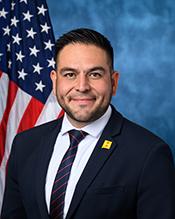
United States · Official source
672 records where Rep. Vasquez, Gabe [D-NM-2] is listed as a sponsor, author, or other actor. Search with topics and years
United States · United States Congress · 28 April 2025
United States · United States Congress · 21 April 2025
Guarding Unprotected Aging Retirees from Deception Act of 2026 or the GUARD Act of 2026 This bill allows state, local, and tribal law enforcement agencies and grantees that receive funds from certain law enforcement grant programs to use the funds to investigate general financial fraud, elder financial fraud, and pig butchering. Pig butchering refers to a confidence and investment fraud in which a victim is gradually lured into transferring increasing amounts of money, generally in the form of cryptocurrency, into a fake virtual investment. The bill allows federal law enforcement agencies to assist state, local, and tribal law enforcement agencies and fusion centers in the use of tracing tools for blockchain and related technology tools. Finally, the bill requires the Financial Crimes Enforcement Network (FinCEN) to report on efforts to combat general financial fraud, elder financial fraud, pig butchering, and scams, including an evaluation of any legislative recommendations to improve the efforts. The bill also requires FinCEN to report on the state of general financial fraud, elder financial fraud, pig butchering, and scams in the United States, including trends in the crimes.
United States · United States Congress · 17 April 2025
United States · United States Congress · 17 April 2025
United States · United States Congress · 17 April 2025
United States · United States Congress · 10 April 2025
United States · United States Congress · 10 April 2025
Continental Divide National Scenic Trail Completion Act This bill directs the Department of Agriculture (USDA) and the Department of the Interior to seek to complete the Continental Divide National Scenic Trail no later than 10 years after the enactment of this bill. USDA and Interior must establish a joint Forest Service and Bureau of Land Management trail completion team to work in coordination with the administrator of the trail to facilitate its completion and optimization. USDA must complete a comprehensive development plan for the trail within three years. USDA and Interior must also seek to enter into agreements with volunteer and nonprofit organizations to facilitate the completion and administration of the trail.
United States · United States Congress · 10 April 2025
Combating Organized Retail Crime Act of 2025 This bill expands federal enforcement of criminal offenses related to organized retail and supply chain crime. The term organized retail and supply chain crime includes criminal offenses involving the interstate transportation of stolen property, the sale or receipt of stolen goods, or theft from an interstate or foreign shipment that is committed by, in coordination with, or at the instruction of an organization. First, with respect to criminal offenses involving the interstate transportation of stolen property or the sale or receipt of stolen goods, the bill broadens the scope of conduct that qualifies as offenses by allowing prosecutions to be based on the aggregate value of stolen items over a 12-month period. Additionally, the bill makes the offenses predicate offenses (i.e., underlying offenses) for prosecutions under the federal money laundering statute and authorizes the criminal forfeiture of any property obtained from the proceeds of an offense. Second, with respect to criminal offenses involving theft from an interstate or foreign shipment, the bill also makes an offense an underlying offense for prosecution under the federal money laundering statute and authorizes the criminal forfeiture of any associated property. Third, the bill expands the federal money laundering statute to include offenses involving general-use prepaid cards, gift certificates, or store gift cards. Finally, the bill temporarily establishes a center within the Department of Homeland Security to coordinate federal law enforcement activities related to organized retail and supply chain crime.
United States · United States Congress · 10 April 2025
United States · United States Congress · 10 April 2025
Youth Lead Act This bill reauthorizes through FY2030 National Institute of Food and Agriculture grants to the Girl Scouts of the USA, the Boy Scouts of America, the National 4–H Council, and the National FFA Organization. These grants must be used to establish pilot projects to expand the programs carried out by the organizations in rural areas and small towns.
United States · United States Congress · 10 April 2025
Chaco Cultural Heritage Area Protection Act of 2025 This bill creates a buffer zone around the Chaco Culture National Historic Park in New Mexico by prohibiting certain leases on federal land for the development of mineral resources or geothermal energy within the buffer zone. Nonproducing oil and gas leases in the buffer zone are terminated.
United States · United States Congress · 10 April 2025
Supplemental Oxygen Access Reform Act of 2025 or the SOAR Act of 2025 This bill establishes certain requirements with respect to the payment and provision of supplemental oxygen and related services under Medicare. For example, the bill provides for separate payments, indexed to inflation, of oxygen and related equipment, supplies, and services under Medicare (rather than under the competitive acquisition program). It also specifically covers services that are provided by respiratory therapists under Medicare and provides for an additional payment adjustment for these services. Additionally, the bill (1) requires the Centers for Medicare & Medicaid Services to develop an electronic template for providers to use when prescribing oxygen and related equipment, supplies, and services; and (2) establishes certain rights for beneficiaries receiving these items and services, such as the right to choose their suppliers and to receive clear communications and be informed about the services provided.
United States · United States Congress · 9 April 2025
United States · United States Congress · 9 April 2025
United States · United States Congress · 9 April 2025
United States · United States Congress · 9 April 2025
United States · United States Congress · 8 April 2025
United States · United States Congress · 8 April 2025
United States · United States Congress · 8 April 2025
United States · United States Congress · 8 April 2025
United States · United States Congress · 3 April 2025
Sammy’s Law This bill requires large social media platforms to permit certain providers of safety software to monitor and manage the activity of children under the age of 17 on such platforms. Specifically, large social media platforms must make available a mechanism by which a child or their parent or guardian may permit a provider of safety software to (1) manage the child’s interactions, content, and account settings on the platform; and (2) regularly access the child’s user data. A software provider may only disclose a child’s data under limited circumstances, including to the child’s parent or guardian if the child is experiencing or is at foreseeable risk of experiencing specified harms. Such harms include suicide, eating disorders, sexual abuse, harassment, and academic dishonesty. The provider may only share data necessary for a reasonable parent or caregiver to understand that the child is experiencing or is at risk of harm. To participate, a software provider must register with the Federal Trade Commission, undergo a security review, and demonstrate that, among other requirements, the provider is based in the United States and will use a child's data solely to protect them from harm. Under the bill, a large social media platform is generally a service that enables a child to share content through the internet with other users that the child has become aware of solely through the platform, and which has more than 100 million monthly global active users or generates more than $1 billion in gross annual revenue.
United States · United States Congress · 3 April 2025
Keep STEM Talent Act of 2025 This bill addresses issues relating to non-U.S. nationals ( aliens under federal law) with advanced degrees in a science, technology, engineering, or mathematics (STEM) field, including exempting certain such individuals from direct limitations on the number of immigrant visas granted per year. To be exempt from the annual numerical limitations on immigrant visas, the individual must (1) have earned a master's level or higher degree in certain STEM fields while in the United States attending an accredited higher education institution, (2) be employed (or have an offer) to perform work directly related to the degree and earn higher than the median wage for that occupation, and (3) meet certain labor certification requirements. The bill also allows an individual seeking a nonimmigrant F-1 (student) visa for an advanced STEM degree to obtain the nonimmigrant visa even if the individual seeks lawful permanent resident status. (Generally, an individual may be denied a nonimmigrant visa if the individual actually intends to seek immigrant status, unless dual intent is allowed for that visa.) Under this bill, to be approved for an F-1 visa for an advanced STEM degree, the applicant must apply for the visa before beginning the advanced degree program. The bill also requires an individual who is inside the United States and applying for an F-1 visa for an advanced STEM degree to undergo the same vetting (e.g., verifying academic credentials and undergoing background checks) as an individual applying from outside the United States.
United States · United States Congress · 1 April 2025
New Producer Economic Security Act This bill establishes the New Producer Economic Security Program within the Farm Service Agency (FSA) to provide funding and grants to help new farmers, ranchers, and forest owners. Specifically, the FSA must make competitive grants to, enter into cooperative agreements with, or provide other capital support to eligible entities (e.g., state or local governments, Indian tribes, nonprofit organizations, and institutions of higher education). These entities must provide direct assistance to qualified farmers, ranchers, and forest owners (e.g., those who have not operated a farm or ranch for more than 10 consecutive years or are economically disadvantaged). The bill specifically excludes from assistance any foreign-based or foreign-owned corporation. The direct assistance may include payments to qualified beneficiaries to acquire real property (including air rights and water rights), secure clear title on heirs' property, and improve or remediate land, water, and soil. Eligible entities may also use grants (1) to provide direct assistance to qualified beneficiaries in assessing, purchasing, acquiring, or retaining eligible land; (2) for activities designed to support farm establishment and long-term viability; and (3) to provide technical assistance. The FSA must establish a stakeholder committee, and in collaboration with the committee, develop a process for evaluating and selecting applications submitted by eligible entities. The stakeholder committee must include perspectives reflecting the complexity of the rural and urban U.S. agricultural landscapes and the wide variety of agricultural production models.
United States · United States Congress · 1 April 2025
Comprehensive Alternative Response for Emergencies Act of 2025 or the CARE Act of 2025 This bill requires the Center for Medicare and Medicaid Innovation (CMMI) to test a five-year model that provides for Medicare payment for ground ambulance services that do not result in the transport of the patient. Under the model, Medicare payment may be furnished for ground ambulance services when an ambulance is dispatched in response to an emergency medical call but the ambulance does not end up transporting the patient. Payment rates under the model must generally align with the payment rates that apply when there is an actual transport. The Government Accountability Office must report on the general access of Medicare beneficiaries to emergency medical services, including the impact of the model on beneficiary access and outcomes.
United States · United States Congress · 1 April 2025
Protect America's Workforce Act This bill nullifies the Executive Order titled Exclusions from Federal Labor-Management Relations Programs (issued on March 27, 2025), which excludes specified executive agencies and subdivisions from the Federal Service Labor-Management Relations Statute. The statute authorizes federal employees' participation in collective bargaining and enforces collective bargaining rights. The bill also specifies that a covered collective bargaining agreement in place as of March 26, 2025, shall have full force and effect through the stated term of the agreement.
United States · United States Congress · 1 April 2025
Sanctioning Russia Act of 2025 This bill imposes penalties on certain persons (individuals and entities) if the President determines that the Russian government or a person acting at Russia's direction is involved with (1) refusing to negotiate a peace agreement with Ukraine; (2) violating a negotiated peace agreement; (3) initiating another invasion of Ukraine; or (4) overthrowing, dismantling, or seeking to subvert the Ukrainian government. If the President makes such a determination, the bill requires certain actions including the President must impose visa- and property-blocking sanctions on specified persons such as the Russian president, certain Russian military commanders, and any foreign person that knowingly provides defense items to the Russian armed forces; the President must increase the rate of duty on all goods and services imported from Russia into the United States to at least 500% relative to the value of such goods and services; the President must increase the rate of duty on all goods and services imported into the United States from countries that knowingly engage in the exchange of Russian-origin uranium and petroleum products to at least 500% relative to the value of such goods and services; the Department of the Treasury must impose property-blocking sanctions on any financial institution organized under Russian law and owned wholly or partly by Russia, and any financial institution that engages in transactions with those entities; and the Department of Commerce must prohibit the export, reexport, or in-country transfer to or in Russia of any U.S.-produced energy or energy product.
United States · United States Congress · 1 April 2025
United States · United States Congress · 1 April 2025
Ensuring Access to Specialty care Everywhere Act of 2025 or the EASE Act of 2025 This bill requires the Center for Medicare and Medicaid Innovation (CMMI) to test a model that uses a network of providers to remotely furnish specialty health care to Medicare, Medicaid, and Children's Health Insurance Program (CHIP) beneficiaries in rural areas. To conduct the model, the CMMI must select at least one provider network that is a nonprofit entity and that consists of at least 50 federally qualified health centers, rural health clinics, critical access hospitals, or rural emergency hospitals. At least half of the providers in the network must be located in rural areas. Providers must use digital methods (e.g., telehealth technology) to provide specialty care and must coordinate with beneficiaries' primary care providers.
United States · United States Congress · 31 March 2025
Hot Foods Act of 2025 This bill expands the Supplemental Nutrition Assistance Program (SNAP) to permit the use of SNAP benefits to purchase hot foods or hot food products ready for immediate consumption.
United States · United States Congress · 31 March 2025
United States · United States Congress · 31 March 2025
Connecting Our Medical Providers with Links to Expand Tailored and Effective Care or the COMPLETE Care Act This bill increases payments and establishes certain requirements to support integrated behavioral health services under Medicare. Specifically, the bill increases payments for integrated behavioral health services that are provided by physicians under Medicare for 2027-2029, with payments increased by 175% in 2027, 150% in 2028, and 125% in 2029. The bill provides funds for FY2025-FY2029 for the Centers for Medicare & Medicaid Services to contract with entities to provide technical assistance to primary care practices that want to adopt models for behavioral health integration.
United States · United States Congress · 27 March 2025
Honor Farmer Contracts Act This bill requires the Department of Agriculture (USDA) to unfreeze funding for agreements and contracts and prohibits USDA from closing certain offices and service centers without notifying Congress in advance. Specifically, USDA must (1) unfreeze funding for, and implement, all agreements and contracts entered into by USDA prior to the bill's enactment; and (2) pay all related past due amounts owed by USDA as rapidly as possible. Further, the bill prohibits USDA from canceling a signed agreement or contract with a farmer or an entity providing assistance to farmers (unless the farmer or entity is not in compliance with the terms and conditions of the contract). Finally, the bill prohibits USDA from closing Farm Service Agency county offices, Natural Resources Conservation Service field offices, or Rural Development Service Centers without providing written notice and a justification to Congress at least 60 days before the closure.
United States · United States Congress · 27 March 2025
United States · United States Congress · 26 March 2025
Creating Resources for Every American To Experiment with Artificial Intelligence Act of 2025 or the CREATE AI Act of 2025 This bill establishes a national program to provide U.S. researchers, educators, and students with access to artificial intelligence (AI) data, computational resources, educational tools and services, and testbeds. The program, to be known as the National Artificial Intelligence Research Resource (NAIRR), must be established by the National Science Foundation (NSF) to improve U.S. AI research capacity and spur the strategic development of AI capabilities. NAIRR may accept and use donated resources from the private sector and federal agencies. Those eligible to use NAIRR resources are (1) researchers, educators, and students based in the United States and affiliated with a U.S. institution of higher education, nonprofit, executive agency, or other specified entity; and (2) employees of U.S. executive agencies or federally funded research and development centers with a demonstrable mission need. NSF must select a nongovernmental organization to operate NAIRR (i.e., an operating entity ) through a competitive and transparent process. The operating entity must ensure that a significant percentage of the annual allotment of computational resources is provided to projects primarily focused on AI privacy, ethics, safety, security, risk mitigation, or trustworthiness. The operating entity must also establish minimum security requirements for all individuals interacting with NAIRR. The operating entity may establish a fee schedule for access to NAIRR, which must include a free tier of access and must ensure that the primary purpose of NAIRR is to support research.
United States · United States Congress · 26 March 2025
United States · United States Congress · 26 March 2025
Farmers’ Market Expansion Act of 2025 This bill includes tree nuts (including shelled tree nuts) as one of the eligible foods under the Senior Farmers' Market Nutrition Program (SFMNP). The Department of Agriculture's SFMNP provides grants to participating states to provide low-income seniors with coupons/vouchers that may be used at farmers’ markets, roadside stands, and community supported agriculture programs to purchase eligible foods (i.e., fresh, nutritious, unprepared, locally-grown fruits, vegetables, honey, and herbs).
United States · United States Congress · 26 March 2025
American Families United Act This bill authorizes the Department of Homeland Security (DHS) or the Department of Justice (DOJ) to exercise discretion in certain immigration cases. Under this bill, DOJ or DHS may, on a case-by-case basis, exercise discretion by declining to remove a non-U.S. national ( alien under federal law) or bar an alien from entering the United States to prevent hardship for the alien's U.S. citizen spouse, parent, or child. This discretion may also be exercised if the alien is the spouse or child of a deceased U.S. citizen. For the purposes of this bill, it shall be presumed that family separation constitutes hardship. However, DOJ or DHS may not exercise this discretion if the alien is removable or inadmissible due to certain grounds, including specified crime- and security-related grounds. This exercise of discretion may be applied to an alien who was ordered removed or denied entry prior to this bill's enactment if the alien files a motion to reopen or reconsider within two years of this bill's enactment.
United States · United States Congress · 25 March 2025
United States · United States Congress · 25 March 2025
Fair Access In Residency Act of 2025 or the FAIR Act of 2025 This bill requires hospitals that receive graduate medical education (GME) payments under Medicare to report certain information about the composition of their medical residency training programs. Specifically, hospitals must provide to the Centers for Medicare & Medicaid Services (CMS) (1) the number of applicants for residencies who are from osteopathic medical schools and from allopathic medical schools, (2) the number of applicants who are accepted from each of these types of medical schools, and (3) an affirmation that the hospital considers applicants from each of these types of medical schools and accepts specified related examination results, as appropriate. Hospitals that do not provide this information are subject to a 2% reduction in their GME payments. The CMS must post the information it receives on a public website.
United States · United States Congress · 25 March 2025
United States · United States Congress · 24 March 2025
This joint resolution provides that the Equal Rights Amendment, which prohibits discrimination on the basis of sex, was ratified by three-fourths of the states and is therefore a valid constitutional amendment, regardless of any time limit that was in the original proposal. The Equal Rights Amendment was originally proposed to the states in 1972. The original proposal included a deadline for ratification of March 22, 1979; Congress subsequently extended the deadline to June 30, 1982. Although the requisite 38 states have ratified the amendment, three of these states did so after the deadlines, and five states subsequently rescinded their ratifications. The status of the amendment has been the subject of litigation.
United States · United States Congress · 21 March 2025
Autonomy for Disabled Veterans Act This bill increases the maximum amount authorized under the Home Improvements and Structural Alterations (HISA) grant program to $10,000 for veterans with a service-connected disability and $5,000 for those with disabilities that are not service-connected. The HISA grant program provides medically necessary improvements and structural alterations to a veteran's (or service member's) primary residence for specified purposes (e.g., allowing for entrance to their home). The bill requires the Department of Veterans Affairs to increase the maximum dollar amount of the grant in accordance with inflation as determined by the Consumer Price Index.
United States · United States Congress · 21 March 2025
United States · United States Congress · 21 March 2025
This resolution expresses the sense of the House of Representatives that every individual has the right to emergency health care, including abortion care.
United States · United States Congress · 21 March 2025
Michael Lecik Military Firefighters Protection Act This bill establishes a presumption of service-connection for specified diseases becoming manifest in certain military firefighter veterans to a degree of disability of 10% or more within 15 years of the veteran's separation from active military, naval, or air service. Under a presumption of service-connection, specific diseases or disabilities diagnosed in certain veterans are presumed to have been caused by the circumstances of their military service. Health care benefits and disability compensation may then be awarded. Veterans addressed by this bill are those who (1) are trained in fire suppression, and (2) served on active duty in a military occupational specialty or career field with a primary responsibility of firefighting or damage control for at least five years in the aggregate.
United States · United States Congress · 18 March 2025
Healthy Foods for Native Seniors Act This bill directs the Department of Agriculture to establish a demonstration project that allows tribal entities (e.g., Indian tribes) to enter into self-determination contracts to purchase agricultural commodities under the Commodity Supplemental Food Program (CSFP). The CSFP distributes monthly food packages to low-income older individuals through local organizations (including tribal organizations).
United States · United States Congress · 18 March 2025
Innovative Feed Enhancement and Economic Development Act of 2025 or the Innovative FEED Act of 2025 This bill provides for the regulation of zootechnical animal food substances as food additives. The bill defines zootechnical animal food substance as a substance that is added to the food or drinking water of animals and that affects only the animal's gastrointestinal tract, with the intended purpose of affecting the byproducts of the animal's digestion, reducing foodborne pathogens, or altering the animal's gastrointestinal biome. The definition does not include substances that are used to treat or prevent diseases in animals, hormones, or active ingredients of animal drugs. Labels for zootechnical animal food substances must include a disclaimer that the substance may not be used to treat or prevent diseases in animals.
United States · United States Congress · 18 March 2025
Restore Protections for Dialysis Patients Act This bill specifies certain requirements for private health insurers regarding coverage of individuals with end stage renal disease (ESRD) who are also covered under Medicare. In particular, the bill specifies that insurers may not limit benefits, including limiting network composition, in a manner that will affect ESRD Medicare beneficiaries differently compared to others without ESRD. The bill additionally specifies that insurers are not required to include a particular renal dialysis provider or a particular number of such providers as part of their networks.
United States · United States Congress · 18 March 2025
Law-Enforcement Innovate to De-Escalate Act This bill removes less-than-lethal projectile devices (e.g., certain TASERs) from regulation under the Gun Control Act. The term less-than-lethal projectile device means a device that (1) is not designed or intended to expel (and may not be readily converted to discharge) commonly used ammunition or projectiles exceeding a velocity of 500 feet per second; (2) is designed and intended to be used in a manner not likely to cause death or serious bodily injury; and (3) does not accept (and cannot be readily modified to accept) an ammunition feeding device. The bill also requires the Bureau of Alcohol, Tobacco, Firearms and Explosives to determine whether a device satisfies the definition of a less-than-lethal projectile device within 90 days of a request.
United States · United States Congress · 18 March 2025