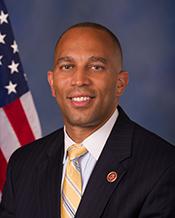
United States · United States Congress · 16 April 2015
Crime Gun Tracing Act Amends the Omnibus Crime Control and Safe Streets Act of 1968 to direct the Attorney General, in awarding public safety and community policing (COPS ON THE BEAT) grants, to give preferential consideration to an applicant that has reported all firearms recovered during the previous 12 months at a crime scene or during the course of a criminal investigation to the Bureau of Alcohol, Tobacco, Firearms, and Explosives, or to a state agency that reports such firearms to the Bureau, for the purpose of tracing. Requires each application for a COPS grant to specify: (1) whether the applicant recovered any firearms at a crime scene or during the course of a criminal investigation during the 12 months before the submission of the application; (2) the number of such firearms recovered; (3) the number of such firearms reported to the Bureau, or to a state agency that reports such firearms to the Bureau, for tracing; and (4) the reason why any such firearms were not so reported.
United States · United States Congress · 16 April 2015
Bridge to Sustainable Infrastructure Act This bill amends the Internal Revenue Code to require an inflation adjustment in calendar years after 2015 to the rates of the excise taxes on petroleum and petroleum products, diesel fuel, alcohol-based fuel, and fuels used in certain buses. Appropriations are advanced to the Highway Account and the Mass Transit Account in the Highway Trust Fund (HTF) in anticipation of a shortfall in funding in 2015. Such advances must be repaid from the HTF to the general fund of the Treasury. There is established in the legislative branch the Bipartisan Task Force for Sustainable Highway Funding. The Task Force shall identify and make recommendations addressing factors that affect the long-term fiscal imbalance of the HTF. The rates of excise taxes on petroleum and diesel fuels are increased to cover an identified three- and five-year shortfall in funding of the HTF in 2017 and each subsequent calendar year through 2024.
United States · United States Congress · 16 April 2015
Innovation Protection Act Establishes in the Treasury the United States Patent and Trademark Office Public Enterprise Fund (Public Enterprise Fund) to be used as a revolving fund by the Director of the U.S. Patent and Trademark Office (USPTO) without fiscal year limitation. Requires to be credited to or deposited in the Public Enterprise Fund: (1) appropriations for defraying the costs of USPTO activities; (2) fees collected under federal patent and trademark laws; and (3) any unobligated balances remaining in the Patent and Trademark Office Appropriation Account and in the Patent and Trademark Fee Reserve Fund. (Thus, replaces the Patent and Trademark Office Appropriation Account, eliminates the Patent and Trademark Fee Reserve Fund, and provides a source of permanent funding for the USPTO.) Requires fees collected by the Director to remain available to the Director until expended. Makes the Public Enterprise Fund available to cover: (1) ordinary and reasonable administrative, operating, and other expenses incurred by the Director for the continued operation of USPTO services, programs, activities, and duties relating to patents and trademarks; and (2) expenses incurred pursuant to obligations, representations, or other commitments of the USPTO. Requires the Director, on an annual basis, to: (1) report to Congress with operation and spending plans, including financial details and staff levels broken down by each major activity; (2) provide for an independent audit of USPTO financial statements; and (3) submit a budget to the President.
United States · United States Congress · 16 April 2015
Equality for All Resolution of 2015 Expresses the sense of the House of Representatives that lesbian, gay, bisexual, and transgender individuals are valuable, contributing members of society who deserve equal treatment under the law. Declares that: (1) discrimination based on sexual orientation and gender identity is a serious problem; (2) existing federal protections are inadequate to ensure nondiscrimination; and (3) Congress should pass legislation that prohibits such discrimination in areas including credit, employment, education, federally funded programs, housing, jury service, and public accommodations. Encourages states to prohibit such discrimination and to reject laws that undermine nondiscrimination protections.
United States · United States Congress · 15 April 2015
Amends the Land and Water Conservation Fund Act of 1965 to make permanent the authorization for the Land and Water Conservation Fund. Requires not less than 1.5% of the annual authorized funding amount or $10 million, whichever is greater, to be used for projects that secure recreational public access to existing federal public land for hunting, fishing, and other recreational purposes.
United States · United States Congress · 14 April 2015
Toxic Exposure Research Act of 2015 Directs the Department of Veterans Affairs (VA) to select a VA medical center to serve as the national center for research on the diagnosis and treatment of health conditions of the biological children, grandchildren, or great-grandchildren of individuals exposed to toxic substances while serving as members of the Armed Forces that are related to such exposure. Requires: (1) the Department of Defense (DOD) or the head of a federal agency to make available to the VA for review records held by DOD, an Armed Force, or that federal agency that might assist the VA in making determinations regarding individuals and descendents afflicted with a health condition as a result of such exposure; (2) the VA and DOD or such agency head to jointly establish a mechanism for the availability and review of records by the VA; and (3) the national center to employ at least one licensed clinical social worker to coordinate access of individuals to appropriate social and health care programs and to handle case management. Establishes an Advisory Board to oversee and assess the national center and to advise the VA regarding the center's work. Directs DOD to declassify documents (other than documents that would materially and immediately threaten national security) related to any known incident in which at least 100 members of the Armed Forces were exposed to a toxic substance that resulted in at least one case of an associated disability. Directs the VA to conduct a national outreach and education campaign directed toward members of the Armed Forces, veterans, and their family members to communicate information on: (1) incidents of exposure of members of the Armed Forces to toxic substances, health conditions resulting from such exposure, and the potential long-term effects; and (2) the national center. Requires DOD and the Department of Health and Human Services to assist the VA in implementing such campaign.
United States · United States Congress · 14 April 2015
Runaway and Homeless Youth and Trafficking Prevention Act of 2015 Amends the Runaway and Homeless Youth Act to reauthorize it through FY2020, generally at FY2009 levels. Modifies the Basic Center Grant (BCG) Program (for short-term emergency shelter and family reunification services to runaway and homeless youth) to require local centers to provide safe shelter and services, including trauma-informed services, for runaway and homeless youth, and (if appropriate) services for their families, including individuals they identify as family. Extends the maximum stay in a BCG shelter from 21 to 30 days, and requires a shelter to provide suicide prevention services. Allows shelter services to include: (1) trauma-informed and gender-responsive services for runaway or homeless youth, including victims of trafficking in persons or sexual exploitation; and (2) an assessment of family engagement in support and reunification (if appropriate), interventions, and services for parents or legal guardians of such youth, or individuals they identify as family. Revises plan applicant record keeping requirements. Requires plan applicants to: (1) provide age, gender, and culturally and linguistically appropriate services to the extent practicable to runaway youth; and (2) assist youth in completing the Free Application for Federal Student Aid. Revises the Transitional Living Grant (TLG) Program (for longer-term residential services, life skills, education, and employment support to older homeless youth) to require information and counseling services in basic life skills to be age, gender, and linguistically appropriate to the extent practicable.. Requires TLG plan applicants to provide suicide prevention services, counseling to homeless youth, and aftercare services. Requires a TLG plan to ensure proper referral of homeless youth to mental health services, including programs providing wrap-around services to victims of trafficking in persons or sexual exploitation. Requires plan applicants to provide age, gender, and culturally and linguistically appropriate services to the extent practicable that address the needs of homeless and street youth. Revises requirements for the coordination of activities among federal agencies, grants for technical assistance and training, and grants for research, evaluation, demonstration, and service projects. Revises the sexual abuse prevention program to authorize the Secretary of Health and Human Services to make grants to public agencies (as well as nonprofit private agencies, as under current law) to provide street-based services to runaway and homeless, and street youth who have been subjected to, or are at risk of being subjected to, sexual abuse, violence, trafficking in persons, or sexual exploitation. Prohibits any person in the United States, on the basis of actual or perceived race, color, religion, national origin, sex, gender identity, sexual orientation, or disability, from being excluded from participation in, denied the benefits of, or subject to discrimination under any program or activity funded in whole or in part under such Act. Makes an exception to this prohibition if sex segregation or sex-specific programming is necessary to the essential operation of a program. Amends the Missing Children's Assistance Act to require the annual grant of the Administrator of the Office of Juvenile Justice and Delinquency Prevention to the National Center for Missing and Exploited Children to be used to operate a cyber tipline to provide online users and electronic service providers an effective means of reporting Internet-related child sexual exploitation in the areas of child sex trafficking (currently, child prostitution). Amends the Crime Control Act of 1990 to: require a missing child report to include a recent photograph of the child, if available; reduce from 60 to 30 days after the original entry of such a report into the state law enforcement system and the National Crime Information Center (NCIC) computer networks the deadline for the law enforcement agency that entered the report to verify and update the record with any additional information; require that law enforcement agency to maintain close liaison with state and local welfare systems; and require it also to grant permission to the NCIC Terminal Contractor for the state to update the missing person record in the NCIC computer networks with additional information learned during the investigation.
United States · United States Congress · 14 April 2015
James Zadroga 9/11 Health and Compensation Reauthorization Act Amends the Public Health Service Act to extend the World Trade Center (WTC) Health Program Fund indefinitely and index appropriations to the medical care component of the consumer price index for urban consumers. Makes funding available for: a quality assurance program for services delivered by health care providers, the WTC Program annual report, WTC Health Program Steering Committees, and contracts with Clinical Centers of Excellence. Amends the Air Transportation Safety and System Stabilization Act to make individuals (or relatives of deceased individuals) who were injured or killed in the rescue and recovery efforts after the aircraft crashes of September 11, 2001, eligible for compensation under the September 11th Victim Compensation Fund of 2001. Allows individuals to file claims for compensation under the September 11th Victim Compensation Fund of 2001 anytime after regulations are updated based on the James Zadroga 9/11 Health and Compensation Act of 2010. Removes the cap on payments under the September 11th Victim Compensation Fund of 2001. Adds the September 11th Victim Compensation Fund and World Trade Center Health Program Fund to the list of accounts that are not subject to budget sequestration.
United States · United States Congress · 14 April 2015
Workforce Development Tax Credit Act of 2015 Amends the Internal Revenue Code to allow a business-related tax credit for: (1) 50% of wages (up to $2,000) paid to an apprenticeship employee during an apprenticeship period, and (2) 40% of wages (up to $6,000) paid to such an employee during a post-apprenticeship period. Defines "apprenticeship employee" as any employee employed by an employer pursuant to an apprentice agreement registered with the Office of Apprenticeship of the Employment and Training Administration of the Department of Labor.
United States · United States Congress · 13 April 2015
Safe Freight Act Prohibits the operation of a freight train or light locomotive engine used in the movement of freight unless it has a crew of at least two individuals, one of whom is certified by the Federal Railroad Administration as a locomotive operator and the other as a train conductor.
United States · United States Congress · 26 March 2015
Summer Meals Act of 2015 Amends the Richard B. Russell National School Lunch Act to redefine "areas in which poor economic conditions exist," where the summer food service program for children may operate, as areas in which at least 40% (currently, 50%) of the children have been determined to be eligible for free or reduced price school meals under the school lunch and breakfast programs. Reimburses service institutions (other than school food authorities) for up to one meal and one snack per child each day during after-school hours, weekends, and school holidays during the regular school calendar. (Currently, such institutions are reimbursed for meals and snacks served to children over the summer months or to children who are on vacation under a continuous school calendar.) Authorizes the Secretary of Agriculture to award competitive grants to service institutions to increase participation in the summer food service program for children at congregate feeding sites through innovative approaches to limited transportation and mobile meal trucks. Allows service institutions that are participating in the summer food service program for children to serve up to three meals, or two meals and one snack, during each day of operation. (Currently, this option is reserved for camps and service institutions that serve meals primarily to migrant children.)
United States · United States Congress · 26 March 2015
Vulnerable Immigrant Voice Act Amends the Immigration and Nationality Act to require that counsel at the government's expense in a removal or related appeal proceeding shall be provided only for an alien who is: (1) an unaccompanied child, or (2) unable to represent himself or herself due to a serious mental disability.
United States · United States Congress · 26 March 2015
Police Creating Accountability by Making Effective Recording Available Act of 2015 or the Police CAMERA Act Amends the Omnibus Crime Control and Safe Streets Act of 1968 to authorize the Assistant Attorney General for the Office of Justice Programs to make grants to states, local governments, and Indian tribes to purchase or lease body-worn cameras for use by law enforcement officers, and for expenses related to the implementation of a body-worn camera program, in order to deter excessive force, improve accountability and transparency of use of force by law enforcement officers, assist in responding to complaints against officers, and improve evidence collection. Requires a grantee to: (1) develop, with community input, policies for the safe and effective use of body-worn cameras, for the secure storage, handling, and destruction of data collected, for protecting the privacy rights of any individual who may be recorded, and for the release of any data collected in accordance with the open records laws of the state; and (2) conduct periodic evaluations of the security of the storage and handling of the body-worn camera data. Requires a grantee to adopt data collection and retention protocols that: require an officer wearing a camera to provide an explanation if an activity that is required to be recorded is not recorded and to obtain a crime victim's or witness's consent to be recorded before interviewing him or her; minimize the collection of data unrelated to a legitimate law enforcement purpose; require the system used to store collected data to log all viewing, modification, or deletion of such data and to prevent its unauthorized access or disclosure; prohibit any law enforcement officer from accessing the stored data without an authorized purpose; require the law enforcement agency to collect and report data on incidences of use of force, the number of complaints filed against officers, the disposition of such complaints, and the number of times camera footage is used for evidence collection in investigations of crimes; and allow an individual to file a complaint with a law enforcement agency relating to the improper use of such cameras. Allows data collected by a grantee to be used only in internal and external investigations of misconduct by a law enforcement agency or officer, if there is reasonable suspicion that a recording contains evidence of a crime, or for limited training purposes. Prohibits a grantee from transferring any collected data to another law enforcement or intelligence agency, with specified exceptions for investigations of crimes and civil rights violations. Directs the Assistant Attorney General to study and report to Congress on the efficacy of body-worn cameras.
United States · United States Congress · 26 March 2015
Private Student Loan Bankruptcy Fairness Act of 2015 Amends the federal bankruptcy code to limit the non-dischargeability, except in cases of undue hardship, of educational loans to those made, insured, or guaranteed by a governmental unit, or made under any program funded by a governmental unit or any program for which substantially all of the funds are provided by a nonprofit institution (thus allowing the discharge of private educational loan indebtedness without the need to show an undue hardship).
United States · United States Congress · 26 March 2015
Access to Quality Diabetes Education Act of 2015 Amends title XVIII (Medicare) of the Social Security Act to recognize state-licensed or -registered certified diabetes educators or state-licensed or -registered health care professionals who specialize in teaching individuals with diabetes to develop the necessary skills and knowledge to manage the individual's diabetic condition and are certified as a diabetes educator by a recognized certifying body. Directs the Government Accountability Office to study the barriers that exist for Medicare beneficiaries with diabetes in accessing diabetes self-management training services under the Medicare program. Requires the Director of the Agency for Health Care Research and Quality of the Department of Health and Human Services to develop a series of recommendations on effective outreach methods to educate primary care physicians and other health care providers as well as the public about the benefits of diabetes self-management training.
United States · United States Congress · 26 March 2015
United States Coast Guard Commemorative Coin Act Directs the Secretary of the Treasury to mint and issue in commemoration of the United States Coast Guard: (1) $5 gold coins, (2) $1 silver coins, and (3) half-dollar clad coins. Requires the design of such coins to be emblematic of the traditions, history, and heritage of the Coast Guard, and its role in securing our nation since 1790. Prescribes design requirements. Restricts the issuance of such coins to the one-year period beginning on January 1, 2018. Prescribes the sale price of the coins and coin surcharges. Requires such surcharges to be paid by the Secretary to the National Coast Guard Museum Association to help finance the design and construction of the National Coast Guard Museum. Directs the Secretary to ensure that minting and issuing coins under this Act will not result in any net cost to the federal government.
United States · United States Congress · 25 March 2015
Paycheck Fairness Act Amends the portion of the Fair Labor Standards Act of 1938 known as the Equal Pay Act to revise remedies for, enforcement of, and exceptions to prohibitions against sex discrimination in the payment of wages. Revises the exception to the prohibition for a wage rate differential based on any other factor other than sex. Limits such factors to bona fide factors, such as education, training, or experience. States that the bona fide factor defense shall apply only if the employer demonstrates that such factor: (1) is not based upon or derived from a sex-based differential in compensation, (2) is job-related with respect to the position in question, (3) is consistent with business necessity, and (4) accounts for the entire deferential in compensation at issue. Makes such defense inapplicable where the employee demonstrates that: (1) an alternative employment practice exists that would serve the same business purpose without producing such differential, and (2) the employer has refused to adopt such alternative practice. Revises the prohibition against employer retaliation for employee complaints. Prohibits retaliation for inquiring about, discussing, or disclosing the wages of the employee or another employee in response to a complaint or charge, or in furtherance of a sex discrimination investigation, proceeding, hearing, or action, or an investigation conducted by the employer. Makes it unlawful to require an employee to sign a contract or waiver prohibiting the employee from disclosing information about the employee's wages. Makes employers who violate sex discrimination prohibitions liable in a civil action for either compensatory or (except for the federal government) punitive damages. States that any action brought to enforce the prohibition against sex discrimination may be maintained as a class action in which individuals may be joined as party plaintiffs without their written consent. Authorizes the Secretary of Labor (Secretary) to seek additional compensatory or punitive damages in a sex discrimination action. Requires the Equal Employment Opportunity Commission (EEOC) and the Office of Federal Contract Compliance Programs to train EEOC employees and affected individuals and entities on matters involving wage discrimination. Authorizes the Secretary to make grants to eligible entities for negotiation skills training programs for girls and women. Directs the Secretary and the Secretary of Education to issue regulations or policy guidance to integrate such training into certain programs under their Departments. Directs the Secretary to conduct studies and provide information to employers, labor organizations, and the general public regarding the means available to eliminate pay disparities between men and women. Establishes the Secretary of Labor's National Award for Pay Equity in the Workplace for an employer who has made a substantial effort to eliminate pay disparities between men and women. Amends the Civil Rights Act of 1964 to require the EEOC to issue regulations for collecting from employers compensation data and other employment-related data (including hiring, termination, and promotion data) disaggregated by the sex, race, and national origin of employees for use in the enforcement of federal laws prohibiting pay discrimination. Directs: (1) the Commissioner of Labor Statistics to continue to collect data on woman workers in the Current Employment Statistics survey, (2) the Office of Federal Contract Compliance Programs to use specified types of methods in investigating compensation discrimination and in enforcing pay equity, and (3) the Secretary to make accurate information on compensation discrimination readily available to the public. Directs the Secretary and the Commissioner [ sic ] of the EEOC jointly to develop technical assistance material to assist small businesses to comply with the requirements of this Act.
United States · United States Congress · 25 March 2015
Lymphedema Treatment Act This bill amends title XVIII (Medicare) of the Social Security Act to cover certain lymphedema compression treatment items as durable medical equipment under Medicare. (Lymphedema is a condition of localized fluid retention and tissue swelling that is caused when the lymphatic system is damaged or blocked.)
United States · United States Congress · 24 March 2015
Military Surviving Spouses Equity Act Repeals certain provisions which require the offset of amounts paid in dependency and indemnity compensation from Survivor Benefit Plan (SBP) annuities for the surviving spouses of former military personnel who are entitled to military retired pay or who would be entitled to retired pay except for being under 60 years of age. Prohibits requiring repayment of certain amounts previously paid to SBP recipients in the form of a retired pay refund. Repeals the optional authority of (and instead requires) the Secretary of the military department concerned to pay an annuity to a member's dependent children when there is no eligible surviving spouse. Directs the Secretary concerned to restore annuity eligibility to a surviving spouse who earlier agreed to transfer such eligibility to a surviving child or children of a member.
United States · United States Congress · 24 March 2015
Health Outcomes, Planning, and Education (HOPE) for Alzheimer's Act of 2015 This bill amends title XVIII (Medicare) of the Social Security Act to cover comprehensive Alzheimer's disease care planning services.
United States · United States Congress · 23 March 2015
Compassionate Access, Research Expansion, and Respect States Act of 2015 or the CARERS Act of 2015 Amends the Controlled Substances Act (CSA) to provide that control and enforcement provisions of such Act relating to marihuana shall not apply to any person acting in compliance with state law relating to the production, possession, distribution, dispensation, administration, laboratory testing, or delivery of medical marihuana. Transfers marihuana from schedule I to schedule II of the CSA. Excludes "cannabidiol" from the definition of "marihuana" and defines it separately as the substance cannabidiol, as derived from marihuana or the synthetic formulation, that contains not greater than 0.3% delta-9-tetrahydrocannabinol on a dry weight basis. Deems marihuana that is grown or possessed for purposes of making cannabidiol, in accordance with state law, to meet such concentration limitation unless the Attorney General determines that the state law is not reasonably calculated to comply with such definition. Prohibits a federal banking regulator from: (1) terminating or limiting the deposit insurance of a depository institution solely because it provides or has provided financial services to a marihuana-related legitimate business; or (2) prohibiting, penalizing, or otherwise discouraging a depository institution from providing financial services to a marihuana-related legitimate business. Prohibits a federal banking regulator from recommending, motivating, providing incentives, or encouraging a depository institution not to offer financial services to an individual, or to downgrade or cancel financial services offered to an individual, solely because: (1) the individual is a manufacturer of marihuana, (2) the individual is or later becomes an owner or operator of a marihuana-related legitimate business, or (3) the depository institution was not aware that the individual is the owner or operator of a marihuana-related legitimate business. Prohibits a federal banking regulator from taking any adverse or corrective supervisory action on a loan to an owner or operator of: (1) a marihuana-related legitimate business soley because the owner or operator is such a business, or (2) real estate or equipment that is leased to a marihuana-related legitimate business solely because it is leased to such a business. Provides depository institutions that provide financial services to a marihuana-related legitimate business protection under federal law from federal criminal prosecution or investigation, criminal penalties, and forfeiture of legal interest in collateral solely for providing financial services to such a business. Directs: (1) the Department of Health and Human Services to terminate the Public Health Service interdisciplinary review process described in the guidance entitled "Guidance on Procedures for the Provision of marihuana for Medical Research" (issued on May 21, 1999), and (2) the Drug Enforcement Administration to issue at least three licenses under CSA registration requirements to manufacture marihuana and marihuana-derivatives for research approved by the Food and Drug Administration. Directs the Department of Veterans Affairs (VA) to authorize VA health care providers to provide veterans with recommendations and opinions regarding participation in state marihuana programs.
United States · United States Congress · 23 March 2015
End Discriminatory State Taxes for Automobile Renters Act of 2015 This bill prohibits a state or locality from levying or collecting a discriminatory tax on the rental of motor vehicles, the business of renting motor vehicles, or motor vehicle rental property, except where such tax is imposed as of the enactment date of this Act, the tax does not lapse, the tax rate does not increase, and the tax base for such tax does not change. A tax is considered discriminatory if it is applicable to the rental of motor vehicles or to motor vehicle businesses or property, but not to the majority of other rentals of tangible personal property or businesses within a state or locality. The bill allows a person who is aggrieved by a discriminatory tax to bring a civil action in a U.S. district court for damages, injunctive relief, other legal or equitable relief, or declaratory relief.
United States · United States Congress · 23 March 2015
Slain Officer Family Support Act of 2015 This bill authorizes a charitable tax deduction for cash contributions made for the relief of the families of slain New York Police Department Detectives Wenjian Liu and Rafael Ramos even if such contributions are made for the exclusive benefit of such families. A taxpayer who makes such a contribution may claim a deduction in 2014 for contributions made between January 1, 2015, and April 15, 2015. The bill also provides that the recordkeeping requirements for the charitable tax deduction will be satisfied if the taxpayer produces a telephone bill showing the name of the organization to which a contribution was made with the date and amount of such contribution.
United States · United States Congress · 23 March 2015
Preservation of Antibiotics for Medical Treatment Act of 2015 This bill amends the Federal Food, Drug, and Cosmetic Act to require an applicant for approval of a new animal drug that is a medically important antimicrobial to demonstrate that there is a reasonable certainty of no harm to human health from antimicrobial resistance attributable to the nontherapeutic use of the drug. Medically important antimicrobials are drugs intended for use in food-producing animals that contain: (1) specified antibiotics, or (2) certain drugs on the World Health Organization’s list of critically important antimicrobials. Two years after enactment of this Act, the Food and Drug Administration (FDA) must withdraw approval of a drug's nontherapeutic use in food-producing animals unless the FDA makes a determination that, based on the application holder's demonstration or an FDA risk analysis, there is a reasonable certainty of no harm to human health from antimicrobial resistance attributable to nontherapeutic use. The FDA must rescind an exemption for investigational use of, or approval of a new drug application for, a medically important antimicrobial for its nontherapeutic use in food-producing animals two years after the exemption is granted or the application for approval is submitted unless there is a reasonable certainty of no harm to human health from antimicrobial resistance attributable to nontherapeutic use. A medically important antimicrobial cannot be administered (including through animal feed) to a food-producing animal for disease control unless there is a significant risk that a disease or infection present on the premises will be transmitted to the animal.
United States · United States Congress · 19 March 2015
Korean War Veterans Memorial Wall of Remembrance Act of 2015 Authorizes a Wall of Remembrance, as part of the previously authorized Korean War Veterans Memorial, to include: (1) a list by name of members of the U.S. Armed Forces who were killed in action; (2) the number of members who were wounded, listed as missing in action, or prisoners of war; and (3) the number of members of the Korean Augmentation to the U.S. Army, the Republic of Korea Armed Forces, and the other nations of the United Nations (U.N.) Command who were killed, wounded, missing, or prisoners. Prohibits using any federal funds to construct the Wall.
United States · United States Congress · 19 March 2015
Democracy Restoration Act of 2015 Declares that the right of a U.S. citizen to vote in any election for federal office shall not be denied or abridged because that individual has been convicted of a criminal offense unless, at the time of the election, such individual is serving a felony sentence in a correctional institution or facility. Provides for enforcement of, and remedies for violations of, this Act. Prohibits this Act from being construed to prohibit a state from enacting any state law that affords the right to vote in any election for federal office on terms less restrictive than those terms established by this Act. Declares that the rights and remedies established by this Act shall be in addition to all other rights and remedies provided by law and shall not supersede, restrict, or limit the application of the Voting Rights Act of 1965 or the National Voter Registration Act of 1993. Sets forth requirements for state and federal notification of individuals of the restoration of their voting rights. Prohibits any state, local government, or other person from receiving or using any federal funds to construct or improve a place of incarceration unless that person has in effect a program to notify each U.S. citizen incarcerated in that person's jurisdiction, upon release from such incarceration, of that individual's rights under this Act.
United States · United States Congress · 19 March 2015
Voter Empowerment Act of 2015 Voter Registration Modernization Act of 2015 Amends the National Voter Registration Act of 1993 (NVRA) to require states to make available websites for online voter registration. Authorizes automated voter registration of certain individuals and establishes other initiatives to promote voter registration, such as same-day registration and voter registration of individuals under 18 years of age. Amends the federal criminal code to prohibit hindering, interfering with, or preventing voter registration. Amends the Help America Vote Act of 2002 (HAVA) to establish requirements for states to promote access to voter registration and voting for individuals with disabilities, including a single office for providing related information. Directs the Election Assistance Commission (EAC) to make grants for pilot programs enabling individuals with disabilities to register to vote and vote privately and independently at their own residences. Reauthorizes the program of grants to state and local governments to assure voting access for individuals with disabilities. Prohibits state or local election officials from preventing an individual from registering or voting in any federal election (voter caging), or from permitting a formal challenge under state law to an individual's registration status or eligibility to vote. Prohibits a person from knowingly and willfully attempting to or depriving or defrauding the residents of a state of the right to vote by the communication of election-related information that is known to be materially false, fictitious, or fraudulent. Increases the penalty for voter intimidation. Declares that the right of a U.S. citizen to vote in any federal election shall not be denied or abridged because of a criminal conviction unless he or she is serving a felony sentence in a correctional institution at the time of the election. Requires each state to notify an individual convicted of a criminal offense under state law, upon release from state custody or upon sentence to probation, of the right to vote in a federal election. Voter Confidence and Increased Accessibility Act of 2015 Revises requirements for the audit capacity of voting systems, particularly those for a permanent paper record. Requires the voting system to require the use of an individual, durable, voter-verified paper ballot of the voter's vote that shall be marked and made available for inspection by the voter before the vote is cast and counted, and which shall be counted by hand or read by an optical character recognition device or other counting device. Requires the system to provide an opportunity to correct any system-made error in the voter-verified paper ballot before it is permanently preserved. Requires the National Science Foundation to make grants for the study and development of accessible ballot voting, verification, and casting mechanisms and devices and best practices to enhance the accessibility of paper ballot voting and verification mechanisms for individuals with disabilities, those whose primary language is not English, and those with difficulties in literacy. Requires each state, except when the winning candidate had no opponent or received 80% or more of the votes, to administer audits of federal election results, without advance notice, consisting of random hand counts of the voter-verified paper ballots. Prohibits certification of election results until completion of audits. Adds requirements for counting provisional ballots. Requires each state to allow early voting and facilitate voting by mail. Amends the Servicemembers Civil Relief Act to extend the guarantee of voting residency to family members of absent military personnel. Revises absentee ballot procedures concerning applications, transmission, and overseas voters. Entitles to leave a federal employee who serves as a poll worker. Directs the EAC to make grants for poll-worker recruitment and training and develop materials for a model program. Makes available to any person aggrieved by a violation of uniform and nondiscriminatory election technology and administration requirements the option to file a complaint with the Department of Justice (DOJ) or pursue a private right of action. Amends the Federal Election Campaign Act of 1971 to make it unlawful for a chief state election administration official, unless he or she or a family member is a candidate, to take an active part in political management or in a political campaign for federal office over which such official has supervisory authority. Treats universities as voter registration agencies. Establishes minimum notification requirements regarding voters affected by polling place changes. Directs DOJ to: (1) coordinate the establishment of a state-based response system for responding to questions and complaints from individuals voting or seeking to vote, or registering to vote or seeking to, in federal elections; (2) establish and operate a toll-free telephone service to connect directly to such response system; and (3) appoint a Voter Hotline Task Force. Makes NVRA and HAVA requirements applicable to the Commonwealth of the Northern Mariana Islands. Reauthorizes and extends the EAC and repeals its exemption from certain contracting requirements.
United States · United States Congress · 18 March 2015
Bank on Students Emergency Loan Refinancing Act Amends title IV (Student Assistance) of the Higher Education Act of 1965 to direct the Secretary of Education to establish a program to refinance the unpaid principal, accrued unpaid interest, and late charges on: (1) the William D. Ford Federal Direct Loans (DLs) of qualified borrowers if the DLs were first disbursed or, in the case of Direct Consolidation Loans, applied for, before July 1, 2015; and (2) the Federal Family Education Loans (FFELs) of qualified borrowers as DLs. (FFELs were not disbursed after June 30, 2010.) Refinances the FFELs as Federal Direct Stafford, Unsubsidized Stafford, PLUS, or Consolidated Loans depending on the categorization of the FFEL as a Stafford, Unsubsidized Stafford, PLUS, or Consolidated Loan. Sets the interest rate on the refinanced loans, other than the Federal Direct Consolidation Loans, at the rate for the 12 months beginning on July 1, 2013, based on: (1) the DL's categorization; and (2) in the case of Stafford Loans, whether the loan was issued to an undergraduate or graduate student. Determines a refinanced Consolidation Loan's interest rate by: (1) weighing the proportion of the unpaid balance of the Consolidation Loan that each component loan represents, (2) setting the interest rate on each component loan at the lesser of the rate on the component loan for the 12 months beginning on July 1, 2013, or its original rate, and (3) applying the weighted average of the interest rates on those loans as the interest rate on the Consolidation Loan. Fixes the interest rate on the refinanced loans for the period of such loans. Directs the Secretary to establish eligibility requirements that are based on a borrower's income or debt-to-income ratio and that take into consideration providing access to refinancing for borrowers who have the greatest financial need. Requires the Secretary to establish a program to refinance the unpaid principal, accrued unpaid interest, and late charges on private education loans as Federal Direct Refinanced Private Loans if the private education loans were first disbursed to qualified borrowers before July 1, 2015, and were for their postsecondary educational expenses. Sets the interest rate on Federal Direct Refinanced Private Loans at the rate applicable for the 12 months beginning on July 1, 2013, to: (1) Direct Stafford and Unsubsidized Stafford Loans issued to undergraduates if the private education loan was issued for undergraduate expenses, (2) Direct Unsubsidized Stafford Loans issued to graduate or professional students if the private education loan was issued for graduate or professional studies, or (3) Direct PLUS Loans if the private education loan was issued for undergraduate and graduate or professional studies. Fixes the interest rate on such loans for the period of such loans. Directs the Secretary to establish eligibility requirements that: (1) are based on a borrower's income or debt-to-income ratio and take into consideration providing access to refinancing for borrowers who have the greatest financial need, (2) ensure eligibility only for borrowers in good standing, (3) minimize inequities between Federal Direct Refinanced Private Loans and other federal student loans, and (4) preclude windfall profits for private educational lenders. Requires qualified borrowers of such loans to undergo loan counseling before their private education loan is refinanced. Requires private educational lenders to report specified loan information to the Secretary, Congress, the Secretary of the Treasury, and the Director of the Consumer Financial Protection Bureau in order to allow for an assessment of the private education loan market. Directs the Secretary to undertake a campaign to alert borrowers that they may be eligible for refinancing under this Act. Amends the Internal Revenue Code to require an individual taxpayer whose adjusted gross income exceeds $1 million to pay a minimum tax rate of 30% of the excess of the taxpayer's adjusted gross income over the taxpayer's modified charitable contribution deduction for the taxable year (tentative fair share tax). Establishes the amount of such tax as the excess (if any) of the tentative fair share tax over the excess of: (1) the sum of the taxpayer's regular tax liability, the alternative minimum tax (AMT) amount, and the payroll tax for the taxable year; over (2) certain tax credits. Provides for a phase-in of such tax. Requires an inflation adjustment to the $1 million income threshold for taxable years beginning after 2016. Requires the Secretary to terminate this Act's refinancing programs on the earlier of the date: (1) when the net cost of carrying out the programs is equal to the Secretary's estimate of the amount of additional revenue generated during the 10-year period beginning on the date of this Act's enactment due to the fair share tax, or (2) that is two years after this Act's enactment.
United States · United States Congress · 18 March 2015
Designates the facility of the United States Postal Service located at 90 Cornell Street in Kingston, New York, as the "Staff Sergeant Robert H. Dietz Post Office Building."
United States · United States Congress · 18 March 2015
Tyler Clementi Higher Education Anti-Harassment Act of 2015 Amends title IV (Student Assistance) of the Higher Education Act of 1965 to require each institution of higher education (IHE) participating in a title IV program (except a foreign school) to include in its annual security report a statement of policy regarding harassment that includes: (1) a prohibition of harassment of students by other students, faculty, and staff; (2) a description of its programs to prevent harassment; (3) a description of the procedures that students should follow if harassment occurs; and (4) a description of the procedures it will follow once an incident of harassment has been reported. Defines "harassment" to include certain conduct undertaken through technological means that limits a student's ability to benefit from the IHE's programs, or creates a hostile or abusive educational environment at the school. Authorizes the Secretary of Education to award competitive grants to IHEs to initiate, expand, or improve programs to: (1) prevent the harassment of students; (2) provide counseling or redress services to students who have been harassed or accused of subjecting other students to harassment; and (3) train students, faculty, or staff to prevent harassment or address harassment if it occurs. Directs the Secretary to publish a report of best practices for combating harassment at IHEs.
United States · United States Congress · 18 March 2015
Medicare CGM Access Act of 2015 - This bill amends title XVIII (Medicare) of the Social Security Act to provide Medicare coverage of continuous glucose monitoring (CGM) devices furnished to a CGM qualified individual. The Department of Health and Human Services must establish a fee schedule and ensure that CGM qualified individuals are furnished with appropriate device components.
United States · United States Congress · 18 March 2015
Family and Medical Insurance Leave Act Establishes the Office of Paid Family and Medical Leave within the Social Security Administration (SSA), to be headed by the Deputy SSA Commissioner. Entitles every individual to a family and medical leave insurance (FMLI) benefit payment for each month beginning on the first day of the first month in which the individual meets the criteria specified below and ending 365 days later (benefit period), not to exceed 60 qualified caregiving days per period. Qualifies for such a benefit payment any individual who: is insured for disability insurance benefits under the Social Security Act at the time his or her application is filed; has earned income from employment during the 12 months before filing it; has filed an application for a FMLI benefit in accordance with this Act; and was engaged in qualified caregiving (any activity, except regular employment, for a reason entitled to leave under the Family and Medical Leave Act of 1993), or anticipates being so engaged, during the 90-day period before the application is filed or within 30 days after. Prescribes a formula for determination of an individual's monthly FMLI benefit payment, as well as for the maximum and the minimum monthly benefit amounts. Requires a FMLI benefit payment to be coordinated with any periodic benefits received from temporary disability insurance or family leave insurance programs under any state law or plan, local government, or an instrumentality of two or more states. Prescribes criteria that makes an individual ineligible for a FMLI benefit payment. Specifies prohibited acts by an employer, and penalties for violations. Establishes the Federal Family and Medical Leave Insurance Trust Fund in the Treasury. Requires FMLI benefit payments to be made only from this Fund. Prohibits the use of amounts from the Social Security Trust Fund or appropriated to the SSA to administer Social Security programs for FMLI benefits or administration. Amends the Internal Revenue Code to impose a tax on every individual and employer, all self-employment income, and every railroad employee, employee representative, or railroad employer to finance the Federal Family and Medical Leave Insurance Trust Fund in the Treasury for FMLI benefits.
United States · United States Congress · 18 March 2015
Recognizes that all families need to be economically secure to create opportunities for their children and the nation's next generation. Recognizes that wealth and income inequality hurt economic growth and risks economic security for individual families, our communities, and the nation as a whole. Supports the elimination of the wealth gap and the racial wealth gap as national economic security priorities. Acknowledges that Congress has a responsibility to implement thoughtful, proven and pragmatic policy strategies to eliminate the wealth gap and the racial wealth gap.
United States · United States Congress · 17 March 2015
Social Security 2100 Act Amends title II (Old Age, Survivors and Disability Insurance) (OASDI) of the Social Security Act (SSAct) to: increase the primary insurance amount formula factor from 90% to 93% for all eligible beneficiaries, beginning in 2016; revise computation of cost-of-living adjustments to use the Consumer Price Index for Elderly Consumers; increase the special minimum primary insurance amount for lifetime low earners based on years in the workforce. Amends the Internal Revenue Code (IRC) to increase the gross income threshold for taxation of Social Security benefits from $25,000 to $50,000 for single taxpayers and from $32,000 to $100,000 for married taxpayers filing joint returns, beginning in 2016. Amends the IRC and SSAct title II to impose the employment tax on all wage income above $400,000, effective in 2016. Requires incremental increases, up to 15.3% in 2084, in the employment and self-employment taxes. Amends SSAct title II to include 2% of an individual's excess average indexed monthly earnings (over $400,000 per annum) in the formula for determining primary insurance amounts. Amends IRC to increase the Social Security tax rate on employees and employers and with respect to self-employment income. Requires reallocation of a portion of employment tax revenues from the OASDI Trust Fund to the Federal Disability Insurance Trust Fund for wages paid after 2014.
United States · United States Congress · 17 March 2015
Preserving American Privacy Act of 2015 Amends the federal criminal code to require a governmental entity operating a public unmanned aircraft system to minimize the collection or disclosure of covered information. Defines "covered information" as: (1) information that is reasonably likely to enable identification of an individual, or (2) information about an individual's property that is not in plain view. Requires such entity to submit to the Attorney General, with an application for a certificate or license to operate such a system in national airspace, a data collection statement that describes the purpose for which the system will be used, the length of time the collected information will be retained, the entity responsible for operating the system, the data minimization policies barring the collection of information unrelated to the investigation and requiring the destruction of information that is no longer relevant, and applicable audit and oversight procedures. Authorizes the Attorney General to request that the Secretary of Transportation revoke such a certificate or license if the operator's activity contravenes such statement. Directs the Attorney General to issue regulations to establish a database indexing such certificates, licenses, and statements. Prohibits a government entity from operating a public unmanned aircraft system and collecting or disclosing covered information for a law enforcement purpose, except: (1) pursuant to a warrant or court order meeting specified requirements; (2) for the purpose of patrolling or securing the border within 25 miles from any external land boundary of the United States; (3) with the prior written consent of the individual to whom the covered information pertains; or (4) where an emergency situation exists that involves immediate danger of death or serious physical injury to any person, or conspiratorial activities threatening the national security interest or characteristic of organized crime, and that requires action before a warrant or order can be obtained. Bars covered information obtained otherwise from being received as evidence in any trial, hearing, or other proceeding. Requires federal judges and state and local prosecuting attorneys to report on such warrants or orders issued or denied each year to the Administrative Office of the United States Courts, which shall report a summary of such information to Congress. Provides for administrative discipline proceedings when there is a serious question about whether a U.S. officer or employee acted intentionally with respect to a violation of this Act. Prohibits: (1) intentionally operating a private unmanned aircraft system to capture, in a manner that is highly offensive to a reasonable person, any type of visual image, sound recording, or other physical impression of an individual engaging in personal or familial activity under circumstances in which the individual had a reasonable expectation of privacy; and (2) any investigative or law enforcement officer or private individual from operating an unmanned aircraft system that is armed with a firearm within U.S. airspace.
United States · United States Congress · 10 March 2015
Designates the facility of the United States Postal Service located at 442 East 167th Street in Bronx, New York, as the "Herman Badillo Post Office Building."
United States · United States Congress · 6 March 2015
Home Health Care Planning Improvement Act of 2015 Amends title XVIII (Medicare) of the Social Security Act to revise conditions of and limitations on payment for home health care services. Allows payment for home health services to Medicare beneficiaries by: (1) a nurse practitioner, (2) a clinical nurse specialist working in collaboration with a physician in accordance with state law, (3) a certified nurse-midwife, or (4) a physician assistant under a physician's supervision.
United States · United States Congress · 4 March 2015
Songwriter Equity Act of 2015 Amends federal copyright law regarding the exclusive rights of sound recording copyright owners to remove a provision that prohibits license fees payable for the public performance of sound recordings, by means of a digital audio transmission, from being taken into account in any administrative, judicial, or other governmental proceeding to set or adjust the royalties payable to copyright owners of musical works for the public performance of their works. Requires Copyright Royalty Judges (CRJs), when setting royalty rates under the compulsory license available for the reproduction and distribution of musical works (commonly referred to as a "mechanical license"), to establish rates and terms that most clearly represent the rates and terms that would have been negotiated in the marketplace between a willing buyer and seller. Requires CRJs, in establishing such rates and terms, to base their decision on marketplace, economic, and use information presented by the participants. Allows consideration of comparable uses and circumstances under voluntary license agreements.
United States · United States Congress · 4 March 2015
Child Tax Credit Permanency Act of 2015 This bill amends the Internal Revenue Code, with respect to the child tax credit, to: (1) adjust the earned income threshold for determining the amount of the refundable portion of such credit, and (2) provide for an inflation adjustment to the $1,000 credit amount for calendar years after 2013.
United States · United States Congress · 4 March 2015
Pet and Women Safety Act of 2015 Amends the federal criminal code to prohibit threats or acts of violence against a person's pet under the offenses of stalking and interstate violation of a protection order. Defines "pet" to mean a domesticated animal that is kept for pleasure rather than for commercial purposes. Requires the "full amount of the victim's losses" for purposes of restitution in domestic violence and stalking offenses to include any costs incurred for veterinary services relating to physical care for the victim's pet. Directs the Department of Agriculture to award grants to eligible entities to carry out programs to provide specified housing assistance, support services, and training of relevant stakeholders to victims of domestic violence, dating violence, sexual assault, or stalking and their pets. Expresses the sense of Congress that states should encourage the inclusion of protections against violent or threatening acts against the pet of the person in domestic violence protection orders.
United States · United States Congress · 4 March 2015
Rafael Ramos and Wenjian Liu National Blue Alert Act of 2015 Directs the Attorney General to: (1) establish a national Blue Alert communications network within the Department of Justice (DOJ) to issue Blue Alerts through the initiation, facilitation, and promotion of Blue Alert plans for the dissemination of information received as a Blue Alert, in coordination with states, local governments, and law enforcement agencies; and (2) assign an existing DOJ officer to act as the national coordinator of the network. Defines "Blue Alert" as information sent through the network relating to: (1) the serious injury or death of a law enforcement officer in the line of duty, (2) an officer who is missing in connection with the officer's official duties, or (3) an imminent and credible threat that an individual intends to cause the serious injury or death of a law enforcement officer. Sets forth the duties of the national coordinator, including: providing assistance to states and local governments that are using Blue Alert plans; establishing voluntary guidelines for states and local governments to use in developing such plans; developing protocols for efforts to apprehend suspects; working with states to ensure appropriate regional coordination of various elements of the network; establishing an advisory group to assist states, local governments, law enforcement agencies, and other entities in initiating, facilitating, and promoting Blue Alert plans; acting as the nationwide point of contact for the development of the network and the regional coordination of Blue Alerts through the network; and determining what procedures and practices are in use for notifying law enforcement and the public of a Blue Alert and which procedures and practices are effective and do not require the expenditure of additional resources to implement. Requires the guidelines to: (1) provide that appropriate information relating to a Blue Alert is disseminated to officials of law enforcement, public health, and other agencies; (2) provide mechanisms that ensure that Blue Alerts comply with all applicable federal, state, and local privacy laws and regulations; and (3) include standards that specifically provide for the protection of the civil liberties of law enforcement officers and their families. Directs the coordinator to report annually on the coordinator's activities and the effectiveness and status of the Blue Alert plans that are in effect or being developed.
United States · United States Congress · 4 March 2015
Rape Survivor Child Custody Act Directs the Attorney General to make grants to states that have in place a law that allows the mother of any child that was conceived through rape to seek court-ordered termination of the parental rights of her rapist with regard to that child, which the court shall grant upon clear and convincing evidence of rape. Limits such a grant to: (1) an amount that is not greater than 10% of the average of the total funding of the three most recent awards a state received under the STOP Violence Against Women Formula Grant Program and the Sexual Assault Services Program; and (2) a one-year term, subject to renewal for not more than three additional years. Requires a state that receives such a grant to use: (1) 25% of grant funds for permissible uses under the STOP Violence Against Women Formula Grant Program, and (2) 75% of funds for permissible uses under the Sexual Assault Services Program.
United States · United States Congress · 4 March 2015
Condemns Boko Haram for its violent attacks, particularly the indiscriminate targeting of civilians, especially women and girls, and the use of children as fighters and suicide bombers. Stands with: (1) the people of Nigeria in their right to live free from fear of state or nonstate actors; (2) the people of Cameroon, Chad, and Niger who are increasingly at risk from Boko Haram's violence; and (3) the international community in its efforts to defeat Boko Haram. Supports the Abuja Accord, and calls on candidates, party officials, and adherents of all political movements to refrain from divisive rhetoric and actions. Condemns civilian abuses by Nigerian security forces. Urges the government of Nigeria to: conduct credible and peaceful elections, refrain from using security services for political purposes, prioritize the security of Nigerians vulnerable to Boko Haram, implement a civilian security response to defeat Boko Haram that addresses political and economic grievances of citizens in the north, improve Nigeria's security forces, and cooperate with regional and international partners to defeat Boko Haram. Urges all Nigerians to engage in the electoral process and to reject divisive actions. Reaffirms that the people of the United States stand with the people of Nigeria in support of peace and democracy.
United States · United States Congress · 4 March 2015
Expresses the sense of Congress that the U.S. Postal Service should issue a commemorative postage stamp honoring the 50th anniversary of the three civil rights marches from Selma, Alabama, to Montgomery, Alabama.
United States · United States Congress · 4 March 2015
Disaster Response Reform Act of 2015 Amends the Robert T. Stafford Disaster Relief and Emergency Assistance Act to require the President, in providing repair or replacement assistance to owner-occupied private residences damaged by a major disaster declared after enactment of this Act, to: (1) treat an owner-occupied housing unit of a housing cooperative in the same manner as an owner-occupied private residence, and (2) provide financial assistance for such units on a unit-by-unit basis. Authorizes the President to provide such assistance in connection with essential living items that are owned by the association for a housing cooperative and located in an owner-occupied housing unit of the cooperative. Directs the President to provide such repair or replacement assistance in connection with damaged personal property that is located in the basement of an owner-occupied private residence in the same manner and to the same extent as personal property that is is located in any other portion of the residence. Requires the Department of Housing and Urban Development (HUD) (for a covered mortgage that is owned or guaranteed by the Federal National Mortgage Association [Fannie Mae] or the Federal Home Loan Mortgage Corporation [Freddie Mac]) and the Federal Housing Finance Agency (FHFA) to prohibit mortgagees and servicers from initiating or taking action to further any foreclosure with respect to a covered mortgage for 90 days after a presidential declaration of the disaster. Defines a "covered mortgage" as a mortgage that: (1) is secured by a one- to four-family dwelling that is the mortgagor's principal residence and is located within a major disaster area declared by the President; and (2) is insured by the Federal Housing Administration or owned or guaranteed by Fannie Mae or Freddie Mac. Sets forth requirements for: (1) notification by mortgagees to mortgagors regarding such forbearance relief, (2) requests by mortgagors to mortgagees for such relief; and (3) determinations by mortgagees regarding a mortgagor's eligibility for relief. Requires a mortgagee who determines, pursuant to a mortgagor's request, that such mortgagor is an eligible homeowner, to submit to the eligible homeowner: a written offer for forbearance that meets the requirements of this Act; explanations of the terms of such offer, when it will expire, and what action the mortgagor must take to accept it; and notification that the mortgagor and the mortgagee can agree to terms of forbearance in lieu of or in addition to forbearance relief required to be offered under this Act and how to contact the mortgagee regarding such relief. Sets forth required terms of such forbearance, including: (1) a suspension of mortgage payments for at least six months, and (2) recoupment of any resulting arrearage by increasing the monthly payments due after the forbearance period by an not more than 5% of the monthly amount that would otherwise be due. Directs HUD to enforce compliance by mortgagees with this Act and the guidelines issued under it. Requires the FHFA, upon determining that a mortgagee has violated this Act, to prohibit Fannie Mae and Freddie Mac from acquiring or otherwise newly dealing in any mortgage of or originated by such mortgagee for 12 months.
United States · United States Congress · 4 March 2015
American Opportunity Tax Credit Act of 2015 Amends the Internal Revenue Code to replace the Hope Scholarship and Lifetime Learning tax credits with a new American Opportunity Tax Credit that: (1) allows an income tax credit of up to $2,500 of the qualified tuition and related expenses of a student who is carrying at least one half of a normal course load, (2) increases the income threshold for reductions in the credit amount based upon modified adjusted gross income, (3) allows a lifetime dollar limitation on such credit of $15,000 for all taxable years, and (4) makes a portion of such credit refundable. Allows an exclusion from gross income of any amount received as a Federal Pell Grant.
United States · United States Congress · 3 March 2015
Improving Access to Maternity Care Act This bill amends the Public Health Service Act to require the Health Resources and Services Administration to designate maternity care health professional shortage areas and review these designations at least annually. The Department of Health and Human Services must collect and publish data on health professional shortage areas so availability of maternal health professionals can be compared by professional category and geographic region. A maternity care health professional shortage area is: (1) an area determined to have a shortage of providers of full scope maternity care health services or of hospital or birth center labor and delivery units, or (2) a population group determined to have a shortage of such providers or facilities. Full scope maternity care health services include care during labor, birthing, prenatal care, and postpartum care.
United States · United States Congress · 3 March 2015
Public Safety and Second Amendment Rights Protection Act of 2015 Amends the Brady Handgun Violence Prevention Act to reauthorize for FY2016-FY2019 the grant program for improvements to the criminal history record system. Amends the NICS Improvement Amendments Act of 2007 to: (1) establish a four-year implementation plan to ensure maximum coordination and automation of reporting of records or making records available to the National Instant Criminal Background Check System; (2) direct the Attorney General to make grants to states, Indian tribal governments, and state court systems to improve the automation and transmittal of mental health records and criminal history dispositions; (3) provide for withholding grant funds from states that have not implemented a relief from disabilities program and the reallocation of such funds to states that are in compliance; (4) make federal court information available for inclusion in the System; and (5) allow the submission to the System of mental health records that would otherwise be protected by the Health Insurance Portability and Accountability Act. Provides that nothing in this Act shall be construed to: (1) expand the enforcement authority or jurisdiction of the Bureau of Alcohol, Tobacco, Firearms, and Explosives; (2) allow the establishment, directly or indirectly, of a federal firearms registry; or (3) extend background check requirements to transfers of firearms other than those made at gun shows or over the Internet, or to temporary transfers for purposes including lawful hunting or sporting, or to temporary possession of a firearm for purposes of examination or evaluation by a prospective transferee. National Commission on Mass Violence Act of 2015 Establishes the National Commission on Mass Violence to study the availability and nature of firearms, including the means of acquiring firearms, issues relating to mental health, and the impacts of the availability and nature of firearms on incidents of mass violence or in preventing mass violence. Requires the Commission to conduct a comprehensive factual study of incidents of mass violence, including incidents not involving firearms, to determine the root causes of such mass violence.
United States · United States Congress · 3 March 2015
Removing Barriers to Colorectal Cancer Screening Act of 2015 This bill amends title XVIII (Medicare) of the Social Security Act to waive coinsurance for colorectal cancer screening tests (in order to cover 100% of their cost under Medicare part B [Supplementary Medical Insurance Benefits for the Aged and Disabled]), regardless of the code billed for a diagnosis as a result of a test, or for the removal of tissue or other procedure furnished in connection with, as a result of, and in the same clinical encounter as the screening test.
United States · United States Congress · 2 March 2015
Accelerating the End of Breast Cancer Act of 2015 Directs the President to establish the Commission to Accelerate the End of Breast Cancer to help end breast cancer by January 1, 2020. Directs the Commission to: (1) identify opportunities and ideas within government and the private sector that are key components in achieving the end of breast cancer and which have been overlooked, yet are ripe for collaboration and investment; (2) recommend projects to leverage such opportunities and ideas in the areas of the primary prevention of breast cancer and the causes and prevention of breast cancer metastasis; and (3) ensure that its activities are coordinated with, and do not duplicate the efforts of, programs and laboratories of other government agencies. Directs the President to enter into an agreement with the Institute of Medicine for an evaluation of the Commission's progress. Terminates the Commission on June 1, 2020.