Bill· HRH.R. 4516 (119th)referred
Saving Lives and Taxpayer Dollars Act
United States · United States Congress · 17 July 2025
The world's political record
Person
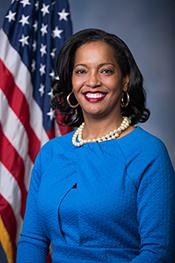
United States · Official source
3,026 records where Rep. Hayes, Jahana [D-CT-5] is listed as a sponsor, author, or other actor. Search with topics and years
United States · United States Congress · 17 July 2025
United States · United States Congress · 17 July 2025
United States · United States Congress · 17 July 2025
United States · United States Congress · 16 July 2025
United States · United States Congress · 16 July 2025
United States · United States Congress · 16 July 2025
United States · United States Congress · 15 July 2025
United States · United States Congress · 15 July 2025
United States · United States Congress · 30 June 2025
United States · United States Congress · 27 June 2025
United States · United States Congress · 27 June 2025
Treat and Reduce Obesity Act of 2025 This bill expands Medicare coverage of intensive behavioral therapy for obesity. Specifically, the bill allows coverage for therapy that is provided by (1) a physician who is not a primary care physician; or (2) other health care providers (e.g., physician assistants and nurse practitioners) and approved counseling programs, if provided upon a referral from, and in coordination with, a physician or primary care practitioner. Currently, such therapy is covered only if provided by a primary care practitioner. The bill also allows coverage under Medicare's prescription drug benefit of drugs used for the treatment of obesity or for weight loss management for individuals who are overweight.
United States · United States Congress · 26 June 2025
United States · United States Congress · 26 June 2025
United States · United States Congress · 26 June 2025
United States · United States Congress · 26 June 2025
United States · United States Congress · 26 June 2025
Stop Hate Crimes Act of 2025 This bill lowers the standard for establishing that a defendant's conduct constitutes a federal hate crime offense. Currently, federal law prohibits willfully causing bodily injury or using a dangerous weapon to attempt to do so because of the actual or perceived protected characteristic (e.g., race or religion) of any person. In a prosecution for a hate crime offense, the government must establish that the defendant committed prohibited conduct because of a specific protected characteristic. The phrase because of is not defined. However, since 2014, courts have generally held that because of relates to causation and requires the government to establish but-for causation. For example, the U.S. Court of Appeals for the Sixth Circuit held in United States v. Miller that in a prosecution for a hate crime offense, the phrase because of required the government to establish that but for the religion of the victims, the defendants would not have committed the assaults. This bill replaces the because of standard, which relates to causation, with a new standard related to motive. Under the new standard, willfully causing bodily injury or using a dangerous weapon to attempt to do so is a hate crime offense if the actual or perceived protected characteristic of any person is a contributory motivating factor in the offense.
United States · United States Congress · 26 June 2025
Ruthie and Connie LGBTQI Elder Americans Act of 2025 This bill makes changes to federal programs serving older individuals to facilitate care for lesbian, gay, bisexual, transgender, queer, and intersex (LGBTQI) individuals. Under current law, certain services provided to older individuals must be targeted to populations with the greatest social need . The bill adds status as an LGBTQI individual and status as an individual living with HIV as factors contributing to greatest social need. The bill also explicitly allows grants that support the health, independence, and longevity of older individuals to be used for certain activities promoting services for individuals with the greatest social need. The bill establishes an Office of LGBTQI Inclusion within the Administration on Aging (AOA). The office must promote access to services for LGBTQI older individuals and coordinate related activities within the Department of Health and Human Services and among other federal entities. The bill also provides statutory authority for a national resource center on LGBTQI aging. The center must provide organizations that serve older individuals or LGBTQI individuals with information and technical assistance needed to effectively serve LGBTQI older individuals. Finally, the bill requires certain studies and reports on issues affecting LGBTQI older individuals. Specifically, state long-term care ombudsmen must collect and analyze data on discrimination against LGBTQI older individuals in long-term care settings. Further, the AOA must study the services needed by LGBTQI older individuals and collect data on the number of such individuals served by various services and activities.
United States · United States Congress · 26 June 2025
United States · United States Congress · 25 June 2025
United States · United States Congress · 25 June 2025
United States · United States Congress · 24 June 2025
Women's Health Protection Act of 2025 This bill prohibits governmental restrictions on the provision of, and access to, abortion services. Before fetal viability, governments may not restrict providers from using particular abortion procedures or drugs, offering abortion services via telemedicine, or immediately providing abortion services if delaying risks the patient's health. Furthermore, governments may not require providers to perform unnecessary medical procedures, provide medically inaccurate information, or comply with credentialing or other conditions that do not apply to providers who offer medically comparable services to abortions. Additionally, governments may not require patients to make medically unnecessary in-person visits before receiving abortion services or disclose their reasons for obtaining services. After fetal viability, governments may not restrict providers from performing abortions when necessary to protect a patient's life and health. The same provisions that apply to abortions before viability also apply to necessary abortions after viability. Additionally, states may authorize post-viability abortions in circumstances beyond those that the bill considers necessary. Further, the bill recognizes an individual's right to interstate travel, including for abortion services. The bill also prohibits governments from implementing measures that are similar to those restricted by the bill or that otherwise target and impede access to abortion services, unless the measure significantly advances the safety of abortion services or health of patients and cannot be achieved through less restrictive means. The Department of Justice, individuals, or providers may sue states or government officials to enforce this bill, regardless of certain immunity that would otherwise apply.
United States · United States Congress · 24 June 2025
United States · United States Congress · 23 June 2025
This concurrent resolution directs the President to remove U.S. Armed Forces from hostilities against Iran unless explicitly authorized by a declaration of war or a congressional authorization for use of military force against Iran. Elements of the U.S. Armed Forces needed to defend the United States, an ally, or a partner from imminent attack are not covered by this requirement provided the President complies with a specified provision of the War Powers Resolution. (The provision generally requires the President to remove U.S. Armed Forces from hostilities no more than 60 days after the President notifies or is required to notify Congress of such involvement, unless Congress authorizes such use. For more information on the War Powers Resolution, see CRS In Focus 13134 .)
United States · United States Congress · 23 June 2025
United States · United States Congress · 23 June 2025
United States · United States Congress · 12 June 2025
United States · United States Congress · 12 June 2025
United States · United States Congress · 12 June 2025
United States · United States Congress · 12 June 2025
United States · United States Congress · 12 June 2025
United States · United States Congress · 12 June 2025
United States · United States Congress · 12 June 2025
United States · United States Congress · 12 June 2025
United States · United States Congress · 12 June 2025
United States · United States Congress · 12 June 2025
United States · United States Congress · 12 June 2025
United States · United States Congress · 12 June 2025
United States · United States Congress · 11 June 2025
United States · United States Congress · 10 June 2025
Bipartisan Background Checks Act of 2025 This bill establishes new background check requirements for firearm transfers between private parties (i.e., unlicensed individuals). Specifically, it prohibits a firearm transfer between private parties unless a licensed gun dealer, manufacturer, or importer first takes possession of the firearm to conduct a background check. The prohibition does not apply to certain firearm transfers or exchanges, such as a gift between spouses.
United States · United States Congress · 10 June 2025
Enhanced Background Checks Act of 2025 This bill establishes more stringent background check requirements for proposed firearm transfers from a federal firearms licensee (e.g., a licensed gun dealer) to an unlicensed person. Specifically, it increases the amount of time, from 3 business days to a minimum of 10 business days, that a federal firearms licensee must wait to receive a completed background check prior to transferring a firearm to an unlicensed person. (This type of transaction is often referred to as a default proceed transaction.) If a submitted background check remains incomplete after 10 business days, then the prospective purchaser may submit a petition for a final firearms eligibility determination. If an additional 10 days elapse without a final determination, then the federal firearms licensee may transfer the firearm to the prospective purchaser. The Government Accountability Office must report on the extent to which the changes have prevented firearms transfers to prohibited persons. The Federal Bureau of Investigation must report on the number of petitions it receives for final federal firearms determinations. The Department of Justice, in consultation with the National Resource Center on Domestic Violence and Firearms, must report on further amendments to the background check process that would likely reduce the risk of death or great bodily harm to victims of domestic violence, domestic abuse, dating partner violence, sexual assault, and stalking.
United States · United States Congress · 10 June 2025
United States · United States Congress · 5 June 2025
United States · United States Congress · 5 June 2025
Accelerating Access to Dementia and Alzheimer’s Provider Training Act or the AADAPT Act This bill reauthorizes through FY2031 and revises the Technology-enabled Collaborative Learning Program, which is administered by the Health Resources and Services Administration. This program provides grants to support the use of technology that connects different health care professionals to improve access to health care, including specialty care, for certain rural and medically underserved populations. The bill explicitly adds dementia care to the types of specialty care that the program may address.
United States · United States Congress · 5 June 2025
Farmers Feeding America Act of 2025 This bill reauthorizes The Emergency Food Assistance Program (TEFAP), increases funding for the program, and provides additional delivery options for geographically isolated states (i.e., Hawaii, Alaska, Puerto Rico, the Northern Mariana Islands, the U.S. Virgin Islands, and Guam). TEFAP is a federal program that helps supplement the diets of people with low income by providing them with emergency food assistance at no cost. Through TEFAP, the Department of Agriculture (USDA) purchases a variety of commodities and makes those food products (e.g., canned, frozen, dried, and fresh fruits and vegetables, eggs, meat, dairy, and whole-grain and enriched grain products) available to state distributing agencies. The bill increases funding for purchasing commodities under the program. Further, the bill directs USDA to coordinate with geographically isolated states to (1) establish alternative delivery options for allocated commodities, and (2) allow for the states to order commodities through the USDA Department of Defense Fresh Fruit and Vegetable Program. USDA may also provide geographically isolated states the ability to directly purchase domestically grown food in lieu of receiving a portion of the commodities. Under this option, USDA may distribute as cash to the state up to 20% of the cash value of the commodities that are allocated to the state under TEFAP. Further, USDA may consider additional factors beyond lowest price in determining winning bids for contracts for fresh produce packages (including product variety and transportation distance).
United States · United States Congress · 5 June 2025
United States · United States Congress · 4 June 2025
United States · United States Congress · 4 June 2025
This resolution expresses the House of Representatives' grave concern with (1) the humanitarian crisis and acute suffering of Palestinian civilians in Gaza, and (2) the suffering of the hostages and hostage families. The resolution also calls on the White House, the Department of State, and other relevant federal agencies to use all available diplomatic tools to bring about the release of the hostages, the disbursement of food and humanitarian aid to Palestinian civilians, and a durable end to the Gaza conflict.
United States · United States Congress · 4 June 2025
Equal Access to Justice for Victims of Gun Violence Act of 2025 This bill removes limitations on the civil liability of gun manufacturers and the disclosure of gun trace data in civil actions. Specifically, the bill repeals the Protection of Lawful Commerce in Arms Act, which prohibits civil actions against a firearm or ammunition manufacturer, seller, importer, dealer, or trade association for damages resulting from the criminal or unlawful misuse of a firearm. Additionally, the bill states that firearms trace data maintained by the Bureau of Alcohol, Tobacco, Firearms and Explosives is not immune from legal process. Such data is subject to discovery; is admissible as evidence; and may be used, relied on, or disclosed in a civil action or administrative proceeding.
United States · United States Congress · 3 June 2025
United States · United States Congress · 3 June 2025