Resolution· HRESH.Res. 457 (119th)open
Expressing support for the designation of June 6, 2025, as "National Gun Violence Awareness Day" and June 2025 as "National Gun Violence Awareness Month".
United States · United States Congress · 2 June 2025
The world's political record
Person
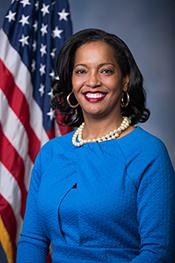
United States · Official source
3,026 records where Rep. Hayes, Jahana [D-CT-5] is listed as a sponsor, author, or other actor. Search with topics and years
United States · United States Congress · 2 June 2025
United States · United States Congress · 29 May 2025
Menstrual Equity For All Act of 2025 This bill expands access to menstrual products (e.g., tampons) in certain locations and for particular groups, such as in schools and for low-income individuals, through federal programs and requirements. It also prohibits state or local sales taxes for these products. The bill expands access to menstrual products through federal programs by requiring Medicaid to cover such products, establishing grants within the Temporary Assistance for Needy Families (TANF) program to provide benefits to ensure access to such products, authorizing the Emergency Food and Shelter Program to provide menstrual products to homeless individuals, and increasing Social Services Block Grant funding to provide such products to low-income individuals. Also, the bill sets out requirements to make free menstrual products available in federal and state correctional facilities (including Department of Homeland Security detention facilities) and restrooms in federal buildings that are open to the public. Further, the bill (1) establishes grants to provide free menstrual products to students at institutions of higher education, and (2) permits elementary and secondary schools to use certain grant funds to provide menstrual products to students. In addition, the bill requires employers with at least 100 employees to provide free menstrual products for employees. Finally, the bill prohibits states and local governments from taxing retail sales of menstrual products.
United States · United States Congress · 23 May 2025
United States · United States Congress · 23 May 2025
United States · United States Congress · 21 May 2025
This bill prohibits the President from selling, transferring, or exporting certain defense articles or services to Israel, except in specified circumstances. Defense articles covered by the prohibition include BLU-109 bunker busting bombs, Joint Direct Attack Munition (JDAM) assemblies, and 155mm artillery ammunition. Defense services directly related to such articles are also covered. The President may sell, transfer, or export such defense articles or services to Israel if (1) a law is enacted specifying the purposes for which such articles or services may be used, and (2) Israel provides written assurances that the defense articles or services will be used for those specific statutory purposes and in a manner consistent with certain other laws, including international human rights laws.
United States · United States Congress · 21 May 2025
College for All Act of 2025 This bill establishes measures to expand access to higher education, including by eliminating tuition and required fees for eligible students, revising the Federal Pell Grant program, and reauthorizing certain programs to assist students from disadvantaged backgrounds. Specifically, the bill provides funding to enable states and tribal colleges and universities, through a federal-state partnership, to eliminate tuition and required fees for (1) all students at community colleges and two-year tribal colleges and universities, and (2) working- and middle-class students at four-year public institutions of higher education and tribal colleges and universities. The bill provides funding to enable private, nonprofit historically Black colleges and universities and minority-serving institutions to eliminate tuition and required fees for eligible students. The bill permanently reauthorizes and otherwise revises the Federal Pell Grant program by providing funding to increase the maximum award for each eligible student, increasing the duration limit for the use of Pell Grants, allowing students to use their awards to cover living and nontuition expenses, and expanding eligibility to Dreamer students (i.e., students who have been granted Deferred Action for Childhood Arrivals status and who entered the United States before the age of 16) and students with other immigration statuses. Further, the bill requires the Department of Education to award grants to eligible states and tribal colleges and universities for improving student outcomes. The bill reauthorizes through FY2035 the Federal TRIO Programs and reauthorizes through FY2029 the Gaining Early Awareness and Readiness for Undergraduate Programs.
United States · United States Congress · 21 May 2025
This resolution declares mental health a national priority and supports the designation of Mental Health Awareness Month.
United States · United States Congress · 21 May 2025
United States · United States Congress · 21 May 2025
United States · United States Congress · 20 May 2025
Improving Seniors' Timely Access to Care Act of 2025 This bill establishes several requirements and standards relating to prior authorization processes under Medicare Advantage (MA) plans. Specifically, MA plans must (1) establish an electronic prior authorization program that meets specified standards; (2) annually submit to the CMS for publication specified prior authorization information, including the percentage of requests approved and the average response time; and (3) meet other standards, as set by the Centers for Medicare & Medicaid Services (CMS), relating to the quality and timeliness of prior authorization determinations. The CMS and the Office of the National Coordinator for Health Information Technology must publish on the CMS' website a report that analyzes the information received from MA plans, the feasibility of implementing real-time decision making with respect to prior authorization requests, and the impact of decisions that are made using artificial intelligence on patient access.
United States · United States Congress · 20 May 2025
United States · United States Congress · 20 May 2025
United States · United States Congress · 20 May 2025
United States · United States Congress · 19 May 2025
United States · United States Congress · 15 May 2025
United States · United States Congress · 15 May 2025
Stronger Communities through Better Transit Act This bill requires the Department of Transportation (DOT) to establish a grant program to support operating projects for public transportation and related service improvements, particularly in underserved communities and areas of persistent poverty. Specifically, the bill requires DOT to allocate funding under the program for urbanized areas, states, and Indian tribes that are recipients of funds under either the Federal Transit Administration's (FTA's) Urbanized Area Formula Funding program or Formula Grants for Rural Areas program. Eligible recipients may use funding for operating costs associated with projects that improve public transportation service for transit-dependent populations and support increased transit ridership (e.g., service expansion, information technology enhancements, and workforce development). DOT must apportion the funding so that recipients receive funds that are proportional to their share of operating costs. The bill also provides for an increased federal cost share for operating assistance for projects or programs carried out in areas of persistent poverty or underserved communities. DOT must set up a multimodal access measurement interface for public agencies to aid transit agencies in determining and reporting on access to jobs and essential services. A grant recipient must (1) report specific information to the FTA for inclusion in the National Transit Database, and (2) survey transit riders and non-riding residents regarding transit service improvements. Further, the bill expands the purposes of the public transportation programs to include supporting public transportation's role in combating climate change through growing/retaining transit ridership.
United States · United States Congress · 15 May 2025
SNAP Administrator Retention Act of 2025 This bill directs the Food and Nutrition Service (FNS) to pay Supplemental Nutrition Assistance Program (SNAP) state agencies for 100% of SNAP administrative personnel costs. The bill also requires that state SNAP agency administrators be paid at least the same amount as federal employees. (Under current law, FNS generally pays 50% of a state's administrative costs for SNAP.) Specifically, FNS must pay a state agency for 100% of all SNAP administrative personnel costs that are part of an FNS-approved state agency personnel wage plan. This must include all costs associated with hiring and training new employees, maintaining those personnel costs, and complying with wage standards. The state agency must use these funds (1) to supplement, not supplant, nonfederal funds used for existing administrative personnel costs; and (2) for existing or additional full-time positions that are above the number of positions that were held in FY2024. The bill also requires that the wage standards for SNAP state agency administrators be (1) at least the same amount as the General Schedule (GS) pay rate for federal employees; and (2) updated annually based on any increase in the GS pay rate, including locality adjustments.
United States · United States Congress · 14 May 2025
United States · United States Congress · 14 May 2025
Nurse Staffing Standards for Hospital Patient Safety and Quality Care Act of 2025 This bill requires hospitals to implement and submit to the Department of Health and Human Services (HHS) a staffing plan that complies with specified minimum nurse-to-patient ratios by unit. Hospitals must post a notice regarding nurse-to-patient ratios in each unit and maintain records of actual ratios for each shift in each unit. The bill also requires hospitals to follow certain procedures regarding how ratios are determined, and other staff are prohibited from performing nurse functions unless specifically authorized within a state's scope of practice rules. HHS must adjust Medicare payments to hospitals to cover additional costs attributable to compliance with these ratios. Nurses may object to, or refuse to participate in, an assignment if it would violate minimum ratios or if they are not prepared by education or experience to fulfill the assignment without compromising the safety of a patient or jeopardizing their nurse's license. Hospitals may not (1) take adverse actions against a nurse based on the nurse's reasonable refusal to accept an assignment; or (2) discriminate against individuals for good faith complaints relating to the care, services, or conditions of the hospital or related facilities. HHS may impose civil monetary penalties on hospitals violating the ratio requirements and must publish the names of such hospitals. The bill provides stipends to the nurse workforce loan repayment and scholarship program and expands the nurse retention grant program to include nurse preceptorship and mentorship projects.
United States · United States Congress · 13 May 2025
United States · United States Congress · 13 May 2025
United States · United States Congress · 13 May 2025
United States · United States Congress · 8 May 2025
United States · United States Congress · 8 May 2025
United States · United States Congress · 8 May 2025
United States · United States Congress · 7 May 2025
United States · United States Congress · 7 May 2025
United States · United States Congress · 6 May 2025
Stop Child Hunger Act of 2025 This bill expands the Department of Agriculture's (USDA's) Summer Electronic Benefit Transfer Program for Children (Summer EBT) to include coverage during a school closure period. (Summer EBT provides grocery-buying benefits to low-income families with school-aged children when schools are closed for the summer.) Under the bill, a school closure period means a period in which an elementary school or secondary school is closed, operating remotely, or operating in a hybrid manner for five or more consecutive weekdays during a calendar year. The bill also increases the daily value of the benefit to cover the cost of breakfast, lunch, and a snack for every day school is closed. For FY2026, USDA must pay each state agency and covered tribal organization 100% of the administrative expenses (currently 50%) incurred in operating the program. The rate that USDA must pay for administrative expenses decreases each fiscal year until it reaches 50% of the expenses for FY2031 and each fiscal year thereafter. USDA must also provide grants to states to support the development or upgrading of data systems that are necessary to implement Summer EBT.
United States · United States Congress · 5 May 2025
United States · United States Congress · 5 May 2025
United States · United States Congress · 5 May 2025
United States · United States Congress · 1 May 2025
United States · United States Congress · 1 May 2025
United States · United States Congress · 1 May 2025
United States · United States Congress · 30 April 2025
United States · United States Congress · 30 April 2025
Assault Weapons Ban of 2025 This bill makes it a crime to knowingly import, sell, manufacture, transfer, or possess a semiautomatic assault weapon (SAW) or large capacity ammunition feeding device (LCAFD). The prohibition does not apply to a firearm that is (1) manually operated by bolt, pump, lever, or slide action, except for certain shotguns; (2) permanently inoperable; (3) an antique; (4) only capable of firing rimfire ammunition; or (5) a rifle or shotgun specifically identified by make and model. The bill also exempts from the prohibition the following, with respect to a SAW or LCAFD: importation, sale, manufacture, transfer, or possession related to certain law enforcement efforts, or authorized tests or experiments; importation, sale, transfer, or possession related to securing nuclear materials; and possession by a retired law enforcement officer. The bill permits continued possession, sale, or transfer of a grandfathered SAW, which must be securely stored. A licensed gun dealer must conduct a background check prior to the sale or transfer of a grandfathered SAW between private parties. The bill permits continued possession of, but prohibits sale or transfer of, a grandfathered LCAFD. Newly manufactured LCAFDs must display serial number identification. Newly manufactured SAWs and LCAFDs must display the date of manufacture. The bill also allows a state or local government to use Edward Byrne Memorial Justice Assistance Grant Program funds to compensate individuals who surrender a SAW or LCAFD under a buy-back program.
United States · United States Congress · 30 April 2025
United States · United States Congress · 29 April 2025
Equality Act This bill prohibits discrimination based on sex, sexual orientation, or gender identity with respect to businesses, employment, housing, federally funded programs, and other settings. Specifically, the bill expands Title II and Title VI of the Civil Rights Act of 1964 to prohibit public accommodations and federally funded programs, respectively, from discriminating based on sex, sexual orientation, or gender identity. It also includes stores, transit services, recreational facilities, and establishments that provide health care, accounting, or legal services as public accommodations under Title II. The bill also expands Title IV (desegregation of public schools) and Title VII (employment discrimination) to specifically include sexual orientation and gender identity. (The Supreme Court held in Bostock v. Clayton County that Title VII's prohibition of employment discrimination based on sex also prohibits employment discrimination based on sexual orientation or gender identity.) The bill similarly expands the Fair Housing Act (discrimination in public and private housing) to include sexual orientation and gender identity. It also prohibits discrimination based on sexual orientation or gender identity by creditors and with respect to jury selection. The bill defines sex for purposes of the aforementioned provisions to include sex stereotypes, pregnancy, childbirth, sexual orientation, gender identity, and sex characteristics.
United States · United States Congress · 29 April 2025
United States · United States Congress · 29 April 2025
United States · United States Congress · 29 April 2025
Medicare for All Act This bill establishes a national health insurance program that is administered by the Department of Health and Human Services (HHS). Among other requirements, the program must (1) cover all U.S. residents; (2) provide for automatic enrollment of individuals upon birth or residency in the United States; and (3) cover items and services that are medically necessary or appropriate to maintain health or to diagnose, treat, or rehabilitate a health condition, including hospital services, prescription drugs, mental health and substance abuse treatment, dental and vision services, long-term care, gender affirming care, and reproductive care, including contraception and abortions. The bill prohibits cost-sharing (e.g., deductibles, coinsurance, and copayments) and other charges for covered services. Additionally, private health insurers and employers may only offer coverage that is supplemental to, and not duplicative of, benefits provided under the program. Health insurance exchanges and specified federal health programs terminate upon program implementation. However, the program does not affect coverage provided through the Department of Veterans Affairs or the Indian Health Service. The bill also establishes a series of implementing provisions relating to (1) health care provider participation; (2) HHS administration; and (3) payments and costs, including the requirement that HHS negotiate prices for prescription drugs. Individuals who are age 18 or younger, age 55 or older, or already enrolled in Medicare may enroll in the program starting one year after enactment of this bill; other individuals may buy into the program at this time. The program must be fully implemented two years after enactment.
United States · United States Congress · 28 April 2025
United States · United States Congress · 28 April 2025
United States · United States Congress · 28 April 2025
United States · United States Congress · 28 April 2025
United States · United States Congress · 28 April 2025
United States · United States Congress · 24 April 2025
United States · United States Congress · 21 April 2025
Guarding Unprotected Aging Retirees from Deception Act of 2026 or the GUARD Act of 2026 This bill allows state, local, and tribal law enforcement agencies and grantees that receive funds from certain law enforcement grant programs to use the funds to investigate general financial fraud, elder financial fraud, and pig butchering. Pig butchering refers to a confidence and investment fraud in which a victim is gradually lured into transferring increasing amounts of money, generally in the form of cryptocurrency, into a fake virtual investment. The bill allows federal law enforcement agencies to assist state, local, and tribal law enforcement agencies and fusion centers in the use of tracing tools for blockchain and related technology tools. Finally, the bill requires the Financial Crimes Enforcement Network (FinCEN) to report on efforts to combat general financial fraud, elder financial fraud, pig butchering, and scams, including an evaluation of any legislative recommendations to improve the efforts. The bill also requires FinCEN to report on the state of general financial fraud, elder financial fraud, pig butchering, and scams in the United States, including trends in the crimes.
United States · United States Congress · 21 April 2025
United States · United States Congress · 17 April 2025