Bill· HRH.R. 1801 (119th)referred
Employer Participation in Repayment Act
United States · United States Congress · 3 March 2025
The world's political record
Person
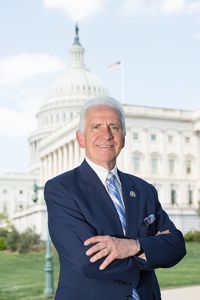
United States · Official source
4,157 records where Rep. Costa, Jim [D-CA-21] is listed as a sponsor, author, or other actor. Search with topics and years
United States · United States Congress · 3 March 2025
United States · United States Congress · 3 March 2025
United States · United States Congress · 3 March 2025
Safe Schools Improvement Act This bill requires states to direct their local educational agencies (LEAs) to establish policies that prevent and prohibit bullying and harassment of elementary and secondary school students. In particular, these policies must prohibit bullying and harassment based on race, color, national origin, disability, religion, or sex. Sex includes sexual orientation, gender identity, and sex characteristics (including intersex traits). Further, LEAs must provide (1) students, parents, and educational professionals with annual notice of the conduct prohibited in their disciplinary policies; (2) students and parents with grievance procedures that target such conduct; and (3) the public with annual data on the incidence and frequency of that conduct at the school and LEA level. The Department of Education must conduct and report on an independent biennial evaluation of programs and policies to combat bullying and harassment in elementary and secondary schools. The National Center for Education Statistics must collect state data to determine the incidence and frequency of the conduct prohibited by LEA disciplinary policies.
United States · United States Congress · 27 February 2025
Technology for Energy Security Act This bill extends the energy investment tax credit for qualified fuel cell property for eight years. Under current law, an energy investment tax credit of up to 30% of the cost of qualified fuel cell property is available provided construction of the qualified fuel cell property begins on or before December 31, 2024. This bill extends the energy investment tax credit to include qualified fuel cell property where construction begins on or before December 31, 2032.
United States · United States Congress · 27 February 2025
United States · United States Congress · 27 February 2025
Governing Unaccredited Representatives Defrauding VA Benefits Act or the GUARD VA Benefits Act This bill imposes fines on individuals for soliciting, contracting for, charging, or receiving any unauthorized fee or compensation with respect to the preparation, presentation, or prosecution of any claim for Department of Veterans Affairs benefits. The attempted commission of such offenses is also punishable by fine.
United States · United States Congress · 27 February 2025
This resolution reaffirms that the Twenty-Second Amendment to the U.S. Constitution (1) applies to two terms in the aggregate as President of the United States, and (2) prohibits President Trump from running for another term as President.
United States · United States Congress · 27 February 2025
United States · United States Congress · 27 February 2025
Save America's Forgotten Equines Act of 2025 or the SAFE Act of 2025 This bill permanently prohibits the slaughter of equines (e.g., horses and mules) for human consumption. (Current law prohibits the slaughter of dogs and cats for human consumption. This bill extends the prohibition to equines.) Specifically, this bill prohibits a person from knowingly (1) slaughtering an equine for human consumption; or (2) shipping, transporting, possessing, purchasing, selling, or donating an equine to be slaughtered for human consumption or equine parts for human consumption. The bill subjects a violator to a fine. The bill applies to conduct in or affecting interstate or foreign commerce or within the special maritime and territorial jurisdiction of the United States. However, it does not apply to an activity carried out by an Indian for a religious ceremony. As background, in recent years, the appropriations acts have prohibited the Department of Agriculture (USDA) from using federal funds to inspect horses before they are slaughtered for human consumption. Therefore, there are currently no USDA-inspected horse slaughter facilities in the United States.
United States · United States Congress · 27 February 2025
Modern Emoluments and Malfeasance Enforcement Act or the MEME Act This bill prohibits the President, the Vice President, Members of Congress, those holding Senior Executive Service positions, admirals, generals, and other federal public officials from engaging in or benefiting from the issuance, sponsorship, or promotion of certain assets. The spouse and dependent children of such an official are also covered by the prohibition. Assets covered by the bill are securities, security futures, commodities, digital assets such as cryptocurrency or a meme coin, as well as derivatives, options, warrants, mutual funds, or exchange traded funds of the preceding assets. The prohibition applies to (1) such officials during their term of service and for 180 days prior to and after their service, and (2) the spouse and dependent children of such an official during that same period. Civil and criminal penalties under the bill include disgorging (giving) to the Treasury any profits from prohibited transactions, fines, and imprisonment for up to five years. The bill provides additional penalties for such prohibited activities if they involve bribery or insider trading. The U.S. Office of Special Counsel may also determine that federal employees or officers serving in other positions are covered by the prohibition.
United States · United States Congress · 27 February 2025
Grown in America Act of 2025 This bill establishes a new tax credit (as part of the general business tax credit) for domestically produced agriculture. Specifically, the bill allows a tax credit for the lesser of (1) 25% of domestically produced agricultural commodity expenses multiplied by the ratio of such expenses to total agricultural commodity expenses (excluding expenses for agricultural commodities that cannot feasibly be produced domestically), or (1) $100 million. (Conditions apply). To qualify for the tax credit, a business’s average expenses (over three years) for domestically produced agricultural commodities must exceed a certain percentage of total agricultural commodity expenses (excluding expenses for agricultural commodities that cannot feasibly be produced domestically). The required percentage is 50% for 2026 and increases by 5% each year until it reaches 85% for tax years beginning after 2033. Under the bill, agricultural commodities include horticultural, viticultural, and dairy products; livestock and livestock products (excluding live animals); poultry and bee raising products; and farm-raised fish products. In addition, the general business tax credit limit based on a business’s tax liability is calculated separately for the domestically produced agriculture tax credit, and the credit is generally limited to 50% of a business’s net regular tax liability. Finally, domestically produced agriculture tax credit amounts in excess of such limitation may be carried forward for 10 years (rather than the 20 years allowed for other business tax credits).
United States · United States Congress · 26 February 2025
United States · United States Congress · 26 February 2025
American Dream and Promise Act of 2025 This bill provides certain non-U.S. nationals ( aliens under federal law) with a path to receive permanent resident status and contains other immigration-related provisions. The Department of Homeland Security (DHS) or the Department of Justice (DOJ) shall provide conditional permanent resident status for 10 years to a qualifying individual who entered the United States as a minor and (1) is deportable or inadmissible, (2) has deferred enforced departure (DED) status or temporary protected status (TPS), or (3) is the child of certain classes of nonimmigrants. The bill imposes various qualifying requirements, such as the individual being continuously physically present in the United States since January 1, 2021, passing a background check, and being enrolled in or having completed certain educational programs. DHS shall remove the conditions placed on permanent resident status granted under this bill if the individual applies and meets certain requirements, such as completing certain programs at an educational institution, serving in the military, or being employed. Furthermore, DHS or DOJ shall provide lawful permanent resident status to certain individuals who had TPS, were eligible for TPS, or were eligible for DED status on certain dates. Such individuals must meet certain requirements and apply for such status within three years of this bill's enactment. This bill also repeals a restriction that bars a state from providing higher education benefits to undocumented individuals unless those benefits are available to all U.S. nationals without regard to residency in the state.
United States · United States Congress · 25 February 2025
United States · United States Congress · 25 February 2025
Ethan's Law This bill establishes a framework to regulate the storage of firearms on residential premises at the federal, state, and tribal levels. At the federal level, the bill establishes statutory requirements for firearms on residential premises to be safely stored if a minor is likely to gain access without permission or if a resident is ineligible to possess a firearm. An individual who violates the requirements is subject to criminal penalties. A firearm stored in violation of the requirements is subject to seizure and forfeiture. At the state and tribal levels, the bill requires the Department of Justice to award grants to implement functionally identical requirements for the safe storage of firearms.
United States · United States Congress · 25 February 2025
Conrad State 30 and Physician Access Reauthorization Act This bill modifies the Conrad 30 Waiver program, which incentivizes qualified foreign physicians to serve in underserved communities. It also extends statutory authority for the program for three years from this bill's enactment. Individuals coming to the United States under a J-1 nonimmigrant visa to receive medical training typically must leave the country and reside for two years abroad before being eligible to apply for an immigrant visa or permanent residence. The Conrad program waives this requirement for individuals who meet certain qualifications, including serving for a number of years at a health care facility in an underserved area. The bill increases the number of waivers that a state may obtain each fiscal year from 30 to 35 if a certain number of waivers were used the previous year, and provides for further adjustments depending on demand. A physician may be employed at an academic medical center to meet the Conrad program's employment requirements if the physician's work is in the public interest, even if the medical center is not in an underserved area. Employment contracts for physicians under the Conrad program shall contain certain information, such as the maximum number of on-call hours per week the physician shall have to work. Certain physicians (along with the physician's spouse and children) shall be exempt from the direct annual numerical limits on immigration, including those physicians that have met certain requirements related to visas for physicians to serve in underserved areas.
United States · United States Congress · 24 February 2025
Delivering for Rural Seniors Act of 2025 This bill directs the Food and Nutrition Service (FNS) to award competitive grants to state agencies under a home delivery pilot program for participants in the Commodity Supplemental Food Program (CSFP). As background, the CSFP works to improve the health of low-income persons at least 60 years of age by supplementing their diets with nutritious Department of Agriculture foods. Under the pilot program, a state agency must distribute grant funds to an eligible entity (i.e., a local agency or subdistributing agency) to operate projects that facilitate home delivery of commodities to CSFP participants. Grant funds may be used for costs associated with transportation and distribution of commodities to CSFP participants, staffing required to operate home delivery services, and home delivery outreach to CSFP participants or potential participants. A state agency must prioritize eligible entities that serve CSFP participants who reside in rural areas. A state agency must also submit an annual report to FNS about the project, including best practices regarding the use of home delivery to improve the effectiveness of the CSFP.
United States · United States Congress · 24 February 2025
United States · United States Congress · 24 February 2025
United States · United States Congress · 24 February 2025
United States · United States Congress · 24 February 2025
United States · United States Congress · 24 February 2025
This resolution supports the designation of Public Schools Week.
United States · United States Congress · 24 February 2025
Alyssa's Legacy Youth in Schools Safety Alert Act or the ALYSSA Act This bill requires each local educational agency (LEA), as a condition of receiving federal elementary and secondary education funds, to ensure that each elementary and secondary school served by the LEA is equipped with at least one silent panic alarm for use in a school security emergency.
United States · United States Congress · 21 February 2025
North Platte Canteen Congressional Gold Medal Act This bill provides for the award of a Congressional Gold Medal to recognize the individuals and communities that provided financial and other support for the North Platte Canteen in North Platte, Nebraska, during World War II.
United States · United States Congress · 21 February 2025
Due Process Continuity of Care Act This bill allows an otherwise eligible individual who is in custody pending disposition of charges (i.e., pretrial detainees) to receive Medicaid benefits at the option of the state. The bill also provides for state planning grants to support the provision of such benefits.
United States · United States Congress · 18 February 2025
United States · United States Congress · 18 February 2025
Buffalo Soldiers Congressional Gold Medal Act of 2025 This bill provides for a Congressional Gold Medal to be awarded to the Buffalo Soldier regiments (six all-Black cavalry and infantry regiments authorized by Congress in 1866 to serve in the Armed Forces) in recognition of their vital service to the United States.
United States · United States Congress · 18 February 2025
Enhanced Iran Sanctions Act of 2025 This bill imposes sanctions on certain foreign persons (individuals and entities) that are involved in Iran's petroleum sector as well as certain associated persons. The bill also requires or authorizes actions to facilitate the enforcement of sanctions on Iran. Specifically, the bill requires the President to impose visa- and property-blocking sanctions on any foreign person that, after the bill's enactment, knowingly engages in any transaction related to the processing, export, or sale of oil, condensates, gas, liquefied natural gas, or other petrochemical products in whole or in part from Iran. The President must also impose sanctions on certain foreign persons associated with a sanctioned individual or entity. For example, the President must sanction the subsidiaries and corporate officers of a sanctioned business. The bill provides certain exceptions to these sanctions, including specifying that sanctions do not apply to the importation of goods or to conducting or facilitating transactions for humanitarian assistance. The Department of State must establish an interagency working group that shall seek to establish a multilateral contact group to coordinate international efforts to enforce sanctions on Iran. The bill expands the State Department rewards program to authorize a reward payment to any individual who furnishes information leading to the identification of a person (1) subject to sanctions under this bill, or (2) that has attempted or is attempting to evade sanctions under this bill.
United States · United States Congress · 18 February 2025
Cameron's Law This bill increases the orphan drug tax credit to 50% (from 25%) of qualified clinical testing expenses paid or incurred in the development of drugs to treat certain rare diseases or conditions. As background, the Tax Cuts and Jobs Act reduced the orphan drug tax credit (for tax years after 2017) to 25% of qualified clinical testing expenses (e.g., wages, supplies, and certain contract expenses) paid or incurred in the development of drugs to treat certain rare diseases or conditions. For 2017 and prior tax years, the orphan tax credit was 50% of such expenses paid or incurred.
United States · United States Congress · 14 February 2025
Codifying Useful Regulatory Definitions Act or the CURD Act This bill establishes a statutory definition for natural cheese . Under the bill, natural cheese is defined as cheese (ripened or unripened soft, semi-soft, or hard) that is produced from animal milk or certain dairy ingredients and is produced in accordance with established cheese-making standards. The definition excludes pasteurized process cheeses, cheese foods, and cheese spreads. A food that does not meet this definition is deemed misbranded and may not be sold if its label includes the term natural cheese as a factual descriptor of a category of cheese.
United States · United States Congress · 14 February 2025
Healthy Poultry Assistance and Indemnification Act of 2025 This bill expands the Animal and Plant Health Inspection Service (APHIS) producer indemnity and compensation program to include compensation for all poultry growers and layers located in an APHIS-determined control area, which may include non-infected poultry. Currently, APHIS provides indemnity and compensation to producers to remove animals classified as affected, suspect, or exposed to diseases of concern, including highly pathogenic avian influenza (HPAI). An APHIS-determined control area consists of both an infected zone and a buffer zone. Under the bill, APHIS must compensate all owners of poultry growing or laying facilities for flocks of birds that the facility owner was prohibited from growing or laying due to the location of the facility within a control area. This may include facilities that are located in the buffer zones and have non-infected poultry. Further, the bill establishes a new compensation payment formula that requires payments to be based on the owner’s average income from the five most recent flocks. Under the bill, APHIS's compensation determination is final and not subject to judicial or administrative review (other than by the Secretary of Agriculture or a designee).
United States · United States Congress · 14 February 2025
United States · United States Congress · 13 February 2025
Growing Rural Agricultural Infrastructure Needs to Deliver Rising Yields Act or the GRAIN DRY Act This bill specifies that funds provided under the Farm Storage Facility Loan Program may be used to construct or upgrade storage facilities for propane that is primarily used for agricultural production. This Department of Agriculture loan program provides low-interest financing for agricultural producers to build or upgrade commodity storage facilities. Some agricultural producers use propane to power agricultural operations (e.g., grain dryers, irrigation engines, and barn heating).
United States · United States Congress · 13 February 2025
This concurrent resolution declares that Congress should not impose any new performance fee, tax, royalty, or other charge relating to the public performance of sound recordings on a local radio station for broadcasting sound recordings over the air, or on any business for such public performance of sound recordings.
United States · United States Congress · 13 February 2025
More Homes on the Market Act This bill increases the amount of gain from the sale of a principal residence that an individual may exclude from gross income (for federal tax purposes). Under the bill, an individual may exclude from gross income gain from the sale of a principal residence of up to $500,000 (currently $250,000), and taxpayers who are married and file a joint federal income tax return may exclude up to $1 million (currently $500.000). The bill also requires these amounts to be adjusted annually for inflation.
United States · United States Congress · 13 February 2025
This resolution reaffirms the House of Representatives' full and unwavering commitment to the North Atlantic Treaty Organization (NATO). The resolution also (1) reaffirms NATO's open door policy and the right of every state, including Ukraine, to choose its own security arrangements; and (2) underscores the importance of NATO allies dedicating at least 2% of their gross domestic product to national defense or establishing plans to meet that obligation.
United States · United States Congress · 13 February 2025
United States · United States Congress · 13 February 2025
This resolution supports the designation of National FFA (Future Farmers of America) Week. It also celebrates the 90th anniversary of New Farmers of America (NFA), which served Black vocational agriculture students in segregated public schools until NFA and FFA became one organization in 1965. The resolution also commemorates the 75th anniversary of the federal charter for the Future Farmers of America.
United States · United States Congress · 13 February 2025
Supply Chain Security and Growth Act of 2025 This bill establishes a tax credit for qualified investments made in certain facilities that are located in a U.S. possession and manufacture drugs, pharmaceuticals, semiconductors, or certain other items, subject to limitations. The bill also increases the deemed-paid foreign tax credit for taxes paid to a U.S. possession. Specifically, under the bill, a taxpayer (other than a prohibited foreign entity) is allowed a tax credit for 40% of an investment in certain property that is placed into service during the tax year; integral to the operation of a critical supply chain facility; and constructed, reconstructed, or erected by the taxpayer, or property acquired for original used by the taxpayer. The bill defines critical supply chain facility as a facility that (1) manufactures active pharmaceutical ingredients, drugs, biologic products, medical countermeasures, medical diagnostic devices, semiconductors, semiconductor manufacturing equipment, aerospace equipment, or artificial nanomaterials; and (2) is located in Puerto Rico, Guam, American Samoa, the Northern Mariana Islands, or the Virgin Islands. Under the bill, the tax credit is transferable and may be claimed as a direct cash payment (i.e., elective payment). (Limitations apply.) Finally, the bill increases to 100% (from 80%) the deemed-paid foreign tax credit for income taxes paid or accrued by a controlled foreign corporation (CFC) to a U.S. possession. (Under current law, a U.S. shareholder of a CFC is allowed a tax credit for income taxes paid by a CFC on certain income attributable to the U.S. shareholder.)
United States · United States Congress · 13 February 2025
First Rhode Island Regiment Congressional Gold Medal Act This bill provides for the award of a single Congressional Gold Medal to the First Rhode Island Regiment, collectively, in recognition of their dedicated service during the Revolutionary War.
United States · United States Congress · 12 February 2025
Alternatives to Prevent Addiction In the Nation Act or the Alternatives to PAIN Act This bill reduces cost-sharing and prohibits the imposition of certain utilization requirements under the Medicare prescription drug benefit for certain non-opioid pain management drugs. Specifically, the bill requires such drugs to be covered without a deductible and to be placed on the lowest cost-sharing tier (if any). The bill also prohibits the imposition of prior authorization requirements (i.e., requiring prior approval from a plan) or step therapy requirements (i.e., requiring the use of alternative drugs before a drug is covered under a plan) with respect to such drugs.
United States · United States Congress · 12 February 2025
United States · United States Congress · 12 February 2025
Water Systems PFAS Liability Protection Act This bill exempts specified water management entities from liability under the Comprehensive Environmental Response, Compensation, and Liability Act of 1980 (CERCLA) for releases of certain perfluoroalkyl or polyfluoroalkyl substances, commonly referred to as PFAS. Specifically, the entities covered under the bill are public water systems, publicly or privately owned or operated treatment works, municipalities with a stormwater discharge permit, political subdivisions or special districts of a state that act as a wholesale water agency, and contractors performing the management or disposal activities for such entities. Under the bill, the exemption only applies if a specified entity transports, treats, disposes of, or arranges for the transport, treatment or disposal of PFAS consistent with applicable laws and during and following the conveyance or treatment of water under federal or state law, such as through the management or disposal of biosolids consistent with the Federal Water Pollution Control Act. Liability for damages or costs associated with the release of certain PFAS must not be precluded if an entity acted with gross negligence or willful misconduct.
United States · United States Congress · 12 February 2025
United States · United States Congress · 12 February 2025
Give Kids a Chance Act of 2025 This bill expands the Food and Drug Administration’s (FDA’s) authority with respect to research on rare pediatric diseases, including by permitting the FDA to take enforcement action against drug sponsors that fail to satisfy pediatric study requirements and by reauthorizing programs that support pediatric research. Specifically, the bill modifies requirements relating to molecularly targeted pediatric cancer investigations to permit research on new drugs in combination with active ingredients that have already been approved, provided certain conditions are met; permits the FDA to take enforcement action against drug sponsors that fail to comply with pediatric study requirements, if such sponsors demonstrated a lack of due diligence in satisfying the requirement; renews the FDA’s authority to award priority review vouchers to sponsors of new products intended to treat rare pediatric diseases through September 30, 2029; and reauthorizes through FY2027 certain funding for the National Institutes of Health to support priority pediatric research. The bill also provides statutory authority for the FDA’s interpretation of the orphan drug exclusivity period. The bill specifies, consistent with FDA regulations, that the seven-year market exclusivity period for drugs for rare diseases or conditions (i.e., orphan drugs) prohibits the approval of the same drug for the same approved use or indication with respect to the disease or condition. (In Catalyst Pharmaceuticals, Inc. v. Becerra , a court rejected the FDA’s interpretation and held that orphan drug exclusivity extends to all uses or indications for the disease or condition.)
United States · United States Congress · 12 February 2025
This resolution recognizes and celebrates the contributions of immigrants to the United States; condemns discrimination against immigrants; and supports comprehensive immigration reform that addresses the needs of the economy, strengthens communities, and reflects the values of compassion, fairness, and opportunity for all.
United States · United States Congress · 11 February 2025
United States · United States Congress · 11 February 2025
United States · United States Congress · 11 February 2025
National Plan for Epilepsy Act This bill requires the Department of Health and Human Services (HHS) to establish a national plan, form an advisory council, and take other actions to address epilepsy. The requirements sunset on December 31, 2035. Specifically, the bill requires HHS to carry out a National Plan for Epilepsy to prevent, diagnose, treat, and cure epilepsy. In carrying out the plan, HHS must implement activities such as coordinating research and services across all federal agencies and soliciting public comments. Also, HHS must establish an Advisory Council on Epilepsy Research, Care, and Services. The advisory council must report to HHS and Congress every two years with an evaluation of federally funded efforts. Additionally, HHS must annually report to Congress with recommended actions based on its assessments of the nation’s progress on epilepsy.
United States · United States Congress · 10 February 2025
Blind Americans Return to Work Act of 2025 This bill requires the Social Security Administration to carry out a demonstration project during which blind Social Security Disability Insurance (SSDI) beneficiaries receive reduced benefits commensurate with income above certain thresholds. Under current law, only individuals who earn under a specified monthly income, known as the substantial gainful activity (SGA) threshold, are considered disabled and thereby eligible for SSDI benefits. For blind workers, this limit is $2,700 per month in 2025. SSDI beneficiaries may earn beyond the SGA threshold for a limited period of time, known as the trial work period , before their benefits are suspended and ultimately terminate. The bill establishes a 20-year demonstration project during which individuals who are entitled to SSDI benefits by reason of blindness and who earn above the SGA threshold continue to receive benefits at an amount gradually reduced commensurate with their earnings beyond a specified amount. During this period, blind workers’ SSDI benefits must be reduced by $1 for every $2 that a worker earns above the sum of (1) the SGA threshold, and (2) the worker’s expenses reasonably attributable to their work. The SGA threshold may not be used to determine whether an individual is disabled during this period, and blind workers’ SSDI benefits may not be terminated due to work-related earnings. The trial work period also must not apply. After 10 years, affected beneficiaries may opt out of the modified benefits structure.