Bill· HRH.R. 5973 (119th)referred
Stop Excessive Force in Immigration Act of 2025
United States · United States Congress · 7 November 2025
The world's political record
Person
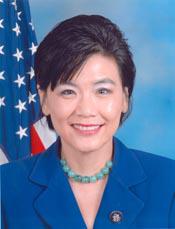
United States · Official source
5,659 records where Rep. Chu, Judy [D-CA-28] is listed as a sponsor, author, or other actor. Search with topics and years
United States · United States Congress · 7 November 2025
United States · United States Congress · 4 November 2025
This resolution expresses the sense of the House of Representatives that the Trump Administration is legally obligated to fund the Supplemental Nutrition Assistance Program (SNAP) through the use of the contingency fund, the Administration has the legal authority and the funds to finance SNAP through November 2025, exercising this power is extremely important for the health and wellness of families experiencing hunger, and the Administration should immediately exercise this authority.
United States · United States Congress · 4 November 2025
United States · United States Congress · 31 October 2025
United States · United States Congress · 28 October 2025
United States · United States Congress · 28 October 2025
United States · United States Congress · 28 October 2025
United States · United States Congress · 21 October 2025
This resolution recognizes the religious and historical significance of Diwali.
United States · United States Congress · 17 October 2025
Head Start Shutdown Protection Act of 2025 This bill requires the Department of Health and Human Services to reimburse a state, local government, or school district that uses its funds to maintain participation in the Head Start program or the Early Head Start program during a government shutdown in which there is a lapse in federal appropriations for the programs. The Head Start programs provide comprehensive early childhood education and development services to low-income children. The programs seek to promote school readiness through the provision of educational, health, nutritional, social, and other services.
United States · United States Congress · 17 October 2025
United States · United States Congress · 14 October 2025
United States · United States Congress · 10 October 2025
United States · United States Congress · 8 October 2025
This bill requires the federal government to reimburse state agencies that use state funds to carry out operations necessary to maintain participation in the Special Supplemental Nutrition Program for Women, Infants, and Children (WIC) during a lapse in discretionary appropriations (i.e., government shutdown). WIC provides nutrition-rich foods, nutrition education, and health care and social services referrals to eligible low-income women, infants, and children.
United States · United States Congress · 8 October 2025
United States · United States Congress · 8 October 2025
United States · United States Congress · 3 October 2025
United States · United States Congress · 3 October 2025
United States · United States Congress · 3 October 2025
This resolution expresses support for the designation of World Space Week.
United States · United States Congress · 30 September 2025
Fair Pay for Federal Contractors Act of 2025 This bill provides back pay to employees of federal contractors who lost pay due to a lapse in appropriations (i.e., government shutdown) in FY2026. Specifically, the bill provides appropriations for federal agencies that are subject to a lapse in appropriations in FY2026 to adjust the price of contracts to compensate federal contractors for providing back pay to employees who were affected by the lapse in appropriations. The agencies must adjust the price of any contract for which the contractor stopped, suspended, delayed, or interrupted all or part of the work under the contract due to the lapse in appropriations. The price adjustment must compensate the contractor for reasonable costs incurred to (1) compensate employees who were furloughed or laid off, were not working, or experienced a reduction of hours or compensation due to the lapse in appropriations; or (2) restore paid leave taken by employees during the lapse in appropriations if the contractor required or permitted employees to use paid leave as a result of the lapse in appropriations. The maximum amount of weekly compensation of an employee for which an adjustment may be made under this bill may not exceed the lesser of (1) the employee's actual weekly compensation, or (2) $1,442 (or a lesser amount pro-rated for an employee who works less than 40 hours per week). The bill also requires the Office of Federal Procurement Policy to submit a report to Congress on the adjustments made under this bill.
United States · United States Congress · 30 September 2025
United States · United States Congress · 30 September 2025
United States · United States Congress · 30 September 2025
Federal Firefighter Paycheck Protection Act This bill provides continuing FY2026 appropriations to pay federal firefighters if a government shutdown is in effect. It also prohibits the firefighters from being subject to a reduction in force (RIF) during a government shutdown. Specifically, the bill provides continuing FY2026 appropriations to provide pay and allowances to federal firefighters during any period in which interim or full-year appropriations for FY2026 are not in effect (i.e., a government shutdown). The bill provides the appropriations until the earlier of (1) the enactment of specified appropriations legislation, or (2) January 1, 2027. The bill also prohibits federal firefighters from being removed from the civil service due to a RIF during a government shutdown.
United States · United States Congress · 30 September 2025
United States · United States Congress · 30 September 2025
United States · United States Congress · 30 September 2025
United States · United States Congress · 26 September 2025
United States · United States Congress · 26 September 2025
United States · United States Congress · 26 September 2025
This bill prohibits the removal of federal employees from the civil service during a government shutdown due to a lapse in discretionary appropriations. If an employee is removed from the civil service in violation of this bill, the employee may elect to be reinstated with back pay on the date on which the lapse in appropriations ends.
United States · United States Congress · 26 September 2025
United States · United States Congress · 26 September 2025
Funding Small Businesses During Shutdown Act This bill provides FY2026 appropriations to continue servicing loans made under certain Small Business Administration (SBA) loan programs if there is a lapse in discretionary appropriations (i.e., government shutdown) in FY2026. If there is a lapse in FY2026 appropriations for the SBA, the bill provides specified appropriations to pay for the salaries and expenses necessary to continue servicing any loans made under several loan programs authorized by the Small Business Act and the Small Business Investment Act of 1958. The bill provides the appropriations for any 30-day period in which there is a lapse in SBA appropriations and on a pro-rated basis if the lapse is less than 30 days.
United States · United States Congress · 23 September 2025
United States · United States Congress · 23 September 2025
United States · United States Congress · 23 September 2025
United States · United States Congress · 19 September 2025
United States · United States Congress · 19 September 2025
This joint resolution directs the President to remove U.S. Armed Forces from hostilities against any organization designated on or after February 20, 2025, as a foreign terrorist organization or specially designated global terrorist, any states in which such entities operate, or any non-state organization engaged in illegal drug trafficking unless a declaration of war or authorization to use military force for such purpose has been enacted. The resolution specifies that it shall not be construed to prevent the United States from defending itself from an armed attack or the threat of an imminent armed attack or from using the U.S. Armed Forces in support of civil authorities as part of authorized counternarcotics operations.
United States · United States Congress · 19 September 2025
United States · United States Congress · 19 September 2025
United States · United States Congress · 18 September 2025
United States · United States Congress · 18 September 2025
United States · United States Congress · 18 September 2025
United States · United States Congress · 18 September 2025
United States · United States Congress · 18 September 2025
United States · United States Congress · 18 September 2025
United States · United States Congress · 18 September 2025
Redistricting Reform Act of 2025 This bill sets forth requirements for congressional redistricting and generally prohibits mid-decade redistricting. Specifically, the bill requires that congressional redistricting be conducted in accordance with a plan developed by (1) a state-established independent commission; or (2) if such a commission does not enact a plan, a three-judge panel from a U.S. District Court. This requirement does not apply to a state that has a plan developed and approved by an independent redistricting commission that complies with specified requirements. The bill outlines the criteria for a redistricting plan, including that congressional districts must be drawn to (1) ensure the practical ability of a protected group to participate in the political process, nominate candidates, and elect representatives of choice; and (2) represent communities of interest and neighborhoods. Additionally, the bill prohibits the use of a redistricting plan that was drawn with the intent (or has the effect of) materially favoring or disfavoring any political party. Further, the bill establishes the requirements for appointing members to a state-established independent redistricting commission, including diversity requirements. The Government Accountability Office must report on the extent to which these commissions meet the diversity requirements. The bill includes a provision to prevent states from redistricting more than once following an apportionment (i.e., mid-decade redistricting). The bill also directs the Election Assistance Commission to make payments to states to carry out congressional redistricting.
United States · United States Congress · 18 September 2025
Responsible Retirement of Law Enforcement Firearms Act of 2025 or the RRLEF Act of 2025 This bill establishes a framework to limit the transfer of firearms to and purchase from federally licensed gun dealers whose firearms have a short time to crime. The term short time to crime means a period of three years or less between the date of the last known retail sale of a firearm and the date a firearm is recovered in an actual or suspected criminal offense. Specifically, the bill directs the Bureau of Alcohol, Tobacco, Firearms and Explosives (ATF) to notify a state or local law enforcement agency if a firearm transferred by the agency is used, or suspected of being used, in the commission of a criminal offense, as traced by the National Tracing Center. Additionally, the bill directs the ATF to publish annually a list of federally licensed gun dealers who have 25 or more traces of firearms with a short time to crime in at least two of the three previous years. The bill prohibits a state (including the District of Columbia), territory, or local government that receives funds under the Edward Byrne Memorial Justice Assistance Grant Program from transferring a firearm to, or purchasing a firearm from, a dealer on the list. The bill removes limits on the authority of the ATF to disclose firearms tracing data.
United States · United States Congress · 17 September 2025
United States · United States Congress · 17 September 2025
This joint resolution nullifies the rule titled Patient Protection and Affordable Care Act; Marketplace Integrity and Affordability , which was issued by the Centers for Medicare & Medicaid Services on June 25, 2025. The rule makes several changes to enrollment requirements for health insurance exchanges, including (1) requiring annual open enrollment periods for all exchanges to begin by November 1 and end by December 31, (2) requiring all exchanges to conduct pre-enrollment verification of eligibility for at least 75% of new enrollments through special enrollment periods, and (3) prohibiting Deferred Action for Childhood Arrivals (DACA) recipients from enrolling in plans through exchanges or in state Basic Health Programs (state programs for certain low-income residents). The rule also prohibits individual and small group health insurers from covering certain sex-trait modification procedures as an essential health benefit.
United States · United States Congress · 17 September 2025
United States · United States Congress · 16 September 2025
United States · United States Congress · 16 September 2025
Faster Labor Contracts Act This bill establishes mandatory deadlines for parties negotiating an initial collective bargaining agreement (CBA) and provides for mediation and arbitration to finalize CBAs. Under the bill, CBA negotiations must begin within 10 days after an employer receives a written request from a newly recognized or certified bargaining representative. The bill provides that parties must make every reasonable effort to conclude and sign a CBA. Further, the bill provides that, if the parties have not reached an agreement after 90 days, either party may request mediation by the Federal Mediation and Conciliation Service (FMCS). The bill directs FMCS to use its best efforts to secure an agreement. If mediation does not result in an agreement within 30 days (or an additional period agreed to by both parties), FMSC must refer the parties to an arbitration panel to render a decision settling the dispute. The panel must consider specified factors, including the employer's financial prospects and employees' cost of living. The resulting CBA is binding on the parties for two years. (Parties may agree to amend the terms during the two-year period.) The bill specifies that (1) an employer must maintain current wages, hours, terms, and conditions of employment during negotiations; and (2) an employer's duty to collectively bargain continues even if a representative has been decertified. The Government Accountability Office must report to Congress regarding the average number of days between the certification or recognition of a bargaining representative and the date the initial CBA was executed.