Bill· HRH.R. 9680 (119th)referred
Replace UNRWA with Real Humanitarian Assistance Act
United States · United States Congress · 14 July 2026
The world's political record
Person
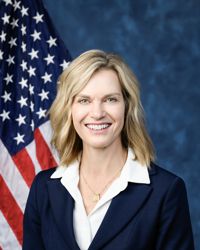
United States · Official source
150 records where Julie Fedorchak is listed as a sponsor, author, or other actor. Search with topics and years
United States · United States Congress · 14 July 2026
United States · United States Congress · 9 July 2026
United States · United States Congress · 30 June 2026
Securing Agriculture's Workforce Act of 2026 This bill expands the H-2A agricultural visa program; creates online platforms for H-2A employers, workers, and agencies; and codifies certain wage calculations. Under current law, workers on H-2A visas are only allowed to perform agricultural work of a seasonal or temporary nature. Under the bill, the seasonal work requirement is removed, thus allowing H-2A workers to qualify for agricultural work that occurs year-round. The bill also expands the type of agricultural work that qualifies, including reforestation, aquaculture, and livestock work. The Department of Agriculture must issue rules to define agricultural labor or services for purposes of the H-2A program. The bill also establishes an H-2A visa pathway for current unauthorized agricultural workers who otherwise meet requirements. The Department of Labor must maintain a national, publicly accessible online job registry and database of all job offers submitted by employers seeking a labor certification required to employ H-2A workers. The Department of Homeland Security must establish an online platform for employers to submit information and documentation for review by federal agencies in the course of admitting H-2A workers. The H-2A program requires employers to provide workers with wage rates at or above those set in regulations and such wages must not adversely affect the wages and working conditions of workers similarly employed in the United States. The bill codifies the current calculation method for the adverse effect wage rate as set in regulation.
United States · United States Congress · 30 June 2026
United States · United States Congress · 10 June 2026
United States · United States Congress · 4 June 2026
United States · United States Congress · 21 May 2026
United States · United States Congress · 13 May 2026
United States · United States Congress · 4 May 2026
This resolution expresses support for police officers and other law enforcement personnel. The resolution further recognizes law enforcement officers across the United States in the pursuit of preserving safe and secure communities; the need to ensure that such officers have the equipment, training, and resources necessary to protect their health and safety while they are protecting the public; and the law enforcement community for acts of sacrifice and heroism. The resolution expresses condolences and appreciation to the loved ones of each law enforcement officer who has made the ultimate sacrifice in the line of duty.
United States · United States Congress · 4 May 2026
This resolution expresses support for the designation of a National Day of Awareness for Missing and Murdered Indigenous Women and Girls.
United States · United States Congress · 30 April 2026
United States · United States Congress · 30 April 2026
United States · United States Congress · 21 April 2026
United States · United States Congress · 2 April 2026
United States · United States Congress · 26 March 2026
United States · United States Congress · 25 March 2026
United States · United States Congress · 19 March 2026
United States · United States Congress · 17 March 2026
United States · United States Congress · 17 March 2026
United States · United States Congress · 17 March 2026
United States · United States Congress · 24 February 2026
United States · United States Congress · 23 February 2026
This resolution supports the designation of National FFA (Future Farmers of America) Week. It also celebrates the 50th anniversary of the chartering of Alaska as a State FFA Association of the National FFA Organization.
United States · United States Congress · 23 February 2026
United States · United States Congress · 9 February 2026
United States · United States Congress · 30 January 2026
Safeguard American Voter Eligibility Act or the SAVE America Act This bill requires individuals to provide documentary proof of U.S. citizenship when registering to vote, and requires photo identification to vote, in federal elections. Specifically, the bill prohibits states from accepting and processing an application to register to vote in a federal election unless the applicant presents documentary proof of U.S. citizenship. The bill specifies what documents are considered acceptable proof of U.S. citizenship, such as identification that complies with the REAL ID Act of 2005 that indicates U.S. citizenship. Further, the bill (1) prohibits states from registering an individual to vote in a federal election unless, at the time the individual applies to register to vote, the individual provides documentary proof of U.S. citizenship; and (2) requires states to establish an alternative process to demonstrate U.S. citizenship. Each state must take affirmative steps on an ongoing basis to ensure that only U.S. citizens are registered to vote, which shall include establishing a program to identify individuals who are not U.S. citizens using information supplied by certain sources. Additionally, states must remove noncitizens from their official lists of eligible voters. The bill (1) provides for a private right of action for certain violations, and (2) establishes criminal penalties for certain offenses. Individuals voting in federal elections must present an eligible photo identification document. An individual who votes by absentee ballot must submit a copy of their identification document with both the request for, and the submission of, the absentee ballot.
United States · United States Congress · 27 January 2026
United States · United States Congress · 12 January 2026
Stop Insider Trading Act This bill generally prohibits Members of Congress and their spouses and dependent children from purchasing stocks and requires public notice before these individuals may sell stocks. Specifically, Members of Congress and the spouses and dependent children of Members of Congress may not purchase covered investments. Between 7 and 14 days before a Member or a covered spouse or dependent sells a covered investment, the relevant Member must file public notice of the intent to sell with the Clerk of the House of Representatives or the Secretary of the Senate, as appropriate. The Clerk or Secretary must publish this notice online. If the individual decides not to sell the covered investment, the notice must be withdrawn. Under the bill, a covered investment is a security issued by a publicly traded company or a comparable economic interest. Some investments are exempt, including interest in a widely held investment fund and certain investments held in a trust. Violations of these provisions are subject to a fee and, in the case of a purchase, a requirement to sell the covered investment. The fee must equal (1) the greater of $2,000 or 10% of the transaction value, and (2) any net gain realized from the transaction during a specified period. The fee may not be paid using campaign donations or Members’ official allowances. Certain transactions by covered spouses and dependents are exempt, including transactions made on behalf of another person or made as part of compensation from the individual’s employer.
United States · United States Congress · 9 January 2026
United States · United States Congress · 9 January 2026
United States · United States Congress · 7 January 2026
Main Street Capital Access Act or the Main Street Act This bill lessens and otherwise modifies banking regulations, including those regarding institution formation, supervision by federal financial regulators, and bank merger requirements. Under the bill, new banks have a three-year phase-in period to meet certain capital requirements. The bill also reduces the leverage ratio for certain rural community banks. Financial regulators must (1) tailor regulatory actions to limit burdens on financial institutions and must consider the institutions' risk profiles and business models, and (2) review their regulations more frequently and expand the scope of these reviews. The bill eases requirements regarding bank mergers, for example, by allowing financial regulators to approve certain bank mergers without considering if the merger is noncompetitive or monopolistic. The bill increases the dollar asset thresholds for various fees, reporting requirements, and other regulatory requirements so that more financial companies and banks are exempt from these requirements. For example, the bill increases the total asset threshold above which financial holding companies need Federal Reserve Board approval to acquire a company, thereby allowing for more acquisitions without board approval. The bill also raises certain asset thresholds so as to allow additional small bank holding companies to operate with higher debt levels and additional small banks to qualify for a longer examination cycle. The bill also provides flexibilities regarding the use of reciprocal deposits, the resolution of failed banks, and other regulated activities.
United States · United States Congress · 17 December 2025
United States · United States Congress · 16 December 2025
Essential Caregivers Act of 2025 This bill prohibits certain health care facilities from limiting the access of essential caregivers to residents of those facilities, including during designated emergency periods. Specifically, the bill generally prohibits Medicare skilled nursing facilities, Medicaid nursing facilities, Medicaid intermediate care facilities, and associated inpatient rehabilitation facilities from restricting the access of essential caregivers to residents of the facilities, including during emergency periods in which visitation rights are otherwise restricted. During emergency periods, facilities may restrict access for an initial period of up to seven days and for one additional maximum seven-day period (if the additional period is approved by the state health department). Facilities may restrict access for a total of 7 days (or 14 days with the approval of the state health department) during an emergency period. Essential caregivers must agree to comply with any safety protocols set by the facility, which may be no more stringent for caregivers compared to those for staff. Caregivers who fail to comply with these requirements may be denied access, subject to an appeals process.
United States · United States Congress · 11 December 2025
United States · United States Congress · 10 December 2025
United States · United States Congress · 9 December 2025
United States · United States Congress · 4 December 2025
United States · United States Congress · 4 December 2025
United States · United States Congress · 3 December 2025
United States · United States Congress · 2 December 2025
United States · United States Congress · 1 December 2025
United States · United States Congress · 25 November 2025
This resolution supports the recognition of National Native American Heritage Month and Native American Heritage Day.
United States · United States Congress · 20 November 2025
United States · United States Congress · 20 November 2025
United States · United States Congress · 20 November 2025
United States · United States Congress · 19 November 2025
United States · United States Congress · 7 November 2025
National Cemetery Access Act This bill requires that national cemeteries administered by the Department of Defense, Department of Veterans Affairs, or the National Park Service must be open to visitors on the 11 legal public holidays (e.g., Memorial Day).
United States · United States Congress · 31 October 2025
United States · United States Congress · 31 October 2025
Firearm Access During Shutdowns Act This bill requires various federal agencies to continue certain operations, functions, and services related to firearms during a government shutdown. The bill applies to the Federal Bureau of Investigation's National Instant Criminal Background Check System, including the processing of background checks in support of the operations of the Directorate of Enforcement Programs and Services of the Bureau of Alcohol, Tobacco, Firearms and Explosives (ATF); the ATF's Directorate of Enforcement Programs and Services; the activities of the Department of Commerce's Bureau of Industry and Security relating to firearms and firearm-related products, including activities related to processing of applications for export licenses; and the activities of the Department of State's Directorate of Defense Trade Controls relating to firearms and firearm-related products, including activities related to processing of applications for export licenses. Under the bill, (1) these operations, functions, and services are deemed to relate to an emergency involving the safety of human life or the protection of property; and (2) employees carrying out the operations, functions, and services are deemed to be excepted employees. (Under an exception in the Antideficiency Act, an employee whose duties involve the safety of human life or the protection of property may be required to work during a government shutdown. Employees who are required to work during a government shutdown because they fall under this or other exceptions are known as excepted employees.)
United States · United States Congress · 17 October 2025
United States · United States Congress · 19 September 2025