Bill· HRH.R. 6151 (119th)referred
Global Respect Act
United States · United States Congress · 19 November 2025
The world's political record
Person
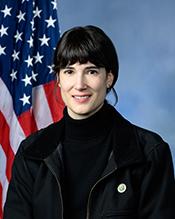
United States · Official source
610 records where Rep. Perez, Marie Gluesenkamp [D-WA-3] is listed as a sponsor, author, or other actor. Search with topics and years
United States · United States Congress · 19 November 2025
United States · United States Congress · 17 November 2025
United States · United States Congress · 17 November 2025
This resolution expresses that the House of Representatives disapproves of the behavior of Representative Jesús G. “Chuy” García of Illinois.
United States · United States Congress · 28 October 2025
United States · United States Congress · 24 October 2025
United States · United States Congress · 24 October 2025
Keep SNAP Funded Act of 2025 This bill provides appropriations for the Department of Agriculture (USDA) to provide uninterrupted benefits under the Supplemental Nutrition Assistance Program (SNAP) during any period in which legislation has not been enacted to provide continuing or full-year FY2026 appropriations to USDA. The bill also provides appropriations for retroactive payments for SNAP benefits that were missed on or after September 30, 2025, and before this bill is enacted. The appropriations provided by this bill are available until legislation is enacted to provide FY2026 appropriations for USDA (including continuing appropriations).
United States · United States Congress · 14 October 2025
No Budget, No Pay Act This bill prohibits Members of Congress from being paid in a fiscal year until both chambers approve the budget resolution and pass all regular appropriations bills for that fiscal year. Retroactive pay is prohibited for such a period.
United States · United States Congress · 30 September 2025
Fair Pay for Federal Contractors Act of 2025 This bill provides back pay to employees of federal contractors who lost pay due to a lapse in appropriations (i.e., government shutdown) in FY2026. Specifically, the bill provides appropriations for federal agencies that are subject to a lapse in appropriations in FY2026 to adjust the price of contracts to compensate federal contractors for providing back pay to employees who were affected by the lapse in appropriations. The agencies must adjust the price of any contract for which the contractor stopped, suspended, delayed, or interrupted all or part of the work under the contract due to the lapse in appropriations. The price adjustment must compensate the contractor for reasonable costs incurred to (1) compensate employees who were furloughed or laid off, were not working, or experienced a reduction of hours or compensation due to the lapse in appropriations; or (2) restore paid leave taken by employees during the lapse in appropriations if the contractor required or permitted employees to use paid leave as a result of the lapse in appropriations. The maximum amount of weekly compensation of an employee for which an adjustment may be made under this bill may not exceed the lesser of (1) the employee's actual weekly compensation, or (2) $1,442 (or a lesser amount pro-rated for an employee who works less than 40 hours per week). The bill also requires the Office of Federal Procurement Policy to submit a report to Congress on the adjustments made under this bill.
United States · United States Congress · 26 September 2025
United States · United States Congress · 23 September 2025
United States · United States Congress · 19 September 2025
United States · United States Congress · 18 September 2025
United States · United States Congress · 18 September 2025
United States · United States Congress · 16 September 2025
Pay Our Troops Act of 2026 This bill provides continuing appropriations for military pay for any period during which interim or full-year appropriations for FY2026 are not in effect (i.e., a government shutdown). Specifically, the bill provides FY2026 continuing appropriations for the pay and allowances of (1) members of the Armed Forces, including reserve components, who perform active service during the period; and (2) civilian personnel and contractors of the Department of Defense (and the Department of Homeland Security in the case of the Coast Guard) who are providing support to such members of the Armed Forces. If a government shutdown occurs, the bill provides the continuing appropriations until the earlier of (1) the enactment into law of specified appropriations legislation, or (2) January 1, 2027.
United States · United States Congress · 16 September 2025
United States · United States Congress · 15 September 2025
Expanding Childcare in Rural America Act of 2025 This bill requires the Department of Agriculture (USDA) to establish the Expanding Childcare in Rural America Initiative to prioritize certain loans and grants that address childcare in agricultural and rural communities. Under the bill, childcare includes eligible programs that provide quality care and early education for young children who are in kindergarten or have not yet entered kindergarten. Under the initiative, USDA must give priority to applicants that propose to use certain loans or grants to address the availability, quality, or costs of childcare in an agricultural or rural community. In addition, USDA must prioritize communities in farming-dependent counties and ensure a balanced geographical distribution of the benefits. USDA must conduct a comprehensive quantitative and qualitative evaluation of the projects carried out under the initiative and submit a report to Congress.
United States · United States Congress · 11 September 2025
This joint resolution proposes a constitutional amendment authorizing Congress and the states to set reasonable limits on the raising and spending of money by candidates and others to influence elections. The amendment grants Congress and the states the power to implement and enforce this amendment by legislation. They are allowed to distinguish between natural persons and corporations or other artificial entities created by law, including by prohibiting such entities from spending money to influence elections.
United States · United States Congress · 11 September 2025
United States · United States Congress · 10 September 2025
Reauthorizing Support and Treatment for Officers in Crisis Act of 2025 This bill reauthorizes through FY2029 grants for state and local law enforcement agencies and other organizations to provide family support services and mental health services to law enforcement personnel.
United States · United States Congress · 9 September 2025
Skills-Based Federal Contracting Act This bill prohibits federal contract bid solicitations for contractor personnel from including minimum educational requirements unless the contracting officer justifies the requirements. The prohibition applies to educational requirements that may be met through education alone, education or experience, or a combination of education and experience. The bill also requires the Office of Management and Budget to issue implementing guidance to federal agencies, including instructions for contracting officers that encourage using alternatives to education requirements.
United States · United States Congress · 9 September 2025
United States · United States Congress · 9 September 2025
United States · United States Congress · 4 September 2025
Bipartisan Premium Tax Credit Extension Act This bill extends for one year, through 2026, temporary changes enacted by the American Rescue Plan Act of 2021 (ARPA) and the Inflation Reduction Act of 2022 (IRA) that generally expand eligibility for and increase the amount of the premium tax credit. Currently, eligible taxpayers may be able to claim the premium tax credit, which applies toward the cost of obtaining health insurance through health insurance exchanges. To be eligible for the premium tax credit, a taxpayer’s household income must meet or exceed 100% of the federal poverty level (FPL) and, after 2025, may not exceed 400% of the FPL (maximum income limit). For 2021-2025, the ARPA and IRA eliminated the maximum income limit, which generally expands eligibility for the premium tax credit. Further, under current law, the amount of the premium tax credit is (1) generally the plan premium (conditions apply), minus (2) the taxpayer’s household income multiplied by the applicable percentage. The applicable percentage is a specific percentage that varies depending on which of six income ranges (adjusted for inflation after 2025) the taxpayer’s household income falls within. For 2021-2025, the ARPA and IRA lowered the applicable percentages and eliminated the adjustment of the applicable percentages for inflation, which generally increases the amount of the premium tax credit. The bill extends for one year, through 2026, the elimination of the 400% maximum income limit, the lower applicable percentages, and the elimination of the inflation adjustment for the applicable percentages.
United States · United States Congress · 4 September 2025
United States · United States Congress · 4 September 2025
United States · United States Congress · 3 September 2025
United States · United States Congress · 26 August 2025
United States · United States Congress · 26 August 2025
United States · United States Congress · 29 July 2025
United States · United States Congress · 29 July 2025
United States · United States Congress · 25 July 2025
Standardizing Permitting and Expediting Economic Development Act or the SPEED Act This bill limits the scope of the National Environmental Policy Act of 1969 (NEPA) and modifies the environmental review of major federal actions under NEPA to generally limit the number of federal actions that trigger NEPA review and to expedite the review process. For example, the bill redefines major federal actions , including to specify that an agency may not determine that an action is a major federal action based solely on the provision of federal funds. It also excludes from the requirement for NEPA review certain proposed agency actions that have already been reviewed under another federal, state, or tribal environmental review statute that meets the requirements of NEPA. The bill directs an agency, when preparing an environmental document for a proposed agency action, to consider only those effects proximately caused by the immediate project or action under consideration. Agencies may not consider effects that are speculative, attenuated from the project or action, separate in time or place from the project or action, or in relation to separate projects or actions. The bill modifies the requirement for agencies to prepare an environmental assessment to apply to agency actions that are not likely to have a reasonably foreseeable significant effect on the quality of the human environment. (Currently, the requirement only applies to actions that do not have such an effect.) The bill makes a variety of other modifications to NEPA, including by limiting judicial review of NEPA cases.
United States · United States Congress · 23 July 2025
United States · United States Congress · 23 July 2025
United States · United States Congress · 23 July 2025
Healthy Drinking Water Affordability Act or the Healthy H2O Act This bill directs the Department of Agriculture (USDA) to establish a program under which USDA awards grants for improving the quality of drinking water in certain rural areas. Grants may be given to individuals or entities, such as home owners, renters, and licensed child-care facilities, that have demonstrated the presence of one or more health contaminants in their drinking water. Grants may also be given to nonprofit organizations to help individuals and entities test their water, analyze the results of the tests, and reduce the contamination.
United States · United States Congress · 23 July 2025
Resident Physician Shortage Reduction Act of 2025 This bill increases the number of residency positions eligible for graduate medical education payments under Medicare for qualifying hospitals, including hospitals in rural areas and health professional shortage areas. The bill provides for an additional increase of 2,000 positions per fiscal year from FY2026-FY2032; during this period, each hospital may receive up to 75 additional positions in total under the bill and current law. Additionally, one-third of the positions that are made available under the bill must be allocated to hospitals that are already operating above applicable resident limits. The bill also requires the Government Accountability Office to report on strategies to increase the diversity of the health professional workforce, including with respect to representation from rural, low-income, and minority communities.
United States · United States Congress · 22 July 2025
United States · United States Congress · 22 July 2025
United States · United States Congress · 21 July 2025
United States · United States Congress · 17 July 2025
United States · United States Congress · 15 July 2025
This resolution provides a special rule for consideration of H.R. 185 and amends that bill to direct the Department of Justice (DOJ) to make publicly available certain records related to Jeffrey Epstein or Ghislaine Maxwell. Under H.R. 185, as amended by the resolution, DOJ must publicly disclose all unclassified records, documents, communications, and investigative materials in its possession that relate to Epstein or Maxwell. The records include unclassified records referring or relating to Epstein's detention and death; flight logs of aircraft owned or used by Epstein; individuals named in connection with Epstein’s criminal activities, civil settlements, or immunity or plea agreements; immunity deals, sealed settlements, or plea bargains of Epstein or his associates; entities with ties to Epstein’s trafficking or financial networks; and internal Department of Justice communications concerning decisions to investigate or charge Epstein or his associates. However, under the amended bill, DOJ may withhold or redact portions of records with written justification that such portions contain (1) victims' personally identifiable information; (2) child sexual abuse materials; (3) images of death, physical abuse, or injury; (4) information which would jeopardize an active federal investigation or prosecution; or (5) classified information. DOJ may not withhold or redact records on the basis of embarrassment, reputational harm, or political sensitivity. Further, within 15 days of completing the required disclosures, DOJ must provide Congress with a report listing all categories of records released and withheld, all redactions made and their legal basis, and all government officials and politically exposed persons named or referenced in the released materials.
United States · United States Congress · 15 July 2025
United States · United States Congress · 14 July 2025
United States · United States Congress · 10 July 2025
CBP SPACE Act This bill expands the authorities for adjusting the rate for merchandise processing fees and the requirements for using certain customs user fees. It also prohibits U.S. Customs and Border Protection (CBP) from requiring sea ports of entry to provide or maintain certain facilities for CBP inspection services. Specifically, the bill authorizes the Department of the Treasury to adjust the ad valorem rate for merchandise processing and the related limits on the amount of the fees to offset CBP's capital costs for processing entries and releases of merchandise. (Currently, Treasury may only adjust the rate and limits to offset CBP's related salaries and expenses.) The bill also requires Treasury to use certain customs user fees to reimburse CBP for paying capital costs associated with passenger inspection services. Additionally, the bill (1) prohibits CBP from requesting or requiring a sea port of entry to provide or maintain administrative, training, or recreational facilities at the port for purposes of facilitating CBP's inspection services; and (2) requires CBP to submit an annual report to appropriate congressional committees on the amount and use of proceeds from merchandise processing fees.
United States · United States Congress · 10 July 2025
United States · United States Congress · 10 July 2025
This resolution expresses support for the designation of Journeyman Lineworkers Recognition Day. (A journeyman lineworker is a person who builds and maintains electrical power systems.)
United States · United States Congress · 2 July 2025
United States · United States Congress · 27 June 2025
United States · United States Congress · 26 June 2025
United States · United States Congress · 26 June 2025
United States · United States Congress · 24 June 2025
Women's Health Protection Act of 2025 This bill prohibits governmental restrictions on the provision of, and access to, abortion services. Before fetal viability, governments may not restrict providers from using particular abortion procedures or drugs, offering abortion services via telemedicine, or immediately providing abortion services if delaying risks the patient's health. Furthermore, governments may not require providers to perform unnecessary medical procedures, provide medically inaccurate information, or comply with credentialing or other conditions that do not apply to providers who offer medically comparable services to abortions. Additionally, governments may not require patients to make medically unnecessary in-person visits before receiving abortion services or disclose their reasons for obtaining services. After fetal viability, governments may not restrict providers from performing abortions when necessary to protect a patient's life and health. The same provisions that apply to abortions before viability also apply to necessary abortions after viability. Additionally, states may authorize post-viability abortions in circumstances beyond those that the bill considers necessary. Further, the bill recognizes an individual's right to interstate travel, including for abortion services. The bill also prohibits governments from implementing measures that are similar to those restricted by the bill or that otherwise target and impede access to abortion services, unless the measure significantly advances the safety of abortion services or health of patients and cannot be achieved through less restrictive means. The Department of Justice, individuals, or providers may sue states or government officials to enforce this bill, regardless of certain immunity that would otherwise apply.