Bill· HRH.R. 4099 (119th)referred
Ensuring Women’s Right to Reproductive Freedom Act
United States · United States Congress · 24 June 2025
The world's political record
Person
United States · Official source
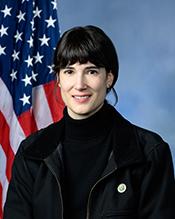
610 records where Rep. Perez, Marie Gluesenkamp [D-WA-3] is listed as a sponsor, author, or other actor. Search with topics and years
United States · United States Congress · 24 June 2025
United States · United States Congress · 12 June 2025
Rural Veterans’ Improved Access to Benefits Act of 2025 This bill extends and expands the pilot program under which certain non-Department of Veterans Affairs (VA) health care professionals may be contracted to provide disability examinations to veterans, regardless of the jurisdiction of their licensure, for purposes of Department of Veterans Affairs (VA) benefits and care. Specifically, the bill (1) expands the types of health care professionals who may provide such examinations, and (2) extends the authority for such professionals to be contracted for this purpose through January 5, 2031. Currently, such examinations may only be contracted to licensed non-VA physicians, physician assistants, nurse practitioners, audiologists, or psychologists. The bill expands the list to include qualified health care professionals who are eligible for appointment to specified positions in the Veterans Health Administration, including hospital or clinic directors, dentists, and pharmacists. The VA must report on its use of the expanded authority under this bill.
United States · United States Congress · 12 June 2025
United States · United States Congress · 12 June 2025
Research for Healthy Soils Act This bill includes research on the agricultural impacts of microplastics and PFAS in land-applied biosolids or compost on farmland as a Department of Agriculture (USDA) high-priority research and extension area. Microplastic is a plastic or plastic-coated particle that is less than 5 millimeters in size. Perfluoroalky and polyfluoroalkyl substances, commonly referred to as PFAS, are man-made and may have adverse human health effects. The bill specifically allows grants for carrying out or enhancing research in this area (e.g., the development or analysis of techniques, including wastewater treatment and composting, to filter out or biodegrade such substances from biosolids intended to be used for agricultural purposes). Further, the bill reauthorizes USDA grants to support competitive specialized research and extension activities, including high-priority areas, through FY2031. The bill also specifically reauthorizes through FY2031 the Pulse Crop Health Initiative; the Comprehensive Food Safety Training Network; pollinator protection research and extension grants; increased USDA capacity and infrastructure to address and conduct research on colony collapse disorder and other pollinator issues; and a USDA-conducted nationwide honey bee pest, pathogen, health, and population status surveillance program.
United States · United States Congress · 12 June 2025
United States · United States Congress · 11 June 2025
United States · United States Congress · 11 June 2025
Stop the Baseline Bloat Act of 2025 This bill changes the assumptions that the Congressional Budget Office uses to calculate the baseline for discretionary spending. (A baseline is a projection of federal spending and receipts during a fiscal year under current law.) Specifically, the bill changes the assumptions used for the discretionary spending baseline to exclude (1) resources designated as an emergency requirement, and (2) resources provided in supplemental appropriations laws.
United States · United States Congress · 5 June 2025
Protection for Reservation Occupants against Trafficking and Evasive Communications Today Act of 2025 or the PROTECT Act of 2025 This bill expands special tribal criminal jurisdiction (STCJ) to include certain controlled substance-related offenses and firearms offenses. It also allows tribal courts to execute warrants for electronic material. STCJ allows participating tribes to investigate, prosecute, convict, and sentence both Indian and non-Indian offenders who commit covered crimes in Indian country against Indian victims. Covered crimes currently include assault of tribal justice personnel, child violence, dating violence, domestic violence, obstruction of justice, sexual violence, sex trafficking, stalking, and a violation of a protection order. The bill expands STCJ to allow participating tribes to prosecute individuals for controlled substance-related offenses (i.e., drug trafficking, unlawful drug possession, or unlawful possession of drug paraphernalia) and firearms offenses (i.e., use or possession of a firearm in furtherance of a covered crime or by a person who has been convicted of domestic violence). Additionally, the bill allows participating tribes to exercise STCJ over a controlled substance-related offense or a firearms offense if neither the defendant nor the alleged victim is an Indian. (Currently, this exception only applies in cases of obstruction of justice or assault of tribal justice personnel.) The bill allows offenders convicted pursuant to STCJ to be incarcerated through the Bureau of Prisons Tribal Prisoner Program. The bill gives tribal courts the same authority as state courts to compel service providers to disclose stored electronic communication information through court-issued warrants, court orders, or administrative subpoenas.
United States · United States Congress · 5 June 2025
United States · United States Congress · 29 May 2025
United States · United States Congress · 20 May 2025
Improving Seniors' Timely Access to Care Act of 2025 This bill establishes several requirements and standards relating to prior authorization processes under Medicare Advantage (MA) plans. Specifically, MA plans must (1) establish an electronic prior authorization program that meets specified standards; (2) annually submit to the CMS for publication specified prior authorization information, including the percentage of requests approved and the average response time; and (3) meet other standards, as set by the Centers for Medicare & Medicaid Services (CMS), relating to the quality and timeliness of prior authorization determinations. The CMS and the Office of the National Coordinator for Health Information Technology must publish on the CMS' website a report that analyzes the information received from MA plans, the feasibility of implementing real-time decision making with respect to prior authorization requests, and the impact of decisions that are made using artificial intelligence on patient access.
United States · United States Congress · 19 May 2025
Medal of Sacrifice Act of 2025 This bill directs the President to issue a medal of sacrifice for eligible law enforcement officers and first responders who are killed in the line of duty. The bill also directs the President to establish a commission on the medal of sacrifice and appoint its members. The bill sets forth responsibilities of the commission, including to advise on the design of the medal and determine how the medal will be presented. Under the bill, eligible law enforcement officers and first responders include federal, state, local, tribal, or territorial law enforcement officers or first responders who are not subject to an official act of wrongdoing (e.g., a determination that the officer or first responder acted outside the scope of their duties or in a manner that was not in accordance with official policies or procedures). A law enforcement officer or first responder who is subject to an official act of wrongdoing is generally not eligible for the medal of sacrifice. However, in the case of such an officer or first responder, the bill requires the commission to investigate the circumstances surrounding the officer or first responder's cause of death and issue a final determination on their eligibility.
United States · United States Congress · 15 May 2025
United States · United States Congress · 15 May 2025
Strong Communities Act of 2025 This bill allows funds under the Community Oriented Policing Services grant program to be used to make competitive grants for local law enforcement agencies to provide training to officers and recruits who agree to serve in law enforcement agencies in their communities.
United States · United States Congress · 8 May 2025
United States · United States Congress · 8 May 2025
United States · United States Congress · 7 May 2025
United States · United States Congress · 7 May 2025
United States · United States Congress · 6 May 2025
United States · United States Congress · 6 May 2025
United States · United States Congress · 5 May 2025
United States · United States Congress · 1 May 2025
Ensuring Community Access to Pharmacist Services Act This bill provides for permanent coverage under Medicare of certain pharmacist services. Specifically, the bill provides for permanent coverage of testing and treatment services provided by pharmacists relating to (1) COVID-19, influenza, respiratory syncytial virus (RSV), and streptococcal pharyngitis (strep throat); and (2) other public health needs in relation to a declared public health emergency. (Similar authorities were temporarily granted during the COVID-19 public health emergency.) Such services must be provided in accordance with the applicable state laws governing pharmacists' scope of practice.
United States · United States Congress · 1 May 2025
United States · United States Congress · 30 April 2025
United States · United States Congress · 30 April 2025
United States · United States Congress · 29 April 2025
Equality Act This bill prohibits discrimination based on sex, sexual orientation, or gender identity with respect to businesses, employment, housing, federally funded programs, and other settings. Specifically, the bill expands Title II and Title VI of the Civil Rights Act of 1964 to prohibit public accommodations and federally funded programs, respectively, from discriminating based on sex, sexual orientation, or gender identity. It also includes stores, transit services, recreational facilities, and establishments that provide health care, accounting, or legal services as public accommodations under Title II. The bill also expands Title IV (desegregation of public schools) and Title VII (employment discrimination) to specifically include sexual orientation and gender identity. (The Supreme Court held in Bostock v. Clayton County that Title VII's prohibition of employment discrimination based on sex also prohibits employment discrimination based on sexual orientation or gender identity.) The bill similarly expands the Fair Housing Act (discrimination in public and private housing) to include sexual orientation and gender identity. It also prohibits discrimination based on sexual orientation or gender identity by creditors and with respect to jury selection. The bill defines sex for purposes of the aforementioned provisions to include sex stereotypes, pregnancy, childbirth, sexual orientation, gender identity, and sex characteristics.
United States · United States Congress · 17 April 2025
United States · United States Congress · 17 April 2025
United States · United States Congress · 10 April 2025
United States · United States Congress · 10 April 2025
Combating Organized Retail Crime Act of 2025 This bill expands federal enforcement of criminal offenses related to organized retail and supply chain crime. The term organized retail and supply chain crime includes criminal offenses involving the interstate transportation of stolen property, the sale or receipt of stolen goods, or theft from an interstate or foreign shipment that is committed by, in coordination with, or at the instruction of an organization. First, with respect to criminal offenses involving the interstate transportation of stolen property or the sale or receipt of stolen goods, the bill broadens the scope of conduct that qualifies as offenses by allowing prosecutions to be based on the aggregate value of stolen items over a 12-month period. Additionally, the bill makes the offenses predicate offenses (i.e., underlying offenses) for prosecutions under the federal money laundering statute and authorizes the criminal forfeiture of any property obtained from the proceeds of an offense. Second, with respect to criminal offenses involving theft from an interstate or foreign shipment, the bill also makes an offense an underlying offense for prosecution under the federal money laundering statute and authorizes the criminal forfeiture of any associated property. Third, the bill expands the federal money laundering statute to include offenses involving general-use prepaid cards, gift certificates, or store gift cards. Finally, the bill temporarily establishes a center within the Department of Homeland Security to coordinate federal law enforcement activities related to organized retail and supply chain crime.
United States · United States Congress · 10 April 2025
Supplemental Oxygen Access Reform Act of 2025 or the SOAR Act of 2025 This bill establishes certain requirements with respect to the payment and provision of supplemental oxygen and related services under Medicare. For example, the bill provides for separate payments, indexed to inflation, of oxygen and related equipment, supplies, and services under Medicare (rather than under the competitive acquisition program). It also specifically covers services that are provided by respiratory therapists under Medicare and provides for an additional payment adjustment for these services. Additionally, the bill (1) requires the Centers for Medicare & Medicaid Services to develop an electronic template for providers to use when prescribing oxygen and related equipment, supplies, and services; and (2) establishes certain rights for beneficiaries receiving these items and services, such as the right to choose their suppliers and to receive clear communications and be informed about the services provided.
United States · United States Congress · 8 April 2025
United States · United States Congress · 8 April 2025
United States · United States Congress · 7 April 2025
United States · United States Congress · 7 April 2025
United States · United States Congress · 2 April 2025
United States · United States Congress · 1 April 2025
Protect America's Workforce Act This bill nullifies the Executive Order titled Exclusions from Federal Labor-Management Relations Programs (issued on March 27, 2025), which excludes specified executive agencies and subdivisions from the Federal Service Labor-Management Relations Statute. The statute authorizes federal employees' participation in collective bargaining and enforces collective bargaining rights. The bill also specifies that a covered collective bargaining agreement in place as of March 26, 2025, shall have full force and effect through the stated term of the agreement.
United States · United States Congress · 1 April 2025
Sanctioning Russia Act of 2025 This bill imposes penalties on certain persons (individuals and entities) if the President determines that the Russian government or a person acting at Russia's direction is involved with (1) refusing to negotiate a peace agreement with Ukraine; (2) violating a negotiated peace agreement; (3) initiating another invasion of Ukraine; or (4) overthrowing, dismantling, or seeking to subvert the Ukrainian government. If the President makes such a determination, the bill requires certain actions including the President must impose visa- and property-blocking sanctions on specified persons such as the Russian president, certain Russian military commanders, and any foreign person that knowingly provides defense items to the Russian armed forces; the President must increase the rate of duty on all goods and services imported from Russia into the United States to at least 500% relative to the value of such goods and services; the President must increase the rate of duty on all goods and services imported into the United States from countries that knowingly engage in the exchange of Russian-origin uranium and petroleum products to at least 500% relative to the value of such goods and services; the Department of the Treasury must impose property-blocking sanctions on any financial institution organized under Russian law and owned wholly or partly by Russia, and any financial institution that engages in transactions with those entities; and the Department of Commerce must prohibit the export, reexport, or in-country transfer to or in Russia of any U.S.-produced energy or energy product.
United States · United States Congress · 31 March 2025
Community Wood Facilities Assistance Act of 2025 This bill makes changes to grant programs administered by the Forest Service to promote wood products. Specifically, the bill reauthorizes through FY2030, modifies, and renames the Community Wood Facilities Grant program. Currently named the Community Wood Energy and Wood Innovation Program, this program provides competitive grants to fund a portion of the capital costs for installing community wood energy systems or building innovative wood products facilities. Modifications to the program include increasing the maximum grant amount per facility, increasing the portion of a project's cost that may be covered by a grant, and changing the grant selection criteria. The bill also modifies the Wood Innovation Grant Program, which provides grants to develop and expand the market for innovative wood products. Specifically, the bill increases the portion of a project's cost that may be covered by such a grant. The bill also modifies both programs to prioritize grants for the construction, use, or retrofitting of forest products manufacturing.
United States · United States Congress · 27 March 2025
Financial Exploitation Prevention Act of 2025 This bill establishes procedures for delaying the redemption of certain securities if an investment company or agent believes that an older individual or an individual with certain impairments has been financially exploited. Specifically, the bill allows for the delay of the redemption of a security issued by an open-end investment management company and serviced by a transfer agent if the company or agent reasonably believes the redemption involves the financial exploitation of an individual (1) age 65 or older, or (2) age 18 or older who is unable to protect his or her own interests due to a mental or physical impairment. (Open-end investment management companies offer securities in pooled investment vehicles such as mutual funds. Transfer agents facilitate certain transactions for corporations and investment companies, including dividend distribution and change of securities ownership.) The company may initially delay the redemption for up to 15 days and, upon making a determination of exploitation, may delay the redemption an additional 10 days. A state regulator, appropriate administrative agency, or court may extend this period. In the event of delay, the company must hold the amounts related to the redemption in a demand deposit account. The bill also establishes notification requirements. The bill requires the registered open-end investment company and transfer agent to notify the Securities and Exchange Commission (SEC) if they elect to comply with the procedures established under this bill. Additionally, the SEC must make recommendations to address the financial exploitation of these adults.
United States · United States Congress · 27 March 2025
United States · United States Congress · 25 March 2025
United States · United States Congress · 24 March 2025
This joint resolution provides that the Equal Rights Amendment, which prohibits discrimination on the basis of sex, was ratified by three-fourths of the states and is therefore a valid constitutional amendment, regardless of any time limit that was in the original proposal. The Equal Rights Amendment was originally proposed to the states in 1972. The original proposal included a deadline for ratification of March 22, 1979; Congress subsequently extended the deadline to June 30, 1982. Although the requisite 38 states have ratified the amendment, three of these states did so after the deadlines, and five states subsequently rescinded their ratifications. The status of the amendment has been the subject of litigation.
United States · United States Congress · 21 March 2025
National Landslide Preparedness Act Reauthorization Act of 2025 This bill reauthorizes through FY2030 and expands the National Landslide Hazards Reduction Program (NLHRP) of the U.S. Geological Survey (USGS) and reauthorizes and expands other related programs. The bill reauthorizes the NLHRP’s activities including analyzing, preparing for, and responding to landslide hazards. It specifies a minimum amount of NLHRP funds that must be used for deploying landslide early warning systems in high-risk areas. It also specifies that tribal organizations and Native Hawaiian organizations may receive the benefits of the NLHRP. Also, the bill expands the NLHRP by requiring the USGS to incorporate atmospheric rivers and extreme precipitation events into the program’s national strategy, resources for communities on landslide preparedness, and emergency response activities. It requires a landslide hazards database to include information regarding identification of areas in need of additional landslide risk assessment and authorizes regional partnerships to coordinate landslide monitoring efforts. It also authorizes the USGS to consult with institutions of higher education when establishing priorities for grants and implementing the debris flow early warning system. Additionally, the bill reauthorizes the USGS’s 3D Elevation Program through FY2030 and requires relevant federal agencies to integrate enhanced elevation data. It also requires the National Oceanic and Atmospheric Administration’s precipitation frequency estimates to include precipitation from hurricanes, atmospheric rivers, and extreme precipitation events.
United States · United States Congress · 21 March 2025
United States · United States Congress · 21 March 2025
Improving Law Enforcement Officer Safety and Wellness Through Data Act of 2025 This bill requires the Department of Justice to report on (1) targeted attacks on law enforcement officers, (2) the feasibility of incorporating such attacks into existing crime reporting systems, and (3) the mental health resources that are available to law enforcement officers.
United States · United States Congress · 18 March 2025
Law-Enforcement Innovate to De-Escalate Act This bill removes less-than-lethal projectile devices (e.g., certain TASERs) from regulation under the Gun Control Act. The term less-than-lethal projectile device means a device that (1) is not designed or intended to expel (and may not be readily converted to discharge) commonly used ammunition or projectiles exceeding a velocity of 500 feet per second; (2) is designed and intended to be used in a manner not likely to cause death or serious bodily injury; and (3) does not accept (and cannot be readily modified to accept) an ammunition feeding device. The bill also requires the Bureau of Alcohol, Tobacco, Firearms and Explosives to determine whether a device satisfies the definition of a less-than-lethal projectile device within 90 days of a request.
United States · United States Congress · 18 March 2025
Protecting Access to Ground Ambulance Medical Services Act of 2025 This bill extends the specialized rate increase for Medicare payment of ground ambulance services in rural areas for an additional three years (until January 1, 2028).
United States · United States Congress · 18 March 2025
United States · United States Congress · 18 March 2025