Amendment· HAMDTHAMDT 1089 (118th)passed
An amendment numbered 9 printed in Part A of House Report 118-602 to prohibit funding for lab-grown meat at the Department of Energy.
United States · United States Congress
The world's political record
Person
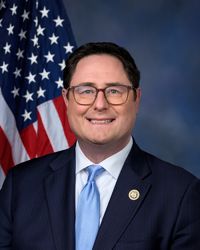
United States · Official source
491 records where Rep. Flood, Mike [R-NE-1] is listed as a sponsor, author, or other actor. Search with topics and years
United States · United States Congress
United States · United States Congress · 24 September 2026
United States · United States Congress · 31 August 2026
United States · United States Congress · 6 August 2026
United States · United States Congress · 22 July 2026
Protecting Access to Spiritual Treatment and Organized Religion Act of 2026 or the PASTOR Act of 2026 This bill requires, as a condition of Medicare participation, health care providers to allow a clergy member access to a patient upon the patient's designation and request.
United States · United States Congress · 30 June 2026
Securing Agriculture's Workforce Act of 2026 This bill expands the H-2A agricultural visa program; creates online platforms for H-2A employers, workers, and agencies; and codifies certain wage calculations. Under current law, workers on H-2A visas are only allowed to perform agricultural work of a seasonal or temporary nature. Under the bill, the seasonal work requirement is removed, thus allowing H-2A workers to qualify for agricultural work that occurs year-round. The bill also expands the type of agricultural work that qualifies, including reforestation, aquaculture, and livestock work. The Department of Agriculture must issue rules to define agricultural labor or services for purposes of the H-2A program. The bill also establishes an H-2A visa pathway for current unauthorized agricultural workers who otherwise meet requirements. The Department of Labor must maintain a national, publicly accessible online job registry and database of all job offers submitted by employers seeking a labor certification required to employ H-2A workers. The Department of Homeland Security must establish an online platform for employers to submit information and documentation for review by federal agencies in the course of admitting H-2A workers. The H-2A program requires employers to provide workers with wage rates at or above those set in regulations and such wages must not adversely affect the wages and working conditions of workers similarly employed in the United States. The bill codifies the current calculation method for the adverse effect wage rate as set in regulation.
United States · United States Congress · 24 June 2026
United States · United States Congress · 24 June 2026
United States · United States Congress · 15 June 2026
United States · United States Congress · 11 June 2026
United States · United States Congress · 10 June 2026
United States · United States Congress · 3 June 2026
United States · United States Congress · 21 May 2026
United States · United States Congress · 21 May 2026
Rural Community Hospital Demonstration Program Reauthorization This bill extends the Rural Community Hospital Demonstration Program for an additional five years. The program tests the feasibility of cost-based reimbursement under Medicare for small rural hospitals that are too large to qualify for special payment as critical access hospitals. The bill specifies that hospitals that participate in the program between December 30, 2024, and January 1, 2027, may continue to participate during the five-year extension period.
United States · United States Congress · 19 May 2026
United States · United States Congress · 19 May 2026
United States · United States Congress · 19 May 2026
This resolution supports the designation of Mental Health Awareness in Agriculture Day to raise awareness around mental health in the agricultural industry and reduce the stigma associated with mental illness.
United States · United States Congress · 13 May 2026
United States · United States Congress · 7 May 2026
Bank Fraud Technology Advancement Act of 2026 This bill directs federal banking agencies (the Office of the Comptroller of the Currency, the Federal Deposit Insurance Corporation, the Federal Reserve Board, and the National Credit Union Administration) to jointly study and report on the use of advanced fraud detection technology by insured depository institutions and credit unions. The study must evaluate, among other topics, the current use and effectiveness of this technology, access by community financial institutions to such technology, and the use and governance of artificial intelligence and machine learning in detecting fraud. Federal banking agencies must report all findings, determinations, and legislative recommendations to the appropriate congressional committees and make the report publicly available. The bill also allows federal banking agencies to jointly establish a temporary pilot program to facilitate community financial institution access to advanced fraud detection tools for small insured depository institutions and credit unions.
United States · United States Congress · 30 April 2026
United States · United States Congress · 28 April 2026
United States · United States Congress · 27 April 2026
United States · United States Congress · 21 April 2026
United States · United States Congress · 21 April 2026
United States · United States Congress · 20 April 2026
United States · United States Congress · 14 April 2026
United States · United States Congress · 26 March 2026
United States · United States Congress · 16 March 2026
United States · United States Congress · 5 March 2026
United States · United States Congress · 23 February 2026
This resolution supports the designation of National FFA (Future Farmers of America) Week. It also celebrates the 50th anniversary of the chartering of Alaska as a State FFA Association of the National FFA Organization.
United States · United States Congress · 23 February 2026
United States · United States Congress · 5 February 2026
United States · United States Congress · 4 February 2026
United States · United States Congress · 27 January 2026
This resolution supports the goals of National Catholic Schools Week, an event cosponsored by the National Catholic Educational Association and the U.S. Conference of Catholic Bishops and established to recognize the contributions of Catholic elementary and secondary schools in the United States.
United States · United States Congress · 16 January 2026
TRIA Program Reauthorization Act of 2026 This bill reauthorizes the Terrorism Risk Insurance Program through 2034. The program covers a portion of the losses incurred by private insurers for property and casualty insurance coverage for terrorism risk. The bill also increases the amount of property and casualty insurance losses required for certification under the program beginning in 2029 and provides statutory authority for Department of the Treasury public notification requirements regarding the determination process for whether an act qualifies as an act of terrorism under this program.
United States · United States Congress · 15 January 2026
This bill designates a portion of Interstate Route 680 in Omaha, Nebraska, as the Hal Daub Freeway. Harold John Daub Jr. served in the House of Representatives from 1981-1989 and as the mayor of Omaha, Nebraska, from 1995-2001.
United States · United States Congress · 12 January 2026
Stop Insider Trading Act This bill generally prohibits Members of Congress and their spouses and dependent children from purchasing stocks and requires public notice before these individuals may sell stocks. Specifically, Members of Congress and the spouses and dependent children of Members of Congress may not purchase covered investments. Between 7 and 14 days before a Member or a covered spouse or dependent sells a covered investment, the relevant Member must file public notice of the intent to sell with the Clerk of the House of Representatives or the Secretary of the Senate, as appropriate. The Clerk or Secretary must publish this notice online. If the individual decides not to sell the covered investment, the notice must be withdrawn. Under the bill, a covered investment is a security issued by a publicly traded company or a comparable economic interest. Some investments are exempt, including interest in a widely held investment fund and certain investments held in a trust. Violations of these provisions are subject to a fee and, in the case of a purchase, a requirement to sell the covered investment. The fee must equal (1) the greater of $2,000 or 10% of the transaction value, and (2) any net gain realized from the transaction during a specified period. The fee may not be paid using campaign donations or Members’ official allowances. Certain transactions by covered spouses and dependents are exempt, including transactions made on behalf of another person or made as part of compensation from the individual’s employer.
United States · United States Congress · 12 January 2026
United States · United States Congress · 9 January 2026
United States · United States Congress · 7 January 2026
Main Street Capital Access Act or the Main Street Act This bill lessens and otherwise modifies banking regulations, including those regarding institution formation, supervision by federal financial regulators, and bank merger requirements. Under the bill, new banks have a three-year phase-in period to meet certain capital requirements. The bill also reduces the leverage ratio for certain rural community banks. Financial regulators must (1) tailor regulatory actions to limit burdens on financial institutions and must consider the institutions' risk profiles and business models, and (2) review their regulations more frequently and expand the scope of these reviews. The bill eases requirements regarding bank mergers, for example, by allowing financial regulators to approve certain bank mergers without considering if the merger is noncompetitive or monopolistic. The bill increases the dollar asset thresholds for various fees, reporting requirements, and other regulatory requirements so that more financial companies and banks are exempt from these requirements. For example, the bill increases the total asset threshold above which financial holding companies need Federal Reserve Board approval to acquire a company, thereby allowing for more acquisitions without board approval. The bill also raises certain asset thresholds so as to allow additional small bank holding companies to operate with higher debt levels and additional small banks to qualify for a longer examination cycle. The bill also provides flexibilities regarding the use of reciprocal deposits, the resolution of failed banks, and other regulated activities.
United States · United States Congress · 16 December 2025
United States · United States Congress · 11 December 2025
Housing for the 21st Century Act This bill revises federal housing programs, including by expanding available financing for affordable housing and providing grants for planning and community development activities. For example, the bill increases the statutory maximum loan limits for mortgage insurance programs administered by the Federal Housing Administration for multifamily homes and requires the use of a more specific inflation index for such loans. The bill also increases the maximum eligible income for the Department of Housing and Urban Development's (HUD's) HOME Investment Partnerships Program (grants to states and localities to support housing for low-income households) and establishes a grant program to assist regional, state, and local entities with strategies to support affordable housing. In addition, the bill exempts certain housing-related activities from the environmental review process, including certain construction, improvement, or rehabilitation of residential buildings; excludes veterans' disability benefits from being considered as income for purposes of determining eligibility for the Veterans Affairs Supportive Housing (VASH) program; establishes a pilot program to provide grants to public housing agencies (PHAs) and other owners of federally assisted housing to test the efficacy of temperature sensors to support compliance with temperature requirements; eliminates the requirement that manufactured homes must be constructed with a permanent chassis; and authorizes HUD to conduct performance reviews of organizations that provide housing counseling services. The bill also expands oversight of HUD and PHAs, such as by requiring PHAs to post information about contracts on their websites. For more information about this bill, see CRS Report R48849 .
United States · United States Congress · 10 December 2025
United States · United States Congress · 10 December 2025
Least Cost Exception Act This bill allows the Federal Deposit Insurance Corporation (FDIC) to waive the least-cost resolution requirement for failed insured depository institutions and use alternative methods of resolution, particularly alternatives that do not involve global systemically important banks (G-SIBs). Under current law, the FDIC must use the resolution method (such as a deposit payoff or the purchase and assumption of a bank’s assets and liabilities) that costs the FDIC's Deposit Insurance Fund the least to implement when an insured depository institution fails. The bill provides an exception to this requirement if the following criteria are met: the alternative method is the least costly of all alternatives that do not involve a G-SIB and that do not exceed the cost of liquidation; the difference in cost between the selected alternative and the cost of a resolution involving a purchase and assumption by a G-SIB is less than a maximum cost as established by rule; if the alternative involves a person purchasing assets or assuming liabilities, that person must pay an assessment to the FDIC; and it is determined that the risks to the fund are outweighed by the benefits of limiting the concentration of U.S. banking under G-SIBs. FDIC must issue a report on any use of the exception established by this bill containing an analysis of the economic impact of cost differences between the selected alternative and the least-cost alternative.
United States · United States Congress · 9 December 2025
United States · United States Congress · 28 November 2025
United States · United States Congress · 25 November 2025
United States · United States Congress · 21 November 2025
United States · United States Congress · 20 November 2025
United States · United States Congress · 12 November 2025
This bill repeals the authority for a Senator to bring a civil action against the federal government if an internet service provider or the Senate Sergeant at Arms (SAA) accessed or disclosed, or accesses or discloses, data from the Senator's office to provide to a federal agency without following prescribed notice requirements. The authority applies to a qualifying instance occurring on or after January 1, 2022. The authority for the civil action was enacted in H.R. 5371, the Continuing Appropriations, Agriculture, Legislative Branch, Military Construction and Veterans Affairs, and Extensions Act, 2026 , which was signed by the President on November 12, 2026. The relevant provision requires written notice from the internet service provider or the SAA to the Senate office upon receipt of any legal process seeking access or disclosure of covered data. A Senator affected by a federal violation of the provision may sue the federal government for the greater of $500,000 per violation or the actual damages, plus attorney's fees and related costs.