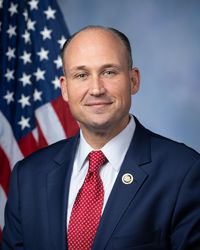
United States · United States Congress · 14 September 2023
Promoting Resilient Buildings Act of 2023 This bill modifies two Federal Emergency Management Agency (FEMA) disaster preparedness and mitigation programs to allow grants to be used to implement the two latest published editions of building codes instead of only the latest edition. Specifically, the bill allows (1) grants under the Pre-Disaster Mitigation Grant Program to continue to be used to implement the two latest editions indefinitely; and (2) capitalization grants under the Safeguarding Tomorrow Revolving Loan Fund Program to be used to implement the two latest editions instead of only the latest edition.
United States · United States Congress · 14 September 2023
This resolution condemns the actions of Governor Michelle Lujan Grisham for violating the Second Amendment to the Constitution and depriving the citizens of New Mexico of their right to bear arms.
United States · United States Congress · 13 September 2023
Diesel Emissions Reduction Act of 2023 This bill reauthorizes through FY2029 a diesel emissions reduction program under which the Environmental Protection Agency provides grants, rebates, or loans for replacing diesel engines or retrofitting the engines with pollution control technologies.
United States · United States Congress · 12 September 2023
9/11 Memorial and Museum Act This bill directs the Department of Homeland Security to award to the nonprofit organization that operates the National September 11 Memorial & Museum in New York City a one-time grant to be used solely for the purposes of the operation, security, and maintenance of the memorial and museum. As a condition of receiving the grant, the organization must provide for free admission to all facilities and museums associated with the memorial and museum for active and retired members of the Armed Forces, individuals who were registered first responders to the terrorist attacks of September 11, 2001, and family members of victims of such attacks; provide for dedicated free admission hours for the general public at least once a week; and allow for annual federal audits of its financial statements.
United States · United States Congress · 12 September 2023
CBDC Anti-Surveillance State Act This bill prohibits a Federal Reserve bank from offering products or services directly to an individual, maintaining an account on behalf of an individual, or issuing a central bank digital currency (i.e., a digital dollar) directly or indirectly to an individual. Further, The Board of Governors of the Federal Reserve System and the Federal Open Market Committee are prohibited from using a central bank digital currency to implement monetary policy.
United States · United States Congress · 8 September 2023
This resolution expresses the sense of the House of Representatives that all 50 states should include the study of the events of the September 11th terrorist attacks in the curriculum of elementary and secondary schools.
United States · United States Congress · 8 September 2023
Giving Increased Variety to Ensure Milk Into the Lives of Kids Act or the GIVE MILK Act This bill revises the Special Supplemental Nutrition Program for Women, Infants, and Children (WIC) to allow WIC participants (or the parent or guardian of such participants) to elect to be issued nonfat milk, 1% low-fat milk, 2% reduced-fat milk, or whole milk. Current WIC regulations restrict the milk choices for most women and children who are at least two years old to nonfat or 1% milk, with exceptions.
United States · United States Congress · 5 September 2023
This joint resolution nullifies the final rule submitted by the Department of Education titled Improving Income Driven Repayment for the William D. Ford Federal Direct Loan Program and the Federal Family Education Loan (FFEL) Program and published on July 10, 2023. The rule creates a new income-driven repayment plan called the Saving on a Valuable Education (SAVE) plan.
United States · United States Congress · 29 August 2023
Rural Telehealth and Education Enhancement Act of 2023 This bill reauthorizes the Distance Learning and Telemedicine Program through FY2028. This Department of Agriculture program provides grants to help rural communities gain the technology and training necessary to engage in telemedicine and distance learning.
United States · United States Congress · 22 August 2023
Flooding Prevention, Assessment, and Restoration Act of 2023 This bill modifies Department of Agriculture (USDA) watershed programs. The bill modifies the Emergency Watershed Protection (EWP) Program to allow USDA to undertake certain measures that go beyond addressing the immediate impairment of the watershed. Specifically, USDA may undertake measures that increase the level of protection of the watershed if USDA determines that the restoration is in the best interest of the long-term health and the protection of the watershed from repetitive impairments. (The EWP Program assists sponsors, landowners, and operators in implementing emergency recovery measures for runoff retardation and erosion prevention to relieve imminent hazards to life and property created by natural disasters.) In addition, for Watershed Rehabilitation Program (REHAB) projects that serve a limited resource area, the bill increases the federal cost-share to up to 90% of the total rehabilitation costs. Currently, the federal cost-share for all projects is 65% of the total rehabilitation costs. (REHAB assists project sponsors in rehabilitating aging watershed dams that are reaching the end of their design life or no longer meet federal or state safety criteria or performance standards.) USDA must also submit a national agriculture flood vulnerability report to Congress that contains the results of a conservation effects assessment project that studies flood risk on agricultural lands.
United States · United States Congress · 4 August 2023
Improving Access to Medicare Coverage Act of 2023 This bill deems an individual receiving outpatient observation services in a hospital as an inpatient for purposes of satisfying the three-day inpatient hospital-stay requirement with respect to Medicare coverage of skilled nursing facility (SNF) services. (Generally, individuals must have been an inpatient at a hospital for at least three days in order to qualify for SNF services. An individual's time spent under observation at a hospital for purposes of determining whether the individual should be admitted does not count towards this requirement.)
United States · United States Congress · 1 August 2023
SNAP Staffing Flexibility Act of 2023 This bill allows a state agency to hire a contractor to perform Supplemental Nutrition Assistance Program (SNAP) certification or other state functions for SNAP under certain conditions. Specifically, a state agency may hire a contractor when the state experiences an increase in SNAP applications or an inability to timely process such applications from causes that include (1) pandemics and other health emergencies, (2) seasonal workforce cycles, (3) temporary staffing shortages, and (4) weather or other natural disasters. The bill includes specific parameters for a state agency that hires a contractor based on temporary staffing shortages. The bill requires that a contractor be part of a blended workforce (i.e., combines government employees and the employees of a for-profit or private nonprofit employer). Further, a state agency must notify the Department of Agriculture (USDA) of the intent to hire a contractor and provide any information or data supporting state agency increases in SNAP applications or the inability to timely process applications. USDA must make the notification and accompanying information publicly available on the USDA website. Finally, USDA must submit an annual report to Congress that includes specific information and recommendations, including information on the measures taken by USDA to address increases in SNAP applications.
United States · United States Congress · 1 August 2023
Dairy Nutrition Incentive Program Act of 2023 This bill directs the Department of Agriculture (USDA) to establish a dairy nutrition incentive program to develop and test methods to increase the purchase and consumption of dairy under the Supplemental Nutrition Assistance Program (SNAP). Specifically, the program must provide an incentive to SNAP benefit recipients for the purchase of naturally nutrient-rich dairy, which the bill defines to include fluid milk, yogurt, and cheese made from cow's milk. To carry out the program, USDA must enter into cooperative agreements with, or provide competitive grants to, state or local governments and nonprofit organizations for projects. The bill provides funding for the program for each fiscal year. USDA must provide for an independent evaluation of each project that measures, to the maximum extent practicable, the effect of incentives on purchases of naturally nutrient-rich dairy by SNAP recipients. Projects currently carried out by the USDA Healthy Fluid Milk Incentives (HFMI) program must be transitioned to the new dairy nutrition incentive program; the bill repeals the HFMI program one year after USDA certifies that the transition is complete.
United States · United States Congress · 1 August 2023
Rural Economic-development Assistance and Consultation to Help Our Tribes Act or the REACH Our Tribes Act This bill requires certain actions, particularly by the Department of Agriculture (USDA), for tribal consultation, data reporting, and interagency collaboration for economic development. Specifically, the bill requires USDA to establish a formal process for consultation with tribal governments on (1) annual budget requests; and (2) bills proposing the reauthorization of certain USDA programs over a period of multiple years with budgetary impacts, including bills providing for the reauthorization of USDA programs (commonly known as farm bills). USDA must report to Congress on this consultation process. Additionally, the bill requires USDA to establish a plan for analyzing and publicly reporting to tribal entities on funding provided through USDA programs for which tribal entities are eligible to apply. The bill also requires USDA, in consultation with the Department of Housing and Urban Development and the U.S. Economic Development Administration, to establish an interagency task force on economic development programs. This task force must (1) review guidance and application requirements for economic development programs administered by USDA, and (2) develop interagency agreements to reduce administrative and planning burdens for applicants to such programs and the federal agencies administering such programs. The Department of Commerce must establish a working group to develop and regularly update a comprehensive and public repository of federal economic development programs that are available to tribal entities.
United States · United States Congress · 1 August 2023
Erie Canal Bicentennial Commemorative Coin Act This bill directs the Department of the Treasury to mint and issue 50,000 $5 gold coins, 400,000 $1 silver coins, and 750,000 half-dollar clad coins in recognition of the bicentennial of the Erie Canal. The designs of the coins must be emblematic of the Erie Canal and its impact on the development of the United States and New York. All sales of coins issued under this bill must include a surcharge to be paid to the Erie Canalway Heritage Fund, Inc., to support the historic preservation and community development of the Erie Canalway National Heritage Corridor in New York and for educational and commemorative programs.
United States · United States Congress · 27 July 2023
D.C. Robert F. Kennedy Memorial Stadium Campus Revitalization Act This bill transfers the administration of the Robert F. Kennedy Memorial Stadium Campus from the National Park Service to the General Services Administration (GSA) to facilitate leasing the campus to the District of Columbia. The GSA must lease the campus to the District for no consideration. The District may lease the campus for (1) stadium use; (2) commercial and residential development; or (3) recreational facilities, open space, or public outdoor recreation use. If the District uses the campus for commercial and residential development, the bill sets forth additional requirements, including requiring the District to (1) ensure that development does not adversely impact National Park Service lands, (2) designate at least 30 percent of the campus as parks and open space, and (3) provide parking facilities to accommodate the development.
United States · United States Congress · 27 July 2023
This bill requires U.S. Customs and Border Protection to ensure that the operating hours of all ports of entry located on the United States-Canada border are equal to or greater than the operating hours that were in place immediately before the declaration of the COVID-19 public health emergency.
United States · United States Congress · 27 July 2023
This resolution condemns Iran for the 1988 massacre of political prisoners. It also urges the Biden Administration and U.S. allies to publicly condemn the massacre and to pressure Iran to provide information to the families of the victims.
United States · United States Congress · 26 July 2023
Anti-CCP Espionage via Social Media Act of 2023 or the ACES Act of 2023 This bill requires certain actions related to ByteDance Ltd., the Chinese parent company of TikTok (a video-sharing mobile application). Specifically, the bill grants Executive Order 13942 the force and effect of law. That order prohibits certain transactions by any person subject to the jurisdiction of the United States with ByteDance. The bill provides statutory authority for that prohibition and specifies exceptions. Further, the bill establishes enforcement procedures and penalties for related violations. The bill requires ByteDance, within 90 days of this bill's enactment, to divest itself of (1) any assets or property used to enable or support ByteDance's operation of the TikTok application in the United States, and (2) any data obtained or derived from TikTok application or Musical.ly application users in the United States. The bill outlines further requirements and procedures for such divestment. The Committee on Foreign Investment in the United States (CFIUS) must review proposed sales or transfers by ByteDance to a third party. CFIUS may implement measures as necessary to verify compliance with the required divestment. CFIUS must review and issue a report to the President on the relationship of each covered U.S. business with ByteDance to determine the effects of such relationship on U.S. national security. The President may take actions to suspend or prohibit the relationship.
United States · United States Congress · 26 July 2023
Promotion and Expansion of Private Employee Ownership Act of 2023 This bill accelerates to the enactment date of this bill the deferral of tax (currently, after December 31, 2027) on sales of employer stock to employee stock ownership plans (ESOPs) sponsored by S corporations. It also eliminates the limitation on the amount that may be deferred. The Department of the Treasury must establish the S Corporation Employee Ownership Assistance Office to foster increased employee ownership of S corporations. The office must provide education and outreach about the benefits of employee ownership of S corporations and technical assistance to assist S corporations in sponsoring ESOPs. The bill directs the Department of Labor to appoint an Advocate for Employee Ownership.
United States · United States Congress · 25 July 2023
Multi-Cloud Innovation and Advancement Act of 2023 This bill requires the Office of Management and Budget (OMB) to (1) examine how executive agencies can implement multi-cloud computing software technology architecture to allow for portability and interoperability across multiple cloud computing software vendors, and (2) develop written guidance for all executive agencies based on the results of this examination. (Multi-cloud software technology allows for data, application, and program portability and interoperability between multiple cloud computing software vendors and between public, private, and edge cloud environments.) The bill also sets forth requirements for OMB to brief Congress and for the Government Accountability Office to provide two reports to Congress on specified topics.
United States · United States Congress · 24 July 2023
This resolution disapproves of the Central Business District Tolling Program of New York City and strongly recommends that (1) New York conduct an economic impact report on the program, and (2) relevant federal agencies and New York halt the program's implementation. The tolling program, also known as congestion pricing, will charge drivers a toll to enter an area designated as Manhattan's central business district.
United States · United States Congress · 19 July 2023
Accelerating Kids' Access to Care Act This bill requires state Medicaid programs to establish a process through which qualifying out-of-state providers may enroll as participating providers for five years without undergoing additional screening requirements, unless the state has an agreement with other states that governs coverage of children with medically complex conditions that is in accordance with specified guidance from the Centers for Medicare & Medicaid Services (CMS). Among other requirements, a qualifying provider must (1) serve individuals under the age of 21; (2) have previously been screened for Medicare participation or for participation in the Medicaid program of the state in which the provider is located; and (3) have been determined by the CMS or state Medicaid program to pose a limited risk of fraud, waste, or abuse.
United States · United States Congress · 19 July 2023
Investing in Rural America Act This bill allows Farm Credit System (FCS) institutions to provide financing and technical assistance for essential community facility projects as part of the Department of Agriculture's Community Facilities Direct Loan & Grant Program. (This program provides funding to develop essential community facilities in rural areas.) The FCS financing and technical assistance may be provided in order to make capital available to develop, build, maintain, improve, or provide other support for essential community facilities in rural communities (e.g., certain facilities that provide healthcare, community support, public safety, educational, or utility services). Under the bill, the financing provided by an FCS institution may not exceed 15% of the institution’s total assets unless the FCS institution offers at least one non-FCS lending institution an interest in the financing under reasonable terms and conditions acceptable to the borrower. The FCS institution must also report the offer to the Farm Credit Administration (FCA). The FCA must submit an annual report to Congress on the activities undertaken by FCS institutions under this bill, including through the partnerships between FCS institutions and other lending institutions. The FCA must post the report on the agency's website.
United States · United States Congress · 19 July 2023
No Taxpayer Funding For Climate Zealots Advancing Radical Schemes Act or the No Taxpayer Funding For CZARS Act This bill prohibits the use of federal funds for any activity of the Special Presidential Envoy for Climate.
United States · United States Congress · 18 July 2023
Rural Hospital Technical Assistance Program Act This bill provides statutory authority for the Rural Hospital Technical Assistance Program within the Department of Agriculture (USDA). Under the bill, USDA must establish and maintain (directly or by grant, contract, or cooperative agreement) a program to help eligible hospital facilities in rural areas with a population of 50,000 inhabitants or less. The program must provide tailored technical assistance and training to hospital facilities to identify development needs for maintaining essential health care services and support action plans for financial, operational, and quality improvement projects to meet these needs. Development needs include (1) constructing, expanding, and modernizing health care facilities; (2) increasing telehealth capabilities; and (3) acquiring or upgrading health care information systems (e.g., electronic health records). The program must also provide technical assistance and training to help hospital facilities to better manage their financial and business strategies and identify, and apply for assistance from, USDA loan and grant programs. In selecting eligible hospital facilities to participate in the program, USDA must give priority to borrowers and grantees of certain USDA rural assistance programs. USDA must also submit an annual report to Congress on the progress and results of the program.
United States · United States Congress · 18 July 2023
Main Street Tax Certainty Act This bill makes permanent the tax deduction for qualified business income. (Under current law, the deduction expires after December 31, 2025.) Qualified business income is defined as the net amount of qualified items of income, gain, deduction and loss with respect to any trade or business, excluding capital gains or losses, dividends, interest income, or income earned outside the U.S.
United States · United States Congress · 11 July 2023
American Confidence in Elections Act or the ACE Act This bill addresses election administration and security, campaign finance, and other related provisions. Specifically, the bill directs the Election Assistance Commission's (EAC's) Standards Board and Local Leadership Council to issue voluntary considerations for states about various aspects of election administration. Additionally, the bill reduces certain election assistance payments for states and local jurisdictions that allow noncitizens to vote; requires states to provide designated congressional election observers with full access to observe the administration procedures of federal elections; prohibits federal agencies from using funds made available for salaries and expenses to solicit or enter into agreements with nongovernmental organizations to conduct voter registration or voter mobilization activities on the agency's property or website; prohibits federal funds for election administration for states that allow ballot harvesting, with exceptions; establishes various requirements for elections in the District of Columbia; makes various changes to the EAC; and prohibits foreign nationals from making contributions or donations in connection with state or local ballot initiatives or referenda. The bill also establishes the Twentieth Amendment Section Four Panel, which must recommend to Congress model legislation to resolve any vacancy created by the death of a candidate in a contingent presidential or vice-presidential election. The bill makes changes to campaign finance, including by (1) repealing limits on coordinated party expenditures, and (2) prohibiting federal funds from being used to make payments in support of a congressional election campaign. It also makes changes to the Federal Election Commission.
United States · United States Congress · 11 July 2023
All Children are Equal Act or the ACE Act This bill revises the funding formulas for distributing Targeted Grants and Education Finance Incentive Grants to local educational agencies (LEAs) by prioritizing allocation of funding to LEAs with a higher percentage of students from low-income families.
United States · United States Congress · 6 July 2023
Choice in Automobile Retail Sales Act of 2023 This bill limits the authority of the Environmental Protection Agency (EPA) with regard to regulating emissions standards for new motor vehicles. Specifically, the EPA is prohibited from prescribing a regulation related to new motor vehicle emissions standards that (1) mandates the use of any specific technology, or (2) results in limited availability of new motor vehicles based on the type of new motor vehicle engine. Additionally, the bill prohibits the EPA from finalizing, implementing, or enforcing the proposed rule titled Multi-Pollutant Emissions Standards for Model Years 2027 and Later Light-Duty and Medium-Duty Vehicles . Among other purposes, the proposed rule includes more stringent greenhouse gas standards for both light-duty and medium duty vehicles starting with model year 2027.
United States · United States Congress · 30 June 2023
John W. Walsh Alpha-1 Home Infusion Act of 2023 This bill provides for Medicare coverage of treatment for alpha-1 antitrypsin (AAT) deficiency (a protein deficiency that raises the risk of lung and other diseases). Specifically, the bill provides for coverage of at-home augmentation therapy for beneficiaries with emphysema as a result of severe hereditary AAT deficiency. Treatment must be provided through qualified home infusion therapy suppliers; beneficiaries must be under the care of a physician, nurse practitioner, or physician assistant.
United States · United States Congress · 22 June 2023
American Farmers Feed the World Act of 2023 This bill imposes limits and requirements on international food assistance provided under Title II of the Food for Peace Act and makes other changes to the assistance program. First, the bill eliminates the use of food procured outside of the United States, food vouchers, or cash transfers as food as assistance under the program. Second, the bill restricts the U.S. Agency for International Development (USAID) from using more than 50% of its annual appropriations for program expenses other than the procurement of agricultural commodities and ocean transportation. Additionally, the bill limits the amount that USAID may provide to qualified organizations to be used for purposes such as administration, personnel, and program evaluation. Under current law, USAID must spend a minimum of 7.5% and a maximum of 20% of its annual appropriations for these purposes. The bill reduces the minimum to 5% and the maximum to 10%. The bill also cancels the Local and Regional Procurement assistance program, which funds field-based (i.e., outside the United States) agricultural projects. The bill also modifies some of the respective powers of USAID and the Department of Agriculture (USDA). For example, the bill transfers from USAID to USDA the authority to approve drawing emergency food aid from the Bill Emerson Humanitarian Trust. The bill also renames the assistance program as the Peter O'Brien Food for Peace Program.
United States · United States Congress · 16 June 2023
This resolution censures Representative Adam Schiff for conduct that misleads the American people and directs the Committee on Ethics to investigate that conduct.
United States · United States Congress · 15 June 2023
Protecting America's Distribution Transformer Supply Chain Act This bill prohibits the Department of Energy (DOE) from revising existing energy conservation standards for distribution transformers in electric power systems for the next five years. During that time, DOE may not propose, finalize, implement, administer, or enforce any rule under the Energy Policy and Conservation Act that establishes requirements that are different than the requirements for distribution transformers under the 2013 final rule titled Energy Conservation Program: Energy Conservation Standards for Distribution Transformer s.
United States · United States Congress · 15 June 2023
Federal Assistance to Initiate Repayment Act or the FAIR Act This bill makes various changes to the federal student loan system, including by establishing a new income-driven repayment plan and limiting the authority of the Department of Education (ED) to propose or issue regulations and executive actions related to federal student aid programs. The bill directs ED to provide at least 12 notices to each borrower of a federal student loan indicating (1) the date on which the borrower is required to make monthly loan payments; (2) the borrower's options for repayment; and (3) the options available to a borrower who is in default, including the option to consolidate or rehabilitate loans. ED must also conduct additional outreach to at-risk borrowers. Additionally, the bill replaces existing federal student loan repayment plans with one standard 10-year repayment plan and one income-driven repayment plan. The bill outlines the terms of this new income-driven repayment plan. The bill provides deferment options for borrowers with loans made on or after July 1, 2024. The bill prohibits ED from authorizing additional deferment options or periods of deferment other than those authorized by this bill. The bill allows borrowers to rehabilitate a defaulted loan twice (currently, only once). The bill also prohibits ED from issuing a proposed rule, final regulation, or executive action related to federal student aid programs if ED determines that the rule, regulation, or action (1) is economically significant, and (2) would result in an increase in a subsidy cost.
United States · United States Congress · 14 June 2023
Preserving Patient Access to Home Infusion Act This bill specifically includes pharmacy services as part of covered home infusion therapy under Medicare. The bill also allows nurses and physician assistants to establish and review the plan of care for home infusion therapy.
United States · United States Congress · 14 June 2023
Fair Access to Agriculture Disaster Programs Act This bill waives the adjusted gross income limitations for payments or benefits under specific Department of Agriculture (USDA) disaster assistance programs for a person or legal entity that derives a portion of their income from agriculture. (Currently, a person or entity is not eligible to receive certain benefits during a crop, fiscal, or program year if their average gross income exceeds $900,000.) Specifically, in the case of an excepted payment or benefit, the adjusted gross income limitation is waived if 75% or more of the average adjusted gross income for the person or entity is derived from farming, ranching, or silviculture activities. These activities include agritourism, direct-to-consumer marketing of agricultural products, and the sale of agricultural equipment owned by such person or entity. The bill applies to the USDA Livestock Indemnity Program; Livestock Forage Disaster Program; Emergency Assistance for Livestock, Honey Bees, and Farm-Raised Fish Program; Tree Assistance Program; and Noninsured Crop Disaster Assistance Program.
United States · United States Congress · 13 June 2023
This bill includes phosphate and potash on the Department of the Interior's final list of critical minerals. (Under current law, Interior and other departments are required to conduct a variety of efforts to ensure a secure and reliable supply chain of critical minerals.) Interior must evaluate current policies relating to permitting and leasing of projects to develop critical minerals and issue recommendations to Congress to support domestic production of such commodities.