Bill· HRH.R. 2398 (119th)referred
Rural Veterinary Workforce Act
United States · United States Congress · 27 March 2025
The world's political record
Person
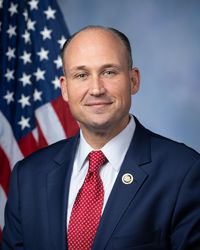
United States · Official source
762 records where Rep. Langworthy, Nicholas A. [R-NY-23] is listed as a sponsor, author, or other actor. Search with topics and years
United States · United States Congress · 27 March 2025
United States · United States Congress · 26 March 2025
Safer Skies Act of 2025 This bill directs the Transportation Security Administration (TSA) to require that certain small public charter air carrier operations comply with the Aircraft Operator Standard Security Program (AOSSP). As background, the TSA has different types of security programs based on the nature of the air carrier’s operations. Currently, the AOSSP requirements apply to all scheduled passenger service with a seating capacity of 61 or more seats that operate into or out of a TSA-controlled sterile area. The TSA also has other security programs that have less stringent security requirements than the AOSSP. These programs are designed for different types of aircraft operators, including operations under Part 135 (e.g., scheduled commuter flights in smaller aircraft) and Part 380 (e.g., public charter flights) of the Department of Transportation’s regulations. This bill applies the AOSSP requirements to air carriers operating under Part 135 and Part 380 that (1) operate scheduled public charter service, (2) operate airplanes configured with 10 or more passenger seats, and (3) do not enplane or deplane in a TSA-managed checkpoint.
United States · United States Congress · 25 March 2025
John W. Walsh Alpha-1 Home Infusion Act of 2025 This bill provides for Medicare coverage of treatment for alpha-1 antitrypsin (AAT) deficiency (a protein deficiency that raises the risk of lung and other diseases). Specifically, the bill provides for coverage of at-home augmentation therapy for beneficiaries with emphysema as a result of severe hereditary AAT deficiency. Treatment must be provided through qualified home infusion therapy suppliers; beneficiaries must be under the care of a physician, nurse practitioner, or physician assistant.
United States · United States Congress · 21 March 2025
United States · United States Congress · 21 March 2025
United States · United States Congress · 18 March 2025
Innovative Feed Enhancement and Economic Development Act of 2025 or the Innovative FEED Act of 2025 This bill provides for the regulation of zootechnical animal food substances as food additives. The bill defines zootechnical animal food substance as a substance that is added to the food or drinking water of animals and that affects only the animal's gastrointestinal tract, with the intended purpose of affecting the byproducts of the animal's digestion, reducing foodborne pathogens, or altering the animal's gastrointestinal biome. The definition does not include substances that are used to treat or prevent diseases in animals, hormones, or active ingredients of animal drugs. Labels for zootechnical animal food substances must include a disclaimer that the substance may not be used to treat or prevent diseases in animals.
United States · United States Congress · 18 March 2025
Restore Protections for Dialysis Patients Act This bill specifies certain requirements for private health insurers regarding coverage of individuals with end stage renal disease (ESRD) who are also covered under Medicare. In particular, the bill specifies that insurers may not limit benefits, including limiting network composition, in a manner that will affect ESRD Medicare beneficiaries differently compared to others without ESRD. The bill additionally specifies that insurers are not required to include a particular renal dialysis provider or a particular number of such providers as part of their networks.
United States · United States Congress · 18 March 2025
Law-Enforcement Innovate to De-Escalate Act This bill removes less-than-lethal projectile devices (e.g., certain TASERs) from regulation under the Gun Control Act. The term less-than-lethal projectile device means a device that (1) is not designed or intended to expel (and may not be readily converted to discharge) commonly used ammunition or projectiles exceeding a velocity of 500 feet per second; (2) is designed and intended to be used in a manner not likely to cause death or serious bodily injury; and (3) does not accept (and cannot be readily modified to accept) an ammunition feeding device. The bill also requires the Bureau of Alcohol, Tobacco, Firearms and Explosives to determine whether a device satisfies the definition of a less-than-lethal projectile device within 90 days of a request.
United States · United States Congress · 18 March 2025
United States · United States Congress · 18 March 2025
United States · United States Congress · 18 March 2025
Preserving Patient Access to Home Infusion Act This bill specifically includes pharmacy services and home infusion drugs that are administered without a pump as part of covered home infusion therapy under Medicare. The bill also allows nurses and physician assistants to establish and review the plan of care for home infusion therapy, and it specifies that payment may be made regardless of whether a practitioner is physically present in the home at the time the drug is administered.
United States · United States Congress · 14 March 2025
United States · United States Congress · 14 March 2025
Maintaining and Enhancing Hydroelectricity and River Restoration Act This bill establishes a new investment tax credit in the amount of 30% of the basis of any hydropower improvement property. The bill defines hydropower improvement property as property that adds or improves fish passage at a qualified dam; maintains or improves the quality of the water retained or released by a qualified dam; promotes downstream sediment transport and habitat maintenance; upgrades, repairs, or reconstructs a qualified dam to meet safety and security standards; improves public uses of, and access to, public waterways impacted by a qualified dam; removes an obsolete river obstruction; or places into service an approved remote dam. Further, written approval for hydropower improvement property must be obtained from the Federal Energy Regulatory Commission or state or local officials prior to January 1, 2032. The bill also allows an election to claim the investment tax credit for qualified progress expenses for some types of hydropower improvement property in advance of such property being placed into service. Any investment tax credit amount claimed for qualified progress expenses reduces the amount of the investment tax credit that may be claimed once the hydropower improvement property is placed into service. The bill authorizes certain entities, including tax-exempt and governmental entities, to treat the investment tax credit for hydropower improvement property as a payment of tax and receive a refund of any overpayment (also known as elective pay). Finally, the investment tax credit for hydropower improvement property may be transferred (i.e., sold).
United States · United States Congress · 14 March 2025
United States · United States Congress · 14 March 2025
Diesel Emissions Reduction Act of 2025 This bill reauthorizes through FY2029 a diesel emissions reduction program under which the Environmental Protection Agency provides grants, rebates, or loans for replacing diesel engines or retrofitting the engines with pollution control technologies.
United States · United States Congress · 14 March 2025
United States · United States Congress · 14 March 2025
Homes for Every Local Protector, Educator, and Responder Act of 2025 or the HELPER Act of 2025 This bill establishes a program administered by the Department of Housing and Urban Development to provide mortgage assistance to law enforcement officers, elementary and secondary school teachers, firefighters, or other first responders. Specifically, these individuals may be eligible for a first-time mortgage on a primary family residence with no down payment. Instead, the mortgage is subject to a one-time, up-front mortgage insurance premium.
United States · United States Congress · 11 March 2025
United States · United States Congress · 11 March 2025
Metastatic Breast Cancer Access to Care Act This bill expedites payment of Social Security Disability Insurance (SSDI) benefits and eligibility for Medicare coverage for those with metastatic breast cancer (i.e., breast cancer that has spread to other sites in the body). Specifically, the bill eliminates the 5-month waiting period for SSDI benefits and the subsequent 24-month waiting period for Medicare coverage for individuals with metastatic breast cancer. Under current law, individuals generally must wait 5 months after the onset of disability to begin receiving SSDI benefits and an additional 24 months to become eligible for Medicare.
United States · United States Congress · 11 March 2025
Space National Guard Establishment Act of 2025 This bill establishes a Space National Guard as the reserve component of the U.S. Space Force, specifically in Alaska, California, Colorado, Florida, Hawaii, New York, and Ohio. The Space National Guard consists of specified units of the Air National Guard and must use existing facilities, infrastructure, and installations.
United States · United States Congress · 10 March 2025
United States · United States Congress · 10 March 2025
25th Anniversary of 9/11 Commemorative Coin Act This bill directs the Department of the Treasury to mint and issue coins to commemorate the 25th anniversary of the September 11, 2001, terrorist attacks on the United States and the establishment of the National September 11 Memorial and Museum at the World Trade Center. The sale of all coins issued under this bill must include a surcharge to be paid to the National September 11 Memorial and Museum at the World Trade Center to support operations and maintenance. However, if the issuance of this commemorative coin exceeds certain annual limits, no surcharge may be included.
United States · United States Congress · 10 March 2025
DMEPOS Relief Act of 2025 This bill extends until December 31, 2025, a higher payment rate (known as the 75/25 blended rate) for durable medical equipment in nonrural or noncontiguous areas under Medicare.
United States · United States Congress · 6 March 2025
Tanning Tax Repeal Act of 2025 This bill repeals the 10% excise tax imposed on the amount paid for indoor tanning services.
United States · United States Congress · 6 March 2025
Preventing Deepfakes of Intimate Images Act This bill makes it a crime to intentionally disclose (or threaten to disclose) a digital depiction that has been altered using digital manipulation of an individual engaging in sexually explicit conduct.
United States · United States Congress · 6 March 2025
Anti-CBDC Surveillance State Act This bill prohibits a Federal Reserve bank from offering products or services directly to an individual, maintaining an account on behalf of an individual, or issuing a central bank digital currency (i.e., a digital dollar). Further, the Board of Governors of the Federal Reserve System is prohibited from using a central bank digital currency to implement monetary policy or from testing, studying, creating, or implementing a central bank digital currency, with exceptions as provided by the bill.
United States · United States Congress · 6 March 2025
United States · United States Congress · 5 March 2025
Medicaid Provider Screening Accountability Act This bill requires state Medicaid programs to check, as part of the provider enrollment and reenrollment process, whether providers were terminated from participating in the Medicare program, any other state Medicaid program, or the Children's Health Insurance Program (CHIP) using certain databases (e.g., the Data EXchange system). The bill requires states to continue to check these databases on at least a monthly basis after providers are enrolled.
United States · United States Congress · 5 March 2025
This resolution censures Representative Al Green.
United States · United States Congress · 3 March 2025
Safeguard Pets, Animals, and Research Ethics Act or the SPARE Act This bill prohibits federal departments, agencies, contractors, subcontractors, and grantees from engaging in research and testing using animals. This prohibition takes effect 3 years after the bill’s enactment for biomedical experimenting and drug testing, and 18 months after enactment for other research including cosmetics and toxicity testing. The prohibition does not apply to clinical veterinary research or certain activities related to military or service animals. Upon an application from a federal entity, contractor, or grantee, Congress may authorize animal research for a limited period if the research relates to an infectious disease or national security, would use animals sparingly, and for which no alternative exists. The bill establishes a civil penalty for certain violations of the prohibition, and permits the Department of Agriculture (USDA) and the National Institutes of Health (NIH) to impose other specified sanctions on violators. The bill also requires federally funded research facilities that have used animals in research to release any such animal to a specified animal organization or eligible individual within one year of the bill’s enactment, after having consulted with an accredited sanctuary or animal behavioral specialist. The USDA and NIH must make available a public database with information on animals released under these provisions. Finally, the bill requires the National Science Foundation to establish a competitive grant program to support the transition of animal research to non-animal research, and to establish a program to support the validation and standardization of non-animal research.
United States · United States Congress · 3 March 2025
This resolution provides for the House of Representatives to consider the following measures: H.J. Res.42, Providing for congressional disapproval under chapter 8 of title 5, United States Code, of the rule submitted by the Department of Energy relating to Energy Conservation Program for Appliance Standards: Certification Requirements, Labeling Requirements, and Enforcement Provisions for Certain Consumer Products and Commercial Equipment ; H.J. Res. 61, Providing for congressional disapproval under chapter 8 of title 5, United States Code, of the rule submitted by the Environmental Protection Agency relating to National Emission Standards for Hazardous Air Pollutants: Rubber Tire Manufacturing ; and S.J. Res. 11, Providing for congressional disapproval under chapter 8 of title 5, United States Code, of the rule submitted by the Bureau of Ocean Energy Management relating to Protection of Marine Archaeological Resources . Under the resolution, all points of order against consideration of each measure are waived; the measures shall be considered as read; and all points of order against provisions in the measures are waived. The resolution further provides that the previous question shall be considered as ordered on each measure (and any amendment thereto) to final passage without intervening motion except one hour of debate and one motion to recommit.
United States · United States Congress · 3 March 2025
United States · United States Congress · 3 March 2025
United States · United States Congress · 3 March 2025
Federal Firearms Licensee Protection Act of 2025 This bill modifies criminal penalties for an offense involving the theft of a firearm from a licensed importer, manufacturer, or dealer, or from their business premises. Specifically, the bill does the following: increases from 10 to 20 years the maximum prison term, and creates a 3- or 5-year mandatory minimum prison term for an offense that occurs during the commission of a burglary or robbery. An attempt to commit an offense is subject to the same penalties as a substantive offense.
United States · United States Congress · 27 February 2025
United States · United States Congress · 27 February 2025
Maintaining Investments in New Innovation Act This bill requires drug products with genetically targeted technology to have had market approval for at least 11 years in order to qualify for the Medicare Drug Price Negotiation Program. (The program requires the Centers for Medicare & Medicaid Services to negotiate the prices of certain prescription drugs under Medicare beginning in 2026. Among other requirements, drugs must have had market approval for at least 7 years (for drug products) or 11 years (for biologics) to qualify for negotiation.)
United States · United States Congress · 27 February 2025
This bill designates the facility of the United States Postal Service located at 1200 William Street, Room 200, in Buffalo, New York, as the "William J. Donovan Post Office Building".
United States · United States Congress · 27 February 2025
Save America's Forgotten Equines Act of 2025 or the SAFE Act of 2025 This bill permanently prohibits the slaughter of equines (e.g., horses and mules) for human consumption. (Current law prohibits the slaughter of dogs and cats for human consumption. This bill extends the prohibition to equines.) Specifically, this bill prohibits a person from knowingly (1) slaughtering an equine for human consumption; or (2) shipping, transporting, possessing, purchasing, selling, or donating an equine to be slaughtered for human consumption or equine parts for human consumption. The bill subjects a violator to a fine. The bill applies to conduct in or affecting interstate or foreign commerce or within the special maritime and territorial jurisdiction of the United States. However, it does not apply to an activity carried out by an Indian for a religious ceremony. As background, in recent years, the appropriations acts have prohibited the Department of Agriculture (USDA) from using federal funds to inspect horses before they are slaughtered for human consumption. Therefore, there are currently no USDA-inspected horse slaughter facilities in the United States.
United States · United States Congress · 27 February 2025
Grown in America Act of 2025 This bill establishes a new tax credit (as part of the general business tax credit) for domestically produced agriculture. Specifically, the bill allows a tax credit for the lesser of (1) 25% of domestically produced agricultural commodity expenses multiplied by the ratio of such expenses to total agricultural commodity expenses (excluding expenses for agricultural commodities that cannot feasibly be produced domestically), or (1) $100 million. (Conditions apply). To qualify for the tax credit, a business’s average expenses (over three years) for domestically produced agricultural commodities must exceed a certain percentage of total agricultural commodity expenses (excluding expenses for agricultural commodities that cannot feasibly be produced domestically). The required percentage is 50% for 2026 and increases by 5% each year until it reaches 85% for tax years beginning after 2033. Under the bill, agricultural commodities include horticultural, viticultural, and dairy products; livestock and livestock products (excluding live animals); poultry and bee raising products; and farm-raised fish products. In addition, the general business tax credit limit based on a business’s tax liability is calculated separately for the domestically produced agriculture tax credit, and the credit is generally limited to 50% of a business’s net regular tax liability. Finally, domestically produced agriculture tax credit amounts in excess of such limitation may be carried forward for 10 years (rather than the 20 years allowed for other business tax credits).
United States · United States Congress · 27 February 2025
United States · United States Congress · 26 February 2025
United States · United States Congress · 26 February 2025
Wireless Resiliency and Flexible Investment Act of 2025 This bill makes certain changes to the process through which states, localities, and their instrumentalities must evaluate requests to modify existing wireless communications towers, base stations, and support structures. Specifically, the bill provides statutory authority for the requirement that states and localities approve eligible modification requests within 60 days of their submission. A request is generally eligible if it proposes to add, replace, or remove transmission equipment in a manner that does not substantially change the physical dimensions of the existing structure. If a request is deemed ineligible, the state or locality must provide written notice and an explanation to the requesting party. If a state or locality fails to respond to a request, it is deemed to be approved. The bill sets out procedures and timelines for addressing incomplete requests and supplemental submissions. Further, the bill provides statutory authority for the requirement that a request be considered submitted (thereby starting the 60-day clock) on the date the requesting party takes the first procedural step within its control to submit the request. The bill also limits the procedural steps and documentation requirements that states and localities may impose upon requesting parties. A requesting party may enforce the requirements of the bill in any U.S. district court, and courts must consider actions brought by a requesting party on an expedited basis.
United States · United States Congress · 26 February 2025
United States · United States Congress · 25 February 2025
United States · United States Congress · 25 February 2025
Protecting American Agriculture from Foreign Adversaries Act of 2025 This bill makes changes to the Committee on Foreign Investment in the United States (CFIUS), including by requiring CFIUS to determine whether a national security review is necessary for reportable agricultural land transactions that are referred by the Department of Agriculture (USDA). (CFIUS oversees the national security risks of certain foreign investment in the United States. CFIUS has the authority to review covered transactions, which include mergers, acquisitions, and takeovers that could result in foreign control of a U.S. business; certain investments in businesses involved in critical technologies, critical infrastructure, or sensitive personal data; and certain real estate transactions.) Specifically, the bill directs CFIUS to, after receiving notification from USDA, determine (1) whether a reportable agricultural land transaction is a covered transaction, and (2) whether CFIUS should initiate a national security review or take another action with respect to the transaction. Reportable agricultural land transaction means a transaction (1) that USDA has reason to believe is a covered transaction; (2) that involves the acquisition of an interest in agricultural land by a foreign person of China, North Korea, Russia, or Iran; and (3) with respect to which a foreign person is required to submit a report to USDA regarding their agricultural land transactions. The bill also expands the membership of CFIUS to include the Secretary of Agriculture for covered transactions that involve agricultural land, agricultural biotechnology, or the agriculture industry (e.g., agricultural transportation, storage, and processing).
United States · United States Congress · 25 February 2025
United States · United States Congress · 24 February 2025
No Rogue Rulings Act or NORRA This bill limits the authority of federal district courts to issue injunctions. Specifically, it prohibits a district court from issuing an injunction unless the injunction applies only to the parties of the particular case before the court.
United States · United States Congress · 24 February 2025
United States · United States Congress · 24 February 2025
Leveling the Playing Field 2.0 Act This bill addresses unfair trade practices by making various changes to U.S. antidumping and countervailing duty laws. Antidumping laws provide relief to U.S industries and workers that are materially injured or threatened with injury due to imports of like products sold in the U.S. market at less than fair value, while countervailing duty laws provide such relief from imports of products subsidized by a foreign government or public entity. Specifically, the bill establishes a process for successive antidumping and countervailing duty investigations. Successive investigations may be concurrent (an ongoing investigation of the same product) or recently completed (not more than two years before the date of the initiation of the successive investigation). Further, the bill establishes a timeline for the Department of Commerce to issue determinations in successive investigations. Among other provisions, the bill authorizes Commerce to apply countervailing duty law to subsidies provided by a foreign government or public entity to a company operating in a different country, use another method for calculating the cost of production in specific circumstances, and require importers to certify that the imported merchandise is not subject to an antidumping or countervailing duty order. Additionally, the bill statutorily establishes procedures for Commerce to conduct circumvention inquiries, including by specifying the deadlines for preliminary and final determinations. The bill also provides statutory authority for Commerce to investigate currency undervaluation as a countervailable subsidy.
United States · United States Congress · 24 February 2025