Bill· HRH.R. 833 (119th)referred
Educational Choice for Children Act of 2025
United States · United States Congress · 31 January 2025
The world's political record
Person
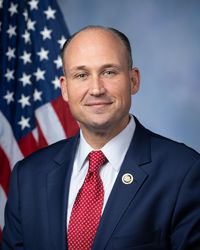
United States · Official source
762 records where Rep. Langworthy, Nicholas A. [R-NY-23] is listed as a sponsor, author, or other actor. Search with topics and years
United States · United States Congress · 31 January 2025
United States · United States Congress · 31 January 2025
Deliver for Veterans Act This bill requires the Department of Veterans Affairs (VA) to include delivery costs when paying the full purchase price of an automobile or other conveyance for certain disabled veterans or members of the Armed Forces. Currently, the VA must pay the lesser of (1) $26,417.20 (adjusted annually for inflation), or (2) the full purchase price associated with providing an automobile or other conveyance to such individuals (not including delivery costs).
United States · United States Congress · 28 January 2025
This resolution expresses the sense of the House of Representatives that Congress should ensure that the U.S. Postal Service is not privatized and remains an independent establishment of the federal government.
United States · United States Congress · 28 January 2025
Veterans' Assuring Critical Care Expansions to Support Servicemembers Act of 2025 or the Veterans' ACCESS Act of 2025 This bill addresses the administration of the Veterans Community Care Program (VCCP) and other Department of Veterans Affairs (VA) health care matters. Among other provisions regarding the VCCP, the bill establishes in statute access standards that determine when a veteran is eligible to receive non-VA care through the VCCP, requires the VA to notify veterans regarding their eligibility for care within two business days after the VA is aware the veteran is seeking care, and extends the deadline for the submittal of claims under the VCCP by health care entities and providers. The VA must address its mental health treatment programs by establishing a standardized screening process to determine whether a veteran satisfies criteria for priority or routine admission to a mental health residential rehabilitation treatment program or a program for residential care for mental health and substance abuse disorders, tracking the performance of medical facilities and Veterans Integrated Service Networks in meeting the requirements for mental health treatment screenings and timely admission to treatment programs under such screenings, and establishing an appeal process for when a veteran is denied admission to a covered treatment program or is accepted into a program but not offered bed placement in a timely manner. Additionally, the VA must establish an online self-service module for veterans to request and manage appointments, track referrals, and appeal and track decisions related to requests for care.
United States · United States Congress · 28 January 2025
Charitable Act This bill allows an individual taxpayer who does not itemize their tax deductions to claim a tax deduction for charitable contributions and eliminates the tax penalty for overstating charitable contributions. (Some limitations apply). Under the bill, for tax years beginning in 2026 or 2027, an individual taxpayer who does not itemize their tax deductions may deduct charitable contributions of up to one-third of the standard deduction allowed to such individual. (Under current law, an individual taxpayer generally must itemize their tax deductions to deduct charitable contributions.) The bill also eliminates the tax penalty for an underpayment of taxes attributable to overstated charitable contributions by taxpayers who do not itemize deductions. (Under current law, taxpayers who claim a deduction under this bill may be assessed a tax penalty in the amount of 50% of the portion of an understatement of tax liability attributable to overstated charitable contributions.)
United States · United States Congress · 23 January 2025
Whole Milk for Healthy Kids Act of 2025 This bill revises requirements for milk provided by the National School Lunch Program of the Department of Agriculture (USDA). Currently, schools participating in the program must provide milk that is consistent with the most recent Dietary Guidelines for Americans; USDA regulations require milk to be fat-free or low-fat and allow milk to be flavored or unflavored. The bill modifies these restrictions and instead permits schools to offer students whole, reduced-fat, low-fat, and fat-free flavored and unflavored milk. The milk that is offered may be organic or nonorganic. Further, USDA may not prohibit a participating school from offering students any of these milk choices. Further, schools currently must provide a substitute for fluid milk, on receipt of a written statement from a licensed physician, for students whose disability restricts their diet. Under the bill, a parent or legal guardian may also provide the written statement. In addition, schools currently participating in the program must provide meals that meet certain nutrition requirements; USDA regulations require that the average saturated fat content of the meals offered must be less than 10% of the total calories. Under the bill, fluid milk is excluded from the saturated fat content calculation; milk fat included in any fluid milk provided by the program must not be considered saturated fat for the purposes of measuring compliance with USDA regulations. Finally, the bill prohibits schools participating in the program from purchasing or offering milk produced by Chinese state-owned enterprises.
United States · United States Congress · 23 January 2025
Support And Value Expectant Moms and Babies Act of 2025 or the SAVE Moms and Babies Act of 2025 This bill prohibits the Food and Drug Administration (FDA) from approving any new drug (either as a brand-name drug or a generic) intended to terminate a pregnancy and imposes additional restrictions on such drugs that are already approved. Under the bill, an already-approved drug intended to terminate a pregnancy may be dispensed to a patient only with a prescription. Furthermore, the FDA may not approve any labeling change that would authorize (1) using the drug after 70 days of gestation, or (2) dispensing the drug by any means other than in-person administration by the prescribing health care practitioner. The FDA must also impose additional restrictions on such already-approved drugs, including by (1) requiring the prescribing health care practitioner to receive a special certification, (2) prohibiting the practitioner from also acting as the dispensing pharmacist, and (3) requiring the practitioner to have the ability to provide surgical intervention to the patient. The bill also rescinds any investigational use exemption already granted to such a drug if the bill would have prohibited the FDA from granting the exemption. (Currently, the FDA may grant an exemption to certain market approval requirements if a drug is intended solely for use in safety and effectiveness investigations.)
United States · United States Congress · 23 January 2025
United States · United States Congress · 23 January 2025
Main Street Tax Certainty Act This bill makes permanent the qualified business income (QBI) tax deduction. Under current law, individuals, estates, and trusts may deduct the lower of (1) 20% of QBI from a qualified business, qualified real estate investment trust dividends, and qualified publicly traded partnership income; or (2) 20% of taxable income less net capital gain. (Some limitations apply.) However, under current law, the QBI tax deduction expires after December 31, 2025.
United States · United States Congress · 23 January 2025
Promoting Domestic Energy Production Act This bill allows corporations to reduce their adjusted financial statement income to account for certain intangible costs related to oil, gas, or geothermal well drilling and development for purposes of calculating the corporate alternative minimum tax. Under current law, a 15% corporate alternative minimum tax is imposed on a corporation with adjusted financial statement income exceeding an average of $1 billion for a consecutive three-year period (or an average of $100 million for a U.S. corporation that is part of a foreign parent multinational group if the adjusted financial statement income of such group exceeds an average of $1 billion for a consecutive three-year period). Adjusted financial statement income generally is the net income or loss reported on the corporation’s applicable financial statement for a tax year, with adjustments for specific items. This bill expands the reductions that may be made to a corporation’s adjusted financial statement income to include (1) intangible drilling and development costs incurred by an operator of a domestic oil, gas, or geothermal well that are allowed as a deduction in the current tax year when computing regular taxable income; and (2) any depletion expenses related to the intangible oil, gas, or geothermal well drilling and development costs.
United States · United States Congress · 23 January 2025
Strengthening our Servicemembers with Milk Act This bill requires the Department of Defense (DOD) to provide varieties of fluid or powdered milk (e.g., unflavored or organic) to members of the Armed Forces at dining facilities on military installations. Under the bill, DOD is prohibited from purchasing such milk from an entity owned or controlled by a foreign adversary.
United States · United States Congress · 22 January 2025
Reining In Federal Licensing Enforcement Act of 2025 or the RIFLE Act of 2025 This bill revises the federal statutory framework governing the licensing, inspection, and enforcement of federally licensed dealers, importers, and manufacturers of firearms (i.e., federal firearms licensees, or FFLs) by the Bureau of Alcohol, Tobacco, Firearms and Explosives (ATF). With respect to an application for a license, this bill requires the ATF to make a preliminary determination, provide notice of a proposed denial, and allow the applicant to request a hearing. With respect to inspections, this bill requires the ATF to establish standards for how it inspects, examines, or investigates FFLs for possible violations. With respect to the enforcement of violations, this bill establishes a new framework. The new framework establishes a presumption that a violation by an FFL is not willful and requires the ATF to provide notice of and work with an FFL to rectify a violation. In the case of a violation that is willful, the ATF has the burden of proving by clear and convincing evidence that the violation was committed willfully. The term willfully means that the person had actual knowledge of a legal duty, understood the obligation imposed by the legal duty, and deliberately disregarded the legal duty. The ATF may pursue revocation of an FFL’s license, but only after (1) providing notice and an opportunity to comply; and (2) finding that a lesser administrative action (e.g., warning, warning letter, or warning conference) is not likely to lead to future compliance.
United States · United States Congress · 22 January 2025
United States · United States Congress · 22 January 2025
No Taxpayer Funding for Abortion and Abortion Insurance Full Disclosure Act of 2025 This bill modifies provisions relating to federal funding for, and health insurance coverage of, abortions. Specifically, the bill prohibits the use of federal funds for abortions or for health coverage that includes abortions. Such restrictions extend to the use of funds in the budget of the District of Columbia. Additionally, abortions may not be provided in a federal health care facility or by a federal employee. Historically, language has been included in annual appropriations bills for the Department of Health and Human Services (HHS) that prohibits the use of federal funds for abortions—such language is commonly referred to as the Hyde Amendment. Similar language is also frequently included in appropriations bills for other federal agencies and the District of Columbia. The bill makes these restrictions permanent and extends the restrictions to all federal funds (rather than specific agencies). The bill's restrictions regarding the use of federal funds do not apply in cases of rape, incest, or where a physical disorder, injury, or illness endangers a woman's life unless an abortion is performed. The Hyde Amendment provides the same exceptions. The bill also prohibits qualified health plans from including coverage for abortions. Currently, qualified health plans may cover abortion, but the portion of the premium attributable to abortion coverage is not eligible for subsidies.
United States · United States Congress · 21 January 2025
FACE Act Repeal Act of 2025 This bill repeals provisions of federal criminal law that prohibit conduct intended to injure, intimidate, or interfere with persons who are seeking to (1) obtain or provide reproductive health services, or (2) exercise their right of religious freedom at a place of religious worship.
United States · United States Congress · 21 January 2025
Sarah's Law This bill requires the Department of Justice or the Department of Homeland Security (DHS) to detain a non-U.S. national ( alien under federal law) who is unlawfully present in the United States and has been charged with, arrested for, convicted of, or admits to having committed acts that constitute the essential elements of a crime that resulted in the death or serious bodily injury of another person. DHS must obtain information about the identity of any victims of the crimes for which the detained individual was charged or convicted. DHS shall provide the victim, or a relative or guardian of a deceased victim, with information about the detained individual, including name, date of birth, nationality, immigration status, criminal history, and a description of any related removal efforts.
United States · United States Congress · 16 January 2025
Stopping Home Office Work's Unproductive Problems Act of 2025 or the SHOW UP Act of 2025 This bill requires each executive agency (other than the Government Accountability Office) to establish as its current policies the telework policies that were in place on December 31, 2019. Agencies may not implement expanded telework policies unless the Office of Personnel Management certifies that such policies, among other requirements, will have a positive effect on the agency's mission and operational costs.
United States · United States Congress · 16 January 2025
No Tax on Tips Act This bill establishes a new tax deduction of up to $25,000 for tips, subject to limitations. The bill also expands the business tax credit for the portion of payroll taxes an employer pays on certain tips to include payroll taxes paid on tips received in connection with certain beauty services. Under the bill, the new tax deduction for tips is limited to cash tips (1) received by an employee during the course of employment in an occupation that customarily receives tips, and (2) reported by the employee to the employer for purposes of withholding payroll taxes. (Under current law, an employee is required to report tips exceeding $20 per month to their employer.) Further, an employee with compensation exceeding a specified threshold ($160,000 in 2025 and adjusted annually for inflation) in the prior tax year may not claim the new tax deduction for tips. Finally, the bill expands the business tax credit for the portion of payroll taxes that an employer pays on certain tips to include payroll taxes paid on tips received in connection with barbering and hair care, nail care, esthetics, and body and spa treatments. (Under current law, an employer is allowed a business tax credit for the amount of payroll taxes paid on certain tips received by an employee in connection with providing, delivering, or serving food or beverages.)
United States · United States Congress · 16 January 2025
United States · United States Congress · 16 January 2025
Chiropractic Medicare Coverage Modernization Act of 2025 This bill expands Medicare coverage of chiropractic services to include all services provided by chiropractors, rather than only subluxation corrections through manual manipulation of the spine.
United States · United States Congress · 16 January 2025
This resolution prohibits a Member, Delegate, or Resident Commissioner from bringing or displaying any flag of a foreign nation on the House floor while it is in session. However, the prohibition does not apply to a Member wearing a flag of a foreign nation as a lapel pin or using a depiction of such a flag as part of an exhibit during a speech or debate under House rules.
United States · United States Congress · 16 January 2025
This bill increases the annual limit on the tax credit for qualified railroad track maintenance expenses (also referred to as the short line railroad tax credit) and expands eligibility for claiming the credit. Under current law, the tax credit is limited each tax year to $3,500 multiplied by the sum of the number of miles of railroad track owned or leased by the taxpayer (miles owned or leased) and the number of railroad track miles assigned to the taxpayer by a Class II or III railroad (miles assigned). This bill increases the annual limit to $6,100 multiplied by the sum of miles owned or leased and miles assigned. The $6,100 amount used in the calculation of the tax credit limit is adjusted for inflation for tax years beginning after 2025. The bill also expands eligibility for the tax credit to include gross expenses for maintaining railroad tracks owned or leased as of January 1, 2024. Under current law, the tax credit is limited to gross expenses for maintaining railroad tracks owned or leased as of January 1, 2015.
United States · United States Congress · 16 January 2025
Protecting Access for Hunters and Anglers Act of 2025 This bill bars the Fish and Wildlife Service (FWS), the Bureau of Land Management (BLM), and the Forest Service from prohibiting or regulating the use of lead ammunition or tackle on federal land or water. The bill makes exceptions for specified existing regulations and where the FWS, the BLM, or the Forest Service determines that a decline in wildlife population at the specific unit of federal land or water is primarily caused by the use of lead in ammunition or tackle, based on the field data from such unit, and the state approves the regulations.
United States · United States Congress · 16 January 2025
Veterans Member Business Loan Act This bill excludes from credit union aggregate loan limitations member business loans made to veterans.
United States · United States Congress · 15 January 2025
United States · United States Congress · 15 January 2025
Repealing Big Brother Overreach Act This bill repeals the Corporate Transparency Act. The act requires existing companies and newly created companies to report beneficial ownership information to the Department of the Treasury’s Financial Crimes Enforcement Network for purposes of addressing the financing of terrorism and money laundering.
United States · United States Congress · 15 January 2025
Miracle on Ice Congressional Gold Medal Act This bill provides for the award of Congressional Gold Medals to the members of the 1980 U.S. Olympic men's ice hockey team in recognition of the team's achievement at the 1980 Winter Olympic Games.
United States · United States Congress · 15 January 2025
This joint resolution nullifies the rule titled Energy Conservation Program: Energy Conservation Standards for Consumer Gas-fired Instantaneous Water Heaters and submitted by the Department of Energy (DOE) on December 26, 2024. Under the rule, DOE adopted amended energy conservation standards for gas-fired instantaneous water heaters to achieve the maximum improvement in energy efficiency that DOE determined was technologically feasible and economically justified.
United States · United States Congress · 14 January 2025
This bill designates the facility of the United States Postal Service located at 216 Cumberland Street in Rochester, New York, as the "Minister Franklin Florence Memorial Post Office".
United States · United States Congress · 13 January 2025
Second Amendment Guarantee Act or the SAGA Act This bill prohibits a state or local government from establishing a regulation, prohibition, or registration or licensing requirement with respect to a rifle or shotgun that is more restrictive (or that imposes a greater penalty or tax) than federal law.
United States · United States Congress · 13 January 2025
Make Greenland Great Again Act This bill authorizes the President to seek to enter into negotiations with Denmark to acquire Greenland. If such an agreement is reached, the President must transmit the agreement and related materials to Congress within five calendar days. The agreement shall go into effect 60 calendar days after such transmission unless Congress enacts a joint resolution of disapproval.
United States · United States Congress · 9 January 2025
This bill designates the facility of the United States Postal Service located at 80 Prospect Street in Avon, New York, as the "Officer Anthony Mazurkiewicz Memorial Post Office Building".
United States · United States Congress · 9 January 2025
Supporting All Producers Act of 2025 or the SAP Act of 2025 This bill directs the Department of Agriculture (USDA) to solicit input from maple industry stakeholders with respect to the research and education priorities of the maple industry for the Acer Access and Development Program (Acer). Specifically, the bill amends Acer to require USDA to consider the information provided through consultation with the maple industry when making program grants. The bill also extends the program's authorization through FY2030. As background, Acer provides competitive grants to states, tribal governments, and research institutions to support their efforts to promote the domestic maple syrup industry through activities associated with, among other things, the promotion of (1) research and education related to maple syrup production, and (2) natural resource sustainability in the maple syrup industry.
United States · United States Congress · 9 January 2025
Making Agricultural Products Locally Essential Act (MAPLE) Act This bill includes maple syrup as one of the eligible foods under the Senior Farmers' Market Nutrition Program (SFMNP). As background, the Department of Agriculture's SFMNP provides grants to participating states to provide low-income seniors with coupons/vouchers that may be used at farmers’ markets, roadside stands, and community supported agriculture programs to purchase eligible foods (i.e., fresh, nutritious, unprepared, locally-grown fruits, vegetables, herbs, and honey).
United States · United States Congress · 9 January 2025
Panama Canal Repurchase Act of 2025 This bill authorizes the President to negotiate with the appropriate Panamanian government officials to reacquire the Panama Canal. The President must submit a report to Congress within 180 days of enactment detailing the progress of such negotiations, potential challenges, and anticipated outcomes.
United States · United States Congress · 9 January 2025
Valor Earned Not Stolen Act of 2025 This bill increases the maximum prison term—from one year to three years—for an individual who falsely claims to be the recipient of certain military awards (e.g., a Medal of Honor or Purple Heart) with the intent to obtain money, property, or other tangible benefit.
United States · United States Congress · 9 January 2025
Creating Access to Rural Employment and Education for Resilience and Success Act or the CAREERS Act This bill reauthorizes the Rural Innovation Stronger Economy (RISE) Grant Program and expands the program to include support for career pathway programs or industry or sector partnerships in industries in rural communities. As background, this Department of Agriculture (USDA) program offers grant assistance to create and augment high-wage jobs, accelerate the formation of new businesses, support industry clusters, and maximize the use of local productive assets in eligible low-income rural areas. Under the bill, RISE grant program funds may be used to support career pathway programs (i.e., a combination of rigorous and high-quality education, training, and other services) or industry or sector partnerships in industries in rural communities. These industries may include public utilities (i.e., telecommunications, broadband, water, wastewater, disposal, and electric supply services), conservation practices and management, health care, child care, manufacturing, and agribusiness. The bill removes the current requirement that the program provide grants (to the maximum extent practicable) for job accelerators in at least 25 states. Instead, USDA must ensure the regional diversity of grant recipients or participants in providing for job accelerators, career pathway programs, and industry or sector partnerships. The bill also includes additional reporting requirements for career pathway programs and industry or sector partnership grant recipients.
United States · United States Congress · 9 January 2025
Grape Research And Protection Expansion Act or the GRAPE Act This bill requires the federal crop insurance program (FCIP) to provide for the research and development of a policy to insure table, wine, and juice grapes against losses due to a freeze event. (Under current law, the term policy means an insurance policy, plan of insurance, provision of a policy or plan of insurance, and related materials.) The Federal Crop Insurance Corporation, the agency that finances FCIP operations, must make any resulting policy available that meets specified FCIP requirements. The FCIP must also submit a report to Congress on the research and any resulting policy.
United States · United States Congress · 9 January 2025
Great Lakes Restoration Initiative Act of 2025 or the GLRI Act of 2025 This bill reauthorizes through FY2031 the Great Lakes Restoration Initiative, which carries out programs and projects to protect and restore the Great Lakes.
United States · United States Congress · 9 January 2025
Return Excessive Migrants and Asylees to International Neighbors in Mexico Act of 2025 or the REMAIN in Mexico Act of 2025 This bill requires the Department of Homeland Security (DHS) to implement the Migrant Protection Protocols as outlined in the January 25, 2019, memo titled Policy Guidance for Implementation of the Migrant Protection Protocols . (The protocols generally required aliens who are not clearly admissible, including those seeking asylum, arriving by land along the U.S.-Mexico border to be returned to Mexico while their immigration proceedings are pending, rather than remain in the United States. On January 21, 2021, DHS stopped applying the protocols to newly-arrived individuals.)
United States · United States Congress · 9 January 2025
Gulf of America Act of 2025 This bill renames the Gulf of Mexico as the Gulf of America and directs federal agencies to update their documents and maps to incorporate the new name.
United States · United States Congress · 9 January 2025
Dairy Farm Resiliency Act This bill updates the Dairy Margin Coverage (DMC) program. As background, the DMC program was enacted in the 2018 farm bill to support dairy operations by allowing producers to buy a guaranteed margin for their milk production. The margin is the difference between the Department of Agriculture's (USDA's) national all milk price and a calculated feed cost, which provides producers optional risk protection on price and feed costs. The bill updates the current requirements that a participating dairy producer have an established milk production history with USDA's Farm Service Agency. Specifically, the bill requires that a dairy operation's production history for DMC be based on the most recent three-year history and be recalculated every five years. The bill also increases Tier I margin coverage for annual milk production to 6 million pounds or less (currently 5 million pounds or less) and Tier II margin coverage to over 6 million pounds (currently over 5 million pounds).
United States · United States Congress · 9 January 2025
Justice for 9/11 Act This bill provides that any plea agreement entered into by Khalid Shaikh Mohammad, Walid Muhammad Salih Mubarak Bin ‘Attash, or Mustafa Ahmed Adam al Hawsawi for actions involving the terrorist attack on September 11, 2001, and its related judgment must not preclude the trial of such individuals under other provisions of law for that attack. In any trial of such individuals, the death penalty must be available. In the case of any sentence imposed on Khalid Shaikh Mohammad, Walid Muhammad Salih Mubarak Bin ‘Attash, or Mustafa Ahmed Adam al Hawsawi, the individual must (1) be held at U.S. Naval Station, Guantanamo Bay, Cuba, in solitary confinement; (2) not be provided contact with foreign nationals; (3) not be provided with psychological treatment except that specifically authorized by medical authorities at Guantanamo Bay; and (4) not be transferred to the continental United States or any other country.
United States · United States Congress · 9 January 2025
Rural Telehealth and Education Enhancement Act of 2025 This bill reauthorizes the Distance Learning and Telemedicine Program through FY2030. This Department of Agriculture program provides grants to help rural communities gain the technology and training necessary to engage in telemedicine and distance learning.
United States · United States Congress · 9 January 2025
Fair Milk Pricing for Farmers Act This bill requires manufacturers to report production cost and product yield information for all dairy products processed in the same facility or facilities to the Department of Agriculture (USDA) Dairy Product Mandatory Reporting Program. Further, USDA must publish a report containing the information obtained under these new requirements and publish a report every two years thereafter. As background, under the Dairy Product Mandatory Reporting Program, USDA must collect certain dairy product sales information from manufacturers and release the data on a weekly basis.
United States · United States Congress · 9 January 2025
National Law Enforcement Officers Remembrance, Support and Community Outreach Act. [ sic ] This bill temporarily directs the Department of the Interior to award a grant to the National Law Enforcement Officers Memorial Fund for the expenses associated with operating and enhancing the community outreach, public education, and officer safety and wellness programs of the National Law Enforcement Museum.
United States · United States Congress · 7 January 2025
National Museum of Play Recognition Act This bill designates the Margaret Woodbury Strong Museum in Rochester, New York, as the National Museum of Play.
United States · United States Congress · 7 January 2025
Protect Local Farms Act This bill provides that the Fair Labor Standards Act (FLSA) preempts any state law that establishes a maximum workweek (i.e., the maximum number of hours an employee is permitted to work without receiving overtime pay) of less than 60 hours for agricultural employees. Under the FLSA, agricultural employees are generally exempt from federal overtime requirements. However, federal overtime requirements currently do not preempt state laws that provide greater protections to employees.
United States · United States Congress · 7 January 2025
Higher Education Loses Payments for Painful Experiments, Tests and Studies Act or the HELP PETS Act This bill prohibits an institution of higher education (IHE) from receiving federal funds if the IHE conducts or funds painful research on dogs or cats. Painful research refers to any research, biomedical training, experimentation, or biological testing classified in specified pain categories by the Department of Agriculture.
United States · United States Congress · 6 January 2025
This joint resolution proposes an amendment to the Constitution establishing term limits for individuals serving in the Senate and the House of Representatives. The proposed amendment makes an individual who has served two terms in the Senate ineligible for appointment or election to the Senate and an individual who has served three terms as a Member of the House of Representatives ineligible for election to the House of Representatives. The joint resolution provides that the amendment shall be valid when ratified by the legislatures of three-fourths of the states within seven years after the date of its submission for ratification. Under Article V of the Constitution, both chambers of Congress may propose an amendment by a vote of two-thirds of all Members present for such vote. A proposed amendment must be ratified by the states as prescribed in Article V and as specified by Congress.