Bill· HRH.R. 1266 (119th)reported
Combating Illicit Xylazine Act
United States · United States Congress · 12 February 2025
The world's political record
Person
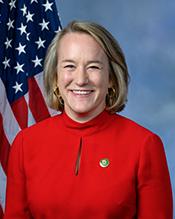
United States · Official source
1,006 records where Rep. Budzinski, Nikki [D-IL-13] is listed as a sponsor, author, or other actor. Search with topics and years
United States · United States Congress · 12 February 2025
United States · United States Congress · 12 February 2025
Give Kids a Chance Act of 2025 This bill expands the Food and Drug Administration’s (FDA’s) authority with respect to research on rare pediatric diseases, including by permitting the FDA to take enforcement action against drug sponsors that fail to satisfy pediatric study requirements and by reauthorizing programs that support pediatric research. Specifically, the bill modifies requirements relating to molecularly targeted pediatric cancer investigations to permit research on new drugs in combination with active ingredients that have already been approved, provided certain conditions are met; permits the FDA to take enforcement action against drug sponsors that fail to comply with pediatric study requirements, if such sponsors demonstrated a lack of due diligence in satisfying the requirement; renews the FDA’s authority to award priority review vouchers to sponsors of new products intended to treat rare pediatric diseases through September 30, 2029; and reauthorizes through FY2027 certain funding for the National Institutes of Health to support priority pediatric research. The bill also provides statutory authority for the FDA’s interpretation of the orphan drug exclusivity period. The bill specifies, consistent with FDA regulations, that the seven-year market exclusivity period for drugs for rare diseases or conditions (i.e., orphan drugs) prohibits the approval of the same drug for the same approved use or indication with respect to the disease or condition. (In Catalyst Pharmaceuticals, Inc. v. Becerra , a court rejected the FDA’s interpretation and held that orphan drug exclusivity extends to all uses or indications for the disease or condition.)
United States · United States Congress · 12 February 2025
United States · United States Congress · 12 February 2025
Rural Obstetrics Readiness Act This bill creates and expands federal grant programs within the Health Resources and Services Administration (HRSA) to increase capacity to provide emergency obstetric health services in rural areas or areas without practitioners or facilities specializing in obstetric services. Specifically, HRSA must establish a program for providing grants to certain hospitals or consortiums that include hospitals in rural areas or areas with maternal health care professional shortages for training, developing a workforce, and purchasing equipment relating to obstetric emergencies. In addition, the bill requires HRSA’s Alliance for Innovation on Maternal Health Capacity program to provide grants for training on emergency obstetric services for practitioners in rural health care facilities without dedicated obstetric units. HRSA must also establish a pilot program to provide grants to government entities for developing or improving telehealth access programs to support urgent maternal health care in rural facilities without a dedicated obstetric unit.
United States · United States Congress · 11 February 2025
United States · United States Congress · 10 February 2025
Stopping Addiction and Falls for the Elderly Act or the SAFE Act This bill incorporates risk assessments and prevention services for falls into annual wellness visits and initial preventive physical exams under Medicare, as well as associated services provided by physical therapists and occupational therapists.
United States · United States Congress · 7 February 2025
United States · United States Congress · 7 February 2025
Family Farm and Small Business Exemption Act This bill restores an exemption for certain family farms and small businesses on the Free Application for Federal Student Aid (FAFSA) form. The bill applies to the net worth of (1) a family farm on which the family resides, or (2) a small business with not more than 100 full-time or full-time equivalent employees that is owned and controlled by the family. Prior to recent changes made to the FAFSA, the net worth of these family farms and small businesses were excluded as assets when calculating a student's financial need to determine federal student aid eligibility. Beginning with the 2024-2025 academic year, the net worth of these farms and businesses are treated as an asset and therefore included in the calculation. This bill restores the exemption to exclude such net worth from the calculation.
United States · United States Congress · 7 February 2025
Freedom to Invest in Tomorrow’s Workforce Act This bill expands the expenses eligible for tax-free withdrawals from a qualified tuition program (known as a 529 plan) to include tuition, fees (including test fees), books, supplies, equipment, and other expenses related to the enrollment or attendance in a recognized postsecondary credentialing program. Under the bill, a recognized postsecondary credentialing program includes certain programs identified by a state as providing training services, a program listed in the Web Enabled Approval Management System (WEAMS) maintained by the Department of Veterans Affairs, certain examinations required to obtain or maintain a credential, and other reputable credentialing programs. Further, under the bill, such programs must be designed for an individual to obtain an industry-recognized postsecondary employment credential (e.g., project management professional certificate, advanced emergency medical technician certificate, and welding supervisor certificate), a certificate of completion of a registered and certified apprenticeship, an occupational or professional license issued or recognized by a state or the federal government (and any certification required for obtaining such license), or an associate or baccalaureate degree.
United States · United States Congress · 6 February 2025
Agriculture Export Promotion Act of 2025 This bill extends the Market Access Program (MAP) and the Foreign Market Development (FMD) Program of the Foreign Agricultural Service (FAS) through FY2029 and increases funding for the programs. Under MAP, FAS provides funds to eligible participants to share the cost of marketing and promotion activities to encourage the development, maintenance, and expansion of commercial export markets for U.S. agricultural commodities. Eligible participants include nonprofit U.S. agricultural trade organizations, state regional trade groups, U.S. agricultural cooperatives, state government agencies, and small businesses. Under the FMD Program, FAS provides funds to nonprofit U.S. agricultural trade organizations to share the cost of overseas marketing and promotion activities. The FMD program focuses on the generic promotion of U.S. commodities, rather than the promotion of branded products.
United States · United States Congress · 6 February 2025
Protecting Sensitive Locations Act This bill prohibits immigration enforcement actions within 1,000 feet of a sensitive location except in exigent circumstances, such as the imminent risk of death, violence, or physical harm to any person. Sensitive locations include health care facilities; schools and school bus stops; places that provide assistance for people such as children, pregnant women, and abuse victims; child care facilities; places that provide disaster or emergency services; places of worship; courthouses and lawyers’ offices; facilities used as polling places; certain labor union facilities; and public assistance offices. The prohibition shall apply to Department of Homeland Security officers and agents, as well as state employees pursuing immigration enforcement actions. If an enforcement action is carried out in violation of this prohibition (1) no information resulting from the action may be entered into the record in a resulting removal proceeding, and (2) the affected individual may move to immediately terminate such a proceeding. U.S. Immigration and Customs Enforcement and U.S. Customs and Border Protection shall annually report to Congress about enforcement actions taken at sensitive locations in the preceding year.
United States · United States Congress · 6 February 2025
Protect Our Letter Carriers Act of 2025 This bill requires or authorizes certain actions related to the U.S. Postal Service (USPS). The bill requires the Department of Justice to appoint an assistant U.S. attorney in each judicial district to coordinate and supervise the investigation and prosecution of various crimes related to postal services (for example, assault on a postal service employee, breaking into a post office, or obstruction of mails). The bill also requires the U.S. Sentencing Commission to amend sentencing guidelines to provide that the assault or robbery of a postal employee shall be treated the same as the assault of a law enforcement officer. Additionally, the bill authorizes appropriations for the USPS to install high security collection boxes and replace older versions of the universal mailbox key with electronic versions.
United States · United States Congress · 6 February 2025
Taxpayer Data Protection Act This bill restricts access to any public money receipt or payment system belonging to the Department of the Treasury. Specifically, access is limited to authorized Treasury officers, employees, or contractors meeting certain performance standards who have held a qualified position for at least a year, or who hold other qualifications as provided by the bill. The bill specifically prohibits special government employees (i.e., temporary appointees hired to perform specific tasks) from having access to such systems. The bill also provides that an individual accessing such systems shall be treated as an executive branch employee for purposes of federal criminal conflict of interest laws. Treasury's Office of Inspector General must investigate and report on each instance of unauthorized use or other access of such payment systems.
United States · United States Congress · 6 February 2025
Educators Expense Deduction Modernization Act of 2025 This bill increases the above-the-line tax deduction for unreimbursed expenses incurred by an eligible educator for classroom supplies and certain professional development courses. (Above-the-line deductions are subtracted from gross income to calculate adjusted gross income.) Under current law, an eligible educator may deduct up to $300 in 2025 (adjusted annually for inflation) for unreimbursed expenses for classroom supplies and certain professional development courses. An eligible educator is defined as a kindergarten through grade 12 teacher, instructor, counselor, principal, or aide who works at least 900 hours during a school year in a school that provides elementary or secondary education. Under the bill, an eligible educator may deduct up to $1,000 in 2026 for unreimbursed expenses for classroom supplies and certain professional development. For tax years after 2026, the $1,000 limit on the tax deduction is adjusted annually for inflation.
United States · United States Congress · 6 February 2025
This bill modifies provisions related to market exclusivity for a generic drug. Currently, the Food and Drug Administration (FDA) awards 180 days of exclusivity on the market to a first applicant to file a qualifying application for market approval of a generic drug. Generally, this exclusivity period begins upon a first applicant's commercial marketing of the drug. The bill authorizes the FDA to approve a subsequent generic drug application prior to a first applicant's first date of commercial marketing if (1) the subsequent application is ready for full approval, (2) the applicant certifies that there are no conditions that would prevent commercial marketing of the drug within 75 days of approval and that the applicant intends to do so, (3) a first applicant's application has been pending for at least 33 months, (4) the approval of a first applicant's application is not precluded by patent infringement claims asserted against that first applicant, and (5) no first applicant's application has been effectively approved on the date that all such conditions are met. If an applicant fails to begin commercially marketing their drug within 75 days of approval via the aforementioned process, the applicant's approval is deemed tentative and the applicant is no longer eligible for subsequent approvals, unless the applicant certifies that the failure was due to unforeseen issues that have since been resolved.
United States · United States Congress · 6 February 2025
Clear Communication for Veterans Claims Act This bill requires the Department of Veterans Affairs (VA) to seek to enter into an agreement with a federally funded research and development center to assess notices that the VA sends to claimants applying for or submitting claims for VA benefits. The VA must report on the findings of the assessment and implement recommendations in the assessment. The bill also extends certain loan fee rates through June 23, 2034, under the VA's home loan program.
United States · United States Congress · 5 February 2025
Love Lives On Act of 2025 This bill extends entitlement for various benefit programs and services for surviving spouses of deceased members of the Armed Forces or veterans. The bill provides that the remarriage of a surviving spouse must not bar the furnishing of dependency and indemnity compensation or special pension benefits to such spouse. Additionally, the Department of Defense may not terminate the payment of an annuity for a surviving spouse under the Survivor Benefit Plan solely because the surviving spouse remarries. The bill also expands the definition of a dependent under TRICARE to include a remarried widow or widower whose subsequent marriage has ended due to death, divorce, or annulment.
United States · United States Congress · 5 February 2025
AM Radio for Every Vehicle Act of 2025 This bill requires the Department of Transportation (DOT) to issue a rule requiring AM radio capabilities to be standard in all new passenger vehicles. (AM radio is often used to deliver emergency alerts and news and entertainment programming; some newer vehicles do not include AM equipment.) Specifically, this bill applies to passenger vehicles (1) manufactured in the United States for sale in the United States, imported into the United States, or shipped in interstate commerce; and (2) manufactured after the rule's effective date. The rule must require all such vehicles to have devices that can receive signals and play content transmitted by AM stations or digital audio AM stations installed as standard equipment and made easily accessible to drivers. Prior to the rule's effective date, manufacturers that do not include devices that can access AM radio as standard equipment (1) must inform purchasers of this fact through clear and conspicuous labeling, and (2) may not charge an additional or separate fee for AM radio access. DOT may assess civil penalties for any violation of the rule. The Department of Justice may also bring a civil action to enjoin a violation. The rule, including DOT’s authority to enforce it, must expire 10 years after the bill’s enactment. Further, the Government Accountability Office must study and report on the dissemination of emergency alerts to the public, including by conducting an assessment of AM radio relative to other Integrated Public Alert and Warning System communication technologies.
United States · United States Congress · 5 February 2025
United States · United States Congress · 5 February 2025
United States · United States Congress · 5 February 2025
This resolution disapproves of pardons for individuals who were found guilty of assaulting U.S. Capitol Police officers.
United States · United States Congress · 5 February 2025
This resolution supports the designation of Career and Technical Education Month to celebrate career and technical education across the United States.
United States · United States Congress · 5 February 2025
United States · United States Congress · 5 February 2025
United States · United States Congress · 4 February 2025
Crime Victims Fund Stabilization Act of 2025 This bill adds a new source of revenue for the Crime Victims Fund (CVF). Specifically, the bill requires certain civil monetary penalties collected from settlements and judgments in cases involving fraud and false claims against the federal government to be deposited into the CVF through FY2029. The CVF supports federal, state, and local programs and activities to compensate and assist victims of crimes. Currently, the CVF is funded by deposits from a variety of sources, including federal criminal fines, penalties, and assessments; forfeited bail bonds; and certain other gifts, donations, and bequests.
United States · United States Congress · 4 February 2025
United States · United States Congress · 4 February 2025
This resolution supports federal investment in public K-12 schools, affirms that the Department of Education (ED) plays a vital role in the public education system, and states that public education funding should not be diverted (e.g., through the use of vouchers) to privately run K-12 schools. The resolution also rejects any claim that the executive branch has the legal authority to (1) dismantle or relocate ED or any of its major offices; or (2) reduce federal funding for public education, block federal grants for education, or transfer funding burdens for education to state and local governments.
United States · United States Congress · 4 February 2025
United States · United States Congress · 4 February 2025
United States · United States Congress · 4 February 2025
United States · United States Congress · 31 January 2025
Nancy Gardner Sewell Medicare Multi-Cancer Early Detection Screening Coverage Act This bill allows, beginning in 2028, for Medicare coverage and payment for multi-cancer early detection screening tests that are approved by the Food and Drug Administration and that are used to screen for cancer across many cancer types, if the Centers for Medicare & Medicaid Services determines such coverage is appropriate. Coverage is limited to those under a certain age (age 68 in 2028, increased by one year every year thereafter) and to one test every 11 months.
United States · United States Congress · 31 January 2025
Stop Antiabortion Disinformation Act or the SAD Act This bill prohibits deceptive advertising for reproductive health services. Specifically, the bill makes it unlawful for a person (i.e., individual, partnership, corporation, association, or organization) to deceptively advertise the reproductive health services they offer, including by misrepresenting that the person (1) offers or provides contraception or abortion services (or referrals for such contraception or abortion services), or (2) employs or offers access to licensed medical personnel. The bill provides for enforcement by the Federal Trade Commission. In addition to any other penalty, violations are subject to a civil penalty that may not exceed the greater of $100,000 (adjusted annually for inflation) or 50% of the revenue earned during the preceding 12-month period by the ultimate parent entity of the person who violated the bill.
United States · United States Congress · 31 January 2025
Keep Our Promise to America's Children and Teachers Act or the Keep Our PACT Act This bill provides funding through FY2035 for grant programs operated by local educational agencies to provide supplementary educational and related services to low-achieving students and other students who attend elementary and secondary schools with relatively high concentrations of students from low-income families. Additionally, the bill permanently reauthorizes the grant program to assist states and outlying areas in providing special education and related services to children with disabilities. The amounts provided by the bill are designated as an emergency requirement for the purposes of Pay-As-You-Go (PAYGO) rules and other budget enforcement procedures.
United States · United States Congress · 31 January 2025
Save Americans from the Fentanyl Emergency Act or the SAFE Act This bill permanently places fentanyl-related substances as a class into schedule I of the Controlled Substances Act. A schedule I controlled substance is a drug, substance, or chemical that has a high potential for abuse; has no currently accepted medical value; and is subject to regulatory controls and administrative, civil, and criminal penalties under the Controlled Substances Act. Fentanyl-related substances are currently regulated under schedule I through a temporary order issued by the Drug Enforcement Administration. The temporary order expires on March 31, 2025. It limits mandatory minimum penalties for certain offenses involving fentanyl-related substances, establishes a process to deschedule or remove certain fentanyl-related substances that have a low potential for abuse, and allows federal courts to vacate or reduce sentences for convictions involving a fentanyl-related substance that is descheduled or moved to a schedule other than schedule I or II. The bill establishes a new, alternative registration process for schedule I research. It also makes other changes to registration requirements for conducting research with controlled substances, including permitting a single registration for related research sites in certain circumstances, waiving the requirement for a new inspection in certain situations, and allowing a registered researcher to perform certain manufacturing activities with small quantities of a substance without obtaining a manufacturing registration. Finally, the bill requires the Government Accountability Office to analyze the implementation and impact of permanently placing fentanyl-related substances into schedule I of the Controlled Substances Act.
United States · United States Congress · 31 January 2025
Medicare Patient Access and Practice Stabilization Act of 2025 This bill increases certain payment adjustments under the Medicare physician fee schedule for services furnished between April 1, 2025, and January 1, 2026.
United States · United States Congress · 28 January 2025
This resolution expresses the sense of the House of Representatives that Congress should ensure that the U.S. Postal Service is not privatized and remains an independent establishment of the federal government.
United States · United States Congress · 28 January 2025
Global Health, Empowerment and Rights Act This bill establishes that a foreign nongovernmental organization shall not be disqualified from receiving certain U.S. international development assistance solely because the organization provides medical services (including counseling and referral services) using non-U.S. government funds if the medical services do not violate the laws of the country in which they are being provided. Such foreign organizations shall not be subject to requirements relating to their use of non-U.S. funds for advocacy or lobbying activities other than those that apply to U.S. nongovernmental organizations receiving such assistance.
United States · United States Congress · 28 January 2025
This concurrent resolution expresses the sense of Congress that tax-exempt fraternal benefit societies serve as a private economic and social support system, providing benefits to their members is necessary to support the charitable and fraternal activities of the volunteer chapters, and their work should continue to be promoted.
United States · United States Congress · 28 January 2025
United States · United States Congress · 24 January 2025
United States · United States Congress · 23 January 2025
Whole Milk for Healthy Kids Act of 2025 This bill revises requirements for milk provided by the National School Lunch Program of the Department of Agriculture (USDA). Currently, schools participating in the program must provide milk that is consistent with the most recent Dietary Guidelines for Americans; USDA regulations require milk to be fat-free or low-fat and allow milk to be flavored or unflavored. The bill modifies these restrictions and instead permits schools to offer students whole, reduced-fat, low-fat, and fat-free flavored and unflavored milk. The milk that is offered may be organic or nonorganic. Further, USDA may not prohibit a participating school from offering students any of these milk choices. Further, schools currently must provide a substitute for fluid milk, on receipt of a written statement from a licensed physician, for students whose disability restricts their diet. Under the bill, a parent or legal guardian may also provide the written statement. In addition, schools currently participating in the program must provide meals that meet certain nutrition requirements; USDA regulations require that the average saturated fat content of the meals offered must be less than 10% of the total calories. Under the bill, fluid milk is excluded from the saturated fat content calculation; milk fat included in any fluid milk provided by the program must not be considered saturated fat for the purposes of measuring compliance with USDA regulations. Finally, the bill prohibits schools participating in the program from purchasing or offering milk produced by Chinese state-owned enterprises.
United States · United States Congress · 23 January 2025
Ensuring Veterans’ Final Resting Place Act of 2025 This bill provides that the provision of an urn or commemorative plaque does not prohibit an individual from receiving a headstone or marker or other burial benefits (i.e., interment at a national cemetery) from the Department of Veterans Affairs. Under current law, individuals who request an urn or plaque do so in lieu of being furnished a headstone or burial benefit.
United States · United States Congress · 21 January 2025
Increased TSP Access Act of 2025 This bill directs the Department of Agriculture (USDA) to modify the certification process for Technical Service Providers (TSPs) at the Natural Resources Conservation Service (NRCS) by establishing an approval process for nonfederal certifying entities and a streamlined certification process for TSPs that hold certain specialty certifications. As background, TSPs are third-party service providers, such as private businesses, Indian tribes, and nonprofit organizations, that work on behalf of customers to offer planning, design, and implementation services that meet NRCS criteria. The bill specifies that USDA must ensure, to the maximum extent practicable, third-party providers with expertise in the technical aspects of conservation practice design, implementation, and evaluation are eligible to become approved TSPs. USDA must provide a streamlined certification process for TSPs who hold appropriate specialty certifications (e.g., certified crop advisors). In determining the eligibility of a nonfederal certifying entity, USDA must consider the ability, experience, expertise, and history of the entity. USDA must decide whether to approve an application submitted by a nonfederal certifying entity to certify TSPs within a specified time period. USDA must also review a TSP's certification by a nonfederal certifying entity within a specified time period. If the certification is satisfactory, USDA must include the TSP on a USDA-maintained registry of certified TSPs. The bill also specifies that TSPs must be paid at rates equivalent to technical assistance provided by USDA. Further, USDA must provide accessible public information on TSPs, including information on funding, certification results, and utilization rates.
United States · United States Congress · 16 January 2025
Food Deserts Act This bill establishes a grant program within the Department of Agriculture to reduce food deserts. Under the program, grants are provided to states for revolving funds that support the establishment and operation of grocery stores in underserved communities. Underserved communities are communities that have (1) limited access to affordable, healthy foods, including fresh fruits and vegetables, in grocery retail stores or farmer-to-consumer direct markets; and (2) a high rate of hunger, a high rate of food insecurity, or a high poverty rate. The bill requires states to use such funds for loans that support grocery stores in underserved communities, including for opening a store (excluding new construction), or supporting an existing store. In order to qualify for loans, grocery stores must meet criteria enumerated in the bill. For example, grocery stores must (1) emphasize unprocessed, healthful foods; (2) provide staple foods and a variety of raw fruits and vegetables; and (3) charge affordable prices at or below market values. Further, states must prioritize loan applications from entities that meet criteria related to hiring workers from the underserved community, providing classes or educational information about a healthful diet, sourcing food from local urban farms and gardens, and demonstrating existing supply chain relationships in the grocery industry.
United States · United States Congress · 16 January 2025
This bill increases the annual limit on the tax credit for qualified railroad track maintenance expenses (also referred to as the short line railroad tax credit) and expands eligibility for claiming the credit. Under current law, the tax credit is limited each tax year to $3,500 multiplied by the sum of the number of miles of railroad track owned or leased by the taxpayer (miles owned or leased) and the number of railroad track miles assigned to the taxpayer by a Class II or III railroad (miles assigned). This bill increases the annual limit to $6,100 multiplied by the sum of miles owned or leased and miles assigned. The $6,100 amount used in the calculation of the tax credit limit is adjusted for inflation for tax years beginning after 2025. The bill also expands eligibility for the tax credit to include gross expenses for maintaining railroad tracks owned or leased as of January 1, 2024. Under current law, the tax credit is limited to gross expenses for maintaining railroad tracks owned or leased as of January 1, 2015.
United States · United States Congress · 16 January 2025
Equal COLA Act This bill applies a cost-of-living adjustment (COLA) for annuities paid under the Federal Employees Retirement System that is equal to the increase in inflation, regardless of the amount of the increase. Specifically, for any year in which the Consumer Price Index (CPI) has increased over the previous year, the COLA amount shall be increased by the change in the CPI from the previous year. Current law applies an adjustment equal to the change in CPI only if the change is 2% or less. If the change is between 2% and 3%, the adjustment is limited to 2%. If the change is more than 3%, the adjustment is limited to 1% less than the change.
United States · United States Congress · 16 January 2025
Saving the Civil Service Act This bill generally prohibits changes to the classification of positions in the competitive service and excepted service unless certain conditions are met. (Competitive service positions are subject to competitive examination while excepted service positions are appointed under one of five schedules. Competitive service positions have notice and appeal requirements for adverse actions that are not applicable to most excepted positions, including those of a confidential, policy-determining, policy-making, or policy-advocating character under Schedule C.) On October 21, 2020, President Donald Trump issued an executive order that placed executive agency positions that are of a confidential, policy-determining, policy-making, or policy-advocating character, and that are not normally subject to change as a result of a presidential transition, under a new Schedule F in the excepted service. The order was subsequently revoked by President Joe Biden. The bill prohibits executive agency positions in the competitive service from being placed in the excepted service, unless such positions are placed in a schedule in the excepted service as in effect on September 30, 2020. The bill also prohibits positions in the excepted service from being placed in any schedule other than the aforementioned schedules. Additionally, agencies may not (1) transfer occupied positions from the competitive or excepted service into Schedule C without the consent of the Office of Personnel Management, or (2) transfer employees in the excepted service to another schedule or transfer employees in the competitive service to the excepted service without employee consent.
United States · United States Congress · 16 January 2025
Federal Adjustment of Income Rates Act or the FAIR Act This bill modifies pay rates for federal employees in 2026. Specifically, the bill increases rates under the statutory pay systems and for prevailing rate employees by 3.3% and increases locality pay by 1%.
United States · United States Congress · 15 January 2025
Prevent Tariff Abuse Act This bill prohibits the President from exercising authorities under the International Emergency Economic Powers Act (IEEPA) to impose duties, tariff-rate quotas, or other quotas on imports entering the United States. (IEEPA provides the President with broad authority to regulate various economic transactions following a declaration of a national emergency.)
United States · United States Congress · 15 January 2025
Rosie the Riveter Commemorative Coin Act This bill directs the Department of the Treasury to mint and issue coins in recognition and celebration of the women who contributed to the U.S. home front during World War II. All sales of coins issued under this bill must include a surcharge to be paid to the Rosie the Riveter Trust to support the National Park Service in maintaining and repairing the Rosie the Riveter WWII Home Front National Historical Park.